Zara

Search documents
9万人联名反对……今天,Shein欧洲首店在抗议声中开业
Xin Lang Ke Ji· 2025-11-05 00:15
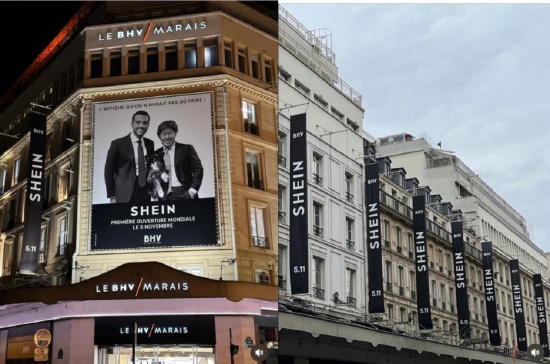
Core Viewpoint - Shein's entry into the European market, specifically through its first physical store in Paris at BHV, has sparked significant public backlash and protests, highlighting the tension between fast fashion and local values of sustainability and craftsmanship [2][5][10]. Group 1: Public Opposition - Over 90,000 signatures were collected against Shein's opening at BHV, with Paris's mayor and local unions publicly opposing the decision [2][5]. - The controversy is fueled by Shein's association with harmful products and environmental concerns, as highlighted by the French consumer regulatory agency's report on Shein's website [2][7]. - The backlash reflects broader sentiments against fast fashion, particularly in light of the decline of local manufacturing and the impact of online retail giants like Amazon [5][9]. Group 2: Environmental Concerns - Shein was recently fined for misleading advertising regarding sustainability claims, which were deemed unsubstantiated and overly ambitious [7][8]. - The French Nature Association criticized Shein's business model for its reliance on plastic fibers and high carbon emissions due to rapid production and shipping practices [7][8]. - Calls for stricter regulations on fast fashion have emerged, emphasizing the need to control both production and marketing to mitigate environmental damage [8][9]. Group 3: Industry Dynamics - Shein's rapid growth has disrupted traditional retail dynamics, with its model of "ultra-fast fashion" leading to concerns about job losses and the viability of local brands [9][16]. - The company has faced significant fines in France, totaling €400 million for misleading commercial practices and data violations, indicating regulatory scrutiny [8][9]. - Major retailers like Galeries Lafayette have publicly opposed Shein's presence, citing conflicts with their brand values and potential damage to their reputation [18]. Group 4: Shein's Strategic Response - In an attempt to mitigate backlash, Shein has announced investments in sustainability initiatives and second-hand platforms, signaling a shift towards a more responsible image [14][15]. - Despite these efforts, Shein's operational model, which emphasizes speed and low cost, continues to clash with the cultural values of French consumers [10][11]. - The upcoming opening of Shein's store is seen as a critical test of its ability to navigate the complex landscape of European retail and consumer expectations [19].

Steakholder Foods Announces Acquisition of Twine Solutions
Globenewswire· 2025-11-04 13:00
Core Insights - Steakholder Foods Ltd. has acquired Twine Solutions Ltd., enhancing its digital printing capabilities in the foodtech industry and positioning itself as a leader in smart manufacturing and supply chain optimization [1][2][3] - The acquisition allows Twine's shareholders to retain a minority stake of approximately 20% in Steakholder Foods, reflecting a strategic partnership aimed at innovation and growth [1][5] Company Overview - Steakholder Foods specializes in 3D printing technologies for alternative proteins, aiming to transform the food industry with advanced production methods [6][7] - Twine Solutions is known for its proprietary waterless dyeing technology, which is revolutionizing the $120 billion textile thread and yarn industry by enabling on-demand dyeing solutions [4][8] Strategic Goals - The acquisition is intended to create a global digital technology powerhouse that can innovate across multiple industries, including food and textiles [2][3] - Both companies aim to explore commercial applications that emphasize speed, personalization, sustainability, and scalability [3] Technological Advancements - Twine has developed the world's first digital thread and yarn dyeing system that utilizes a waterless process, supported by 10 granted and pending patents [3] - The combined technological capabilities of Steakholder and Twine are expected to enhance operational efficiency and environmental sustainability in textile production [4][8] Market Positioning - The acquisition positions Steakholder Foods to expand its market reach beyond foodtech into adjacent industries with significant growth potential [5] - Twine's partnerships with major brands like Zara and COATS Group highlight its influence and strategic importance in the textile sector [4]


San Francisco Mayor Daniel Lurie: We are open for business
CNBC Television· 2025-10-30 19:00
Let's talk about it with Daniel Lori. He is the mayor of this city along with Kate Rogers. Covers restaurants and small business.Oh, and by the way, lives here. >> I do not. Kate, this is a critical uh interview in many different ways because it's a national conversation.This city is so important. We talk about AI, >> Mr. . Mayor, every day on this very fine network.How much is AI and the spending that goes along with it playing a role in San Francisco's economy. the this is the innovation ecosystem of the ...

特朗普的关税压倒“免费退货”
3 6 Ke· 2025-10-23 13:01
Core Insights - The article discusses the shift from free returns to paid returns in the retail industry, highlighting how many brands are now charging customers for returns, which was previously a competitive advantage for e-commerce [1][2][3] Group 1: The Cost of Returns - The concept of free returns originated to alleviate consumer concerns about online shopping, popularized by Zappos and later adopted by Amazon [2] - The average return rate in the U.S. retail industry has reached 16.5%, translating to $165 billion in returned goods for every $1 trillion in sales [3] - Return processing costs can account for 30%-40% of the product price, leading to significant losses for brands when items are returned [3] Group 2: Transition to Paid Returns - Amazon has introduced a $1 handling fee for returns on certain items, resulting in a 12% decrease in overall return rates without negatively impacting sales [5][6] - Other retailers like Zara and H&M are following suit, implementing return fees and adjusting return policies to share costs with consumers [7] Group 3: Considerations for Small and Medium Brands - Increased tariffs on imports have pressured brands financially, leading them to reconsider return policies to avoid losses [8] - Brands like Joe & Bella and Bejou are exploring innovative solutions such as return insurance to manage costs while maintaining customer service [9][10] Group 4: Consumer Reactions - Over 60% of consumers understand the rationale behind return fees, yet 57% would leave a retailer that charges for returns, indicating a conflict between rational understanding and emotional response [11] - A growing number of consumers believe that return fees will encourage more thoughtful purchasing decisions, reflecting a shift in consumer behavior [12]
优衣库,跌落“平价神坛”
Xin Jing Bao· 2025-10-22 08:56
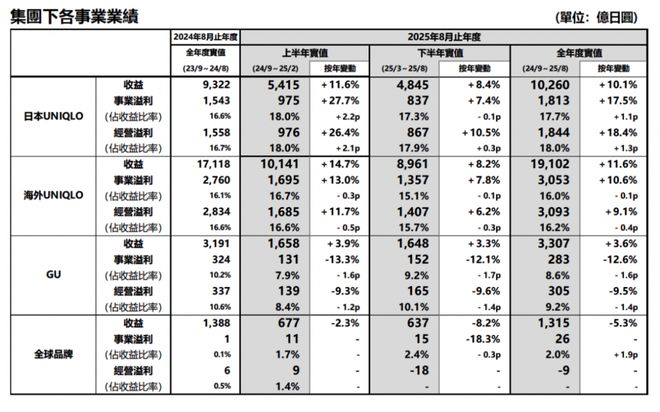
Core Insights - Uniqlo, once known for its high cost-performance ratio, is facing challenges in the Chinese market due to intensified competition and changing consumer attitudes [1][6][7] Financial Performance - Fast Retailing Group reported a record revenue of 3.4 trillion yen for the fiscal year ending August 31, 2025, a 9.6% increase year-on-year, with operating profit at 551.1 billion yen, up 13.6% [2] - Uniqlo remains the core brand, contributing approximately 2.9 trillion yen, or 86% of total revenue, but reliance on a single brand poses risks [2][3] - Revenue in Greater China fell to 650.2 billion yen, a 4% decline, marking the first time both revenue and profit have decreased in this market [3][6] Regional Performance - Japan's Uniqlo revenue surpassed 1 trillion yen for the first time, growing 10.1%, while international business revenue reached 1.91 trillion yen, up 11.6%, accounting for 56% of total revenue [2][3] - Despite the decline in Greater China, it remains the largest single market outside Japan, contributing about 19% to total revenue, outperforming North America (8%) and Europe (10.9%) [3][5] Market Challenges - The rise of domestic brands and "affordable alternatives" has eroded Uniqlo's price advantage, leading to discussions among consumers about whether Uniqlo has become too expensive [6][7] - Uniqlo faces dual challenges of product strategy and brand perception, with recent policy changes and design criticisms affecting its appeal among younger consumers [6][7] - The company is adjusting its store layout, reducing the number of stores in lower-tier cities while focusing on flagship stores in first-tier cities, indicating a shift from expansion to efficiency optimization [8][9] Future Outlook - Fast Retailing Group plans to drive growth in the Chinese market through business restructuring and digital transformation, projecting a revenue increase to 3.75 trillion yen for the fiscal year 2026, a 10.3% year-on-year growth [5]

优衣库中国市场遇冷:收入利润双降,年轻人“不买账”
Xin Jing Bao· 2025-10-22 07:33
Core Viewpoint - Uniqlo, once celebrated for its high cost-performance ratio, is facing challenges in the Chinese market due to intensified competition and changing consumer attitudes, leading to a decline in both revenue and profit in its largest overseas market, Greater China [2][4][7]. Financial Performance - Fast Retailing Group reported a record revenue of 3.4 trillion yen for the fiscal year ending August 31, 2025, a 9.6% increase year-on-year, with operating profit at 551.1 billion yen, up 13.6% [3]. - Uniqlo remains the core brand, contributing approximately 2.9 trillion yen, or 86% of total revenue, but reliance on a single brand poses risks [3][4]. - Greater China revenue fell to 650.2 billion yen, a 4% decline, with operating profit down 12.5% to 89.9 billion yen, marking the first instance of simultaneous revenue and profit decline in recent years [4][6]. Regional Performance - Japan's Uniqlo revenue surpassed 1 trillion yen for the first time, growing 10.1%, while international business revenue reached 1.91 trillion yen, up 11.6%, accounting for 56% of total revenue [3][4]. - In contrast, Greater China's revenue accounted for about 19% of total revenue, still higher than North America's 8% and Europe's 10.9% [4][6]. Market Dynamics - The rise of domestic brands and "alternative" products has eroded Uniqlo's price advantage, with consumers increasingly turning to local brands and cheaper alternatives [7][8]. - Uniqlo's pricing strategy is under scrutiny, as consumers express concerns over perceived value, with many opting for alternatives that offer similar styles at lower prices [7][8]. - The company is adjusting its store strategy, reducing the number of outlets in lower-tier cities while focusing on flagship stores in first-tier cities, indicating a shift from expansion to efficiency optimization [8][9]. Future Outlook - Fast Retailing plans to drive growth in the Chinese market through business restructuring and digital transformation, projecting a revenue increase to 3.75 trillion yen for the fiscal year 2026, a 10.3% year-on-year growth [6].
研究 | 张强:你买的快时尚,正在悄悄暴露你的自控力?
Sou Hu Cai Jing· 2025-10-15 09:54
Core Insights - Fast fashion consumption may negatively impact perceptions of self-control, affecting personal finances and professional image [1][6] - The global fast fashion market is projected to grow from approximately $151 billion in 2024 to $291 billion by 2032, with brands like Zara, H&M, and Shein leveraging social media for market penetration [1] Research Background - The fast fashion business model is characterized by its trendiness, disposability, and unsustainability, yet its psychological impact on consumers, particularly how they are perceived by others, has not been thoroughly explored [4] - The study aims to investigate whether fast fashion consumption signals lower self-control to external observers [4] Research Findings - The study identifies six core hypotheses, concluding that fast fashion consumption leads to negative perceptions of self-control due to a "short-term focus" mindset [5][6] - Heavy fast fashion consumers are perceived to have lower self-control compared to light consumers, but cues indicating long-term orientation can mitigate this negative effect [5][6] Practical Implications - The research highlights the social cognitive risks associated with consumer choices, urging consumers to consider the implications of their spending habits [7] - It provides critical insights for marketers, especially for fast fashion brands, regarding brand image management and crisis communication strategies [7]

遭遇“身份危机”,从瑜伽裤到全品类的 lululemon 急需一个新人设
3 6 Ke· 2025-10-13 23:18
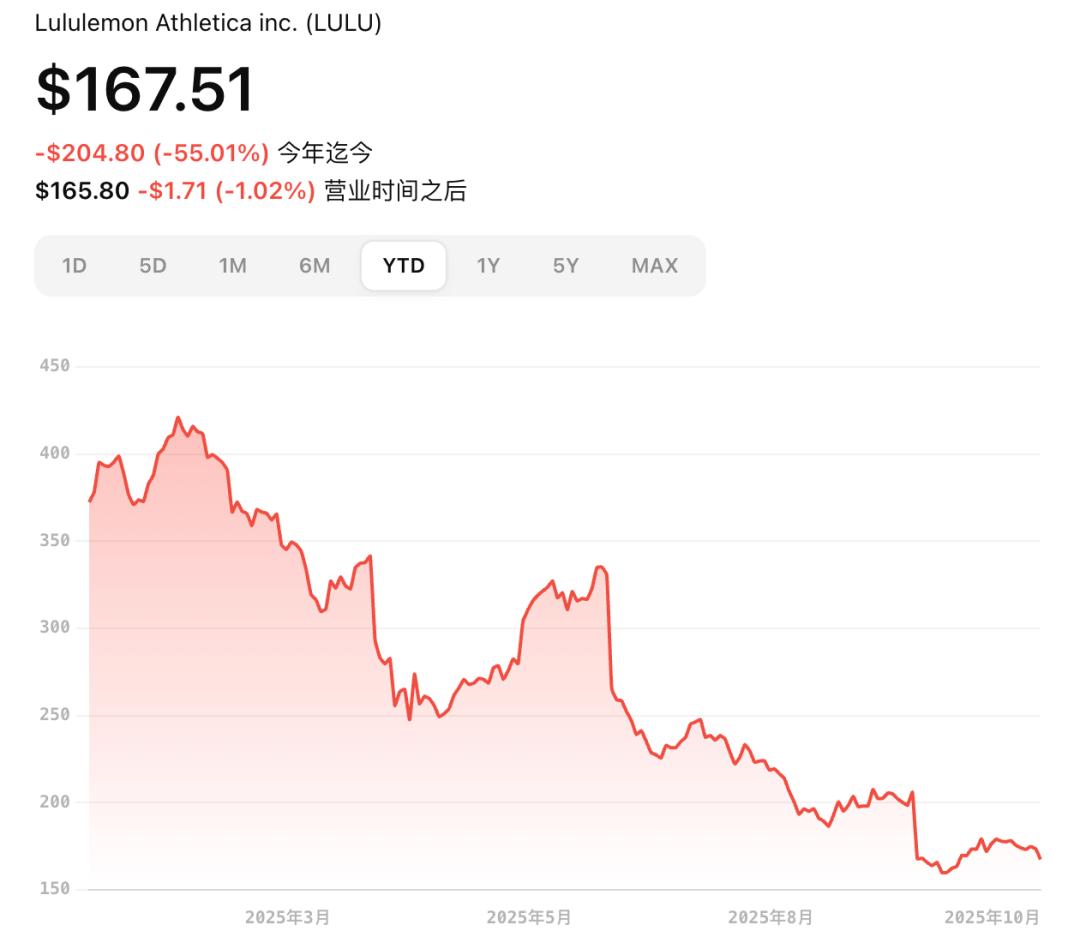
Core Insights - Lululemon is facing significant challenges in maintaining its brand identity and market position, with loyal customers expressing confusion over its recent product offerings and direction [1][28][50] - The company's stock has dropped over 55% this year, reaching a six-year low, indicating market concerns about its strategic shifts and product innovation [1][4] - Founder Chip Wilson has publicly criticized the company's current management and direction, calling for a "soul revival" to restore its innovative and cultural roots [4][19][26] Company Strategy and Market Position - Lululemon's recent strategy has focused on expanding into men's apparel and footwear, but these new categories have not produced standout products, leading to a dilution of its core yoga business [1][42][44] - The brand's attempt to appeal to a broader market has resulted in a loss of its unique identity, with some consumers comparing its offerings to fast fashion brands like H&M and Zara [1][45][49] - The company's direct-to-consumer (DTC) model, which once fueled its growth, is now seen as a double-edged sword, as it struggles to maintain the personal touch that characterized its early success [34][41][51] Leadership and Governance Issues - Wilson's departure in 2015 has led to a board that prioritizes short-term financial performance over long-term brand vision, resulting in a loss of creative talent and institutional knowledge [8][12][24] - The current leadership has been criticized for lacking a clear product-driven strategy, focusing instead on operational and financial metrics that do not resonate with the brand's core audience [14][18][26] - The erosion of Lululemon's brand culture and identity is attributed to a governance structure that fails to protect its long-term vision, leading to disengagement from its original customer base [16][25][50] Consumer Perception and Brand Identity - Lululemon's shift towards mainstream appeal has alienated some of its core customers, who feel the brand has lost its exclusivity and innovative edge [15][28][50] - The introduction of celebrity endorsements and mass marketing strategies has sparked debate over whether the brand is compromising its original values and identity [33][50] - The brand's pricing strategy is under scrutiny, as it remains significantly higher than competitors like Nike and Adidas, raising questions about its value proposition in a more price-sensitive market [49][50]

优衣库在华跑偏
Bei Jing Shang Bao· 2025-10-12 15:27
Core Viewpoint - Fast Retailing, the parent company of Uniqlo, reported strong performance for the fiscal year 2025, with a revenue increase of 10% and an operating profit increase of 13%, driven by robust growth in overseas markets, particularly Uniqlo's international business [1][2][3] Financial Performance - For fiscal year 2025, Fast Retailing's revenue reached approximately 3.4 trillion yen, a year-on-year increase of nearly 10%, while operating profit was 564.27 billion yen, up about 13%, marking a historical high for four consecutive years [2] - In the Japanese domestic market, revenue was 1.026 trillion yen, a growth of 10.1%, while overseas revenue grew by 11.6% to 1.91 trillion yen, with North America and Europe showing particularly strong performance, with North America seeing revenue growth exceeding 24% [2] - The company anticipates a net profit of 435 billion yen for fiscal year 2026, surpassing market expectations, and expects net sales of 3.75 trillion yen, also above market forecasts [3] Market Challenges - Despite overall strong performance, the Greater China region experienced a decline, with revenue and profit for Uniqlo and GU decreasing by 4% and core profit down by 10% in fiscal year 2025 [5] - The slowdown in the Greater China market began in fiscal year 2024, with sales revenue of 677.063 billion yen, a growth of only 9.2%, compared to double-digit growth in the previous fiscal year [5] - Analysts attribute the decline in China to increased competition and the rise of local brands offering better price-performance ratios, making it difficult for Uniqlo to maintain its competitive edge [6][7] Strategic Adjustments - Fast Retailing plans to implement refined operational strategies to restore growth in the Greater China market, focusing on product innovation, store upgrades, and marketing optimization [8] - The company aims to enhance its brand positioning and market segmentation to regain momentum, with a strategy of "brand premiumization + high cost-performance" being suggested as the best approach for the Chinese market [8][9] - Uniqlo is adopting a more localized operational strategy, incorporating consumer preferences into product development and optimizing store efficiency by renovating or closing underperforming locations [9]
中国品牌国外开店遭疯狂抵制!揭露企业出海最悲哀的一面,真相扎心了...
Xin Lang Cai Jing· 2025-10-05 19:18
Core Insights - Shein is a disruptive force in the global fashion industry, transitioning from a local brand in Nanjing to a major player in the global market, particularly targeting the youth demographic [1][2] - The brand's entry into the French market has faced significant cultural and commercial resistance, highlighting the clash between its business model and traditional French values [1][10] Group 1: Business Model and Success - Shein has evolved "fast fashion" into "ultra-fast fashion," utilizing a closed-loop system that leverages data analytics to track fashion trends and consumer preferences in real-time [2][4] - The company benefits from a highly efficient supply chain in the Greater Bay Area of China, allowing for rapid production cycles, with new designs going from concept to sale in just a few days [4][6] - Shein's revenue is projected to exceed $38 billion in 2024, marking its growth from a little-known cross-border e-commerce platform to a significant player with over 16,000 employees and sales in more than 150 countries [6][7] Group 2: Market Entry and Challenges - Shein plans to establish a permanent physical presence in France, starting in Paris, using a "store-in-store" model in collaboration with local retail groups to enhance brand acceptance [8][10] - The partnership with the Galeries Lafayette Group has sparked controversy, as the latter expressed strong dissatisfaction with Shein's business practices, indicating a misalignment with its high-end brand values [10][12] - The resistance from traditional French retailers reflects a broader societal pushback against Shein's business model, which is seen as undermining the essence of French fashion [13][19] Group 3: Cultural and Ethical Implications - The French fashion elite view Shein's model as a threat to the traditional values of quality and timelessness, associating it with disposable consumerism [13][15] - Legislative measures in France differentiate between "classic" fast fashion and "ultra-fast fashion," imposing stricter regulations on the latter, which includes Shein [15][19] - The backlash against Shein is not solely based on cultural concerns but is also driven by economic interests, as its low pricing threatens the survival of local brands and retailers [19][21]