通威股份

Search documents
A股“绩差生”扎堆交卷:超500家公司年报预亏,53家亏损超10亿元
Di Yi Cai Jing· 2026-01-27 12:43
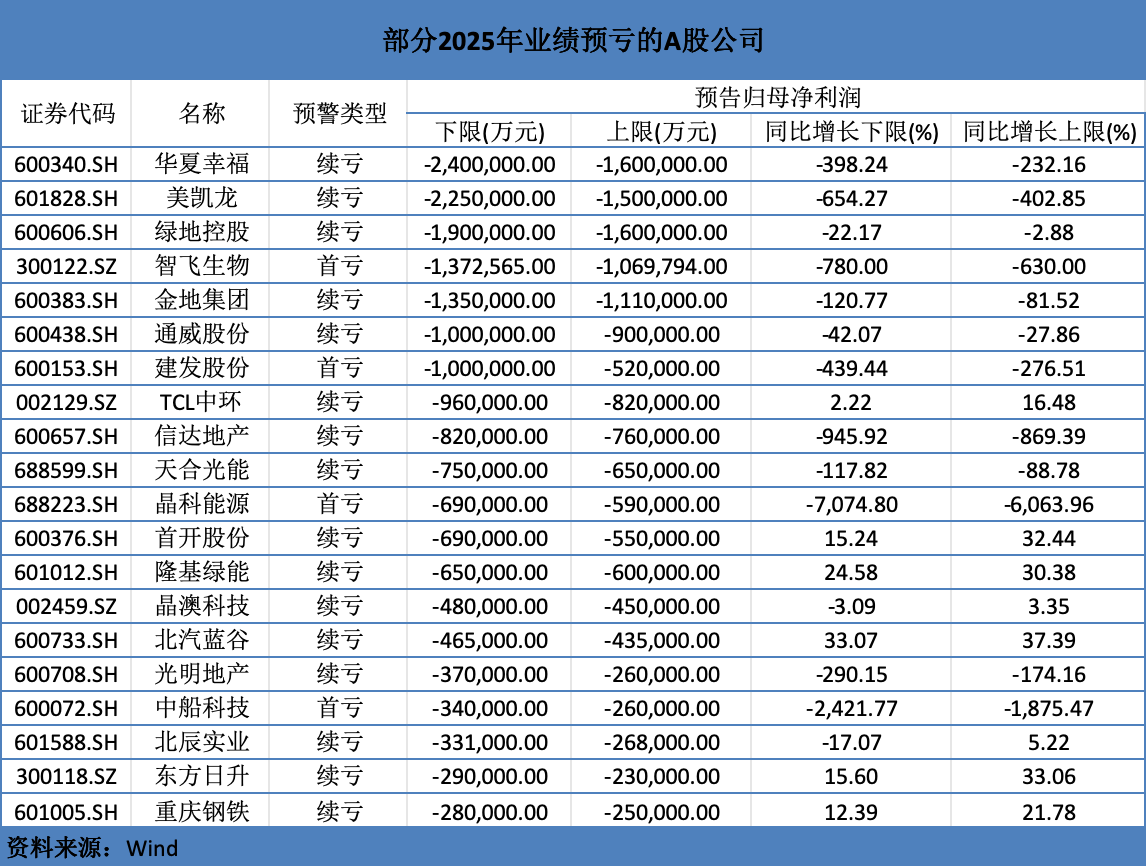
Group 1 - A significant number of loss-making companies are disclosing their performance forecasts during the annual report season, contrasting with previous years where profitable companies led the announcements [1][2] - As of January 26, 1165 A-share companies have disclosed their performance forecasts, with approximately 60% (709 companies) reporting a decline in performance, and over 500 companies expected to incur losses [1][3] - The real estate and construction sectors are particularly affected, with companies like Huaxia Happiness expected to report losses between 16 billion to 24 billion yuan, making it the "loss king" [1][5] Group 2 - The trend of loss-making companies proactively disclosing their forecasts reflects a transformation in the A-share market, indicating a more rational market behavior [2][15] - The majority of companies facing performance declines are concentrated in the real estate, construction, and pharmaceutical sectors, with 53 companies expected to report losses exceeding 1 billion yuan [4][6] - The solar energy sector is also experiencing significant losses, with leading companies like Tongwei Co. and Longi Green Energy projecting substantial net profit losses [7][18] Group 3 - Following the disclosure of poor performance forecasts, stock prices of several companies have dropped significantly, with Yanghe Co. and Zhichun Technology experiencing notable declines [10][11] - The termination of acquisitions and restructuring efforts has further compounded the challenges for some companies, leading to sharp declines in their stock prices [14] - Investors are urged to adjust their stock selection logic, focusing on the quality of earnings and cash flow, as well as aligning investments with high-growth sectors [16][17]





鑫宏业:公司光伏线缆主要服务于地面光伏电站、通威等行业头部企业
Zheng Quan Ri Bao Zhi Sheng· 2026-01-27 11:49
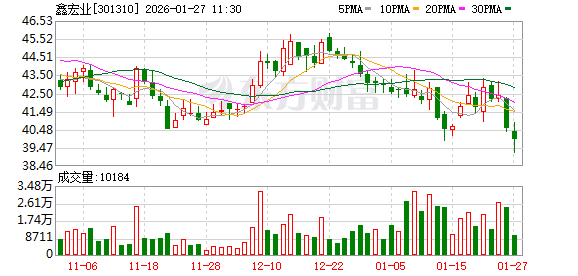
(编辑 楚丽君) 证券日报网讯 1月27日,鑫宏业在互动平台回答投资者提问时表示,公司光伏线缆主要服务于地面光伏 电站、光储一体化等场景,核心客户包括隆基、天合、通威等行业头部企业。公司高度关注太空光伏等 新兴赛道发展趋势,会持续根据科技发展趋势和市场需要适时开展技术预研与市场跟踪,稳步推进相关 业务布局。若有重大进展,将严格按照监管要求履行信息披露义务。 ...
多数光伏企业2025年延续亏损状态,部分企业锚定2026年业绩扭亏
Di Yi Cai Jing· 2026-01-27 10:56
Core Viewpoint - The keyword "pre-loss" has become prominent in the 2025 performance forecasts of various photovoltaic companies, indicating that most firms continue to face losses due to operational challenges and supply-demand imbalances in the industry [1] Group 1: Financial Performance - Leading photovoltaic companies are forecasting significant losses for 2025, with Tongwei Co. expecting a loss of 9 to 10 billion yuan, LONGi Green Energy forecasting a loss of 6 to 6.5 billion yuan, and JinkoSolar projecting a loss of 5.9 to 6.9 billion yuan [1] - The overall photovoltaic industry has experienced nine consecutive quarters of losses since Q4 2023, driven by a decline in component prices due to intense competition and insufficient end-user demand [1][2] Group 2: Industry Challenges - The photovoltaic industry is facing a supply surplus, with core raw material prices rising while product prices continue to decline, leading to significant operational pressure on companies [2] - The ongoing low operating rates and the deepening market reforms in the domestic electricity sector, along with increasing trade barriers abroad, have created a complex and challenging operating environment for photovoltaic companies [2] Group 3: Recovery Efforts - Some companies are beginning to emerge from the loss cycle, with LONGi Green Energy expecting to reduce losses by up to 30.38% and Aiko Solar by up to 77.44% compared to 2024 [2] - The China Photovoltaic Industry Association reported a 16.9% year-on-year decline in revenue for the main industry chain in the first three quarters of 2025, although gross margins improved to 3.64% [2] Group 4: Future Goals - Companies like Trina Solar have set profit targets for 2026, aiming for a net profit of no less than 200 million yuan, with increasing targets for subsequent years [3] - LONGi Green Energy's employee stock ownership plan also includes targets for positive net profit in 2026, with specific profit goals for 2027 and 2028 [3] Group 5: Price Adjustments - Trina Solar has raised its component prices three times this month, with prices now ranging from 0.88 to 0.92 yuan per watt, reflecting a response to industry self-discipline [4] - Major component manufacturers are increasing prices by 0.02 to 0.04 yuan per watt, and there is a growing willingness among intermediate suppliers to support price increases [4]





解读2025年全球裁员潮:AI还不是关键因素
经济观察报· 2026-01-27 10:42
Core Viewpoint - AI is transforming the way companies employ labor, but it is not necessarily the main driver behind the current wave of layoffs. Instead, AI serves as a narrative framework for structural adjustments within companies while also being a significant force in productivity transformation [1][6]. Group 1: Layoff Trends - A massive layoff wave is expected globally by 2025, affecting various sectors from tech giants to traditional manufacturing and finance. The true drivers behind these layoffs include economic slowdown and strategic restructuring rather than solely AI [2][4]. - In the U.S., approximately 153,074 layoffs were announced in October 2025, marking one of the worst months in over 20 years. By the end of November 2025, total layoffs reached around 1.17 million, the highest since the COVID-19 pandemic [2]. - AI-related layoffs accounted for only about 4% to 5% of total layoffs in the U.S., indicating that economic pressures and strategic realignments are more significant factors [3][6]. Group 2: Regional Differences - In Europe, layoffs are primarily attributed to cost control, profit pressure, and business restructuring, particularly in the automotive and manufacturing sectors [4]. - In China, layoffs are closely linked to macroeconomic adjustments and structural changes, with youth unemployment rates remaining high. The layoffs are driven by economic slowdown and industry cycles rather than a clear AI factor [5]. Group 3: AI's Role in Employment - AI is reshaping job structures, particularly affecting roles in customer service and support. However, the broader causes of layoffs remain economic conditions and strategic business decisions [6][10]. - AI is expected to create new talent demands, with job postings related to AI increasing by approximately 78% in 2025, while the talent pool only grew by 24% [11]. Group 4: Skills and Training - The future workforce will require a combination of skills, including the ability to learn continuously, understand business deeply, and collaborate effectively. These meta-skills will be crucial in the AI era [14][15]. - Companies that invest in employee reskilling and development tend to perform better in terms of innovation and long-term competitiveness compared to those that focus solely on layoffs [19][20]. Group 5: Organizational Change - Successful companies are not just reducing headcount but are also investing in employee skill upgrades and organizational restructuring to adapt to technological changes [20][21]. - The focus should be on optimizing processes and reallocating talent to higher-value roles rather than merely cutting jobs, as this approach supports long-term growth and productivity [21].

鑫宏业:在光伏线缆领域,公司紧跟光伏行业发展始终保持光伏线缆产品的持续创新与迭代升级
Zheng Quan Ri Bao· 2026-01-27 10:16
证券日报网讯 1月27日,鑫宏业在互动平台回答投资者提问时表示,公司自2004年着手研发光伏线缆产 品,在光伏线缆领域,公司紧跟光伏行业发展始终保持光伏线缆产品的持续创新与迭代升级。持续创新 与迭代升级使得公司光伏线缆产品持续保持市场领先地位,与隆基股份、天合、通威等知名光伏组件生 产商保持良好的合作关系,具体可查阅公司定期报告获取。 (文章来源:证券日报) ...
鑫宏业:公司光伏线缆主要服务于地面光伏电站、光储一体化等场景 核心客户包括隆基、天合、通威等头部企业
Mei Ri Jing Ji Xin Wen· 2026-01-27 04:48
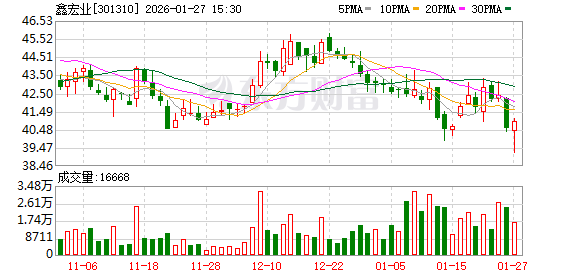
鑫宏业(301310.SZ)1月27日在投资者互动平台表示,公司光伏线缆主要服务于地面光伏电站、光储一 体化等场景,核心客户包括隆基、天合、通威等行业头部企业。公司高度关注太空光伏等新兴赛道发展 趋势,会持续根据科技发展趋势和市场需要适时开展技术预研与市场跟踪,稳步推进相关业务布局。若 有重大进展,将严格按照监管要求履行信息披露义务。 (文章来源:每日经济新闻) 每经AI快讯,有投资者在投资者互动平台提问:据查阅,晶科能源、阿特斯这些头部光伏组件厂商都 是公司客户,都开始进军太空光伏领域,请问公司的光伏线缆是否同步跻身太空光伏领域? ...
壹快评丨光伏反内卷攻坚,政企同心方得始终
Di Yi Cai Jing· 2026-01-27 04:26
Core Viewpoint - The photovoltaic industry is undergoing a significant transformation towards high-quality development, driven by both internal corporate self-discipline and external government support, as evidenced by recent regulatory measures and policy adjustments aimed at combating price competition and fostering innovation [1][4][7]. Industry Performance - The photovoltaic sector is currently facing severe financial challenges, with major companies like Tongwei Co. and LONGi Green Energy projected to incur substantial losses in 2025, highlighting the industry's struggle with low-price competition and rising material costs [1][2]. - The average gross margin for the industry has plummeted to just 3.64%, leading many companies into a cycle of "production equals loss" [2]. Competitive Landscape - The industry is experiencing an oversupply of homogeneous production capacity, with silicon material capacity exceeding global demand by more than double, resulting in a fierce price war among companies [2][3]. - Companies that previously relied on scale advantages are now also facing revenue declines and negative profits, indicating a widespread crisis across the sector [2]. Material Costs and Innovation - The price of silver, a critical component in photovoltaic cells, has surged by 231% in 2025, pushing companies to adopt cost-reduction technologies such as "less silver" or "silver-free" approaches [3]. - The focus on price competition has led some companies to neglect technological innovation and quality improvement, which are essential for long-term survival [3]. Government Role and Policy Recommendations - Government intervention is crucial for the success of the anti-involution measures, requiring a unified and clear policy direction to stabilize market expectations and foster industry consensus [4][6]. - There is a need for coordinated regulatory efforts across various government departments to effectively combat unfair competition and ensure sustainable industry practices [5][6]. Future Outlook - The current challenges in the photovoltaic industry present an opportunity for transformation, shifting from a focus on quantity to value creation, which is expected to be a long-term process [7]. - Some companies are beginning to reduce losses, and there is optimism that the industry may see a profitability turning point in early 2026 [7].

股市面面观丨1123家上市公司发布2025年业绩预告 哪些赛道公司“最赚钱”?
Zhong Guo Jin Rong Xin Xi Wang· 2026-01-27 03:49
Group 1 - A total of 1123 A-share listed companies have released their 2025 performance forecasts, with 602 companies expecting profits and 521 companies anticipating losses [1][2] - Among the companies predicting profits, Zijin Mining leads with a forecasted net profit of 52 billion yuan, followed by Luoyang Molybdenum with 20.8 billion yuan [2][3] - The automotive sector, represented by SAIC Motor, is expected to see a significant profit increase of 438%-558%, the highest growth rate among the top ten profit forecast companies [2][3] Group 2 - The real estate sector dominates the list of companies forecasting significant losses, with China Fortune Land Development expected to lose between 16 billion and 24 billion yuan [3][4] - Other sectors facing losses include the photovoltaic industry, with Tongwei Co., TCL Zhonghuan, and Trina Solar among the top ten companies predicting losses [4][5] - JinkoSolar is projected to experience the largest decline in net profit, with a decrease of 6063.96%-7074.8% due to price fluctuations in the global photovoltaic industry [9][10] Group 3 - Companies like *ST Weir and Tonghua Dongbao are expected to see substantial profit growth, with *ST Weir forecasting a net profit increase of 8303.8%-9599.14% [6][8] - Approximately 260 companies are expected to have a net profit growth rate exceeding 100%, accounting for about one-fifth of the companies that have released forecasts [7][8] - The performance of companies in the photovoltaic sector is under pressure due to market conditions, impacting their profitability despite efforts to innovate and upgrade technology [9][10]






今日火热开售!5大投资机遇共叠,千亿指数大厂低位入局光伏
Sou Hu Cai Jing· 2026-01-27 02:31
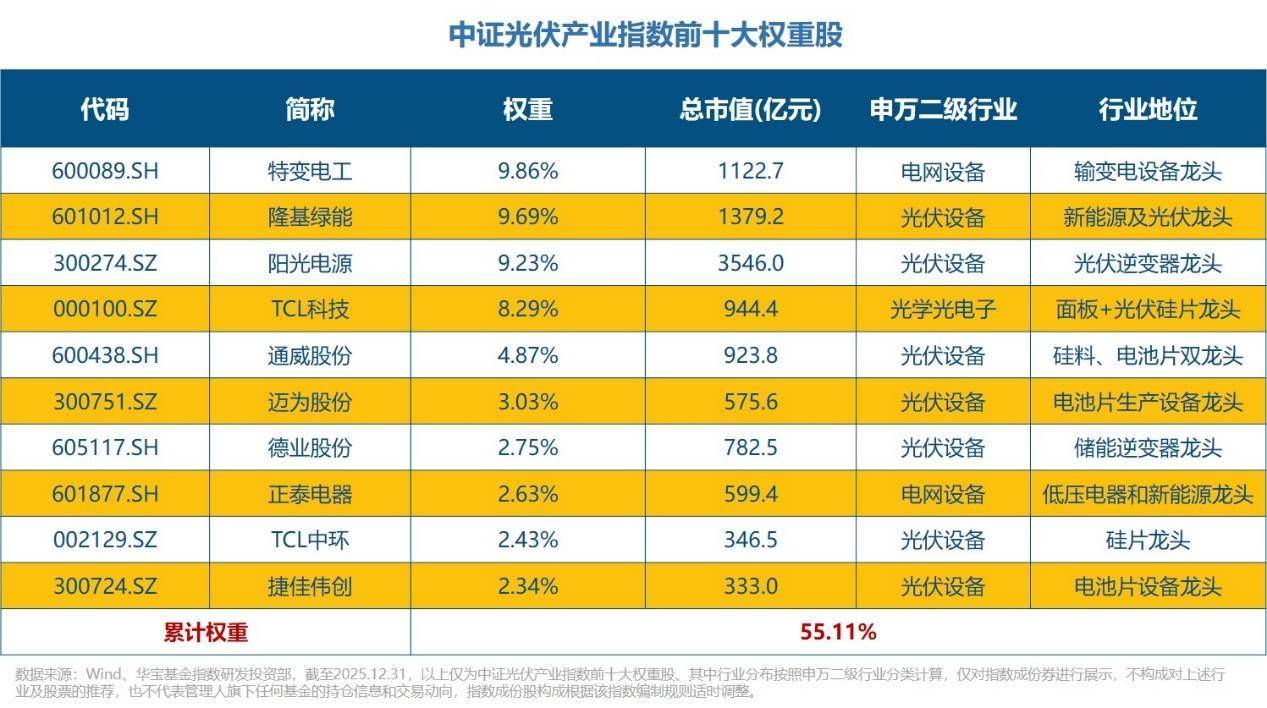
Core Insights - The current wave of investment in the photovoltaic (PV) sector is unexpectedly driven by commercial aerospace, with projections indicating a demand space of around 100 billion for low Earth orbit satellites and a potential market of 1 trillion to 10 trillion for space computing, highlighting vast opportunities [1] - The PV industry is currently facing five major investment opportunities: anti-involution, technological iteration, overseas demand, energy storage needs, and space photovoltaics, making it an attractive sector for investors [1] - After approximately four years of adjustment, the allocation value of the PV sector has become prominent, prompting fund companies to increase their investments in this area [1] Investment Opportunities - The Chinese PV industry chain is the most competitive globally, with numerous investment opportunities across various segments, including PV battery components, inverters, and silicon materials [2] - The newly launched Huabao CSI Photovoltaic Industry Index Fund (code: 026754) tracks the CSI Photovoltaic Industry Theme Index, which encompasses a wide range of segments within the PV industry, providing broad exposure to the entire value chain [2] - The CSI Photovoltaic Industry Index includes 50 constituent stocks, with the top five accounting for 41.9% and the top ten for 55.11%, creating a balanced structure of leading and supporting companies [2][3] Performance Metrics - From the index's inception on April 22, 2019, to December 31, 2025, the CSI Photovoltaic Industry Index has achieved a cumulative return of 47.48% and an annualized return of 6.67%, outperforming the CSI 300 Index and other related indices [5][7] - The index has demonstrated a clear cyclical characteristic, with a current price-to-book (PB) ratio of 2.52, indicating low valuation and high elasticity, thus highlighting its allocation value [8][11] Future Outlook - The fund manager of the Huabao CSI Photovoltaic Industry Index Fund anticipates focusing on anti-involution and new growth opportunities in the first half of 2026, while emphasizing the importance of industry profit recovery in the second half [9] - Key factors for 2026 include the clear direction of anti-involution, rising industry chain prices, and the alignment of storage systems with PV component customer bases, which may lead to significant growth opportunities [9]
光伏概念股走低,光伏相关ETF跌约3%
Sou Hu Cai Jing· 2026-01-27 02:30
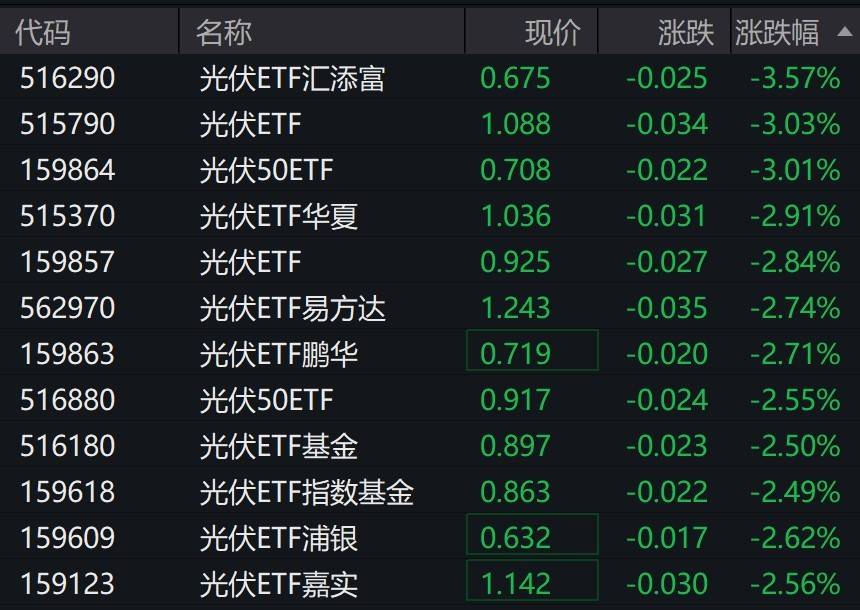
受盘面影响,光伏相关ETF跌约3%。 光伏概念股走低,特变电工跌超5%,隆基绿能、通威股份、正泰电器跌超3%。 | 代码 | 名称 | 现价 | 涨跌 | 涨跌幅 ▲ | | --- | --- | --- | --- | --- | | 516290 | 光伏ETF汇添富 | 0.675 | -0.025 | -3.57% | | 515790 | 光伏ETF | 1.088 | -0.034 | -3.03% | | 159864 | 光伏50ETF | 0.708 | -0.022 | -3.01% | | 515370 | 光伏ETF华夏 | 1.036 | -0.031 | -2.91% | | 159857 | 光伏ETF | 0.925 | -0.027 | -2.84% | | 562970 | 光伏ETF易方达 | 1.243 | -0.035 | -2.74% | | 159863 | 光伏ETF鹏华 | 0.719 | -0.020 | -2.71% | | 516880 | 光伏50ETF | 0.917 | -0.024 | -2.55% | | 516180 | 光伏ETF基金 | ...