京东健康

Search documents
美银:AI仍为中国互联网最大增长亮点 腾讯控股为行业首选
Zhi Tong Cai Jing· 2026-01-13 06:16
Core Viewpoint - The report from Bank of America Securities indicates that stock performance will remain differentiated this year, with the artificial intelligence sector expected to outperform the market again, while virtual consumption in entertainment and travel will continue to outperform physical e-commerce [1] Group 1: Market Trends - The macroeconomic environment is weak, putting pressure on consumer spending (e-commerce) and corporate spending (advertising), which remains a drag on the industry [1] - Chinese internet stocks are seen as having attractive valuations, providing a buffer against downside risks, with a forecasted price-to-earnings ratio of 18 times, lower than the ten-year average of 23 times, the Nasdaq 100's 26 times, and the "Big Seven" in the US stock market at 31 times [1] Group 2: Stock Preferences - The company prefers stocks in artificial intelligence and online gaming over e-commerce, with Tencent Holdings (00700) being the top pick due to its growth driven by AI applications, stable market competition, excellent shareholder returns, and attractive valuation [1] - Alibaba (09988) is identified as the best investment target in China's artificial intelligence sector and the top choice among Chinese e-commerce stocks [1] - Baidu-SW (09888) is considered attractive in the AI field, with value release on the right track [1] - In the digital entertainment sector, the company favors online gaming, recommending Bilibili-W (09626) and Tencent Music-SW (01698) [1] - Within specific sectors, JD Health (06618) and Trip.com (09961) are viewed positively [1]



美银:AI仍为中国互联网最大增长亮点 腾讯控股(00700)为行业首选
智通财经网· 2026-01-13 06:06
Core Viewpoint - The report from Bank of America Securities indicates that stock performance will remain differentiated this year, with the artificial intelligence sector expected to outperform the market again, while virtual consumption in entertainment and tourism will continue to excel over physical e-commerce [1] Group 1: Market Trends - The weak macro environment is putting pressure on consumer spending (e-commerce) and corporate spending (advertising), which remains a drag on the industry [1] - Chinese internet stocks are seen as having attractive valuations, providing a buffer against downside risks, with a forecasted price-to-earnings ratio of 18 times, lower than the ten-year average of 23 times, the Nasdaq 100's 26 times, and the "Big Seven" of US stocks at 31 times [1] Group 2: Stock Selection - The company prefers artificial intelligence and online gaming over e-commerce, with Tencent Holdings (00700) being the top pick due to its growth driven by AI applications, stable market competition, excellent shareholder returns, and attractive valuation [1] - Alibaba (09988) is identified as the best investment target in China's artificial intelligence sector and the top choice among Chinese e-commerce stocks [1] - Baidu-SW (09888) is considered attractive in the AI field, with value release on the right track [1] - In the digital entertainment sector, the company favors online gaming, recommending Bilibili-W (09626) and Tencent Music-SW (01698) [1] - Within specific sectors, JD Health (06618) and Trip.com (09961) are viewed positively [1]
CXO、消费医疗大崩盘:这三年医疗行业发生了什么?
Sou Hu Cai Jing· 2026-01-13 03:48
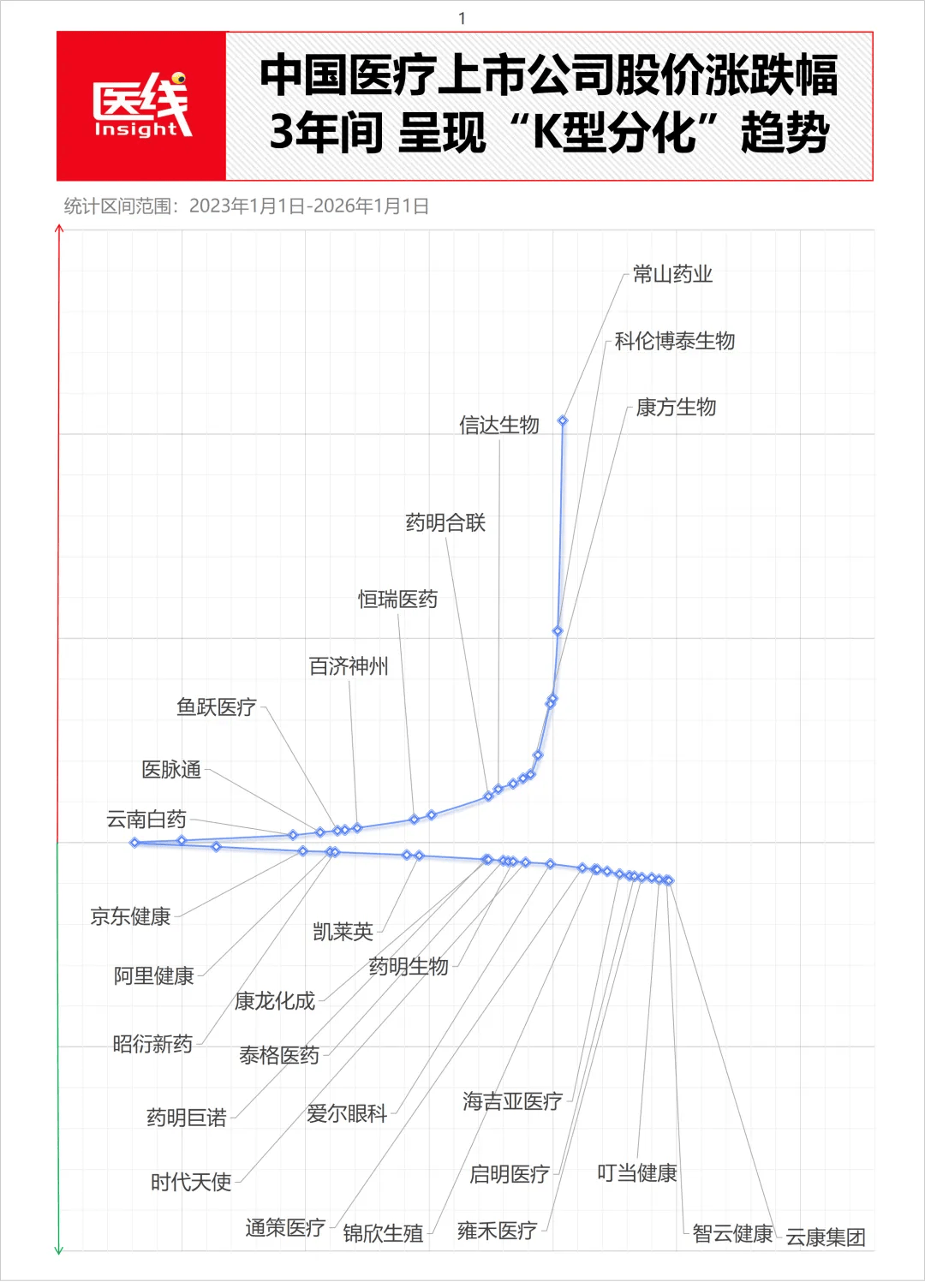
Core Insights - The Chinese healthcare industry has undergone a significant transformation from 2020 to 2025, transitioning from a "golden era" of investment to a "bubble-clearing period" characterized by a K-shaped divergence in market performance [1][2][4]. Group 1: K-shaped Downward Trends - The collapse of previously successful business models, particularly in CXO, consumer healthcare, and internet healthcare, has led to substantial market value losses, with some companies experiencing declines of over 90% [4][7]. - The downturn is attributed to macroeconomic factors such as U.S. interest rate hikes and geopolitical tensions, as well as microeconomic issues like supply-demand imbalances and the disappearance of growth dividends [8][10]. - The CXO sector, once seen as a perpetual growth engine, has faced a 46.68% decline for WuXi Biologics and 44.47% for Tigermed, revealing the fragility of its business model reliant on continuous global financing [12][10]. - Consumer healthcare has suffered a "Davis double whammy," with companies like Yonghe Medical and Aier Eye Hospital seeing declines of 86.19% and 52.69%, respectively, as consumer spending shifts away from discretionary healthcare services [14][15]. - Internet healthcare companies, including Zhiyun Health and Dingdang Health, have also faced severe declines, with drops of 92.44% and 90.67%, as the market realizes that their revenue largely comes from online drug sales rather than innovative healthcare solutions [19][21]. Group 2: K-shaped Upward Trends - In contrast, companies with strong global rights and hard-core technology have thrived, with Keren Biotechnology and Kangfang Biopharma seeing increases of 518.33% and 166.72%, respectively, marking a shift towards biopharma and global market engagement [29][31]. - The rise of these companies signifies a new era where capital is attracted to firms that can demonstrate robust clinical data and global market potential, moving away from mere concepts [30][31]. - Even within struggling sectors, some companies like WuXi AppTec and Yuyue Medical have shown resilience, with increases of 113.36% and 28.75%, respectively, by focusing on high-tech, high-barrier services [34][35]. Group 3: Challenges Ahead - Despite the emergence of new leaders, significant challenges remain, including the risks associated with licensing agreements that may compromise long-term profitability [36][37]. - The ADC sector is experiencing a rush similar to the past PD-1 craze, raising concerns about market saturation and price competition, which could undermine future profitability [39][40]. - The ongoing "ice age" in the primary market poses a threat to innovation, as funding for early-stage companies has become increasingly scarce, potentially leading to a decline in new drug approvals in the coming years [42][43].

AI医疗成牛市反弹“急先锋”,港股通医疗ETF(520510)强势领涨!
Sou Hu Cai Jing· 2026-01-13 02:52
Group 1 - The Hong Kong stock market has shown strong performance post-New Year, with the healthcare and pharmaceutical sectors exhibiting notable elasticity, as evidenced by the Hong Kong Stock Connect Medical ETF (520510) surging over 4% and achieving a year-to-date increase of over 20% [1] - The Hang Seng Medical ETF (159892) also experienced a year-to-date rise that once exceeded 17%, ranking among the top performers in the overall market ETFs [1] - Ark Health saw a significant increase of over 30% during trading, highlighting the robust interest in the healthcare sector [1] Group 2 - Zheshang Securities believes that the integration of AI and healthcare is flourishing, with policy support and market demand driving the industry into a rapid phase of commercialization [1] - In terms of AI healthcare applications, industry policies are clear and progress is swift, with five ministries issuing relevant implementation opinions by 2025, the launch of ChatGPT Health in early 2026, and Ant Group's Aifuku seeing monthly active users double to 30 million, all contributing to heightened market enthusiasm [1] - The Hong Kong Stock Connect Medical ETF (520510) tracks the Hong Kong Stock Connect Medical Theme Index, covering AI healthcare stocks such as Alibaba Health, JD Health, and Ping An Good Doctor, and is expected to benefit from advancements in brain-computer interfaces, innovative drug exports, and the AI healthcare technology revolution [1]


卫星落,医疗起!港股通医疗ETF华宝(159137)大涨逾8%
Sou Hu Cai Jing· 2026-01-13 02:29
Core Viewpoint - The commercial aerospace sector, represented by low-orbit satellites, experienced a significant pullback, while the Hong Kong medical sector showed strong gains, indicating a potential shift in market momentum [1] Group 1: Market Performance - The Hong Kong medical ETF, Huabao (159137), surged over 5%, leading the market in real-time ETF gains, with an intraday increase of over 8% [1] - Since 2026, the Hong Kong medical theme index has risen over 20%, highlighting the recent popularity of "Hong Kong medical" stocks [1] - In 2025, the annual increase of the Hong Kong medical theme index reached 48.20% [1] Group 2: Historical Context - The Hong Kong medical sector has undergone four years of adjustment, with the theme index currently at a historically low point in terms of valuation [1] - As of the end of 2025, the index level has retreated over 65% from its historical peak in 2021, with a TTM price-to-earnings ratio of 29.43, which is below 65% of the historical range since the base date [1] Group 3: Investment Opportunities - The Hong Kong medical ETF, Huabao (159137), tracks the CSI Hong Kong medical theme index, covering four major sectors: CXO, medical commerce and services, medical devices, and biopharmaceuticals [1] - Over 80% of the ETF's weight is concentrated in leading companies within CXO, internet healthcare, and high-end medical devices, with over 85% of the constituents being "Hong Kong exclusive" stocks, including unique offerings like JD Health and Alibaba Health [1]
刚收购春雨医生就被香港证监会点名,国锐生活能否站上互联网医疗风口?
Sou Hu Cai Jing· 2026-01-12 22:31
Core Viewpoint - The acquisition of 78.29% of the internet medical platform Chunyu Doctor by the Hong Kong-listed property company Guorui Life for approximately 269 million yuan reflects a significant discount compared to its peak valuation of nearly 1 billion USD, indicating challenges in the internet medical sector and the need for traditional industries to adapt to new market dynamics [2][10][24]. Company Overview - Guorui Life, formerly known as Guorui Real Estate, operates in property management and development across China, the UK, and the US, but faces revenue declines due to fluctuations in the real estate market [3][5]. - In 2024, Guorui Life reported total revenue of 310 million HKD, a 12.1% decrease year-on-year, with both core segments experiencing a downward trend for three consecutive years [5][6]. Financial Performance - Guorui Life recorded a net loss of 934.8 million HKD in 2024, a sevenfold increase in comprehensive losses compared to 2023, primarily due to valuation adjustments of its commercial properties [6][7]. - The company’s cash and cash equivalents stood at 99.42 million HKD as of mid-2025, indicating liquidity challenges [8]. Chunyu Doctor's Situation - Chunyu Doctor, a pioneer in mobile internet healthcare, has over 180 million registered users and 690,000 contracted doctors, but its revenue has significantly declined from 101 million yuan in 2023 to 66.2 million yuan in 2024 [7][10]. - The platform has accumulated losses exceeding 35 million yuan from 2023 to the first ten months of 2025, with a narrowing loss of 2.918 million yuan in 2025 [8][10]. Acquisition Details - The acquisition price of 269 million yuan corresponds to an overall valuation of approximately 344 million yuan, reflecting a more than 95% decrease from its historical peak [8][9]. - The payment structure involves an initial cash payment of 53.8 million yuan, representing 20% of the total, with the remaining 80% to be paid in shares at a significant discount to market value [9][14]. Market Context - The internet healthcare sector is experiencing consolidation, with major players like Alibaba Health and Ping An Good Doctor dominating over 60% of the market share, making it difficult for second-tier companies like Chunyu Doctor to compete [22][24]. - Recent policy changes allowing electronic prescriptions to be reimbursed through retail pharmacies may provide new opportunities for Chunyu Doctor, especially if it can leverage Guorui Life's property resources [23][24]. Strategic Implications - The acquisition is seen as a defensive move for Guorui Life to diversify its business amid declining traditional property revenues, with the new leadership aiming to explore digital healthcare as a growth avenue [13][24]. - However, the success of integrating Chunyu Doctor's services with Guorui Life's property assets will require significant operational precision and coordination across multiple sectors [26].

齐鲁制药ALK靶向新药伊鲁阿克片(启欣可®)在京东健康全网首发
Zhong Jin Zai Xian· 2026-01-12 14:21
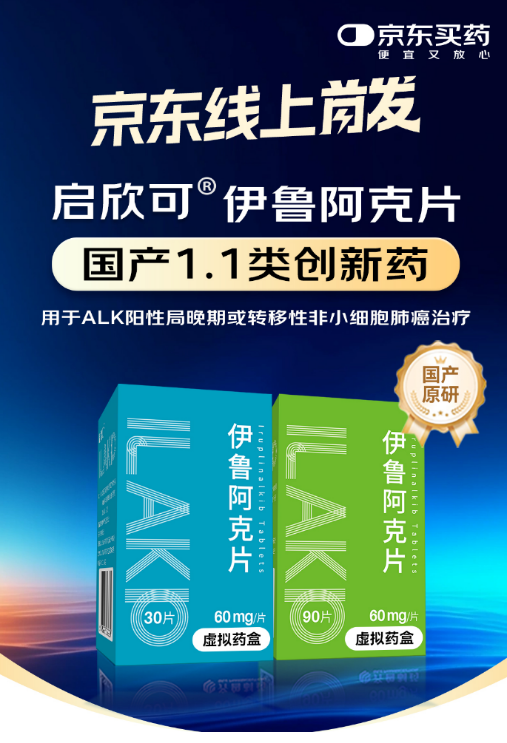
伊鲁阿克作为新一代ALK抑制剂,具有强效抑制ALK激酶活性、良好覆盖常见耐药突变、优异血脑屏 障穿透能力等多重优势。临床研究显示,其在颅内病灶缓解方面表现突出,颅内客观缓解率(ORR)达 85.7%,为易发生脑转移的ALK阳性患者提供了重要治疗保障。同时,该药在长期生存数据上也展现出 1月12日,齐鲁制药旗下1.1类创新药、ALK阳性非小细胞肺癌靶向治疗新药——启欣可®(伊鲁阿克片) 在京东健康全网首发。该药物的上市,进一步丰富了京东健康在肺癌精准治疗领域的产品矩阵,为更多 ALK阳性肺癌患者提供了全新的治疗选择。京东健康将持续发挥"新特药全网首发第一站"的能力优势, 推动更多前沿治疗药物快速触达患者,提升药品可及性与治疗规范性。 肺癌是我国发病率和死亡率最高的恶性肿瘤,其中非小细胞肺癌(NSCLC)占比超过80%。ALK融合基因 突变在非小细胞肺癌中发生率约为3%-7%,主要出现在年轻人、女性及非吸烟者中,因其对靶向药物响 应率高、患者生存获益显著而被称为"钻石突变"。尽管靶向药物已成为ALK阳性肺癌的主要治疗手段, 但临床上仍面临着患者发病年龄轻,疗效需要持续突破、脑转移发生率高、耐药机制复杂等挑战。 除 ...
恒生科技指数劲升3.1% AI应用爆发引发科技股狂欢
Xin Lang Cai Jing· 2026-01-12 08:47
Market Performance - The Hong Kong stock market indices strengthened collectively, with the Hang Seng Index rising by 1.44% to 26,608.48 points, the Tech Index increasing by 3.10% to 5,863.20 points, and the National Enterprises Index up by 1.90% to 9,220.08 points [2]. Sector Highlights - The leading sectors included internet technology, AI applications, SaaS concepts, AI healthcare, paper industry, film and entertainment, and commercial aerospace, while pharmaceutical research services and lithium battery sectors experienced a pullback [5]. AI and Technology Sector - Major internet companies showed strong performance, with Alibaba Health rising by 10.23%, Kuaishou by 7.43%, and Meituan by 6.60% [6]. - The rise in AI applications was notable, with stocks like Zhiyun (31.40% increase) and Weimeng Group (21.39% increase) leading the charge [8]. Paper Industry - The paper sector saw gains due to improved supply-demand dynamics and favorable exchange rates, with Nine Dragons Paper up by 10.06% and Lee & Man Paper by 5.81% [12]. Film and Entertainment Sector - The film sector benefited from rising expectations for the upcoming Spring Festival box office, with stocks like Damai Entertainment increasing by 6.98% and Maoyan Entertainment by 3.86% [14]. Commercial Aerospace - Stocks in the commercial aerospace sector rose due to policy benefits, with Asia Pacific Satellite increasing by 18.16% [16]. Pharmaceutical Sector - The pharmaceutical sector showed mixed results, with stocks like Zhaoyan New Drug down by 4.29% while the healthcare index overall rose by 10.3% in the first week of 2026 [18]. Lithium Battery Sector - The lithium battery sector faced pressure from policy adjustments, with stocks like CATL down by 2.45% following the announcement of changes to export tax rates [20]. Individual Stock Movements - Tongcheng Travel saw a rise of 5.61% due to increased demand for off-peak travel as students enter their winter break [22]. - Bilibili increased by 6.54% as AI technology improved marketing material production efficiency and advertising effectiveness [23].

港股科网股全线大涨
第一财经· 2026-01-12 08:26
Market Overview - The Hang Seng Index (HSI) rose by 1.44% to close at 26,608.48, with a trading volume of 306.2 billion [1] - The Hang Seng Tech Index (HSTECH) increased by 3.10% to 5,863.20, with a trading volume of 103.8 billion [1] - The Hang Seng China Enterprises Index (HSCEI) gained 1.90% to 9,220.08, with a trading volume of 121.1 billion [1] - The Hang Seng Composite Index (HSCI) rose by 1.48% to 4,084.35, with a trading volume of 223.7 billion [1] Notable Stock Performances - Kingdee International surged by 12.16% to 16.230, with a trading volume of 1.357 billion [2] - Alibaba Health increased by 10.23% to 6.360, with a trading volume of 2.211 billion [2] - Kuaishou rose by 7.43% to 80.250, with a trading volume of 6.691 billion [2] - SenseTime gained 6.88% to 2.640, with a trading volume of 3.011 billion [2] - Meituan increased by 6.60% to 105.000, with a trading volume of 11.310 billion [2] - Bilibili rose by 6.54% to 238.000, with a trading volume of 1.470 billion [2] - Alibaba (9988) saw a rise of 5.32% to 154.300, with a trading volume of 25.051 billion [2] - Baidu Group (9888) increased by 5.31% to 144.700, with a trading volume of 2.661 billion [2] AI Application Stocks - AI application concept stocks showed strong performance, with Zhipu AI, referred to as the "first global large model stock," rising over 31% to close at 208.4 HKD per share [2] - MINIMAX also saw an increase of over 15% [2]

港股通医疗ETF华宝(159137)涨0.38%,成交额1.73亿元
Xin Lang Cai Jing· 2026-01-12 07:15
Core Insights - The Huabao CSI Hong Kong Stock Connect Medical Theme ETF (159137) closed with a gain of 0.38% on January 12, with a trading volume of 173 million yuan [1] Fund Overview - The fund was established on December 31, 2025, and is officially named Huabao CSI Hong Kong Stock Connect Medical Theme Exchange-Traded Fund [1] - The management fee is set at 0.50% per annum, while the custody fee is 0.10% per annum [1] - The performance benchmark for the fund is the return of the CSI Hong Kong Stock Connect Medical Theme Index, adjusted for the RMB exchange rate [1] Fund Management - The current fund manager is Zhang Fang, who has managed the fund since its inception, achieving a return of 4.33% during the management period [1] Top Holdings - The latest report indicates that the top holdings of the ETF include: - WuXi Biologics: 2.65% holding, valued at approximately 7.49 million yuan [2] - JD Health: 2.02% holding, valued at approximately 5.71 million yuan [2] - WuXi AppTec: 1.44% holding, valued at approximately 4.07 million yuan [2] - Crystal Digital Holdings: 0.98% holding, valued at approximately 2.76 million yuan [2] - Alibaba Health: 0.93% holding, valued at approximately 2.63 million yuan [2] - WuXi AppTec Holdings: 0.86% holding, valued at approximately 2.43 million yuan [2] - Sinopharm: 0.72% holding, valued at approximately 2.04 million yuan [2] - Genscript Biotech: 0.55% holding, valued at approximately 1.55 million yuan [2] - Ping An Good Doctor: 0.46% holding, valued at approximately 1.31 million yuan [2] - CSPC Pharmaceutical Group: 0.41% holding, valued at approximately 1.17 million yuan [2]