老板电器

Search documents
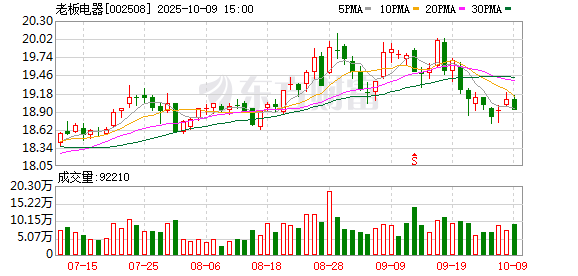
老板电器:公司今年成立杭州人工智能研究院,重点布局机器视觉与运动控制等相关领域
Mei Ri Jing Ji Xin Wen· 2025-10-09 12:55
Core Viewpoint - The company has established an artificial intelligence research institute in Hangzhou to enhance the integration of AI technology into its kitchen appliances, aiming to provide users with a more intelligent and personalized cooking experience [1] Group 1 - The company has focused on key areas such as machine vision and motion control, as well as voice interaction and the Internet of Things [1] - The establishment of the AI research institute is part of the company's strategy to accelerate the efficient transformation of AI technology in its products [1] - The goal is to innovate and improve existing products by incorporating AI elements rather than merely adding superficial features [1]

老板电器:公司如有回购计划会依照规则及时进行信息披露
Zheng Quan Ri Bao· 2025-10-09 10:10
Core Viewpoint - The company indicated that it will disclose any share repurchase plans in accordance with regulations if such plans are made [2] Group 1 - The company responded to investor inquiries on October 9 regarding potential share repurchase plans [2] - The company emphasized its commitment to timely information disclosure in line with regulatory requirements [2]

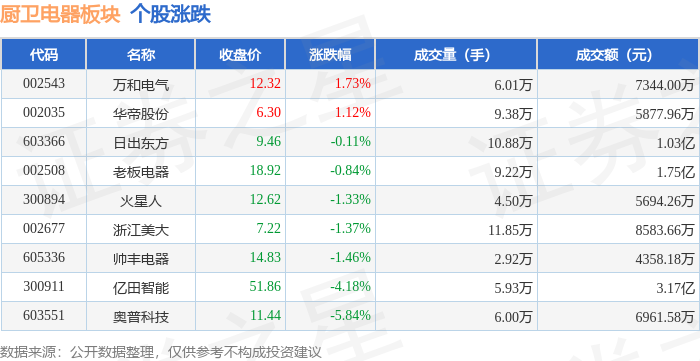
厨卫电器板块10月9日跌1.22%,奥普科技领跌,主力资金净流出6330.39万元
Zheng Xing Xing Ye Ri Bao· 2025-10-09 08:53
Market Overview - The kitchen and bathroom appliance sector experienced a decline of 1.22% on October 9, with Aopu Technology leading the losses [1] - The Shanghai Composite Index closed at 3933.97, up 1.32%, while the Shenzhen Component Index closed at 13725.56, up 1.47% [1] Stock Performance - Notable stock performances include: - Wanhe Electric (002543) closed at 12.32, up 1.73% with a trading volume of 60,100 shares and a turnover of 73.44 million yuan - Aopu Technology (603551) closed at 11.44, down 5.84% with a trading volume of 60,000 shares and a turnover of 69.62 million yuan - Yitian Intelligent (300911) closed at 51.86, down 4.18% with a trading volume of 59,300 shares and a turnover of 317 million yuan [1] Capital Flow - The kitchen and bathroom appliance sector saw a net outflow of 63.30 million yuan from main funds, while retail funds had a net inflow of 23.78 million yuan [1] - Specific capital flows for key stocks include: - Aopu Technology had a main fund net outflow of 2.98 million yuan, with retail inflow of 5.03 million yuan - Wanhe Electric had a main fund net inflow of 0.60 million yuan, with retail outflow of 0.62 million yuan [2]

机构上调评级+低PE,18只个股上榜!股息率最高在7%以上
Xin Lang Cai Jing· 2025-10-08 00:50
Core Insights - Institutional upgrades in ratings indicate a positive market outlook for related assets or companies, suggesting good growth potential and investment value [1] Group 1: Institutional Upgrades - As of September 2025, 41 stocks received upgrades from institutions, with several leading companies from various sectors included [1] - Traditional industry leaders such as Yangtze Power, Huaneng Hydropower, Guotou Power, Sany Heavy Industry, XCMG, and Yanzhou Coal Mining are among those upgraded [1] - Emerging industry leaders like BAIC BluePark and Xinzhou Bang also made the list [1] Group 2: Valuation Metrics - As of September 30, 2025, 18 stocks had a rolling price-to-earnings (PE) ratio below 30, with 6 stocks having a PE ratio under 15, including Yanzhou Coal Mining, Boss Electric, Hailide, Yuntu Holdings, Zhou Dazheng, and Anhui Hefei [1] Group 3: Dividend Yields - The highest dividend yield over the past 12 months was recorded by Pingmei Shenma, reaching 7.25% as of September 30, 2025 [1]




2025年中国家电维修行业发展历程、产业链、市场规模、重点企业及发展趋势研判:人们生活水平提高和家电产品更新换代,家电维修行业前景广阔[图]
Chan Ye Xin Xi Wang· 2025-10-08 00:36
Core Insights - The home appliance repair industry is becoming an essential service area due to the increasing demand for maintenance and reliability of various appliances, driven by rising consumer expectations and income levels [1][12] - The market size of China's home appliance repair industry is projected to grow from 235.1 billion yuan in 2016 to 399 billion yuan in 2024, with a compound annual growth rate (CAGR) of 6.8% [1][12] - The industry is expected to benefit from advancements in smart home technology and the Internet of Things (IoT), creating more opportunities for growth [1][12] Industry Overview - Home appliance repair involves the detection, adjustment, repair, and component replacement of household appliances, aiming to restore functionality and extend lifespan [3][11] - The industry is categorized into large appliance repair (e.g., refrigerators, air conditioners) and small appliance repair (e.g., vacuum cleaners, coffee machines) [3] Market Dynamics - The home appliance repair industry has evolved through three stages: the initial phase in the 1980s, the standardization and professionalization phase in the 1990s to early 2000s, and the platform integration phase from the 21st century onwards [7][11] - The increasing production of home appliances, such as refrigerators and washing machines, is driving the demand for repair services, with significant growth in production volumes projected from 2017 to 2024 [10] Industry Structure - The market comprises various players, including brand after-sales service providers, chain repair platforms, independent repair shops, and community service points [12] - Major companies like Midea, Haier, Gree, and Xiaomi have established comprehensive after-sales service systems, leveraging brand strength and original parts [12] Key Trends - Preventive maintenance services are gaining traction, utilizing IoT and sensor technology for real-time monitoring and predictive maintenance [15] - Modular design in appliances is becoming a trend, allowing for easier and quicker repairs, thus reducing waste and enhancing resource efficiency [16] - The emergence of repair technology sharing platforms is transforming the dissemination of repair knowledge and service delivery, promoting digitalization and collaboration within the industry [16]







国补第四批资金下达!小城居民卡点抢券秒光,部分家电卖场“自掏腰包”补贴
Sou Hu Cai Jing· 2025-10-06 01:50
Group 1 - The article highlights the ongoing promotional activities in the home appliance market during the National Day holiday, with retailers offering various incentives to attract consumers [3][5] - The fourth batch of government subsidies, amounting to 69 billion yuan, has been distributed, indicating that the home appliance subsidy program is nearing its end by 2025 [7][9] - There is a noticeable decline in consumer interest and foot traffic in stores compared to previous years, with predictions suggesting that the overall market performance during the holiday may not surpass last year's figures [3][5][11] Group 2 - Retailers are adapting to the scarcity of government subsidies by launching their own promotions, with some stores offering additional discounts and gifts to encourage purchases [3][5] - The shift from easily accessible subsidies to a more competitive "coupon" system has made it difficult for consumers to obtain these benefits, leading to a decline in consumer confidence and spending [6][8] - Analysts suggest that the reduction in subsidy availability is likely to impact the growth of the home appliance market, with companies needing to rely more on their competitive strengths rather than government support [9][10]
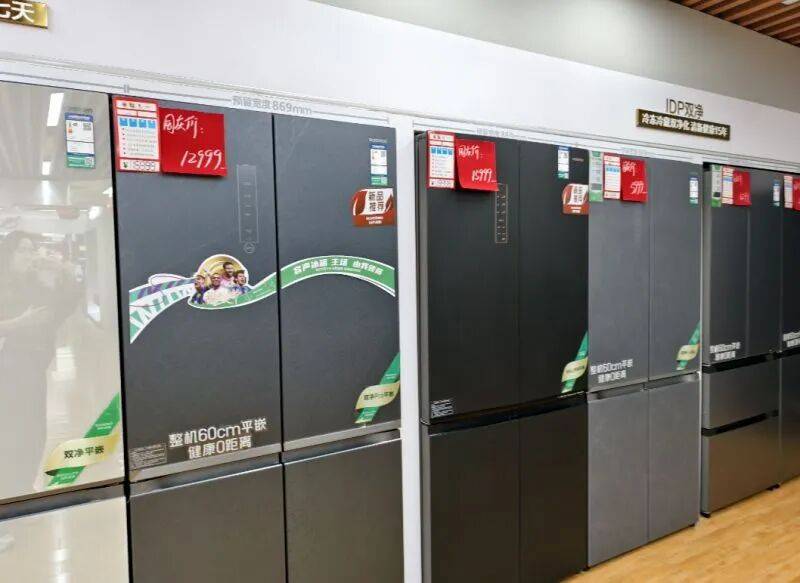
国补第四批资金下达!小城居民卡点抢券秒光,部分家电卖场“自掏腰包”补贴|华夏双节观察
Hua Xia Shi Bao· 2025-10-05 06:42
Group 1 - The article highlights the ongoing promotional activities in the home appliance market during the National Day holiday, with significant discounts and gifts being offered to attract consumers [3][4]. - The fourth batch of government subsidies for home appliances has been released, indicating that the subsidy program is nearing its end by 2025, leading to increased competition among companies to maintain market share without relying solely on government support [2][5]. - Despite the promotional efforts, foot traffic in stores has not met expectations, with some stores reporting more staff than customers during peak hours, suggesting a potential decline in consumer interest [4][5]. Group 2 - The government has allocated a total of 690 billion yuan in subsidies for the year, but the availability of consumer vouchers has become limited, making it difficult for consumers to access these benefits [5][6]. - The shift from easily accessible subsidies to a more competitive voucher system has led to a decline in consumer purchasing power and market demand, as many consumers are unable to secure the necessary vouchers [6][8]. - Analysts predict that the current subsidy policy will likely not continue beyond 2026, as the market has already absorbed much of the purchasing potential, and companies will need to rely on their own competitiveness for growth [7][8]. Group 3 - The home appliance industry is experiencing a slowdown, with overall retail sales growth significantly decreasing from 23.8% in late 2024 to just 7% by mid-2025, indicating a diminishing impact of the subsidy program [8]. - Companies are increasingly looking to international markets for growth opportunities, suggesting a strategic shift in focus away from domestic subsidies [8]. - Recommendations for manufacturers include introducing differentiated products and enhancing service quality to stimulate consumer demand in the absence of government support [8].
国庆家电市场:Mini LED电视、扫地机人气旺,厂商补贴唱主角
Di Yi Cai Jing· 2025-10-01 13:33
Group 1 - The National Development and Reform Commission announced the allocation of 69 billion yuan in special bonds to support the consumption of old-for-new appliances, expected to boost sales during the Double Eleven shopping festival [3][9] - Some manufacturers are offering subsidies of up to 20% for appliances, with promotional slogans like "Don't wait for Double Eleven, refresh during National Day" [3][5] - Compared to last year's high base, the growth in appliance sales during National Day is expected to be challenging, with a focus on product structure and consumption upgrades [3][6] Group 2 - Mini LED televisions are becoming a competitive focus in the market, with TCL and Hisense launching new models ahead of National Day [5][6] - The sales of large-screen and high-end products are being emphasized, with significant discounts on Mini LED TVs observed in retail [5][6] - The overall market for televisions is projected to decline by 7.2% year-on-year in the fourth quarter, indicating pressure on sales growth [5][6] Group 3 - The appliance market is expected to see structural upgrade opportunities, with Mini LED TV penetration projected to reach 28.3% by mid-2025, a significant increase from previous years [6][9] - The cleaning appliance market is also seeing innovation, with new products like integrated robotic vacuum cleaners being introduced [6][9] - Retail sales in the appliance market are expected to grow by 23.8% year-on-year from September to December 2024, driven by subsidies [6][9] Group 4 - Retail channels are preparing for both National Day promotions and the upcoming Double Eleven sales, with various retailers offering substantial subsidies [8][9] - Major brands are competing on product offerings, pricing, and services, with significant promotional activities planned for the holiday season [9][10] - The fourth batch of national subsidies is expected to be implemented before Double Eleven, providing additional support for sales [9][10]
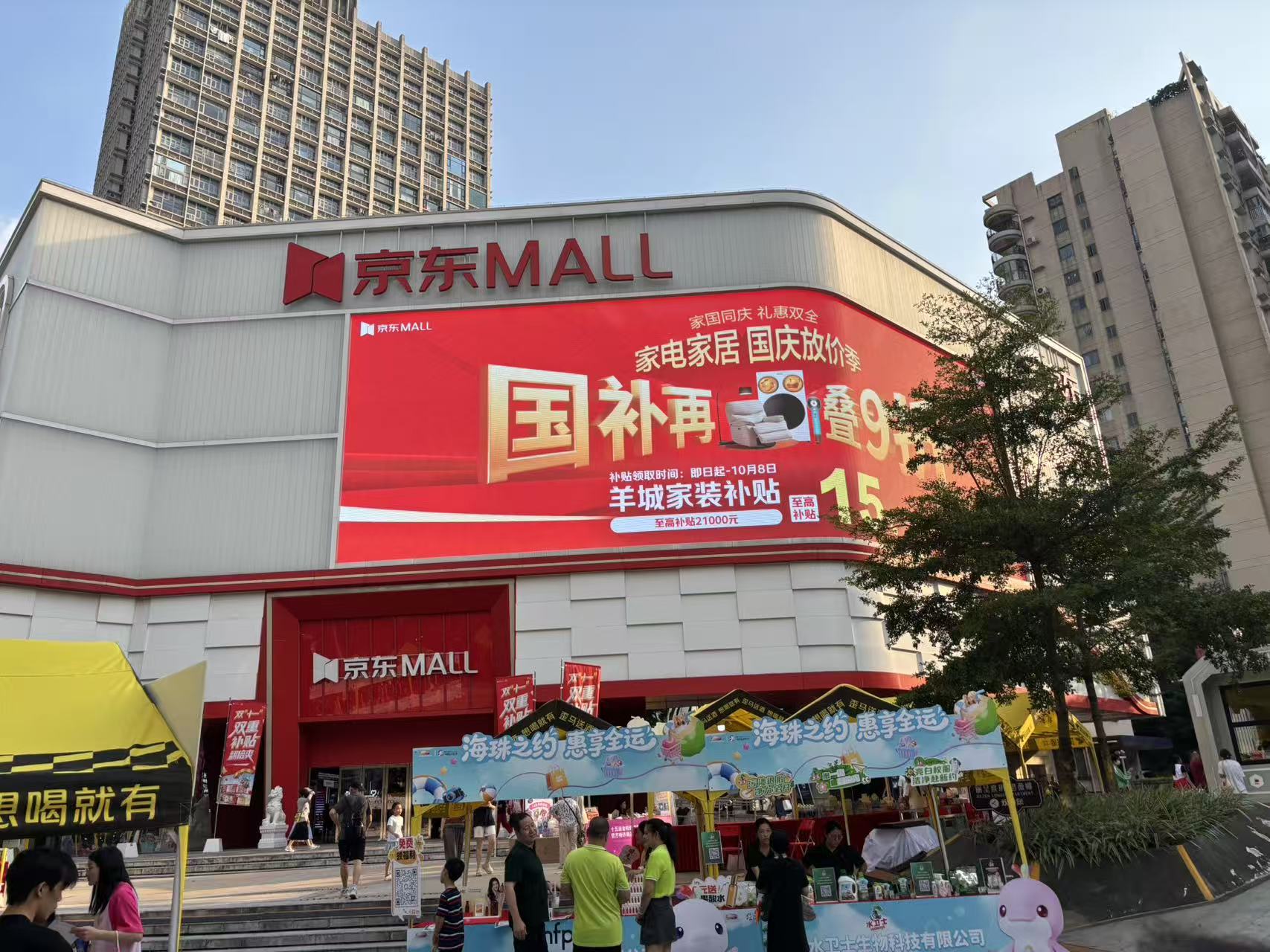
老板电器:已在美国成立销售子公司,全力加速网点拓展
Zheng Quan Ri Bao Wang· 2025-09-30 12:11
Core Viewpoint - The company has established a sales subsidiary in the United States to accelerate its network expansion and is actively implementing its brand overseas strategy through localized marketing efforts in international markets [1] Group 1 - The company has formed a sales subsidiary in the United States [1] - The company is focused on accelerating its network expansion [1] - The company is promoting its overseas localization marketing strategy [1]
数读厨卫电器半年报|火星人销售费用率高达47.9%亿田智能毛利率骤降近30%经营性现金流转负
Xin Lang Cai Jing· 2025-09-30 10:42
Core Viewpoint - The domestic home appliance market shows resilience in growth during the first half of 2025, supported by the "trade-in" policy, with significant increases in retail sales of kitchen appliances [1] Group 1: Market Performance - In the first half of 2025, retail sales of range hoods and gas stoves increased by 11.8% and 10.1% year-on-year, respectively [1] - A total of 9 listed kitchen and bathroom appliance companies reported a combined revenue of 15.063 billion yuan, a decrease of 7.9% compared to the same period in 2024 [1] - Among kitchen appliance companies, total revenue was 8.299 billion yuan, with a net profit of 804 million yuan, representing declines of 13.2% and 35.9% year-on-year, respectively [1] Group 2: Company Performance - Boss Electric ranked first in revenue with 4.608 billion yuan, 1.12 times that of the second-ranked Wanhe Electric, and over 1.8 billion yuan higher than third-ranked Vatti [1] - The operating costs of kitchen appliances generally decreased, with Wanhe Electric being the only company to see a 15.5% increase in operating costs, exceeding its revenue growth [1] - Operating costs for kitchen appliances remained between 50%-60% of revenue, while Yitian Smart's operating cost ratio reached 85.9%, with a significant drop in gross margin [1] Group 3: Efficiency and Expenses - Companies like Yitian Smart, Shuaifeng Electric, Zhejiang Meida, and Aopu Technology reduced their sales, management, and R&D expenses during the reporting period [1] - Boss Electric had the highest sales expenses at 1.249 billion yuan, being the only company with a significant sales expense scale [1] - Yitian Smart had the highest management expense ratio at 17.6%, followed closely by Shuaifeng Electric at 17.5% [1] Group 4: R&D and Profitability - R&D expense ratios for kitchen appliance companies generally ranged from 3%-5%, with Marsman having a notably high R&D expense ratio of 12.2% [1] - Boss Electric led in net profit with 712 million yuan, nearly double that of the second-ranked Wanhe Electric [1] - Aopu Technology managed to increase its net profit by 7.8% despite a 4.9% decrease in revenue, attributed to effective cost control [1] Group 5: Cash Flow and Inventory Management - Companies like Zhejiang Meida, Marsman, and Yitian Smart experienced a negative shift in operating cash flow, with over half of the companies seeing a year-on-year decline in cash flow [1] - Boss Electric had an accounts receivable turnover period of approximately 70 days, while Zhejiang Meida's was only 5 days, indicating faster capital recovery [1] - Shuaifeng Electric's inventory turnover days increased by 26.7% to approximately 174 days, with a significant portion of its inventory being finished goods [1]