
零跑

Search documents
汽车行业周报(20250707-20250713):反内卷叠加行业去库,预计下半年市场状态-20250713
Huachuang Securities· 2025-07-13 13:34
Investment Rating - The report maintains a "Recommended" rating for the automotive industry, indicating a positive outlook for the second half of the year [1]. Core Insights - The automotive market is expected to continue strong sales in the second half of the year, supported by a reduction in inventory and a decrease in price war risks. However, there are concerns regarding sales fluctuations due to potential electric vehicle subsidies next year, which may suppress market sentiment [1]. - The report suggests actively observing opportunities in the sector after market sentiment stabilizes, particularly in the context of the recent strong performance of Hong Kong stocks [1]. Data Tracking - In June, new energy vehicle deliveries showed significant growth, with BYD delivering 382,585 units (up 12% year-on-year), while Li Auto and Xpeng saw deliveries of 36,279 units (down 24.1% year-on-year) and 34,611 units (up 224.4% year-on-year), respectively [4][21]. - Traditional automakers also reported strong sales, with Geely's sales reaching 236,000 units (up 42.1% year-on-year) and SAIC Motor leading with 365,000 units (up 21.6% year-on-year) [4][23]. Industry Recommendations - For complete vehicles, the report recommends Jianghuai Automobile, highlighting potential for growth in both volume and profitability in the second half of the year. It also suggests monitoring new models from Li Auto and Baic Blue Valley, as well as the accelerated delivery of Xiaomi's YU7 [6]. - In the parts sector, the report advises a selective approach to stock picking, focusing on companies with lower valuations (below 15 times) and expected growth rates above 15% for the next year. Recommended stocks include Xingyu Co. and Aikodi [6]. - The heavy truck segment is expected to maintain strong growth, with policy support driving demand. Recommendations include Heavy Truck A and Weichai H/A [6]. Market Performance - The automotive sector experienced a decline of 0.56% this week, ranking 29th out of 29 sectors. In contrast, the overall market indices showed positive growth, with the Shanghai Composite Index up 1.09% and the ChiNext Index up 2.36% [9][33].

标普全球林怀滨:预计未来二三年新能源车企业将迎来盈亏平衡潮
news flash· 2025-07-12 05:20
Core Insights - S&P Global's Lin Huaibin predicts that a wave of breakeven for new energy vehicle (NEV) companies will occur in the next 2-3 years due to declining battery costs and increasing sales volume [1] Group 1: Profitability Forecast - The profitability of pure electric vehicle companies is expected to rise rapidly due to cost benefits from battery price reductions and scale effects from increasing sales [1] - Non-luxury NEV brands have a breakeven point at approximately 500,000 units sold annually, which companies like Leap Motor and Xpeng need to achieve [1] - Luxury NEV brands have a lower breakeven point of around 350,000 units, with companies like AITO, Li Auto, and Xiaomi expected to reach breakeven soon as their sales are projected to approach 450,000 units or higher this year [1] Group 2: Sales Projections - If Zeekr's sales reach approximately 340,000 units by 2026, it will also meet the profitability standard [1]
机构预测:到2030年约有15个中国新能源车品牌仍将保持财务活力
Di Yi Cai Jing· 2025-07-11 14:50
Group 1 - The core viewpoint of the report is that by 2025, Chinese brands are expected to capture 67% of the domestic market share in the electric vehicle sector, while foreign brands will continue to decline in market presence [1] - The report predicts that out of 129 brands selling electric vehicles in 2024, only 15 will remain financially viable by 2030, collectively holding three-quarters of the market share [1] - The report highlights that the number of brands with sales exceeding 100,000 units is increasing, indicating a growing market concentration [1] Group 2 - In the first half of the year, several new energy vehicle companies, including Zeekr, Leap Motor, and Li Auto, have reported cumulative deliveries exceeding 200,000 units, with specific figures of 244,900, 221,700, and 203,900 units respectively [2] - The latest financial forecasts indicate that Seres expects a net profit of 2.7 to 3.2 billion yuan for the reporting period, representing a year-on-year increase of 66.20% to 96.98% [2] - Li Auto reported a revenue of 25.9 billion yuan in Q1, with a net profit of 647 million yuan, reflecting a year-on-year growth of 9.4% [2] Group 3 - The report suggests that the market will experience significant consolidation, with only the most competitive brands likely to succeed in the coming years [3] - Some leading electric vehicle companies have already achieved profitability, highlighting the sustainable growth potential of the industry [3] - The changes driven by new operational models focusing on speed, cost-effectiveness, and flexible decision-making are expected to create a more competitive and innovative landscape for China's electric vehicle industry [3]




今日新车速递:极氪9X、零跑C11、乐道L90-20250710
Haitong Securities International· 2025-07-10 14:33
Investment Rating - The report does not explicitly provide an investment rating for the automotive industry or the specific companies discussed. Core Insights - Multiple new vehicle launches occurred on July 9-10, including the Zeekr 9X, Leapmotor C11, and ONVO L90, showcasing advancements in technology and competitive pricing [1][7]. - The Zeekr 9X is positioned as a new benchmark for premium electrified SUVs, emphasizing its full-stack smart driving capabilities and high-performance specifications [2][8]. - Leapmotor C11 focuses on technology accessibility and high value, offering both electric and extended-range versions with advanced features [3][11]. - ONVO L90 combines battery swapping technology with spacious design, targeting family-oriented consumers [4][14]. Summary by Sections Zeekr 9X - Built on the SEA-S platform, it features advanced smart driving technology with dual NVIDIA Thor chips and multiple sensors for L3 autonomy [2][8]. - The vehicle boasts a powerful 2.0T triple-motor system with a total output of 1030 kW, achieving 0-100 km/h in 3.1 seconds and offering a combined range exceeding 1000 km [2][10]. - Interior design includes a minimalist luxury approach with a large central display and advanced entertainment options [2][11]. Leapmotor C11 - Constructed on an 800V platform, it offers both pure electric and extended-range versions, emphasizing affordability and intelligent features [3][11]. - Equipped with a 128-line LiDAR and Qualcomm 8650 chip, it supports advanced driving assistance and immersive cabin experiences [3][12]. - The electric version provides a maximum range of 640 km, while the extended-range version achieves a total range of 1220 km [3][12]. ONVO L90 - Designed on a 900V high-voltage platform, it supports NIO's battery swapping technology and features a spacious interior with a three-row, six-seat layout [4][14]. - Performance includes a 0-100 km/h acceleration time of 5.9 seconds for the rear-wheel drive version and 4.7 seconds for the all-wheel drive version [4][15]. - Safety features include a robust structure with 9 airbags and advanced driver assistance systems [4][15].
李斌为何直言“蔚来的钱都亏在明处”?研发投入“资本化”还是“费用化”背后,是一个“长痛”与“短痛”的选择
Mei Ri Jing Ji Xin Wen· 2025-07-09 15:08
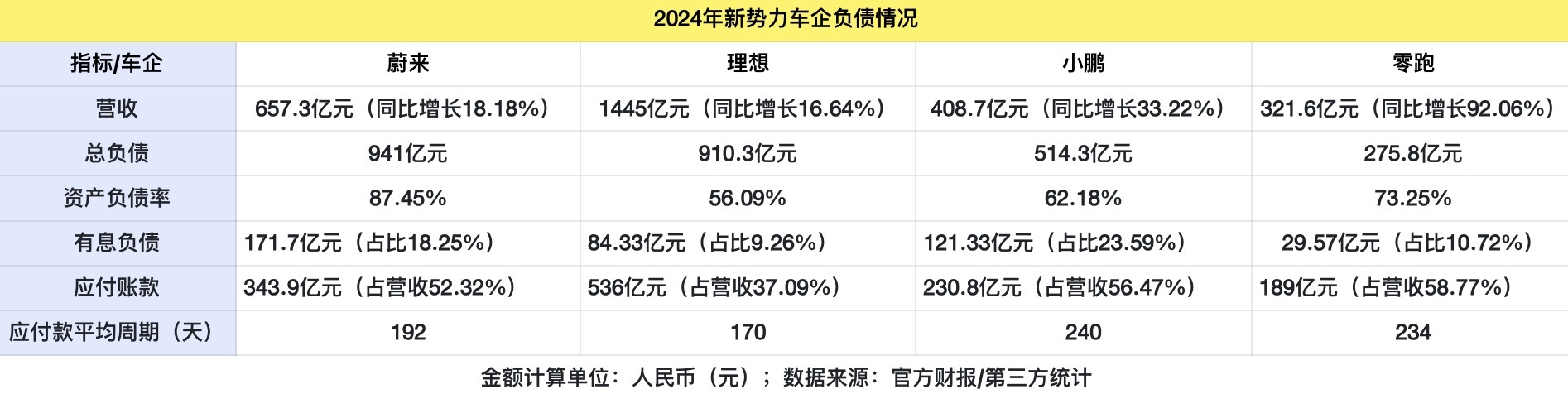
Core Viewpoint - NIO's significant R&D investment has led to a substantial net loss, contrasting with its competitors who have shown profitability or reduced losses, highlighting different strategic approaches in the electric vehicle market [1][4]. Group 1: Financial Performance - In Q1 2025, NIO reported a net loss of 6.89 billion yuan, while competitors Li Auto achieved a net profit of 650 million yuan, and XPeng and Leap Motor reduced their losses to 660 million yuan and 130 million yuan respectively [1]. - NIO's revenue reached 65.73 billion yuan, reflecting an 18.18% year-on-year growth, while Li Auto's revenue was 144.5 billion yuan, growing by 16.64% [3]. - NIO's total liabilities stood at 94.1 billion yuan with an asset-liability ratio of 87.45%, indicating a high level of debt compared to Li Auto's 56.09% [3]. Group 2: R&D Investment - NIO's R&D expenditure in Q1 2025 was 3.18 billion yuan, accounting for 26.4% of its revenue, which is among the highest ratios in the global automotive industry [4]. - The R&D spending of competitors was lower, with XPeng at 1.98 billion yuan, Li Auto at 2.5 billion yuan, and Leap Motor at 800 million yuan [4]. - NIO's CEO emphasized the company's commitment to long-term R&D investment despite operational pressures to reduce costs [1]. Group 3: Accounting Treatment of R&D - NIO and other new energy vehicle companies prefer to expense all R&D costs, contrasting with traditional automakers like Great Wall Motors, which capitalized nearly 50% of their R&D expenses [5][6]. - The choice between capitalizing or expensing R&D costs reflects a strategic decision impacting short-term financial performance versus long-term growth [6]. - The automotive industry generally experiences high debt levels due to the substantial investments required for new model development and production [4].

上半年车企座次再洗牌,东风日产和华晨宝马跌出销量前十
第一财经网· 2025-07-09 13:54
Group 1 - The cumulative retail sales of passenger cars reached 10.901 million units in the first half of the year, representing a year-on-year growth of 10.8%. The market share of domestic brands is 64%, an increase of 7.5 percentage points compared to the same period last year [1][2] - The top ten car manufacturers by sales have undergone a reshuffle, with BYD maintaining the first position, followed by Geely, FAW-Volkswagen, Changan, and Chery, all exceeding 600,000 units in sales. BYD and Geely surpassed one million units sold [1] - The traditional dominance of SAIC Volkswagen, FAW-Volkswagen, and SAIC-GM in the top three has changed, with only FAW-Volkswagen remaining in the top ten, while SAIC-GM has dropped out [1][2] Group 2 - The overall performance of domestic brands in the first half of the year was strong, with significant growth in the new energy vehicle sector led by companies like BYD, Geely, and Changan, as well as breakthroughs in overseas markets [2] - The market is experiencing intensified competition, with some companies facing declining sales and potential marginalization. Sustainable development requires companies to solidify their advantages in electric vehicle technology, expand scale effectively, and build differentiated competitiveness [3] - The market has shown resilience due to policies promoting consumption, with local governments implementing measures to stimulate sales, leading to a positive trend in June. However, a structural differentiation in growth is evident, with traditional fuel vehicle production capacity remaining high amid a shrinking market [3]


新能源车板块小幅回调,关注新能源车ETF(159806)布局机会,6月多数新能源车企交付量表现较为平稳
Mei Ri Jing Ji Xin Wen· 2025-07-09 06:33
Group 1 - The majority of new energy vehicle companies showed stable month-on-month delivery and sales performance in June, with NIO, Xpeng, Leapmotor, GAC Aion, and Seres achieving month-on-month growth, while BYD remained flat, and Li Auto, Zeekr, and Xiaomi experienced declines [1] - The sales of new energy vehicles are expected to continue growing year-on-year, driven by the maturity of solid-state battery technology, increased supply of quality products, and policies promoting vehicle trade-ins and the intelligent transformation of electric vehicles [1] - The construction of the solid-state battery pilot line project by Zhonggu Times has commenced, focusing on key technologies such as dry electrode, solid-state battery materials, and ultra-large capacity solid-state battery cell design and manufacturing [1] Group 2 - The solid-state battery commercialization timeline indicates that the pilot line will reach a critical phase between 2025 and 2026, with semi-solid-state batteries expected to be commercially applied by 2027 and full solid-state batteries entering vehicle validation [1] - By 2030, full solid-state batteries are anticipated to reach an industrialization inflection point, benefiting companies with well-established material layouts and rapid validation progress [1] - The New Energy Vehicle ETF (159806) tracks the CS New Energy Vehicle Index (399976), which reflects the overall performance of A-share listed companies in the new energy vehicle industry, focusing on key areas such as lithium batteries, motors, electronic controls, and vehicle manufacturing [2]
产业观察:【智能车产业跟踪】拼吧出行完成千万级Pre~A轮融资,加速布局AI驱动定制出行
GUOTAI HAITONG SECURITIES· 2025-07-08 11:20
Investment Rating - The report does not explicitly provide an investment rating for the industry [2]. Core Insights - The smart vehicle industry is experiencing significant trends, including a notable increase in sales for new energy vehicles, with leading brands like Leap Motor and AITO showing substantial month-on-month growth [2][12]. - Recent financing activities indicate a strong interest in AI-driven transportation solutions, with companies like Pinba Chuxing securing significant funding to enhance their market presence [24]. Summary by Sections 1. Information Dispatch - **Monthly Sales Rankings**: In June 2025, the top three new energy vehicle brands by sales were Leap Motor (48,006 units, up 6.5% month-on-month), AITO (44,685 units, up 22.9%), and Li Auto (36,279 units, down 11.2%) [12]. - **New Car Releases**: Several new models were launched between June 30 and July 6, including BYD's Haiyue Zizai version and Xpeng's G7, with prices ranging from 6.98 to 37.69 million yuan [3][12]. 2. Lithium Battery Information - **Lithium Carbonate Prices**: As of July 4, 2025, the average price of battery-grade lithium carbonate was reported at 62,320 yuan per ton, reflecting a slight increase due to improved demand expectations [4][14]. - **Material Price Trends**: The report highlights fluctuations in the prices of various lithium battery materials, with lithium carbonate showing a week-on-week increase of 1.81% [15]. 3. Investment and Financing Events - **Recent Financing Activities**: From June 30 to July 6, 2025, there were four notable financing events in the smart vehicle sector, including Tian Tong Vision's completion of a 500 million yuan Series D funding round and Pinba Chuxing's completion of a multi-million Pre-A round [23][24]. - **Company Profiles**: Tian Tong Vision focuses on smart driving technology, while Pinba Chuxing aims to integrate AI into customized transportation solutions [24].
中国汽车市场一周行业信息快报——2025年7月第1期
Zhong Guo Zhi Liang Xin Wen Wang· 2025-07-07 07:36
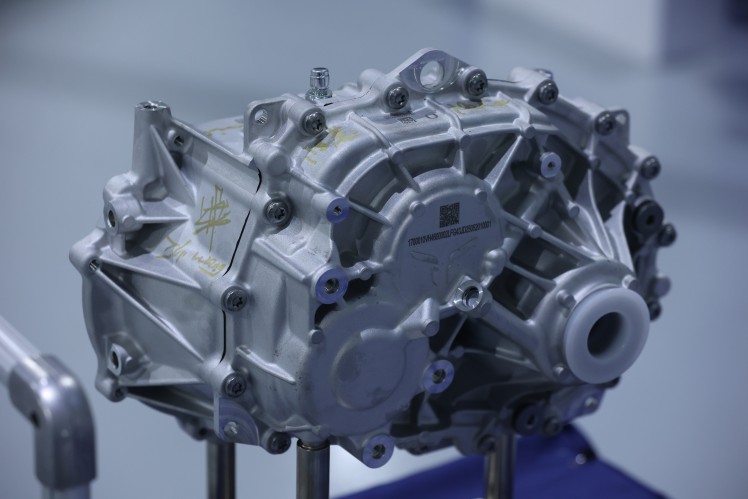
Core Insights - Several automotive companies reported their sales data for June and the first half of the year, indicating a mixed performance in the market with some companies showing significant growth while others faced declines [2] Group 1: Sales Performance - Leap Motor achieved a record high with 48,006 units delivered in June, marking a year-on-year increase of 138.65%, and a total of 221,664 units for the first half of the year [2] - Li Auto delivered 36,279 vehicles in June, a year-on-year decrease of 24.06%, with a total of 203,758 units delivered in the first half [2] - Xpeng Motors reported 34,611 units delivered in June, a year-on-year increase of 224.44%, surpassing the total deliveries for the entire year of 2024 with 197,189 units in the first half [2] - NIO delivered 24,925 vehicles in June, a year-on-year increase of 17.52%, with a total of 114,150 units delivered in the first half, reflecting a 30.57% year-on-year growth [2] Group 2: New Product Launches and Upgrades - ZF Shanghai officially launched its first independent reducer for electric vehicles, designed to meet stringent technical standards, with plans for it to debut in a mid-size SUV in the second half of 2025 [5] - Chery initiated a large-scale OTA upgrade affecting over 1 million users, introducing new features across five vehicle series, including the Tiggo 9 and Arrizo 8 [6][8] - The new L90 SUV from Lada features a spacious interior with a 2+2+2 seating layout and advanced technology, set to begin pre-sales on July 10 [9][11] - Xpeng G7 was launched with a starting price of 195,800 yuan, featuring advanced AI capabilities and a high-performance display system [12][15] - BYD launched the Seal 06 DM-i travel version with a price range of 109,800 to 129,800 yuan, featuring a hybrid powertrain and advanced driving assistance systems [19][21] - Xiaomi's YU7 SUV commenced nationwide deliveries, offering multiple configurations and advanced features, with prices ranging from 253,500 to 329,900 yuan [22][24] Group 3: Infrastructure Development - Li Auto's supercharging station count surpassed 2,800, with plans to reach 4,000 by the end of the year, enhancing its charging network across 31 provinces [16][18]
汽车周报:持续看好强势自主整车,年度重视整车、智驾、机器人-20250704
ZHONGTAI SECURITIES· 2025-07-04 12:49
Investment Rating - The report maintains a positive outlook on strong domestic automotive brands, emphasizing the importance of complete vehicles, intelligent driving, and robotics for the year [6][8]. Core Viewpoints - The report continues to favor strong domestic automotive brands, with a focus on complete vehicles, intelligent driving, and robotics throughout the year [6][8]. - It highlights the potential for significant investment opportunities in the automotive sector, particularly in the context of domestic brand growth and technological advancements [6][8]. Market Tracking - The total insurance volume for the week of June 23-29 reached 585,000 units, exceeding the 400,000 weekly threshold, representing a year-on-year increase of 31.5% and a week-on-week increase of 4.3% [7]. - New energy vehicle insurance volume for the same week was 297,000 units, with a year-on-year increase of 39.4% and a week-on-week increase of 4.9%, achieving a penetration rate of 50.8% [7][32]. - The report notes that the overall market remains stable, with some companies experiencing slight declines in deliveries, and anticipates a year-on-year decline in deliveries for July [7][37]. Industry Prosperity - The report tracks terminal data, orders, and export totals, indicating a stable overall situation in June, with some companies showing growth while others experience slight declines [27][46]. - It emphasizes the ongoing trend of domestic brands replacing joint ventures, with market share for domestic brands increasing from 36% in January 2021 to 64% by December 2024 [42]. Stock Tracking - The report recommends several automotive stocks, including Xiaomi, Leap Motor, Xpeng, BYD, Seres, Geely, and Changan, highlighting their potential for growth based on product cycles and market conditions [6][8]. - It notes that the automotive parts sector has shown strong performance, with a weekly increase of 4.6% and a year-to-date increase of 11% [15][19].