三星电子

Search documents
港股半导体板块,全线爆发!
Xin Lang Cai Jing· 2026-02-16 03:36
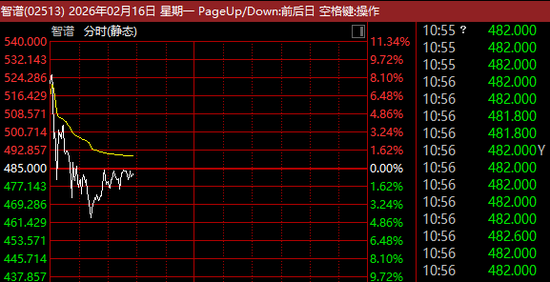
Market Overview - On February 16, the Hong Kong stock market opened slightly lower, with the Hang Seng Index down 0.25% and the Hang Seng Tech Index down 1.14% [1] - The market saw strength in sectors such as precious metals, semiconductors, and oil, while sectors like defense, consumer discretionary, and hardware struggled [1] Technology Sector - The Hang Seng Tech Index has experienced significant declines recently, creating potential value for investors [9] - Recent market volatility is attributed to liquidity shocks, and the current situation is compared to market conditions in November 2025 [10] - Analysts recommend buying on dips and holding stocks through the holiday season [10] AI Application Stocks - AI application stocks in Hong Kong saw gains, with Zhiyu (智谱) opening up over 7% and later experiencing fluctuations [11] - Zhiyu's stock price has increased by 130% since February, with a total market capitalization exceeding 230 billion HKD [11] IPO Developments - Zhiyu has withdrawn its IPO guidance submitted in April 2025 and is now pursuing a new listing on the Sci-Tech Innovation Board [13] - The company has changed its IPO advisory firms to Guotai Junan Securities and China International Capital Corporation [13] Semiconductor Sector - The semiconductor sector showed strength, with stocks like Zhaoyi Innovation (兆易创新) rising over 17% [16] - A price increase in storage chips is expected, with Kioxia planning to raise average selling prices by approximately 50% starting in Q1 2026 [17] - Analysts predict significant improvements in profitability for the NAND industry, with Samsung's NAND business operating margin expected to rise to 37% and SK Hynix to 42% in Q1 2026 [18] Precious Metals Market - The precious metals sector is experiencing a boost, with gold prices expected to rise due to seasonal demand and investment interest [14] - ANZ analysts have raised their gold price forecast for Q2 from $5,400 to $5,800 per ounce [14]

下一代功率半导体,韩国发力
半导体行业观察· 2026-02-16 01:58
Core Viewpoint - The South Korean government aims to double its technological autonomy in power semiconductors from 10% to 20% by 2030, prioritizing infrastructure applications [2] Group 1: Government Initiatives - The Ministry of Trade, Industry and Energy has established a "Next-Generation Power Semiconductor Promotion Team" to enhance the country's capabilities in power semiconductors [2] - The team is led by Professor Koo Sang-mo, an expert in compound power semiconductors [5] Group 2: Importance of Power Semiconductors - Power semiconductors are critical components for controlling and converting electricity in national infrastructure, including electric vehicles, national grids, AI data centers, and defense systems [2][4] - The failure of power semiconductors could lead to the collapse of essential national infrastructure, highlighting their importance [4] Group 3: Strategic Focus and Challenges - The global competitive landscape in the power semiconductor industry is unfavorable for South Korea, which has lagged behind Europe and the U.S. in technology development [5][6] - The promotion team's strategy is "demand-driven," focusing on identifying required specifications and performance in key sectors like electric vehicles and AI data centers [6] Group 4: Development Roadmap and Talent Cultivation - The team plans to complete a technology development roadmap for power semiconductors in the first half of the year, outlining performance indicators and long-term R&D directions [6] - There is a focus on ensuring that domestic power semiconductors can be effectively applied in public infrastructure through legal and institutional improvements [6][10] Group 5: Future Goals and Ecosystem Building - The target of achieving a 20% self-sufficiency rate by 2030 is seen as a minimum benchmark that must be exceeded [9] - The promotion team aims to create a self-sustaining ecosystem for power semiconductors, emphasizing the importance of public infrastructure and national security [10]
存储芯片,走向失控
半导体行业观察· 2026-02-16 01:58
Core Viewpoint - A global storage crisis is emerging, driven by a significant shortage of memory chips, particularly DRAM, which is impacting profits across various sectors, including consumer electronics and automotive industries [2][3][4]. Group 1: Causes of the Crisis - The shortage of DRAM is primarily attributed to the increasing demand from artificial intelligence data centers, which require high bandwidth memory (HBM) for processing large datasets [3][6]. - Companies like Alphabet Inc. and OpenAI are purchasing millions of memory chips for AI applications, leading to a competitive squeeze on supply for consumer electronics manufacturers [4][5]. - The price of DRAM has surged dramatically, with some prices increasing by 75% from December to January, reminiscent of hyperinflation [4][23]. Group 2: Impact on Companies - Major semiconductor manufacturers, including SK Hynix, Samsung, and Micron, control over 90% of global memory chip production and are experiencing record valuations due to the demand surge [4][5]. - The shift in production focus from traditional DRAM to HBM has resulted in reduced availability of standard memory chips for consumer electronics, affecting companies like Apple and Tesla [2][5]. - The memory crisis is causing significant disruptions in product release schedules, with companies like Sony considering delays for their next-generation gaming consoles [19][23]. Group 3: Market Predictions - TrendForce predicts that DRAM and NAND flash prices will rise by 90% to 95% and 55% to 60%, respectively, in the first quarter alone [4][6]. - The demand for HBM is expected to grow by 70% year-on-year by 2026, indicating a long-term shift in the memory market dynamics [6][22]. - The supply-demand imbalance is projected to persist throughout the year, with potential declines in smartphone shipments and increased prices for low-end devices [23][19].


铠侠针对北美客户提价50%
Jin Rong Jie· 2026-02-15 12:38
据最新消息,日本存储巨头铠侠预计从2026年第一季度开始,针对北美客户的修订定价政策将生效,平 均销售价格预计环比提升约50%。摩根士丹利测算,铠侠一季度的调整后毛利率将达到66%。 有分析指 出,铠侠的涨价动作为整个NAND行业释放了利好信号, 存储芯片行业的盈利能力将大幅改善。高盛 预计,三星电子的NAND业务营业利润率将大幅提升至2026年第一季度的37%,SK海力士将跃升至 42%。 ...
暴涨50%!芯片,重大利好来袭!
券商中国· 2026-02-15 12:13
价格暴涨50% Daishin Securities在最新发布的报告中指出,铠侠从2026年第一季度开始执行修订后的定价政策,预计针对北 美主要客户的ASP将环比飙升约50%。这标志着,铠侠打破了此前因长期合同约束而被迫以低于市场水平供货 的局面,也意味着移动NAND ASP正在恢复正常水平。 据Daishin Securities分析称,公司对单一大客户的高收入依赖度形成了双刃剑效应——预先谈判的长期合同意 味着产品以低于市场价格供应,是铠侠ASP增长持续落后同行的核心原因。 存储芯片涨价潮愈演愈烈。 据最新消息,日本存储巨头铠侠预计从2026年第一季度开始,针对北美客户的修订定价政策将生效,平均销售 价格(ASP)预计环比提升约50%。摩根士丹利测算,铠侠一季度的调整后毛利率将达到66%。 有分析指出,铠侠的涨价动作为整个NAND行业释放了利好信号,存储芯片行业的盈利能力将大幅改善。高盛 预计,三星电子的NAND业务营业利润率将大幅提升至2026年第一季度的37%,SK海力士将跃升至42%。 近期该公司正在利用紧张的供需环境积极推动涨价。受此消息刺激,铠侠股价在最近一个交易日大幅飙涨近 8%,再度创出历史 ...

暴涨50%!芯片,重大利好来袭!
Xin Lang Cai Jing· 2026-02-15 12:10
存储芯片涨价潮愈演愈烈。 据最新消息,日本存储巨头铠侠预计从2026年第一季度开始,针对北美客户的修订定价政策将生效,平 均销售价格(ASP)预计环比提升约50%。摩根士丹利测算,铠侠一季度的调整后毛利率将达到66%。 有分析指出,铠侠的涨价动作为整个NAND行业释放了利好信号,存储芯片行业的盈利能力将大幅改 善。高盛预计,三星电子的NAND业务营业利润率将大幅提升至2026年第一季度的37%,SK海力士将跃 升至42%。 价格暴涨50% 铠侠表示,将继续执行资本支出纪律策略,计划将资本支出增长控制在与NAND需求中长期年均复合增 长率一致的水平。 高盛指出,作为全球第三大NAND制造商,铠侠的审慎扩产将进一步收紧市场供需平衡。在三星、SK 海力士和美光等综合性存储厂商越来越多地将资源转向DRAM业务之际,这一策略选择尤为关键。 据Daishin Securities,业内普遍采取通过转换投资和产品组合调整来应对需求的方式,而非新增产能, 因为前者的折旧负担较低。这显示出管理理念日益以盈利能力和长期供需稳定为中心。 在此前的一次活动中,铠侠存储器事业部执行董事中户俊介(Shunsuke Nakato)谈到了当 ...
突传内存“闪崩”!记者实探华强北!商家:回调有限
Xin Lang Cai Jing· 2026-02-15 03:40
炒股就看金麒麟分析师研报,权威,专业,及时,全面,助您挖掘潜力主题机会! 春节假期逐渐临近,近期国内陆续传出内存价格"闪崩"等消息,在北美市场,存储巨头股价也出现高位 回调。 近日,证券时报记者实探华强北市场发现,内存现货市场价格有些许回调但幅度有限,炒作心态有所收 敛,但在闪存市场,部分品种出现"补涨"行情。 从供给侧来看,在数据中心需求虹吸效应下,国际存储原厂库存加速消耗,纷纷提高资本开支强度,并 谋求更大的交易话语权;同时,国产存储供应链也在加速扩产,甚至给出了涨价终结预测,供需博弈将 迈入新阶段。 炒作心态偏谨慎 临近春节,不少华强北柜台歇业。对于近期内存DDR4部分规格最高降价20%消息,多位商家向记者表 示实际回调很有限,"DDR4从去年底到现在涨了五六倍,现在只是跌个十几块、几十块,像DDR4有的 型号还是要1800元,比黄金都贵。" 还有商家表示,有的DDR规格都拿不到货,只能先给个报价,"如果电脑还能用,内存还是别换了。" "最近电脑内存(PC DDR)热度下去了,基本维持着去年12月份的价格。"存储代理商向记者表示,内 存价格回调主要是跟过年有关系,厂商回笼资金,但是有海外客户订单支持,所 ...
三大晶圆厂,巅峰之战
半导体行业观察· 2026-02-15 01:37
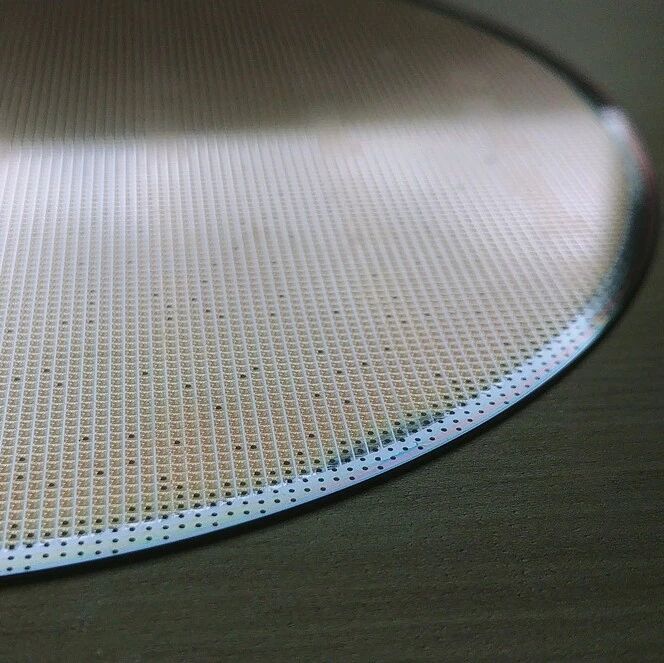
Core Viewpoint - The global semiconductor industry is crucial for modern technology, with TSMC, Samsung Foundry, and Intel Foundry as the three major players driving innovation and competition in advanced chip manufacturing [2][4][6]. Group 1: Company Profiles - TSMC is the absolute leader in pure foundry services, focusing solely on wafer manufacturing and avoiding competition in chip design, which has fostered strong relationships with companies like NVIDIA, AMD, Apple, and Qualcomm [2]. - Samsung Foundry represents a vertically integrated alternative, producing both chips and consumer electronics, and is investing heavily in advanced process nodes like 2nm GAA technology [3]. - Intel Foundry is a strategic newcomer, transitioning from a vertically integrated model to opening its fabs to external customers, with a roadmap that includes advanced nodes like Intel 18A [3]. Group 2: Competitive Dynamics - Competition among these companies drives technological advancement, as the need for innovation in transistor architecture and manufacturing processes is fueled by competitive pressure [5]. - The presence of multiple strong competitors enhances supply chain resilience, reducing risks associated with geopolitical tensions and natural disasters [5]. - Customers benefit from increased choice and bargaining power, allowing for better pricing and capacity allocation, which encourages foundries to respond actively to customer needs [5]. Group 3: Industry Implications - The competition among TSMC, Samsung, and Intel is not merely a commercial issue but has structural significance for the semiconductor ecosystem, ensuring innovation, resilience, and sustainable growth [4][6]. - The semiconductor industry is recognized as one of the most strategically important sectors globally, underscoring the necessity of these three companies for its success [6].


这类DRAM,成为新研究方向
半导体芯闻· 2026-02-14 08:56
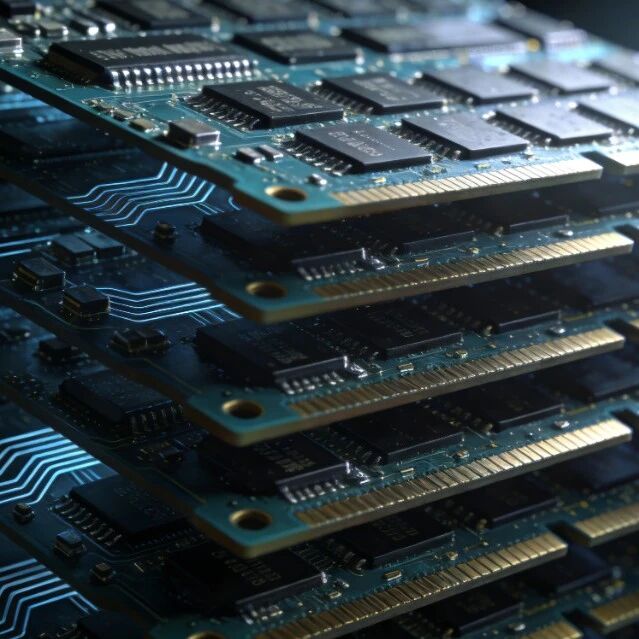
Core Viewpoint - Samsung Electronics and SK Hynix are accelerating the development of the next-generation 3D Dynamic Random Access Memory (DRAM), specifically the vertical structure "4F² DRAM," aiming to complete and test early prototypes by the end of this year [2][3]. Group 1: 4F² DRAM Development - The 4F² DRAM architecture overcomes the limitations of traditional planar DRAM by utilizing a vertical stacking method, which is expected to enhance performance, data transfer rates, and energy efficiency [2]. - Samsung and SK Hynix plan to validate the commercial viability of the 4F² DRAM prototype before advancing to 3D DRAM development [3]. - Micron Technology has opted to skip the 4F² DRAM stage and move directly into 3D DRAM development [3]. Group 2: Industry Challenges and Innovations - The transition to vertical structure designs is seen as essential to overcome the challenges posed by the shrinking of planar DRAM, which has led to increased complexity and manufacturing costs [4]. - Samsung anticipates launching the 4F² DRAM following its seventh-generation 10nm products, while SK Hynix may introduce its 4F² series in the next generation [4]. - The performance of the 4F² DRAM is projected to improve by nearly 50% compared to existing models, with a potential for mass production within three years if development progresses smoothly [4].
三星,终于逆袭?
半导体芯闻· 2026-02-14 08:56
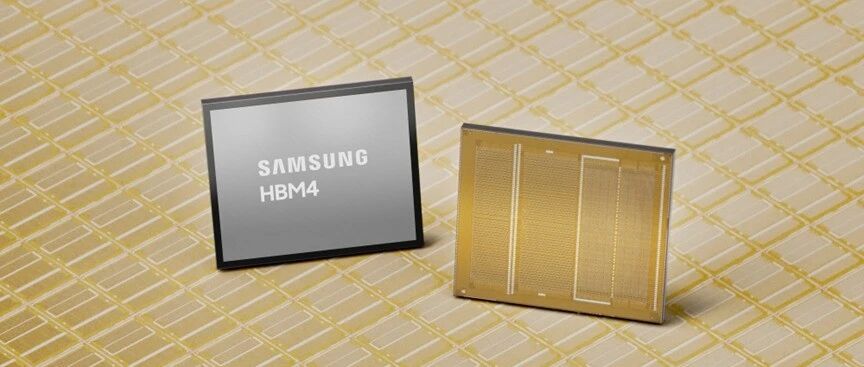
Core Viewpoint - Samsung Electronics has begun shipping its sixth-generation high-bandwidth memory (HBM4), becoming the first manufacturer to mass-produce this crucial storage chip for artificial intelligence, marking a significant turnaround in its competitive position in the AI-driven semiconductor market [1][3]. Group 1: Product Features and Performance - Samsung's HBM4 memory offers a stable processing speed of up to 11.7 Gbps, a 46% increase over the industry standard of 8 Gbps, and a 1.22 times improvement over its predecessor HBM3E's maximum speed of 9.6 Gbps [3][4]. - The total memory bandwidth per stack has increased by 2.7 times compared to HBM3E, reaching up to 3.3 TB/s [4]. - Samsung has integrated advanced low-power design solutions to address the challenges posed by the increase in I/O pin count from 1024 to 2048, achieving a 40% improvement in energy efficiency and a 30% enhancement in heat dissipation [4]. Group 2: Market Strategy and Future Plans - Samsung anticipates that its HBM product sales will triple in 2026 compared to 2025 and is actively expanding HBM4 production capacity [5][6]. - The company plans to introduce HBM4E samples in the second half of 2026 and customized HBM samples based on specific customer requirements in 2027 [7]. - Samsung's integrated design and manufacturing capabilities provide a competitive edge in the HBM market, allowing for optimized production processes and reduced supply chain risks [6][7]. Group 3: Competitive Landscape - Samsung's HBM4 is expected to create a turning point in the competitive landscape, particularly against SK Hynix, which has dominated the HBM market due to its exclusive orders from NVIDIA [10][13]. - The differentiation in manufacturing processes between Samsung and SK Hynix has led to significant performance disparities, with Samsung's HBM4 achieving higher data transfer rates and scalability [13][14]. - Analysts believe that Samsung's performance-first strategy may set new market standards, especially as NVIDIA has raised its specifications to 13 Gbps [14].