
天弘基金

Search documents
国家药监局助力创新药“中国首发”!创新药ETF天弘(517380)连续三日“吸金”累超1.7亿元,跟踪指数年内上涨超10%
2 1 Shi Ji Jing Ji Bao Dao· 2026-01-12 06:22
Group 1 - The A-share and Hong Kong stock markets showed strength on January 12, with the innovative drug concept experiencing fluctuations after several days of rebound; the Hang Seng-Hushen-Hong Kong Innovative Drug Selected 50 Index fell by 0.63% at the time of reporting, while stocks like CSPC Pharmaceutical Group, BeiGene, and Boteng Co., Ltd. saw slight increases [1] - Since the beginning of 2026, as of the close on January 9, the Hang Seng-Hushen-Hong Kong Innovative Drug Selected 50 Index has rebounded over 10% cumulatively [1] - The Tianhong Innovative Drug ETF (517380) was actively traded, with a transaction amount exceeding 40 million yuan and a premium rate of 0.78% at the time of reporting; it has seen continuous capital inflow, accumulating over 170 million yuan from January 7 to 9 [1] Group 2 - According to Zhongtai Securities, it is recommended to focus on three dimensions for investment in 2026: "innovative drugs and their industrial chain, demand recovery and operational turning points, and AI+" [2] - Continuous attention should be paid to the AI+ theme, the positive catalysts from the JPM conference in the innovative drug sector, and the potential for exceeding annual performance forecasts or clearing turning point opportunities [2]


29只,新发!
中国基金报· 2026-01-12 02:26
【导读】本周 29 只新基金启动募集,被动指数基金仍是 " 主力军 " 中国基金报记者 王思文 新年伊始,全市场共有 29 只新基金在本周密集发行! 募集目标定在 50 亿元的有天弘价值成长混合型证券投资基金、国泰恒生生物科技交易型开放 式指数证券投资基金、鹏华添鑫 90 天持有期债券型证券投资基金等。 被动指数基金仍是 " 主力军 " 本周( 1 月 12 日 —1 月 16 日),全市场共 29 只新基金面向投资者公开发行。 从发行特点看,本周新基金的发行主力仍是被动指数型基金。同时,新基金的认购天数有所 缩短,多数新基金选择在两周内完成募集。在募集目标上, 20 亿元、 50 亿元、 80 亿元的 新基金居多。 29 只新基金在本周发行 Wind 数据显示,本周 29 只新基金中, 18 只在周一启动发行,占本周新基金总数的 62% ;周二、周三、周四、周五分别有 4 只、 5 只、 1 只和 1 只基金开始认购。 从认购天数来看,本周新基金中,认购天数较长的达到 90 天,为明亚多元配置三个月持有期 混合型基金中基金( FOF )。 其余新基金认购天数均在一个月以内,多数选择在两周内完成募集,较去年下 ...


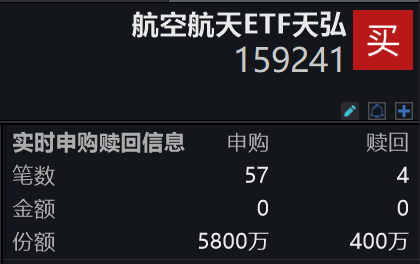
我国12月新增20万颗卫星申请!航空航天ETF天弘(159241)上周五净申购5400万份,标的指数自“924”行情以来暴涨超108%
Sou Hu Cai Jing· 2026-01-12 01:19
Core Viewpoint - The aerospace ETF Tianhong (159241) has shown significant market activity, with a turnover of 34.03% and a trading volume of 216 million yuan, reflecting strong investor interest in the aerospace sector [1]. Group 1: ETF Performance - As of January 9, 2026, the aerospace ETF Tianhong (159241) tracked the National Aerospace Industry Index (CN5082), which surged by 4.44%, with constituent stocks such as Huayin Technology (688281) rising by 18.92% and Guoke Military Industry (688543) by 18.01% [1]. - Since the "924" market rally, the National Aerospace Industry Index has increased by 108.78% [1]. - On the previous Friday, the aerospace ETF Tianhong (159241) experienced a net subscription of 54 million units, indicating strong capital inflow [1]. Group 2: Product Highlights - The aerospace ETF Tianhong (159241) is designed to efficiently capture core military aerospace opportunities, with a military attribute ratio of 97.86%, making it the highest military content index in the market [3]. - The weight of aerospace equipment in the ETF is notably high at 66.8%, surpassing other indices such as the CSI Military and CSI Defense indices [3]. Group 3: Industry Developments - China has applied for over 200,000 satellite frequency resources, indicating a strategic national initiative to accelerate its satellite capabilities and compete with SpaceX [4]. - According to Guojin Securities, the construction of satellite internet is driving strong demand for commercial rockets, with plans to launch a total of 44,816 satellites, leading to an estimated annual need for approximately 8,963 satellite replacements [5]. - The commercial rocket industry in China is entering a new phase of engineering and industrialization, supported by government policies and the initiation of IPO processes for several commercial rocket companies [5].





新基金密集发行 2026投资风向浮现
Xin Lang Cai Jing· 2026-01-11 21:22
Group 1 - In the first trading week of 2026, a total of 46 new funds were launched, with equity funds dominating the market, including 16 mixed equity funds and 10 passive index funds [2][4] - The popularity of equity products can be traced back to 2025, where over 1500 new funds were issued, totaling more than 1.1 trillion units, with a significant focus on equity products [4][5] - The trend of increasing issuance of equity funds is evident, with a notable growth in stock and mixed funds compared to previous years, reflecting a sustained demand for equity assets amid improving market conditions [6][7] Group 2 - The "technology boom" remains a key investment theme, with a strong preference for technology sectors such as AI, quantum communication, and advanced manufacturing, which are expected to continue driving investment in 2026 [6][7] - Multiple fund companies emphasize the importance of technology as a long-term investment focus, highlighting sectors like semiconductors, consumer electronics, and innovative energy solutions [6][7] - The AI application sector is anticipated to become a significant investment focus in 2026, with a shift towards commercialized applications across various industries [7]
百亿级行业主题ETF数量激增
Zhong Guo Zheng Quan Bao· 2026-01-11 20:49
Core Insights - The commercial aerospace, semiconductor equipment, and non-ferrous metals sectors have sparked a theme investment boom since the beginning of 2026, with industry-themed ETFs becoming a key choice for capital allocation due to their transparency and convenience [1][2] - As of January 9, 2026, the number of domestic stock ETFs with a scale exceeding 10 billion yuan has expanded to 65, with a notable increase of 7 new funds in just one month [1][2] - The trend shows a decline in the share of broad-based ETFs in the A-share market while the share of industry-themed ETFs continues to grow, indicating a shift in market sentiment and investor preferences [1][5] Fund Performance - The satellite ETF from Yongying Fund has surged over 50% in the past month, with a net inflow of over 6.7 billion yuan, growing from 2.395 billion yuan to 11.769 billion yuan in size [2] - Other ETFs, including the semiconductor equipment ETF from Guotai Fund and the industrial non-ferrous ETF from Wanjia Fund, have also seen significant growth, with increases of over 20% in the same period [2] - The overall landscape shows a strong presence of 10 billion yuan-level ETFs in sectors such as securities, dividends, robotics, pharmaceuticals, non-ferrous metals, and military industry [2][3] Fund Management Strategies - Fund managers are increasingly focusing on strategic positioning in industry-themed ETFs, leveraging structural market trends to enhance their product offerings [3][4] - Leading firms have established a competitive advantage through a broad product line in industry-themed ETFs, with many achieving significant scale [3][4] - Recent successful launches include the gold stock ETF and the satellite ETF, which have quickly reached the 10 billion yuan mark, reflecting effective market positioning and timely product development [4] Market Trends - The total scale of domestic ETFs has stabilized at 6 trillion yuan, with a noticeable trend of capital inflow into industry-themed ETFs while broad-based ETFs experience outflows [5] - This shift in investor behavior is closely tied to market sentiment, where optimistic conditions lead to increased interest in high-risk industry-themed ETFs, while uncertain conditions drive a preference for more balanced broad-based ETFs [5] - Future opportunities for fund managers lie in providing more refined investment tools, including ETFs that cover specific niche industries and the increasing number of Smart Beta or enhanced index ETFs [5]
中国商业航天迎“质变元年”卫星ETF规模开年接近翻倍
Zheng Quan Shi Bao· 2026-01-11 18:01
Core Viewpoint - The satellite industry chain has shown remarkable performance since the beginning of 2026, with significant growth in commercial aerospace, space stations, and Beidou navigation sectors, leading to substantial increases in satellite ETFs and related products [1][3]. Group 1: Market Performance - As of January 9, 2026, the China Satellite Industry Index has increased by 64.99% over the past month, while the National Commercial Satellite Communication Industry Index has risen by over 50% [1]. - Multiple satellite ETFs have seen performance increases exceeding 60% in the same timeframe, with total assets under management for satellite-related ETFs and linked products reaching 23.76 billion yuan, nearly doubling from 12.11 billion yuan at the end of 2025 [1]. - The Yongying National Commercial Satellite Communication Industry ETF has become the first satellite ETF to exceed 10 billion yuan in scale, currently standing at 11.769 billion yuan [1]. Group 2: Product Overview - There are currently four satellite industry indices in the market, with two having tracking products. The total scale of ETFs and linked products related to satellite investment exceeds 23.7 billion yuan [2]. - The Yongying National Commercial Satellite Communication Industry ETF is the only product tracking the National Commercial Satellite Communication Industry Index, while the China Satellite Industry Index has ten tracking products from various fund companies, including five ETFs [2]. Group 3: Industry Outlook - Fund managers anticipate that 2026 will be a pivotal year for the acceleration of China's commercial aerospace industry, with high entry barriers, strong policy support, and clear order visibility in midstream sectors like rocket launches and satellite manufacturing [3][4]. - The successful launch of the Zhuque-3 rocket marks a significant resolution to the long-standing issue of insufficient launch capacity, with various rocket models set to conduct frequent launches and recovery tests in the coming months [4]. - Satellite communication is expected to serve as the foundational technology for 6G communication and support applications in autonomous driving, low-altitude economy, IoT, and space computing [4]. Group 4: Investment Considerations - The commercial aerospace sector is currently experiencing a convergence of industry, policy, and capital, leading to rapid development [5]. - The focus for selecting relevant listed companies should be on "technical barriers + competitive advantages + order visibility," prioritizing firms with core technologies, strong competitive capabilities, and stable order acquisition [6].
逆向布局精准卡位主动权益基金操作“向ETF看齐”
Zheng Quan Shi Bao· 2026-01-11 17:03
Group 1 - The boundary between passive investment through ETFs and actively managed funds is becoming increasingly blurred, with ETFs evolving into a "duet" with active equity funds [1] - The direction of ETF applications is increasingly serving as a "barometer" for many active equity funds, reflecting market demand and profitability [2] - Active equity funds are adopting ETF-like characteristics, with high concentration in specific sectors to achieve beta returns, often pushing their positions close to the 90% limit [2] Group 2 - The issuance of ETFs is often seen as a precursor to industry booms, as evidenced by the rapid adoption of robotics ETFs leading to a surge in active equity fund investments in the robotics sector [2] - The recent focus on commercial aerospace by active equity funds aligns with the launch of the first satellite ETF, indicating a strategic shift towards this sector [3] - A decrease in ETF applications for consumer sectors correlates with a reduction in active equity fund allocations to those areas, demonstrating a synchronized investment approach [3] Group 3 - The logic behind ETF applications has evolved from merely capturing flows to predicting industry turning points, significantly benefiting the research and investment strategies of active equity funds [4] - The recent surge in chemical ETFs reflects a strategic pivot in ETF product development, aligning with active fund managers' investment strategies [4][5] - The collaboration between ETF product development and research departments enhances the precision of investment strategies, allowing for better positioning in the market [8] Group 4 - The reverse positioning of ETFs during industry downturns often signals the end of a sector's decline and the potential for fundamental recovery, as seen in the solar and battery sectors [7] - The issuance of solar and battery ETFs by leading funds indicates a strategic bet on these sectors, supported by favorable policy changes [7] - The collaborative effect between ETF development and research departments is a significant advantage for precise market positioning [8]
逆向布局精准卡位 主动权益基金操作“向ETF看齐”
Zheng Quan Shi Bao· 2026-01-11 17:00
Group 1 - The boundary between passive investment through ETFs and actively managed funds is becoming increasingly blurred, with ETFs evolving into a "duet" with active equity funds [1] - The direction of ETF applications is increasingly serving as a "barometer" for many active equity funds, reflecting market demand and profitability [2] - Active equity funds are adopting ETF-like characteristics, with high concentration in specific sectors to achieve beta returns, often pushing their positions close to the 90% limit [2] Group 2 - The issuance of ETFs is seen as a signal for industry booms, with examples like the robotics sector where major fund companies launched ETFs, leading to a surge in active fund investments in that area [2] - The recent focus on commercial aerospace by active equity funds aligns with the launch of the first satellite ETF, indicating a strategic shift towards this sector [3] - A decrease in ETF applications for consumer sectors correlates with a reduction in active fund allocations to those areas, demonstrating a synchronized investment approach [3] Group 3 - The logic behind ETF applications has evolved from merely capturing flows to predicting industry turning points, significantly benefiting the research and investment strategies of active equity funds [4] - The recent surge in chemical ETFs reflects a strategic pivot in ETF product development, with active funds adjusting their holdings in response to these new offerings [4][5] - The synchronization between active fund managers and ETF applications indicates a high level of collaboration between public investment research and product development [5] Group 4 - The reverse positioning of ETFs often signals the end of industry downturns, as seen in the solar and battery sectors, where ETFs were launched despite active funds reducing their exposure [6] - The issuance of solar and battery ETFs by leading public funds aligns with policy changes aimed at industry reform, suggesting a strategic move towards enhancing profitability for leading companies [6] Group 5 - The collaboration between ETF product development and research departments has become a significant advantage for public funds in identifying investment opportunities [7] - ETF applications are evolving into precursors for active equity fund strategies, providing liquidity for sectors that are underrepresented or have been overlooked [7]
九十一只基金竞逐一月发行市场 权益资产领跑“小爆款”频现
Zheng Quan Shi Bao· 2026-01-11 17:00
Core Insights - The A-share market experienced a strong start in January 2026, with a significant increase in public fund issuance, totaling 91 new funds, marking a record high for the period [1] - Equity funds led the issuance with 36 new products, reflecting institutional optimism towards equity assets [1][3] - FOF funds showed remarkable performance, with three newly established products raising over 60 billion yuan, accounting for more than 70% of the total issuance for the month, indicating strong demand for asset allocation products [1][2] Fund Distribution - In January 2026, the distribution of newly issued funds included 36 equity funds, 27 mixed funds, 13 bond funds, 13 FOFs, and 2 QDII funds, catering to various investor needs [2] - The total issuance scale of 11 newly established funds reached 81.91 billion yuan, with FOF funds contributing significantly to this figure [2] Performance of FOF Funds - The three FOF funds raised a total of 60.32 billion yuan, representing 73.64% of the total new fund issuance for the month, with the largest being Guangfa Yueying Stable Three-Month Holding A at 32.88 billion yuan [2] - High subscription efficiency was noted, with several funds completing their fundraising in just one day [2] Focus on Technology Innovation - The issuance of technology-themed funds, particularly those related to the Sci-Tech Innovation Board, emerged as a highlight in January, with multiple companies launching index funds tracking various dimensions of the board [4] - Institutions are recognizing the long-term investment value in the Sci-Tech Innovation Board and are creating more refined tools to capture growth opportunities across different sectors [4] Diverse Product Offerings - New fund products displayed a diverse range, catering to different risk preferences, with several major fund companies launching mixed equity or ordinary equity funds [4] - The trend indicates a growing emphasis on active management to generate excess returns [4] Global Asset Allocation Trends - In response to global asset allocation trends, several fund companies launched QDII or Hong Kong stock-themed funds, enabling investors to seize opportunities in quality Hong Kong assets [5] - Mixed bond funds and bond-mixed funds were also introduced to provide options for investors seeking stable returns [5] Strong Fund Company Performance - Leading public fund companies showcased robust product development capabilities, with several launching multiple new products across various categories [6][7] - Major banks are serving as custodians for many of these products, indicating strong support from distribution channels for the new fund issuance [7] Market Outlook - The public fund market in January 2026 had a promising start, reflecting fund managers' positive expectations for structural opportunities in the market [7] - The trend of innovation and depth in public fund services is expected to continue, providing investors with new tools to strategically position themselves for investment opportunities in 2026 [7][8]
开年以来港股主题ETF“吸金”超百亿元 多只产品份额创新高
Shang Hai Zheng Quan Bao· 2026-01-09 18:42
Group 1 - The core point of the news is that there has been a significant inflow of funds into Hong Kong stock thematic ETFs, with a total net subscription amounting to 100.5 billion yuan from January 5 to 8, indicating strong investor interest in the technology sector [1][2] - Multiple ETFs have reached record high subscription amounts, with specific funds like the Fuguo Hong Kong Internet ETF and the Huatai-PB Southern East Ying Hang Seng Technology ETF seeing net subscriptions of 17.02 billion yuan and 9.87 billion yuan respectively [2] - New thematic ETFs are being launched, with private equity funds frequently appearing among the top holders, suggesting a growing interest in this investment vehicle [3] Group 2 - Public funds are increasing their investment in Hong Kong thematic funds, with several new funds accelerating their issuance process to capitalize on market opportunities [4] - The Hong Kong market has shown signs of seasonal volatility, with historical data indicating a strong performance from Christmas to the Lunar New Year, which may continue this year due to reduced liquidity concerns [5] - Current valuations of Hong Kong stocks are considered reasonable, with expectations of strong corporate earnings supporting potential market strength, particularly in technology and new consumption sectors [6]