微软

Search documents
“AI杀死SaaS”论调引发全球抛售 软件的天塌了吗
2 1 Shi Ji Jing Ji Bao Dao· 2026-02-05 23:13
Core Viewpoint - The global capital markets are experiencing significant turbulence due to fears that AI may disrupt the SaaS industry, leading to a sharp sell-off in SaaS stocks following the release of an AI tool by Anthropic [1][3]. Group 1: Market Impact - On February 3, the combined market value of two S&P indices tracking software, financial data, and exchange stocks dropped by approximately $300 billion [1]. - The Hong Kong SaaS index fell by 6.39% on February 4, resulting in a total market value loss of nearly HKD 150 billion [1]. - Major SaaS stocks in Hong Kong, such as Kingdee International and Kingsoft, saw declines of 12.64% and 5.14%, respectively [1]. Group 2: Broader Market Reactions - The sell-off in the software sector affected the entire Hang Seng Tech Index, which dropped by 1.84%, with notable declines in Tencent (3.96%), Alibaba (0.93%), and NetEase (3.32%) [2]. - The A-share SaaS index also fell by 2.61%, with companies like Sangfor Technologies and Yonyou Network experiencing significant losses [2]. - The U.S. SaaS sector had already begun to decline on February 3, with a drop of 4.12% in the Wind U.S. SaaS index, leading to a total market value loss exceeding $30 billion [2]. Group 3: Causes of Market Sentiment - The catalyst for the sell-off was the introduction of an AI plugin by Anthropic, which automates various legal tasks, raising concerns about the potential obsolescence of traditional SaaS offerings [3][4]. - The term "SaaSpocalypse" was coined by traders to describe the market's reaction to the perceived threat posed by AI to the SaaS business model [3]. Group 4: SaaS Business Model Insights - SaaS operates on a subscription model, providing services like CRM and ERP, which contrasts with traditional software sales [6]. - The low entry barriers and integration of industry best practices are key advantages of SaaS, making it appealing to small and medium-sized enterprises [6]. - While AI can enhance SaaS offerings by providing personalized solutions, it also presents challenges, particularly for smaller businesses that may struggle with AI deployment [6]. Group 5: Future Outlook - The market may be overreacting, as SaaS still holds advantages in the SME sector, and a differentiation within the SaaS market is expected [7]. - Deloitte predicts that the SaaS business model may evolve, with a shift towards hybrid pricing models based on usage and outcomes by 2026 [7]. - Gartner forecasts that by 2030, at least 40% of enterprise SaaS spending will transition to usage-based or outcome-based pricing models [7].
中国资产大涨!微软市值蒸发超万亿元!现货白银跌近20%!比特币跌超14% 发生了什么?
Mei Ri Jing Ji Xin Wen· 2026-02-05 23:11
Group 1: Market Performance - Major tech stocks experienced a decline, with AMD down over 3%, Amazon down over 4%, and Qualcomm down nearly 9% [1][2] - Amazon's Q4 sales reached $213.39 billion, a 13.6% year-over-year increase, but the stock fell over 11% in after-hours trading [2] - Qualcomm's performance was negatively impacted by a global storage supply shortage, leading to lower-than-expected guidance [2] Group 2: Cryptocurrency Market - Bitcoin faced a significant drop of over 14%, trading at $62,912.45, with a total liquidation amount of $2.06 billion affecting over 430,000 traders [5][6] - Market sentiment towards Bitcoin and other cryptocurrencies has turned pessimistic, with notable investors suggesting that Bitcoin has become a speculative asset rather than a hedge against currency devaluation [7] - Analysts indicate that Bitcoin is in a bear market, with many participants likely to incur losses [7] Group 3: Chinese Stocks - The Nasdaq Golden Dragon China Index rose by 0.90%, with several Chinese stocks like NIO and Li Auto showing gains [2] - Notable performers included Liandai Technology, which surged over 38%, and Flash Delivery, which increased by over 14% [4]

【高通(QCOM.O)】FY26Q1业绩符合预期, 内存短缺拖累下游需求——FY26Q1业绩点评(付天姿)
光大证券研究· 2026-02-05 23:08
Core Viewpoint - Qualcomm's FY26Q1 performance met expectations, but the guidance for FY26Q2 fell short due to adverse impacts from memory shortages and price increases affecting downstream demand [4]. Group 1: FY26Q1 Performance - Qualcomm achieved Non-GAAP revenue of $12.252 billion in FY26Q1, slightly above Bloomberg's consensus estimate of $12.196 billion, representing a year-on-year increase of 5% [4]. - The QCT business generated $10.613 billion in revenue, also up 5% year-on-year, while the QTL business reported $1.592 billion, a 4% increase [4]. - Non-GAAP net profit for FY26Q1 was $3.781 billion, exceeding the consensus estimate of $3.690 billion, with Non-GAAP EPS at $3.50, above the expected $3.407 [4]. Group 2: FY26Q2 Guidance - Qualcomm's guidance for FY26Q2 indicates Non-GAAP revenue between $10.2 billion and $11 billion, below the consensus estimate of $11.16 billion [4]. - The projected Non-GAAP diluted EPS for FY26Q2 is between $2.45 and $2.65, compared to the consensus estimate of $2.874 [4]. - The guidance shortfall is primarily attributed to the negative impact of memory shortages and price increases on downstream demand [4]. Group 3: QCT Mobile Business - In FY26Q1, the mobile business revenue was $7.824 billion, reflecting a 3% year-on-year growth, driven by increased shipments of Snapdragon chips [5]. - Qualcomm secured a 75% supply share for high-end smartphone chips for Samsung's upcoming series, and ByteDance's AI smartphone features Qualcomm's Snapdragon Elite chips [5]. - The company anticipates that the ongoing memory chip shortage will constrain the growth of its mobile business in the short term, with FY26Q2 mobile revenue expected to be around $6 billion [5]. Group 4: QCT IoT Business - The IoT business generated $1.688 billion in revenue in FY26Q1, a 9% year-on-year increase, mainly due to higher shipments in edge networking and consumer products [6]. - Qualcomm is expanding its presence in vertical applications, launching new products at CES 2026, including the Dragonwing Q-7790 and Q-8750 for various applications [6]. - The company introduced the Snapdragon X2 Plus chip, enhancing CPU single-core performance by 35% and NPU performance by 78%, with multiple PC products based on Snapdragon showcased at CES [7]. Group 5: QCT Automotive Business - The automotive business reported $1.101 billion in revenue for FY26Q1, a 15% year-on-year increase, driven by higher shipments of vehicles equipped with Qualcomm's smart cockpit technology [8]. - Qualcomm signed a long-term supply agreement with Volkswagen Group, expanding its supply to brands like Audi and Porsche [8]. - The company is collaborating with CARIAD and Bosch to develop autonomous driving systems, indicating progress in its smart driving initiatives [8].

中国资产大涨!微软市值蒸发超万亿元!现货白银跌近20%!比特币跌超14%,全网超43万人爆仓,143亿元灰飞烟灭,发生了什么?
Mei Ri Jing Ji Xin Wen· 2026-02-05 23:05
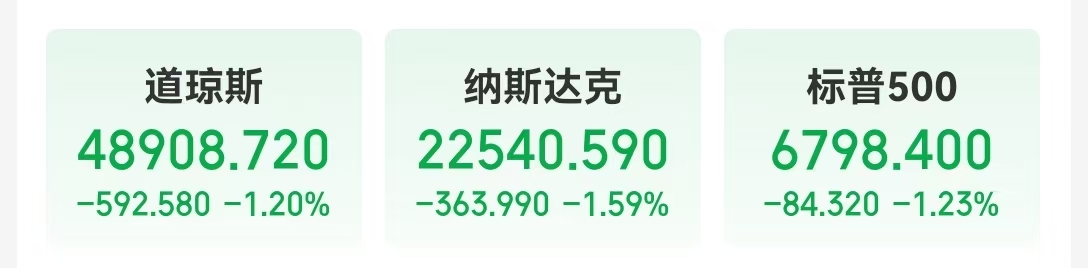
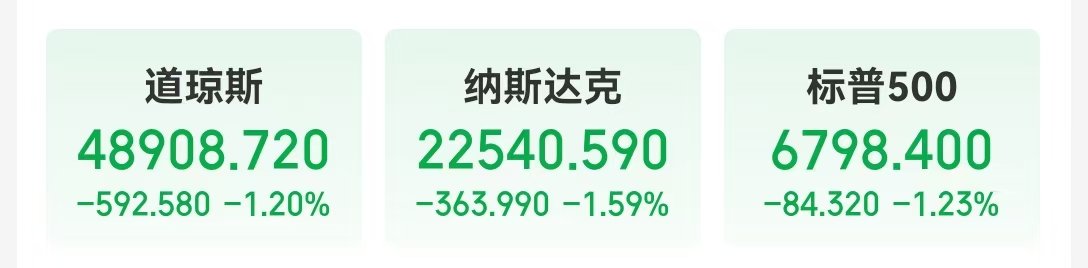
每经编辑|杜宇 当地时间2月5日,美股三大指数集体收跌,道指下跌592.58点,跌幅1.20%;纳指跌1.59%;标普500指数跌1.23%。 热门科技股普跌,超微电脑、高通跌超8%,亚马逊跌超4%,AMD跌超3%,特斯拉跌超2%,英伟达跌超1%。 微软跌4.95%,市值一夜蒸发1524亿美元(约合人民币10573亿元)。 | 微软 | | | --- | --- | | MSFT us 空 | | | 408.300 昨收 414.190 量比 0.98 393.670 - | | | 392.330 市值 2.92万亿 换 0.90% | | | -20.520 -4.95% 开 407.440 市盈™ 24.51 额 262.24亿 | | | 异动解读:评级下调+云业务增长放缓+软件... ● × 1.7 16. | | | 盘后 391.070 - -2.600 -- -0.66% 0 0 17:12 美东时间 | | | 盘中 × 1 日K × 周K × 月K × 五日 × | 更多▼ | | 时间05:00 均价:398.905 最新393.670 涨幅-4.954% | | | 436.050 ...


华尔街顶级分析师最新评级:微软遭下调,Snap获上调
Xin Lang Cai Jing· 2026-02-05 16:44
Core Insights - The report summarizes significant analyst rating adjustments that could influence market trends, highlighting both upgrades and downgrades across various companies [1]. Upgrades - B. Riley upgraded Snap (SNAP) from Neutral to Buy, maintaining a target price of $10, citing strong growth in high-end subscription revenue and the rollout of high-margin advertising formats [5]. - Seaport Research upgraded FuboTV (FUBO) from Neutral to Buy with a target price of $3, viewing current uncertainties as a quality investment opportunity following a significant stock drop post-earnings [5]. - Wolfe Research upgraded Zoom Video Communications (ZM) from Peer Perform to Outperform, setting a target price of $115, anticipating a re-acceleration in growth and strong performance in its contract center and phone business [5]. - Jefferies upgraded Celanese (CE) from Hold to Buy, raising the target price from $43 to $86, suggesting it is a good time to buy despite potential earnings volatility in the first half of 2026 [5]. - Cantor Fitzgerald upgraded DigitalOcean (DOCN) from Neutral to Overweight, increasing the target price from $47 to $68, emphasizing its focus on digital-native enterprises and a strong foundation for market expansion [5]. Downgrades - Stifel downgraded Microsoft (MSFT) from Buy to Hold, reducing the target price from $540 to $392, citing supply issues with Azure and strong competition from Google Cloud [5]. - Susquehanna downgraded Qualcomm (QCOM) from Positive to Neutral, lowering the target price from $210 to $140, recommending a wait-and-see approach due to industry challenges [5]. - Citigroup downgraded Six Flags Entertainment (FUN) from Buy to Neutral, cutting the target price from $25 to $20, citing overvaluation after a 40% increase since November [5]. - Jefferies downgraded Steven Madden (SHOO) from Hold to Underperform, lowering the target price from $37 to $30, highlighting ongoing pressures in its wholesale business [5]. - JPMorgan downgraded Corteva (CTVA) from Overweight to Neutral, raising the target price from $75 to $77, based on valuation considerations [5]. Initiations - Benchmark initiated coverage on Cava Group (CAVA) with a Buy rating and a target price of $80, recognizing its leading position in the Mediterranean dining category [5]. - H.C. Wainwright initiated coverage on Incyte (INCY) with a Buy rating and a target price of $135, noting potential catalysts that could stabilize revenue expectations post-Jakafi patent expiration [5]. - Bernstein initiated coverage on Coupang (CPNG) with an Underperform rating and a target price of $17, favoring companies with strong growth potential driven by online penetration [5]. - Benchmark initiated coverage on Andersons (ANDE) with a Buy rating and a target price of $75, highlighting the growth momentum in its ethanol business [5]. - Bank of America initiated coverage on Wave Life Sciences (WVE) with a Buy rating and a target price of $38, emphasizing the differentiated advantages of its obesity drug WVE-007 [6].




美股三大指数集体低开
第一财经· 2026-02-05 14:47
2月5日,美股三大指数集体低开,纳指跌1.34%,道指跌0.66%,标普500指数跌0.95%。 | 名称 | 涨跌幅 | 现价 | 涨跌 | 道琼斯工业平均 | -0.66% 49176.50c -324.80 | | --- | --- | --- | --- | --- | --- | | 纳斯达克指数 | -1.34% 22597.27c -307.31 | 标普500 | -0.95% 6817.27c -65.45 | | | | 纳斯达克100 | -1.14% 24608.60c -282.64 | 万得美国科技七巨头指数 --2.17% -63001.05 -1398.31 | | | | 大型科技股多数下跌,高通跌超9%,谷歌跌逾5%,亚马逊跌超3%。 | 名称 | 涨跌幅 ▼ 现价 | | --- | --- | | 蔚来 | 6.90% - 4.747 | | 理想汽车 | 2.31% 17.740 | | 哔哩哔哩 | 2.25% 30.420 | | 文远知行 | 2.05% 7.256 | | 百度集团 | 1.67% 140.260 | | 我们之 | 1.40% 12.290 ...

三大股指期货齐跌,“软件股末日”论甚嚣尘上,亚马逊(AMZN.US)盘后公布财报
Zhi Tong Cai Jing· 2026-02-05 14:09
Market Overview - US stock index futures are all down, with Dow futures down 0.30%, S&P 500 futures down 0.52%, and Nasdaq futures down 0.68% [1] - European indices also show declines, with Germany's DAX down 0.63%, UK's FTSE 100 down 0.40%, France's CAC40 down 0.06%, and the Euro Stoxx 50 down 0.41% [2][3] - WTI crude oil prices fell by 2.15% to $63.74 per barrel, while Brent crude oil dropped by 2.06% to $68.03 per barrel [3][4] Software Sector - The software sector is experiencing significant declines, with Goldman Sachs' software index falling for the seventh consecutive day, down 19% year-to-date, contributing to a 1.4% drop in the Nasdaq 100 index [5] - Major software companies like Microsoft, Oracle, Salesforce, and Palantir have seen year-to-date declines exceeding 10%, with Adobe's stock plummeting by 20% [5] - The software sector has lost $2 trillion in market value from last year's peak, and hedge fund net positions have dropped to a historical low of 4.2% [5] Trade and Geopolitical Developments - The US is planning to establish a protected trade zone for rare earths, using tariffs to set price floors, as announced by Vice President Pence [6] - A recent Markets Pulse survey indicates that most respondents believe stock returns will outperform bonds due to international policy dynamics, with over half citing trade and geopolitical developments as the main catalysts for market volatility [6] Individual Company Updates - Amazon faces a $70 million fine from German antitrust regulators for price control practices, coinciding with its upcoming earnings report [8] - Barrick Gold reported a 64% increase in Q4 revenue and a 140% increase in dividends, announcing plans for an IPO to spin off its North American gold assets [9] - SiTime's Q4 revenue reached $113.3 million, a 66% year-over-year increase, with a strong performance in its communication and data center business [10][11] - Qualcomm's stock fell over 12% after it provided a weak earnings forecast, raising concerns about smartphone demand due to chip shortages [12] - Arm Holdings' stock dropped over 7% after its revenue forecast fell short of investor expectations, despite a 26% year-over-year revenue increase in Q3 [13] - BBVA's net profit grew by 4.1% to €2.53 billion, but increased provisions in emerging markets raised concerns about future growth [14] - Shell's Q4 adjusted profit fell to $3.26 billion, below market expectations, due to low oil prices and poor performance in its chemical business [15] - Vodafone's stock hit a one-year low despite a 6.5% increase in Q3 revenue, as growth in its key German market fell short of expectations [16] - NIO forecasts an operating profit of RMB 700 million to 1.2 billion for Q4 2025, marking its first anticipated quarterly operating profit [17]

Stifel下调微软目标价至392美元
Ge Long Hui· 2026-02-05 13:10
Stifel将微软的评级从"买入"下调至"持有",目标价从540美元下调至392美元。(格隆汇) ...
微软市值暴跌5000亿后 市场焦点转向亚马逊AWS云业务财报
Ge Long Hui A P P· 2026-02-05 13:08
Group 1 - Amazon's upcoming earnings report is a major focus for the market, as investors seek insights into the growth prospects of the cloud computing industry [1] - The tech sector is experiencing heightened risk aversion following a significant stock price correction for Microsoft due to slowing growth in its cloud business [1]
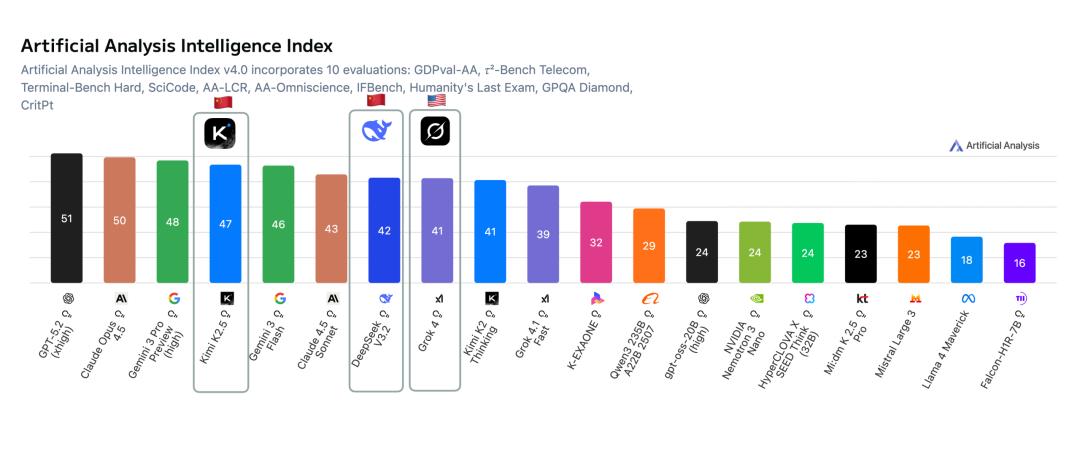
中国AI拒绝仰视
3 6 Ke· 2026-02-05 12:58
Group 1 - The core event involves the merger of xAI and SpaceX, resulting in a new entity valued at $1.25 trillion, with xAI's valuation prior to the merger reaching $200 billion to $230 billion [1] - The valuation disparity between Chinese and American AI companies is highlighted, with xAI's valuation significantly exceeding that of all Chinese AI startups combined [1] - The article discusses the systemic undervaluation of Chinese tech companies compared to their American counterparts, with Nasdaq's median valuation at 34 times earnings versus Hong Kong's at 18-19 times [7] Group 2 - The article argues that the valuation differences reflect a deeper "capital hegemony," where American investors are willing to pay a premium for potential market-defining technologies [9][10] - It contrasts the "ecosystem pricing" approach of the U.S. market with China's "efficiency pricing," which focuses on tangible results and financial visibility [12] - The historical context of American tech dominance is presented, suggesting that past successes have led to a biased perception of future potential [14] Group 3 - The financial performance of xAI is scrutinized, revealing a cash burn rate of approximately $1 billion per month, indicating challenges in achieving self-sustainability [15] - In contrast, Chinese AI companies are noted for their rapid technological advancements and practical applications, with significant growth in open-source model downloads [17][24] - The article emphasizes that Chinese AI firms are not merely low-cost alternatives but are becoming essential components of the global developer ecosystem [24] Group 4 - The narrative suggests a shift in capital market perceptions, with increasing recognition of the core competencies of Chinese tech firms, such as engineering talent and comprehensive industrial support [26] - It predicts a potential turning point in profitability for Chinese tech giants, with AI adoption expected to enhance their valuations by 15% to 20% [26] - The conclusion posits that the future of technology investment should focus on practical applications and real-world value creation rather than speculative narratives [27][28]