大疆

Search documents
大疆DJI RS5相机稳定器体验:从抵触到爱用 小白用户力荐
Xin Lang Cai Jing· 2026-01-15 12:05
Core Insights - The DJI RS5 significantly lowers the entry barrier for using camera stabilizers, allowing even novice users to achieve leveling in just a few minutes [2][3] - The Z-axis stability indicator and fifth-generation stabilization algorithm enhance stability during significant movements, aiding beginners in developing their usage habits [2][3] - The intelligent tracking module can recognize various objects, reducing operational costs by eliminating the need for additional personnel with high skills, enabling one person to accomplish tasks typically requiring a small team [2][3]
穿透消费分化迷雾:CBI品牌榜中的“真增长”挖掘
Ge Long Hui· 2026-01-15 11:25
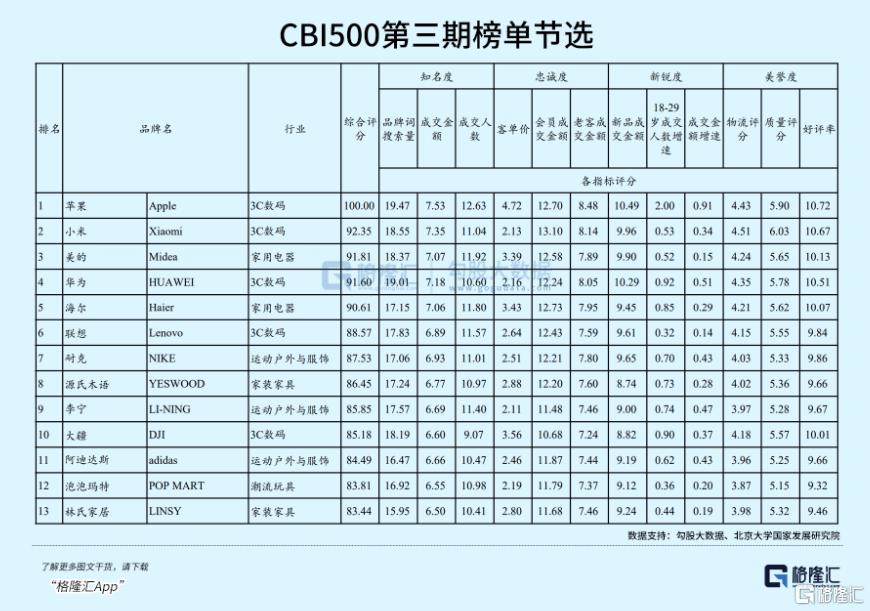
Group 1 - The Chinese consumer market has shown a steady recovery since 2025, with a year-on-year growth of 6.8% in retail sales of consumer goods in the first three quarters, contributing 53.5% to economic growth [1] - The recovery trend in the consumer sector is not uniform, with traditional brands struggling due to lack of innovation, while new brands are breaking through with technological advancements and innovative models [1] - The need for a quantitative evaluation tool to identify structural opportunities in the market has led to the development of the "China Online Consumption Brand Index (CBI)" and the "Global Brand China Online Top 500 List (CBI500)" by Peking University [2] Group 2 - The CBI500 list is based on real consumer data from Taobao and Tmall, utilizing a comprehensive brand quality indicator that includes new product capability, user reviews, and search popularity [2][5] - The top five brands in the CBI500 list—Apple, Xiaomi, Midea, Huawei, and Haier—demonstrate a "stronger gets stronger" logic, maintaining competitive advantages through balanced performance across various dimensions [6][8] - DJI has achieved significant growth, moving from a score of 78.53 to 85.18, entering the top ten for the first time, driven by continuous technological innovation and market expansion [9][12] Group 3 - Pop Mart has shown strong resilience in the collectible toy sector, climbing from 31st to 12th place in the CBI500 list, with leading scores in loyalty and customer spending [14][17] - The growth logic of Pop Mart is based on deep insights into emotional consumption needs, utilizing an IP matrix and a robust membership system to create a strong emotional connection with consumers [17] - The differentiation in the consumer market has created opportunities for brands that adapt to trends, as seen with Fenjiu's rise in rankings due to its "youthful" strategy targeting younger consumers [22][23] Group 4 - The CBI list serves as a data-driven tool for observing the consumer market, helping investors identify brands that capture product innovation opportunities and possess anti-cyclical potential [27][29] - The evaluation logic of the CBI list helps to avoid misleading short-term sales data, focusing instead on loyalty and reputation metrics to identify brands that achieve sustainable growth [27][29] - The current economic recovery phase presents a critical window for brand restructuring and value selection, emphasizing the importance of understanding consumer behavior changes [26][29]







机器人6S和3D打印店 正在催生新零售场景
2 1 Shi Ji Jing Ji Bao Dao· 2026-01-15 11:17
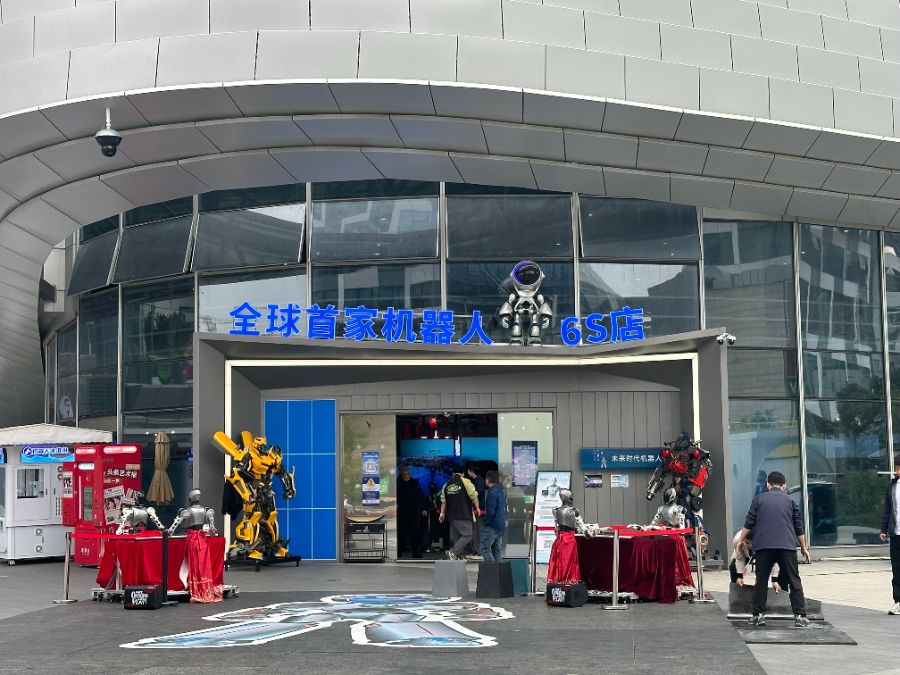
Core Insights - The first robot 6S store in the world has gained significant attention, achieving a total revenue of 20 million yuan within six months and attracting approximately 300,000 customers, with over 30% being international visitors [5][9]. Group 1: Business Model and Operations - The robot 6S store operates under a unique model that includes leasing and customization, creating a comprehensive service system that differs from traditional retail [11]. - The store has attracted nearly 70 robot brands, showcasing products across various sectors such as home service, medical assistance, and education [10]. Group 2: Economic Impact - The emergence of technology flagship stores in Shenzhen is seen as a vital driver for consumer traffic and economic growth, with the first human-shaped robot theme store attracting over 2,000 visitors daily [17]. - These stores enhance the shopping experience and draw high-value customers, significantly increasing the average time spent in stores by 1-2 hours [20]. Group 3: Industry Trends - The technology retail sector is becoming a key contributor to shopping mall performance, with tech brands achieving 2-3 times the sales per square meter compared to traditional retail [21]. - The introduction of technology flagship stores is expected to bridge the gap between technology and consumer markets, accelerating the adoption of innovative products [22][25]. Group 4: Challenges and Solutions - Despite the initial success, maintaining operations for technology flagship stores is challenging, with a closure rate of over 26% for newly opened stores nationwide [28]. - Shenzhen's government is actively promoting the development of flagship stores, aiming to introduce over 1,000 new stores within the year and providing financial incentives for attracting well-known brands [29][30].

穿透消费分化迷雾:CBI品牌榜中的“真增长”挖掘
格隆汇APP· 2026-01-15 11:15
Core Insights - The article highlights the steady recovery of China's consumer market since 2025, with a year-on-year growth of 6.8% in retail sales of consumer goods in the first three quarters, contributing 53.5% to economic growth [2] - However, the consumer sector faces challenges with increasing internal differentiation, where traditional brands struggle due to lack of innovation while new brands succeed through technological breakthroughs and innovative models [2][3] Group 1: Consumer Brand Landscape - The CBI500 ranking reflects a stable top tier of brands, emphasizing the "stronger get stronger" logic in the consumer market [7] - Leading brands like Apple, Xiaomi, Midea, Huawei, and Haier maintain competitive barriers through balanced performance across four dimensions: brand awareness, innovation, loyalty, and reputation [8][10] - DJI and Pop Mart have shown significant growth, with DJI entering the top ten for the first time, driven by continuous technological innovation and market expansion [11][16] Group 2: Brand Performance and Growth Strategies - DJI's growth is attributed to its focus on technology innovation and creating benchmark products, leading to a 66% market share in the global action camera market as of Q3 2025 [11][14] - Pop Mart's rise in the rankings is due to its strong loyalty metrics and effective IP matrix operation, which resonates with emotional consumer needs [19][20] - The brand's strategy includes a robust membership system that enhances customer loyalty through emotional engagement [19] Group 3: Market Differentiation and Opportunities - The differentiation in the consumer market presents challenges for traditional brands while creating opportunities for those that adapt to trends [21][22] - Brands like Fenjiu have successfully capitalized on changing consumer preferences, with a notable increase in their ranking due to a focus on younger consumers [26] - The article emphasizes the importance of aligning with policy support and consumer trends to identify quality brands that can thrive in a competitive landscape [27][28] Group 4: CBI Index and Its Value - The CBI index serves as a data-driven tool for observing the consumer market, helping investors identify brands that capture product innovation opportunities and possess resilience against economic cycles [30][31] - The index's multidimensional evaluation framework allows for a deeper understanding of consumer demand and brand performance, aiding in long-term investment decisions [32]

变革中的空中新交通——我国低空交通运输发展一线观察
Xin Hua Wang· 2026-01-15 10:28
Core Viewpoint - The development of low-altitude transportation in China is transforming logistics and transportation efficiency, leveraging drone technology to address traditional challenges in various sectors [1][2][3][4][5][6]. Group 1: Innovations in Low-Altitude Transportation - The use of drones in Yunnan has significantly improved winter road maintenance, reducing the use of de-icing agents by 30% and operation time by 40% through a coordinated multi-drone approach [1]. - In Hubei, the establishment of 74 low-altitude takeoff and landing sites and 42 logistics routes has enhanced delivery efficiency by 70% and reduced costs by 0.28 yuan per item [3]. - Meituan has launched 70 drone delivery routes in cities like Shenzhen and Shanghai, completing over 780,000 orders and offering more than 160,000 product choices, indicating a shift towards low-altitude logistics [4]. Group 2: Safety and Emergency Applications - The introduction of drone technology in Suzhou's Taihu National Tourism Resort has improved traffic incident response times, allowing drones to reach accident scenes within 10 seconds for evidence collection [5]. - Various applications of low-altitude transportation, such as water rescue and disaster reconnaissance in Jiangsu and Sichuan, highlight the technology's role in ensuring public safety [6]. - The industry is transitioning from concept validation to practical applications, with a focus on cargo and information transport, aligning with China's vast geography and complex scenarios [6]. Group 3: Future Outlook - The integration of drone networks and multi-scenario applications is expected to enhance China's modern transportation system and accelerate the country's progress towards becoming a transportation powerhouse [6].
中国消费走出新赛道,跳出日本低欲望陷阱,升级逻辑藏惊喜
Sou Hu Cai Jing· 2026-01-15 09:53
Core Insights - The recent discussions around the book "In the Light of Day" highlight concerns about whether China's consumption will fall into a "low-desire" trap similar to Japan's "lost thirty years" [1] Group 1: Consumption Trends - The China Online Consumption Brand Index (CBI) reached 62.65 in Q3 2025, marking a 4.4% increase from the same period in 2023 and a 0.92% increase from 2024, indicating a consistent quarterly growth since 2023 [4] - The CBI focuses on the proportion of high-quality brand purchases, reflecting a shift in consumer preferences towards quality over mere availability [4] - Japanese consumers, often labeled as "low-desire," are also exhibiting similar trends, with a notable presence of new local brands in the fashion market, indicating a preference for design and craftsmanship [6] Group 2: Consumer Behavior - Consumers are becoming more discerning, comparing prices for necessities while being willing to spend on items that provide emotional value [8] - In China, brands like DJI and Pop Mart have entered the top 10 of the CBI 500 list without engaging in price wars, demonstrating a focus on quality and brand value [9] - The Z generation is prioritizing experiential purchases, with travel-related spending accounting for 36.9% of emotional consumption, surpassing traditional material goods [13] Group 3: Market Dynamics - The consumption upgrade in China is supported by strong supply chains and platforms, allowing for rapid product iteration and innovation [16] - Major e-commerce platforms like Taobao and JD.com are shifting their focus towards quality content and brand value, facilitating the entry of new brands and innovative products [18] - The CBI index's characteristics of "month-on-month decline, year-on-year increase" suggest a stable brand foundation, with consumers concentrating on high-value brands during promotional periods [20]

广东制造爆款频出,董明珠们点赞“广货行天下”
Sou Hu Cai Jing· 2026-01-15 04:43
Core Viewpoint - The article emphasizes the importance of quality in both consumer and corporate life, highlighting the robust quality awareness ingrained in Guangdong's manufacturing culture [1]. Industry Overview - Guangdong produces one out of every three smartphones sold globally, with the Greater Bay Area's smart home appliance industry accounting for approximately 30% of the global market [2]. - By November 2025, Guangdong's home appliance exports are expected to represent nearly half of the national total [2]. Historical Context - The "Four Great Kings" of Guangdong, which include traditional products like "Pearl River Water, Guangdong Grain, Lingnan Clothing, and Cantonese Home Appliances," have evolved significantly since the 1980s [3]. Current Industry Developments - "Pearl River Water" now symbolizes Guangdong's extensive trade logistics, with cross-border e-commerce import and export volume increasing 66 times over nine years, holding over one-third of the national market share [4]. - The food industry in Guangdong aims to exceed 1.5 trillion yuan in output value by 2027, with Cantonese mooncakes accounting for 75% of national production and 90% of exports [4]. - Guangdong's clothing and home appliance sectors are innovating in smart wearables and smart home technologies, with 40% of global smartphones and 70% of consumer drones labeled as "Made in Guangdong" [5]. Ecosystem and Supply Chain - Guangdong's manufacturing ecosystem is characterized by deep collaboration and a complete industrial chain, enabling rapid product development and delivery [8]. - In the textile and apparel sector, a micro-ecosystem in Guangzhou allows for clothing production from design to delivery in as little as one day [8]. - The consumer electronics sector benefits from a "one-hour industrial circle" around Dongguan, facilitating efficient assembly of over 95% of smartphone components [8]. Innovation and Technology - The article discusses a transformation in Guangdong's manufacturing driven by AI and user experience, with companies like Gree and Skyworth leading the charge in smart technology integration [12][13]. - The shift in mindset from "what I can produce" to "how I can serve your needs" is highlighted as a key factor in enhancing product offerings [13]. Market Expansion Initiatives - The "Guangdong Goods Going Global" initiative aims to enhance market access for over 6,000 enterprises across various sectors, supported by major e-commerce platforms [15]. - The initiative employs a model of "government support, platform assistance, and enterprise participation," promoting products through cultural integration [15]. Future Outlook - Experts suggest that Guangdong's manufacturing must enhance its brand image and focus on high-value products to compete globally [20][22]. - The importance of leveraging traditional Lingnan culture for creative inspiration in product development is emphasized, alongside the need for technological innovation [22].

AI硬件投资:有人跟风,有人离场
创业邦· 2026-01-15 03:29
Core Viewpoint - The article discusses the current state of the AI hardware sector, highlighting the disparity between inflated valuations driven by investor enthusiasm and the actual market performance of products, suggesting a potential valuation bubble in the industry [3][10]. Group 1: Investment Trends - A recent shift in investor focus from AI hardware to traditional sectors like beauty indicates a growing skepticism about the sustainability of AI hardware startups [3]. - The "DJI system" has emerged as a focal point for venture capital, with startups founded by former DJI employees attracting significant investment due to their perceived engineering and supply chain capabilities [5][8]. - The trend of high valuations for startups with backgrounds in major tech companies is evident, with some teams achieving initial valuations of over $100 million despite lacking mature products [6][8]. Group 2: Market Dynamics - The AI hardware sector has seen a dramatic increase in funding, with over 379 billion yuan raised in the past year, a significant rise compared to previous years [9]. - Despite the influx of capital, many AI hardware projects are struggling with low sales and poor user retention, revealing a disconnect between investor expectations and market realities [9][10]. - The phenomenon of "valuation bubble" is highlighted, where the trust in founders' backgrounds leads to inflated valuations that do not align with actual product performance [8][10]. Group 3: Product Performance and Consumer Demand - Many AI hardware products are still in the prototype stage, with some companies failing to deliver on their ambitious promises, leading to disappointing user experiences [9][12]. - High return rates and negative consumer feedback indicate that the market is not ready for the products being offered, with some features being labeled as "false demand" [10][12]. - Successful examples like Plaud AI demonstrate that focusing on specific, high-frequency needs can lead to sustainable business models, contrasting with the broader, less defined narratives of many AI hardware startups [12][14]. Group 4: Future Outlook - The article suggests that as the initial excitement fades, only those startups that respect the realities of hardware development and focus on genuine consumer needs will survive [15]. - The current investment climate reflects a structural anxiety within capital markets, with differing strategies between RMB and USD funds complicating the landscape for hardware startups [14].

21社论丨“新广货”彰显中国智造全球竞争力
21世纪经济报道· 2026-01-15 01:08
Core Viewpoint - The article highlights the significant growth and transformation of Guangdong's manufacturing industry, emphasizing its role in global trade and innovation, particularly in the consumer electronics sector, showcasing a shift from manufacturing to intelligent manufacturing [1][2][3]. Group 1: Trade Growth and Performance - In 2025, China's total foreign trade import and export value reached 45.47 trillion yuan, a year-on-year increase of 3.8%, marking a historical high and maintaining its position as the world's largest goods trading nation [1]. - Guangdong province accounted for over 20% of the national total in foreign trade, with exports reaching 26.99 trillion yuan, growing by 6.1%, serving as the main driver of overall trade growth [1]. Group 2: Globalization of Guangdong Products - The globalization of "Guangdong goods" represents the deep integration of Guangdong's manufacturing industry into the global value chain, evolving from imitation to independent research and brand development [2]. - In the consumer electronics sector, companies like OPPO and vivo have over 60% of their sales from overseas, while Transsion Holdings has a staggering 90% from international markets [2]. - By 2025, BYD is expected to achieve approximately 1.05 million overseas sales, a 145% increase year-on-year, positioning itself among the top sellers in the new energy vehicle market [2]. Group 3: Evolution of Export Models - The export model of "Guangdong goods" is evolving from OEM/ODM and product exports to building independent brands and direct foreign investments [2]. - In the first half of 2025, China is projected to surpass the United States as the largest source of foreign direct investment globally, with greenfield investments establishing overseas production bases becoming a new characteristic [2]. Group 4: Technological and Cultural Integration - Guangdong enterprises are at the forefront of this trend, with companies like BYD establishing factories in countries such as Thailand and Hungary, and brands like Shein localizing production in Vietnam and Turkey [3]. - The new "Guangdong goods" integrate advanced technology, sustainable practices, and cultural elements, forming a cluster of high-value, intelligent products and services, transitioning from price competition to comprehensive competition based on quality, technology, and brand [3]. - The rise of "Guangdong goods" indicates a trend where innovation and efficiency, honed by a large domestic market, are influencing the global manufacturing landscape, positioning Guangdong as a precursor to China's transformation into a "global innovation hub" [3].


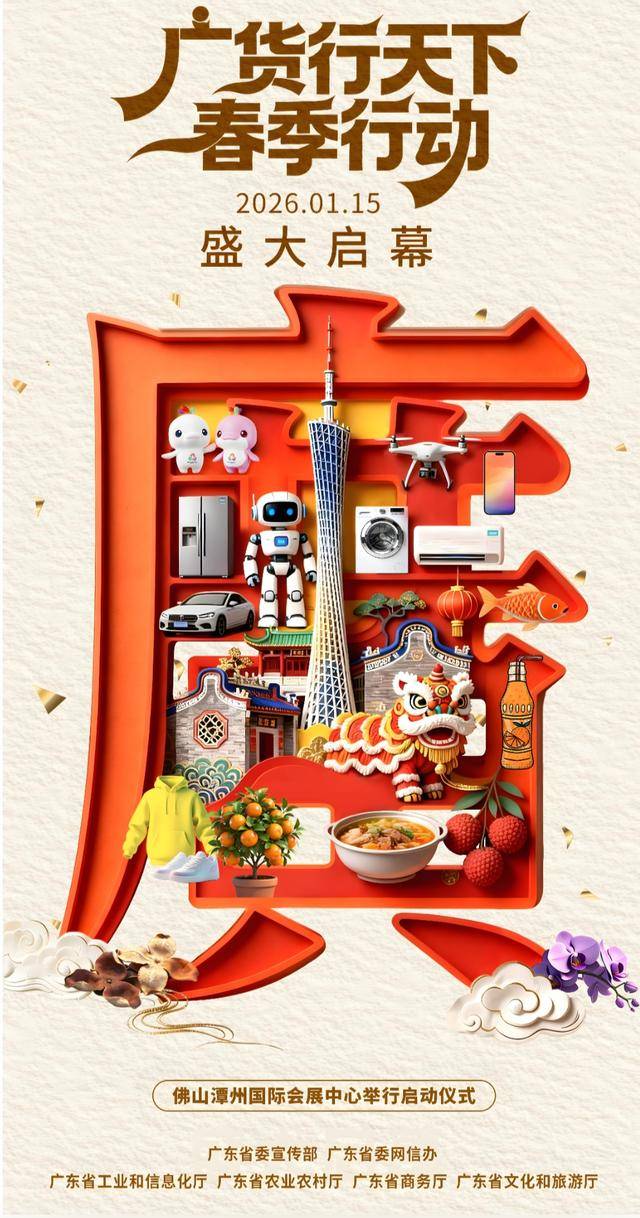
【深圳特区报】“广货行天下”春季行动今日在佛山启幕 广货已备好 等您来采购
Sou Hu Cai Jing· 2026-01-15 00:11
Core Viewpoint - The article highlights the significant growth and transformation of Guangdong's manufacturing industry, particularly in the context of the upcoming Spring Festival, showcasing the region's products and innovations to global consumers [3][12]. Group 1: Overview of Guangdong's Manufacturing - Guangdong's industrial economy has evolved from small-scale operations to a leading position, with classic products like home appliances and textiles now complemented by high-tech goods such as drones and 5G smartphones [8][10]. - The "Guangdong Goods Going Global" initiative aims to promote local products through various online and offline activities, enhancing visibility and sales on major e-commerce platforms [8][9]. Group 2: Technological Advancements - Guangdong produces 70% of the world's consumer drones, 40% of smartphones, and significant portions of industrial robots and integrated circuits, indicating its strong manufacturing capabilities [9][10]. - Traditional industries in Guangdong are undergoing transformation through technological innovation, with companies like Gree and TCL achieving remarkable efficiency improvements [10][11]. Group 3: Focus on Foshan - Foshan, as the first stop for the "Guangdong Goods Going Global" campaign, exemplifies the region's manufacturing strength, contributing nearly 30% of Guangdong's revenue in the home appliance sector [12][13]. - The city is actively promoting the transformation of traditional industries and has seen an average production efficiency increase of 16% through digitalization [12].