云深处

Search documents
被“打假”的清大经管:曾推出高管研学活动每人收费7800
Nan Fang Du Shi Bao· 2025-06-23 14:56
一名为"曹玉磊"的人士以"清大经管学院院长""清华大学经济管理学院院长"等身份公开活动,被清华大 学经管学院"打假",引发广泛关注。6月23日,曹玉磊接受南都记者采访时称,"清大经管"系自己创立 的品牌。今年以来,该品牌公众号发布了多次研学营招生帖,包含针对学生推出的少年研学冬令营,以 及针对企业高管、行业人士的研学行等。 此外,"清华经管"还定期开办"清大高级工商管理(建筑业)总裁研修班"。 今年3月,该公众号发布"清大高级工商管理(建筑业)总裁研修班"上课通知,该课程全程4天,地点位 于"北京.清华科技园"。课程包括"新形势下施工企业战略管理与转型升级""战略性人力资源管理"等。推 文显示,这一研修班的授课教师有"中国人民大学经济学博士、中央民族大学副教授、硕士生导师史 璐,清华大学特聘教授杜慧鹏"等。 今年5月,该研修班再次开课,地点仍在清华科技园。本次课程授课教师为"清华大学经济学研究所博士 后李江涛、天津大学国际工程管理首席讲师肖维"等。 6月23日下午,南都记者就研学活动情况咨询曹玉磊,对方未作回复。 采写:南都记者林诗妍焦明梁 报名详情页。 南都记者搜索发现,"清大经管"的公众号名为"清大经馆" ...


入门具身离不开3个要素,数据+算法+本体
具身智能之心· 2025-06-23 13:54
Core Insights - The article emphasizes the importance of three key elements in embodied intelligence: data, algorithms, and embodiment. Many individuals only understand algorithms, while data collection requires experience and effective strategies [1][2] - The community aims to create a platform for knowledge sharing and collaboration in the field of embodied intelligence, targeting a membership of 10,000 within three years [2][6] Data Collection - Remote operation data collection relies on embodiment and is costly, but preprocessing and postprocessing are simpler, yielding high-quality data suitable for robotic arms [1] - The community provides various data collection strategies and high-cost-performance robotic arm platforms to support research [1][2] Algorithm Development - Common technologies in embodied intelligence include VLN, VLA, Diffusion Policy, and reinforcement learning, which require continuous reading of academic papers to stay updated [1] - The community offers a comprehensive set of learning paths and resources for newcomers and advanced researchers alike [9][12] Hardware and Resources - Well-funded laboratories can purchase high-cost embodiment systems, while those with limited budgets may rely on 3D printing or cost-effective hardware platforms [1] - The community has compiled a list of over 40 open-source projects and nearly 60 datasets related to embodied intelligence, along with mainstream simulation platforms [9][26][28] Community Engagement - The community has established connections with various companies in the field, creating a bridge for academic collaboration, product development, and recruitment [2][6] - Members can access job postings, industry insights, and a supportive environment for learning and networking [5][12] Educational Content - The community provides a wealth of educational materials, including summaries of research papers, books, and learning routes across various topics in embodied intelligence [10][18][20] - Regular discussions and Q&A sessions are held to address common challenges in the field, such as data collection platforms and robot learning techniques [11][12]
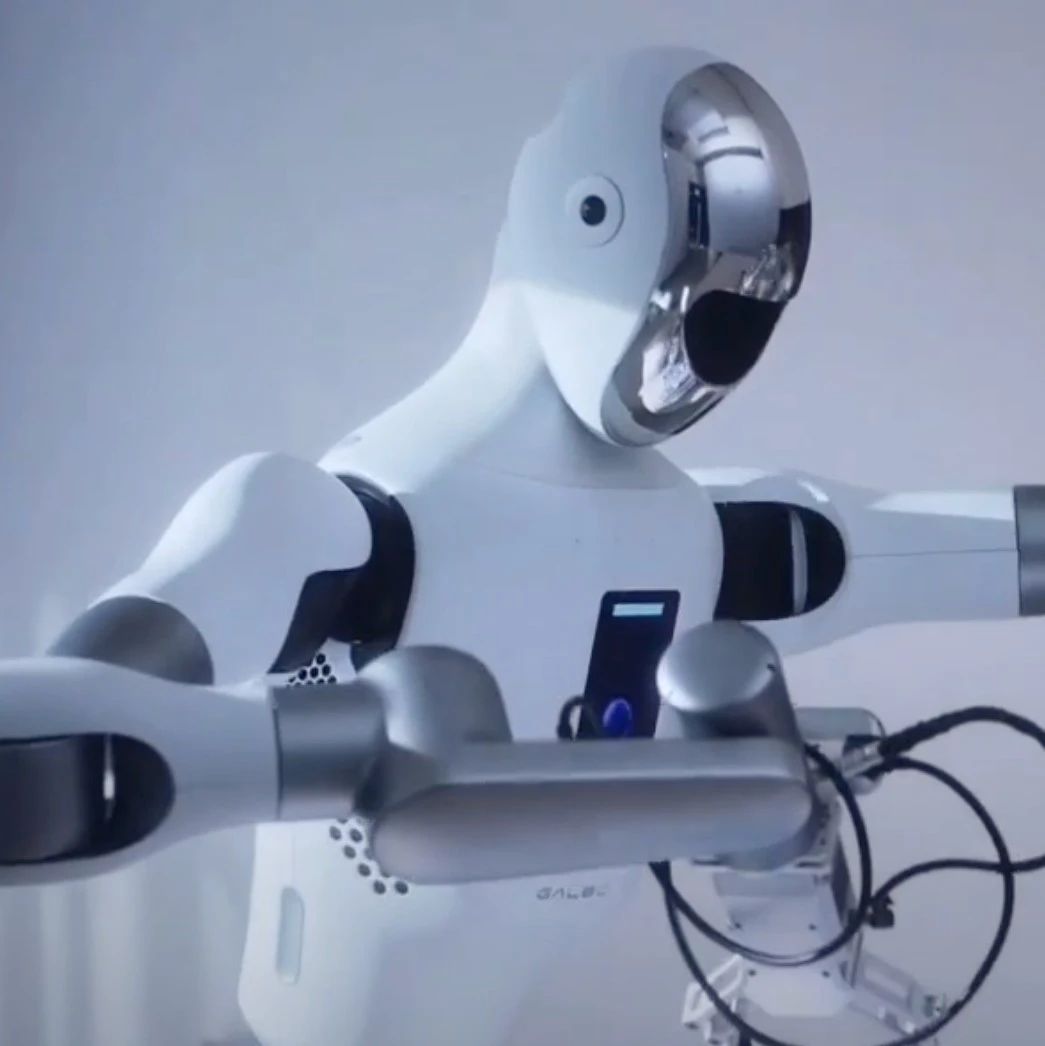
人形机器人遭“墙倒众人推”,不想干成大玩具,“王兴兴们”下一步该做点啥?
AI前线· 2025-06-20 02:47
Core Viewpoint - The humanoid robot market is experiencing significant growth, driven by increased public interest and various competitions, despite facing challenges related to performance and consumer expectations [1][2][3]. Group 1: Market Dynamics - The humanoid robot sales market is on the rise, with companies like Leju (Suzhou) Robot Technology Co., Ltd. reporting full order books and high production capacity [1]. - Many humanoid robot companies have publicly stated they are overwhelmed with orders, indicating a strong demand in the market [1]. - E-commerce platforms are seeing a variety of robot products selling out, with specific models like the Songyan Power N2 receiving significant pre-orders [1]. Group 2: Performance Challenges - Negative feedback from users has increased, highlighting issues such as robots malfunctioning during competitions and poor battery life [2]. - The disparity between promotional videos and actual robot performance has led to skepticism about the technology's readiness for widespread use [3][4]. Group 3: Investment Perspectives - Investors maintain a realistic view of the current state of robotics, recognizing that the technology is still in its early stages and that many robots require human assistance to function effectively [4][14]. - The market is expected to remain small and focused on luxury consumption, with a gradual increase in capabilities over time [10][11]. Group 4: Future Outlook - The potential for humanoid robots to become commonplace in households is acknowledged, with predictions suggesting that individuals may own one or two robots in the future [20]. - The timeline for achieving fully autonomous humanoid robots is estimated to be between 10 to 15 years, with initial applications likely in specific, controlled environments [18][23]. - The industry may see a consolidation of leading companies as technology matures, while niche players will continue to exist due to the complexity of specific applications [24].
正在筹划做一个万人的具身社区!
具身智能之心· 2025-06-17 12:53
这几天刚和团队小伙伴沟通完后期工作建设,探讨究竟要做一个什么样的具身社区?其中一个答 案比较符合我们的思路,那就是一个能够凝聚行业人群、遇到问题能够快速响应、影响到整个行 业的地方。 我们目标是3年内打造一个万人聚集的具身社区,这里也非常欢迎优秀的同学加入我们 (目前已经 有华为天才少年、具身领域研究前沿的几个大佬加入)。 我们和多家具身公司搭建了学术+产品 +招聘完整的桥梁和链路,同时内部在教研板块也基本形成了闭环(课程 + 硬件 + 问答)。社区里 也能看到很多最新的行业观点、技术输出。现在本体是怎么样的?有哪些不足?数据采集的成功 率和有效率怎么提升?sim2real怎么做的有效点?这些都是我们一直关注的。 前面一直在想怎么帮助刚入门的小白快速收拢技术栈,社区内部也为大家整理了一系列配套内 容,完整的入门路线。 已经从事相关研究的同学,我们也给大家提供了很多有价值的产业体系和项目方案。 还有源源不断的求职、岗位分享哦,欢迎和我们一起打造完整的具身生态。 具身智能之心知识星球 社区创建的出发点是给大家提供一个具身相关的技术交流平台,交流学术和工程上的问题。星球 内部的成员来自国内外知名高校实验室、具身相关 ...

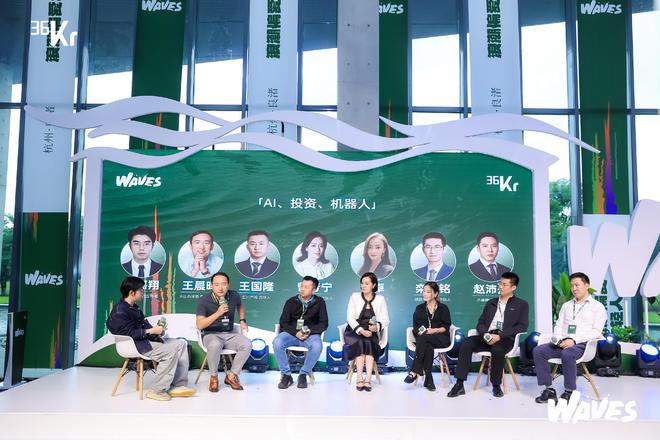
AI、投资、机器人丨WAVES新浪潮2025
3 6 Ke· 2025-06-17 10:03
Core Viewpoint - The Chinese venture capital market is at a turning point, characterized by a structural transformation and a focus on capturing certain opportunities amidst uncertainty [1] Group 1: Event Overview - The WAVES 2025 conference took place on June 11-12 at the Hangzhou Liangzhu Cultural Art Center, focusing on the theme of "New Era" in Chinese venture capital [1] - The event gathered top investors, emerging entrepreneurs, and experts in technology and innovation to discuss topics such as AI technology innovation, globalization, and value reassessment [1] Group 2: Investment Focus - Various investment firms highlighted their focus areas, including robotics, AI hardware, and advanced manufacturing [4][6][7] - Fire Mountain Investment emphasized its long-term commitment to robotics, having invested in companies like Ecovacs and Fourier [3][4] - Multi-dimensional Capital has completed over 300 financing rounds, focusing on AI hardware and robotics, with a portfolio that includes companies like Rokid and Lingchu [5][6] Group 3: Investment Strategies - Investors discussed the importance of balancing technological advancement with commercial viability, noting that successful companies must address specific market needs [8][10] - The panelists agreed that technology must ultimately serve commercial applications, with a focus on specific use cases for embodied intelligence [9][11] - The need for a clear path to commercialization was emphasized, with successful projects often having strong founding teams and defined market applications [24][25] Group 4: Challenges and Opportunities - The panelists identified key challenges in the commercialization of embodied intelligence, including the need for high-quality data and the integration of advanced hardware [28][30] - There is a consensus that the industry is still in a phase of technological iteration, with significant potential for growth as barriers are overcome [27][29] - The discussion highlighted the importance of real-world applications and the necessity for companies to demonstrate their value proposition in practical scenarios [21][22]

在人工智能浪潮中勇立潮头——杭州全城聚力建设人工智能创新高地
Hang Zhou Ri Bao· 2025-06-13 02:31
Group 1: Industry Overview - Artificial intelligence (AI) is recognized as a leading industry trend, with Hangzhou positioning itself as a key area for AI innovation and development [11][12] - The city has launched the "Implementation Plan for Building an AI Industry Development High Ground (2025 Edition)," which includes 17 measures and 20 policies to foster AI growth [12] - Six districts in Hangzhou are rapidly responding to the AI strategy, focusing on their unique resources and industrial foundations to create a differentiated competitive landscape [12][16] Group 2: District Initiatives - Gongshu District is developing an innovation circle around universities, integrating education, innovation, and industry to create a "four-chain integration" model [13] - Xihu District aims to drive innovation and ecological development in AI, focusing on high-end equipment manufacturing and deepening the "AI+" initiative [13] - Binjiang District is forming an industrial cluster in the robotics sector, leveraging its "three valleys" strategy to enhance visual intelligence and digital core industries [14] Group 3: Corporate Contributions - Nearly 700 core AI companies have gathered in Hangzhou, serving as testing grounds for policy implementation and technological breakthroughs [17] - Companies like Yunshenchu are leading in embodied intelligence technology, collaborating with universities and research institutions to advance AI applications [18] - Alibaba is investing in AI infrastructure to support the rapid development of the AI industry in Hangzhou, focusing on personalized and intelligent services [19] Group 4: Academic and Research Institutions - Higher education institutions and research organizations are crucial for AI innovation in Hangzhou, with efforts to attract top talent and enhance interdisciplinary research [20][21] - Zhejiang University is a key player in AI development, expanding its talent pool and focusing on foundational and applied research in AI [20] - Collaborative efforts among various research institutes aim to accelerate the transformation of cutting-edge technologies into practical applications [21] Group 5: Future Outlook - Hangzhou's recent AI initiatives align with its positioning as a "digital economy first city," aiming to deepen innovation and build a modern industrial system [22] - The city is encouraged to strengthen its high-end talent teams and core technologies in AI to drive higher-level economic development [22]

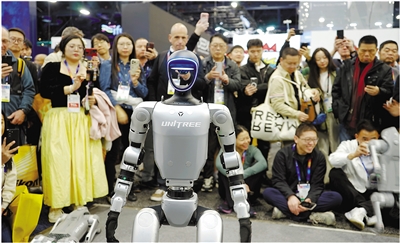
暨军民调研具身智能机器人产业
Hang Zhou Ri Bao· 2025-06-06 02:32
Core Insights - The city is focusing on the development of the embodied intelligent robotics industry, leveraging its solid foundational research, numerous innovation entities, comprehensive hardware and software support, and rich application scenarios [1][2] Group 1: Research and Development - The South Lake Brain-Machine Intersection Research Institute is concentrating on brain-machine interfaces, innovative brain drugs, brain disease mechanisms, and brain-machine materials, aiming to establish a strategic technological force in brain-machine medical applications [1] - Emphasis is placed on accelerating clinical validation and promoting the application of brain-machine interface technology in medical rehabilitation and intelligent prosthetics [1] Group 2: Industry Application - Bionic robots, including quadrupedal and humanoid robots, are identified as optimal carriers for embodied intelligence, representing a deep integration of artificial intelligence and manufacturing [1] - Companies such as West Lake Robotics, Cloud Deep, and 58 Intelligent are being encouraged to enhance their research and development in multi-modal fusion perception technology and to build a localized intelligent collaborative robotics ecosystem [1] Group 3: Policy and Innovation - The city aims to create a collaborative innovation system led by enterprises, focusing on key areas such as intelligent algorithms, scenario applications, ecosystem construction, and system integration [2] - Legislative research and supervision of local economic development are being emphasized to foster a conducive environment for artificial intelligence development and to accelerate the establishment of an AI innovation hub [2]
对话杭州资本孙刚锋:耐心资本的关键是态度而非时间
36氪· 2025-06-03 08:23
Core Viewpoint - The article discusses the emergence of Hangzhou as a significant player in the venture capital market, particularly through the success of the "Six Little Dragons" and the transformation of state-owned capital into a builder of innovation ecosystems [4][6][7]. Group 1: Hangzhou's Rise in Venture Capital - Since 2025, Hangzhou has gained attention in the venture capital market, with several tech companies emerging in fields like artificial intelligence and brain-machine interfaces [4]. - The success of Hangzhou is attributed to its historical development of private economy, mature city management, and a conducive innovation ecosystem [6][7]. - The "Six Little Dragons" are not recent successes but the result of nearly a decade of development, indicating a long-term investment strategy [10][11]. Group 2: Role of State-Owned Capital - State-owned capital in Hangzhou has evolved from being a mere capital provider to an active participant in building an innovation ecosystem [6][12]. - The government’s role in venture capital has been debated, with a focus on whether it is necessary given the vibrancy of the private market [13]. - The establishment of Hangzhou Capital aimed to create a nurturing environment for innovation and entrepreneurship, emphasizing the importance of increasing investment opportunities [14][15]. Group 3: Investment Strategy and Focus - Hangzhou Capital's investment strategy includes early-stage investments and a focus on hard technology sectors such as smart IoT, biomedicine, high-end equipment, new materials, and green energy [23]. - The success rate of early-stage projects under Hangzhou Capital is reported to be over 50% for follow-on financing [21]. - The decision-making process in state-owned capital investment emphasizes a balanced team approach rather than relying on key individuals [26][27]. Group 4: Market Environment and Regulatory Framework - The regulatory environment in Zhejiang is noted for its effective balance, which has been shaped by the long-standing development of the private economy [31]. - State-owned capital is encouraged to invest based on the willingness of enterprises to settle in the city rather than purely for招商 (investment attraction) purposes [29]. - The article highlights the importance of understanding the unique characteristics of each city's business environment, with Hangzhou being particularly favorable for innovation [31].

对话杭州资本孙刚锋:耐心资本的关键是态度而非时间
暗涌Waves· 2025-06-03 02:03
Core Viewpoint - The article discusses the rise of Hangzhou as a significant player in the venture capital market, particularly through the emergence of the "Six Little Dragons" in the tech sector, highlighting the city's unique blend of private capital, government support, and a conducive innovation ecosystem [1][3]. Group 1 - Hangzhou has become a focal point in the venture capital landscape since 2023, with several tech companies emerging in cutting-edge fields such as artificial intelligence and brain-machine interfaces [1][3]. - The success of Hangzhou's venture capital model is attributed to a combination of historical development, a robust private economy, and mature city management [3][4]. - The "Six Little Dragons" represent nearly a decade of development, indicating that their success is not a recent phenomenon but rather the result of long-term efforts [5][6]. Group 2 - The Hangzhou capital's approach emphasizes creating an innovation ecosystem rather than merely acting as a capital provider, focusing on nurturing investment opportunities [8][9]. - The city has a rich pool of private capital, which plays a crucial role in its vibrant market, leading to debates about the necessity of government involvement in venture capital [8][9]. - The transformation of Hangzhou capital from a policy-driven entity to an innovation-focused platform has been significant, especially following the recent state-owned enterprise reforms [9][10]. Group 3 - The Hangzhou capital's strategy includes investing in early-stage projects, with a focus on creating a supportive environment for innovation, which has led to a high success rate in securing follow-on funding for early investments [13][14]. - The investment focus is on five key industries: intelligent IoT, biomedicine, high-end equipment, new materials, and green energy, with a particular emphasis on hard technology and core patents [15][16]. - The decision-making process within state-owned capital is characterized by a balanced team approach rather than reliance on key individuals, which is seen as a strength of the model [18][19]. Group 4 - The recent government policy emphasizes that investment should not be driven by the desire to attract businesses but should focus on the inherent value of the projects themselves [21][22]. - Hangzhou's regulatory environment is noted for its effectiveness, shaped by the region's long-standing private economic development [23][24]. - The article highlights the importance of patience in capital investment, suggesting that while state-owned capital should adopt a long-term view, it must also be prepared to exit investments when necessary [29][30].

「孤臣」宇树:明星公司的另一面
雷峰网· 2025-05-28 00:26
Core Viewpoint - The article explores the journey of Yushu, a prominent robotics company in China, and its founder Wang Xingxing, highlighting his unique management style, technical pursuits, and the company's evolution in the robotics industry [1][4]. Group 1: Wang Xingxing's Management Style - Wang Xingxing exhibits two contrasting emotional states: extreme joy and anger, reflecting a highly intense work ethic and dedication to the company [2][3]. - His management approach is characterized by a flat structure, with direct communication with each team member, maintaining a hands-on role in product development and decision-making [29][30]. - Despite the company's growth, Wang continues to work long hours, instilling a culture of high expectations and dedication among employees [30][31]. Group 2: Company Evolution and Market Position - Yushu initially focused on quadruped robots, facing challenges in commercialization and funding, but eventually found success in the research and education sectors [12][13]. - The company gained significant recognition after its quadruped robots performed at the 2021 Spring Festival Gala, marking a turning point in its visibility and market strategy [19][23]. - Yushu's pricing strategy for its quadruped robots has been competitive, significantly undercutting rivals like Boston Dynamics, which has helped it capture market share [14][38]. Group 3: Technological Development and Challenges - Yushu has invested heavily in self-developed motors, which are crucial for controlling costs and maintaining competitive pricing in the robotics market [35][39]. - The company has recently ventured into humanoid robots, leveraging its existing technology and market experience, with plans for further development in this area [34][41]. - Despite its successes, Yushu faces increasing competition in the humanoid robot sector, where the barriers to entry are lowering, and the demand for AI integration is rising [42][51]. Group 4: Talent Management and Organizational Culture - Yushu has experienced high employee turnover, attributed to intense work culture and external competition for talent, despite its rapid growth and valuation increase [44][46]. - The company's rigid management structure and high-pressure environment have led to concerns about employee well-being and retention [45][49]. - There is a growing recognition that Yushu needs to adapt its approach to attract and retain talent, especially in the face of evolving market demands and technological advancements [50][52].