现代汽车集团

Search documents
2030年或是氢能产业拐点
Zhong Guo Qi Che Bao Wang· 2025-07-02 03:02
Core Viewpoint - Hydrogen energy is poised to play a significant role in future energy structures, but the industry, including hydrogen fuel cell vehicles, is still in the exploratory phase, facing challenges in technology, cost, and business models [2][3][4]. Industry Development - 2025 is identified as a critical year for the large-scale development of hydrogen energy, particularly in the heavy-duty commercial vehicle sector, which has vast application potential [2][4]. - The global hydrogen industry is undergoing a significant transformation, with China emerging as a leader in innovation and development [4]. - Predictions indicate that by 2030, the hydrogen energy industry will enter a rapid development phase, with cost competitiveness expected between 2030 and 2035 [3][4]. Economic and Technical Challenges - The hydrogen fuel cell vehicle industry is currently facing economic viability issues, with small industry scale and low competitiveness being key bottlenecks [6][7]. - There is a need for top-level design and timely policy support to avoid gaps in hydrogen energy and fuel cell industry policies [6][7]. - The industry must focus on technological innovation and collaboration to reduce lifecycle costs and improve safety [6][7]. Collaborative Efforts - The development of hydrogen energy requires collaboration across the entire industry chain, including market demand awareness and international cooperation [8]. - Establishing a resilient ecosystem and a complete supply chain is essential for reducing costs and ensuring profitability for all stakeholders [8][9]. Storage and Transportation - Low-pressure solid-state storage and liquid hydrogen are highlighted as effective solutions for overcoming hydrogen storage and transportation challenges [9]. - The integration of hydrogen energy with existing industries is crucial for future development, with an increasing proportion of hydrogen in pipeline networks anticipated [9]. Broader Applications - Beyond vehicles, hydrogen fuel cells have potential applications in maritime transport, with a focus on regulatory updates and infrastructure development [10].


15GWh!宁德时代又一项目破土动工
起点锂电· 2025-06-30 11:24
Group 1 - The fifth "Two-Wheeled Vehicle Battery Swap Conference" and "Lightweight Power Battery Technology Summit Forum" will be held on July 10-11, 2025, in Shenzhen [2] - The conference theme is "Battery Swap City, Smart Two-Wheelers," and it is organized by Qidian Lithium Battery, Qidian Sodium Battery, and Qidian Two-Wheeled Vehicles and Battery Swap [2] - Major sponsors and partners include Yadi Technology Group, Tailin Group, New Day Co., and several other companies in the battery and electric vehicle sectors [2] Group 2 - CATL's joint battery project in Indonesia has officially broken ground, with an expected total battery capacity of 15 GWh, capable of powering 250,000 to 300,000 vehicles [6] - The project is a collaboration between CATL's subsidiary CBL and Indonesia Battery Company (IBC), with a total investment of up to $5.968 billion for a comprehensive battery ecosystem [3][4] - The initial capacity of the factory will be 6.9 GWh, with plans to expand to 15 GWh by the end of 2026 [3] Group 3 - Indonesia is the world's largest nickel producer, holding over 41% of global nickel reserves, making it a strategic location for battery manufacturing [4] - Other companies, such as Ruipu Lanjun and LG Energy Solution, are also establishing battery production facilities in Indonesia, with LG's factory expected to reach a capacity of 30 GWh [6][7]

陆家嘴财经早餐2025年6月30日星期一
Wind万得· 2025-06-29 22:30
Group 1 - The 2025 Listed Companies Forum was held in Wenzhou, where leaders from major exchanges announced multi-dimensional reform signals, including the implementation of the "1+6" reform measures and the planning of the ChiNext reform [2] - The Hong Kong market will adjust its stock trading fees from 0.002% to 0.0042% of the transaction amount starting June 30, which will lower costs for small transactions and help institutional investors optimize trading strategies [5] - The Hong Kong Stock Exchange received 16 IPO applications from mainland companies in one day, with total financing exceeding $44 billion this year, ranking first globally [6] Group 2 - China's fiscal policy has become more proactive this year, with an emphasis on early issuance and use of long-term special bonds and local government bonds to boost consumption and economic growth [4] - The number of public fund managers in China reached a record high of 4,041, reflecting a significant increase in the industry and a trend of talent turnover [11] - The domestic logistics total for January to May was 138.7 trillion yuan, showing a year-on-year growth of 5.3%, indicating a stable logistics operation and an accelerating demand for consumer logistics [12] Group 3 - The A-share market experienced a rise, with the Shanghai Composite Index reaching a new high for the year, and analysts expect structural opportunities in the upcoming earnings season [7] - The issuance of corporate bonds in China has gained momentum, with 62 bond issuance plans approved by the CSRC this year, totaling 577.966 billion yuan [21] - The recent adjustments in deposit rates by private banks have become a norm, with some banks still offering rates above 2%, indicating a divergence in deposit rate levels among different banks [12]

美国汽车关税下,韩日车企在美库存即将见底
Huan Qiu Shi Bao· 2025-06-23 21:38
Group 1 - The global automotive industry is experiencing an accelerated trend of price increases due to the rapid depletion of "non-tariff inventories" in the U.S. market [1] - Toyota plans to raise the average price of its brand vehicles in the U.S. by $270 next month, while Mitsubishi will increase prices by an average of 2.1% [1] - Subaru has also announced price hikes starting from products shipped in June [1] Group 2 - Japanese automakers are temporarily absorbing the costs from high tariffs imposed by the U.S., while Korean automakers are facing significant pricing pressure [3] - Experts indicate that for global automakers, not raising prices equates to profit erosion, making the timing of price increases a critical issue [3] - Hyundai Motor Group remains cautious about adjusting prices, having extended its price freeze period previously set to end on July 7 [3] Group 3 - Hyundai and Kia rely heavily on imports for their U.S. sales, with 65% of their vehicles imported, significantly higher than competitors like Honda (35%) and Toyota (51%) [4] - The ability of Hyundai and Kia to maintain price freezes is attributed to their prior inventory levels, which are now rapidly depleting [4] - As of April, Hyundai's inventory could support sales for about three months, while Kia's could last for about two months, indicating a looming need for imports as inventories are nearly exhausted [4]


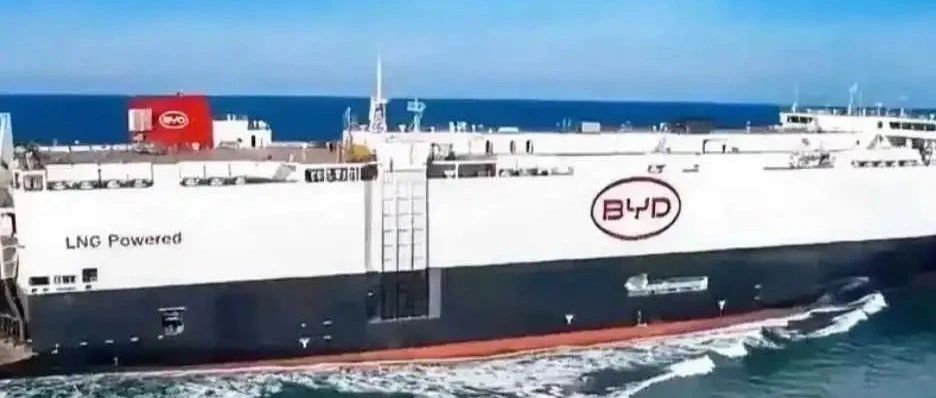
从集体买船到载量比拼,中国车企“大船东时代”来临
第一财经· 2025-06-18 11:57
Core Viewpoint - The article discusses the surge in Chinese automotive exports and the subsequent "buying ships" movement among domestic automakers to secure transportation capacity and reduce costs amid rising shipping prices [4][6][12]. Group 1: Automotive Export Growth - China's automotive export volume has dramatically increased from 1 million units before 2021 to over 5 million units in 2023, making it the world's largest automotive exporter for three consecutive years [6][9]. - The shipping costs for automotive transport have skyrocketed, with the daily rental price for a 6,500-car capacity ship rising from $10,000 in mid-2020 to $115,000 by the end of 2023, marking a 9.5-fold increase [6][12]. Group 2: Shipbuilding Initiatives - Major automakers like SAIC Group and BYD have initiated their own shipbuilding projects to create a fleet of automotive transport ships, with SAIC planning to build 12 ships with capacities ranging from 7,600 to 9,500 cars [7][8]. - BYD has also confirmed the construction of 8 automotive transport ships, with a total investment of nearly 5 billion yuan [7][9]. Group 3: Competitive Landscape - Chinese automakers are striving to become significant players in the global automotive transport market, with companies like Chery and GAC also investing in shipbuilding [8][9]. - As of April 2025, Chinese shipowners hold a 7.6% share of the global automotive transport fleet, with SAIC owning 18 ships, ranking 15th globally [12][13]. Group 4: Future Outlook and Concerns - There are concerns about potential oversupply in the automotive transport market due to the rapid increase in shipbuilding and a slowdown in export growth [13]. - Experts suggest that collaboration among different automotive brands could mitigate risks associated with potential oversupply by sharing transportation resources [13].


从集体买船到载量比拼,中国车企“大船东时代”来临
Di Yi Cai Jing· 2025-06-18 07:18
Core Insights - The automotive industry in China is experiencing a significant increase in exports, leading to a "buying ships" movement among major domestic brands to secure transportation capacity and reduce costs [1][3][5] - Major companies like SAIC Group and BYD are investing in building their own fleets of car transport ships to ensure supply chain stability and efficiency [2][4][5] - The global automotive transport ship market is dominated by Japanese, Norwegian, and South Korean companies, but Chinese companies are gradually increasing their market share [6][7] Group 1: Export Growth and Shipbuilding - China's automotive exports surged from 1 million units in 2020 to over 5 million units in 2023, marking a nearly fivefold increase in four years [3] - The rental price for car transport ships has skyrocketed from $10,000 per day in mid-2020 to $115,000 per day by the end of 2023, reflecting the high demand for shipping capacity [3] - SAIC Logistics has ordered 12 new ships with capacities ranging from 7,600 to 9,500 car spaces, expected to be delivered by 2026, providing an annual capacity of over 600,000 vehicles [4] Group 2: Strategic Moves by Companies - BYD has confirmed the construction of eight car transport ships with a total cost of nearly 5 billion yuan, with four already in operation [4] - Chery Group, the top exporter in 2022 with over 1.14 million units, and SAIC Group, with nearly 1.04 million units exported, are also expanding their shipping capabilities [5] - The trend of building and owning transport ships is not unique to China, as Japanese automakers have historically invested in their shipping fleets to support global distribution [6][7] Group 3: Market Dynamics and Future Outlook - As of April 2025, Chinese shipowners hold a 7.6% share of the global automotive transport ship market, with SAIC Group ranking 15th globally [7] - Concerns are rising about potential oversupply in the automotive transport ship market due to the rapid increase in fleet size compared to the slowing growth of automotive exports [7][8] - Experts suggest that collaboration among different automotive brands could mitigate risks associated with potential oversupply in the shipping market [8]
中创新航拿下30GWh电池大单!
鑫椤锂电· 2025-06-16 08:52
Core Viewpoint - Hyundai Motor Group has signed a 30GWh battery supply contract with Chinese battery manufacturer CALB, marking a diversification in its battery supply chain in China, following partnerships with CATL and BYD [3][4]. Group 1: Hyundai's Business in China - In 2024, Hyundai Motor Group's global sales and profit margins are projected to rank third, with China not being its primary market, as the focus remains on South Korea and North America [4]. - Hyundai's performance in China has shown significant improvement, with Beijing Hyundai's first-quarter losses narrowing to 423 billion KRW, a substantial improvement from 717.7 billion KRW year-on-year, nearing breakeven [4]. - Kia's joint venture in China, Yueda Kia, turned profitable last year after six consecutive years of losses, achieving an operating profit of 52.2 billion KRW in the first quarter, exceeding last year's total profit [4]. Group 2: CALB's Performance and Market Position - CALB's revenue for 2024 is projected to be 27.752 billion CNY, a year-on-year increase of 2.76%, with a profit of 844 million CNY, up 93.14% year-on-year, and a net profit attributable to shareholders of 591 million CNY, increasing by 101.02% [6]. - In Q1 2025, CALB achieved revenue of 6.896 billion CNY, a 41.99% year-on-year growth, with a net profit of 230 million CNY, up 36.11% [6]. - According to SNE Research, CALB's power battery installation volume for 2024 is expected to reach 39.4GWh, a 16.6% increase year-on-year, ranking fourth globally and third in the domestic market behind CATL and BYD [6]. Group 3: Market Share and Rankings - In the first four months of 2025, CALB ranked fifth globally in power battery installation volume with 11.9GWh, a year-on-year growth of 21.4%, capturing a market share of 3.9% [7]. - In the domestic market, CALB maintained its position as the third-largest player with an installation volume of 15.07GWh and a market share of 6.26% from January to May [7].
天有为:积极开拓海外市场 加速全球化布局
Zheng Quan Shi Bao Wang· 2025-06-05 11:09
Core Viewpoint - The company, Tianyouwei, specializes in the research, design, production, and sales of automotive instruments and is expanding into the smart cockpit sector, with a focus on enhancing its global market presence and product offerings [1][2]. Group 1: Business Overview - Tianyouwei primarily engages in the development and production of electronic combination instruments, full LCD combination instruments, dual-screen instruments, and other automotive electronic products and services [1]. - The company has established long-term partnerships with numerous well-known automotive manufacturers and parts suppliers, including Hyundai Motor Group, BYD, Changan Automobile, and others [1]. Group 2: Market Expansion - The company aims to increase its overseas revenue share from 47.06% in 2022 to 53.60% by 2024, indicating a strategic push for global market expansion [2]. - Tianyouwei is actively developing new products such as curved screen instruments and ultra-thin navigation screens, leveraging its relationships with major automotive manufacturers to enhance its product offerings [2][3]. Group 3: Technological Innovation - The company's core technology, composite screen technology, innovatively combines segment code screens with TFT color screens to achieve near full-color display effects, providing a cost-effective alternative to traditional TFT screens [3]. - This technology allows for customized instrument shapes while maintaining high display quality, thus broadening the product range available to customers [3]. Group 4: International Operations - Tianyouwei's subsidiary in Mexico has generated revenue of 370 million yuan since its establishment in 2022, with plans for a modern, automated factory projected to cost 55 million USD [4]. - The new facility is expected to enhance service capabilities in the Americas and Europe, reduce delivery times, and lower transportation costs, thereby strengthening the company's competitive edge in the global automotive electronics market [4].
2025-2030年中国燃料电池汽车行业深度调研及投资战略分析报告
Sou Hu Cai Jing· 2025-06-04 15:05
Group 1 - The core viewpoint of the report is to provide a comprehensive analysis of the fuel cell vehicle industry, covering its development, competitive landscape, and investment opportunities in both global and Chinese markets [2][3][4]. Group 2 - The report outlines the definition, classification, advantages, and disadvantages of fuel cell vehicles, as well as their unique characteristics [2]. - It analyzes the policy, economic, social, and technological environments affecting the fuel cell vehicle industry [2]. - The global development history, current status, and competitive landscape of the fuel cell vehicle industry are discussed [3]. - The report details the development conditions and supply-demand dynamics of the fuel cell vehicle industry in China [3][4]. - It provides insights into the market analysis of fuel cell buses and trucks in China [3]. - The report identifies pain points within the Chinese fuel cell vehicle industry [3]. - It examines the investment, mergers, and restructuring activities within the Chinese fuel cell vehicle sector [4]. - The competitive state of the industry is analyzed, including existing competitors, potential entrants, and the bargaining power of suppliers and buyers [4]. - The cost structure of the fuel cell vehicle industry is analyzed, including regional and enterprise competition [4]. - The report discusses the structure of the fuel cell vehicle industry chain and the market for key raw materials and core components [4]. - It evaluates the development of hydrogen production and transportation in China, as well as the construction of hydrogen refueling stations [4][5]. - The application of fuel cell vehicles in logistics and urban public transport is analyzed, including current status and future trends [5]. - The report provides an overview of key regions in China and their respective fuel cell vehicle industry development [5]. - It includes a detailed analysis of major Chinese fuel cell vehicle companies and their operational performance [5]. - The future prospects of the fuel cell vehicle industry in China are predicted, including market size and development trends [5].

韩国芯片销量,创历史新高
半导体芯闻· 2025-06-03 10:39
Core Viewpoint - The export data from South Korea for May indicates growing concerns about the country's economic trajectory, with overall exports declining despite a surge in semiconductor exports driven by AI technology demand [1][2]. Export Performance - In May, South Korea's semiconductor exports rose by 21.2% year-on-year, reaching $13.79 billion, marking the second-highest monthly export figure on record [1]. - However, overall exports fell into negative territory, with 10 out of 15 major export categories experiencing year-on-year declines [1][2]. - Exports to the three major trading partners— the United States, China, and ASEAN— also contracted, with a slight increase in exports to the EU primarily due to a low base effect from the previous year [1]. Sector-Specific Challenges - Key sectors such as electric vehicles (EVs) and steel faced significant declines, with steel exports down 12.4% and automotive exports down 4.4% [2]. - The automotive sector, being South Korea's largest export category, saw exports to the U.S. plummet by 32% to $1.84 billion, largely due to a 25% tariff imposed by the U.S. government [2][3]. - Semiconductor shipments to China fell by 14.6%, as China increases domestic production of mid-to-low-end chips, potentially reducing reliance on South Korean exports [3]. Economic Outlook - The Korea International Trade Association predicts a 2.1% decline in total exports for the year, with automotive exports expected to drop by 8% due to stagnant demand and tariff impacts [3]. - The short-term recovery outlook appears limited amid weakened competitiveness and ongoing trade policy uncertainties [3].