
长江存储

Search documents
恒运昌科创板IPO通过上市委会议 超6成收入来自单一客户
智通财经网· 2025-11-14 10:55
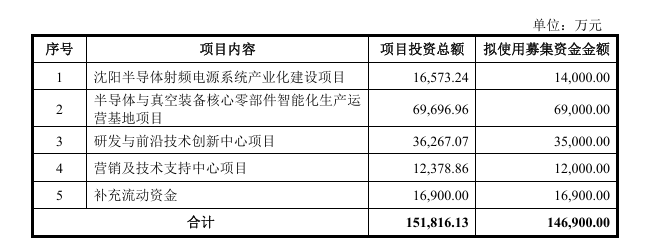
Core Viewpoint - Shenzhen Hengyun Chang Vacuum Technology Co., Ltd. has passed the listing committee meeting of the Shanghai Stock Exchange's Sci-Tech Innovation Board, aiming to raise 1.55 billion yuan for its semiconductor equipment core component supply business [1] Company Overview - Hengyun Chang specializes in the research, production, sales, and technical services of plasma radio frequency power systems, plasma excitation devices, and various accessories, providing comprehensive solutions for plasma processes [1] - The company is a leading domestic supplier of plasma radio frequency power systems, with a market share ranking first among domestic manufacturers in the semiconductor industry [1] Market Context - The market size for plasma radio frequency power systems in China's semiconductor industry is projected to reach 6.56 billion yuan in 2024, with a domestic production rate of less than 12% [1] - Plasma technology is essential for semiconductor precision manufacturing, widely used in critical processes such as film deposition, etching, ion implantation, and cleaning [1] Product Development - The second-generation Bestda series supports 28nm processes, while the third-generation Aspen series supports 7-14nm processes [2] - The company has achieved mass production and delivery to leading domestic semiconductor equipment manufacturers and wafer fabs [2] Customer Concentration - The top five customers account for a significant portion of the company's revenue, with the first customer, Tuojing Technology, contributing 62.06% of sales [2] Fundraising and Investment Plans - The company plans to invest the raised funds in several projects, including: - Shenyang Semiconductor Radio Frequency Power System Industrialization Project: 1.657 billion yuan total investment, 1.4 billion yuan from raised funds - Intelligent production base for core components of semiconductors and vacuum equipment: 696.97 million yuan total investment, 690 million yuan from raised funds - R&D and frontier technology innovation center: 362.67 million yuan total investment, 350 million yuan from raised funds - Marketing and technical support center: 123.79 million yuan total investment, 120 million yuan from raised funds - Supplementing working capital: 169 million yuan from raised funds [3] Financial Performance - The company reported revenues of approximately 158 million yuan, 325 million yuan, 541 million yuan, and 304 million yuan for the years 2022, 2023, 2024, and the first half of 2025, respectively [3] - Net profits for the same periods were 26.19 million yuan, 79.83 million yuan, 142 million yuan, and 69.35 million yuan [3] - The total assets as of June 30, 2025, are projected to be 890.79 million yuan, with a debt-to-asset ratio of 15.78% [4]

暴跌砸出“黄金坑”?存储芯片涨价逻辑能走多远
Xin Lang Cai Jing· 2025-11-14 10:09
Core Viewpoint - The recent significant decline in U.S. tech stocks is attributed to multiple uncertainties, including delayed economic data releases and reduced expectations for interest rate cuts, leading to heightened investor concerns about high valuations in the tech sector [1] Group 1: Market Dynamics - The storage chip sector has experienced a sharp decline, with the storage index dropping by 4.21% [1] - The demand for storage chips is expected to grow exponentially due to the rise of AI, cloud computing, IoT, and other emerging applications, indicating a long-term growth potential despite short-term market fluctuations [1] Group 2: Supply and Demand Imbalance - Morgan Stanley's report highlights that the storage industry is entering a "super cycle," with the global storage market projected to reach $300 billion by 2027, driven by surging demand for high-bandwidth memory (HBM) chips [2] - The supply of traditional DRAM and NAND has contracted by over 20% as major manufacturers like Samsung and SK Hynix shift focus to higher-margin products, exacerbating the supply-demand imbalance [2] - Prices for DDR4 have surged nearly 30% in less than a month and over 200% in six months due to supply constraints [2] Group 3: Domestic Industry Growth - Chinese storage chip companies such as Yangtze Memory Technologies and Changxin Memory Technologies are gaining market share, with projections of 10% and 12% market shares in NAND and DRAM by 2025, respectively [3] - Domestic firms are entering supply chains of major companies like Tesla and Huawei through self-developed control chips and capacity collaboration, indicating a shift in the competitive landscape [3] - The current market volatility presents a strategic opportunity for long-term investments in the storage chip industry, driven by the dual forces of the AI revolution and domestic substitution [3]
“一天一个价!”比黄金还猛!消费者:一个月,价格涨了一两千元
Zhong Guo Jing Ji Wang· 2025-11-14 04:40
Core Insights - The storage industry is experiencing a super cycle driven by AI giants' aggressive procurement, leading to significant price increases for memory products [1][5][10] - The rising costs are impacting smartphone manufacturers, particularly during the peak sales season of "Double 11" [1][3][11] Group 1: Price Surge and Market Dynamics - Prices for solid-state drives and memory modules have doubled in just two months, with DRAM prices increasing by 171.8% year-on-year in Q3 [1][5] - Major manufacturers like Samsung and SK Hynix have halted contract pricing for DDR5 DRAM due to rapid price increases [1][5] - The demand for storage is being driven by AI data centers and cloud service providers, who are less price-sensitive and are engaged in a "computing arms race" [5][6] Group 2: Impact on End Products - Smartphone manufacturers like Xiaomi are raising prices for new models due to increased memory costs, with significant price hikes noted for the K90 series [3][11] - The price of PC components has also surged, with reports of increases of 1,000 to 2,000 yuan for certain models during the "Double 11" sales [12] - The overall gross margin for companies like Xiaomi has been affected, dropping from 14.6% to 12.6% due to rising core component prices [11] Group 3: Future Outlook and Strategies - The current supply constraints are expected to persist, with many manufacturers locking in orders for 2027, exacerbating the tight supply situation [10][13] - Companies are exploring ways to mitigate the impact of rising memory costs by developing smaller models and enhancing storage chip capabilities [14][15] - The competition for HBM (High Bandwidth Memory) is intensifying, with major players like Samsung aiming to secure a leading position in the next generation of memory technology [6][9]
中科飞测20251113
2025-11-14 03:48
Summary of Zhongke Feicai Conference Call Company Overview - Zhongke Feicai is a leading domestic supplier of semiconductor measurement equipment, with a delivery volume exceeding 1,000 units by the end of 2024, covering 66.6% of the front-end quality control testing market. However, the localization rate is only 16.4%, indicating significant room for improvement [2][3][19]. Core Insights and Arguments - **Technological Advantage**: The company has a technological edge in the 28-14 nm nodes and advanced packaging, having shipped some 28 nm measurement products and validated them in scenarios like HBM. Key products include defect detection equipment, measurement devices, and intelligent software systems [2][4][5]. - **R&D Strength**: The R&D team is robust, with core members from the Institute of Microelectronics of the Chinese Academy of Sciences. The team has expanded, enhancing defect detection and critical dimension measurement capabilities through various software systems [2][6]. - **Revenue Growth**: In the first three quarters of 2025, revenue reached 1.2 billion yuan, a year-on-year increase of 47.92%. However, the company reported a net loss due to high R&D expenses, maintaining a gross margin of around 50% [2][19]. - **Order and Inventory Trends**: The company’s order coverage amount is significantly higher than in previous years, with inventory levels gradually increasing. In the first three quarters of 2024, the company shipped 176 units for front-end testing and produced 245 units, indicating a rapid growth phase [2][20]. Industry Context - **Market Position**: Zhongke Feicai is a leading player in the domestic front-end measurement equipment market, serving major logic and memory wafer fabs, including SMIC and Changjiang Storage. The localization rate in the front-end measurement segment has increased by 5.2 percentage points from 2023 to 2025 [3][16]. - **Global Market Growth**: The global semiconductor equipment market is expected to reach $121 billion by 2025, with the front-end defect detection equipment market projected to reach $14.37 billion by 2026, providing ample market space for domestic manufacturers like Zhongke Feicai [4][13]. - **Competitive Landscape**: KLA is the dominant player in the global front-end measurement and detection equipment market, holding over 60% market share. Other competitors include Hitachi High-Technologies and Applied Materials [15]. Additional Important Insights - **Future Projections**: The company anticipates medium-speed growth from 2025 to 2027, benefiting from product volume increases and revenue scale enhancements. R&D expenses are expected to decrease as the company scales, potentially improving profitability [4][19][24]. - **Client Concentration**: The top five clients account for approximately 40% of the company’s revenue, indicating a moderate level of client concentration risk [22]. - **Investment Plans**: The company is planning expansion projects, including a capital increase in 2025 for high-end semiconductor quality testing and R&D center construction, which are crucial for long-term growth [22]. Conclusion - Zhongke Feicai is well-positioned in the semiconductor measurement equipment market, with significant growth potential driven by technological advancements, increasing localization rates, and a favorable market environment. The company’s focus on R&D and expansion will be key to its future success [25].

一天一个价,存储芯片的“涨价潮”没有尽头?
Tai Mei Ti A P P· 2025-11-14 01:49
Group 1 - The price surge of storage chips has accelerated since the second half of 2025, with DDR5 high-performance chip prices rising by 25% in just one week, leading to panic buying in the market [2] - Morgan Stanley reports that server DRAM prices have surged nearly 70% and NAND contract prices have increased by 20-30% in Q4 2025, indicating a significant upward trend in memory costs [2] - The rising storage costs have directly impacted product pricing, as seen with Xiaomi's Redmi K90 series, which has increased prices by 100-400 yuan due to higher upstream storage costs [2] Group 2 - The current memory demand is driven by a "arms race" among tech companies focused on AI data centers and cloud services, which are less sensitive to price changes compared to traditional consumers [3] - Major tech companies are significantly increasing their capital expenditures for AI, with Meta planning to deploy up to 1.3 million GPUs by the end of 2025 and investing at least $600 billion in data centers and infrastructure by 2028 [3][4] - Microsoft and Google are also ramping up their capital expenditures, with Microsoft spending $34.9 billion in Q1 FY2026 and Google raising its capital expenditure forecast to $91-93 billion for 2025 [4] Group 3 - AI servers require 3-5 times more DRAM compared to regular servers, leading to unprecedented demand for high-bandwidth memory (HBM) and large storage capacities [5] - Major storage chip manufacturers like Samsung and SK Hynix are prioritizing capital expenditure and production capacity for high-end products like HBM and DDR5, resulting in a squeeze on traditional memory production [5] - The production of HBM consumes three times the wafer resources compared to DDR5, exacerbating the overall DRAM capacity crunch [5] Group 4 - Domestic storage chip manufacturers are launching "domestic storage replacement plans" to alleviate supply pressures and offer more competitive pricing, with companies like Longxin Technology producing LPDDR5X products that meet international standards [6][7] - Domestic chips are typically 15-20% cheaper than equivalent imported products, providing significant cost savings for manufacturers [7] - However, domestic manufacturers still face challenges in high-performance storage media and technology gaps compared to leading global firms like Samsung and SK Hynix [8]
又一个“电子茅台”来了,谁在买单?
创业邦· 2025-11-13 10:12
Core Viewpoint - The article discusses the significant price increase in memory products, particularly DRAM and SSDs, driven by a "super cycle" in the memory supply chain, influenced by rising demand from the AI industry and structural supply constraints [5][17][29]. Group 1: Price Trends - The price of 16GB DDR4 memory has surged from around 200 RMB to over 400 RMB within a year, with some models increasing by more than 300% [10][12]. - The price of high-end DDR5 memory has also doubled, with some models reaching prices close to 2000 RMB, reflecting a significant increase in demand [12][20]. - The average price of mainstream 1TB PCIe4.0 SSDs has risen by over 60% since the beginning of the year, with some models seeing price hikes of up to 80% [15]. Group 2: Demand Drivers - The AI industry's growth is the primary driver of increased demand for memory, with AI servers requiring eight times more DRAM than standard servers [18][20]. - The demand for memory is further exacerbated by the recovery of the consumer electronics market and the rise of smart technologies, such as smart cars, which require higher storage capacities [25][29]. Group 3: Supply Constraints - Major memory manufacturers like Samsung and SK Hynix are shifting production towards high-end chips, reducing the supply of DDR4 memory [21][22]. - The discontinuation of DDR4 production by leading manufacturers indicates a persistent supply shortage, which is expected to last until at least mid-2026 [24][22]. Group 4: Market Speculation - Speculative behavior in the market has amplified price volatility, with some dealers hoarding memory products in anticipation of further price increases [26][28]. - The article warns that while there may be opportunities for profit, the risks associated with speculation in the memory market are high, and many may end up as "bag holders" [30][36]. Group 5: Future Outlook - The transition from DDR4 to DDR5 and HBM is irreversible, suggesting that the memory market will continue to see price increases [29]. - Domestic memory manufacturers are expected to gain market share as they ramp up production, potentially stabilizing prices in the long term [36].

存储行业迈入景气周期,佰维存储赴港上市能否激发战略潜力?
Zhi Tong Cai Jing· 2025-11-13 08:43
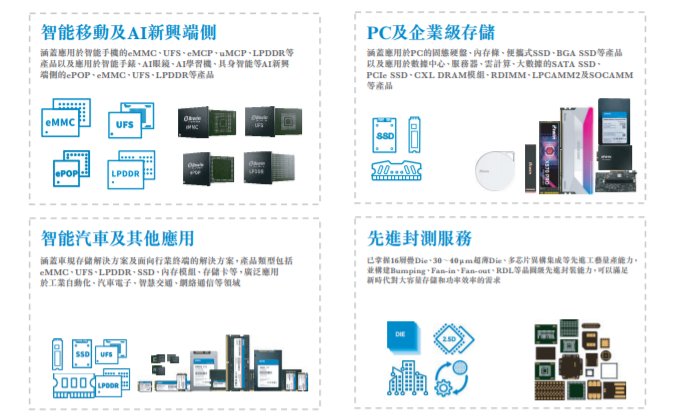
Core Viewpoint - The storage industry has shown remarkable performance in the capital market since September, driven by a structural supply-demand imbalance and rising product prices due to increased demand from AI applications and strategic production cuts by major manufacturers [1][2]. Group 1: Market Performance - As of November 13, 2023, stocks in the storage sector, such as Shannon Chip Creation, Demingli, Jiangbolong, and Baiwei Storage, have seen significant price increases of 423%, 258.94%, 288%, and 142.45% respectively since September [1]. - The storage industry is expected to maintain its upward trend in market conditions at least until the second half of 2026, according to CITIC Securities [1]. Group 2: Company Overview - Baiwei Storage is the only independent storage solution provider globally with wafer-level packaging capabilities and is the largest independent storage manufacturer with proprietary packaging as of 2024 [2]. - The company plans to use funds raised from its upcoming Hong Kong listing to upgrade its self-developed main control chips, enhance storage solution design, and improve advanced packaging capabilities, while also pursuing international expansion and strategic partnerships [2]. Group 3: Revenue Growth - Baiwei Storage's revenue has shown rapid growth, with figures of 2.986 billion, 3.591 billion, and 6.695 billion RMB for the years 2022, 2023, and 2024 respectively, and a projected revenue of 3.912 billion RMB for the first half of 2025 [7][8]. - The company’s revenue growth is attributed to recovering downstream demand and the expansion of new customers, with the revenue distribution for 2024 being 55.4% from smart mobile and AI emerging applications, 30.5% from PC and enterprise storage, and 12.5% from smart automotive and other applications [8]. Group 4: Profitability and Challenges - Baiwei Storage's adjusted net profit fluctuated significantly, with figures of 78.27 million, -500 million, and 473.3 million RMB for 2022, 2023, and 2024 respectively, indicating a transition from profit to loss in the first half of 2025 [10][11]. - The volatility in profitability is primarily due to the cyclical nature of the storage industry, where inventory management plays a crucial role in financial performance [12]. Group 5: Strategic Positioning - Baiwei Storage has adopted a dual domestic and international growth strategy, with revenue contributions from mainland China and other regions being 50.3% and 49.7% respectively in 2024 [9]. - The company has established a long-term supply agreement with major wafer manufacturers to ensure stable supply of key raw materials, which is essential for its ongoing business expansion [14]. Group 6: Future Outlook - The company is positioned to leverage its unique capabilities in wafer-level packaging and its strategic focus on high-growth sectors such as AI and smart automotive applications to achieve sustained growth [15][16]. - The ability to capitalize on the current industry upcycle and the upcoming Hong Kong listing will be critical for Baiwei Storage to realize its long-term financial potential [16].
新股前瞻|存储行业迈入景气周期,佰维存储赴港上市能否激发战略潜力?
Zhi Tong Cai Jing· 2025-11-13 08:39
Core Viewpoint - The storage industry has shown remarkable performance in the capital market since September, driven by a structural supply-demand imbalance and rising product prices due to increased AI computing power and strategic capacity reductions by major producers [1][2]. Group 1: Market Performance - Since September, stocks in the storage sector, such as Shannon Chip Creation and Bawei Storage, have seen significant price increases, with Bawei Storage's stock rising by 142.45% [1]. - The storage industry is expected to maintain its upward trend in market conditions at least until the second half of 2026 [1]. Group 2: Company Overview - Bawei Storage is the only independent storage solution provider globally with wafer-level packaging capabilities and is the largest independent storage manufacturer with proprietary packaging manufacturing as of 2024 [2]. - The company plans to use funds raised from its upcoming Hong Kong listing to upgrade its self-developed main control chips, enhance storage solution design, and expand its advanced packaging capabilities [2]. Group 3: Revenue Growth - Bawei Storage's revenue has shown rapid growth, with figures of 2.986 billion, 3.591 billion, and 6.695 billion RMB for 2022, 2023, and 2024 respectively, indicating a strong upward trend [7]. - The company’s revenue from smart mobile and AI emerging sectors, PC and enterprise storage, and smart automotive applications accounted for 55.4%, 30.5%, and 12.5% of total revenue in 2024 [8]. Group 4: Profitability and Challenges - Bawei Storage's adjusted net profit fluctuated significantly, with figures of 78.27 million, -500 million, and 473.3 million RMB for 2022, 2023, and 2024 respectively, indicating volatility in profitability [10][11]. - The company's gross margin was 12.8% in 2022, dropped to -2.1% in 2023 due to falling product prices, and rebounded to 17.3% in 2024 [12]. Group 5: Inventory and Strategic Positioning - As of September 30, 2025, Bawei Storage's inventory reached 5.695 billion RMB, reflecting a 61% year-on-year increase, which supports short-term performance but raises concerns about sustainability [14]. - The company emphasizes a diversified supply strategy to ensure stable access to key raw materials, which is crucial for its ongoing business expansion [14]. Group 6: Technological and Market Position - Bawei Storage has established a full-chain technical capability encompassing chip design, solid-state algorithms, and advanced packaging, positioning itself well in high-growth sectors like AI and smart automotive [15]. - The company’s strategic layout indicates potential for sustained growth in the medium to long term, contingent on leveraging current market conditions and its upcoming listing [16].
新股前瞻|存储行业迈入景气周期,佰维存储(688525.SH)赴港上市能否激发战略潜力?
智通财经网· 2025-11-13 08:31
Core Viewpoint - The storage industry has shown remarkable performance in the capital market since September, driven by a structural supply-demand imbalance and rising product prices due to increased AI computing power and strategic capacity reductions by major producers [1][2]. Group 1: Market Performance - The stock prices of key players in the storage sector, such as Shannon Chip and Bawei Storage, have seen significant increases, with Bawei Storage's stock rising by 142.45% since September [1]. - The overall market sentiment indicates that the high prosperity cycle in the storage industry is expected to continue at least until the second half of 2026 [1]. Group 2: Company Overview - Bawei Storage is the only independent storage solution provider globally with wafer-level packaging capabilities and is the largest independent storage manufacturer with proprietary packaging manufacturing as of 2024 [2]. - The company plans to use funds raised from its upcoming Hong Kong listing to upgrade its self-developed main control chips, enhance storage solution design, and expand its advanced packaging capabilities [2]. Group 3: Revenue Growth - Bawei Storage's revenue has shown rapid growth, with figures of 2.986 billion, 3.591 billion, and 6.695 billion RMB for the years 2022, 2023, and 2024 respectively, indicating a strong upward trend [7][8]. - The revenue breakdown for 2024 shows that smart mobile and AI emerging applications account for 55.4%, PC and enterprise storage for 30.5%, and smart automotive and other applications for 12.5% [8]. Group 4: Profitability and Challenges - The company has experienced significant fluctuations in net profit, with adjusted net profits of 78.27 million, -500 million, and 473.3 million RMB for 2022, 2023, and 2024 respectively, indicating the cyclical nature of the storage industry [10][11]. - The volatility in profits is attributed to the need for module manufacturers to stock up in advance, leading to potential losses during downturns when prices drop [11]. Group 5: Inventory and Strategic Positioning - Bawei Storage's inventory has increased significantly, reaching 5.695 billion RMB by September 30, 2025, which supports short-term performance but raises concerns about sustainability once inventory benefits diminish [14]. - The company emphasizes a diversified supply strategy to ensure stable access to key raw materials, which is crucial for its ongoing business expansion [14]. Group 6: Technological and Market Position - Bawei Storage has established a full-chain technical capability encompassing chip design, solid-state algorithms, and advanced packaging, positioning itself well in high-growth sectors like AI and smart automotive [15]. - The company's strategic layout indicates potential for sustained growth in the medium to long term, contingent on effectively leveraging the current industry boom and its upcoming listing [16].
AI把闪存链烧断了
投中网· 2025-11-13 06:43
Core Viewpoint - The rising demand for AI is creating significant opportunities and challenges in the NAND flash memory market, particularly for Chinese manufacturers like Yangtze Memory Technologies Co. (YMTC) [4][5]. NAND Price Surge - SanDisk, a leading NAND flash manufacturer, announced a price increase of up to 50% for NAND contracts due to overwhelming market demand, causing a ripple effect throughout the storage supply chain [4][6]. - Other manufacturers, including Micron and Samsung, have also raised prices following SanDisk's lead, indicating a strong demand for NAND products [6]. Impact on AI Server Production - The price hikes have led to module manufacturers like Transcend and Innodisk pausing shipments to reassess pricing, which could disrupt the production of AI servers for major companies like Oracle and Microsoft [4][6]. Market Demand and Projections - TrendForce predicts that AI server shipments will grow by over 20% year-on-year by 2026, with NAND usage in AI servers potentially three times that of traditional servers [6][7]. - The global NAND flash market exceeds $60 billion, dominated by a few major players with approximately 90% market share, leaving limited space for Chinese manufacturers [7]. Opportunities for Chinese Manufacturers - YMTC is positioned to capitalize on the current market dynamics, with plans to increase its monthly production capacity from 100,000 wafers to 150,000 by the end of 2025, aiming for a 15% global market share by 2028 [8]. - The company is also targeting the enterprise SSD market, which offers higher profit margins compared to consumer products [8]. Challenges in Entering the Enterprise Market - YMTC faces significant hurdles in obtaining necessary compatibility certifications from major platform providers and software vendors, which can take 6 to 12 months [10]. - The validation process for large-scale deployment of its products may take up to two years, despite having met technical standards [10]. Industry-Wide Implications - The opportunity for domestic alternatives extends to the entire supply chain, particularly in packaging and testing, with companies like Huatian Technology and Tongfu Microelectronics investing heavily in advanced packaging capabilities [12][13]. - The domestic semiconductor equipment and materials sector is also seeing rapid advancements, with companies like North Huachuang and Zhongwei making significant inroads into the market [14]. Current State of Domestic Production - Despite progress, the overall domestic production rate remains low, with semiconductor equipment localization at about 30% and photolithography equipment at 0-1% [15]. - The NAND market breakthrough could lead to substantial growth in the materials and equipment sectors, as domestic manufacturers seek to reduce reliance on foreign suppliers [16].
