
LG

Search documents
当白光退场,RGB背光能把液晶送上神坛吗?
3 6 Ke· 2025-09-23 12:03
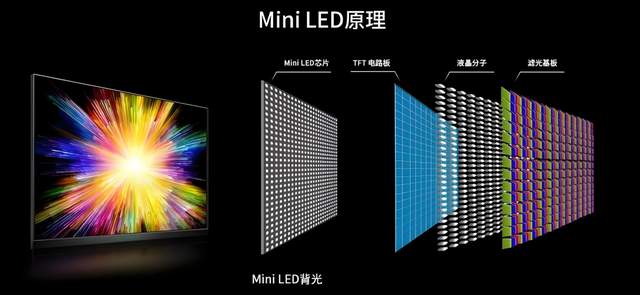
Core Viewpoint - The television industry in 2025 is experiencing declining sales, yet manufacturers continue to promote "revolutionary" technologies, with RGB+Mini LED being highlighted as the "ultimate picture quality solution" [1][10] Technology Overview - RGB+Mini LED is a backlighting technology for LCDs, enhancing brightness and color purity by using red, green, and blue LEDs directly, avoiding the loss associated with white light and filters [3][5] - Mini LED technology allows for thousands of smaller LEDs, enabling more precise local dimming and improved contrast compared to traditional backlighting methods [3][4] Market Positioning - RGB+Mini LED is positioned as a superior alternative to OLED, offering higher brightness and longer lifespan, particularly advantageous for large screen sizes [4][8] - The technology is seen as a strategic move for Chinese manufacturers to leverage their strengths in the LCD supply chain while competing against OLED technologies from Korean companies [8] Consumer Experience - Users have reported that RGB+Mini LED displays provide superior color purity and performance in both dark and bright environments, enhancing overall viewing experience [6][7] - Despite the technological advancements, the industry faces challenges with declining television usage rates as consumer attention shifts to mobile devices and other forms of entertainment [9][10] Economic Considerations - The cost of RGB backlighting modules is significantly higher than traditional white light solutions, with production costs increasing by 30% to 50% [7] - High power consumption and heat generation in large models pose additional challenges, impacting design and user experience [7] Future Outlook - The future of televisions may depend less on technical specifications and more on redefining their role in the home as entertainment hubs and smart living interfaces [9][10] - While RGB+Mini LED represents a peak in LCD technology, it may serve as a transitional phase as the industry explores new innovations like Micro LED and AI-enhanced features [9][10]

【Tesla每日快訊】 秘密武器:特斯拉LG新電池,悄悄改寫了物理定律?🔥巴菲特清倉比亞迪(2025/9/23-2)
大鱼聊电动· 2025-09-23 10:50
Battery Technology - Some new Model Ys have a hidden secret that could revolutionize battery maintenance, potentially eliminating range anxiety [1] - LG's new M53F cells in Model Y exceed the 42% volt charging voltage limit of ternary lithium batteries, reaching 4242% volt [1] - Tesla's vehicle engineering VP suggested that in the near future, cars will maintain a higher state of charge without battery degradation concerns [1] Tesla's Market Performance - Tesla China's insurance registration number reached 17300 units in the third week of September, the highest single-week record in the third quarter and the third highest weekly sales this year, an increase of 13% compared to the previous week [1] - Tesla's third-quarter total sales in China fell by about 8% year-on-year, indicating intense competition in the Chinese electric vehicle market [1] - Model Y is expected to regain the European pure electric vehicle sales champion in the third quarter of 2025 [1] BYD's Financial Analysis - Berkshire Hathaway sold all of its BYD shares, ending a 17-year investment with over 20x returns [1] - BYD's cash flow is negative, indicating that the company's operating income is not enough to cover its expenses, and it raised a record $56 billion in March [2] - BYD extends the payment cycle to suppliers to over 130 days, while the industry average is about 70 days, creating a cash flow illusion [2] - A significant portion of BYD's profits comes from government subsidies, which are more like blood transfusions than rewards [2] - BYD's sales growth has stagnated, and sales in China may have peaked in December 2024 [2] Musk's Vision - Musk said Optimus will be a full-featured humanoid robot capable of performing various tasks, with an estimated 20 billion units working in the industry [2]

锂电设备2025年中报总结:传统锂电景气复苏,看好固态新技术催生设备新需求
CMS· 2025-09-23 08:32
Investment Rating - The report maintains a "Recommendation" rating for the lithium battery equipment industry [2] Core Viewpoints - The lithium battery equipment sector is experiencing a recovery in demand, driven by both traditional lithium battery needs and new solid-state battery technologies, leading to a significant rebound in stock prices [5][10] - The overall revenue for the lithium battery equipment sector in Q2 2025 reached 12.347 billion, marking a year-on-year increase of 9.93%, while net profit attributable to shareholders was 434 million, a decrease of 12.76% [14][19] - The report highlights a fundamental turning point in the industry, with new orders beginning to recover after a downturn [9][14] Summary by Sections 1. Overview of Lithium Battery Equipment Mid-Year Report 2025 - The report analyzes the operational performance of 13 key listed companies in the lithium battery equipment sector, confirming a turning point in the fundamentals and a recovery in new orders [9] 2. Market Performance - The lithium battery equipment index has outperformed the broader market, with a year-to-date increase of 130.14% compared to a 17.84% rise in the CSI 300 index [10] - The sector's performance is attributed to fundamental changes, advancements in solid-state battery technology, and favorable policy expectations [10] 3. Mid-Year Report Summary - The lithium battery equipment sector achieved a total revenue of 21.476 billion in H1 2025, a slight decrease of 0.35% year-on-year, while net profit was 920 million, down 37.20% [14][16] - The report notes that the revenue growth in Q2 2025 ended a four-quarter decline, indicating a recovery in the revenue stream [14][19] 4. Future Outlook - The solid-state battery industry is approaching commercialization, with significant implications for equipment demand and value [5][43] - The report anticipates that the global market for semi-solid battery equipment could reach 62.44 billion by 2030, with a CAGR of 59% from 2024 to 2030 [5] - The solid-state battery market is projected to reach 45.50 billion by 2030, with a CAGR of 159% from 2024 to 2030 [5] 5. Investment Recommendations - The report suggests focusing on companies involved in the "selling shovel" logic, particularly those engaged in the upstream dry process equipment [5] - Key companies to watch include Naconoer, Xinyuren, Honggong Technology, and Mannester for their potential in the new technology segment [5] - The report also highlights leading companies with established relationships with major battery manufacturers, such as Xian Dao Intelligent, Yinghe Technology, Liyuanheng, and Hangke Technology [5]




感谢超高清升级,才知道家里是4K电视!
第一财经· 2025-09-22 07:07
Core Viewpoint - The article discusses the rapid adoption and market penetration of 4K televisions, highlighting the importance of content and signal quality to fully utilize the capabilities of these devices. Group 1: Market Overview - 4K televisions have become a significant selling point in the market, transitioning from high-end products to mainstream options with prices starting from around 1,000 yuan for 50-inch models and up to over 10,000 yuan for 100-inch models [2][4] - In 2023, global shipments of 4K televisions reached approximately 150 million units, accounting for over 70% of total television shipments, with a projected increase to 160 million units in 2024, representing a year-on-year growth of about 6.7% [4] Group 2: Industry Participants - Major global players in the 4K/8K ultra-high-definition television market include Sharp, Sony, LG, and Samsung, while domestic brands in China consist of TCL, Hisense, Haier, Changhong, Konka, as well as emerging brands like Huawei, Honor, and Xiaomi [5] Group 3: Content and Signal Development - The availability of 4K content and signals is crucial for enhancing the viewing experience, with the National Radio and Television Administration planning to launch 13 new ultra-high-definition channels by the end of 2025 and an additional 11 channels in 2026 [10][11] - By 2025, the number of ultra-high-definition channels in China is expected to reach 12, with platforms like iQIYI, Youku, and Tencent planning to have over 50% of their newly added programs in ultra-high-definition [11] Group 4: Consumer Engagement and Upgrades - The "Oriental Cable Ultra HD AI Upgrade Action" launched in Shanghai aims to provide free upgrades of ultra-high-definition AI set-top boxes to cable television users, facilitating access to enhanced viewing experiences [10][11] - Consumers can also benefit from a television renewal service, allowing them to purchase 4K televisions at discounted prices, further promoting the adoption of ultra-high-definition technology [13]






浙大校友A轮融资8.5亿元!英伟达、亚马逊、三星、LG全部押注这家具身智能公司!
机器人大讲堂· 2025-09-22 04:20
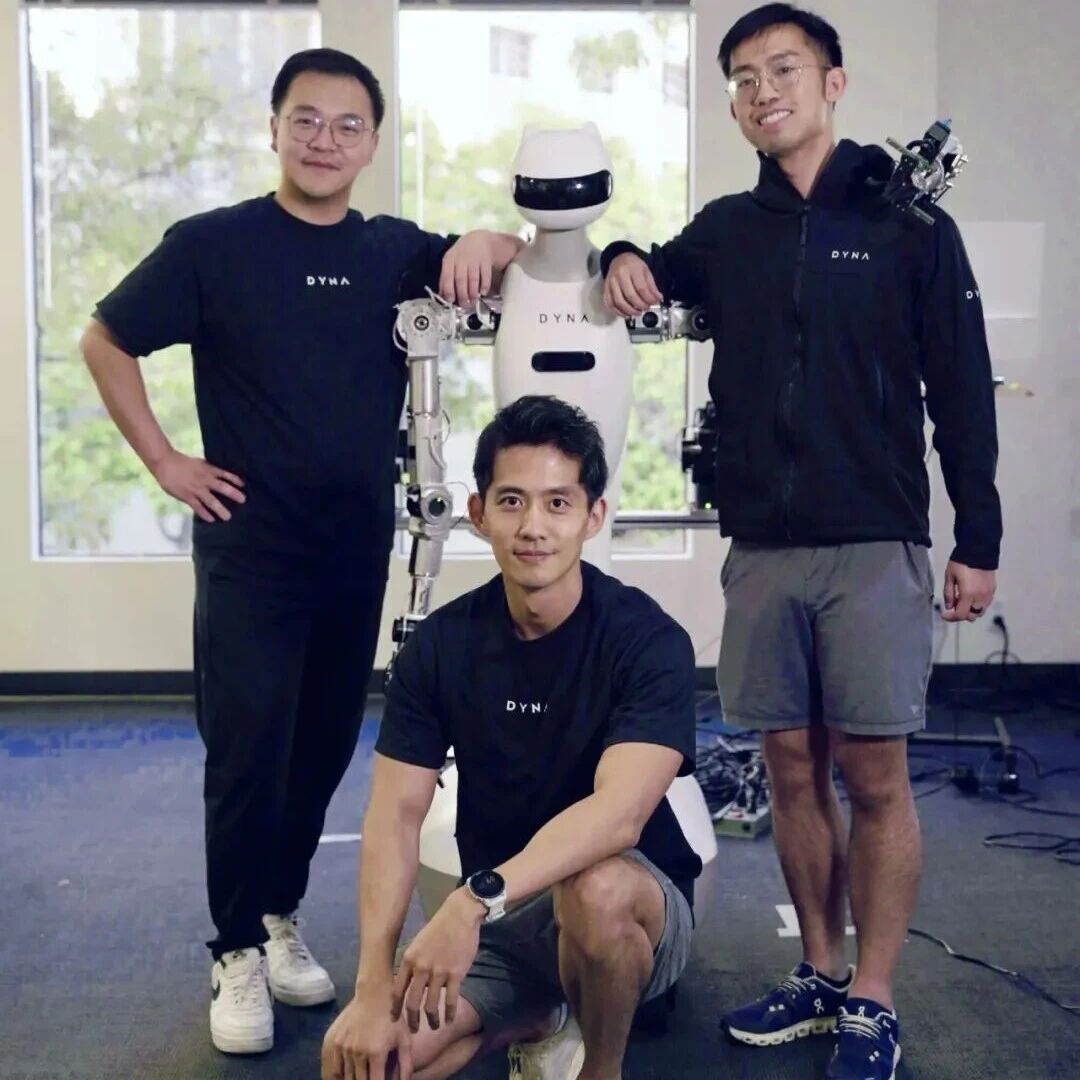
Core Insights - Dyna Robotics, a startup focused on embodied intelligence, has successfully completed a $120 million Series A funding round, raising its valuation to $600 million [1][3] - The company aims to develop low-cost, single-task robots that can eventually evolve into general-purpose embodied intelligence [13][20] Funding and Valuation - The recent funding round was led by Robostrategy, CRV, and First Round Capital, with participation from Salesforce Ventures, NVIDIA, Amazon, Samsung Next, and LG Technology Ventures [1] - In March, Dyna Robotics raised $23 million in seed funding, with a valuation of approximately $10 million, indicating a sixfold increase in valuation within six months [3] Company Background - Founded in September 2024 in Houston, Texas, Dyna Robotics has a hardware R&D center in Shanghai, with its Chinese entity, Shanghai Dyna Robotics Technology Co., Ltd., registered in February 2025 [5] - The company has attracted talent from top tech firms like DeepMind, OpenAI, and Google, as well as renowned universities such as Harvard and MIT [9] Founders and Team - The company is co-founded by Lindon Gao and York Yang, who previously founded Caper AI, which was acquired by Instacart for $350 million in 2021 [6] - Jason Ma, the Chief Scientist, has a strong research background, having worked at Google DeepMind and developed breakthrough algorithms at NVIDIA AI and Meta AI [8] Product Development - Dyna Robotics has developed the DYNA-1 model, which can autonomously fold napkins with a success rate of 99.4% after just six weeks of training, outperforming traditional models [15][17] - The company is currently in small-scale production, focusing on practical applications rather than experimental projects, to ensure data accumulation and avoid unprofitable spending [18][20] Market Strategy - The company emphasizes creating commercial value and cash flow through practical tasks like cutting potatoes and washing dishes, rather than merely showcasing capabilities [20] - Dyna Robotics aims to reduce hardware costs while providing immediate value to customers, addressing the high costs and long delivery times typical in the robotics industry [20]
国务院新闻办公室举行“高质量完成‘十四五’规划”系列主题新闻发布会,科创板100etf获批
Tianfeng Securities· 2025-09-21 13:11
Investment Rating - Industry rating is maintained at "Outperform the Market" [5] Core Insights - The report highlights significant advancements in humanoid robotics, driven by government policies and technological breakthroughs, which are facilitating the application of these robots in various sectors such as automotive manufacturing, logistics, and power inspection [1][2] - The global interest in humanoid robots is increasing, with notable investments from major companies like Nvidia and Intel, indicating a shift towards viewing humanoid robotics as a critical sector alongside electric vehicles and AI [2] - The report suggests that the technological advancements and successful commercialization of humanoid robots will position the Chinese industry favorably in the global competition [2] Company Summaries - **Obi Zhongguang**: Recognized as a leading company in 3D visual perception, deeply integrated with Microsoft and Nvidia. The company has a market share exceeding 70% in domestic service robot visual sensors and is one of the few globally to cover six major 3D visual perception technologies [3] - **Keli Sensor**: A leading domestic strain gauge sensor company, specializing in the development, production, and sales of strain sensors and related components. The company has completed product series development for humanoid robot wrist and ankle sensors, demonstrating advanced technical capabilities [3]


黄仁勋,投了个浙大校友
3 6 Ke· 2025-09-21 03:57
Core Insights - Dyna Robotics, a robotics startup, has completed a $120 million Series A funding round, raising its valuation to over $600 million within a year of its establishment [1][8] - The funding round saw participation from major industry players including Nvidia, Amazon, Samsung, and LG, indicating strong investor confidence in the robotics sector [1][8] - The company aims to optimize its AI models and deploy more robots in commercial environments, leveraging the new capital to expand its research and engineering team [5] Company Overview - Dyna Robotics was founded in September 2024 and is headquartered in Houston, Texas, with a hardware R&D center in Shanghai [2][3] - The founding team consists of three members: Lindon Gao, York Yang, and Jason Ma, who bring a blend of entrepreneurial experience, technical expertise, and academic strength [2][3] - The company has shown remarkable growth, with its valuation increasing from approximately $100 million after a $20 million seed round in March 2025 to $600 million in just six months [3] Technology and Product Development - Dyna Robotics has developed the DYNA-1 (Dynamism v1), the world's first commercially viable dexterous manipulation model, which allows robots to perform complex tasks in various environments [3][8] - The company's approach aligns with Nvidia CEO Jensen Huang's "physical AI" concept, focusing on enabling robots to learn from environmental data rather than relying on pre-programmed instructions [4][8] - Dyna Robotics is currently focusing on practical applications of its technology, with fixed robotic arms already deployed in tasks such as folding napkins in restaurants and organizing towels in gyms [4] Market Context - The robotics industry is experiencing significant investment, with $12.1 billion attracted in the first half of the year, indicating a strong trend towards robotics as a key investment area [4] - Dyna Robotics' successful funding reflects the broader enthusiasm in the robotics sector, which is seen as being in the early stages of trend investment [4] Strategic Implications - Nvidia's investment in Dyna Robotics exemplifies its strategy to strengthen its ecosystem by investing in companies that enhance its technology platform and extend AI capabilities into the physical world [7][8] - The collaboration between Dyna Robotics and major tech firms positions the company as a crucial player in bridging robotics research and practical applications [6][8]

珠海冠宇“购买”日本松下锂电池专利
起点锂电· 2025-09-20 09:37
Core Viewpoint - Zhuhai Guanyu has acquired at least three Chinese patents from Panasonic, which may significantly impact the patent landscape in the lithium battery industry [2]. Group 1: Patent Acquisition - The three patents acquired by Zhuhai Guanyu include: "Secondary Battery" (Patent ZL201880018653.9), "Non-Aqueous Electrolyte Secondary Battery" (Patent ZL200880001215.8), and "Lithium Secondary Battery" (Patent ZL200710008331.X) [2]. - The transfer of these patents from Panasonic to Zhuhai Guanyu occurred between June and July of this year, but the corresponding U.S. patents have not yet been recorded as transferred [2]. Group 2: Panasonic's Patent Strategy - Panasonic has been actively monetizing its patents through various methods, including bilateral litigation and patent pools [2]. - Panasonic, along with LG, established the Tulip patent pool to promote licensing of lithium battery patents, aiming to collect licensing fees from Chinese battery manufacturers [2]. - Recently, two Chinese companies, Zhuhai Guanyu and BAK Battery, have joined the Tulip patent pool, indicating a strategic move in the industry [2].


南都电源(300068) - 300068南都电源投资者关系管理信息20250919
2025-09-19 09:34
Group 1: Company Overview and Strategic Transformation - The company has completed its strategic transformation since 2020, with the business structure and capacity structure adjustments finalized by the end of 2024 [1] - The business is divided into three main sectors: new energy storage, communication and data center storage, and consumer lithium batteries [2] Group 2: New Energy Storage Sector - The company has participated in nearly 500 energy storage projects since 2008, establishing a strong industry position and experience [1] - The current backlog of large-scale energy storage orders is approximately 7.8 GWh, with 5 GWh from domestic sources and 2.8 GWh from overseas, primarily from Australia, Europe, and the UK [2] Group 3: Communication and Data Center Storage - The company has 30 years of experience in the production and application of backup power systems for data centers, with a focus on high-power lithium battery systems [2] - The expected revenue from high-voltage lithium batteries is projected to reach 1 billion yuan by 2025, with anticipated significant growth in the following year [2] Group 4: Consumer Lithium Battery Sector - The company has begun actively developing consumer lithium batteries since 2024, targeting electric three-wheelers and low-speed four-wheelers [2] - Collaborations with various well-known brands are established, which will enhance cash flow and improve lithium battery capacity utilization [2] Group 5: Production Capacity and Future Plans - The current production capacity for large-scale lithium batteries is 4 GWh, with an integrated capacity of 10 GWh expected to be completed by the end of the year [3] - The company plans to expand data center lithium battery production capacity from 1.5 GWh to 2.5 GWh next year, with the ability to quickly scale up if demand increases [4] Group 6: Competitive Landscape and Technology - In North America, the main competitors are Samsung and LG, with the company's lithium batteries utilizing a lithium iron phosphate technology that offers superior safety and cycle life [4] - The company has secured a 2.8 GWh order for semi-solid batteries, marking a significant step in the commercialization of solid-state battery technology [4]

【环球财经】海信集团在巴西打造可复制扩张路径
Xin Hua Cai Jing· 2025-09-19 08:38
Core Viewpoint - Hisense is accelerating its strategic expansion in the Brazilian market, aiming to transition from a market newcomer to a leader in the consumer electronics and home appliance sectors [1][5]. Group 1: Market Entry and Strategy - Hisense entered the Brazilian market in 2022, focusing initially on air conditioners and gradually expanding its product range through a multi-category matrix and brand differentiation [1][3]. - The company achieved approximately 1 billion Brazilian Reais in sales in its first year and plans to increase this to 3 billion Reais by 2027, targeting leading positions in core categories like TVs and air conditioners [1][3]. Group 2: Local Production and Brand Marketing - Hisense employs a "local production + brand marketing" dual strategy, collaborating with local factories to produce TVs and air conditioners, thereby reducing import tariffs and enhancing supply chain efficiency [2][4]. - The company has established a sales network in over 3,000 physical stores and major e-commerce platforms, while also introducing its high-end brand Gorenje to cater to various consumer segments [2][3]. Group 3: Product Strategy and Market Expansion - Hisense emphasizes a balanced approach of "volume and price," offering competitively priced products in the entry-level market while introducing advanced technologies in the mid-to-high-end segments [3][4]. - The company plans to expand its TV models from 13 in 2024 to 30 by 2025, with annual sales expected to exceed 1 million units, reflecting both quantity expansion and category diversification [3][4]. Group 4: Challenges and Competitive Landscape - Hisense faces intense competition from established brands like Samsung, LG, and Gree, which have strong customer loyalty and service networks [4][5]. - The company must overcome challenges in localizing its entire supply chain and building a robust after-sales service network to compete effectively [4][5]. Group 5: Global Experience and Future Outlook - Hisense's global experience, including being the top TV seller in China for 17 consecutive years and holding significant market shares in Japan and Europe, supports its optimistic outlook for the Brazilian market [5]. - The company's expansion in Brazil serves as a model for other Chinese enterprises looking to enter the Latin American market, with potential implications for their strategic decisions [5].