
百威亚太

Search documents
精酿啤酒进入“战国时代” 五粮液、珍酒跨界入局
Zhong Guo Jing Ying Bao· 2025-08-10 00:00
Group 1: Market Entry and Strategy - Wuliangye's subsidiary, Xianlin Ecological Wine Industry, has launched a new craft beer brand "Fenghuolun," entering the mid-to-high-end craft beer market with a price of 19.5 yuan per can (390ml) [1] - Guizhou Zhenjiu has also entered the craft beer market with its "Niushi" craft beer, priced at 88 yuan per 375ml aluminum bottle [1] - The craft beer market in China is projected to reach a scale of 134.2 billion yuan by 2025, with a sustained growth rate leading the overall beer industry [1][7] Group 2: Consumer Targeting and Brand Positioning - Wuliangye's strategy focuses on three consumer groups: young consumers, middle-aged individuals in small towns, and experienced white-collar workers, targeting ages 25-49 who seek quality, individuality, and cultural experiences [2] - The introduction of "Fenghuolun" is seen as a significant evolution of Wuliangye's brand strategy, enhancing brand youthfulness and internationalization while integrating unique Chinese elements [3] Group 3: Competitive Landscape and Challenges - The entry of traditional liquor giants into the craft beer market is expected to raise channel thresholds and squeeze smaller brands in the short term, but may also promote the maturation and development of the craft beer category in the long term [1][4] - White liquor companies possess advantages such as established distribution networks and high-end brand images, which can support the premium pricing of craft beer products [4][5] - However, challenges include brand recognition conflicts, consumer skepticism regarding the expertise of liquor companies in beer production, and the mismatch between the short shelf life of craft beer and the long inventory cycles typical of liquor [6] Group 4: Industry Trends and Future Outlook - The craft beer market is entering a "Warring States" period, with traditional liquor giants like Wuliangye and Zhenjiu targeting the mid-to-high-end market, while independent craft beer brands focus on innovation in niche segments [8] - The overall consumption of craft beer in China is expected to grow significantly, with a compound annual growth rate of 17% from 2022 to 2025 [7] - The rise of instant retail and modern logistics is transforming consumer habits and scenarios in the craft beer industry, enhancing consumer experience through precise marketing and immediate delivery [8]

290亿白酒大佬,亲身下场卖啤酒
2 1 Shi Ji Jing Ji Bao Dao· 2025-08-08 06:46
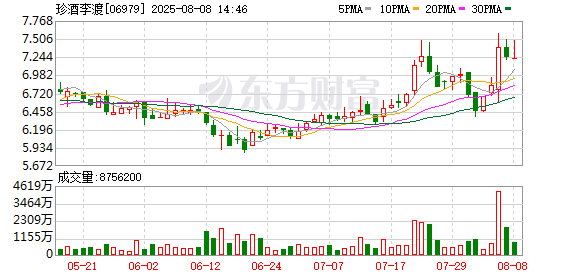
Core Viewpoint - The liquor industry is facing significant challenges, prompting the chairman of Zhenjiu Lidou, Wu Xiangdong, to adopt innovative strategies, including launching a new beer product and engaging in live streaming to boost sales and reach younger consumers [2][4][5]. Group 1: Company Performance - Zhenjiu Lidou issued a profit warning in early August, expecting revenue between 2.4 billion to 2.55 billion yuan for the first half of the year, representing a year-on-year decline of approximately 40% [4]. - The company's net profit is projected to shrink by at least 23% due to reduced liquor consumption, particularly in business and social settings [4]. Group 2: Strategic Initiatives - Wu Xiangdong is implementing three major strategies to address declining demand: 1. Cultivating new strategic products, such as the high-end product "Dazhen·Zhenjiu," priced at 888 yuan per bottle [8][9]. 2. Strengthening the competitive position of existing flagship products, "Zhen Fifteen" and "Zhen Thirty," with suggested retail prices of 899 yuan and 1888 yuan, respectively, while addressing significant price discrepancies in the market [10][11]. 3. Expanding new consumption scenarios by launching mid-range and high-end products tailored for events like birthdays and weddings, including the newly launched "Zhen Ten" priced between 500-600 yuan [12]. Group 3: Marketing and Consumer Engagement - To attract younger consumers, Wu Xiangdong has engaged in various marketing efforts, including appointing celebrity Yao Anna as a brand ambassador and launching the "City Koi" campaign, which incentivizes purchases with a lottery [13]. - The company is also entering the high-end beer market with a new product named "Niu Shi," which took three years to develop, leveraging existing business networks for sales [14][15][16]. - As of August 7, Zhenjiu Lidou's stock closed at 7.24 HKD, with a market capitalization nearing 25 billion HKD [17].

啤酒竞争格局演变及推演
2025-08-07 15:03
Summary of Key Points from the Conference Call Industry Overview - The conference call focuses on the Chinese beer industry, highlighting the competitive landscape and key players such as Yanjing Beer and Budweiser APAC [1][5][10]. Core Insights and Arguments - **Yanjing Beer**: - Yanjing Beer is recommended due to its nationwide expansion and the significant growth potential of its flagship product U8, with a profit margin that could improve by at least 3-4 percentage points compared to the industry average [1][3][4]. - The company is currently in a catch-up phase regarding supply-side reforms, which began in 2016, and its net profit margin is around 10%, indicating room for improvement [3][9]. - **Budweiser APAC**: - Budweiser APAC faces challenges in the Chinese market, including a decline in market share that has persisted since the second half of last year, with a sales drop of approximately 8% in the first half of this year [5][6]. - The tightening of expense policies post-pandemic has weakened its brand and channel barriers, leading to a significant impact on its sales performance [5]. - **Market Dynamics**: - The decline in Budweiser's market share has benefited domestic brands, particularly in regions like Guangdong (where Zhujiang Beer has gained), Fujian (where China Resources' Heineken has benefited), and Zhejiang [6]. - The overall industry has experienced pressure on ton prices, which are expected to decline throughout the year due to economic conditions and a shift towards lower-end products by breweries [7][8]. Additional Important Insights - **Ton Price Trends**: - The ton price in the Chinese beer industry has not yet peaked, with expectations for continued high-end product development and potential price increases once deflation ends [8][9]. - The current ton price is projected to improve from a base of 3,300 RMB, showing resilience even during economic downturns [8]. - **Supply-Side Reform Impact**: - Supply-side reforms initiated in 2016 have led to varying net profit margins across brands, with most brands achieving margins above 13%, while Yanjing's slower reform process has kept it at around 10% [9]. - **Future Outlook**: - The next one to two years will focus on market share dynamics, with Yanjing Beer, Qingdao Beer, and Chongqing Beer being key players to watch for potential organizational innovations [3][10]. - The restaurant sector has seen limited impact from recent policy adjustments, with non-dining channels maintaining positive growth [11]. - **Investment Timing**: - The best time for investment is suggested to be after August, following the release of mid-year reports, as traditional consumer sectors are expected to undergo revaluation and performance outlook improvements [12].

百威亚太中国“寒意”弥漫:上半年净利锐降24.4%
Jing Ji Guan Cha Bao· 2025-08-07 05:12
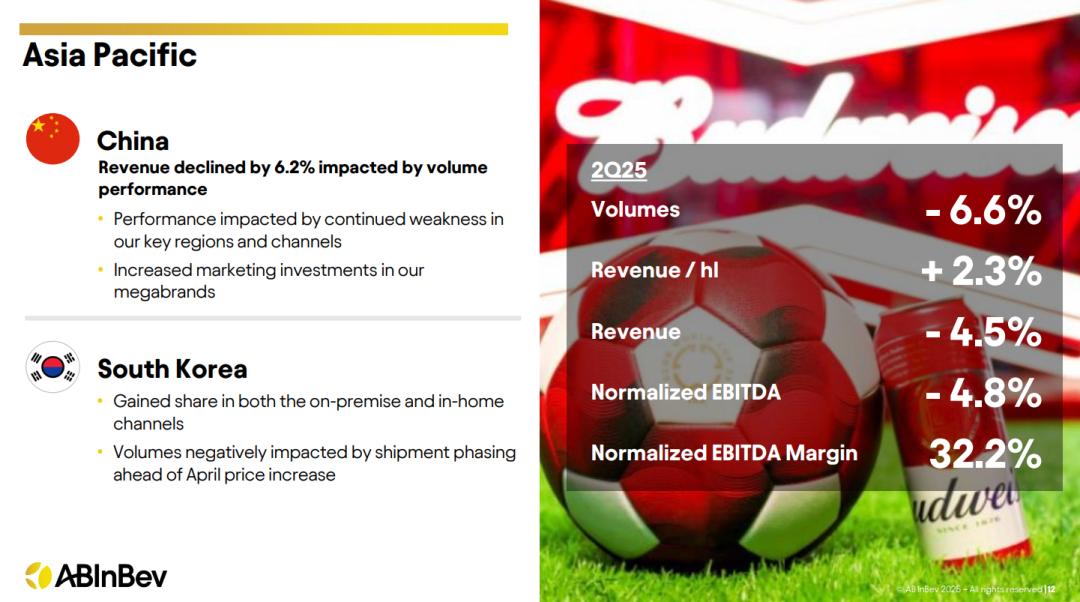
Group 1 - The core viewpoint of the news is that Budweiser APAC is facing significant challenges in the Chinese market, with a notable decline in sales and revenue, indicating a deeper crisis in its operations in China [1][2] - In the first half of 2025, Budweiser APAC reported a total sales volume decrease of 6.1% to 4.363 billion liters and a revenue decline of 5.6% to $3.136 billion, with net profit plummeting by 24.4% to $409 million [1] - The company’s performance in China is particularly concerning, with sales down 8.2% and revenue down 9.5%, highlighting the struggles of this foreign beer giant in the Chinese market [1] Group 2 - The recent leadership change, with Cheng Yanjun becoming the first Chinese CEO, has not yet yielded positive results, as the second quarter of 2025 still showed a 7.4% decline in sales and a 6.4% drop in revenue in the China region [1] - The financial report identifies key issues such as "imbalanced regional layout" and "weakness in on-premise channels," with traditional strong markets like Guangdong and Fujian facing significant contraction in high-end consumption scenarios [1] - The company is also challenged by domestic brands like China Resources Beer and Tsingtao Brewery, which are rapidly advancing in the high-end market, directly impacting Budweiser APAC's market share [2] Group 3 - The Chinese beer industry is undergoing a dual transformation towards premiumization and a shift in consumption scenarios, which poses a critical challenge for Budweiser APAC [2] - The future growth of Budweiser APAC will depend on its ability to optimize channels, innovate products, and effectively manage its leadership changes to regain market dominance [2]

百威亚太(01876) - 截至2025年7月31日止月份之股份发行人的证券变动月报表
2025-08-06 08:30
股份發行人及根據《上市規則》第十九B章上市的香港預託證券發行人的證券變動月報表 截至月份: 2025年7月31日 狀態: 新提交 致:香港交易及結算所有限公司 公司名稱: 百威亞太控股有限公司 呈交日期: 2025年8月6日 I. 法定/註冊股本變動 | 1. 股份分類 | 普通股 | 股份類別 | 不適用 | | 於香港聯交所上市 (註1) | | | 是 | | | --- | --- | --- | --- | --- | --- | --- | --- | --- | --- | | 證券代號 (如上市) | 01876 | 說明 | | | | | | | | | | | 法定/註冊股份數目 | | | 面值 | | | 法定/註冊股本 | | | 上月底結存 | | | 18,000,000,000 | USD | | 0.00001 | USD | | 180,000 | | 增加 / 減少 (-) | | | | | | | USD | | | | 本月底結存 | | | 18,000,000,000 | USD | | 0.00001 | USD | | 180,000 | 本月底法定/註冊 ...
百威集团全球CEO:啤酒消费渠道有新行情,百威中国要调整执行,需要有合适的人才,还会继续投资
3 6 Ke· 2025-08-06 02:23
Core Insights - The CEO of Budweiser Group, Michel Doukeris, stated that the company's performance in the Chinese and Brazilian markets for Q2 was below expectations, primarily due to a decline in the on-premise channel [1][5][7] - Budweiser's sales in China decreased by 7.4% in Q2, with revenue down by 6.4%, although revenue per hectoliter increased by 1.1% due to a positive brand mix [5][10] - The overall beer market in China is experiencing a slowdown, with Budweiser's performance lagging behind the industry average, but the company remains optimistic about future recovery [7][10] Company Performance - Budweiser Group's total volumes decreased by 1.9% in Q2, while revenue increased by 3% and EBITDA grew by 6.5% [10][19] - The underlying EPS increased by 8.7% in USD terms, and revenue per hectoliter rose by 4.9% [10][19] - Despite selling fewer beers, Budweiser's revenue and profits have grown, indicating effective cost management and pricing strategies [9][10] Strategic Adjustments - Budweiser is focusing on rebalancing its on-premise and off-premise channel strategies in China, with an emphasis on enhancing capabilities in the off-premise channel [12][14] - The company is investing in lower-priced products to better align with off-premise consumer demand, shifting from a high-end focus [17][19] - Budweiser is collaborating with wholesalers to improve the sales team's capabilities and expand distribution in underdeveloped regions [19] Market Outlook - The non-on-premise channel currently accounts for about 50% of Budweiser's business in China, which is below the industry average of 60%, indicating significant growth potential [17] - The company anticipates that the impact of current market challenges will diminish over time, leading to a more positive sales trend in the industry [7][10] - Budweiser's management believes that the ongoing investments in the off-premise channel will yield substantial returns as the market evolves [14][19]

百威亚太(01876.HK)非即饮破局,高端布局成效可期
Xin Lang Cai Jing· 2025-08-05 09:07
Core Viewpoint - Budweiser APAC is shifting its strategic focus towards non-drink channels, demonstrating operational resilience and long-term growth potential despite market challenges in the first half of 2025 [1] Financial Performance - In the first half of 2025, Budweiser APAC reported revenue of $3.136 billion, a decrease of 5.6% year-on-year, but achieved a 0.5% year-on-year increase in revenue per hectoliter due to diversified brand matrix and refined revenue management in the eastern region [1] - As of the end of the first half of 2025, the company had a net cash reserve of $2.4 billion, indicating a robust asset-liability structure [1] Strategic Focus - The company aims to enhance its market share in non-drink channels, leveraging its distribution network to expand the presence of high-end and super high-end products [2] - Budweiser APAC's CEO emphasized the importance of focusing on controllable factors, including continued investment in flagship brands and accelerating the expansion of non-drink channels [1][3] Market Trends - The non-drink channel is steadily increasing its share of overall sales and revenue, contributing to an improvement in EBITDA profit margins [1] - The non-drink channel currently accounts for approximately 60% of the total industry scale in the Chinese market, with significant growth potential as consumer disposable income rises [1] Regional Performance - Budweiser APAC's operations in India are experiencing strong growth, with double-digit increases in sales and revenue for high-end and super high-end product lines [3] - The company's performance in South Korea is outperforming industry averages in both drink and non-drink channels, benefiting from effective revenue management measures [3] Collaboration and Innovation - The company is actively developing new primary and secondary distributors to expand its sales network and is collaborating with distributors to invest in expanding the non-drink sales team [2] - Budweiser APAC is focusing on product innovation and packaging design to enhance consumer drinking experiences [3]
中国市场拖累明显 百威亚太上半年净利润缩水24.4%
Xi Niu Cai Jing· 2025-08-05 08:00
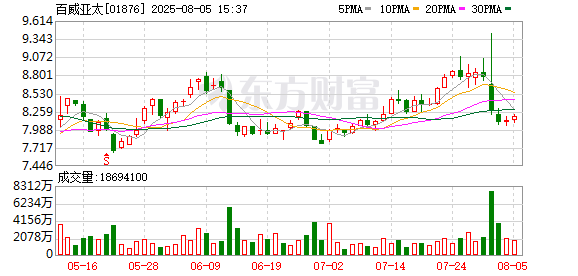
Core Insights - Budweiser APAC reported a disappointing half-year performance with a 5.6% year-on-year revenue decline to $3.136 billion and a significant 24.4% drop in net profit to $409 million [3] - The Chinese market was the primary factor dragging down performance, with sales decreasing by 8.2% and revenue falling by 9.5%, underperforming the industry average [3] - The company attributed the poor performance in China to regional layout and channel structure issues, heavily relying on coastal regions like Guangdong and Fujian, where dining and nightlife consumption slowed in Q2 [3] Company Strategy - Budweiser APAC is accelerating its transition to non-drinking channels, which currently account for only 50% of its Chinese business, below the industry average of 60% [3] - The company is also pushing a premiumization strategy, although short-term challenges in the drinking channel are expected to persist [3] - New CEO Cheng Yanjun emphasized continued investment in flagship brands, cost structure optimization, and expanding the digital platform BEES to enhance business efficiency [4] Market Context - The overall Chinese beer industry is undergoing structural adjustments, with intensified competition in the premium segment and a shift in consumption scenarios from traditional nightlife and dining to home and online [4] - Competitors like Heineken are gaining momentum in the high-end market through partnerships, leaving Budweiser in a relatively passive position [4] - The stock price of Budweiser APAC fell nearly 6% on the day of the earnings report, with a cumulative decline of over 40% for the year [4]
新帅首考挂科,百威中国啤酒销量降超8%
Guo Ji Jin Rong Bao· 2025-08-05 07:36
Core Viewpoint - Budweiser APAC, the largest beer company in the Asia-Pacific region, is facing significant challenges with declining revenue, profit, and sales, particularly in the Chinese market, which has historically been a key growth driver for the company [1][2]. Financial Performance - In the first half of the year, Budweiser APAC reported total revenue of $3.136 billion, a year-on-year decline of 5.6% [1]. - Shareholder profit decreased to $409 million, down 24.4% year-on-year [1]. - Total beer sales reached 4.363 billion liters, reflecting a 6.1% decline compared to the previous year [1]. Market Challenges - The decline in revenue, profit, and sales is closely linked to poor performance in the Chinese market, where beer sales fell by 8.2% and net income decreased by 9.5% [2]. - Revenue per hundred liters dropped by 1.4%, indicating a challenging market environment [2]. - The company has faced pressure from both domestic market weaknesses and the rise of local competitors like China Resources Beer and Tsingtao Brewery, which are seeking to capture higher-end market segments [2]. Historical Context - Budweiser APAC's sales in China have been on a downward trend, with a compound annual growth rate of -2.6% from 2018 to 2024, which is below the national average growth rate for large-scale beer production [2]. - Last year, the company experienced a significant decline in performance in China, with sales dropping by 11.8% and revenue falling by 13%, resulting in a market share decrease of 149 basis points [2]. Strategic Actions - In response to the declining performance, the company has implemented three key strategies: layoffs, price increases, and changes in leadership [2]. - The workforce in China was reduced from 21,181 to 18,401 employees, a decrease of 2,780 staff members [3]. - Despite reports of price increases for certain products, the financial data for the first half of this year indicates a simultaneous decline in both volume and price [3]. Leadership Changes - In February, Budweiser APAC announced the resignation of CEO Jan Craps after a seven-year tenure, with Cheng Yanjun taking over in April [4]. - Cheng, the first Chinese CEO of Budweiser APAC, is seen as having the critical task of reversing the company's fortunes in the Chinese market [5]. - However, the performance under the new leadership has not met expectations, particularly during the peak sales season in the second quarter [6].
食品饮料周报:飞天批价保持稳定,重视大众品回调机会-20250804
Tianfeng Securities· 2025-08-04 09:44
Investment Rating - Industry Rating: Outperform the market (maintained rating) [5] Core Viewpoints - The liquor sector experienced a slight pullback, with stable prices for Feitian liquor. The white liquor index PE-TTM is at 18.06X, which is 5.23% below the reasonable low level over the past decade. Strong alpha companies such as Shanxi Fenjiu and Guizhou Moutai are recommended, along with beta companies like Luzhou Laojiao and Water Well [2][12] - The beer sector saw a decline, with Budweiser Asia reporting a 3.9% decrease in revenue and a 6.2% drop in sales in Q2 2025. However, there is optimism for recovery in beer sales due to upcoming consumption promotion policies and adjustments to alcohol bans [3][13] - The consumer goods sector is experiencing a pullback, with a focus on new products and performance data catalysts. Companies that can enhance efficiency and market share are highlighted as strong investment opportunities [4][20] Summary by Sections Market Performance Review - The food and beverage sector declined by 2.17%, while the Shanghai Composite Index fell by 0.94% and the CSI 300 Index dropped by 1.75%. Specific declines included snacks (-3.03%) and soft drinks (-4.28%) [1][21] Liquor Sector Insights - The white liquor sector saw a 2.40% decline, with notable drops in companies like Shanxi Fenjiu and Shede Liquor. Despite this, the mid-term value of the sector remains promising [2][12] - The yellow wine sector is also under observation, with companies like Gu Yue Long Shan actively repurchasing shares [12] Beer and Beverage Sector Insights - The beer sector's decline was led by companies like Qingdao Beer and Budweiser Asia. The latter's performance was impacted by weak demand in China and Korea [3][13] - The soft drink sector also faced challenges, with companies like Nongfu Spring and Master Kong showing declines [15] Consumer Goods Sector Insights - The consumer goods sector is focusing on new product launches and performance data. Companies like Qiaqia Food and Jinzai are expanding their product lines [4][20] - The dairy sector remains stable, with average milk prices at 3.03 RMB/kg, showing a year-on-year decline of 5.90% [18] Investment Recommendations - Strong alpha liquor companies such as Shanxi Fenjiu and Guizhou Moutai are recommended, along with consumer goods companies that focus on cost reduction and market share growth [5][20]

