长江存储

Search documents
HBM 新材料的国产替代进程
2025-11-10 03:34
Summary of HBM Industry Conference Call Industry Overview - The HBM (High Bandwidth Memory) market is currently dominated by three major players: Samsung, SK Hynix, and Micron, with SK Hynix holding approximately 50% market share [1][2][3] - The competitive landscape is expected to shift by mid-2026 as Samsung and Micron are anticipated to narrow the gap with SK Hynix [1][2] Key Insights and Arguments - **Market Dynamics**: - SK Hynix has a monthly production capacity of 150,000 wafers, Samsung at 140,000, and Micron at 36,000, totaling 326,000 wafers per month [2] - Micron's late entry into the HBM market and its focus on HBM3E and HBM4 technologies may allow it to surpass competitors in performance metrics [1][2] - The demand for GPU boards is projected to reach approximately 10 million units in 2025 and grow to 17-18 million units in 2026, driven by AI applications [1][5] - **Technological Developments**: - HBM technology is evolving towards Hybrid Bonding to meet increasing bandwidth and storage density requirements [1][8] - SK Hynix has already achieved certification for HM4 with NVIDIA, while Samsung is expected to complete certification by the end of 2025, and Micron is projected to finish by early 2026 due to yield issues [1][6] - **Pricing Trends**: - HBM prices have risen significantly, with HBM3 priced at approximately $560, up over 50% from $370, primarily due to increased material and process costs [14][15] - Future price increases are expected as new generations of HBM are introduced, with a projected 20-25% rise in material costs by 2026 [26] Additional Important Points - **Supply Chain and Material Requirements**: - HBM production requires higher performance materials and equipment, with about half of the global DRAM capacity being utilized for HBM production [3][11] - The transition from traditional DRAM to HBM has increased the demand for specific high-performance materials [11][12] - **Domestic Market Developments**: - Domestic companies like Changxin and Yangtze Memory are entering the HBM market, with Changxin already producing HBM2E and planning to increase capacity significantly [1][8] - The domestic supply chain is gradually integrating into international markets, although challenges remain due to existing technological gaps [19][22] - **Future Outlook**: - The overall supply of HBM is expected to stabilize as production capacities expand, mitigating potential supply shortages [16][32] - Cloud computing companies are also significant consumers of HBM, with demand levels comparable to that of NVIDIA [31] This summary encapsulates the key points discussed in the conference call regarding the HBM industry, highlighting the competitive landscape, technological advancements, pricing trends, and future market outlook.

涨价50%!国际存储巨头大幅上调NAND价格,多家模组厂暂停出货
Xuan Gu Bao· 2025-11-09 23:18
Group 1 - SanDisk, a leader in flash memory, has significantly raised NAND flash contract prices by 50% in November, prompting companies like Transcend, ADATA, and Apacer to halt shipments and reassess pricing [1] - The chairman of Transcend stated that the current DRAM memory shortage is the most severe in 30 years, indicating a critical supply issue in the market [1] - Minsheng Securities predicts that due to limited allocation of advanced process capacity to high-end server DRAM and HBM by the three major manufacturers, the overall DRAM prices are expected to continue rising in the fourth quarter [1] Group 2 - To overcome the "memory wall" limiting computing power development, CBA and HBF technologies have emerged as core directions for future storage IDM development, with CBA significantly enhancing storage density and optimizing internal interconnect paths [2] - HBF technology, inspired by HBM packaging design, replaces part of the DRAM stack with flash memory, offering 8-16 times the storage capacity and non-volatile storage advantages, alleviating heat management and energy cost pressures in AI data centers [2] - The storage industry is likely to face a continued tight supply-demand situation due to rising AI demand and ongoing price increases, leading manufacturers to increase capital expenditures to meet growing storage needs, benefiting semiconductor equipment [2] Group 3 - According to Changjiang Securities, Zhaoyi Innovation ranks second globally in NOR Flash and has developed self-researched DRAM with multiple product models including DDR3L, DDR4, and LPDDR4, while planning LPDDR5 small-capacity product development [3] - Baiwei Storage's Mini SSD has been recognized as the only storage product on TIME's list of the year's best inventions, thanks to technological breakthroughs and forward-looking design [3]
存储涨价“存货为王”,A股哪家模组厂商Q4迎来高光时刻?
Ju Chao Zi Xun· 2025-11-09 04:53
Core Insights - The global memory industry is facing a structural, long-term shortage due to the rapid expansion of artificial intelligence applications, with major DRAM manufacturers like SK Hynix, Samsung, and Micron experiencing significant capacity constraints, expected to last until the end of 2026 [2] - Memory module manufacturers are currently prioritizing inventory management over order fulfillment, leading to a market environment where "inventory is king" [2] - The financial performance of major A-share memory module companies shows significant divergence, with varying revenue growth, profit structures, and inventory management [2] Revenue Performance - In the first three quarters of 2025, Jiangbolong led in revenue with 16.73433 billion, followed by Bawei Storage, Demingli, Wanrun Technology, Langke Technology, and Tongyou Technology with revenues of 6.57508 billion, 6.65911 billion, 3.71386 billion, 794.83 million, and 327.24 million respectively [2] - Year-on-year revenue growth rates for Demingli were the highest at 85.1294%, with Bawei Storage, Jiangbolong, Wanrun Technology, Langke Technology, and Tongyou Technology showing growth rates of 30.8424%, 26.1235%, 21.7743%, 35.1916%, and 7.7274% respectively [4] Profitability Analysis - Jiangbolong achieved the highest net profit of 712.63 million, a year-on-year increase of 27.9541%, while Bawei Storage and Wanrun Technology reported profits of 30.41 million and 27.76 million, respectively, with Wanrun experiencing a decline of 16.5846% [5] - In Q3, Jiangbolong's revenue reached 6.53868 billion, leading the sector, while other companies reported revenues of 2.66275 billion, 2.55007 billion, 1.16627 billion, 315.92 million, and 153.54 million respectively [5] Inventory and Accounts Receivable - Jiangbolong held the highest inventory at 8.51687 billion, followed by Bawei Storage, Demingli, Wanrun Technology, Langke Technology, and Tongyou Technology with inventories of 5.69514 billion, 5.93952 billion, 386.74 million, 290.83 million, and 138.24 million respectively [9] - In terms of accounts receivable, Jiangbolong also led with 2.76049 billion, while Bawei Storage, Demingli, Wanrun Technology, Langke Technology, and Tongyou Technology had accounts receivable of 1.37709 billion, 937.18 million, 1.29445 billion, 109.3 million, and 374.49 million respectively [9] Market Dynamics - The third quarter saw a significant improvement in operating data across memory module manufacturers due to widespread price increases, with Jiangbolong's net profit growth reaching 20 times year-on-year [9] - The fourth quarter is characterized by a focus on inventory accumulation, with companies like Jiangbolong and Bawei Storage positioned to benefit more from the price increase cycle, widening the gap between leading and lagging manufacturers [9]

我国47个城市跻身亚洲最具价值100强:上海第4,杭州第13,南京略胜武汉!
Sou Hu Cai Jing· 2025-11-08 18:42
Core Insights - The latest "Top 100 Most Valuable Cities in Asia" list by GYBrand highlights the strong performance of Chinese cities, with 47 cities making the list, showcasing nearly half of the rankings [1][13] - The rankings consider economic scale, innovation potential, talent attraction, and sustainable development [1] Group 1: City Rankings - Tokyo ranks first, followed by Hong Kong and Singapore, with Shanghai at fourth and Beijing at fifth [2] - Other notable Chinese cities include Shenzhen (8th), Guangzhou (9th), Hangzhou (13th), Nanjing (22nd), and Wuhan (23rd) [2][3] Group 2: Shanghai's Economic Impact - Shanghai's GDP has surpassed 4.7 trillion yuan, with the digital economy's core industries accounting for over 18% of its GDP [7] - The city leads in annual IPO fundraising globally, enhancing its financial services to the real economy [7] - Key industries such as integrated circuits, biomedicine, and artificial intelligence have exceeded 1.5 trillion yuan in scale [7] Group 3: Hangzhou's Digital Economy - Hangzhou ranks 13th, driven by a robust digital economy, with its core industries contributing 28% to its GDP [9] - The city is home to major players like Alibaba and Ant Financial, reshaping the fintech landscape [9] - Continuous talent inflow and a favorable living environment enhance its attractiveness for innovation [9] Group 4: Nanjing vs. Wuhan - Nanjing ranks 22nd, slightly ahead of Wuhan (23rd), highlighting different competitive advantages [11] - Nanjing benefits from a strong manufacturing base and educational resources, while Wuhan leverages its transportation hub status [11] - Both cities show resilience, with Nanjing's industrial revenue exceeding 1.8 trillion yuan and Wuhan's GDP growth rebounding to 6.5% [11] Group 5: Overall Trends - The shift from "quantity advantage" to "quality advantage" among Chinese cities is evident, with Shanghai, Hangzhou, Nanjing, and Wuhan representing diverse paths of high-quality development [13] - The cities face challenges in balancing economic growth with improving living standards amid global industrial restructuring [13]

涨幅最高700%,它成了比黄金还猛的“理财产品”
吴晓波频道· 2025-11-08 00:29
Core Viewpoint - The article discusses the significant price increase in memory products, which has become a major factor affecting the cost of consumer electronics, particularly smartphones and computers, driven by rising demand from the AI sector [2][14][42]. Group 1: Price Trends and Consumer Impact - Memory components account for approximately 10%-20% of smartphone hardware costs, leading to inevitable price increases of several hundred yuan for new smartphones due to rising storage prices [14]. - Prices for memory products have surged dramatically, with a 1TB Samsung SSD priced at 650 yuan, doubling in a month, and 16GB Samsung DDR4 memory sticks rising from around 200 yuan to 420 yuan in two months [4][7]. - The price increase has directly impacted consumers, with new smartphones seeing price hikes of 200-500 yuan, particularly for high-capacity models like the iPhone 17 Pro Max [7][8]. Group 2: Market Dynamics and Supply Chain - The memory market is experiencing volatility, with some merchants adopting conservative inventory strategies while others speculate on future price increases by hoarding stock [12][13]. - Major memory manufacturers, including Samsung, Micron, and SK Hynix, dominate over 80% of the global market, and have shifted focus to high-margin enterprise products due to increased demand from AI infrastructure [23][29]. - The AI sector's demand for storage is expected to drive a "super cycle" in the memory market, with projections indicating the global storage market could reach $300 billion by 2027 [14][42]. Group 3: Future Outlook and Technological Developments - The current price surge is attributed to the AI-driven demand for data storage, with significant increases in data requirements for AI applications [17][19]. - Technological advancements, such as QLC storage technology, may eventually lead to cost reductions in consumer-grade storage as these technologies become more widely adopted [38]. - The rise of domestic memory manufacturers in China, such as Yangtze Memory Technologies and ChangXin Memory Technologies, presents opportunities to fill supply chain gaps and may help stabilize prices in the long term [40].

江苏晶圆测试“小巨人”冲刺科创板,华为哈勃持股,拟募资15亿
3 6 Ke· 2025-11-07 07:00
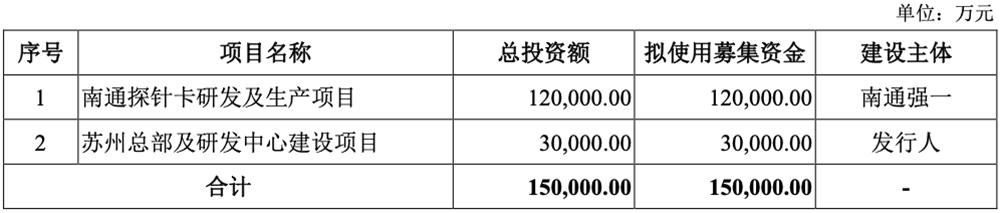
Core Viewpoint - Qiangyi Co., Ltd., a leading MEMS probe card manufacturer in Suzhou, Jiangsu, has submitted its IPO application to the Sci-Tech Innovation Board, with a review scheduled for November 12, 2023. The company aims to raise 1.5 billion yuan for R&D and production projects [1][2][31]. Company Overview - Founded in August 2015, Qiangyi Co., Ltd. has a registered capital of 97.1694 million yuan and is recognized as a national-level "little giant" enterprise specializing in advanced manufacturing [1][2]. - The company focuses on the R&D, design, production, and sales of probe cards, breaking the monopoly of foreign manufacturers in the MEMS probe card sector [1][31]. Market Position - Qiangyi ranks ninth in the global semiconductor probe card industry in 2023 and sixth in 2024, being the only domestic company to enter the top ten [1][2]. - The probe card products are used in both non-storage fields (SoC chips, CPUs, GPUs, RF chips) and storage fields (DRAM, NAND Flash) [1][2]. Financial Performance - In 2022, the company reported revenue exceeding 600 million yuan, with a net profit increase of 1149% [4]. - For the first nine months of 2025, Qiangyi's revenue reached 647 million yuan, a year-on-year increase of 65.88%, with a net profit of 248 million yuan, up 100.13% [6][7]. Future Projections - Qiangyi expects its 2025 revenue to be between 950 million and 1.05 billion yuan, representing a growth of 48.12% to 63.71% year-on-year [7][9]. - The company plans to enhance its R&D capabilities and production capacity for MEMS probe cards, particularly in the storage sector, to improve competitiveness [31]. Client Base - The company has over 400 clients, including major chip design firms and foundries, with significant sales to top clients like Company B, which accounts for over 80% of revenue [2][13][18]. - Qiangyi's major clients include well-known companies such as ZTE Micro, Fudan Microelectronics, and others in the semiconductor industry [2][17]. R&D and Innovation - As of September 30, 2025, Qiangyi had 159 R&D personnel, accounting for 19.85% of its total workforce, and held 182 authorized patents [13][14]. - The company has developed various types of probe cards, including 2D/2.5D MEMS probe cards, and is actively expanding its product offerings [15][16]. Supply Chain and Procurement - Qiangyi's procurement is concentrated, with the top five suppliers accounting for a significant portion of its total procurement costs [22][23]. - The company is working to enhance supply chain stability by sourcing core components domestically, while still relying on imports for certain materials [25][31].
【深度】全球存储芯片涨价潮席卷深圳:模组厂利润翻倍,代理商满仓囤货
Xin Lang Cai Jing· 2025-11-07 00:51
Core Insights - The storage chip prices have surged over 70% in the past two months, outpacing gold price increases, leading to significant profit projections for companies like Chengbang Co., which anticipates a net profit of 30 million yuan, doubling initial estimates [1][2] - The global storage chip market is experiencing a price surge, particularly in DRAM and NAND components, with DRAM prices increasing by 171.8% year-on-year as of Q3 2025 [1][2] - The storage chip industry in Guangdong is primarily focused on mid-to-lower stream segments, with a concentration of companies in Shenzhen and Dongguan involved in design, packaging, and testing [1][4] Industry Dynamics - The storage chip sector has transitioned from a period of low demand and oversupply to a bullish market, referred to as the "milk and bread" phase [2] - Module manufacturers like Chengbang, Jincun, and Jiangbolong are experiencing a significant recovery in performance, with Chengbang reporting a 127.95% year-on-year increase in Q3 net profit [5][6] - The core business of module manufacturers involves packaging and testing storage chips, which are increasingly in demand for consumer electronics and AI applications [5][6] Price Trends and Market Behavior - The price increase is primarily driven by rising wafer costs, with major tech companies like OpenAI and Amazon securing supply, leading to reduced availability for consumer markets [7] - Short-term price volatility is expected to stabilize, but medium-term projections suggest a potential increase of 50% to 80% over the next year [7] - The market is witnessing significant stockpiling behavior among storage agents, with many holding large inventories in anticipation of further price increases [8][9] Impact on End Markets - The price hikes are affecting downstream consumer electronics manufacturers, who are beginning to feel the pressure of rising costs, particularly in low-margin products [12][13] - Companies are prioritizing supply to financially robust clients, while smaller brands face greater challenges due to rising component costs [12][13] - Consumers are already experiencing price increases in storage products, with some SSD prices rising over 30% in just two months [13] Long-term Outlook - Industry experts predict that the current storage chip market conditions could last for five to six years, marking the beginning of a new cycle driven by AI demand [14][15] - Morgan Stanley's report suggests that the global storage market could reach $300 billion by 2027, indicating a significant growth trajectory for the storage chip industry [14]
德明利:为全资子公司新增1亿元担保,累计担保近17.67亿元
Xin Lang Cai Jing· 2025-11-06 10:46
Core Viewpoint - The company announced a new guarantee of 1 billion yuan for its wholly-owned subsidiary, Yuan De (Hong Kong) Co., Ltd., towards Changjiang Storage and Changxin Memory Technologies, which represents approximately 22.96% of the audited net assets for the fiscal year 2024 [1] Group 1 - The total guarantee amount for Yuan De is expected to not exceed 30 billion yuan (or equivalent foreign currency), which is within the scope approved by the shareholders' meeting [1] - For the period from January to September 2025, Yuan De reported revenue of 7.139 billion yuan and a net loss of 138 million yuan, with a debt-to-asset ratio of 98.11% [1] - The company and its subsidiaries have no guarantees outside the consolidated financial statements and no overdue guarantees [1]
中微,研发大增
半导体芯闻· 2025-11-05 10:30
Core Insights - AMEC's operating profit for the first three quarters of this year increased by over 30% compared to the same period last year, alongside a significant rise in R&D investment [1][2] - The company reported a revenue of 8.063 billion RMB, a year-on-year growth of 46.40%, with R&D spending reaching 2.523 billion RMB, up 63.44% [2] Group 1: Financial Performance - AMEC's revenue for the first three quarters was 8.063 billion RMB, reflecting a 46.40% increase year-on-year [2] - The operating profit for the same period was 1.22456 billion RMB, showing a growth of approximately 30% [2] Group 2: R&D Investment - R&D expenditure for AMEC reached 2.523 billion RMB, which is a 63.44% increase compared to the previous year [2] - R&D spending accounted for 31.29% of AMEC's total revenue, indicating a strong commitment to innovation [2] Group 3: Market Position and Comparisons - AMEC's R&D investment is notably higher than that of its South Korean counterparts, Jusung Engineering and Eugene Technology, which invested 72.7 billion KRW and 78.4 billion KRW respectively [3] - Compared to global leaders like ASML and Applied Materials, AMEC's R&D spending as a percentage of revenue is higher than the average of 15% to 20% for Chinese semiconductor companies [3] - Despite high R&D spending, AMEC has not yet established a competitive technological edge in the advanced semiconductor market [4]

“一天一价”,价格仍在涨!小米公司行销总监:有点“惊悚”
Di Yi Cai Jing· 2025-11-05 06:06
Core Insights - The recent surge in storage product prices is significantly impacting various consumer electronics, with companies like Xiaomi expressing concern over rising costs [1][3][4] Price Trends - Memory prices began to rise noticeably in September, with DDR4 8G memory prices increasing from below 90 yuan to between 100 and 130 yuan within a month [7] - By October, DDR4 16G memory prices ranged from 350 to 520 yuan, while DDR5 16G prices reached around 600 yuan [7] - Market data indicates that some mainstream DRAM products have seen price increases of 6% to 25% week-over-week, with DDR4 16G prices rising by 25% to 20 USD [8][10] Supply Chain Dynamics - The price hikes are attributed to structural shortages in the storage market, driven by increased demand from AI applications and a shift in production capacity towards server-grade memory [11][12] - Major manufacturers like Samsung have paused contract pricing for DDR5 DRAM, leading to a 25% spike in spot market prices [9] Market Outlook - Analysts predict that the price increases will continue, with general DRAM prices expected to rise by 8% to 13% in Q4, and NAND Flash prices projected to increase by 5% to 10% [10] - The ongoing supply shortages are expected to persist into 2026, with significant impacts on consumer electronics manufacturers who may struggle to adapt to rising costs [13][14] Stock Market Reaction - Several storage-related stocks have reached historical highs, with companies like Zhaoyi Innovation and Jiangbolong hitting record prices in late October [14]