福田汽车

Search documents
北京现代加码转型 股东双方深化战略合作
Zhong Zheng Wang· 2026-01-17 08:00
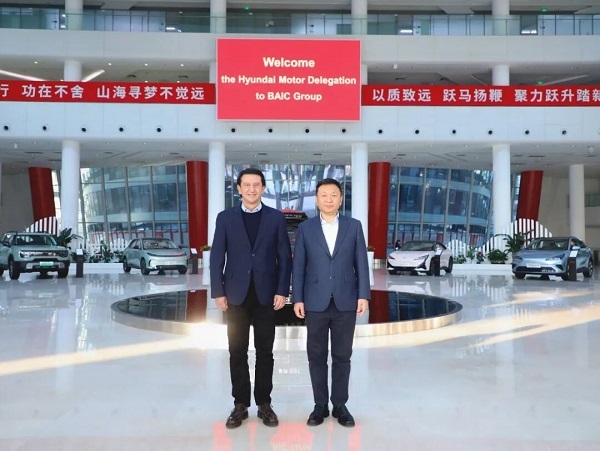
Core Viewpoint - Beijing Hyundai is deepening its strategic cooperation with Hyundai Motor, focusing on the transformation towards new energy vehicles and enhancing competitiveness in the high-end market [1][2] Group 1: Strategic Cooperation - A high-level meeting was held between Zhang Jianyong, Chairman of BAIC Group, and José Munoz, CEO of Hyundai Motor, resulting in multiple agreements to strengthen collaboration [1] - The cooperation aims to inject new momentum into Sino-Korean automotive industry collaboration, recognizing the importance of the Chinese market [1] Group 2: Market and Product Strategy - Beijing Hyundai has achieved over 12 million users in 23 years and aims to sell 210,000 vehicles by 2025, with six consecutive months of positive growth [2] - The company plans to launch two new energy vehicle models in 2026, equipped with L2+ level driving assistance systems, as part of its "Smart Start 2030 Plan" [2] - Future strategies include a focus on localized operations, integrating local technology and supply chains, and advancing a diverse range of new energy products [2] Group 3: Support and Resources - Hyundai Motor will enhance its support for Beijing Hyundai by providing advanced electric and intelligent technologies and sending expert teams [1] - BAIC Group will open core resources and establish a joint R&D platform, while leveraging its brand and channels for comprehensive marketing support [1]

股东双方高层时隔7个月再会面,北京现代加速智电化转型
Zhong Guo Jing Ji Wang· 2026-01-16 11:44
Core Viewpoint - The recent meeting between senior executives of Beijing Hyundai's shareholders reflects a commitment to deepen strategic cooperation and accelerate the company's transformation towards new energy vehicles, with a focus on enhancing support in various dimensions for its development [1][3]. Group 1: Strategic Cooperation - The meeting between BAIC Group and Hyundai Motor's CEO emphasizes the importance of the Chinese market in Hyundai's global strategy, aiming to enhance communication efficiency and support Beijing Hyundai's rapid market response [3]. - Both parties reached a consensus on providing comprehensive support, including financial investment and local talent development, to facilitate Beijing Hyundai's transition [3][4]. Group 2: Market Position and Performance - Beijing Hyundai has gained the trust of over 12 million users in 23 years, achieving a sales target of 210,000 units by 2025, with six consecutive months of positive growth [3][5]. - The company is committed to a dual-path development strategy, maintaining stable growth in its fuel vehicle business while accelerating breakthroughs in its new energy vehicle segment [5]. Group 3: Future Plans - Beijing Hyundai plans to launch 20 new models under the "Smart Start 2030 Plan" over the next 4 to 5 years, targeting annual sales of 500,000 units, with 300,000 units for the domestic market and 200,000 for export [5]. - The introduction of the EO electric SUV marks a significant step in the implementation of the "Smart Start 2030 Plan," indicating a clear path for the company's dual-fuel strategy [5].

出口量全球第一,中国汽车在海外卖爆了
3 6 Ke· 2026-01-16 11:44
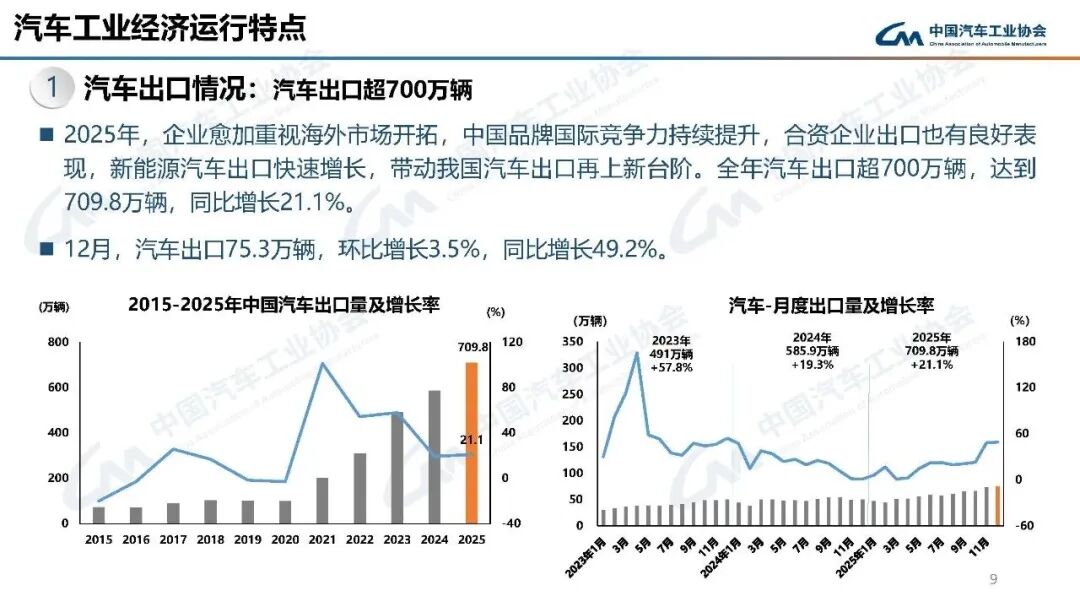
Core Insights - China's automobile exports are projected to exceed 7 million units by 2025, reaching 7.098 million, a year-on-year increase of 21.1%, solidifying its position as the world's largest automobile exporter [1][2][6] - The growth in exports is driven by increased focus on overseas markets, enhanced international competitiveness of Chinese brands, and rapid growth in electric vehicle (EV) exports [1][2][6] Export Performance - In 2025, Chery is expected to lead with an export volume of 1.344 million units, a 17.4% increase, accounting for 18.9% of total exports [1][6][7] - BYD has emerged as a significant player, with exports reaching 1.054 million units, a 140% increase, moving from sixth to second place in export rankings [1][7][8] - SAIC Group is projected to export 950,000 units in 2025, implementing a new global strategy focused on localization [8] Market Dynamics - The export landscape is shifting, with Mexico becoming the largest export destination, surpassing Russia, which saw a decline in exports from over 1 million units in 2024 to 513,078 units in 2025 [1][10][11] - The top ten export destinations for Chinese automobiles in 2025 include Mexico, Russia, and the UAE, with significant increases in exports to these regions [10][11] Electric Vehicle Export Trends - In 2025, EV exports are expected to reach 2.615 million units, doubling year-on-year, while traditional fuel vehicle exports are projected to decline by 2% to 4.483 million units [6][12] - The growth in EV exports is characterized by a strong increase in plug-in hybrid electric vehicles (PHEVs), with exports of pure electric vehicles expected to reach 1.646 million units, a 66.7% increase [6][12] Strategic Developments - Chinese automakers are adapting their strategies to focus on brand and ecosystem development, moving from product export to value chain export [7][8][13] - The competitive landscape is evolving, with companies leveraging local production and technology transfer to enhance their market presence and mitigate risks [12][13]


全球首艘标准模块电池换电船下水,“河豚蔚蓝”送绿色动能到内河航运
Ke Ji Ri Bao· 2026-01-16 11:14
Core Viewpoint - The article highlights the advancements made by Wuhu Shipyard's subsidiary, San Dian Shui Technology, in developing the "He Tun Wei Lan," the first certified electric inland vessel in China, marking a significant step towards the standardization and large-scale development of the domestic electric ship industry [1][9]. Group 1: Product Development and Innovation - San Dian Shui Technology showcased an integrated solution for cargo, ships, vehicles, and storage at the International Maritime Exhibition in Shanghai [1]. - The "He Tun Wei Lan" vessel, measuring 88.9 meters in length and capable of carrying 3,000 tons, can achieve a maximum speed of 8 knots and has a battery swap time of just 5 minutes, reducing overall energy consumption by 22% [1]. - The company has developed a "high-pressure parallel sequential discharge" technology that ensures uninterrupted power supply by automatically switching to backup circuits in case of battery failure [3]. Group 2: Safety and Cost Challenges - Safety concerns regarding battery performance and potential failures were identified as major issues for customers, similar to the early days of electric vehicles [2]. - Traditional battery solutions posed risks, as a single battery failure could lead to total power loss for the vessel [2]. - The cost of electric vessels was initially 40% higher than that of fuel-powered ships, with batteries being the primary cost driver [4]. Group 3: Cost Reduction Strategies - By customizing battery cells specifically for maritime use, the company was able to reduce costs by 30% compared to using standard automotive batteries [4]. - A partnership with Guoxuan High-Tech led to the development of a specialized battery with a lifespan of 6,000 cycles, reducing procurement costs by 28% [5]. - The introduction of a battery bank model allows shipowners to pay for battery usage over time, further lowering the initial investment required [6]. Group 4: Production Efficiency and Market Acceptance - The company has adopted a modular approach to shipbuilding, significantly reducing construction time from 18 months to just 6 months [8]. - The "He Tun Wei Lan" has received positive market feedback, with total orders reaching 1 billion yuan by 2025 [9]. - Plans are in place to expand operations along the Yangtze River and into new waterways, aiming to contribute to a "zero-carbon" future for inland shipping [9].
从烧钱拓荒到算账淘汰赛 新能源重卡赛道融资换挡
Zhong Guo Qi Che Bao Wang· 2026-01-16 09:29
Core Insights - The financing heat in the new energy heavy truck sector is rising, with companies like Kaven New Energy and Supao Technology securing billions in funding, indicating ongoing capital interest in the electrification of commercial vehicles [1] - The investment logic has shifted from early-stage technology concepts to a focus on commercial viability, requiring companies to demonstrate cost control, scalable delivery, and ecosystem integration capabilities [1] Financing Trends - In 2025, the total financing in the new energy heavy truck sector reached approximately 8 billion, with the top five companies capturing over 70% of this amount [2] - Kaven New Energy completed over 1.2 billion in Pre-A financing in June 2025, while Supao Technology secured over 1 billion in strategic financing, focusing on core technology development and global expansion [2] - Other notable financing includes Berai Technology's record-breaking 1 billion in the autonomous driving sector and Jiushi Intelligent's 100 million in B4 financing, highlighting the capital's recognition of technology implementation [2][3] Market Dynamics - A stark contrast exists between the financing fortunes of leading and trailing companies, with the latter facing unprecedented survival pressures and financing costs exceeding 10%, compared to 3.5%-5% for leading firms [3] - Many trailing companies are experiencing issues such as unpaid wages and team departures, indicating a rapid industry reshuffle [3] Shift in Investment Focus - The era of financing based solely on technology concepts has ended, with capital now favoring companies that have validated their business models and can demonstrate delivery capabilities [4] - Successful companies have clear paths to market and verifiable delivery results, with DeepWay and Proton Automotive exemplifying this trend through significant sales and operational achievements [4][5] Ecosystem and Global Expansion - The future of competition in the new energy heavy truck sector will hinge on technology differentiation, ecosystem building, and global market strategies [6] - Companies are expected to develop dual technology routes, such as pure electric and hydrogen, while also exploring alternative fuels like methanol [6] - Building an operational ecosystem that integrates vehicles, energy, and services will be crucial for companies to differentiate themselves in a crowded market [7] International Market Opportunities - Expanding into international markets is becoming essential for leading companies to enhance market share and brand influence, with several firms already making strides in Europe and North America [8] - However, challenges such as regulatory compliance and geopolitical factors will require companies to possess robust technology and localized operational capabilities to succeed globally [8]
【快讯】每日快讯(2026年1月16日)
乘联分会· 2026-01-16 08:50
Domestic News - Hangzhou's "15th Five-Year Plan" aims to accelerate the development of two trillion-level industrial clusters in artificial intelligence and visual intelligence, focusing on nine key areas including intelligent robots, integrated circuits, and new energy equipment [7] - Shanghai has implemented a traffic congestion model at 360 intersections, resulting in a 12.9% increase in average vehicle speed at trial intersections, with traffic accidents expected to decrease by 2.7% and fatalities by 7% by 2025 [9] - BAIC Group and Hyundai Motor are deepening strategic cooperation to accelerate the transformation of Beijing Hyundai [10] - China National Building Material Group and Chery Automobile have signed a strategic cooperation agreement to focus on new materials for industries such as new energy vehicles and robotics [11] - Xiaomi plans to lower the safety mileage requirement for its urban navigation assistance feature to enhance user experience, with a target of 1,000 kilometers set for 2024 [12] - Dongfeng's solid-state battery, with an energy density of 350Wh/kg, is undergoing extreme cold testing in Mohe, demonstrating significant performance in low temperatures [13] - Zeekr's 007GT has launched in Europe, with prices in the Netherlands ranging from 374,000 to 467,000 RMB [14] - Baidu's Robotaxi service has quietly expanded to approximately 20 cities nationwide, with significant investments in smart connected vehicle testing projects [15] International News - General Motors plans to invest $1 billion in the Mexican manufacturing sector over the next two years, focusing on projects aimed at domestic demand [17] - South Korea's automotive exports are projected to reach a record $72 billion in 2025, marking a 1.7% increase from 2024 [18] - Honda's U.S. division aims for a sales target of 1.5 million vehicles by 2026, employing a balanced strategy of hybrid, fuel, and electric models [19] - Mercedes-Benz is expanding its electric vehicle charging network to Canada, with the first three fast-charging stations now operational [20] Commercial Vehicles - The Xiangling V5 gas engine product has been launched in the southwest region, targeting logistics solutions for various sectors [21] - Dongfeng's Rui Lida has completed extreme cold testing, demonstrating superior performance in low-temperature conditions [22] - Shaanxi Automobile is set to unveil three strategic new products at its upcoming partner conference [23] - The Yuanmeng Super VAN has achieved a 212% year-on-year sales increase in 2025, maintaining the top market share in the new energy wide-body light truck segment [25]

福田汽车:在汽车设计领域已有AI相关技术的应用
Ge Long Hui· 2026-01-16 07:55
Group 1 - The core viewpoint of the article is that Foton Motor (600166.SH) has applied AI-related technologies in the field of automotive design [1]
福田汽车(600166.SH):在汽车设计领域已有AI相关技术的应用
Ge Long Hui· 2026-01-16 07:44
格隆汇1月16日丨福田汽车(600166.SH)在互动平台表示,公司在汽车设计领域已有AI相关技术的应用。 ...
崔东树:新能源高增长下汽车发动机市场仍稳步增长
智通财经网· 2026-01-16 05:51
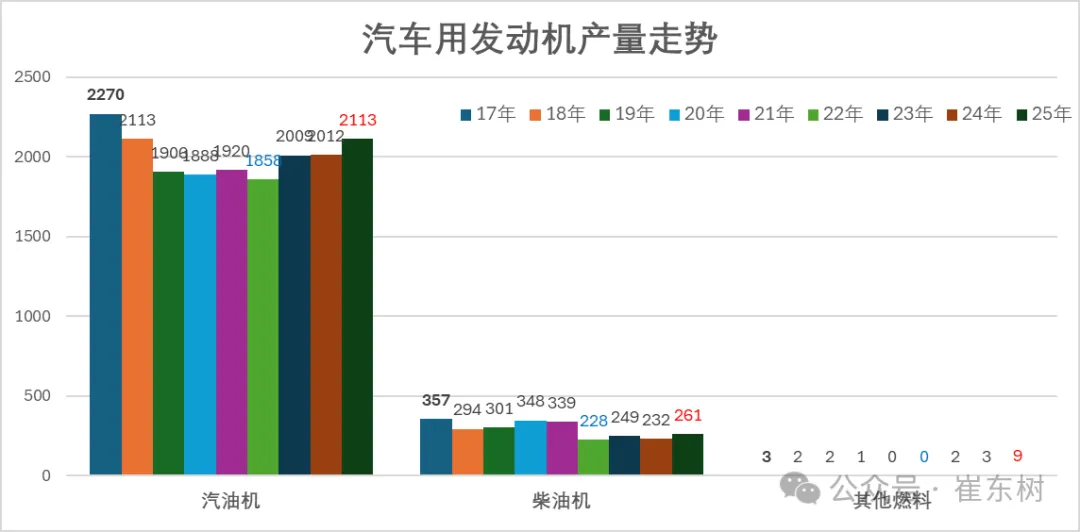
Group 1 - The overall automotive engine market is stable with a slight upward trend, driven by the demand for gasoline engines and the impact of hybrid vehicles [1][4][12] - Gasoline engines maintain a dominant position in the market, with production expected to reach approximately 21.13 million units by 2025, despite minor fluctuations [4][12] - Diesel engine production is declining, from 3.57 million units in 2017 to an estimated 2.61 million units in 2025, primarily due to changes in commercial vehicle demand and stricter environmental regulations [4][12] Group 2 - The gasoline engine market is supported by major manufacturers, while independent manufacturers face significant challenges [6][8] - Major manufacturers have stable production levels, benefiting from strong market competitiveness and ongoing technological upgrades [7][12] - Independent gasoline engine manufacturers are experiencing a decline in production, attributed to increased vertical integration by vehicle manufacturers and the competitive pressure from electric vehicles [8][12] Group 3 - Diesel engine production is stabilizing at low levels, with leading companies gradually recovering after previous declines [9][10] - The market for independent diesel engine manufacturers is increasingly polarized, with some achieving stability while others face exit from the market [11][12] - The shift towards electric commercial vehicles is further squeezing the market for smaller independent diesel engine manufacturers, accelerating industry differentiation [11][12]
经济聚焦|汽车产业竞争力源自硬实力
Ren Min Ri Bao· 2026-01-16 03:00
Group 1 - The core viewpoint highlights the continuous growth of China's automotive production and sales, driven by advancements in electrification technology, innovative applications of cutting-edge technologies, and effective measures against internal competition [1][6] - China's automotive production and sales have maintained a scale of over 30 million units for three consecutive years, ranking first globally for 17 years [1] - The introduction of advanced manufacturing systems and strong local supply chain capabilities has effectively released domestic demand in the automotive sector [1] Group 2 - The integration of multiple technological routes in electrification is emphasized, with significant advancements in battery management systems and the introduction of solid-state batteries [2] - By 2025, the average range of pure electric passenger vehicles in China is expected to approach 500 kilometers, with fast-charging technology allowing for 80% charge in 15 minutes [2] - In 2025, the production and sales of new energy vehicles are projected to reach 16.626 million and 16.49 million units, respectively, marking year-on-year growth of 29% and 28.2% [2] Group 3 - The export of new energy vehicles is set to double in 2025, with a total of 2.615 million units exported, including 2.532 million passenger vehicles and 83,000 commercial vehicles [4] - The automotive industry is transitioning towards mass production applications of autonomous driving technologies, with significant investments and advancements in safety and user experience [5] - The proportion of new passenger vehicles with L2-level assisted driving functions has exceeded 60%, indicating a shift towards more advanced driving technologies [5] Group 4 - Measures to combat internal competition, such as halting price wars and improving product consistency, have led to a 4.4% profit growth in the automotive industry from January to October 2025 [6] - The automotive industry is shifting from resource-dependent, low-cost competition to a focus on technological innovation and value enhancement, with flagship models gaining market recognition [6] - High-end domestic brands in the new energy sector have seen sales growth exceeding 40% year-on-year, with several models leading in their respective market segments [6] Group 5 - The Chinese automotive industry is expected to continue its high-quality development and maintain stable market operations in 2026, supported by the smooth transition of new policies [7]