
西门子

Search documents
AI电源行业专家交流
2025-10-21 15:00
Summary of SST System Industry Conference Call Industry Overview - The conference focused on the SST (Solid State Transformer) system industry, discussing its cost structure, market trends, and competitive landscape in both domestic and overseas markets [1][2][3]. Key Points and Arguments Cost Structure of SST Systems - The cost composition of SST systems includes rectifier modules (40%-50%), high-frequency transformers (approximately 25%), control and distribution (15%), energy storage (11%), and structural cooling (8%) [1][2]. - Current single watt cost of SST systems is around 5 RMB, with total system costs reaching 8-10 million RMB. By 2028, costs are expected to drop to below 1 RMB per watt, with total system costs around 2 million RMB, but large-scale application is anticipated only by 2030 [1][4]. Price Trends and Market Dynamics - There is a significant price disparity between domestic and overseas SST systems, particularly in North America, where prices are expected to remain around 4-5 RMB per watt until 2027-2028, with limited reduction [5]. - Domestic market competition is intense, with expectations that prices could fall below 1 RMB per watt by 2030 [5]. Technical Standards and Design Differences - North America tends to adopt higher input voltage SST systems (35 kV or 20 kV), which enhances renewable energy integration efficiency but also increases costs. Differences in design standards between North America and China contribute to cost variations [6][8]. - Domestic companies can enter the SST supply chain by exporting components like high-frequency transformers and rectifier modules, capturing growth opportunities despite slower rack power increases compared to North America [9]. Market Opportunities and Challenges - Companies like Jinpan and Sungrow, which have comprehensive system integration capabilities, are better positioned to enter the SST supply chain [3][16]. - The domestic market's ability to reduce SST product prices significantly is attributed to lower value differences compared to overseas products, reflecting market maturity and demand [23]. Future Prospects - The SMT (Solid State Transformer) AC-DC hybrid system market is expected to grow faster than the data center market due to lower energy continuity and stability requirements, making it more cost-sensitive [24]. - The demand for silicon carbide (SiC) in charging stations and data centers is increasing, but the complex production process may lead to supply constraints and price increases [26]. Additional Important Insights - The integration capabilities of domestic companies lag behind those of leading overseas firms like Delta, Schneider, and Eaton, which have dedicated departments for each segment of the SST system [22]. - The competitive landscape in the HVDC (High Voltage Direct Current) sector shows that traditional power distribution companies in China have advantages, but emerging electronic companies are rapidly advancing [18]. This summary encapsulates the critical insights from the SST system industry conference call, highlighting the cost structures, market dynamics, technical standards, and future prospects within the industry.
帝奥微拟收购荣湃半导体100%股权,加码模拟芯片
Huan Qiu Lao Hu Cai Jing· 2025-10-21 06:20
Core Viewpoint - The company, DiAo Micro, plans to acquire 100% of Rongpai Semiconductor (Shanghai) Co., Ltd. through a combination of share issuance and cash payment, which is expected to enhance its asset scale, revenue, and net profit, thereby improving its sustainable development and profitability [1][3]. Group 1: Acquisition Details - The acquisition will make Rongpai Semiconductor a wholly-owned subsidiary of DiAo Micro, contributing to the company's growth in various financial metrics [1]. - DiAo Micro aims to quickly expand its product offerings in the isolation device category through this acquisition, enhancing its competitive advantage in the analog chip design industry [3]. Group 2: Financial Performance - Rongpai Semiconductor reported total assets of 118 million yuan and equity of 33.51 million yuan as of June 30, 2025, with revenues of 61.10 million yuan, 99.08 million yuan, and 51.99 million yuan for the years 2023 to the first half of 2025, respectively, alongside losses of 66.32 million yuan, 29.90 million yuan, and 8.23 million yuan [2]. - DiAo Micro's revenue figures for the years 2022 to the first half of 2025 were 502 million yuan, 381 million yuan, 526 million yuan, and 306 million yuan, with net profits of 174 million yuan, 15 million yuan, -4.7 million yuan, and -420,920 yuan, respectively [3]. Group 3: Industry Context - Both DiAo Micro and Rongpai Semiconductor operate within the analog chip design industry, where mergers and acquisitions are seen as key strategies for growth [3]. - Rongpai Semiconductor's products, including high-performance analog chips, have been successfully integrated into vehicles from major manufacturers such as BYD and Volkswagen, indicating strong market demand [2]. Group 4: Strategic Partnerships - Xiaomi Yangtze Industry Fund holds stakes in both DiAo Micro (3.87%) and Rongpai Semiconductor (3.5%), highlighting a strategic partnership that benefits both companies [4]. - DiAo Micro's products are utilized in Xiaomi's 5G terminal devices, with sales amounting to 31.78 million yuan in 2024, reinforcing the collaboration between the two entities [4].

东土科技筹划收购高威科100%股权,股票自10月21日起停牌
Ju Chao Zi Xun· 2025-10-21 02:45
Core Viewpoint - Dongtu Technology Co., Ltd. has announced a suspension of trading as it plans to acquire 100% equity of Gaoweike through a combination of issuing shares and cash payment, with the transaction still in the planning stage [2][5][7] Group 1: Company Overview - Gaoweike, established on February 21, 2001, is a non-listed company with a registered capital of 103.4 million yuan, focusing on industrial automation control systems and related products [2] - The company has developed a customized MES system that offers various management modules, enhancing production efficiency and information integration for clients in the automotive industry [3] - Gaoweike has established a nationwide sales network with 15 subsidiaries and logistics centers in major cities, serving as a distributor for several industrial automation manufacturers [4] Group 2: Transaction Details - The acquisition involves 43 shareholders, including the actual controllers Zhang Xun and Liu Xinping, with ongoing discussions to finalize the transaction details [4][5] - Dongtu Technology signed a cooperation intention agreement with Gaoweike on October 20, outlining the core direction of the acquisition, while specific transaction terms are still under negotiation [5] - The company is committed to disclosing the transaction plan within 10 trading days, by November 4, 2025, and will resume trading if the plan is not disclosed by that date [6]


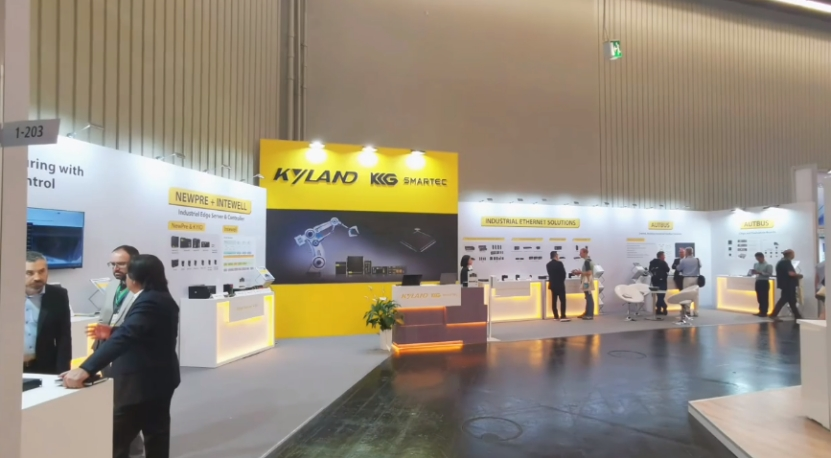
威胜控股(3393.HK):AI产业崛起驱动业务扩大及升级
Ge Long Hui· 2025-10-20 20:58
Core Viewpoint - The company is positioned to benefit from the global rise of the AI industry, which is driving increased electricity demand in data centers, thus expanding its smart distribution business [1][2] Group 1: Market Opportunity - The target price for the company has been raised from HKD 11.65 to HKD 17.40, reflecting a 39.3% upside potential based on a 13.0x FY26 target P/E ratio [1] - The International Energy Agency (IEA) projects that global electricity consumption by data centers will increase by approximately 127.7% from an estimated 415 TWh in 2024 to a forecasted 945 TWh by 2030 [1] - The electricity consumption of data centers in China and the U.S. is expected to grow by about 170% and 130%, respectively, reaching approximately 420 TWh and 275 TWh by 2030, together accounting for over 70% of the global forecast [1] Group 2: Business Expansion - Data center clients are driving the expansion of the company's smart distribution business, with significant collaborations with Siemens and Global Data [2] - The company's smart distribution business is projected to have a compound annual growth rate (CAGR) of 24.7% in revenue and 26.0% in gross profit from FY24 to FY27, surpassing the overall company growth rates of 19.6% and 21.2% [2] - The contribution of smart distribution to total revenue and gross profit is expected to increase from 33.3% and 24.9% in FY24 to 37.7% and 27.9% in FY27, respectively [2]
机械设备行业周报:智元发布精灵G2,优必选新获订单-20251020
Donghai Securities· 2025-10-20 09:41
Investment Rating - The report assigns an "Overweight" rating for the mechanical equipment industry, indicating a positive outlook compared to the broader market index [1]. Core Insights - The report emphasizes the increasing importance of embodied intelligent robots in both policy and research sectors, with a focus on commercial deployment and large-scale manufacturing [3][17]. - The "Shanghai Intelligent Terminal Industry High-Quality Development Action Plan (2026-2027)" has been released, aiming for the industry to exceed 300 billion yuan by 2027 and to cultivate globally influential consumer brands [3][18]. - The report highlights significant advancements in humanoid robots, including the launch of new products and procurement contracts, indicating a robust growth trajectory in the sector [19][20]. Summary by Sections Company Announcements - Inveke reported a revenue of 4.026 billion yuan for the first three quarters of 2025, a year-on-year increase of 40.19% [11]. - Huace Testing anticipates a net profit growth of 8.26%-9.51% for the same period, driven by service upgrades and innovation [12]. - Linyi Zhizhao expects a net profit of 1.890 billion to 2.120 billion yuan, reflecting a growth of 34.10%-50.42% [13]. Robotics Industry Dynamics - The report notes a heightened focus on the commercialization of embodied intelligent robots, with significant R&D activity expected to drive industry growth [17]. - The introduction of the Zhiyuan Spirit G2 robot, designed for industrial applications, showcases advancements in operational capabilities and precision [19]. - The Figure03 humanoid robot has been launched, featuring enhanced sensory and operational capabilities, indicating a shift towards practical applications in everyday environments [20][21]. Industrial Automation - Siemens is actively expanding its industrial software capabilities through multiple acquisitions, enhancing its position in the digital industrial software market [23][24]. - Domestic leaders are integrating AI into industrial automation, with companies like Huichuan Technology and Zhongkong Technology making strides in software development for smart manufacturing [29][30]. Market Review - The report notes a decline in the mechanical equipment sector, with a drop of 5.84%, underperforming the broader market index [30].
威胜控股(03393):AI产业崛起驱动业务扩大及升级
ZHONGTAI INTERNATIONAL SECURITIES· 2025-10-20 08:32
Investment Rating - The report maintains a "Buy" rating for the company with a target price raised to HKD 17.40 from HKD 11.65, indicating a potential upside of 39.3% based on a target P/E ratio of 13.0 times FY26 earnings [1][6]. Core Insights - The rise of the AI industry is driving the expansion and upgrade of the company's business, particularly in smart distribution, as the demand for electricity in data centers increases. This shift from traditional industrial positioning to advanced technology presents a revaluation opportunity for the company [1]. - The global electricity consumption of data centers is expected to increase significantly, with a projected growth of approximately 127.7% from 415 TWh in 2024 to 945 TWh by 2030. The consumption in China and the U.S. will account for over 70% of this total [2]. - The company's smart distribution business is its fastest-growing segment, with expected compound annual growth rates (CAGR) of 24.7% for revenue and 26.0% for gross profit from FY24 to FY27, surpassing the overall company growth rates [4]. Financial Summary - For the fiscal year ending December 31, 2023, the company reported revenue of RMB 7,252 million, with a growth rate of 23.8%. Projections for the following years indicate revenue growth to RMB 14,915 million by 2027, maintaining a growth rate of around 19.2% [5][16]. - The net profit attributable to shareholders is expected to grow from RMB 521 million in 2023 to RMB 1,552 million by 2027, reflecting a CAGR of 26.5% [5][16]. - The earnings per share (EPS) is projected to increase from RMB 0.53 in 2023 to RMB 1.56 in 2027, with a corresponding decrease in the P/E ratio from 21.8 to 7.4 over the same period [5][16].
分析一下全球芯片产业链,看看中国到底厉不厉害?
Sou Hu Cai Jing· 2025-10-20 05:12
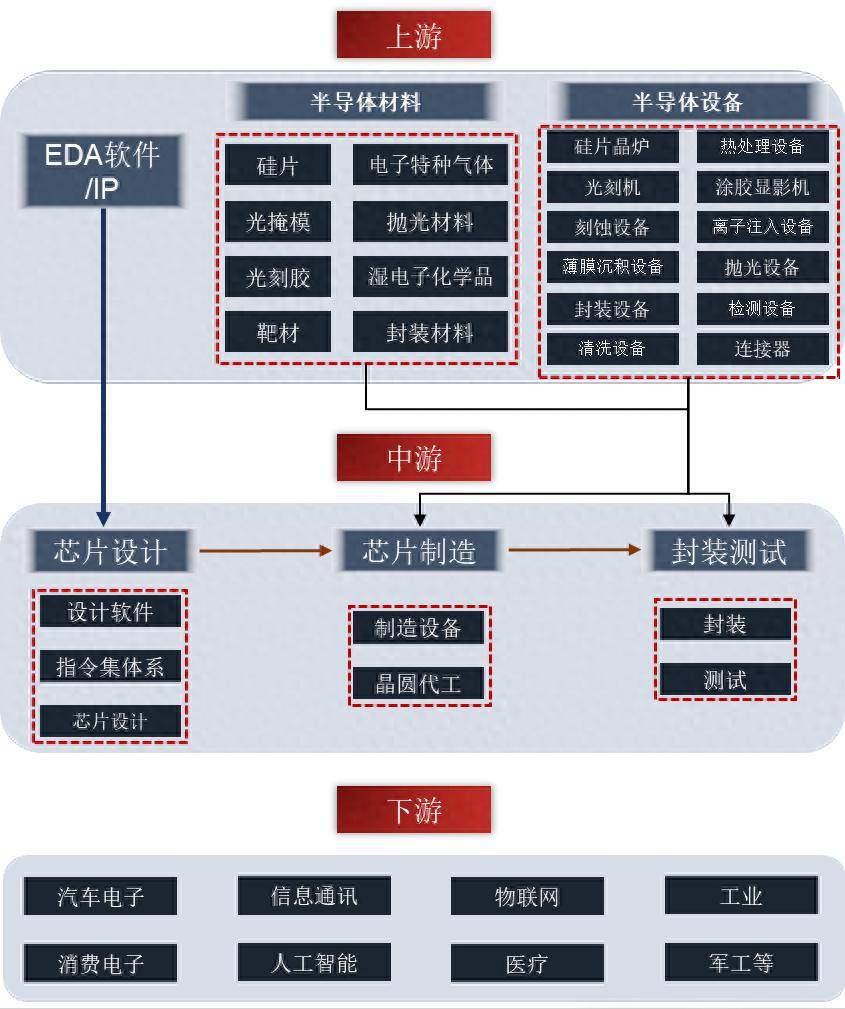
Core Insights - The article discusses the current state of the semiconductor industry in China, highlighting its strengths and weaknesses across the entire supply chain [1][18]. Upstream Sector - The EDA/IP segment is dominated by American companies, which hold over 80% of the global market share, while China's share is less than 10% [3][5]. - In the EDA field, the top three companies (Synopsys, Cadence, Siemens EDA) account for over 80% of the market, indicating a significant gap for China [5]. - Semiconductor materials, crucial for chip manufacturing, are primarily controlled by Japan, which holds around 60% of the market, with China accounting for less than 20% [7]. - The semiconductor equipment market is also dominated by the US, Japan, and the Netherlands, with only one Chinese company, North Huachuang, ranking seventh globally [7][10]. Midstream Sector - In the design segment, American companies dominate, with six out of the top ten IC design firms being American, while only one Chinese company, OmniVision, holds a mere 1% market share [10][12]. - China's semiconductor manufacturing capacity is relatively high at over 20%, which is more than double that of the US, but the technology is several generations behind [13]. - In the packaging and testing segment, China performs well, with four out of the top ten global packaging and testing companies being Chinese, capturing over 25% of the market [16]. Downstream Sector - The overall chip market share for China is only 4.5%, while the US holds a dominant 50.4% share, indicating a heavy reliance on imported chips [15][18].
第三届西部消博会西安开幕 双会场赋能“消费+运动”新体验
Sou Hu Cai Jing· 2025-10-18 20:32
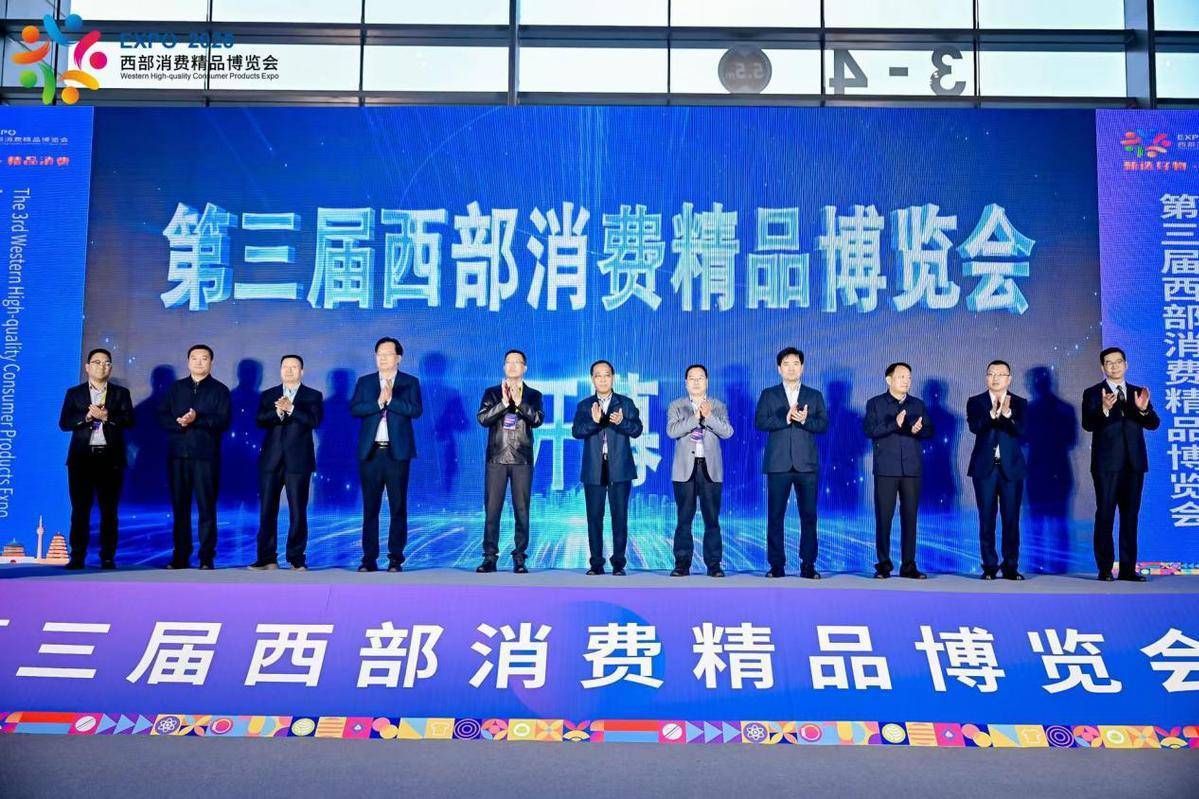
Core Insights - The third Western Consumer Expo opened in Xi'an, focusing on promoting high-quality consumption and regional economic collaboration [1][3] Group 1: Event Overview - The expo is themed "Select Good Products, Quality Consumption" and features a dual venue model, linking the main venue at Xi'an International Convention Center with the Xi'an International Marathon [3] - The event spans an exhibition area of 10,000 square meters, with over 200 participating companies showcasing more than a thousand products [6] Group 2: Economic and Industry Highlights - Key data on the "China First Release Economy" and "Xi'an First Release Economy" were presented, providing precise data support for consumption upgrades and industrial collaboration in the West [4] - The expo highlighted regional strengths, with companies like Zhongtian Bee Industry Group focusing on the bee industry, showcasing the diverse industrial endowments and competitive advantages of the Western regions [4] Group 3: Participating Companies and Products - Major industry leaders such as NIO, Xiaomi, Huawei, Gree, Siemens, DJI, and West Fen Liquor participated, covering sectors like home appliances, sports, retail, automotive, and energy [6] - The expo also included a "buy and refund" policy consultation point to promote the convenience of international consumer services in Xi'an [6] Group 4: Consumer Engagement and Benefits - The event features free gifts and lottery draws to enhance consumer engagement, aiming to provide diverse consumption benefits and promote resource sharing in the West [6]



印度已对美作出保证,美财长转身瞄准中国,威胁最高征收500%关税
Sou Hu Cai Jing· 2025-10-18 12:17
Group 1 - Trump's announcement of India's commitment to stop purchasing Russian oil is perceived as a diplomatic victory for the U.S. [1][6] - India's reliance on Russian oil is significant, as it constitutes a major portion of its annual crude oil imports, which helps control domestic inflation and supports industrial operations [3][4] - India's military cooperation with Russia is crucial, with 70% of its weapons sourced from Russia, making a complete severance of ties challenging [3][6] Group 2 - U.S. Treasury Secretary Yellen's threat to impose a 500% tariff on Chinese purchases of Russian oil has caused turmoil in global trade markets [1][8] - The proposed 500% tariff is unprecedented and could severely impact U.S. industries that rely on Chinese-sourced rare earth materials, including electric vehicles and military components [8][10] - The U.S. is attempting to pressure India into abandoning its strategic autonomy and increasing reliance on American support [6][21] Group 3 - The European Union is unlikely to comply with U.S. requests to impose tariffs on China, given its strong trade ties with China and the potential negative impact on its own companies [12][21] - The U.S. is primarily concerned about China's control over rare earth materials, which are critical for various industries, and is using tariffs as a form of deterrence [16][21] - China's response to U.S. tariff threats indicates a strategic approach, suggesting it will not engage in a tariff battle and has its own countermeasures in place [18][21]
医疗器械CDMO赛道获青睐 企业加速入场
Zhong Guo Zheng Quan Bao· 2025-10-17 20:15
Core Insights - The medical device CDMO sector in China is experiencing significant growth driven by policy support and surging demand, with expectations to replicate the successful trajectory of the pharmaceutical CXO model over the next five years [1][7]. Policy Support - The Chinese medical device market is projected to reach 1.2 trillion yuan by 2024, indicating robust growth potential [2]. - Global leaders in the medical device industry have long outsourced production to specialized CDMO providers to enhance R&D efficiency and reduce time-to-market for new products [2]. - The implementation of the MAH system allows R&D companies to outsource production, providing a significant policy boost to the industry [3]. Industry Demand - There is a growing demand for CDMO services in high-end medical equipment sectors, particularly in surgical robotics, where innovative companies require robust support for product commercialization [5]. - The medical device CDMO market is expected to grow rapidly, with a projected annual compound growth rate of 16.3% from 2020 to 2025, significantly outpacing the overall medical device industry growth [2]. Company Developments - Companies like Meihua Medical are actively expanding their CDMO capabilities, offering comprehensive services from product development to mass delivery across various medical device segments [4]. - The establishment of high-end medical device CDMO platforms, such as Shuimu Dongfang, is facilitating the acceleration of product development and market entry for innovative projects [5]. Market Trends - The Chinese medical device CDMO sector is transitioning from a focus on specific segments like IVD to a broader range of product lines and full-service capabilities [7]. - The industry is characterized by a fragmented landscape with a focus on specialized, high-quality services rather than large-scale operations [6]. Future Outlook - The next 3-5 years are critical for the industry, with expectations for the emergence of 1-2 leading companies capable of providing integrated services from R&D to mass production [9]. - Key growth areas include high-value consumables, automated filling and sterilization platforms, and the development of accelerators for prototype registration and small batch production [7].