Mobileye

Search documents
GPT-5惨遭零分打脸,顶级AI全军覆没,奥特曼AI博士级能力神话破灭
3 6 Ke· 2025-09-16 00:39
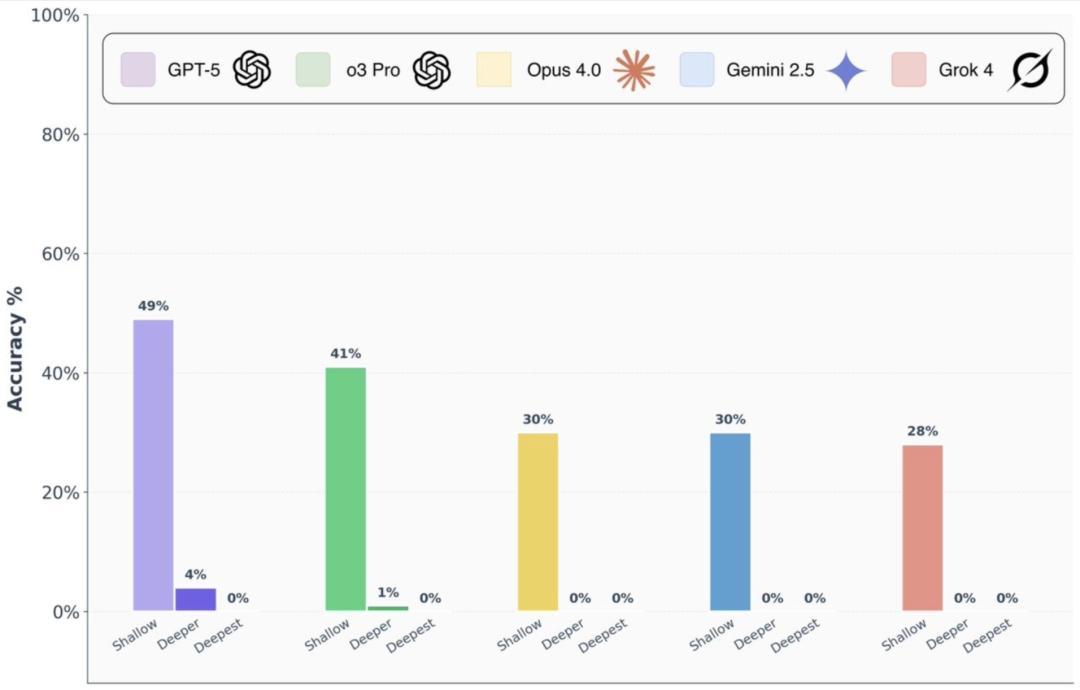
Group 1 - The FormulaOne benchmark test reveals the limitations of top AI models, with GPT-5 achieving only about 4% accuracy on advanced questions and scoring zero on the most difficult problems [1][6][19] - The benchmark, developed by AAI, aims to measure algorithmic reasoning depth beyond competitive programming, focusing on real-world optimization problems [8][15] - The test consists of 220 novel graph-based dynamic programming problems categorized into three levels of difficulty: shallow, deeper, and deepest [16][18] Group 2 - AAI was founded by Amnon Shashua, co-founder of Mobileye, and focuses on AI research and development [10][11] - The benchmark's problems are designed to be easily understandable but require significant creativity and deep reasoning to solve [19][22] - The challenges presented in the deepest level of the benchmark highlight the gap between current AI capabilities and the reasoning required for complex real-world problems [25][30]

自动驾驶的“4G时刻”,正在十几万的车上爆发
Tai Mei Ti A P P· 2025-09-13 02:39
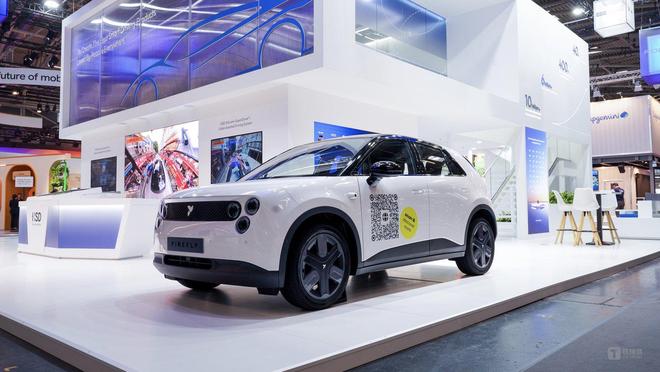
Core Insights - The article discusses the strategic positioning of Horizon Robotics in the global smart driving industry, emphasizing its role as a "non-car manufacturer Tesla" that focuses on providing comprehensive solutions in the smart driving ecosystem [3][4] - Horizon's approach is characterized by a collaborative philosophy, aiming to empower automotive manufacturers by filling the gaps in the smart driving value chain, thus achieving a significant market share in China [4][5] - The company is poised for a technological leap, likening the current moment in smart driving to the "4G moment" in mobile communications, with its HSD system set to revolutionize the market by making advanced driving assistance accessible to mainstream vehicles [5][6][8] Company Strategy - Horizon Robotics is recognized for its "four quadrants" strategy, encompassing chips, software, cockpit, and intelligent driving, positioning itself as a comprehensive enabler for automotive companies [3][4] - The company has achieved a 45.8% market share in China's ADAS front-view integrated machine market in the first half of 2025, collaborating with over 40 manufacturers and enabling more than 400 models [4][5] - Horizon aims to transition from "millions of chips" to "millions of HSD systems," focusing on delivering a fully integrated autonomous driving solution that combines perception, decision-making, and execution [11][12] Technological Advancements - The HSD system, which debuted at the Munich Auto Show, integrates advanced algorithms and low-latency processing, marking a significant step in the evolution of smart driving technology [5][6][7] - Horizon's chips, such as the Journey 6P, boast a processing power of 560 TOPS, placing them in the same league as competitors like Mobileye and NVIDIA [7] - The company emphasizes making high-level driving assistance a standard feature in affordable vehicles, aiming to democratize access to advanced driving technologies [6][8] Global Expansion - Horizon has established a European headquarters in Munich and formed deep partnerships with major Tier-1 suppliers, completing extensive overseas testing [15][16] - The company has secured collaborations with nine joint venture automakers for 30 models, projecting over 7.5 million overseas orders in the future [15][16] - Horizon's strategy for international expansion focuses on building trust and ecological partnerships rather than merely increasing shipment volumes, reflecting a long-term vision for global market integration [15][16]
NVIDIA英伟达进入自动驾驶领域二三事
自动驾驶之心· 2025-08-13 23:33
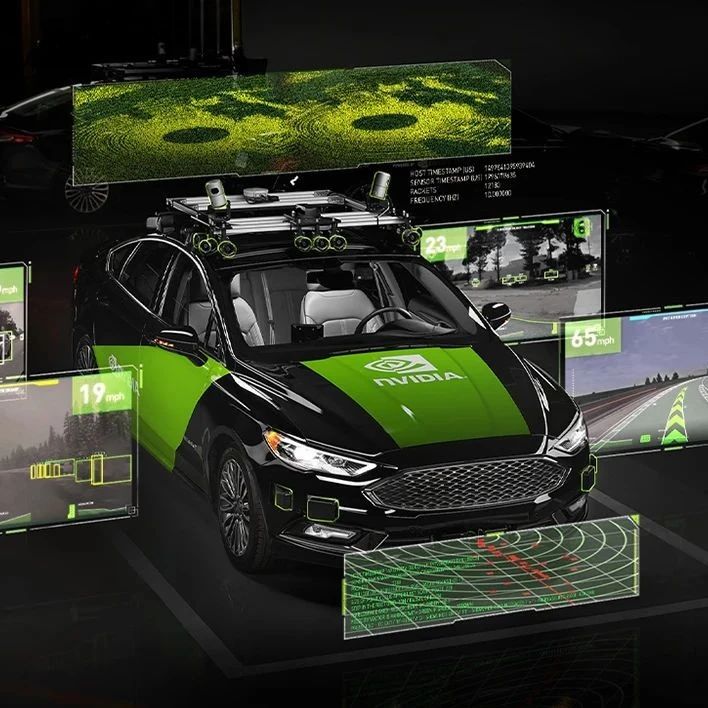
Core Viewpoint - The article discusses the evolution of the partnership between Tesla and NVIDIA in the autonomous driving sector, highlighting the challenges and innovations that have shaped their collaboration. Group 1: Tesla's Journey in Autonomous Driving - In September 2013, Tesla officially entered the autonomous driving arena, emphasizing internal development rather than relying on external technologies [5] - Initially, Tesla partnered with Mobileye due to the lack of suitable self-developed autonomous driving chips, enhancing Mobileye's technology with unique innovations like Fleet Learning [9][12] - Tensions arose between Tesla and Mobileye as Tesla sought to develop its own algorithms, leading to Mobileye's demand for Tesla to halt its internal vision efforts [12][13] Group 2: NVIDIA's Strategic Shift - In 2012, NVIDIA's CEO Jensen Huang recognized the potential of autonomous driving in electric vehicles, leading to a focus on deep learning and computer vision [15] - By November 2013, Huang highlighted the importance of digital computing in modern vehicles, indicating a shift towards automation in the automotive industry [17] - In January 2015, NVIDIA launched the DRIVE brand, introducing the DRIVE PX platform, which provided significant computational power for autonomous driving applications [18] Group 3: The Partnership Development - Following a significant accident in May 2016, Mobileye ended its partnership with Tesla, prompting Tesla to choose NVIDIA as its new technology partner [19][20] - In October 2016, Tesla announced that all its production models would feature hardware capable of full self-driving capabilities, utilizing NVIDIA's DRIVE PX 2 platform [20] - By early 2017, Tesla publicly announced its plans to develop its own chips, indicating a shift in its strategy while NVIDIA continued to expand its automotive partnerships [25][26] Group 4: Technological Advancements - In 2018, NVIDIA introduced the DRIVE Xavier platform, which improved computational performance while reducing power consumption [28] - Tesla's HW3, launched in April 2019, was described by Musk as the most advanced computer designed specifically for autonomous driving, marking the end of NVIDIA's direct involvement in Tesla's autonomous driving hardware [30][32]
【重磅深度/小马智行】革新交通运输,Robotaxi驶向未来
东吴汽车黄细里团队· 2025-08-06 13:52
Investment Highlights - The cost of Robotaxi is decreasing, with BOM costs dropping to around 300,000 yuan, aided by mass production of autonomous driving kits and significant reductions in the costs of onboard computing units and LiDAR by 80% and 68% respectively [3][48] - The company has a strong technical foundation and is leading in commercialization, with over 10 billion kilometers of testing data generated through its PonyWorld platform [4][66] - The company is expanding its operations in major cities like Beijing, Shanghai, Guangzhou, and Shenzhen, while also pursuing international markets, having obtained Robotaxi licenses in the US, South Korea, and Luxembourg [5][62] Business Model and Financials - The company’s revenue from autonomous driving truck logistics is expected to grow significantly, with a 61.3% increase projected for 2024 [23] - The company’s total revenue is forecasted to reach 78 million USD in 2025, with a rapid scale-up expected as the Robotaxi business model matures [6] - The gross margin is under pressure due to the increasing share of lower-margin autonomous truck logistics revenue, but there is potential for improvement as operational efficiency increases [26] Market Potential - The Robotaxi market in China is projected to reach 200 billion yuan, with significant growth expected as it replaces traditional shared mobility services [52] - The company is well-positioned to benefit from a supportive policy environment and advancements in autonomous driving technology, which are expected to drive down costs and enhance profitability [59][60] Technological Advancements - The company’s latest generation of Robotaxi vehicles features advanced sensor configurations, including 9 LiDARs and 14 cameras, enabling 360-degree detection and a range of up to 650 meters [70] - The integration of multi-modal language models into the autonomous driving system enhances its ability to understand complex traffic scenarios and improve decision-making [34][38] Regulatory Environment - The regulatory framework for autonomous vehicles in China is evolving, with increasing support for testing and commercial operations, which is expected to accelerate the industry’s growth [59][62] - The company is actively participating in pilot programs across various cities, contributing to the establishment of a robust operational framework for autonomous driving [62]

特斯拉智驾芯片“风云”
半导体行业观察· 2025-07-30 02:18
Core Viewpoint - Tesla's dominance in the intelligent driving sector is attributed to its continuous evolution of self-developed driving chips, which have become a key force in reshaping the industry landscape [1][54]. Group 1: Tesla's Early Development and Partnerships - In 2014, Tesla began its journey into intelligent driving by collaborating with Mobileye, utilizing the EyeQ3 chip for its Autopilot 1.0 system [3][6]. - The initial hardware platform HW1.0 was limited by Mobileye's black-box solutions, which restricted Tesla's ability to customize algorithms and utilize data effectively [8][9]. Group 2: Transition to NVIDIA and HW2.0 - After ending its partnership with Mobileye in 2016, Tesla partnered with NVIDIA to develop the HW2.0 system, significantly increasing processing power from 0.256 TOPS to 12 TOPS [10][11]. - HW2.0 featured a "vision-first" approach, utilizing multiple cameras to create a 360-degree view, enhancing the vehicle's environmental perception [14][15]. Group 3: Advancements with HW3.0 and Self-Development - In 2019, Tesla launched the HW3.0 platform with its self-developed Full Self-Driving (FSD) chip, achieving a processing power of 144 TOPS, marking a significant leap in capabilities [21][23]. - The FSD chip's architecture allowed Tesla to optimize chip design according to its algorithm needs, facilitating rapid iterations of intelligent driving features [25][49]. Group 4: HW4.0 and Enhanced Scene Adaptation - The HW4.0 system, introduced in 2023, aimed to address the limitations of HW3.0 in complex urban environments, featuring a new FSD chip with over three times the processing power [30][31]. - HW4.0 reintroduced millimeter-wave radar to improve safety and reliability, enhancing the system's ability to handle diverse driving scenarios [33][34]. Group 5: Future Developments with AI5 and HW5.0 - Tesla's next-generation AI5 chip, expected to achieve 2000-2500 TOPS, is set to redefine the standards for intelligent driving technology [42][46]. - The HW5.0 system is anticipated to begin small-scale deliveries in mid-2025, with plans for mass production in 2026, further solidifying Tesla's leadership in the autonomous driving market [43][46]. Group 6: Synergy with Shanghai Factory - The Shanghai factory plays a crucial role in Tesla's self-developed chip strategy, providing a cost-effective production environment that supports rapid technological iterations [48][50]. - The factory's high localization rate and production efficiency have significantly reduced costs, allowing Tesla to invest more in R&D for intelligent driving technologies [49][52].
英特尔公司20250425
2025-07-16 06:13
Summary of Conference Call Company Overview - The conference call involved Intel, with CEO Lipu Tan and CFO David Finzner presenting the first quarter results and future strategies [1][2]. Key Industry Insights - The semiconductor industry is facing macroeconomic uncertainties, impacting demand and pricing strategies [2][9]. - The company is focusing on AI workloads and redefining its product portfolio to meet emerging demands in the computing landscape [4][5]. Financial Performance - Q1 revenue was reported at $12.7 billion, exceeding guidance, driven by strong Xeon sales [7]. - Non-GAAP gross margin was 39.2%, approximately three percentage points above guidance, attributed to better-than-expected demand for Raptor Lake [7]. - Earnings per share (EPS) for Q1 was $0.13, surpassing the breakeven guidance due to higher revenue and lower operating expenses [7]. - Operating cash flow was $800 million, with capital expenditures (CapEx) of $6.2 billion [7]. Cost Management and Operational Efficiency - The company plans to reduce operating expenses (OPEX) to $17 billion in 2025 and $16 billion in 2026, reflecting a $500 million reduction from previous expectations [10]. - A target of $18 billion for gross CapEx in 2025 was set, down from $20 billion, focusing on operational efficiencies [10]. - The leadership structure has been flattened to enhance decision-making speed and reduce bureaucratic hurdles [2][3]. Product Strategy and Innovation - Intel aims to refocus on building best-in-class products, particularly in client and data center computing, with a strong emphasis on AI capabilities [4][5]. - The company is prioritizing the launch of Panther Lake and Clearwater Forest products, with the first SKU expected by year-end 2025 [16][17]. - A shift towards a customer service mindset in the foundry business is emphasized, recognizing the diverse needs of different customers [5][12]. Market Outlook and Guidance - The forecast for Q2 revenue is between $11.2 billion and $12.4 billion, reflecting a potential decline due to macroeconomic pressures [9]. - The company anticipates a contraction in the total addressable market (TAM) and is preparing for potential impacts from tariffs [9][27]. - Long-term growth is expected to be driven by AI products, with a focus on edge AI and reasoning models [19][28]. Risks and Challenges - The company acknowledges risks related to macroeconomic conditions, including potential pullbacks in investment and spending [9][21]. - There is a noted challenge in maintaining market share amidst increasing competition, particularly from ARM in the data center segment [25]. Additional Considerations - The company is exploring partnerships to enhance its AI strategy and is committed to a balanced approach in manufacturing, leveraging both internal and external foundry capabilities [30][32]. - The divestiture of a 51% stake in Altera is expected to close in the second half of 2025, which will impact future operating expense calculations [8][31]. This summary encapsulates the key points discussed during the conference call, highlighting Intel's current performance, strategic direction, and the challenges it faces in the semiconductor industry.

Robotaxi 已落地 7 城,20 城在路上!一文讲透全球自动驾驶投资机会
Zhi Tong Cai Jing· 2025-07-03 11:15
Core Insights - The autonomous vehicle (AV) market is projected to reach a potential size of $1.2 trillion by 2040, covering various sectors including automotive, trucking, logistics, agriculture, and mining [1][7] - Currently, commercial AV deployment is scaling, with 7 cities globally offering commercial robotaxi services and an additional 20 cities set to launch soon [1][7] - The report encompasses companies with a combined market capitalization of approximately $10 trillion, highlighting their strategies in AV technology development and market share competition [1][3] Market Overview - The AV market is expected to grow from $137 billion in 2024 to $1.2 trillion by 2040, with significant compound annual growth rates (CAGR) across various sectors [7] - The automotive sector alone is anticipated to reach $686.89 billion by 2040, with a CAGR of 14.6% from $78.08 billion in 2024 [10] - The trucking sector is projected to grow to $353.52 billion by 2040, with a CAGR of 14.5% [10] Key Companies and Their Roles - Major players in the OEM sector include companies like Caterpillar, Deere, Daimler Truck, and Toyota, all of which are investing in AV technologies and partnerships [4][9] - Chinese companies such as Xiaomi and XPeng are also significant, with Xiaomi focusing on LiDAR technology and XPeng developing the XNGP system for nationwide deployment [8][10] - In the software domain, companies like Google (Waymo) and Baidu (Apollo Go) are leading in AV commercialization, with Waymo planning to provide 250,000 paid rides weekly by 2025 [8][10] Technology and Innovation - The semiconductor sector plays a crucial role in AV development, providing essential capabilities such as AI training and sensor processing [11] - Key semiconductor companies include Nvidia, Qualcomm, and Mobileye, with Nvidia expected to generate $1.7 billion in automotive revenue by 2025 [11] - LiDAR technology is dominated by companies like Hesai and RoboSense, with significant revenue growth projected in the coming years [8][11] Future Projections - By 2030, it is estimated that 10% of Deere's revenue will come from recurring sources related to AV solutions in agriculture and construction [9] - Daimler Truck's Torc system is expected to contribute $1.5 billion in profit by 2035, representing 30% of its adjusted EBIT in 2024 [9] - Horizon Robotics anticipates that 97% of its revenue will come from AV-related solutions by 2024, with significant market share growth expected by 2030 [9][10]




英特尔汽车业务败走中国,喊出“All in”才过两个月
Tai Mei Ti A P P· 2025-06-26 10:52
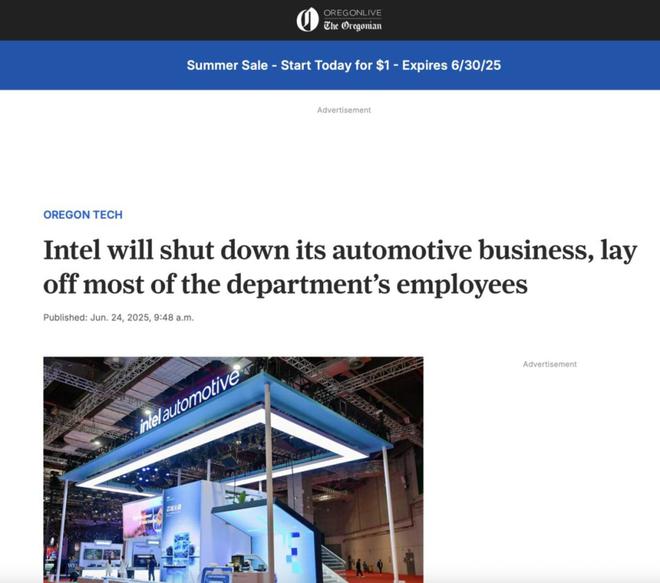
Core Viewpoint - Intel has abruptly decided to shut down its automotive business, which was previously seen as a significant growth opportunity, indicating a strategic retreat in response to financial pressures and competitive challenges in the automotive semiconductor market [1][10][23]. Group 1: Business Decision and Leadership Changes - Intel's automotive division, once considered a key growth area, is being closed under the leadership of new CEO Lip-Bu Tan, who has initiated a company-wide restructuring to focus on core businesses [8][10]. - Jack Weast, a prominent figure in Intel's automotive strategy, had recently relocated to China to spearhead the automotive initiative but has now returned to the U.S. following the decision to cut the division [9][22]. Group 2: Financial Performance - Intel reported a net loss of $821 million in Q1 2025, with total revenue declining over 30% from 2021 to 2024, and the foundry business losing $7 billion in 2023 [10][11]. - The automotive division, defined as a "small-scale business," has not generated sufficient revenue to justify its continued operation amid the company's financial struggles [11][18]. Group 3: Competitive Landscape - The automotive semiconductor market is highly competitive, dominated by companies like Qualcomm and NVIDIA, making it difficult for Intel to establish a foothold [19][20]. - Local Chinese companies, such as SemiDrive and SiEngine, are gaining traction in the market, further complicating Intel's position [20]. Group 4: Strategic Shift - Intel's decision to exit the automotive chip market reflects a broader strategy to focus on its core data center and client computing businesses while retaining control over Mobileye, a leader in advanced driver-assistance systems (ADAS) [23][24]. - The shift from being an operator in the automotive space to a more focused investor in specialized segments indicates a strategic realignment in response to market dynamics and geopolitical risks [24][25].
Innoviz Technologies .(INVZ) - 2025 FY - Earnings Call Transcript
2025-06-11 14:02
Financial Data and Key Metrics Changes - Innoviz is positioned as a leader in the automotive LIDAR space with a focus on both level three and level four applications, indicating a strategic shift to capture a larger market share [10][11] - The company anticipates significant growth in production capacity, with plans to ramp up operations in collaboration with contract manufacturer Fabrinet [41][42] Business Line Data and Key Metrics Changes - Innoviz has transitioned from focusing solely on level three consumer applications to also include level four commercial applications, effectively doubling its business opportunity [11][57] - The average selling price (ASP) for level three applications is estimated between $600 to $800 per vehicle, while level four applications could reach $6,000 to $7,000 per vehicle due to the deployment of multiple LIDAR units [18][19] Market Data and Key Metrics Changes - The automotive market is projected to see a 10% penetration of LIDAR technology by 2030, translating to approximately 8 to 9 million units sold annually [54][55] - The commercial application market is maturing faster than expected, with a clear return on investment (ROI) model that enhances business opportunities for Innoviz [57][58] Company Strategy and Development Direction - Innoviz aims to win additional programs and ramp up production capacity, focusing on both consumer and commercial applications [11][12] - The company is also exploring opportunities in non-automotive markets, leveraging its automotive-grade LIDAR technology for applications in security, smart cities, and industrial uses [34][36] Management's Comments on Operating Environment and Future Outlook - Management highlighted the importance of AI in enabling autonomous driving, stating that without AI, autonomous features cannot be realized [20][22] - The company expects significant volume increases starting in 2026, particularly in level four applications, while level three deployments are anticipated to ramp up in 2027 and beyond [16][56] Other Important Information - Innoviz's partnership with major platform players like Mobileye and NVIDIA is crucial for its growth, as these partnerships provide integrated solutions that save time and resources for OEMs [26][29] - The company is committed to maintaining a CapEx-light model by utilizing contract manufacturers, which allows for flexibility and scalability in production [41][43] Q&A Session Summary Question: How do you see the market for level three and level four applications developing? - Management noted that level four applications are gaining traction due to maturing technology and favorable business models, while level three applications are already being deployed in high-end vehicles [13][16] Question: What is the significance of partnerships with platform players like NVIDIA and Mobileye? - These partnerships are essential as they provide a ready-made solution for OEMs, reducing the time and cost associated with developing autonomous driving technologies [26][29] Question: How does Innoviz plan to enter non-automotive markets? - Innoviz is strategically looking to leverage its automotive-grade LIDAR technology for applications in security and smart cities, where there is already a demand for effective LIDAR solutions [34][36] Question: What trends are expected to impact the automotive sector in the next five to ten years? - Management anticipates a significant increase in LIDAR adoption, with projections of 8 to 9 million units sold annually by 2030, driven by safety considerations and the need for differentiation in the automotive market [54][55][56]

【新能源周报】新能源汽车行业信息周报(2025年5月26日-6月1日)



乘联分会· 2025-06-04 08:38
Industry Information - In the first four months, Shaanxi's automobile production increased by 33.3% year-on-year, with a total output of 630,000 vehicles, surpassing the national growth rate of 22.2% [8] - China Automotive Research Institute signed a strategic cooperation agreement with Huawei's subsidiary, aiming to enhance collaboration in policy research, AI technology application, and digital model development [9] - Nvidia plans to launch a new AI chip for the Chinese market, priced significantly lower than the previous H20 chip, with production expected to start in June [10] - The Horgos port exported 106,000 vehicles from January to April, marking an 18% year-on-year increase [10] - A Guangzhou company has developed a fast-charging technology that can charge 70% of a vehicle's battery in just 5 minutes, leading the industry [10] - The automotive chip company Chuangzhan completed nearly 100 million yuan in angel financing [11] - CATL expects to achieve small-scale production of solid-state batteries by 2027, which are anticipated to address key issues in electric vehicle range and safety [12] - Geely's battery subsidiary plans to reach a production capacity of 70GWh by 2027, with multiple production bases established [12] - Hesai Technology reported Q1 revenue of 530 million yuan, with a gross margin of 41.7% and a delivery volume of 195,818 units [13] - Pony.ai has partnered with Dubai's RTA to launch Robotaxi testing operations by 2025 [14] - Nvidia's Q1 revenue reached $44.062 billion, with a 72% increase in automotive chip business [15] - UBS forecasts continued growth in electric vehicle sales, projecting a compound annual growth rate of 17% from 2024 to 2027 [16] Policy Information - Henan aims to complete the scrapping and replacement of approximately 500,000 vehicles by 2025, along with over 8 million home appliance replacements [25] - Shanghai's Jiading district has introduced policies to support the development of intelligent connected new energy vehicles [26] - Guangzhou has allocated over 2.986 million yuan in subsidies for electric vehicle charging infrastructure construction [27] - Beijing encourages foreign enterprises to participate in high-level autonomous driving demonstration zones [28] - Chongqing plans to establish 30 smart factories and 300 digital workshops by 2027 [28] - Harbin is launching a promotional campaign for automobiles, offering 48 million yuan in subsidies [28] - Guangdong's energy bureau has issued a notice for energy-saving and carbon reduction work for public institutions by 2025 [28] - Fujian supports automotive consumption activities and aims to build over 80,000 public charging piles by the end of 2025 [28] - Zhejiang Jiaxing has announced subsidy standards for personal charging piles and hydrogen stations [33]