吉林化纤

Search documents
新乡化纤(000949) - 000949新乡化纤投资者关系管理信息20250619
2025-06-19 06:30
Group 1: Company Overview and Strategy - In 2024, the company focused on strengthening its core business and extending its industry through project construction, aiming for industrial upgrades and green low-carbon transformation [2] - The company completed a specific issuance of shares and enhanced research in bio-based chemical fibers and raw materials [2] - Production and operational stability were maintained, with project construction progressing as planned [2] Group 2: Production and Financial Performance - In 2024, the company produced 96,368 tons of bio-based cellulose filament and 183,212 tons of spandex fiber [3] - The total revenue for the year reached 736,577.45 million yuan, with a net profit attributable to shareholders of 24,555.25 million yuan [3] Group 3: Industry Trends - Spandex Fiber - China is the largest producer and consumer of spandex, with a domestic production capacity of approximately 1.37 million tons in 2024 [4] - The spandex industry is experiencing growth in both supply and demand, with an improved competitive environment despite price adjustments due to raw material fluctuations [4] Group 4: Industry Trends - Bio-based Cellulose Filament - China is the largest producer of bio-based cellulose filament, with a total production capacity of about 250,000 tons in 2024 [5] - The industry is consolidating, with leading companies like Xinxiang Chemical Fiber maintaining a competitive edge in production capacity and product quality [5] - The overall demand for bio-based cellulose filament is increasing, influenced by new consumption trends [5] Group 5: Other Developments - The company's subsidiary, Xinxiang Mycelium New Materials Technology Co., is progressing with its mycelium biomass fiber project according to the planned schedule [6]

研判2025!中国防臭袜行业发展背景、产业链、发展现状、竞争格局及发展趋势分析:新一代消费群体崛起,防臭袜市场有望持续发展[图]
Chan Ye Xin Xi Wang· 2025-06-14 01:46
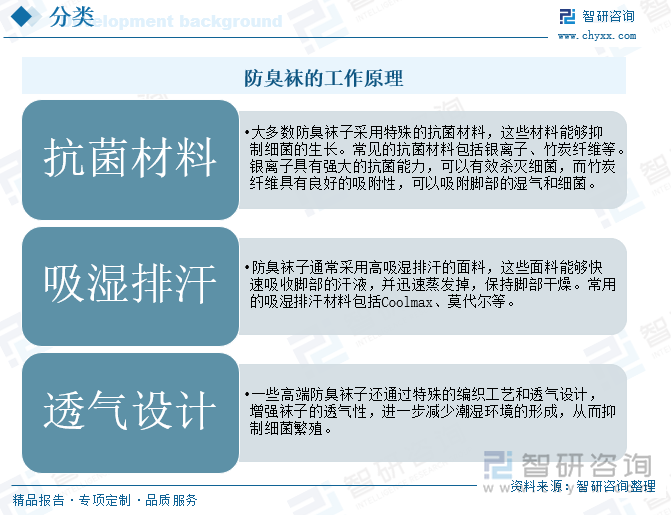
Core Viewpoint - The demand for odor-resistant socks is increasing in China due to rising consumer awareness of quality and functionality, with the market expected to reach 5.77 billion yuan in 2024, a 15% year-on-year increase [1][13]. Group 1: Industry Overview - Odor-resistant socks are designed to inhibit and kill bacteria, primarily using materials like bamboo fiber and silver ion fiber, which help reduce odor by preventing bacterial growth [3][7]. - The industry has established a complete supply chain, including raw material supply, manufacturing, high-tech antibacterial material research, and efficient sales operations [1][13]. - The market for odor-resistant socks is growing rapidly, with 85% of the Chinese population suffering from foot odor issues, driving demand for these products [1][5]. Group 2: Market Dynamics - The online sales channel has become crucial for the odor-resistant sock industry, benefiting from the rapid growth of e-commerce, with online retail sales reaching 4.74 trillion yuan in the first four months of 2025, a 7.7% year-on-year increase [11]. - The consumer demographic shows a significant male preference, with 68% of consumers being male, largely due to higher sweat gland activity in men [15]. Group 3: Competitive Landscape - The industry is characterized by intense competition, with numerous players offering similar products, leading to price wars and promotional strategies to gain market share [17]. - Key companies in the sector include Langsha Holding Group, Zhejiang Jian Sheng Group, and Nanjing He Su Times Antibacterial Materials Technology Group, among others [2][18][20]. Group 4: Future Trends - The industry is expected to diversify product functions, integrating smart features such as temperature regulation and health monitoring, alongside aesthetic enhancements [22]. - There is a growing emphasis on sustainable practices, with a shift towards eco-friendly and recyclable materials in production processes [23]. - The integration of online and offline sales channels will be a significant trend, allowing consumers to experience products in-store while benefiting from the convenience of online shopping [24][25].


建筑建材25年中期展望:焕新提速,供给转型
2025-06-12 15:07
Summary of the Conference Call Records Industry Overview - **Industry**: Construction and Building Materials - **Key Trends**: The construction industry is experiencing a downward trend in revenue and profit in the first half of 2025, with accounts receivable turnover impacting ROE significantly. The gross profit margin remains stable. The second half of the year will focus on the impact of debt resolution on cash flow, with potential for improvement in fundamentals if positive changes occur [1][3][4]. Core Insights and Arguments - **Market Performance**: The construction and building materials sectors are in a state of adjustment, with the building decoration and renovation sectors performing slightly better. Cement and fiberglass prices have rebounded since hitting a low in Q1 of the previous year, leading to better performance compared to the broader market [2][4]. - **Debt Resolution**: The construction sector's debt resolution is crucial, especially for state-owned enterprises, which account for approximately 90% of the revenue and profit of listed construction companies. Significant improvements in cash flow have been observed, particularly among small and medium-sized construction firms [8]. - **Demand and Supply Dynamics**: The building materials sector is facing challenges with domestic orders and output under pressure, but design orders have shown good growth. Local government investments are increasingly focused on industrial investments, affecting project progress [9][10]. Investment Recommendations - **Construction Sector**: Recommended areas include stock renovation, urban renewal, emerging industry services (e.g., semiconductor clean rooms, nuclear power projects), and overseas business. Specific companies to watch include China National Materials, China Chemical, China Nuclear Power, and China State Construction International [5][6]. - **Building Materials Sector**: Focus on overseas business, high-end electronic fabrics, consumer building materials, and companies with clean de-real estate operations like China Liansu. High-dividend companies such as Conch Venture are also worth considering due to their promising waste-to-energy business [7][6]. Additional Important Insights - **Challenges**: The construction industry faces significant demand pressure, with a notable clearing phenomenon. Private enterprises are actively seeking cross-industry transformations, especially following supportive policies for mergers and acquisitions [11][12]. - **Emerging Opportunities**: The overseas market remains robust, with significant growth in direct investment and engineering contracts in countries along the Belt and Road Initiative [14]. - **Future Trends**: The nuclear power sector is expected to see significant investment growth, with approvals for new units accelerating. The construction sector is also expected to benefit from increased investment in infrastructure and energy projects [18][19]. Conclusion The construction and building materials sectors are navigating a complex landscape characterized by both challenges and opportunities. Key areas for investment include urban renewal, overseas expansion, and high-demand materials, with a focus on companies that can adapt to changing market conditions and leverage emerging trends in technology and sustainability.
基础化工行业周报(2025/6/2-2025/6/6):印度钾肥大合同落地,关注农化景气向好-20250610
Donghai Securities· 2025-06-10 07:09
Investment Rating - The report suggests a positive outlook for the chemical industry, particularly in segments like potassium fertilizers and carbon fiber, indicating potential investment opportunities in leading companies with scale and technological advantages [5][6][7]. Core Insights - The potassium fertilizer market is expected to maintain its favorable conditions following the signing of a major contract between Russia and India at a price of $349 per ton, reflecting a 23.3% increase from the previous year [6][15]. - The carbon fiber industry is undergoing accelerated consolidation, with significant players like Dow and SGL exiting the market, which may create opportunities for companies with strong technological capabilities [7][16][17]. Summary by Sections 1. Industry News and Events - The Indian potassium fertilizer contract was finalized at $349 per ton, with a shipment volume of 600,000 tons, indicating a strong market outlook [6][15]. - The carbon fiber sector is seeing consolidation, with Dow selling its stake in DowAksa and SGL closing its factory in Portugal, suggesting a shift towards companies with competitive advantages [7][16][17]. 2. Chemical Sector Performance - The basic chemical index rose by 2.61% in the week of June 2-6, 2025, outperforming the broader market [21][22]. - Notable stock performances included significant gains in companies like Lianhua Technology and Dazhi Technology, while some companies faced declines [26][28]. 3. Price Trends - Key products such as sulfuric acid and caustic soda saw price increases of 4.67% and 4.56% respectively, while vitamin E prices dropped by 13.46% [32][33]. - The price spread for products like PVC and PET bottles showed significant increases, indicating market dynamics favoring certain chemical products [34][35]. 4. Investment Recommendations - The report recommends focusing on integrated players in the refining and chemical sectors, as well as leaders in the refrigerant and agricultural chemical markets [19][20]. - Companies involved in domestic substitution for high-end materials, such as semiconductor materials and advanced engineering plastics, are highlighted as potential beneficiaries of the domestic manufacturing trend [20].
抢占化工新材料发展新赛道
Zhong Guo Hua Gong Bao· 2025-06-10 06:40
Core Viewpoint - The chemical new materials industry is a crucial sector for strategic emerging industries, playing an irreplaceable role in promoting industrial upgrades, ensuring national security, and facilitating sustainable economic development [1]. Group 1: Industry Development - During the "14th Five-Year Plan" period, China's chemical new materials capacity and output have steadily expanded, with self-sufficiency rates continuously improving, marking a rapid development phase [2]. - Significant achievements have been made in system construction, technological innovation, and market cultivation, making it the fastest-growing and most dynamic field in China's chemical industry [2]. - Technological innovations have seen breakthroughs, with key technologies and products developed, such as metallocene polypropylene and high-performance carbon fibers, breaking foreign monopolies and supporting domestic manufacturing [2]. Group 2: Application and Market Expansion - Chemical new materials are widely applied in strategic emerging industries such as new energy, electronic information, aerospace, and high-end equipment manufacturing, enhancing performance and efficiency [3]. - The industry has formed clusters in regions like Bohai Rim, Yangtze River Delta, and Pearl River Delta, fostering collaboration among leading enterprises and research institutions [3]. - Leading companies like China National Chemical Corporation and Sinopec have made significant progress in various sub-sectors, becoming key players in high-performance chemical materials [3]. Group 3: Challenges and Areas for Improvement - The industry faces challenges such as insufficient innovation capabilities and an unreasonable product structure, with a lack of original innovation and collaboration between enterprises and research institutions [4][5]. - High-end product self-sufficiency rates remain low, with significant reliance on imports for critical materials like metallocene polyethylene, posing risks to national supply chain security [5]. - Market competition is intensifying, with domestic companies facing pressure from multinational corporations, leading to a shift towards integrated competition across the entire industry chain [6]. Group 4: Future Directions - To address existing issues, the industry must strengthen basic research, enhance innovation capabilities, and establish collaborative mechanisms between academia and industry [7]. - Upgrading and transforming the industry by focusing on key strategic needs and optimizing the product structure is essential for improving overall competitiveness [8]. - A comprehensive industrial ecosystem should be developed, including robust service platforms and financial support to facilitate innovation and market stability [9].
基础化工行业周报:印度钾肥大合同落地,关注农化景气向好
Donghai Securities· 2025-06-10 06:23
Investment Rating - The report suggests a positive outlook for the potassium fertilizer market, with a focus on companies like Yaqi International and Dongfang Iron Tower [6][15]. Core Insights - The report highlights the acceleration of consolidation in the carbon fiber industry, recommending attention to leading companies with scale and technological advantages such as Guangwei Composite and Zhongfu Shenying [7][17]. - The potassium fertilizer contract signed between Russia and India at $349 per ton indicates a potential upward trend in the potassium fertilizer market, with a 23.3% increase from last year's price [6][15]. - The report emphasizes the importance of monitoring the chemical sector's performance, noting that the basic chemical index outperformed the market with a 2.61% increase [8][21]. Summary by Sections Industry News and Events - The Indian potassium fertilizer contract was finalized at $349 per ton, which is a 23.3% increase from last year's price of $283 per ton, indicating a favorable market outlook [6][15]. - The carbon fiber industry is experiencing accelerated consolidation, with significant exits from major players like Dow Chemical, suggesting a shift towards companies with stronger technological capabilities [7][17]. Chemical Sector Performance - The basic chemical index increased by 2.61%, outperforming the broader market, with notable gains in sub-sectors such as pesticides (7.69%) and other chemical raw materials (5.05%) [8][21][22]. - Key products showing price increases include sulfuric acid (4.67%) and caustic soda (4.56%), while vitamin E saw a significant decline of 13.46% [8][32][33]. Investment Recommendations - The report recommends focusing on integrated players in the refining-PX-PTA chain, such as Hengli Petrochemical and Rongsheng Petrochemical [19]. - It also suggests monitoring leading companies in the refrigerant and fluorochemical sectors, as well as those involved in agricultural chemicals, which are currently experiencing favorable market conditions [20].
东海证券晨会纪要-20250610
Donghai Securities· 2025-06-10 03:47
Group 1: Semiconductor Industry Insights - The semiconductor industry is experiencing a recovery in supply and demand despite policy disruptions, with a focus on structural opportunities in AI and semiconductor equipment [5][7][11] - In May 2025, global semiconductor demand continued to improve, with mobile phones and tablets showing slight growth, while TWS earphones, wearable devices, and smart home products experienced rapid growth [5][8] - The pricing trend remains upward, with expectations for continued improvement in supply-demand dynamics in June 2025 [5][7] - The semiconductor sector's valuation metrics indicate a PE ratio of 61.52% and a PB ratio of 39.18%, reflecting a historical context of valuation [6][7] - The first quarter of 2025 saw a significant increase in public fund holdings in the semiconductor sector, accounting for 12% of total public fund stock value [6][7] Group 2: Carbon Fiber Industry Developments - The carbon fiber industry is undergoing accelerated consolidation, with a focus on leading companies that possess scale and technological advantages [12][17] - Global carbon fiber production capacity is expected to reach 309,000 tons by 2024, with a growth rate of 9.23% anticipated for 2025, despite underutilization of capacity [13][14] - The demand for carbon fiber is projected to rebound in 2024, driven by sectors such as aerospace and low-altitude economy applications [15][16] - Key players in the domestic carbon fiber market are advancing technology and expanding capacity, with significant developments in high-performance carbon fiber products [16][17] Group 3: Inflation and Economic Indicators - In May 2025, the CPI showed a year-on-year decline of 0.1%, while the PPI decreased by 3.3%, indicating ongoing price pressures in the economy [19][21] - The decline in oil prices has negatively impacted transportation and communication prices, contributing to the overall inflationary pressures [20][21] - The core CPI has shown slight recovery, influenced by seasonal factors and consumer behavior during promotional periods [20][21] Group 4: Market Overview and Financial News - Recent financial news highlights government initiatives aimed at improving social welfare and addressing public concerns, which may influence market sentiment [22][23] - The A-share market has shown positive momentum, with major indices experiencing gains, indicating a favorable trading environment [26][27] - The foreign trade data for May 2025 revealed a trade surplus of $103.22 billion, reflecting a mixed performance in exports and imports [24][25]
低空物流场景落地加速,沃飞长空斩获CCAR-135部运行合格证
Southwest Securities· 2025-06-08 08:18
Investment Rating - The report maintains an "Outperform" rating for the low-altitude economy industry [1]. Core Insights - The low-altitude logistics scenarios are accelerating, with significant developments such as沃飞长空 receiving the CCAR-135 operational qualification certificate, marking it as the first domestic eVTOL manufacturer qualified for short-distance aerial tours and passenger flights [1][26]. - The low-altitude economy sector has outperformed the market, with the万得低空经济指数 rising by 1.96%, surpassing the Shanghai Composite Index by 0.86 percentage points [6][14]. - National and local policies are increasingly supportive of the low-altitude economy, with initiatives aimed at enhancing drone applications in logistics and tourism [21][22][23]. Summary by Sections Market Review - From May 26 to June 8, the low-altitude economy sector outperformed the market, with the万得低空经济指数 increasing by 1.96% and the国证通用航空指数 rising by 3.12% [6][14]. - The report highlights various local government initiatives aimed at promoting the development of the low-altitude economy, including the establishment of low-altitude flight service platforms in regions like Hubei [25][26]. Policy Dynamics - The National Postal Bureau emphasized the development of drone technology for logistics, aiming to enhance low-altitude economic growth [21]. - The Ministry of Industry and Information Technology, along with other agencies, released a digital transformation plan for the electronic information manufacturing industry, which includes applications for drones and low-altitude logistics [22]. Industry Developments - The report details significant advancements in the industry, such as the launch of the移动机场 2.0 by圣翔航空, which allows for flexible deployment of vertical takeoff and landing airports [34]. - Major contracts and partnerships are being formed, including a 100-unit order from中航租赁 for the御风未来 M1B eVTOL, indicating strong market demand [30][32]. - Joby Aviation's collaboration with a Saudi Arabian company aims to establish a distribution agreement for eVTOLs, with potential deliveries of up to 200 aircraft valued at approximately $1 billion [40].
解码文化自信的城市样本丨一江松水唱风流——解码“北国江城”吉林的文化自信样本
Xin Hua She· 2025-06-07 07:34
Group 1: Historical and Cultural Significance - Jilin City, known as "the northern Jiangnan," is rich in historical and cultural heritage, with the Songhua River serving as a central axis for its development [3][5] - The city has numerous historical sites, including the Dong and Xi Tuan Mountain sites and the Longtan Mountain City, showcasing its long-standing cultural lineage [3][5] - Jilin City is recognized as a birthplace of the Manchu culture and has a deep-rooted cultural confidence stemming from its historical significance [5][6] Group 2: Industrial Development - Jilin City has a strong industrial base, with significant projects established during the early years of New China, including the first bag of fertilizer and the first barrel of dye [7][10] - The city is undergoing a transformation with the relocation and modernization of its industrial zones, such as the Hada Bay Industrial Area, which is shifting from traditional industries to creative and modern sectors [12][14] - The construction of a new 1.2 million tons/year ethylene project is set to enhance Jilin's chemical industry, marking a significant transition from a fuel-based to a product-oriented economy [14][15] Group 3: Winter Sports and Tourism - Jilin City is leveraging its rich ice and snow resources to promote winter sports, becoming a hub for skiing and related activities [19][21] - The city is actively hosting international events, such as the World Cold Region Ice and Snow Economy Conference, to boost its profile in the global ice and snow industry [21][22] - The development of facilities and infrastructure for winter sports is contributing to the city's ambition to become a world-class ice and snow industry base [21][22]

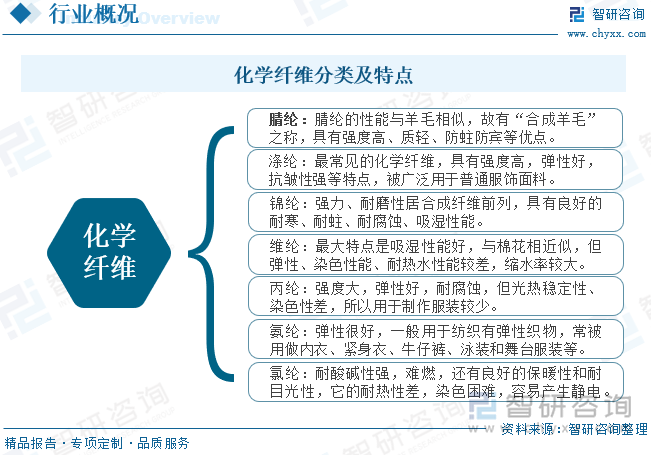
2025年中国腈纶供需及进出口现状简析,国产替代进程深化,净出口实现逆转[图]
Chan Ye Xin Xi Wang· 2025-06-04 01:43
Core Viewpoint - The acrylic industry in China is transitioning to a weak balance phase after significant adjustments in supply and demand, with production expected to rise from 580,000 tons in 2019 to 620,000 tons by 2024, while demand slightly decreases from 643,000 tons to 619,300 tons during the same period, indicating a narrowing supply-demand gap and deepening domestic substitution process [1][10]. Industry Development Overview - Acrylic, also known as polyacrylonitrile, is a high molecular compound primarily used to produce acrylic fibers, which are known for their good weather resistance and vibrant dyeing capabilities, but have limitations in moisture absorption and wear resistance [2]. Policy Background - The acrylic industry is influenced by dual policies focusing on environmental governance and industrial upgrading, with the Ministry of Ecology and Environment emphasizing pollution control in the chemical fiber sector and promoting energy efficiency improvements [5][6]. Industry Chain - The acrylic industry chain relies on acrylonitrile as a core raw material produced by petrochemical companies, with vertical integration accelerating as leading companies establish their own acrylonitrile facilities to enhance cost control and extend into high-value areas like carbon fiber [8]. Current Industry Status - China produces over 30% of the world's acrylic fabrics and garments, with a significant shift in supply-demand dynamics leading to a narrowing gap by 2024, driven by capacity clearance and technological upgrades [10]. Trade Dynamics - The import-export landscape of the acrylic industry shows a reduction in imports from 89,000 tons to 44,400 tons and an increase in exports from 26,000 tons to 45,100 tons from 2019 to 2024, indicating enhanced international competitiveness of domestic acrylic products [12]. Competitive Landscape - The competitive landscape features a concentration of leading firms like Jilin Chemical Fiber, which has achieved a compound annual growth rate of 9.6% in revenue from 2020 to 2024, while international giants are also investing in high-end material development [14][16]. Development Trends - The acrylic industry is expected to accelerate the integration of green low-carbon technologies, aiming for a 30% reduction in carbon footprint through innovations in raw materials and recycling systems, while also developing high-performance differentiated products for emerging markets [18].