
海信视像

Search documents
海信的CES答卷:从RGB引领者到AI生态构建者的全球跃迁
2 1 Shi Ji Jing Ji Bao Dao· 2026-01-08 08:28
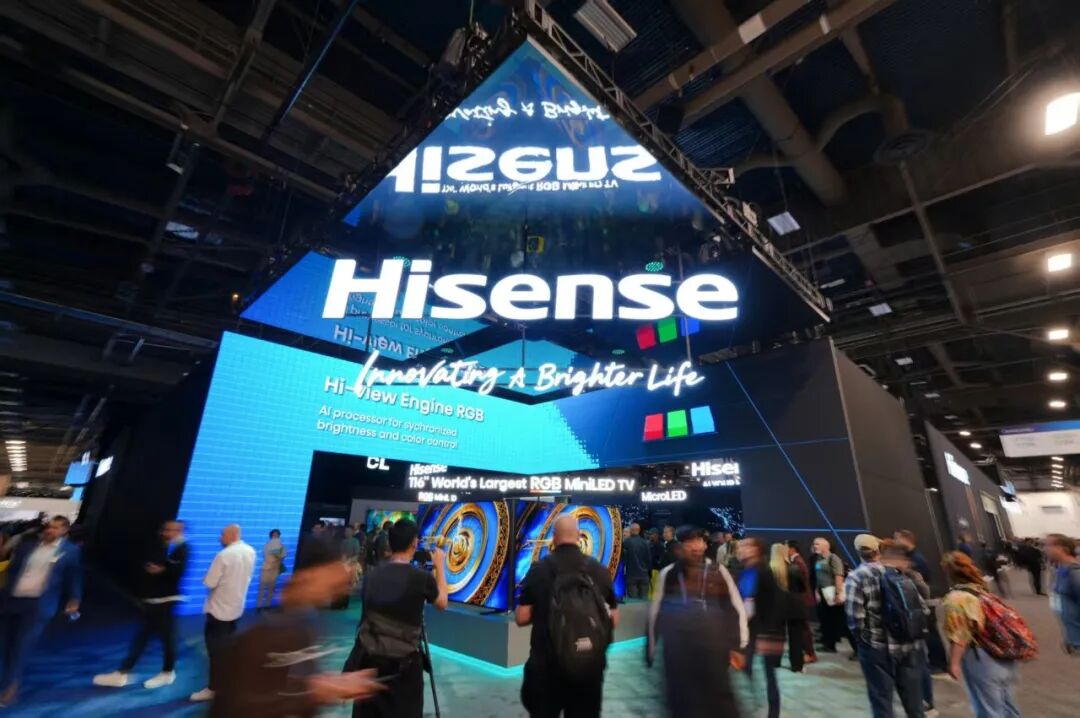
Core Viewpoint - The 2026 CES showcased intense competition in the black appliance sector, particularly with the introduction of RGB-Mini LED televisions, where Hisense maintained a leading position through innovation and strategic marketing [3][4][6]. Group 1: Product Innovation - Hisense launched the world's first RGB-Mini LED television at CES 2025, significantly improving color gamut and precision while maintaining cost efficiency [4][6]. - The new generation of Hisense RGB-Mini LED products features advanced backlighting and AI image quality chips, enhancing color range and reducing energy consumption [3][8]. - Hisense's RGB-Mini LED technology utilizes a four-color chip structure, achieving a color coverage leap from 100% BT.2020 to 110% BT.2020, with over 40,000 control zones, doubling the industry standard [9]. Group 2: Market Position and Strategy - Hisense's early entry into the RGB market has allowed it to establish a strong brand presence, with a significant market share in large-screen televisions, particularly during major sporting events [10][12]. - The company is leveraging its sponsorship of the 2026 FIFA World Cup to enhance its brand visibility and market penetration in North America and Europe [10][13]. - Hisense's strategic focus on high-end RGB products aligns with the growing demand for premium black appliances in mature markets, potentially accelerating its overseas expansion [13]. Group 3: AI and Smart Ecosystem - Hisense is integrating AI technology across its product range, enhancing user experience through features like AI motion mode and AI gaming mode, which optimize settings automatically [14][16]. - The company is developing a comprehensive AI ecosystem that connects various home appliances, improving energy efficiency and user interaction [16][17]. - Hisense's introduction of AI-powered home robots aims to address specific needs in smart home environments, enhancing the overall user experience and brand loyalty [16][17].


海信的CES答卷:从RGB引领者到AI生态构建者的全球跃迁
21世纪经济报道· 2026-01-08 08:25
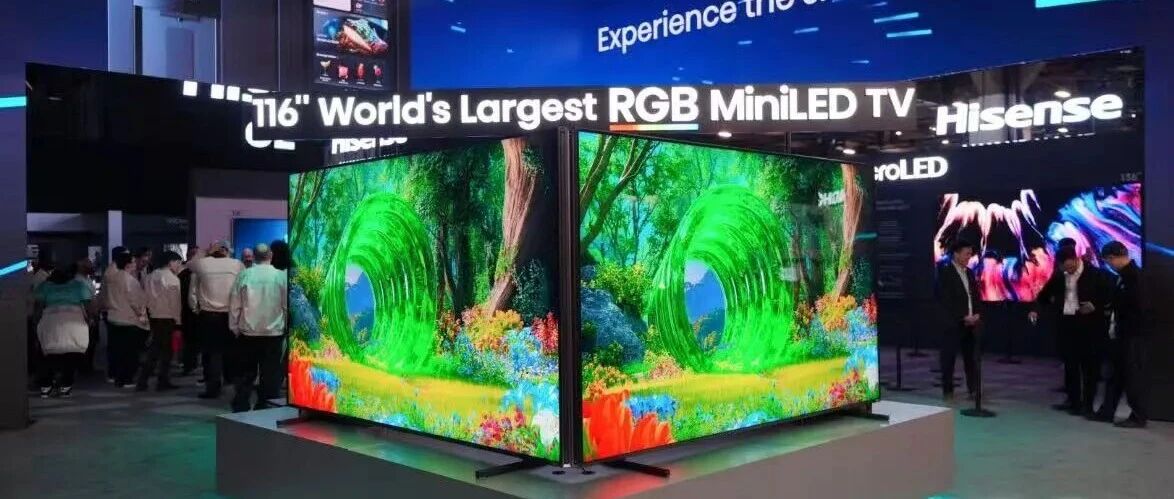
Core Viewpoint - The article highlights the competitive landscape of the black appliance industry, particularly focusing on the advancements in RGB-Mini LED technology, with Hisense leading the charge in innovation and market share expansion [3][4][6]. Group 1: Industry Competition and Innovation - The 2026 CES showcased intense competition among black appliance brands, with Hisense, Samsung, Sony, and LG all presenting their RGB-Mini LED television products [3]. - Hisense has established a strong market presence by being the first to commercialize RGB-Mini LED technology, launching various screen sizes including 75, 85, 100, and 116 inches [3]. - The global RGB shipment is projected to surge to 500,000 units in 2026, marking a 25-fold increase, indicating a significant market expansion for RGB technology [6]. Group 2: Technological Advancements - Hisense's RGB-Mini LED technology improves color accuracy and display quality by replacing traditional monochrome backlighting with red, green, and blue light sources [8]. - The new Hisense products feature advanced AI capabilities, enhancing color control and display performance, with a color control precision upgrade from 108 bits to 134 bits [9]. - Hisense's proprietary AI technology supports various modes for different viewing experiences, such as AI sports mode and AI movie mode, enhancing user interaction [15]. Group 3: Marketing and Brand Positioning - Hisense's sponsorship of the 2026 FIFA World Cup is a strategic move to enhance its brand visibility in overseas markets, particularly among consumers who prefer large-screen televisions for sports viewing [10][12]. - The company has successfully linked its brand with major sporting events, creating a strong marketing presence that resonates with consumers in regions with a culture of watching sports at home [13]. - Hisense's brand positioning as a leader in RGB technology is expected to be a key factor in the competitive landscape of black appliances in 2026 [9]. Group 4: AI Integration and Smart Home Ecosystem - Hisense is building a comprehensive AI ecosystem that integrates various home appliances, enhancing the overall user experience and functionality of smart home devices [15][17]. - The introduction of AI-powered home robots and smart appliances aims to improve household efficiency and safety, addressing specific needs such as elderly care and child monitoring [17][18]. - The development of a robust AI ecosystem is anticipated to elevate Hisense's market competitiveness and brand strength in the smart home sector [18].
雷军直播破防!当场回怼“营销大师”标签:听这俩字就恶心
Sou Hu Cai Jing· 2026-01-08 07:41
Core Viewpoint - Lei Jun, the founder of Xiaomi, reflects on being labeled a "marketing master," which originated from a humorous competition with Liu Qiangdong, highlighting the unintended consequences of such labels over the years [1][3] Group 1: Marketing and Brand Perception - Lei Jun expresses discomfort with the term "marketing," as it undermines the technical efforts and R&D investments made by Xiaomi [3] - The attention from competitors regarding Xiaomi's marketing indicates the company's significant market influence [4] Group 2: New Product Launch - The new generation SU7 has been launched with substantial upgrades, including enhanced safety features and improved battery performance, with the Pro version offering a maximum range of 902 kilometers [6][11] - The price increase for the SU7 is attributed to rising costs and added features, which may challenge consumer expectations of Xiaomi's high cost-performance ratio [4][8] Group 3: Company Response to Challenges - Xiaomi's public relations team has acknowledged past mistakes and is seeking to improve its image after facing negative publicity over the last several months [11] - Lei Jun emphasizes that the success of the SU7, which has delivered 360,000 units in just 1 year and 9 months, is due to product quality and genuine user engagement rather than solely marketing efforts [11]

CES 2026开展首日直击:海信展区人气火爆,让AI从炫技到日常
Zheng Quan Shi Bao Wang· 2026-01-08 06:40
Core Viewpoint - The 2026 CES marks a significant showcase for Hisense, highlighting its innovative RGB-Mini LED technology and AI-driven products, emphasizing the integration of technology into daily life [1][12]. Group 1: Product Innovations - Hisense's new RGB-Mini LED television UX features an industry-leading color gamut of 110% BT.2020 and a color control precision of 134 bits, enhancing visual quality [3][5]. - The introduction of a fourth cyan self-luminous chip in the RGB-Mini LED technology, along with the upgraded H7 AI picture quality chip, allows for superior color differentiation and performance in various lighting conditions [5][6]. - Hisense has established a comprehensive RGB-Mini LED product matrix, being the only brand with top-tier products across RGB-Mini LED, RGB-Micro LED, and RGB laser display technologies [6]. Group 2: AI Integration - Hisense has developed an integrated AI capability system that enhances picture quality, sound quality, and personalized user experiences, transforming televisions into interactive home companions [6][8]. - The company showcased AI-driven solutions for smart home appliances, including refrigerators, air conditioners, and washing machines, which adapt to user needs and environmental data [10]. - Hisense's AI energy management system optimizes energy usage through smart coordination of solar power, storage systems, and home appliances, aiming to reduce energy costs and enhance sustainability [10]. Group 3: Robotics and User Interaction - Hisense introduced its first commercial humanoid robot, Harley, designed for customer service and product guidance, showcasing advanced interaction capabilities and a deep knowledge base [11]. - The robot can engage in multi-language interactions and provide personalized purchasing advice, enhancing the customer experience at exhibitions and retail locations [11]. Group 4: Industry Trends - The CES 2026 is viewed as a pivotal moment for AI in consumer electronics, transitioning from conceptual demonstrations to practical applications in everyday life [12].
2026年美国消费电子展开幕 中国企业表现抢眼
Ren Min Wang· 2026-01-08 06:37
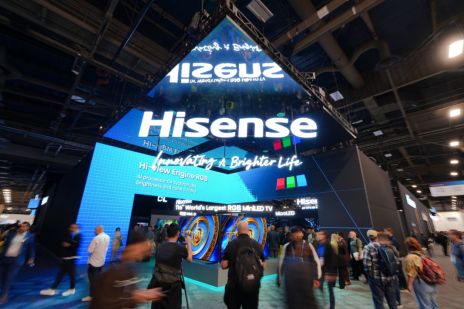
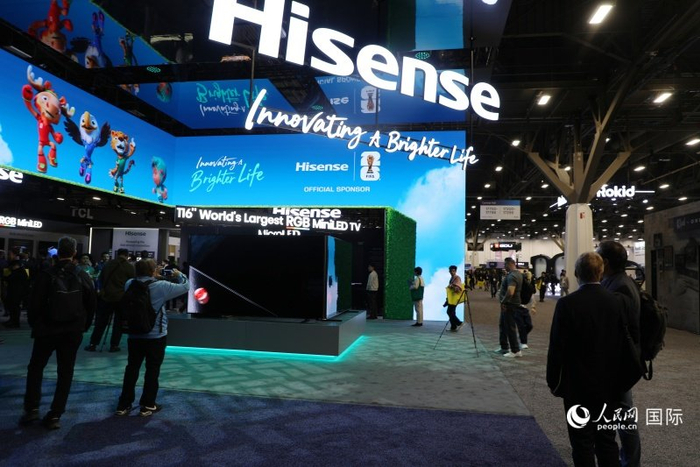
人民网拉斯维加斯1月7日电 (记者李志伟)当地时间1月6日,2026年美国拉斯维加斯消费电子展开幕。此 次展会于1月6日至9日举行。今年,930多家中国企业参展,规模庞大,表现亮眼。 在主会场,中国企业的展台随处可见,TCL、海信、追觅等企业占据了主会场中心位置的展台,观众络 绎不绝。中国企业在本次展会上不但有较大的规模,更展现出旺盛的创新活力,在新型显示技术、人工 智能、机器人技术、汽车科技、智能出行等领域推出创新产品,吸引了来自世界各地观众的目光。 图 中国企业的亮点是人工智能与产品的深度融合。宇树科技等中国企业展示了许多人形机器人产品。 本届展会吸引超过155个国家和地区的数千家企业参展,重点展示人工智能、数字健康、未来能源、机 器人技术、汽车科技、智能出行等领域的最新进展。展会期间还将举行400多场主题演讲和论坛活动。 作为全球规模最大的消费技术产业盛会之一,拉斯维加斯消费电子展一直是科技领域的开年重头戏,被 视为国际消费电子领域的"风向标"。 在 为消费电子展上的海信展台。人民网记者 李志伟摄 TCL展台,观众在了解创新技术情况。人民网记者 李志伟摄 ...
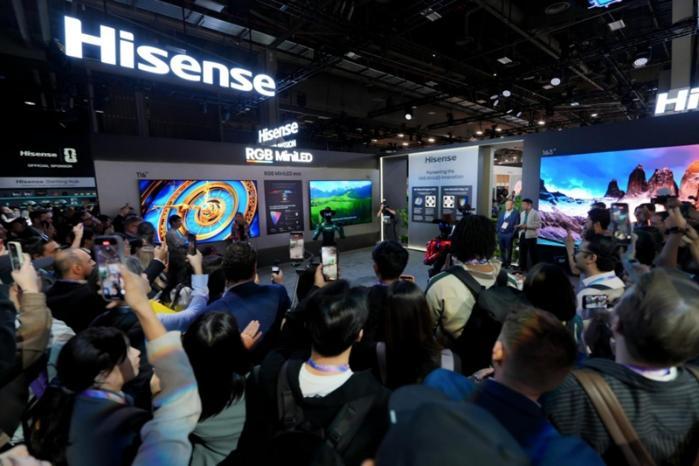
海信全新一代RGB-Mini LED电视116UX引爆CES 2026
Zhong Guo Xin Wen Wang· 2026-01-08 03:46
全新一代RGB-Mini LED电视116UX全球首秀,色彩真实到像"现场" 海信116UX的登场直接定义了高端显示新标杆,斩获美国消费者技术协会(CTA)颁发的"CES2026荣誉 奖"。不少外国观众蹲在屏幕前仔细观察画质细节,举着手机拍个不停,感叹"这色彩也太真实了!看球 赛时像在现场"。 能这么圈粉,核心就在于海信全新一代RGB-Mini LED三大王炸黑科技升级:一是全球首创玲珑4芯真 彩背光,在红绿蓝三原色基础上加入天青色芯片,不仅让色域提升到行业最高的110% BT.2020,比QD- Mini LED高10%,比QD-OLED高18%,色彩体积100%,还原肉眼级的真实色彩,还解决了普通彩色背 光串色、色晕、偏色的三大行业难题;二是高达134bits超高精度算力的信芯AI画质芯片,可分辨百万亿 级色彩差异,实现了背光色彩与亮度的完美同步,即便面对全新玲珑4芯真彩背光的复杂性,其强大算 力也能从容驾驭高阶混光运算,实现亮场不漂白、暗场不漏光的全场景画质通透感;三是带来了全链路 色彩管理系统,比如全球首发光影妙控台,支持画质模式自定义和分享,普通用户只需几步操作,就能 获得大师级调校效果,人人都是" ...
CES 2026群雄逐鹿,海信首创玲珑4芯突围
Guan Cha Zhe Wang· 2026-01-08 02:51
Core Viewpoint - The CES 2026 showcases a competitive landscape in display technology, with major brands like Samsung, LG, Sony, TCL, and Hisense unveiling their latest innovations, particularly in RGB-MiniLED and OLED technologies [1][2]. Group 1: Display Technology Developments - The CES 2026 features a competitive environment characterized by the "explosion of RGB-MiniLED and continuous iteration of OLED" technologies [2]. - Samsung introduces its "Micro RGB" technology, offering a product range from 55 inches to 115 inches, achieving 100% BT.2020 color coverage with its Micro RGB AI Engine Pro chip for precise color temperature control [2]. - LG adopts a dual strategy by upgrading its OLED product line and entering the RGB-Mini LED market with its Micro RGB evo series, achieving near-OLED light control precision [2]. - Sony focuses on commercializing RGB-Mini LED technology with its Bravia 9 II and Bravia 7 II series, featuring "True RGB" backlight technology and peak brightness of 4000 nits [2]. - TCL emphasizes its Mini-LED offerings with the X11L SQD Mini-LED TV, achieving 100% BT.2020 color coverage and peak brightness of 10000 nits [3]. Group 2: Hisense's Innovations - Hisense's new RGB-Mini LED technology features a groundbreaking "玲珑4芯真彩背光" architecture, enhancing color gamut and achieving 110% BT.2020 color coverage, surpassing current QD-Mini LED and QD-OLED technologies [4][5]. - The introduction of the信芯AI画质芯片H7 enhances color precision to 134 bits, allowing for superior color performance across various brightness levels while reducing harmful blue light by 60% compared to QD-OLED [6][7]. - Hisense's RGB-Mini LED technology includes a comprehensive color management system, ensuring accurate color reproduction and enhancing the viewing experience for consumers [7]. Group 3: Market Positioning and Launch Plans - Major brands are adopting differentiated strategies for product positioning, with Samsung aiming to make Micro RGB TVs more accessible, while TCL has already launched its X11L model [9]. - Hisense plans to launch its UX series TV, featuring the new 玲珑4芯 technology, in March 2026, following its recognition at CES 2026 [9]. - The 116-inch version of Hisense's UX series has garnered significant attention, positioning it as a strong competitor in the high-end TV market [9].
推动中国式现代化长沙实践迈出坚实步伐——《政府工作报告》2025年及“十四五”成就回顾
Chang Sha Wan Bao· 2026-01-08 02:47
Economic Growth and Development Goals - The city's GDP is projected to grow by approximately 5% in 2025, with industrial added value increasing by around 7.5% and local public budget revenue rising by 2.56% [3][4] - The city has been recognized as one of the most livable cities in China for 18 consecutive years, with over 400 consumer promotion events held, driving total social consumption to exceed 42 billion yuan [3][4] Investment and Industrial Development - The city aims to attract over 102.06 billion yuan in long-term special government bond funds and central budget investments, marking a 52.6% increase [4] - Significant industrial projects have been launched, including the Hisense (Changsha) Industrial Park and the Yuhu Cold Chain Trading Center, contributing to the completion of annual investment plans [5] Innovation and R&D - Total R&D expenditure in the city reached 51.156 billion yuan, reflecting an 8.2% increase, with effective invention patents totaling 88,600 [8] - The city has established a national laboratory system and has seen a doubling of various R&D institutions over the past two years [8] Business Environment and Reforms - The city has completed 852 key reform tasks, with significant improvements in the business environment, ranking in the top 10 nationally for four consecutive evaluations [24][12] - The integration of the Ningxiang Economic Development Zone and Ningxiang High-tech Zone has been completed, enhancing operational efficiency [12] Urban and Rural Development - The city has made substantial progress in urban infrastructure, including the construction of the Huanghua Airport and the expansion of metro lines, contributing to improved urban living standards [25][14] - Rural revitalization efforts have led to the establishment of high-standard farmland and community support services, enhancing agricultural productivity [26][18]
从CES看2026智能家电新品趋势
2026-01-08 02:07
Summary of Key Points from the Conference Call Industry Overview - The conference discusses trends in the smart home appliance industry, particularly focusing on the CES 2026 event where the number of Chinese companies participating significantly decreased from 1,100 in 2024 to 837 in 2026, indicating a shift in the overseas ecosystem [2][1]. - Major listed companies continue to participate due to strong cash flow and overseas market shares, showcasing a variety of products [1][2]. Core Insights and Arguments - **Product Diversification**: Companies like Ecovacs and XGIMI are accelerating their expansion into multiple product categories, such as companion robots and AI glasses, leveraging their technological advantages to find new growth avenues [1][3][4]. - **Market Dynamics**: The robotic vacuum cleaner market has seen nearly a decade of iteration, with a focus on embodied functionalities. The lawn mower robot segment is converging on RTK and laser radar navigation technologies, with anti-dumping measures potentially reshaping market dynamics [1][6][7]. - **Regional Focus**: The lawn mower robot market is primarily targeting Europe, while the U.S. market presents more complex challenges due to varied yard environments, leading to increased attention from companies to enhance their product offerings in the U.S. [8][1]. Emerging Trends - **New Product Categories**: AI glasses and 3D printing are in the early stages of market penetration, with no unified technical solutions yet. The demand is being stimulated by innovative designs, necessitating continuous tracking of potential mainstream technologies and capable companies [11][1]. - **Competitive Landscape**: The overseas robotic vacuum market remains stable, with iRobot's market share declining. Leading companies maintain their shares through differentiated strategies. The competition in the floor washing machine market is intensifying, with companies like Roborock increasing their presence [18][3]. Company-Specific Developments - **Ecovacs**: Focused on expanding its overseas presence with products like the rolling washing machine and pool cleaning robots, while also addressing domestic sales uncertainties due to subsidy policies [15][12]. - **Roborock**: Showcased a wheeled robotic vacuum at CES 2026, emphasizing its commitment to quality in a single product category. The company plans to maintain a limited number of washing machine models overseas while optimizing its cleaning solutions [13][16]. - **Ninebot**: Launched a significant number of lawn mower robots at CES 2026, incorporating advanced technologies like RTK and laser radar to meet diverse consumer needs [21][1]. - **XGIMI**: Introduced a high-end projector and several AI glasses, leveraging its existing market channels for rapid product promotion [23][1]. Additional Insights - **Market Evolution**: The lawn mower robot industry is transitioning from a single product focus to a multi-SKU cost control and channel management competition phase, similar to the early stages of the robotic vacuum cleaner market [10][9]. - **Investment Recommendations**: Large domestic appliance companies like Midea and Haier are recommended for their stability and diversified strategies. Companies with clear overseas trends, such as Ninebot and Roborock, are also favored. In emerging categories, 3D printing is highlighted as a promising direction [25][26].


国际消费电子展如约而至 AI成主角
Jin Rong Shi Bao· 2026-01-08 01:07
Group 1: CES Overview - The 2026 International Consumer Electronics Show (CES) took place from January 6 to January 9 in Las Vegas, showcasing innovations in AI, XR Metaverse, smart home technology, digital health, electric vehicles, semiconductor chips, and sustainable technologies [1] - The event featured 4,112 global companies, with major players like Nvidia, AMD, Hisense, and TCL participating, despite Apple's absence [1] - AI and robotics emerged as the central themes of this year's CES, with a focus on comprehensive discussions and competitions surrounding AI technologies [1] Group 2: Nvidia's Developments - Nvidia's CEO Jensen Huang highlighted the demand for AI chips and introduced the open-source physical AI inference model Alpamayo, designed for autonomous driving scenarios [2] - The Alpamayo model operates on a visual-language-action architecture, enabling multi-step reasoning in complex road environments [2] - Nvidia's latest AI superchip platform, Vera Rubin, has entered full-scale production, boasting double the capabilities of its predecessor while improving assembly efficiency and energy control [2] Group 3: AMD's AI Strategy - AMD's CEO Lisa Su presented the company's AI product lineup, noting a surge in active AI users from 1 million to 1 billion since the launch of ChatGPT [3] - Su projected that active AI users could reach 5 billion by 2030, necessitating a 100-fold increase in global computing power in the coming years [3] - AMD introduced a series of new AI processors, positioning AI-driven personal computers as a core focus for future development [3]

