
阿里

Search documents
从千万级大单数量看差距:东软上半年斩获近20单
Sou Hu Wang· 2025-09-28 11:50
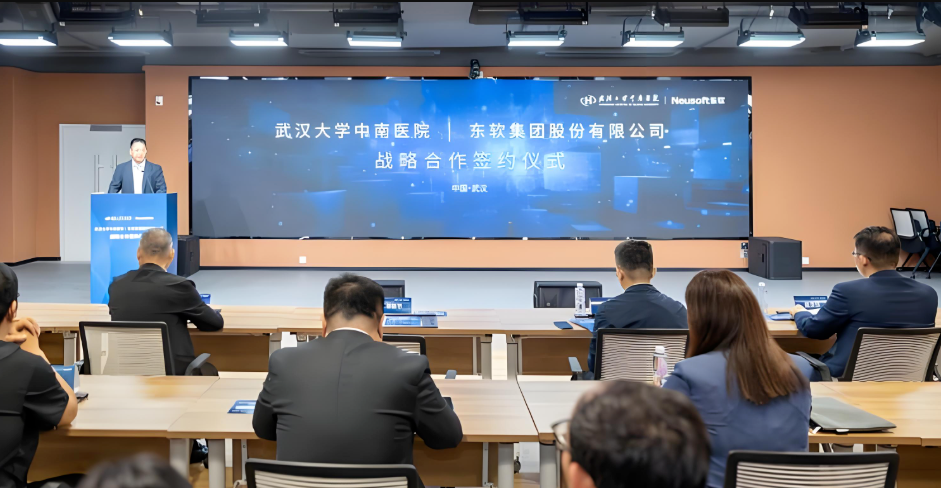
Core Insights - The Chinese healthcare information and digitalization market is experiencing significant challenges, with many companies facing business contraction and profit losses, while Eastsoft Group is strategically navigating this landscape to potentially reshape the market dynamics [1][2][4] Industry Overview - The healthcare IT sector is one of the hardest-hit areas, with a median revenue growth rate plummeting to -7.01% and a median net profit growth rate dropping to -26.09% for the first half of 2025 among 336 listed IT companies in China [2] - Factors contributing to this downturn include government budget tightening, delayed hospital budgets, and a shift in demand from large-scale construction to refined operations [2] Company Performance - Eastsoft Group's healthcare and social security business reported a slight revenue decline of 1.37%, while its subsidiary, Eastsoft Medical, achieved a modest revenue growth of approximately 4.01 million [2] - In contrast to the broader industry, where many companies are experiencing revenue declines of 20% to 30%, Eastsoft's performance indicates a potential reallocation of market share, positioning it as a likely beneficiary [2] Strategic Initiatives - Eastsoft is focusing on "defensive" strategies to maintain its core business while simultaneously launching targeted offensive strategies, particularly in smart hospital construction [4][5] - The company secured nearly 20 large contracts worth over 10 million each in the first half of 2025, showcasing its competitive strength in a contracting market [4] Technological Advancements - Eastsoft's AI strategy has evolved into a comprehensive, productized approach, exemplified by the launch of the "Tianyi" healthcare intelligent solution, which integrates eight categories of medical industry empowerment [6][7] - The rapid deployment of this solution in top-tier hospitals demonstrates Eastsoft's engineering capabilities and deep understanding of hospital pain points, allowing for quick market feedback [7] Partnerships and Collaborations - In March 2025, Eastsoft signed a comprehensive cooperation agreement with Huawei Technologies, aiming for deep collaboration in the healthcare sector, which is crucial for competing against major players like Alibaba and Tencent [9] Data Strategy - Eastsoft is transitioning from being a traditional software provider to a data value extractor and operator, as evidenced by its involvement in national and regional benchmark projects [10][11] - The company's participation in the construction of a national AI application pilot base for healthcare highlights its data technology capabilities at a national strategic level [10] Market Positioning - Eastsoft's dual strategy of leveraging AI and data is expected to create new growth avenues while establishing high technical and ecological barriers against competitors [12] - The company's ability to maintain cash flow and secure its foundational business while tapping into AI and data trends positions it as a market leader during challenging times [13] Future Outlook - Eastsoft's journey towards intelligent transformation is ongoing, with the need to demonstrate that its investments in AI and data can translate into effective commercial products and sustainable service revenues [14] - The company aims to become a true industry benchmark that defines standards, leads industry direction, and achieves sustainable development in the Chinese healthcare information sector [14]


ASIC系列研究之四:国产ASIC:PD分离和超节点
Shenwan Hongyuan Securities· 2025-09-26 12:46
Investment Rating - The report maintains a positive outlook on the ASIC industry, indicating a favorable investment rating for the sector [2]. Core Insights - The report highlights the significant cost-effectiveness and efficiency advantages of ASICs over GPUs, particularly in the context of AI model inference, with Google's TPU v5 demonstrating an energy efficiency ratio 1.46 times that of NVIDIA's H200 [3][19]. - The increasing penetration of AI applications is driving a surge in inference demand, expanding the market for ASICs, with projections indicating the global AI ASIC market could reach $125 billion by 2028 [3][32]. - The report emphasizes the complexity of ASIC design, underscoring the critical role of design service providers like Broadcom and Marvell, which are expected to benefit from the growing demand for custom ASIC solutions [4][44]. Summary by Sections 1. Demand Driven by Large Model Inference - The global AI chip market is projected to reach $500 billion by 2028-2030, with significant growth in AI infrastructure spending anticipated [13]. - ASICs are specialized chips that offer strong cost and efficiency advantages, particularly in specific applications like text and video inference [14][19]. - The report notes that the demand for ASICs is expected to rise sharply due to the increasing consumption of tokens in AI applications, exemplified by the rapid growth of ChatGPT's user engagement [25][31]. 2. High Complexity of ASIC Design and Value of Service Providers - ASIC design involves a complex supply chain, with cloud vendors often relying on specialized design service providers for chip architecture and optimization [41][44]. - Broadcom's ASIC revenue is projected to exceed $12 billion in 2024, driven by the success of its TPU designs for Google and other clients [60]. - The report identifies the importance of a complete IP system and design experience as key factors for service providers to secure new orders in the ASIC market [63]. 3. Domestic Developments: Not Just Following Trends - Leading Chinese cloud providers like Alibaba and Baidu are making significant strides in self-developed ASICs, indicating a robust domestic ecosystem [3][4]. - The report highlights the emergence of domestic design service providers such as Chipone and Aowei Technology, which are positioned to capitalize on the growing demand for ASICs [3][4]. - The trends of PD separation and supernodes are identified as critical developments in the domestic ASIC landscape, with companies like Huawei and Haiguang leading the way [4][44]. 4. Key Trends in Domestic ASIC Development - PD separation involves using different chips for prefill and decode tasks, enhancing efficiency in specific applications [4]. - Supernodes are being developed to create unified computing systems through high-bandwidth interconnections, with early implementations seen in domestic companies [4][44].




星网锐捷:公司非常重视与优秀企业的合作机会
Zheng Quan Ri Bao Wang· 2025-09-26 10:12
Core Viewpoint - The company emphasizes the importance of collaboration with outstanding enterprises, highlighting Alibaba as a significant client [1] Company Summary - StarNet RuiJie (002396) acknowledged Alibaba as an important customer during an interaction on September 26, indicating a strong focus on partnerships with leading companies [1]

386亿热钱涌来 工厂家庭难普及 人形机器人离规模商用还有多远?
Nan Fang Du Shi Bao· 2025-09-25 23:12
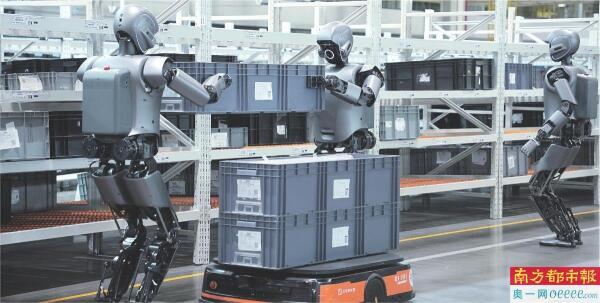
Core Insights - The article discusses the rapid growth of the robotics industry in China, highlighting the surge in IPO activities and the increasing interest from capital markets in robotics companies [6][7][8]. Group 1: IPO Activities - UBTECH Robotics is set to go public on the Hong Kong Stock Exchange in December 2023, becoming the first humanoid robot stock in China, with projected 2024 revenue of approximately 1.305 billion yuan and a net loss of about 1.124 billion yuan [6][8]. - Yujiang Technology plans to list in December 2024, with expected revenue of around 374 million yuan and a net loss of approximately 95.4 million yuan [6][8]. - Other companies like LeDong Robotics and WoAn Robotics are also preparing for IPOs, indicating a growing trend in the sector [9]. Group 2: Market Dynamics - The robotics sector is experiencing a capital frenzy, with total financing in the industry reaching approximately 38.624 billion yuan by August 2025, significantly higher than the 21.254 billion yuan in 2024 [7][10]. - Major internet companies like JD, Ant Group, and Tencent are heavily investing in the robotics field, indicating a shift from traditional VC funding to broader industry integration [10][11]. - Despite the influx of capital, many robotics companies are still facing challenges in achieving profitability, with examples like LeDong Robotics showing significant revenue growth but continuous net losses [10][11]. Group 3: Challenges in Commercialization - The article emphasizes that the primary challenge for the robotics industry remains the transition from financing to actual commercialization, with humanoid robots largely still in demonstration phases and collaborative robots having limited adoption in factories [7][12]. - Key barriers include high production costs, varying application requirements, and the need for a cohesive ecosystem in robotics, which is still underdeveloped in China [14][15]. - The consensus among industry experts is that sustainable commercial models are essential for long-term success in the robotics sector [12][15].

独立站与AI:Shopify示范史上最强Beta,谁能成为下一个Alpha?
格隆汇APP· 2025-09-25 10:31
Core Insights - Shopify started as a small ski shop and evolved into a global e-commerce platform, addressing the limitations of existing e-commerce solutions by providing a flexible and data-driven system for merchants [2] - The independent site model, while less familiar to Chinese consumers, reflects the differences in internet development between China and the U.S., where merchants prefer to build their own brands and user data through independent sites [2] - Shopify's SaaS model allows it to offer comprehensive solutions for online sales, payment, logistics, and marketing, enabling merchants to efficiently manage their stores and achieve scale [3] Growth Catalysts and Market Dynamics - The COVID-19 pandemic acted as a catalyst for Shopify, leading to explosive growth as consumers shifted online, resulting in a peak market valuation of $200 billion and a PS ratio of 40x [5] - However, as the pandemic subsided, consumer behavior shifted back to offline shopping, causing Shopify's stock to drop significantly, with a decline of 58% from late 2021 to early 2022 [5] Strategic Decisions and Management Response - In 2022, Shopify's acquisition of logistics company Deliverr aimed to replicate Amazon's model but deviated from its core SaaS focus, leading to significant capital investment and profit drag [9] - The company quickly recognized this strategic misstep and sold the logistics assets at a loss of approximately $1.3 billion, which was positively received by the market, resulting in a stock price increase of over 20% on the announcement day [9][10] AI Integration and Future Growth - Shopify is leveraging AI technologies, such as Sidekick and Shopify Magic, to enhance merchant workflows, improve operational efficiency, and increase marketing conversion rates [11] - The integration of AI not only empowers small merchants but also attracts larger enterprises by reducing costs and supporting more physical operations [11] - The rapid adoption of AI technologies is reshaping industry dynamics, with Shopify positioned to capitalize on this trend, potentially becoming a leader in the e-commerce SaaS space [12] Investment Philosophy and Market Outlook - Successful companies typically exhibit three key elements: a favorable environment, a solid business model, and effective management, as demonstrated by Shopify's ability to adapt and focus on its core business [14] - The current AI wave presents significant investment opportunities, and identifying companies with long-term growth potential is crucial for maximizing returns [17][18]

沸腾了!人工智能
中国基金报· 2025-09-25 04:09
Core Viewpoint - JD.com announced at the JD Global Technology Explorer Conference (JDD) that it will invest continuously over the next three years to create a trillion-scale artificial intelligence ecosystem [1][4]. Group 1: AI Ecosystem Development - JD.com showcased a comprehensive AI layout, upgrading its "JoyAI" model brand and launching three consumer-facing products, four application scenarios, and three deep platforms [1][4]. - The company aims to extend its supply chain advantages to the user end through these AI-driven innovations [1][4]. Group 2: Product Launches - The three newly launched AI-native applications include the JD Xi App, Ta Ta Ta, and JoyInside 2.0, marking a shift from traditional e-commerce to AI-driven new interactions [4][5]. - JoyInside 2.0 has already integrated with over 30 brands, while the JD Xi App is positioned as a "next-generation shopping and lifestyle service super portal" [5]. Group 3: Supply Chain and Application Scenarios - JD.com is focusing on deep applications in supply chain management, with AI reshaping its core strategy across retail, logistics, health, and industrial sectors [8][9]. - In the retail sector, over 50 AI tools are currently serving more than 3 million merchants, assisting in over 30 million operational decisions weekly [9]. Group 4: Market Trends and Competitive Landscape - The AI landscape is shifting from a focus on model performance to practical applications, with major companies emphasizing real-world use cases and effectiveness [12]. - JD.com is strategically investing in the "embodied intelligence" sector, having made several investments in robotics companies since June [13]. Group 5: Financial Market Impact - Following the announcement, JD.com's stock price in Hong Kong saw an intraday increase of nearly 7% [2]. - The AI sector has experienced significant growth, with the A-share AI sector rising nearly 80% year-to-date, indicating strong market interest and investment [14].

游戏股开盘大涨,年内版号已下发1275个
第一财经· 2025-09-25 03:51
Core Viewpoint - The A-share gaming sector has experienced significant gains, with several companies seeing stock price increases of over 10% following the approval of new game titles by the National Press and Publication Administration, indicating a positive outlook for the industry [3][4]. Group 1: Market Performance - A-share gaming stocks opened strongly, with notable increases: Xinghui Entertainment up over 12%, Bingchuan Network nearly 10%, and Perfect World over 5%, reaching nearly two-year highs [3]. - The A-share gaming index (BK1046) rose over 3%, breaking historical highs at 1751 [3]. Group 2: Game Approvals - In September, 145 new domestic games were approved, including significant titles from Tencent, NetEase, and others, highlighting ongoing regulatory support for the gaming industry [3][4]. - A total of 11 new imported games received approval in September, including titles from Chuangmeng Tiandi and Xinghui Entertainment [4]. Group 3: Regulatory Environment - The cumulative number of game licenses issued in 2025 has reached 1275, maintaining a high issuance frequency, which reflects the regulatory support for the gaming sector [4]. - The normalization of game license issuance indicates a sustained commitment from regulators to support the industry's growth [5]. Group 4: Industry Trends - The gaming industry is transitioning from "one-off skin swap products" to "long-cycle projects," suggesting a shift in market dynamics that may extend the current cycle beyond market expectations [5]. - The valuation of gaming stocks remains attractive, with recommendations to continue investing in the sector, focusing on core new games and established titles [5]. Group 5: Company Performance - Several gaming companies have seen their stock prices and market capitalizations double this year, with Century Huatong's stock price increasing over threefold, leading the A-share gaming market with a market cap exceeding 160 billion [5]. - Other companies like Giant Network and JiBit have also experienced significant stock price increases, with JiBit and Perfect World doubling their valuations this year [5].







游戏股开盘大涨,年内版号已下发1275个
Di Yi Cai Jing· 2025-09-25 03:24
Group 1 - A-share gaming stocks experienced significant gains on September 25, with notable increases in companies such as Xinghui Entertainment (up over 12%) and Bingchuan Network (up nearly 10%) [1] - The A-share gaming index (BK1046) rose over 3%, reaching a new historical high of 1751 [1] - The National Press and Publication Administration approved 145 new domestic games in September, including key titles from Tencent, NetEase, and MiHoYo [1] Group 2 - As of September, a total of 1275 game licenses have been issued in 2025, indicating a sustained high frequency of approvals [2] - The gaming industry is transitioning from "one-wave skin change products" to "long-cycle projects," suggesting a potentially longer economic cycle than market expectations [2] - Several gaming companies have seen their stock prices and market values double this year, with Century Huatong's stock price increasing over threefold [2]
财信证券晨会纪要-20250925
Caixin Securities· 2025-09-24 23:39
Market Strategy - The market is experiencing a volume contraction while the semiconductor equipment sector shows strong performance [5][7] - The overall A-share market index increased by 1.40%, closing at 6289.68 points, with the Shanghai Composite Index rising by 0.83% to 3853.64 points [7] - The ChiNext Index rose by 2.28% to 3185.57 points, and the Sci-Tech 50 Index led the major indices with a 3.49% increase [7] Industry Dynamics - The National Energy Administration emphasizes the need for greater efforts to promote high-quality development in the new energy sector, highlighting significant achievements in renewable energy capacity [25][26] - As of August 2025, the total installed capacity of wind and solar power in China exceeded 1.69 billion kilowatts, contributing to 80% of the new power installations since the start of the 14th Five-Year Plan [26] - The gaming industry saw the approval of 145 domestic game licenses in September 2025, a year-on-year increase of 36 licenses compared to September 2024 [27][28] Company Updates - Wanchen Group submitted an application for H-share issuance and listing on the Hong Kong Stock Exchange, indicating its growth strategy [31][32] - The company reported a GMV of 42.6 billion yuan in 2024, marking a year-on-year growth of 282%, and operates over 15,365 stores nationwide [32] - The company maintains a high direct procurement ratio of approximately 95%, with an average retail price 20-30% lower than similar products in large supermarkets [32]
Plaud回归国内市场 AI录音设备“卷”至百元级
2 1 Shi Ji Jing Ji Bao Dao· 2025-09-24 23:17
Core Insights - The AI recording pen market is experiencing a shift towards lower price points due to intense competition from internet giants and startups, with products now available in the hundred-yuan range [1] - Plaud, a Shenzhen-based startup, has returned to the domestic market after initially focusing on overseas sales, launching several AI recording devices [1][2] - The market for AI recording pens is expected to grow as AI large models become more prevalent, despite being considered a niche market with a scale of several hundred billion yuan [1][7] Company Overview - Plaud has sold over 1 million units globally and anticipates annual revenue of $250 million by 2025, reflecting a doubling of growth compared to the previous year [2] - The company aims to create a complete user experience by integrating hardware audio capture, intelligent transcription, and content summarization into a single solution [2][5] Market Dynamics - The domestic market has seen a surge in competition, with major players like iFlytek and new entrants like Out of the Question launching similar AI recording products [4][7] - The market is characterized by a multi-dimensional competitive landscape, with established brands focusing on professional services and new brands targeting cost-effective solutions for individual users and small teams [7][8] Competitive Landscape - The competition is intensifying, with a focus on three main dimensions: technology (transcription accuracy and processing speed), user experience (ease of use and data security), and cost (premium versus affordable pricing strategies) [8] - Industry experts suggest that startups like Plaud should focus on precise positioning, differentiated technology, and deep engagement in specific scenarios to survive in a highly competitive environment [9]