
香港交易所

Search documents
直击达沃斯|唐家成:AI和清洁能源吸引大量投资 投资人要学会甄别真锦鲤
Xin Lang Cai Jing· 2026-01-21 09:32
专题:世界经济论坛年会_2026冬季达沃斯 唐家成认为,投资人需要将真锦鲤和"赶时髦"企业区分开来。能够区分两种类型企业的投资人,才会长 期受益。 新浪声明:所有会议实录均为现场速记整理,未经演讲者审阅,新浪网登载此文出于传递更多信息之目 的,并不意味着赞同其观点或证实其描述。 责任编辑:李昂 专题:世界经济论坛年会_2026冬季达沃斯 新浪财经欧洲站站长 郝倩 发自瑞士达沃斯 新浪财经欧洲站站长 郝倩 发自瑞士达沃斯 香港交易及結算所有限公司主席唐家成在冬季达沃斯分析AI领域的投资问题。他表示,清洁能源和人 工智能,尤其是相应的融合科技受到很多资本的追捧,很多私募和风头都在人工智能集成和清洁能源领 域增加了投资。 香港交易及結算所有限公司主席唐家成在冬季达沃斯分析AI领域的投资问题。他表示,清洁能源和人 工智能,尤其是相应的融合科技受到很多资本的追捧,很多私募和风头都在人工智能集成和清洁能源领 域增加了投资。 "但我们需要小心",唐家成强调说。重点在于,在对AI板块进行投资时,投资人需要区分长期可持续性 和即时流行的趋势。而这些需要市场来验证。 "所以投资人需要长期观察,看一家AI或者清洁能源企业是否产生收 ...
智通ADR统计 | 1月21日
智通财经网· 2026-01-20 22:29
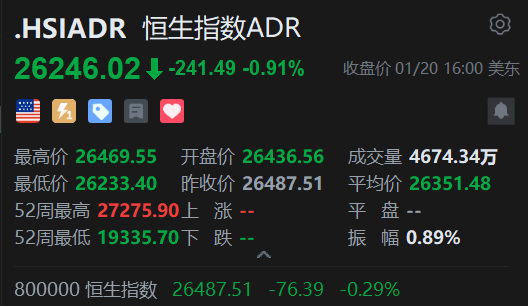
Market Overview - The Hang Seng Index closed at 26,246.02, down by 241.49 points or 0.91% [1] - The index reached a high of 26,469.55 and a low of 26,233.40 during the trading session [1] - The average price for the day was 26,351.48, with a trading volume of 46.7434 million [1] Major Blue-Chip Stocks Performance - HSBC Holdings closed at HKD 128.682, up by 0.22% compared to the Hong Kong close [2] - Tencent Holdings closed at HKD 593.183, down by 1.30% compared to the Hong Kong close [2] - Alibaba Group (W) closed at HKD 159.700, down by 0.44% [3] - Xiaomi Group (W) closed at HKD 35.480, down by 2.74% [3] - Meituan (W) closed at HKD 97.350, down by 1.17% [3] Stock Price Changes - Tencent Holdings saw a decrease of HKD 9.000, or 1.48% [3] - HSBC Holdings increased by HKD 1.400, or 1.10% [3] - China Ping An rose by HKD 0.600, or 0.88% [3] - BYD Company experienced a decline of HKD 3.700, or 3.67% [3] - Kuaishou Technology (W) fell by HKD 0.700, or 0.91% [3]






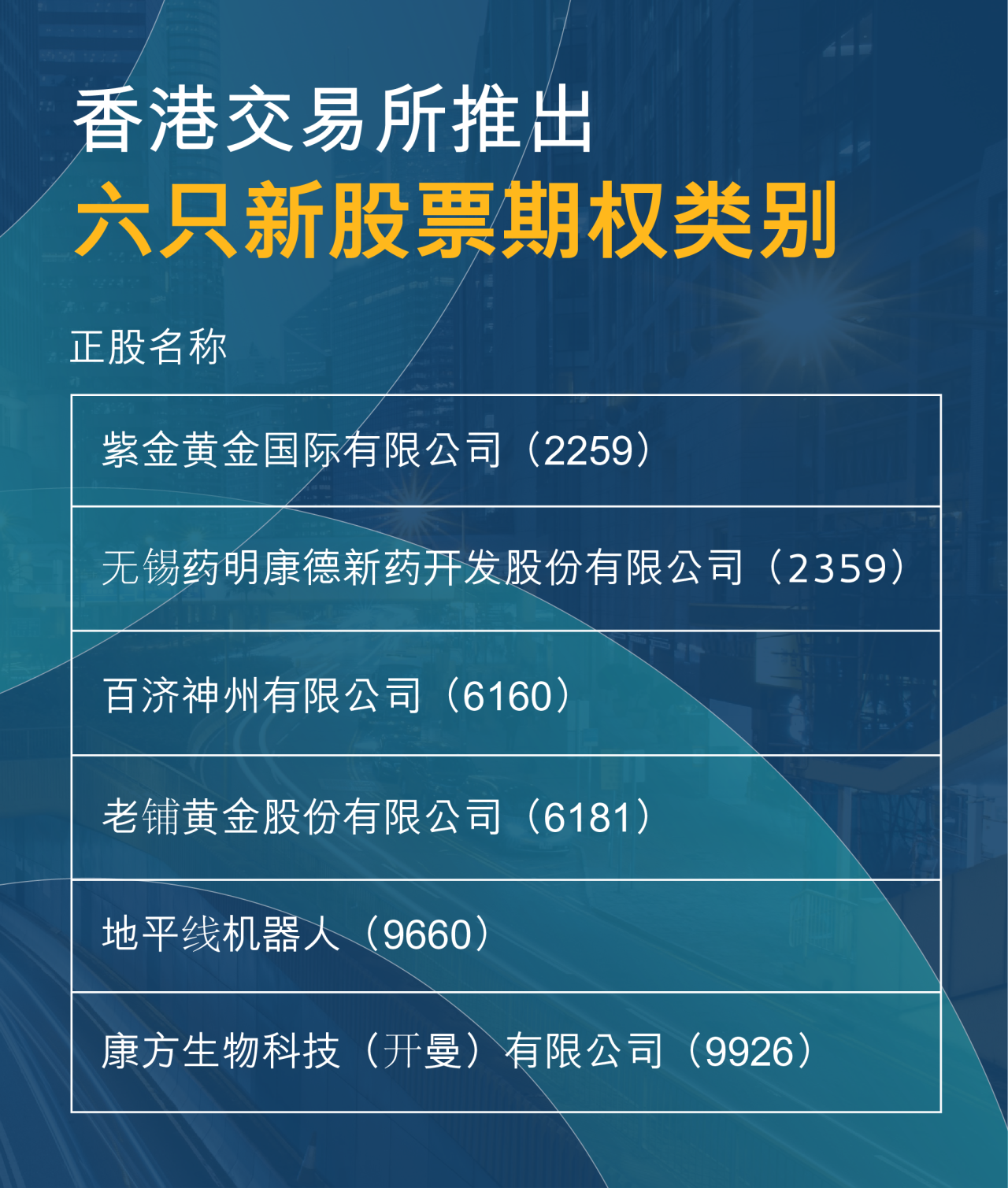
香港交易所推出6只新股票期权类别
Zheng Quan Ri Bao Wang· 2026-01-20 13:06
Core Insights - The Hong Kong Stock Exchange's derivatives market achieved record performance in 2025, with an average daily trading volume of 1.66 million contracts, representing a year-on-year increase of 7% [1] - Stock options emerged as the most actively traded product, with an average daily trading volume of 879,831 contracts, reflecting a year-on-year growth of 22% [1] - In response to this positive trend, the Hong Kong Stock Exchange recently launched six new categories of stock options, providing investors with a wider range of choices [1] Summary by Category - **Market Performance** - The average daily trading volume reached 1.66 million contracts, marking a 7% increase compared to the previous year [1] - Stock options accounted for a significant portion of this volume, with 879,831 contracts traded daily, up 22% year-on-year [1] - **Product Offerings** - The Hong Kong Stock Exchange introduced six new categories of stock options to enhance investment choices for market participants [1] - **Understanding Stock Options** - Stock options are financial contracts traded on exchanges, based on individual stocks, and are divided into call options and put options [3] - Call option buyers have the right to purchase the underlying stock at a predetermined price before or on the expiration date, while sellers are obligated to sell the stock if the option is exercised [3] - Put option buyers have the right to sell the underlying stock at a predetermined price before or on the expiration date, while sellers are obligated to buy the stock if the option is exercised [3]
创维集团向香港交易所申请创维光伏股份上市及买卖
Xin Lang Cai Jing· 2026-01-20 10:40
Group 1 - The company, Skyworth Group, has applied to the Hong Kong Stock Exchange for the listing and trading of Skyworth Photovoltaic shares [1]
港股20日跌0.29% 收报26487.51点
Xin Hua Wang· 2026-01-20 09:51
Market Overview - The Hang Seng Index fell by 76.39 points, a decrease of 0.29%, closing at 26,487.51 points [1] - The total turnover on the main board was HKD 2,377.66 million [1] - The National Enterprises Index dropped by 39.69 points, closing at 9,094.76 points, a decline of 0.43% [1] - The Hang Seng Tech Index decreased by 66.54 points, closing at 5,683.44 points, a drop of 1.16% [1] Blue-Chip Stocks - Tencent Holdings decreased by 1.48%, closing at HKD 601 [1] - Hong Kong Exchanges and Clearing fell by 1.11%, closing at HKD 427 [1] - China Mobile remained unchanged, closing at HKD 79.3 [1] - HSBC Holdings increased by 1.1%, closing at HKD 128.4 [1] Local Hong Kong Stocks - Cheung Kong Holdings rose by 0.74%, closing at HKD 43.34 [1] - Sun Hung Kai Properties decreased by 0.99%, closing at HKD 110.2 [1] - Henderson Land Development increased by 0.52%, closing at HKD 31.12 [1] Chinese Financial Stocks - Bank of China fell by 0.45%, closing at HKD 4.47 [1] - China Construction Bank decreased by 0.51%, closing at HKD 7.76 [1] - Industrial and Commercial Bank of China dropped by 0.47%, closing at HKD 6.31 [1] - Ping An Insurance rose by 0.88%, closing at HKD 69 [1] - China Life Insurance increased by 4.31%, closing at HKD 33.4 [1] Oil and Petrochemical Stocks - China Petroleum & Chemical Corporation fell by 0.61%, closing at HKD 4.92 [1] - China National Petroleum Corporation decreased by 0.12%, closing at HKD 8.21 [1] - CNOOC Limited dropped by 1.74%, closing at HKD 21.52 [1]


投资银行业与经纪业:政策呵护资本市场高质量发展,看好板块景气度上行
Changjiang Securities· 2026-01-19 11:04
Investment Rating - The report maintains a "Positive" investment rating for the industry [7] Core Insights - The non-bank sector has shown overall weak performance this week, with the securities sector experiencing a decline. However, recent policy developments from the China Banking and Insurance Regulatory Commission (CBIRC) and the China Securities Regulatory Commission (CSRC) are expected to support high-quality development in the capital market [2][4] - The insurance sector is expected to see improved return on equity (ROE) and valuation recovery, driven by trends such as the migration of deposits and increased allocation to equities. The overall cost-effectiveness of the sector is gradually improving, indicating a potential revaluation [2][4] - Recommendations include stable profit growth and dividend rates from companies like Jiangsu Jinzu, China Ping An, and China Pacific Insurance, as well as companies with strong market positions such as New China Life, China Life, Hong Kong Exchanges, CITIC Securities, and others [4] Summary by Sections Market Performance - The non-bank financial index decreased by 2.6% this week, with a year-to-date performance of -0.1%, ranking 28 out of 31 sectors [5] - The average daily trading volume in the market increased to 34,650.61 billion yuan, up 21.50% week-on-week, with a daily turnover rate of 3.37%, up 59.41 basis points [5] Key Industry News - The CBIRC and CSRC held meetings to discuss regulatory work for 2026, and the CSRC released a draft for the supervision of derivative trading [6] - Companies such as GF Securities and Huatai Securities have made significant announcements regarding refinancing and capital increases [6] Insurance Sector Insights - The cumulative insurance premium income for November 2025 reached 57,629 billion yuan, a year-on-year increase of 7.56%, with life insurance premiums growing by 9.06% [21][22] - The total assets of insurance companies as of November 2025 were 40.65 trillion yuan, with a slight increase of 0.15% [25][26] Brokerage and Investment Business - The brokerage business is recovering, with a notable increase in trading volumes and margin financing balances, indicating a gradual improvement in profitability [38][45] - The investment business remains under scrutiny, with fluctuations in equity and bond markets impacting self-operated income for brokerages [42] Financing and Asset Management - In December 2025, equity financing reached 663.12 billion yuan, a 30.9% increase, while bond financing was 7.34 trillion yuan, up 4.0% [49] - The issuance of collective asset management products saw a significant rise, indicating a recovery phase for the asset management sector [51]

“只买不卖”!“香港巴菲特”将四分之一的财富投入黄金
Hua Er Jie Jian Wen· 2026-01-19 07:46
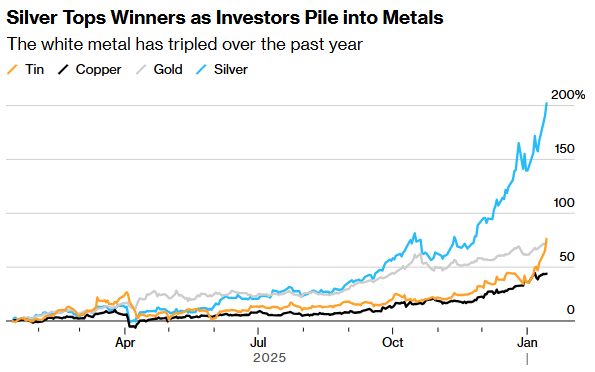
Core Viewpoint - The article highlights the investment strategy of Cheung Hai, known as the "Hong Kong Buffett," who allocates a significant portion of his wealth to gold, far exceeding the average allocation among peers, and adheres to a "buy and hold" strategy without trading or using derivatives [1][2]. Group 1: Investment Strategy - Cheung Hai has allocated approximately 25% of his family office assets, totaling around $1.4 billion, to precious metals, particularly gold, while the average allocation among family offices is only 2% [1][2]. - His investment in precious metals began with small amounts in 2008, leading to substantial purchases of physical gold ETFs ten years later, resulting in cumulative gains of $251.1 million and a growth rate of 167% [1][2]. - He recommends an investment portfolio consisting of 60% stocks, 20% bonds, and 20% precious metals, primarily gold, citing geopolitical tensions as a driving force for gold and silver [1][2]. Group 2: Historical Context and Performance - Cheung Hai's significant gold purchases were funded by selling shares of his company, Wei Li Group, before a major market correction in 2015 [4]. - He launched the Value Gold ETF in 2010, storing physical gold in Hong Kong, and remains the largest shareholder of the fund, valued at approximately HKD 1.3 billion ($167 million) [4]. - The prices of gold, silver, copper, and tin reached historical highs in early 2026, driven by anticipated easing policies from the Federal Reserve, political pressures from the Trump administration, and ongoing geopolitical tensions [1][4]. Group 3: Market Trends and Insights - Cheung Hai believes that the world is entering a period of large-scale "vault migration," with wealthy Asian families increasingly moving their assets back to the region to avoid U.S. sanctions or potential asset seizures [4]. - He emphasizes that owning physical gold is a secure way to store wealth, as it does not rely on any third party [4][5]. - The article notes that some Asian family offices are bypassing intermediaries to trade physical gold directly, reflecting a growing trend in precious metal investments [5].
香港亿万资管大佬大举加仓黄金 贵金属占资产四分之一
Zhi Tong Cai Jing· 2026-01-19 03:08
Group 1 - Cheah Cheng Hye, a prominent figure in Asian value investing, is significantly increasing his investment in gold, suggesting that investors should do the same [1] - Cheah's family office, managing $1.4 billion, has allocated about 25% of its assets to precious metals, up from 15% a year ago [1] - Despite gold prices reaching historical highs, Cheah's bullish stance on gold sets him apart from other ultra-high-net-worth investors, as UBS reports an average allocation of only 2% to gold and precious metals among family offices for 2024 [1] Group 2 - Cheah's investment in precious metals began with small amounts in 2008, leading to substantial investments in physical gold ETFs, yielding a total return of $251.1 million, a 167% increase [2] - The rise in metal prices, including gold and silver, has been driven by anticipated Federal Reserve easing policies, political pressures from the Trump administration, and geopolitical tensions [2] - Wealthy Asian families are increasingly reallocating funds back to the region to avoid U.S. sanctions or potential asset confiscation risks, with gold seen as a secure method for wealth storage [2] Group 3 - Cheah emphasizes the advantages of purchasing physical gold over paper gold, stating that physical gold stored in warehouses or bank vaults ensures ownership [5] - He has a significant investment in silver, which has seen a price increase of nearly three times over the past year, outpacing gold's growth [5] - Cheah co-founded Value Partners in 1993, which became the first asset management company listed in Hong Kong, reaching an asset management peak of $17 billion in 2017 [5] Group 4 - Cheah's substantial gold purchases were initiated from funds generated by reducing his stake in Value Partners before a market downturn in 2015 [8] - He launched the Value Gold ETF in 2010, storing physical gold in Hong Kong airport due to dissatisfaction with Western storage methods [8] - Cheah believes that geopolitical factors, such as tensions in Venezuela and the Russia-Ukraine conflict, are driving increasing demand for gold and silver, validating his investment strategy [8]
香港交易所(00388.HK)获贝莱德增持188.69万股
Ge Long Hui· 2026-01-18 23:59
增持后,BlackRock, Inc.最新持好仓数目为6516.113万股,持好仓比例由4.99%上升至5.14%。 | 股份代號: | 00388 | | --- | --- | | 上市法國名稱: | 香港交易及結算所有限公司 | | 日期 (日 / 月 / 年): | 19/12/2025 - 19/01/2026 | 格隆汇1月19日丨根据联交所最新权益披露资料显示,2026年1月12日,香港交易所(00388.HK)获BlackRock, Inc.在场内以每股均价425.9778港元增持好仓 188.69万股,涉资约8.04亿港元。 | 豪格序號 | 大股東/董事/最高行政人員名 作出披露的 買入 / 賣出或涉及的 每股的平均價 | | | | 持有權益的股份數目 佔已發行的 有關事件的日期休 | | | --- | --- | --- | --- | --- | --- | --- | | | 股份數目 | 原因 | | | (請參閱上述*註 | 有投票權股 (日 / 月 / 年) 福 | | | | | | | | 份自分比 | | | | | | | | 9/a | | CS20260115E ...

ETF互联互通标的扩至364只
Zheng Quan Ri Bao· 2026-01-18 17:17
Core Viewpoint - The recent expansion of the ETF (Exchange-Traded Fund) interconnection marks a significant increase in the number of ETFs available for northbound trading, enhancing investment opportunities for both domestic and international investors [1] Group 1: ETF Interconnection Expansion - On January 19, a total of 98 ETFs were officially included in the northbound trading of the Shanghai and Shenzhen Stock Connect, increasing the total number of products in the "ETF Connect" from 273 to 364, representing a growth of over 30% [1] - The inclusion of more ETFs is expected to enrich the investment options for overseas institutional investors and promote the institutionalization of the A-share market [1] Group 2: Fund Management Perspective - A total of 29 fund companies had products included in the "ETF Connect," with China Asset Management leading with 14 ETFs, followed by E Fund with 10, and FT Fund with 7 [1] - The newly included products cover a wide range of types, including broad-based ETFs and industry-themed ETFs, which are expected to attract significant market attention [2] Group 3: Market Impact and Future Outlook - The expansion of the ETF interconnection is anticipated to enhance the international competitiveness and influence of China's capital market by attracting more professional investors and incremental capital [3] - Since the formal introduction of ETFs into the interconnection mechanism in July 2022, the total trading volume of northbound funds in 2025 is projected to reach 816.58 billion yuan, marking a 76% increase from 2024 [3]