
中国商飞

Search documents
特朗普果然没安好心,一天之内多华多次出手,不能再轻信美国了
Sou Hu Cai Jing· 2025-06-12 08:11
Group 1 - The Trump administration has intensified its attacks on China, including halting the sale of engine technology for the C919 aircraft and threatening to revoke visas for Chinese students, as well as planning to impose tariffs of up to 100% on cranes [1][3][5] - The strategy employed by the Trump administration reflects a short-sighted and anxious approach, characterized by a "salami-slicing" tactic, where attacks are made on various fronts sequentially, despite showing a facade of goodwill in trade negotiations [3][5] - The suspension of engine technology sales to China may inadvertently accelerate China's efforts to achieve domestic alternatives in aircraft manufacturing, as the C919 is already a product of China's independent research and development [5][7] Group 2 - The announcement to revoke visas for Chinese students aims to weaken China's future technological competitiveness, but it has faced strong resistance from China and concerns from U.S. educational institutions about the potential loss of talent and research capabilities [5][7] - The ongoing pressure on the Trump administration to maintain a hardline stance against China may lead to a situation where the U.S. becomes increasingly dependent on China, contradicting the intended goals of the sanctions [7]

东南亚航空市场发展前景可期
Jing Ji Ri Bao· 2025-06-11 21:59
近年来,东南亚地区航空市场快速增长,究其原因,首先是该地区经济持续增长奠定了坚实基础。此 外,市场需求旺盛、航空基础设施建设加快、航空公司运营模式优化、政府政策支持以及区域经济一体 化进程加快等也成为关键因素。虽然该地区航空市场未来前景乐观,但仍面临供应链存在瓶颈和绿色转 型压力加大等多重挑战。对此,东南亚航空业正通过技术创新和国际合作逐步化解挑战,有望未来继续 保持良好发展态势。 国际航空运输协会日前发布数据显示,2025年全球航空业总收入预计达到9790亿美元,同比增长 1.3%,首次接近1万亿美元大关。其中,亚太地区客运量占全球40%以上,东南亚作为核心增长极之 一,其航空市场的强劲表现尤为瞩目。波音公司近期预测显示,未来20年,东南亚航空客运总量将以年 均7.2%的速度增长,超过全球平均水平。 国际航空运输协会理事长沃尔什近日在第81届国际航协常年大会上表示,东南亚航空业在2025年前5个 月表现强劲,且未来前景乐观。这一乐观预期并非偶然,该地区航空市场的增长动力,源于多重结构性 因素的叠加效应。 东南亚地区经济持续增长为航空业发展奠定了坚实基础。随着居民收入水平逐渐提升,东南亚地区中等 收入群体迅速 ...
伦敦谈判落幕!特朗普7字坦言中美交锋,稀土博弈暴露美国软肋?
Sou Hu Cai Jing· 2025-06-11 04:58
Group 1 - The core issue of the negotiations revolves around the U.S. desire for China's rare earth resources, which are critical for various industries, including military and technology [1][12] - China has implemented export controls on seven types of heavy rare earths, significantly impacting U.S. manufacturing, with over 80% of global rare earth processing capacity located in China [1][12] - The U.S. military and technology sectors are highly dependent on rare earths, with a reliance rate exceeding 60%, leading to supply chain vulnerabilities for companies like Toyota and Boeing [1][9] Group 2 - The U.S. attempted to leverage three major strategies: upgrading AI chip bans, halting engine supplies for China's C919 aircraft, and tightening student visa regulations for Chinese STEM students [4] - These strategies have proven ineffective, highlighting vulnerabilities in U.S. dominance as China controls critical segments of the global supply chain [6][12] - The negotiations revealed that unilateral pressure from the U.S. could accelerate the "de-Americanization" process in global supply chains [6][12] Group 3 - The U.S. offered to relax some restrictions on chip design software and jet engine components in exchange for China lifting its rare earth export controls, indicating a zero-sum game approach [8] - China's countermeasures have effectively disrupted the U.S. military supply chain, with the F-35 production facing shutdown due to shortages of critical materials [9] - The U.S. has suffered significant losses, estimated at over $120 billion, due to its technology blockade against China, while China's domestic production rates in key sectors have improved significantly [10] Group 4 - The negotiations signify a shift in global power dynamics, with the era of coercive tactics yielding diminishing returns for the U.S. [12][13] - Rare earths are recognized as strategic resources essential for modern industries, and China's control over this resource is reshaping global supply chains [13] - China's proposal for a "rare earth industry community" aims to build a cooperative framework with ASEAN and EU countries, countering U.S. unilateralism [13][14]
不只是稀土,其实谈判的“天平”早已倾向北京,美国已经无法挽回
Sou Hu Cai Jing· 2025-06-10 09:23
6月8日,英国《金融时报》报道:目前中国除了在稀土领域拥有主导地位外,在新型超强磁铁、电池、新型芯片等多项领域都拥有主导地位,特朗普政府已 经意识到了这一点,但他们也无能为力。 中国的底牌远不止稀土,特朗普政府后知后觉,终于发现天平朝中方倾斜,美国掀起关税战,不但没能逼中国低头,反而帮中国更了解自己的实力了。 国际观察家们已经注意到,中国在稀土供应链上的布局配合对美出口的适时管控,正成为影响中美贸易谈判走向的关键筹码,天平正逐渐向北京倾斜,中国 市场的任何风吹草动,都可能牵动美国工业和科技敏感的神经。 特朗普政府并非没有尝试过其他方案:从其他国家采购,甚至考虑海底开采稀土,然而实践表明,即便获得矿石,缺乏中国的精炼技术也无济于事,正如外 国专家直言:"稀土调配完全由中国掌控"。 将视野放宽,中国的优势远不止于稀土,除了新型超强磁铁和电池,中国在高性能晶体管、特定软件领域,以及无人机、机器人、智能手机等热门产业,都 已构建起完整的产业生态体系。 这一体系的独特之处在于,即便某些技术环节尚有提升空间,整个系统仍能自主运转,不惧外部干扰,当美国政界意识到时,中国已在多个领域占据先机, 追赶将变得异常困难。 以华为芯 ...

苏州联佳:好风凭借力,长三角民营企业如何助力国产大飞机圆梦九霄
Feng Huang Wang Cai Jing· 2025-06-10 07:46
Core Viewpoint - The successful landing of the domestically developed C919 aircraft marks a new era for China's commercial aviation and signifies the rise of a comprehensive aviation manufacturing industry chain in the Yangtze River Delta, which is crucial for the country's economic transformation and upgrading [1][3]. Industry Overview - The aviation manufacturing industry is considered the "crown" of modern manufacturing, with large passenger aircraft development reflecting a nation's technological capabilities and industrial strength [3]. - Historically, the global aviation industry has been dominated by Boeing and Airbus, which together hold 93.1% of the market share as of 2024 [3]. - The emergence of the C919 is changing this landscape, with over 1,200 orders received since its commercial operation began in 2022, including international orders from airlines in Asia, Africa, and Latin America [3]. Regional Development - The Yangtze River Delta region is home to over one-third of China's large aircraft installation suppliers and more than 900 related enterprises, forming an industrial cluster with an output value exceeding 100 billion yuan [3]. - Suzhou, as a core city in this economic belt, has accumulated hundreds of aerospace supporting enterprises, with the related industry scale exceeding 30 billion yuan [1][3]. Company Profile: Lianjia Technology - Lianjia Technology is a key player in the C919 supply chain, involved in various critical components from aircraft interiors to avionics systems and flight control systems [7]. - The company has developed high-precision continuous forming processes that have improved production efficiency by 50% and enhanced product quality stability [7][8]. - Lianjia Technology has achieved an annual production volume of 500,000 pieces, covering over 10,000 product types, and has the capacity to manage 100,000 types of aviation components [8]. Historical Context and Growth - Founded in 2004 by Zhang Wujiao, Lianjia Technology has evolved from a small workshop to a significant player in the aviation precision component sector, reflecting the broader evolution of China's manufacturing industry [11][19]. - The company transitioned to the aviation sector in 2015, focusing entirely on aviation components after recognizing the strategic importance of the industry [14][19]. Technological Advancements - Lianjia Technology has made significant advancements in manufacturing processes, achieving a precision level of 0.005mm, which meets international standards [17]. - The company has developed a unique flexible management model that integrates various production and supply chain processes, ensuring high reliability and efficiency in small-batch, multi-variety production [8][29]. Future Outlook - The Chinese government has outlined a vision for a green aviation manufacturing system by 2035, which will guide companies like Lianjia Technology in their development strategies [21]. - Lianjia Technology plans to expand its operations internationally, reflecting its commitment to contributing to the national goal of becoming a strong manufacturing power [29].

美国刚宣布断供,CJ-1000A发动机就横空出世!
Sou Hu Cai Jing· 2025-06-09 06:15
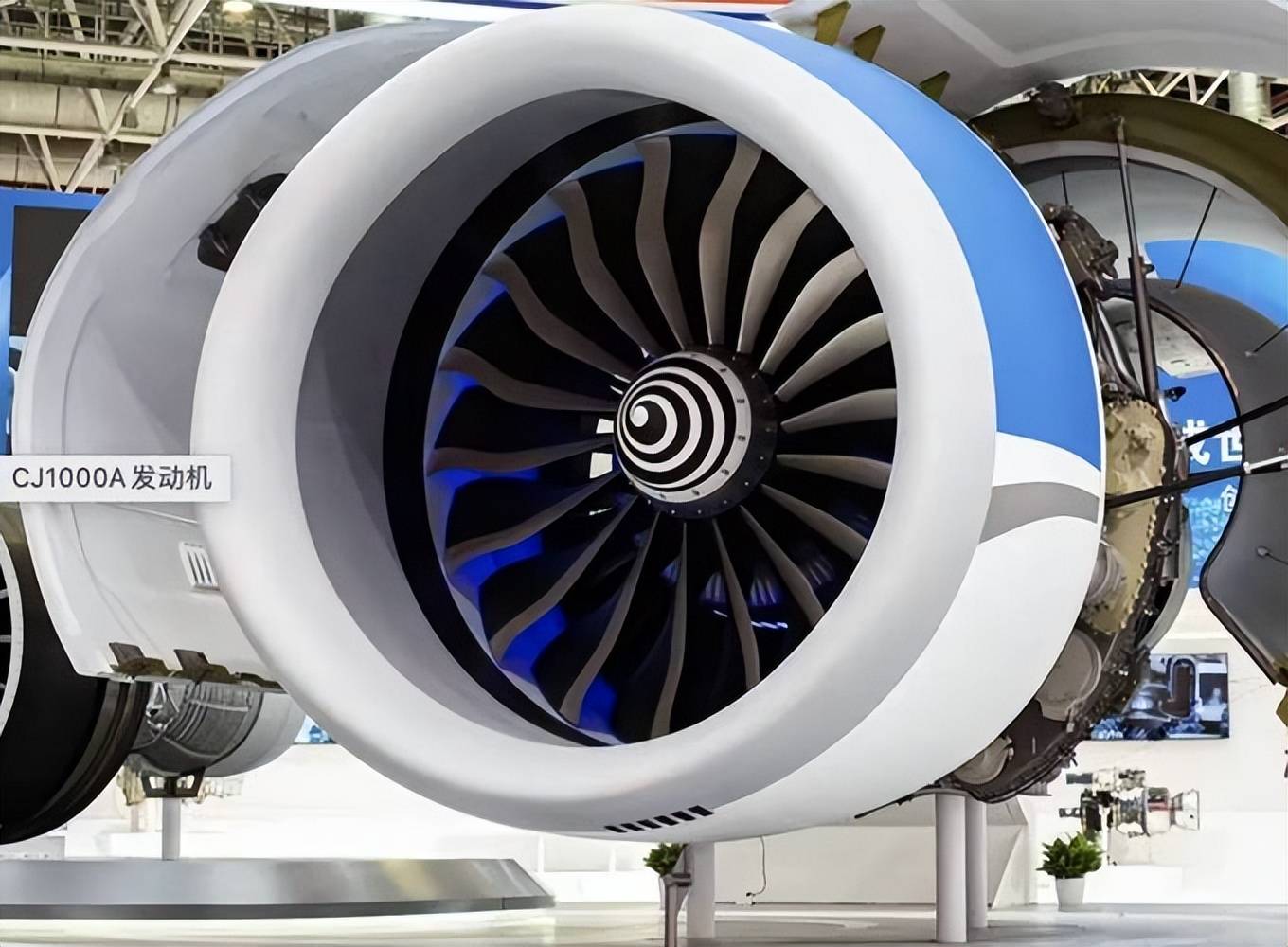
Core Viewpoint - The recent decision by the U.S. government to suspend the export of large passenger aircraft engines to China is seen as an attempt to hinder China's development of domestic aircraft, but it may inadvertently accelerate China's determination to achieve self-sufficiency in aviation engine technology [1][9]. Group 1: U.S.-China Trade Relations - The U.S. is struggling to respond effectively to China's rare earth export restrictions while simultaneously attempting to cut off engine supplies to China, indicating a lack of effective leverage [3]. - Trump's administration has reinstated high tariffs on Chinese goods, reaching as high as 145%, but China has prepared countermeasures that directly impact U.S. farmers and high-tech industries [5][8]. - The U.S. high-tech sector is facing challenges due to its reliance on Chinese rare earth materials, with production lines for critical military and commercial products being affected [7]. Group 2: China's Aviation Industry Development - China has already tested the CJ-1000A engine, which can replace imported engines, and this engine is expected to significantly reduce costs by approximately 30% compared to imports while enhancing performance [9][11]. - The successful development of military engines like the "Taihang" and "WS-15" signifies a leap in China's military aviation technology, allowing for more competitive offerings in the global market [11]. - China has mastered core technologies for various types of engines, entering a new phase of independence in aviation engine design, which may mitigate short-term impacts from U.S. supply cuts [13]. Group 3: Future Prospects - The C929 project, initially a collaboration with Russia, is now being independently advanced by China, featuring a domestically produced engine with superior thrust compared to competitors [15]. - The maturation of high-thrust engines like the Changjiang-2000 may enable China to develop larger strategic transport aircraft, enhancing its military capabilities [17]. - China's advancements in new power systems, including electric motors and hydrogen fuel engines, position it to lead in future aviation technology, similar to the rapid growth seen in its semiconductor industry following U.S. restrictions [18].
解禁稀土接收波音,中国为何主动了?以技术换时间,以空间换突破
Sou Hu Cai Jing· 2025-06-09 05:11
Core Viewpoint - The article discusses China's strategic maneuvering in the rare earth and aviation sectors, highlighting a shift from merely exporting raw materials to leveraging technology and market access for industrial advancement. Group 1: Rare Earth Industry - China holds 90% of global crude gallium production but has faced challenges in high-end purification, prompting a recent temporary export permit to U.S. automakers as a strategic move [3] - A breakthrough in 7N high-purity gallium production technology by a team from Guangxi University has reduced the purification cycle from 7 days to 48 hours, allowing China to transition from "selling ore" to "selling technology" [3] - The export permit is temporary and subject to real-time regulation by Chinese authorities, with a tiered release strategy already benefiting European and Vietnamese companies [3] - Upgrades in rare earth production areas in Jiangxi and Yunnan are ensuring resources are directed towards high-end sectors like new energy vehicles and photovoltaics [3] Group 2: Aviation Industry - The recent acceptance of a Boeing 737MAX by Xiamen Airlines, previously returned due to tariff issues, reflects a strategic timing to bolster domestic aircraft manufacturing [6] - The current domestic aircraft C919 has a 60% localization rate, with core components still reliant on imports; the pause in accepting Boeing aircraft allowed for accelerated development of domestic composite materials [6] - Boeing has a backlog of 130 orders from China, and the resumption of deliveries helps avoid a gap in air transport capacity while China seeks technology transfer from Boeing to enhance its domestic maintenance capabilities [8] - The reduction of tariffs from 125% to acceptable levels has made Boeing aircraft more financially viable for China, with the CEO noting that most tariffs can be recouped upon export [9] Group 3: Strategic Implications - The apparent concessions in rare earth exports and Boeing aircraft acceptance are part of a broader strategy for China to maintain leverage while advancing its manufacturing capabilities [11] - Chinese companies are relocating rare earth processing to Malaysia and Australia to mitigate trade risks, indicating a shift in the supply chain dynamics [11] - Despite ongoing U.S. technology restrictions on the C919, domestic orders are projected to extend to 2030, with the resumption of Boeing deliveries providing a critical five-year window for supply chain development [11] - The strategic approach of selectively easing restrictions while retaining key resources illustrates a sophisticated balance of power in international trade [13]


军工行业周报:导致变化的变化-20250609
AVIC Securities· 2025-06-09 01:34
Investment Rating - The report maintains an "Overweight" rating for the defense and military industry [3] Core Insights - The new forms of warfare are driving demand for advanced weaponry, characterized by "intelligent, systematic, and informational" capabilities, which are becoming critical for major power strategic competition [2][25] - Global military spending is projected to reach $2.718 trillion in 2024, marking a 9.4% year-on-year increase, the highest growth since the Cold War, and has been rising for ten consecutive years, providing a solid material foundation for the military industry [2][26][27] - The report highlights the increasing importance of low-cost military equipment, as demonstrated in the Russia-Ukraine conflict, prompting nations to focus on cost-effectiveness in military procurement [28][29] Summary by Sections New Warfare Forms Create New Demands - Recent international conflicts have highlighted the need for new types of weaponry, with a focus on unmanned systems, information warfare, and electronic warfare [2][25] - The military industry is experiencing a transformation driven by the evolving nature of warfare, leading to new demands and trade systems [2][3] Global Military Spending Trends - Military spending is expected to grow significantly, with the top five spenders being the USA, China, Russia, Germany, and India [26][27] - The report notes that military spending is a primary source of funding for the military industry, particularly for equipment expenses [27] Cost-Effectiveness in Military Procurement - The report emphasizes the need for low-cost solutions in military equipment, as seen in the effectiveness of low-cost drones during high-intensity conflicts [28][29] - It discusses the importance of considering total lifecycle costs, including procurement, maintenance, and operational costs, in military equipment development [29][30] Index Component Adjustments - Recent adjustments to major indices have resulted in several military industry stocks being added, which may lead to increased market attention and potential capital inflows [12] Investment Recommendations - The report suggests focusing on sectors such as unmanned equipment, military intelligence, satellite internet, and electronic countermeasures for investment opportunities [15][16] - Specific companies and sectors within the military equipment supply chain, such as fighter jets, drones, and missile systems, are highlighted as potential investment targets [15][16]
美国据报暂停向商飞出售部分技术,航材国产化需求迫切
China Post Securities· 2025-06-09 01:31
Industry Investment Rating - The industry investment rating is "Outperform the Market" and is maintained [2] Core Viewpoints - The report highlights the increasing production and delivery of China's C919 passenger aircraft, with an expected annual production capacity of 75 units by 2025 and 200 units by 2029 [6] - The C919 aircraft has achieved over 50% domestic production rate, although key components like engines and avionics still rely on foreign suppliers [7] - The report emphasizes the importance of domestic supply chain security for aviation materials, predicting a shift towards domestic production of critical systems and high-value components [9] Summary by Relevant Sections Industry Basic Situation - The closing index is at 1508.79, with a 52-week high of 1712.48 and a low of 1113.62 [2] Recent Developments - The U.S. has suspended the sale of certain technologies to Chinese companies, impacting the development of the C919 aircraft [5] - The report notes that the CJ-1000A engine development is progressing better than expected, which is crucial for the C919's future [9] Market Performance - The relative performance of the defense and military industry shows a fluctuating trend, with a peak increase of 32% observed from June 2024 to June 2025 [4]
梁勇:与大飞机事业共成长
Zhong Guo Qing Nian Bao· 2025-06-09 00:40
Core Points - The C919 aircraft is China's first self-developed jetliner that meets international airworthiness standards, showcasing significant advancements in the domestic aviation industry [1] - The aircraft's final test unit, designated as 106, plays a crucial role in the overall production and testing process, with a dedicated team focused on quality and safety [1][2] - The team led by Liang Yong has faced numerous challenges during the testing phases, emphasizing the importance of preparation and collaboration among various professionals [2][3] Group 1 - The C919 aircraft has undergone extensive testing and development, with the 106 unit being the last in the series, making it difficult to control the production schedule [2] - Liang Yong, the youngest team leader, highlights the significance of proactive planning and the unpredictability of the testing process [2][3] - The team successfully completed critical tests, including ground tests and night flight trials, demonstrating their resilience and teamwork [3][4] Group 2 - The team faced a critical decision regarding wind conditions for engine ground tests, showcasing the challenges of capturing suitable weather for testing [4][5] - On November 20, the team successfully conducted wind tests after a series of challenges, marking a significant achievement for the 106 unit [5] - Following the successful test flights, the C919 is set to enter commercial operations, with Liang Yong taking on key roles in supporting its delivery and operational readiness [5][6] Group 3 - The C919 project represents a significant milestone in China's aviation industry, with Liang Yong reflecting on the growth and development witnessed throughout his career [6]