
陶氏公司

Search documents
工业硅及有机硅专题汇报
2025-07-29 02:10
Summary of Key Points from the Conference Call Industry Overview - The chemical industry has experienced fluctuations in operating rates, currently recovering to 72%, but there is a severe oversupply in products related to new energy, such as industrial silicon [1][2] - Major companies like Wanhua Chemical and Hualu Hengsheng have healthy cash flows and profitability, outperforming overseas competitors, which may lead to an optimization of the domestic chemical industry landscape as foreign companies exit [1][3] - Fixed asset investment in the chemical industry has turned negative at -1.1%, indicating a potential end to natural attrition [1][4] Organic Silicon Industry Insights - The organic silicon industry is expected to see no new capacity additions from 2025 to 2026, suggesting a potential recovery from the bottom [1][4][9] - The organic silicon supply chain shows that polysilicon is the largest downstream segment, accounting for 55%, while organic silicon represents 27.6% [1][6] - The DMC (Dimethylcyclosiloxane) price is currently around 12,500 RMB/ton, with a profit margin of approximately 1,300 RMB/ton, which is at a decade low [2][13] - The total capacity of the organic silicon industry is projected to reach 3.44 million tons by 2025, having doubled since 2019 [1][8] Demand and Market Dynamics - The apparent demand growth for organic silicon is forecasted at 21% for 2024, with export growth at 34%, driven by the exit of overseas capacity and increased domestic demand from the photovoltaic and new energy sectors [1][10] - In the first half of 2025, the apparent demand growth reached 23.9%, although export growth saw a decline due to trade relations [11] - The organic silicon industry is currently in a favorable improvement trend, with a CR3 of 45.9% and CR5 of 61.9%, indicating a high concentration in the market [12] Industrial Silicon Sector - The industrial silicon sector is characterized as high energy consumption and low value, with a total capacity of 7.48 million tons, primarily concentrated in the Yunnan, Guizhou, and Sichuan regions [2][16][17] - Current industrial silicon prices are around 9,600 RMB/ton, with mid-tier companies struggling to remain profitable [2][18] - The market outlook for industrial silicon is optimistic due to the potential for effective regulation and the implementation of anti-involution measures [19] Key Companies and Investment Opportunities - Key companies in the organic silicon sector include Hoshine Silicon Industry, which has a DMC capacity of 880,000 tons, holding a market share of 25.6% [2][14] - Other notable companies include Dongyue Group, Xian Chemical, and Luxi Chemical, which also have significant capacities and potential for profit growth [14][15][21] - The potential for profit improvement in the organic silicon sector is significant, driven by demand growth and the exit of less competitive players [7][12] Conclusion - The chemical industry, particularly the organic silicon segment, is poised for recovery with no new capacity additions expected in the near term, while the industrial silicon sector faces challenges but shows signs of potential improvement through regulatory measures and market dynamics [1][4][19]

全球化工行业未有明显起色——2025年全球化工企业50强榜单浅析
Zhong Guo Hua Gong Bao· 2025-07-28 03:17
Group 1 - The global chemical industry is experiencing stagnation, characterized by a down cycle due to oversupply and weak demand, with the top 50 companies' sales remaining nearly flat for two consecutive years [1][2] - BASF leads the ranking with sales of $70.612 billion, followed by Sinopec at $58.131 billion and Dow at $42.964 billion, with total sales for the top 50 companies amounting to $1.014 trillion, a slight decrease of 0.07% from the previous year [1] - The profits of the top 50 companies reached $56.8 billion in 2024, an increase of 8.1% compared to 2023, following a significant drop of 44.1% in the previous year [1][3] Group 2 - Capital expenditures for the top 50 companies increased by 3.5% to $73 billion, while R&D spending rose by 3.0% to $12.3 billion, indicating a slight recovery in executive confidence [2] - Many companies are downsizing operations, particularly in Europe, due to high energy and other costs, with companies like LyondellBasell and Dow closing or selling facilities [2] - The profitability of the petrochemical sector is mixed, with some companies like ExxonMobil and SABIC showing profit growth, while others like LyondellBasell and Dow experienced declines [3]




行业基本面面临挑战,股息削减
Haitong Securities International· 2025-07-28 03:02
Investment Rating - The report indicates a negative market reaction expected for Dow's Q2 2025 performance despite adjusted net income meeting market expectations, primarily due to the strong profitability in its performance materials and coatings segment [1][2]. Core Insights - Dow reported an adjusted net income of $42 million for Q2 2025, exceeding market expectations of a $90 million loss, driven by better-than-expected performance in its high-performance materials and coatings business [2]. - The company aims to achieve over $6 billion in cash flow by 2026 through short-term cash support and profit growth leverage, while also adjusting its dividend policy based on economic cycles to enhance financial flexibility [1]. - The performance materials and coatings segment generated $213 million in operating income, a 4% year-over-year increase, attributed to seasonal demand for architectural coatings and increased sales of downstream silicone products [2]. - Conversely, the industrial intermediates and infrastructure segment reported an operating loss of $185 million, impacted by declining sales in polyurethane and construction chemicals, partially offset by growth in industrial solutions [2]. - The packaging and specialty packaging segment's revenue was $71 million, falling short of market expectations due to a decline in overall profit margins [2]. Summary by Sections Financial Performance - Q2 2025 adjusted net income was $42 million, a 147% quarter-over-quarter increase, but a 91% year-over-year decline [4]. - Revenue for Q2 2025 was $10.1 billion, a 3% decrease quarter-over-quarter and a 7% decrease year-over-year [4]. - Adjusted EBITDA for Q2 2025 was $703 million, reflecting a 26% decrease quarter-over-quarter and a 53% decrease year-over-year [4]. Segment Performance - **Performance Materials & Coatings**: Revenue of $2.129 billion, with operating income of $152 million, a 210% increase quarter-over-quarter [4]. - **Industrial Intermediates & Infrastructure**: Revenue of $2.786 billion, with an operating loss of $185 million, a significant decline from previous quarters [4]. - **Packaging & Specialty Packaging**: Revenue of $5.025 billion, with operating income dropping to $71 million, a 90% year-over-year decline [4].
以企业家精神进行价值投资
雪球· 2025-07-27 05:49
↑点击上面图片 加雪球核心交流群 ↑ 巴菲特就是以"创业家"的角色起步的。创业家的标准定义是,那些为了获取利润而创建自由企业 的人。作为一位典型的创业家,巴菲特以创业一家投资合伙企业起步,并通过发挥他的企业管理 才能,将其事业发展成为全球最受尊敬的公司之一。他的投资生涯以及他对伯克希尔-哈撒韦的领 导,充分展现了他的创业精神。所以,他身兼企业家与投资家的双角色。 巴菲特很早就树立了"为自己工作"的理想。他从6岁起,就通过各种各样的生意为自己赚钱。到25 岁时,他创立了巴菲特合伙公司,并很快成为百万富翁(以今天的美元购买力计算)了。他的个 人和社会背景,使得他能成为有史以来最成功的企业家之一的重要基石。正如芬克尔所指出的, 巴菲特的性格和价值观无疑是由巴菲特家族的创业传统塑造,包括他的外祖父经营的印刷厂和他 的祖父欧内斯特·巴菲特创办的杂货店。巴菲特拥有所有企业家共有的许多特质。 企业家有实现目标的超强动力,他们愿意坦承自己的错误,而不是指责别人。他们是敢于冒险的 人,对不确定性的容忍度较高,但对一项事业成功的可能性有着比较敏锐的实用主义意识。换句 话说,他们并不鲁莽。大多数企业家都很独立,拥有坚如磐石的自信和 ...


暴跌81%、亏超78亿,国际巨头们怎么了?
Sou Hu Cai Jing· 2025-07-26 14:17
Group 1 - The global cosmetics industry is facing significant challenges, including major losses for international giants, layoffs, and strategic shifts among key players [2][3][4] - Dow Chemical reported a net sales decline of 7% in Q2 2025, with a total loss of $1.09 billion (approximately 7.82 billion RMB) in the first half of the year [4][5][7] - L'Oréal USA is closing its SalonCentric warehouse and laying off 79 employees as part of a restructuring effort, contributing to nearly 7,000 job cuts across the global beauty sector [8][12] Group 2 - Fempower Beauty, a lip product brand founded six years ago, announced its closure and is selling products at a 50% discount [15][20] - Samhwa, a major cosmetics packaging company, was sold to KKR for 800 billion KRW (approximately 4.16 billion RMB), highlighting the growing appeal of packaging manufacturers in the beauty industry [21][24] - Interparfums reported a 5.8% increase in sales for the first half of 2025, with plans to launch a new high-end perfume brand, Solférino Paris, amid a competitive fragrance market [31][39]
Sectornomics: Dow Inc. halves dividend
CNBC Television· 2025-07-25 16:31
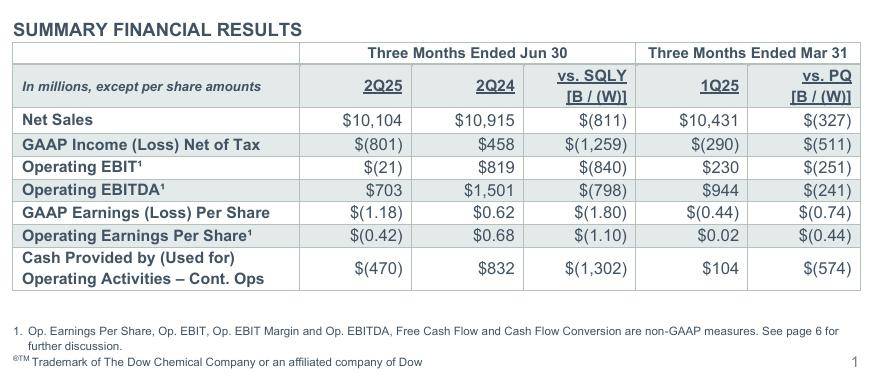
Welcome back. We're keeping an eye on the material sector today. One of the best performing groups of the month, as you probably know, despite a near 20% drop for one of the sectors holdings this week.Our Dom Chu has some of that for us this morning. Hey, Dom. >> All right.Good morning, Carl. So, sectoromics today focuses on dividends in the material sector. We've got a great hook here because Dow did cut its dividend in half just this week from 70 cents a quarter to 35 cents.That stock took a big hit on th ...
欧洲蒸汽裂解装置运营陷困局
Zhong Guo Hua Gong Bao· 2025-07-25 02:38
Core Viewpoint - The European chemical industry is facing a prolonged downturn, with no short-term recovery in sight due to persistent supply overcapacity and structural challenges in the ethylene market [2][4]. Industry Overview - Over the past 18 months, the European chemical sector has experienced a wave of steam cracker shutdowns and downstream capacity consolidation, reflecting the ongoing weakness in the ethylene market [2]. - High raw material costs, low profit margins from naphtha cracking, and competition from low-priced imports have pressured the industry, leading to the closure or planned shutdown of six steam cracker facilities in Europe [2][3]. Company Actions - Saudi Basic Industries Corporation (SABIC) announced the closure of its ethane cracker in Wilton, UK, on June 25, 2023, indicating a potential exit from the European market [2]. - Dow Chemical also announced plans to close its steam cracker in Germany by Q4 2027 due to structural challenges [2]. Market Dynamics - The demand for steam cracker capacity is expected to rise globally, with raw material demand projected to increase from 432 million tons in 2024 to 610 million tons by 2034 [3]. - Ethylene production from ethane and naphtha routes is expected to be approximately 74 million tons each in 2024, with ethane production projected to reach 101 million tons by 2034 [3]. Regional Competitiveness - European steam crackers lack competitiveness compared to lower-cost regions due to high energy and raw material costs and a bleak demand outlook [3][5]. - As of the end of 2024, the operating rate of European steam crackers is expected to be around 75%, necessitating a reduction of approximately 2 million tons per year of ethylene capacity to achieve a 90% operating rate [4]. Price Trends - The production profit and price of ethylene in Europe are expected to remain under pressure for the remainder of the year, with spot prices fluctuating around €790 per ton since the end of 2022 [4]. - In July 2023, ethylene prices fell to €563 per ton, marking a ten-year low outside of the COVID-19 pandemic period [4]. Market Sentiment - European ethylene producers are gradually losing their global competitive edge due to structural changes in demand, leading to reduced operating rates to avoid exacerbating supply overcapacity [5]. - The uncertainty surrounding tariff policies has further dampened the confidence of European ethylene companies, causing many market participants to delay significant actions [5].
工业硅价格走势会议
2025-07-25 00:52
Summary of Industrial Silicon Price Trends Conference Industry Overview - The industrial silicon demand is primarily driven by polysilicon, with production capacity increasing from 1.08 million tons in 2021 to an expected 3 million tons by the end of 2024, and projected to reach 3.3 million tons by 2025 [1][3] - The recent rebound in industrial silicon prices is attributed to supply reductions (notably from Hoshine Silicon Industry), increased demand (growth in organic silicon and polysilicon), inventory structure changes, and market sentiment [1][4] Key Points Supply and Demand Dynamics - Current supply and demand for industrial silicon show a marginal improvement, with supply tightening due to Hoshine's production cuts, despite some increases in Yunnan and Sichuan regions [5][6] - From June to July, significant destocking occurred, reducing total inventory from 350,000 tons to 250,000 tons, with total industry inventory around 800,000 tons [1][6] - The main demand sources for industrial silicon are polysilicon (43%), organic silicon (25.97%), and aluminum alloys (15%), with exports accounting for about 15% [1][8] Market Sentiment and Price Influences - Market sentiment significantly impacts industrial silicon prices, with expectations of anti-competitive policies leading polysilicon companies to agree on selling at no less than cost, driving prices up [1][4] - Coal costs are a critical factor influencing industrial silicon prices, showing a correlation with coking coal price trends [1][7] Industry Changes and Future Outlook - The polysilicon industry is undergoing a capacity consolidation phase, expected to complete by the end of September, which may lead to price increases and production decreases [11][12] - By the end of 2025, China's actual industrial silicon capacity is projected to be around 8 million tons, with nominal capacity at 7 million tons, indicating a potential severe oversupply [13][15] - Historical trends show that industrial silicon prices typically bottom out with capacity reductions, but currently, no such reductions are observed despite low prices [14][15] Policy and Regulatory Impact - There are ongoing discussions about eliminating small furnaces (below 12,500 kVA), which could significantly impact the industry if implemented, potentially reducing total capacity by up to 5% [18][19] - The effectiveness of market-driven measures to eliminate outdated capacity is questioned, particularly in regions where small furnaces produce specialized products [27][31] Profitability and Cost Structure - The cost structure varies significantly across regions, with cash costs in Xinjiang around 6,800 RMB/ton, while costs in Yunnan and Sichuan can reach up to 10,000 RMB/ton [24][25] - The profitability outlook for the third quarter is positive, with expectations of turning losses into profits if prices exceed 10,000 RMB/ton [29] Key Focus Areas - Key areas to monitor in the coming months include Hoshine's production resumption and the potential impact of small furnace elimination policies on supply-demand balance and pricing [20] Additional Insights - The organic silicon market is rapidly developing, with significant applications in photovoltaics and electric vehicles, and is expected to maintain stable growth [10] - The integration of polysilicon production is anticipated to stabilize prices and improve overall market conditions [11][12]

Trade Tracker: Otis Worldwide, Cheniere Energy and RTX
CNBC Television· 2025-07-24 17:02
Okay, let's talk about some moves uh that we have on our desk today. Josh Brown bought more Otus Worldwide. Why so.>> Yeah, Otis reported yesterday and uh it was slightly disappointing, but I really like the stock as at least an intermediate term hold. And uh I think the thing that was weak was the thing I care the least about selling new elevators. It's part of the business, but it's not the better part of the business. The better part of the business is the service and maintenance contracts.This is recess ...


金十图示:2025年07月24日(周四)美股热门股票行情一览(美股盘中)


news flash· 2025-07-24 16:39
Market Overview - The market capitalization of major US stocks shows varied performance, with Oracle at 762.30 billion, Mastercard at 321.36 billion, and Visa at 770.15 billion, reflecting increases of +0.66%, +0.86%, and +0.68% respectively [3] - Exxon Mobil's market cap is 679.53 billion, with a slight decrease of -0.98%, while Johnson & Johnson and Netflix show minor changes of -0.08% and -0.05% respectively [3] - Companies like Wells Fargo and Cisco have market caps of 270.15 billion and 279.59 billion, with respective increases of +0.98% and -0.58% [3] Notable Stock Movements - T-Mobile US Inc experienced a significant increase of +6.20%, reaching a market cap of 272.19 billion [3] - General Electric and Coca-Cola saw market caps of 285.05 billion and 298.76 billion, with increases of +0.37% and +0.91% respectively [3] - Companies like Disney and Goldman Sachs have market caps of 229.06 billion and 221.80 billion, with slight changes of +0.01% and -0.60% [3] Sector Performance - The technology sector shows mixed results, with Intel at 991.05 billion, down -3.28%, while AMD increased by +2.46% to 254.92 billion [5] - The consumer goods sector is represented by companies like Procter & Gamble and Coca-Cola, with market caps of 371.68 billion and 298.76 billion, showing slight increases [3][4] - The energy sector, represented by Exxon Mobil and Chevron, shows varied performance, with Exxon down -0.98% and Chevron up +0.66% [3] Summary of Key Companies - Oracle's market cap stands at 762.30 billion, reflecting a positive trend [3] - Mastercard and Visa show strong performance with market caps of 321.36 billion and 770.15 billion, both increasing [3] - Companies like Pfizer and Comcast have market caps of 1579.81 billion and 1332.00 billion, with Pfizer showing minimal change and Comcast down -3.16% [4][5]
