
奈雪的茶

Search documents
爆火一年,你已经被羽衣甘蓝包围了
3 6 Ke· 2025-09-26 10:33
Core Insights - The emergence of kale as a popular ingredient in the beverage industry marks a significant shift in consumer preferences, transforming a previously underappreciated vegetable into a trendy drink option [1][3][12] - The success of kale-based drinks, particularly through the "Super Plant Tea" series by Heytea, demonstrates the effectiveness of innovative product development in driving market trends and consumer engagement [5][13][24] Market Trends - The introduction of kale into tea beverages began in July 2024, with Heytea's "Champion Slimming Bottle" leading the charge, which quickly gained popularity and resulted in over 100 million cups sold within a year [3][12] - The trend has prompted other major tea brands, such as Nayuki and Suge Fresh Tea, to launch their own kale-infused products, indicating a widespread industry response to this new consumer demand [14][19] Consumer Behavior - The shift in consumer perception of kale from a health food to a desirable beverage reflects a growing trend among younger consumers who seek both enjoyment and health benefits in their drink choices [8][22] - The rapid sales growth of kale drinks, with Heytea's initial launch selling over 1.6 million cups in just ten days, highlights the strong market appetite for innovative health-oriented products [5][22] Supply Chain and Production - The rising demand for kale has led to significant changes in its cultivation practices in China, with an increase in domestic production to meet the needs of beverage manufacturers [24][26] - Heytea's commitment to quality has resulted in partnerships with high-standard farming bases to ensure the production of pesticide-free kale, reflecting a trend towards more sustainable and health-conscious sourcing practices [26][28] Industry Impact - The kale trend has not only revitalized the beverage sector but has also influenced retail and food industries, with various brands incorporating kale into their product lines, thus creating a "kale universe" [16][20] - The overall growth of the "Super Plant" category suggests a potential long-term shift in consumer preferences towards health-focused ingredients, positioning kale as a pioneer for future innovations in the beverage industry [28]

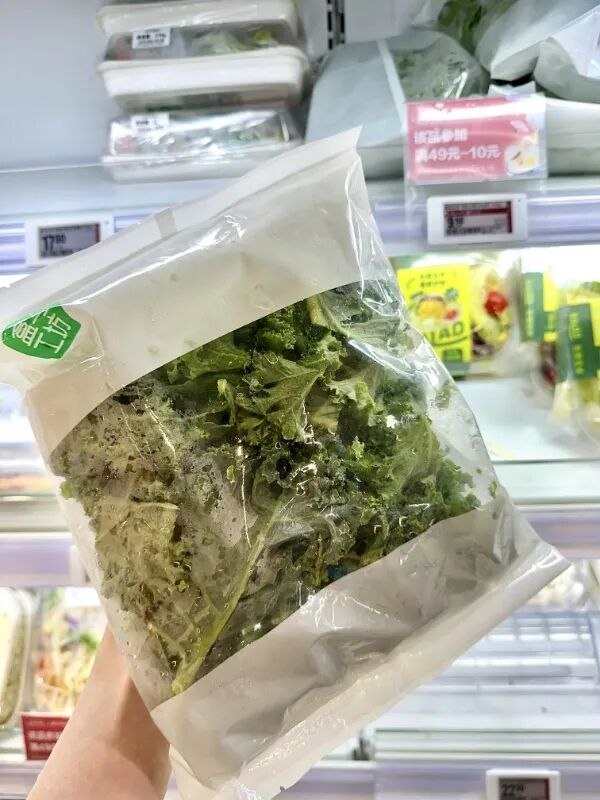
爆火一年,你已经被羽衣甘蓝包围了
36氪未来消费· 2025-09-26 10:29
Core Viewpoint - The rise of kale as a mainstream ingredient in the beverage industry represents a significant shift in consumer preferences towards health-oriented products, driven by innovative marketing and product development strategies [4][10][14]. Group 1: Market Introduction and Initial Success - Kale, previously an underutilized vegetable in China, was introduced into the beverage market by Heytea in July 2024, leading to the creation of the "Super Plant Tea" series [4][5]. - Within a year, Heytea's kale-based drinks achieved cumulative sales exceeding 100 million cups, indicating a strong market acceptance and consumer interest [4][10]. Group 2: Consumer Behavior and Marketing Strategy - The success of kale beverages is attributed to a shift in consumer perception, transforming kale from a health obligation to a desirable drink choice through innovative flavor combinations [7][10]. - The marketing strategy effectively linked kale with fitness and health trends, appealing to younger consumers' desire for both enjoyment and health benefits [10][14]. Group 3: Industry Response and Expansion - Following Heytea's lead, other major tea brands quickly introduced kale products, indicating a rapid industry-wide adoption of this trend [17][19]. - By late 2024, kale had become a staple ingredient across various beverage brands, with significant product launches from competitors like Nayuki and Luckin Coffee [17][19]. Group 4: Supply Chain and Agricultural Impact - The popularity of kale has led to a significant increase in its cultivation in China, with prices rising from less than 1 yuan per jin to around 5 yuan per jin due to heightened demand [30][32]. - Companies like Heytea are now engaging in customized planting practices to ensure high-quality kale supply, reflecting a deeper integration into the agricultural supply chain [30][34]. Group 5: Future Trends and Opportunities - The "Super Plant" trend is expected to continue, with kale serving as a gateway for other health-oriented ingredients to enter the mainstream beverage market [28][34]. - The beverage industry's focus on fresh ingredients and quality control is likely to drive further innovation and consumer interest in health-focused products [28][34].

小赛道,才有大机会
创业家· 2025-09-25 10:11
Core Viewpoint - Successful companies in China should focus on niche markets that others overlook, as small tracks can present significant opportunities. Companies should avoid spending in areas where they cannot compete and be willing to take bold risks in areas where they can succeed [1] Group 1: Course Overview - The "Black Horse Consumption Rise Selected Course" is scheduled from October 17 to 19 in Shenzhen, featuring renowned instructors from various industries [2][5] - The course aims to provide insights into product innovation and brand expansion, particularly in the context of the stock market era [6][8] Group 2: Japanese Manufacturing Insights - The success of Japanese companies since the 1980s serves as a model for emerging economies, emphasizing the transformation of technology into user-perceived value [7] - Companies like Sony and Uniqlo succeeded not solely due to advanced technology but by addressing consumer pain points and understanding consumption scenarios [7] Group 3: AI and Consumer Innovation - AI is reshaping the essence of consumption by redefining product value through algorithms, with future champions being those who can perfectly integrate demand with AI [7][10] - Examples include Plaud's recording card and Haivivi's toys, which leverage AI to enhance user experience and emotional connection [7] Group 4: Market Strategies - The course will cover strategies for becoming champions in niche markets amidst intense competition, focusing on AI's role in creating new product categories [10] - It will also address how to find a clear market position and leverage scalable innovative products for brand differentiation [10] Group 5: Globalization and Localization - The essence of globalization is to deeply bind China's supply chain capabilities with local market demands abroad, moving from simple export to localized coexistence [11] - Trust-building with local consumers is crucial for Chinese brands entering overseas markets, requiring a connection between brand stories and local needs [19]

谁能想到:一杯奶茶的尽头竞是地方的“土特产”
东京烘焙职业人· 2025-09-25 08:33
Core Viewpoint - The article discusses the emerging trend in the tea beverage industry where brands are focusing on local ingredients and cultural narratives to differentiate themselves in a saturated market, emphasizing the importance of regional elements as a driving force for innovation and consumer engagement [5][6][87]. Group 1: Ingredient Innovation - The primary path for brands to tap into local growth is through the deep exploration and innovative application of regional ingredients, with many leading brands already starting to leverage local food sources [7]. - Qingdao's "Chase Colorful Season" used clam broth as a tea base, achieving nearly 10 million views online in just ten days [9]. - Heytea has introduced products using local ingredients from Yunnan, such as wood ginger and papaya, creating unique flavor profiles [11][12]. - Other brands like Naixue and Luckin Coffee are also exploring local ingredients, with Naixue's "West Yunnan Tree Tomato" drink quickly becoming a top seller [15][17]. Group 2: Cultural Storytelling - The second core path is the localization of cultural IP narratives, allowing brands to connect emotionally with consumers [27]. - Brands like Tea Talk integrate local culture into their product development and marketing, creating a unique identity that resonates with consumers [28][30]. - Bawang Chaji has successfully incorporated local cultural symbols into their product offerings, enhancing emotional connections with consumers [34][46]. Group 3: Supply Chain Optimization - The third core path involves the localization and efficiency enhancement of supply chains, which is crucial for building competitive barriers in a crowded market [47]. - Brands are establishing long-term partnerships with local farmers and cooperatives to ensure stable supply and quality control [51][52]. - Companies like Mixue Ice City are leveraging global procurement networks to reduce costs while maintaining quality [54]. Group 4: Experiential Retail - The fourth core path focuses on creating immersive store experiences that serve as emotional touchpoints for consumers [62]. - Brands are investing in unique store designs that reflect local culture, attracting both tourists and locals [63][64]. - For instance, Bawang Chaji's stores feature cultural elements that transform beverage purchases into cultural experiences [65][66]. Group 5: Health and Wellness - The fifth strategy is the integration of local health wisdom into product offerings, creating health-oriented beverages that resonate with regional consumers [75]. - Brands are developing products that combine local ingredients with traditional health concepts, such as using Ningxia goji berries in innovative drinks [80][81]. - The focus on health and wellness is evident in products that emphasize nutritional benefits, appealing to health-conscious consumers [82][83]. Conclusion - The competition in the tea beverage market has evolved beyond taste to a deeper engagement with local culture and ingredients, indicating a shift towards a "deep customization" strategy based on regional characteristics [86][87].

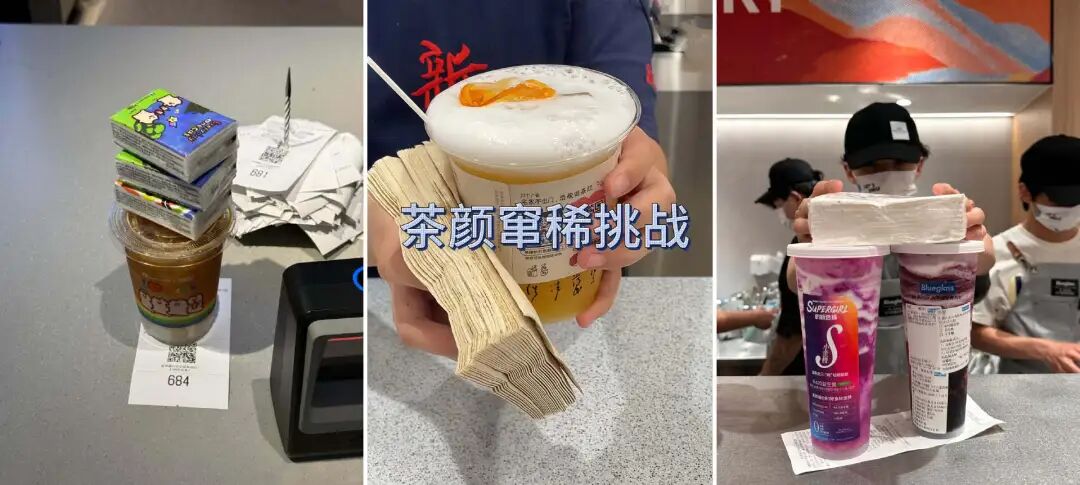
被逼疯了?茶饮营销“卷”进厕所
3 6 Ke· 2025-09-25 03:25
Core Insights - The article discusses a new marketing trend in the tea beverage industry, where brands are using bold and unconventional strategies to attract attention, particularly focusing on products that promote digestive health and relieve constipation [1][3][8] - The trend has led to a surge in social media content around these products, with a notable emphasis on the "laxative" effects of certain drinks, particularly from the brand blueglass, which has gained notoriety for its "畅" series [3][10] Marketing Strategies - Several brands, including blueglass, have adopted a straightforward and somewhat edgy marketing approach by highlighting the digestive benefits of their products, which has resonated with consumers [3][7] - Other brands, such as 奈雪的茶 and 沪上阿姨, have also launched products with similar "digestive" themes, indicating a broader trend within the industry [4][5] Consumer Behavior - There is a significant consumer interest in products that claim to alleviate constipation, with over 56 million individuals in China reportedly suffering from this issue, leading to a rise in related social media discussions [8][10] - The popularity of these "laxative" drinks has sparked a wave of consumer experimentation, with many users sharing their experiences online, further driving the trend [10][12] Industry Risks and Concerns - The marketing tactics employed by some brands have raised concerns about consumer health and safety, with reports of adverse effects such as severe diarrhea and gastrointestinal issues following consumption [10][11] - Critics argue that the use of humor and casual language around serious health issues can be disrespectful and may mislead consumers about the safety and efficacy of these products [11][12] Market Trends - The new-style tea beverage market in China is projected to reach a scale of 354.72 billion yuan in 2024, although growth rates are slowing, prompting brands to seek differentiation through unconventional marketing [13] - The saturation of the market has led to increased competition, with brands attempting to stand out by leveraging consumer trends and social media engagement [13][14]
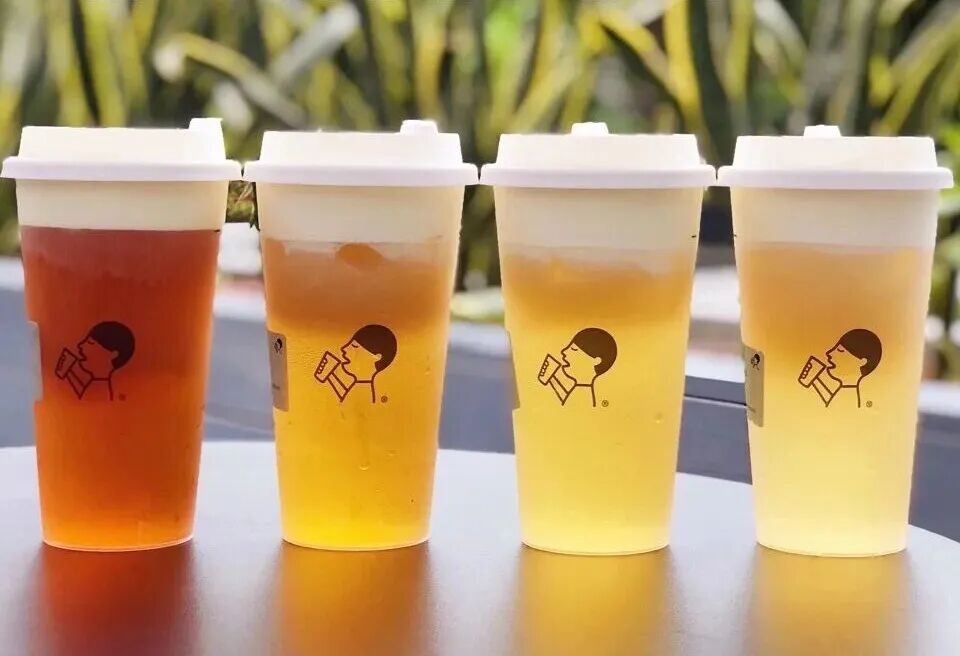
过去十年,哪些“超级奶茶”封神了?
3 6 Ke· 2025-09-25 00:52
Core Insights - The article discusses the evolution of the new tea beverage industry over the past decade, highlighting significant product innovations and trends that have shaped consumer preferences [2][3]. Industry Evolution - The new tea beverage industry has experienced a "golden decade" from 2015 to 2025, marked by the emergence of "super milk teas" and innovative product offerings [2][4]. - Key products that defined this period include cheese milk cap tea, fresh fruit tea, and various unique flavors that have captured market attention [4][6]. Major Trends and Innovations - 2016 saw the rise of cheese milk cap tea, with brands like Heytea and Naixue introducing fresh fruit tea combinations, which became a hallmark of the new tea beverage era [4][6]. - The introduction of brown sugar drinks in 2017, such as the "dirty tea" from brands like Dujiaoxiang, created a new market segment and led to widespread popularity [8][10]. - By 2018, the market witnessed a surge in niche products, with brands like Shuyi and Hushang Ayi focusing on unique ingredients like grass jelly and red bean milk tea, leading to rapid expansion [14][16]. Product Highlights - Notable products from 2019 to 2020 included the introduction of creamy toppings and the "eight-treasure porridge" style drinks, which redefined consumer expectations for beverage complexity [19][21]. - The trend of using lesser-known fruits in beverages gained traction in 2021, with products like oil citrus and yellow skin fruit becoming popular, showcasing a shift towards unique flavor profiles [21][24]. - The introduction of health-focused beverages in 2023, such as light milk tea and avocado yogurt smoothies, reflects changing consumer preferences towards healthier options [29][31]. Future Outlook - By 2025, the industry is expected to continue evolving towards richer flavors and healthier options, with products like mint milk green tea and Thai salted yogurt gaining popularity [33][35]. - The article emphasizes that despite market saturation, true product innovation and quality will drive the industry's future growth, highlighting the importance of continuous improvement in ingredients and flavor profiles [35].
投资人,还在投什么样的消费企业?
创业家· 2025-09-24 10:07
Core Viewpoint - Investors are focusing on consumer enterprises that can establish a strong main brand, achieve high standardization for rapid replication, and create a defensible ecosystem against imitation [1][8]. Group 1: Brand and Market Strategy - Successful consumer brands must have a standout product that breaks through the market, allowing for the incubation of smaller brands [1]. - High standardization enables rapid scaling and the establishment of a chain of stores [1]. - Companies need to think about defensibility and innovation before launching products to prevent imitation [1]. Group 2: Lessons from Japanese Brands - The success of Japanese brands in the 1980s was due to their ability to convert technology into user-perceived value, exemplified by Sony's Walkman and Uniqlo's comfortable basics [8]. - AI is reshaping consumer value by redefining product existence through algorithms, with future champions being those who integrate demand with AI effectively [8]. - Companies like Plaud and Haivivi are leveraging AI to create products that meet emotional and practical needs in the market [8]. Group 3: Consumer Market Insights - The rise of AI algorithms is creating new opportunities in consumer sectors such as food, electronics, and beauty, emphasizing the need for clear market positioning and innovative products [10]. - Companies must identify their market niche and innovate to capture new opportunities effectively [10]. Group 4: Globalization and Brand Localization - Successful globalization involves deeply integrating Chinese supply chain capabilities with local market demands, moving from simple export to localized coexistence [11]. - Building trust in overseas markets requires understanding local consumer needs and effectively communicating brand stories [11][20]. Group 5: Course Offerings and Expert Insights - The course features industry experts who will share insights on product innovation, market strategies, and the importance of data-driven decision-making in consumer goods [14][23]. - Participants will learn how to navigate cultural challenges in international markets and leverage technology for product development [19][25].


4元1杯的雪王柠檬水断货,其他茶饮凭啥躲过一劫?
3 6 Ke· 2025-09-24 04:09
Core Viewpoint - The recent shortage of lemon water at Mixue Ice City highlights significant risks within the industry, primarily due to rising lemon prices and supply chain vulnerabilities [1][5][11]. Group 1: Supply Chain and Pricing Issues - The average wholesale price of lemons in China has nearly doubled compared to the same period last year, reaching 15 RMB per kilogram as of September 17, 2025 [3]. - Mixue Ice City sells over 1 billion cups of its lemon water annually, generating approximately 4 billion RMB in sales, which constitutes 13% of the company's revenue for the first half of 2025 [5]. - The company has invested in its supply chain by controlling over 50% of high-quality fresh fruit resources in key lemon-producing areas, but this concentration has amplified risks when faced with climate disasters and global supply chain disruptions [8][11]. Group 2: Climate Impact and Global Supply Chain - Major lemon-producing regions in China, particularly Sichuan and Chongqing, have faced severe droughts and high temperatures, leading to expected reductions in lemon supply by 50-60% [8]. - Global supply chain issues, including adverse weather in other lemon-producing countries, are projected to decrease global lemon supply by 6% [8][10]. Group 3: Competitive Landscape and Risk Management - Other tea brands have successfully mitigated the lemon crisis by diversifying their sourcing strategies and using alternative lemon varieties that are less affected by climate issues [15]. - Brands like Starbucks and CoCo utilize a global sourcing model to minimize risks associated with local supply disruptions, while Mixue's low-price strategy has constrained its ability to pass on rising costs to consumers [15][19]. - The crisis underscores the vulnerability of Mixue's concentrated capital model, contrasting with competitors who have adopted more resilient supply chain strategies [20].

4元1杯的雪王柠檬水断货,其他茶饮凭啥躲过一劫?
首席商业评论· 2025-09-24 03:50
Core Viewpoint - The recent shortage of lemon water at Mixue Ice City highlights significant risks within the industry, particularly related to supply chain vulnerabilities and reliance on single-source raw materials [2][6][21]. Group 1: Supply Chain Issues - Multiple stores of Mixue Ice City have reported unavailability of lemon water, with staff confirming that the product is out of stock and expected to remain so for several days [2]. - The shortage is attributed to a sharp increase in lemon prices, with the average wholesale price reaching 15 RMB per kilogram, nearly doubling compared to the same period last year [4]. - Mixue Ice City has a significant dependency on lemons from specific regions, with over 70% of its supply sourced from Sichuan and Chongqing, making it vulnerable to climate-related disruptions [12]. Group 2: Financial Impact - The ice-fresh lemon water is a key product for Mixue Ice City, with annual sales exceeding 1 billion cups, translating to a revenue of approximately 4 billion RMB, which constitutes 13% of the company's total revenue of 14.87 billion RMB for the first half of 2025 [6][9]. - The company's low-price strategy, exemplified by the 4 RMB price point for lemon water, has pressured its supply chain, making it difficult to absorb rising costs when supply shortages occur [14][20]. Group 3: Competitive Landscape - Other tea brands have managed to avoid similar shortages by diversifying their supply sources and utilizing different lemon varieties that are less susceptible to climate impacts [16]. - Brands like Heytea and Starbucks employ global sourcing strategies and local processing to mitigate risks associated with supply chain disruptions [18]. - The contrasting business models and capital structures of competitors allow them to maintain higher profit margins, enabling them to better manage cost increases compared to Mixue Ice City, which has a lower gross profit margin of 31.6% [20]. Group 4: Broader Industry Implications - The lemon crisis reflects a broader conflict between capital concentration and diverse consumer demands, revealing the fragility of Mixue Ice City's single-capital model [21]. - The future of the tea beverage industry may shift from mere store expansion to a focus on controlling the entire supply chain, including cultivation and processing [21].

Perfat Technologies获融资;奈雪进入纽约;盒马CEO将兼任CMO
Sou Hu Cai Jing· 2025-09-23 15:20
Investment Dynamics - Finnish startup Perfat Technologies raised 20.879 million RMB in Series A funding, led by Newtree Impact and Beyond Impact. The company has developed a plant oil conversion technology that transforms liquid oils into solid functional fats, reducing fat content by 80% and calories by 30% compared to traditional fats, while adding dietary fiber [3] - McDonald's plans to invest 200 million USD (approximately 1.4 billion RMB) in regenerative agriculture practices across U.S. ranches over the next seven years, covering 4 million acres across 38 states. This is the largest investment by McDonald's in the U.S. to support regenerative agriculture [5] - M Stand acquired Shanghai restaurant brand RAC BAR, which was established in 2017 and operates several locations in Shanghai. The acquisition allows RAC BAR to maintain independent operations at its original location [8][9] - Regal Food, a UK baking manufacturer, acquired soft drink brand Suncrest, known for its tropical fruit-flavored beverages. This acquisition aims to expand Regal Food's beverage product portfolio and create new growth opportunities in the UK and international markets [10][12] - Saks Global is negotiating to sell 49% of its luxury department store Bergdorf Goodman for approximately 1 billion USD. The sale could help stabilize Saks Global's financial situation, which is burdened by over 4 billion USD in debt [13][15] - Winland Foods and La Doria merged to create a new food manufacturing entity valued at 4 billion USD, named Windoria. The merger aims to enhance product offerings and strengthen the supply chain for retailers and food distributors globally [18] - SPC has reached a cooperation agreement with Fonterra to produce Fonterra brand products at its Carrum Downs factory for overseas markets. This partnership is expected to enhance the flexibility of regional supply chains in the dairy processing sector [21] - Nayuki Tea launched a pop-up store in Flushing, New York, attracting significant foot traffic in a Chinese community area. The store's location is strategically chosen due to lower rental costs compared to Manhattan and the presence of other Chinese tea brands [23] - Jean-Marc Bellaiche, former CEO of Printemps, will become the CEO of Sani/Ikos Group, a resort operator, starting January 1. His transition reflects a trend of fashion industry leaders moving into the hospitality sector [24] - Hema announced a major organizational restructuring, with CEO Yan Xiaolei also taking on the role of Chief Merchandise Officer (CMO) to enhance product development and supply chain management, aiming to strengthen Hema's competitive position in the fresh and instant retail market [28]

