Stellantis N.V.

Search documents
零跑CEO朱江明回应一汽入股,称将保持创始团队控制权
Cai Jing Wang· 2025-12-29 02:25
Core Viewpoint - The CEO of Leap Motor, Zhu Jiangming, emphasized that the company will maintain control by the founding team despite the investment from FAW Group, which is expected to enhance the company's stability and risk resilience [1] Group 1: Investment and Control - FAW Group will become a strategic shareholder in Leap Motor through an increase in domestic shares, as per the investment and cooperation agreement signed on December 28 [1] - The agreement includes collaboration between FAW's subsidiary, Qixin Power, and Leap Motor for the joint development and production of plug-in hybrid and range-extended powertrains [1] Group 2: Market Outlook - Zhu Jiangming acknowledged that the automotive sector will face challenges in the coming years, indicating that having major shareholders and collaboration in components is a beneficial choice for Leap Motor [1]



2000名中国员工,冲向西班牙电池工厂!
鑫椤锂电· 2025-12-29 01:17
Core Viewpoint - The article highlights the commencement of a significant battery manufacturing project by CATL in Spain, marking it as the largest battery factory in the country's history with a total investment of €4.1 billion, expected to start production by the end of 2026 [1]. Group 1 - The factory will be located in Figueruelas, Aragon, and is anticipated to create over 3,000 jobs, making it one of the most important industrial projects in the region in recent years [1]. - Nearly 2,000 Chinese technicians will be deployed to Spain for the construction phase, with 1,847 coming from China, primarily from CATL, to ensure the factory meets the company's technical standards from the outset [1][2]. - The project is a collaboration between CATL and automotive group Stellantis, reflecting a strategic move to replicate successful operational models previously used in Germany and Hungary [2].


财经观察:西班牙为何“踩下电动汽车油门”?
Huan Qiu Wang· 2025-12-28 22:53
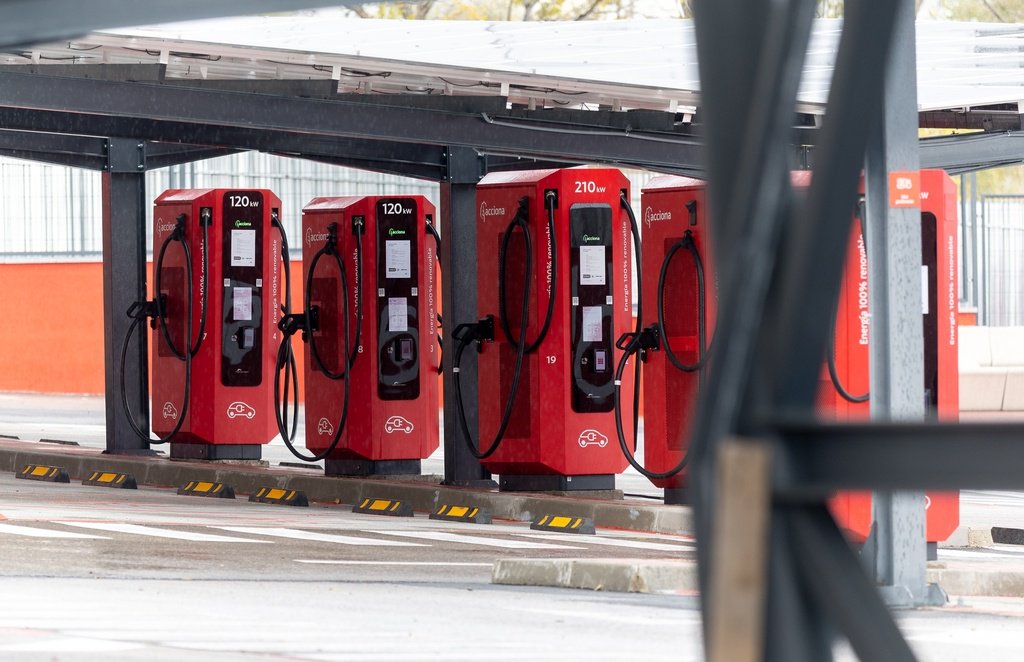
【环球时报驻德国特约记者 青木 环球时报特约记者 梁睿璇 环球时报记者 丁雅栀 杨沙沙】 编者的话: 随着欧盟委员会对2035年全面禁止销售新燃 油车的既定安排进行松绑,欧洲内部围绕汽车电动化路径的分歧进一步显现。根据欧盟委员会12月16日披露的方案,欧盟将允许非电动车在2035 年后继续销售。该计划获得德国、意大利等传统汽车生产大国及其本土车企的支持,但遭到仅次于德国的欧盟第二大汽车生产国——西班牙的明 确反对,不仅如此,西班牙还宣布了推进电动化转型的"西班牙汽车2030"计划。当德国、意大利等国试图为燃油车争取更多缓冲空间时,西班牙 却选择了一条截然不同的道路,积极布局电动化转型。这背后究竟是怎样的战略考量? 欧盟松绑燃油车禁令,西班牙 " 逆势 " 发声 欧洲新闻电视台近日报道称,欧盟委员会16日宣布,从2035年起,总部位于欧盟的汽车制造商必须将其二氧化碳排放量减少90%,而非此前欧盟 法律规定的100%。制造商需通过使用欧盟生产的低碳钢或使用可持续燃料来抵消剩余10%的排放量。 据路透社报道,在推动欧盟委员会调整"2035燃油车禁令"上,包括德国、意大利、保加利亚和捷克在内的多个欧盟成员国,联合欧洲 ...
向上,领跑 零跑汽车举办成立十周年发布会
Jin Rong Jie· 2025-12-28 14:34
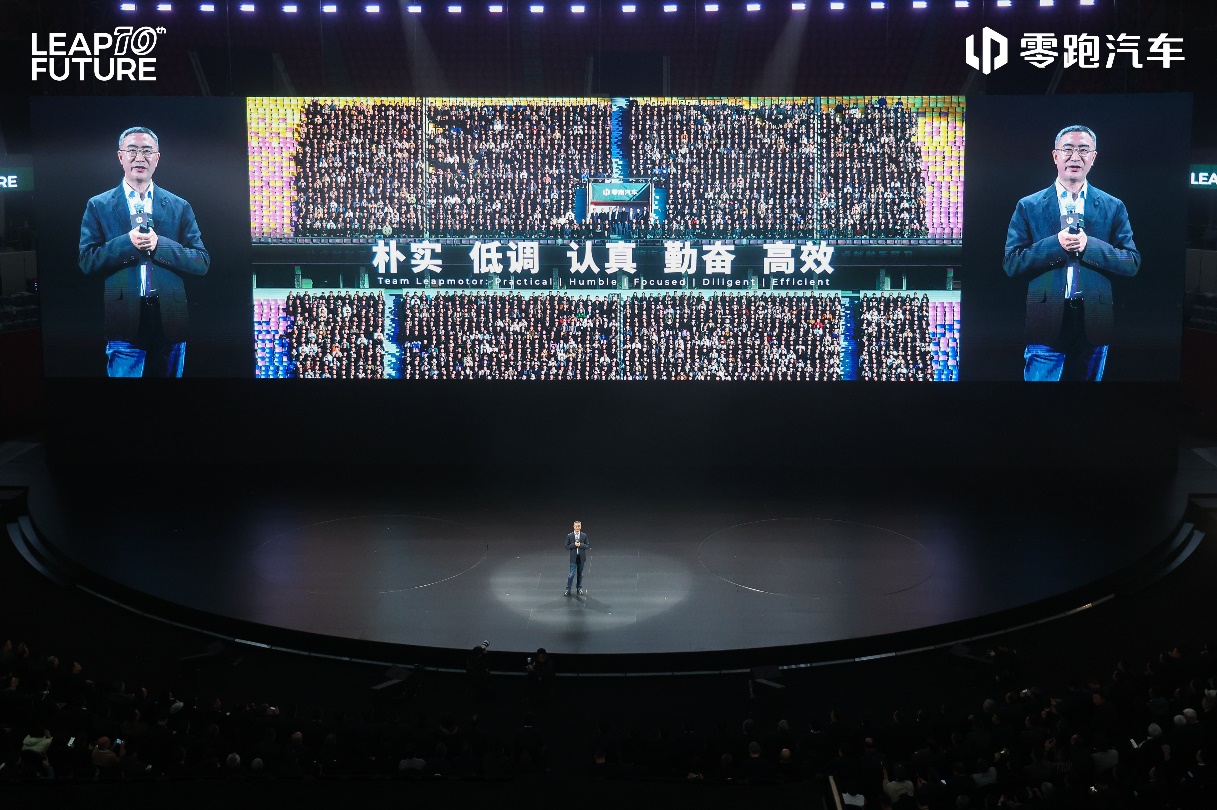
Core Insights - Leap Motor celebrated its 10th anniversary with a strategic vision for the next decade, showcasing its flagship models D19 and D99, emphasizing its technological and product strength [1][19][22] Group 1: Company Overview - Leap Motor has evolved from a newcomer in the automotive industry to a leading player among nearly a hundred new forces in car manufacturing, driven by a culture of engineering and long-term commitment [3][14] - The company has achieved cumulative deliveries exceeding 1.2 million vehicles, with an expected annual sales volume of nearly 600,000 units in 2025, maintaining its position as the top new force in China's automotive sector [3][10] Group 2: Technological Advancements - Leap Motor emphasizes "full-domain self-research," covering 65% of the vehicle's cost with core technologies, and maintains a high R&D personnel ratio of 80% [5][7] - The company has developed key technologies such as the first automotive-grade intelligent driving chip in China and integrated battery and chassis technology, making advanced features accessible to the mainstream market [5][7] Group 3: Product Strategy - Leap Motor focuses on creating high-value products that are competitively priced, with a diverse product lineup that includes sedans, SUVs, and MPVs, all under 300,000 yuan [8][19] - The D series models, including the D19 SUV and D99 MPV, are positioned as luxury offerings with advanced features and flexible configurations, targeting middle-class families [17][19] Group 4: Market Expansion - The company has established a global presence, with operations in 35 countries and regions, and over 800 overseas sales and service outlets, marking a significant step in its internationalization strategy [11][14] - Leap Motor's collaboration with Stellantis has accelerated its global market entry, enhancing its brand internationalization efforts [11][14] Group 5: Financial Performance - Leap Motor has achieved sustainable profitability, becoming the second new force in the industry to reach profitability, supported by strategic investments and government backing [14][22] - The company aims to reach an annual sales target of 4 million vehicles by 2035, with a goal of selling 1 million vehicles by 2026 [22][24] Group 6: Future Strategy - The company plans to focus on five key areas for the next decade: technological innovation, product innovation, ecosystem building, local industrial clusters, and refined marketing management [24][26] - Leap Motor aims to transition from a follower to a leader in technological innovation within the smart electric vehicle sector [24]

2025年12月28日,零跑汽车在杭州奥体中心体育馆(小莲花)举办十周年发布会。...
Xin Lang Cai Jing· 2025-12-28 14:33
Core Insights - Leap Motor celebrated its 10th anniversary on December 28, 2025, at the Hangzhou Olympic Sports Center, showcasing its journey in the automotive industry and unveiling its strategic plan for the next decade [1] - The event featured the global interior debut of the D19, the first luxury flagship SUV from the D series, and the D99, the first luxury flagship MPV, highlighting the company's technological and product capabilities [1] - Strategic partners, including China FAW Group and Stellantis, along with users, dealers, investors, and media representatives, attended the milestone event [1] Company Highlights - Leap Motor's founder, chairman, and CEO, Zhu Jiangming, reflected on the company's ten-year journey in vehicle manufacturing during the anniversary event [1] - The launch of the D series vehicles signifies Leap Motor's commitment to innovation and luxury in the electric vehicle market [1] Industry Context - The presence of major strategic partners at the event underscores the collaborative efforts within the automotive industry to advance electric vehicle technology and market presence [1]
Brown Forman, Carvana, And Stellantis Are Among Top 10 Large Cap Losers Last Week (Dec. 22-Dec. 26): Are the Others in Your Portfolio? - Carvana (NYSE:CVNA), General Mills (NYSE:GIS), Samsara (NYSE:IO
Benzinga· 2025-12-28 12:31
Group 1: Stock Performance - Brown Forman Inc (NYSE:BF) decreased by 9.64% this week, with Citigroup analyst Filippo Falorni downgrading the stock from Neutral to Sell and lowering the price forecast from $30 to $27 [1] - Carvana Co. (NYSE:CVNA) fell by 5.73% this week, but Evercore ISI Group analyst Michael Montani maintained an In-Line rating and raised the price forecast from $420 to $425 [1] - Stellantis (NYSE:STLA) slumped by 4.77% this week, as the company pushed back against the European Union's revised vehicle emissions plan, warning it undermines growth incentives [2] - Starbucks Corporation (NASDAQ:SBUX) decreased by 4.68% this week, with the Starbucks Workers United union protesting at the company's Seattle headquarters [2] - Samsara Inc. (NYSE:IOT) fell by 4.71% this week [3] - Ryan Specialty Holdings, Inc. (NYSE:RYAN) decreased by 3.98% this week [3] - PepsiCo, Inc. (NASDAQ:PEP) fell by 3.63% this week, with Citigroup analyst Filippo Falorni maintaining a Buy rating and raising the price forecast from $165 to $170 [3] - Texas Pacific Land Corporation (NYSE:TPL) fell by 4.46% this week [3] - On Holding (NYSE:ONON) decreased by 2.54% this week [3] - General Mills, Inc. (NYSE:GIS) fell by 1.53% this week, with Morgan Stanley analyst Megan Alexander maintaining an Underweight rating and lowering the price forecast from $48 to $47 [4]


Dow Jones Today: Why is Dow down today as the US stock market paused after record highs?
The Economic Times· 2025-12-26 17:01
Market Overview - The U.S. stock market experienced a cooling period following a strong pre-Christmas rally, with the Dow Jones Industrial Average falling 96.62 points, or 0.20%, to 48,634.54 [1][15] - The S&P 500 slipped 0.07% to 6,927.29, while the Nasdaq Composite remained nearly flat, shedding just 0.21 points to hold at 23,613.10 [1][15] - Traders reduced rate-cut bets, pricing in under 15% odds for a Federal Reserve move next month, indicating a "higher for longer" monetary environment [2][4][15] Technology Sector - Nvidia (NVDA) gained 1.29% to reach $191.04, driven by a strategic clarification regarding its relationship with AI chip startup Groq, confirming a non-exclusive licensing deal for Groq's Language Processing Unit technology [7][8][15] - The integration of Groq's leadership into Nvidia's ranks aims to scale new architecture, allowing Nvidia to diversify its hardware portfolio and maintain dominance over competitors like Google [8][15] Automotive Industry - Legacy automakers such as Ford, General Motors, and Stellantis are recalibrating strategies due to a significant decline in electric vehicle (EV) demand, exacerbated by the expiration of federal EV tax credits and changes in fuel economy standards [9][10][15] - Tesla (TSLA) fell 1.55% to $477.86, reflecting the broader cooling of the EV sector, while concerns arise that reduced EV investments may lead to a competitive disadvantage if global demand for sustainable transport rebounds [10][15] Retail Sector - Target (TGT) rose 1.70% to $98.17 following reports of activist investor Toms Capital Investment Management building a significant stake in the company, with hopes of reversing Target's 26% decline in 2025 [11][15] Commodities Market - Gold futures surged to a new lifetime high, briefly touching $4,561.40 per ounce, representing a 70% annual gain, the largest since 1979 [12][15] - Silver prices breached the $75 per ounce milestone for the first time, with March delivery futures jumping 4% to reach $75.49 per ounce, marking a 158% year-to-date increase [13][15] - The rally in precious metals is attributed to geopolitical tensions and a weakening U.S. dollar, leading investors to seek safe-haven assets [14][15]


Big 3 automakers take $52.1 billion hit from EV pivot
Yahoo Finance· 2025-12-26 14:24
Core Viewpoint - The automotive industry, particularly the Big Three (Stellantis, Ford, and GM), is undergoing a significant shift away from electric vehicles (EVs) towards hybrid and gas-powered models due to declining EV demand and changing regulatory environments [4][5][15]. Stellantis - CEO Antonio Filosa has shifted the company’s strategy to accommodate gas engines in the Dodge Charger and is discontinuing the base version of its EVs in favor of higher trims [1]. - Stellantis will not release an EV-only Ram pickup, opting instead for an extended-range EV hybrid version, and may cancel existing EV models in Europe and the US [2]. - The company announced cash payments of €6.5 billion ($7.7 billion) over four years and will take charges totaling €14.7 billion ($17.34 billion) against its 2025 second-half results, although these charges will not affect adjusted operating income [3]. - Stellantis has reported a cumulative charge of $26 billion as it resets its EV business, contributing to a total of $52.1 billion in charges across the Big Three automakers [6]. Ford - Ford has pivoted to a hybrid and extended-range EV strategy, resulting in a $19.5 billion charge related to this shift [11]. - The company has canceled the existing form of the Lightning EV pickup and a planned electric commercial van, citing a lack of customer demand [12]. - Despite the significant charge, Ford's stock rose after the announcement, indicating investor acceptance of the strategic reset [12]. - Analysts view Ford's decision as a necessary strategic reset, although it may face challenges if consumer preferences shift again in the future [13][16]. General Motors (GM) - GM continues to invest in EVs, with plans for new models like the Chevrolet Bolt and Cadillac Celestiq, despite facing challenges from declining EV demand and the loss of tax credits [18][19]. - The company took a $6 billion charge in December related to its EV strategy, bringing its total EV write-down to $6.6 billion [19]. - GM is transitioning to include hybrids in its portfolio, investing $4 billion to adapt factories for hybrid and gas-powered vehicles [20]. - Analysts believe GM is well-positioned to navigate the current market due to its operational consistency and diverse portfolio [22][24].


汽车行业双周报(20251208-20251221):26年汽车出口思考(1):分析中国车企对欧洲出口的可行性-20251226
Hua Yuan Zheng Quan· 2025-12-26 12:36
Investment Rating - The investment rating for the automotive industry is "Positive" (maintained) [1] Core Insights - The Western European passenger car market is large, with significant room for improvement in the penetration rate of new energy vehicles (NEVs). The annual sales of passenger cars in Western Europe exceed 10 million units, and the NEV penetration rate increased by 6 percentage points year-on-year to 29% in the first ten months of 2025. Countries with high passenger car sales, such as Germany, the UK, France, Spain, and Italy, have NEV penetration rates generally below 35% [3][6][12] - The growth of the European NEV market in 2026 is supported by policy foundations, including comprehensive EU regulations and incentives for NEV adoption. The EU aims for climate neutrality by 2050, and while there are adjustments to the 2035 "zero-emission" target, the overall goals remain intact [12][15] - With Chinese manufacturers accelerating their presence in Europe, it is expected that NEV exports from China to Europe will see rapid growth in 2026. Currently, major shares in the Western European NEV market are held by manufacturers like Volkswagen and BMW, but companies like BYD are increasing their market share [20][28] Summary by Sections 1. Western European Passenger Car Market - The market is characterized by a significant annual sales volume exceeding 10 million units, with a NEV penetration rate that has room for growth. The focus will be on B/SUV-B/C/SUV-C models to enhance NEV penetration [3][6][10] 2. Policy Support for NEV Growth in 2026 - The EU has established clear targets for NEV transition, with penalties and incentives for carbon emissions. The 2026 NEV market growth is expected to be bolstered by continued or new subsidies in key European countries [12][15] 3. Growth of Chinese Manufacturers in Europe - Chinese manufacturers are expected to see significant growth in NEV exports to Europe, with companies like BYD and Geely leading the charge. The expansion of sales networks and local production will contribute to this growth [20][28]


全球第三的失守与进攻丨年度观察
起点锂电· 2025-12-26 10:05
Core Viewpoint - 2025 marks the beginning of a new growth cycle for lithium batteries and a global showdown, with Korean battery companies intensifying their counterattacks [3] Group 1: Market Dynamics - LG Energy Solution, once a leading competitor to CATL, is currently navigating between losing ground and making offensive moves [4] - The global demand for electric vehicles (EVs) is slowing down, impacting LG Energy's market position. For instance, LG Energy's battery installation volume from January to October 2025 was 86.5GWh, a year-on-year increase of only 12.8%, significantly lower than the industry average of 35% [8][9] - LG Energy's market share has dropped below 10%, now standing at 9.3%, while CATL and BYD hold 38.1% and 16.9% respectively [8][9] Group 2: Financial Performance - LG Energy's financial performance is under pressure, with revenue declining. In Q1 2025, revenue was 6.3 trillion KRW, down 2.9% quarter-on-quarter, while Q2 revenue fell to 5.6 trillion KRW, a decrease of 11.2% [11] - Despite a rise in profits, LG Energy's reliance on subsidies and tax credits is evident, with significant portions of profits attributed to these incentives [11][12] Group 3: Strategic Shifts - LG Energy is focusing on lithium iron phosphate (LFP) batteries, aiming to strengthen its position in the energy storage system (ESS) market. The company has secured over 300 billion KRW in LFP battery orders from Tesla, effective from August 2027 [15] - The company plans to increase its ESS battery production capacity from 30GWh this year to over 50GWh next year, reflecting a strategic pivot towards energy storage [15][16] - A recent organizational restructuring aims to unify production across different product lines, enhancing flexibility in response to market demands [16] Group 4: Future Outlook - The transition to energy storage may take 2-3 years to yield significant results for LG Energy, as the company faces challenges in balancing costs and profits within the LFP battery supply chain [18]