
小鹏汇天

Search documents
低空经济未来可期 访北京航空航天大学教授、知识产权经济研究所所长沈映春
Jin Rong Shi Bao· 2025-05-23 04:39
Core Viewpoint - The low-altitude economy is rapidly developing and becoming an integral part of daily life and production, with significant implications for economic growth and quality of life in China [1][5]. Application Scenarios - The low-altitude economy is being applied in diverse fields such as agriculture, logistics, tourism, public services, and urban air mobility [2][3][4]. - In agriculture, drones are utilized for irrigation, fertilization, and crop monitoring, with a reported 251,000 agricultural drones operating over 2.67 billion acres, covering 30% of the country's arable land by the end of 2024 [2]. - In logistics, drone delivery can reduce costs by 50% in remote areas, with companies like SF Express conducting over 40,000 flights in Tibet, improving delivery efficiency by 70% [3]. - The tourism sector is seeing growth in low-altitude experiences, with the number of licensed glider pilots increasing from over 10,000 in 2019 to 20,000 in 2024, indicating market expansion [3]. Economic Impact - The low-altitude economy is characterized by its intelligent, green, and integrated features, driving advancements in aviation manufacturing, materials science, and automation [5][6]. - It is expected to create synergies between the aviation industry and other sectors, enhancing overall economic efficiency and providing new opportunities for industrial transformation [6]. - The market size for China's low-altitude economy is projected to reach 1.5 trillion yuan by 2025 and 3.5 trillion yuan by 2035, highlighting its vast potential [6]. Infrastructure and Safety - The development of low-altitude economy infrastructure is crucial for enhancing interconnectivity and logistics efficiency [6]. - Safety is a core element for sustainable development, with the need for comprehensive safety management, regulatory frameworks, and emergency response mechanisms [8]. Challenges and Solutions - The low-altitude economy faces challenges such as immature business models, insufficient consumer market cultivation, and inadequate infrastructure [9][10]. - To address these issues, companies should focus on technological innovation to reduce production costs and target specific consumer groups, while the government can provide tax incentives and subsidies to stimulate market growth [11].
小米YU7正式发布!雷军:价格19万9不可能,全面对标Model Y;高合汽车复活,欲降薪召回员工;深圳知名大卖森合创新宣布解散
雷峰网· 2025-05-23 00:11
Group 1 - Shenzhen's well-known company Senhe Innovation announced its dissolution due to team restructuring, manufacturing difficulties, and funding constraints, leading to the shutdown of all operations [4][5][6] - The Oasa R1, despite its innovative features, has limitations in its LiDAR-Vision Perception technology, making it less competitive compared to domestic alternatives that can cover larger areas [5][6] - Xiaomi launched the YU7, a luxury high-performance SUV, with a focus on safety and advanced technology, aiming to compete directly with Tesla's Model Y [10][11] - High合汽车 has received a $100 million investment from a Lebanese businessman, marking its revival and plans to recall employees, albeit with salary reductions [13][15] - Li Auto has adjusted its annual production target to 640,000 units, down from 700,000, while also implementing cost control measures to ensure profitability [22][23] Group 2 - Ford's CEO praised the rapid R&D pace of Chinese automakers, noting that they can develop new vehicles in half the time compared to traditional manufacturers [28] - Tesla faced a significant drop in sales in Europe, with April sales plummeting 46.2% year-on-year, highlighting challenges in the competitive electric vehicle market [32] - Google announced plans to integrate advertisements into its AI search mode, reflecting a shift in its revenue strategy amid growing consumer skepticism about AI-related advertising [33]





银禧科技(300221) - 300221银禧科技投资者关系管理信息20250523
2025-05-22 18:22
Company Overview - Guangdong Yinhui Technology Co., Ltd. was established in 1997, focusing on high-performance polymer new materials research, production, and sales [2][3]. - The company has established production and R&D bases in multiple locations, including Dongguan, Suzhou, and Vietnam, to support international expansion [3]. Production Bases - The Yinhui Polymer New Materials Industrial Park in Dongguan has been put into operation, focusing on automated production of modified plastics and 3D printing materials [4]. - The Zhuhai production base is operational, producing electronic chemicals for 5G applications [4]. - The Anhui Chuzhou base, built by the government, is also operational, primarily producing modified polymer materials [4]. Product Focus and Market Strategy - The company has shifted its product structure towards high-margin products and is focusing on niche markets in emerging fields such as consumer electronics and robotics [6][11]. - The company has a stable customer base in industries like electronics, low-altitude aircraft, and household service robots [7][11]. Financial Performance - The company's gross margin is positioned in the upper-middle range compared to peers in the modified plastics industry [9]. - Recent years have seen stable growth in operating performance, despite challenges such as industry competition and macroeconomic factors [11]. Customer Segmentation - The customer base is diverse, with low revenue concentration across various sectors, including traditional home appliances and emerging technology fields [9][11]. - The company is actively developing relationships with new clients in high-margin sectors while maintaining its traditional customer base [12]. Challenges and Future Outlook - The company faces external uncertainties from macroeconomic conditions and policy changes, but internal uncertainties are minimal [11]. - Future growth is anticipated through continuous product development and market expansion, particularly in high-margin segments [11][12]. R&D and Innovation - The R&D team is stable, composed mainly of graduates in materials and chemical engineering, with a focus on developing products for leading companies in emerging sectors [17]. - The company has engaged in preliminary technical exchanges regarding lightweight materials for drones but has not yet established business partnerships [14]. Regulatory and Compliance - The company has no military qualifications and does not supply military products, although it has previously developed lightweight materials for aerospace applications [19][20]. - The company adheres to accounting principles and regulations regarding asset impairment and credit provisions, ensuring transparency in financial reporting [12].

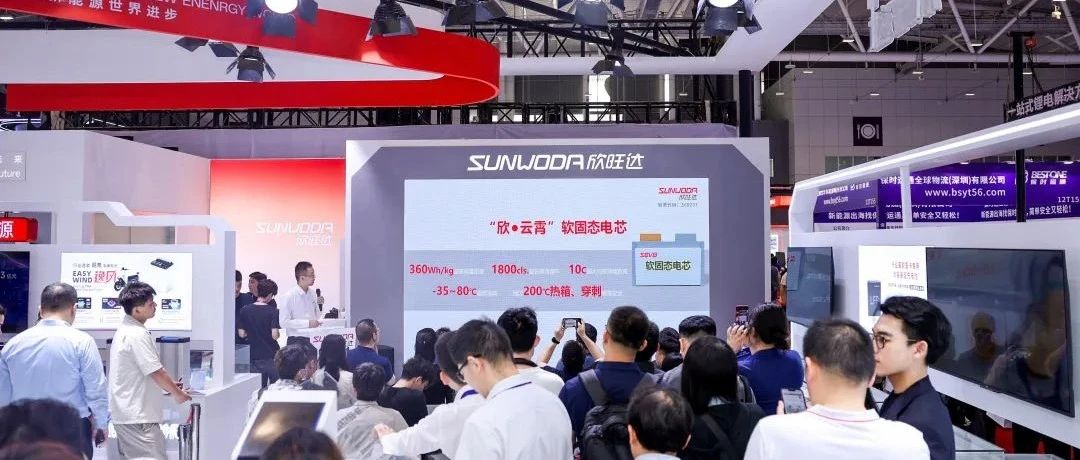
飞行汽车量产倒计时 香山股份战略卡位低空经济蓝海迎先发优势
Quan Jing Wang· 2025-05-21 05:44
Group 1 - The production license application for Xiaopeng Huitian's flying car "land aircraft carrier" (code: X3-F) has been accepted, marking a significant step in the mass production system of flying cars in China [1] - The low-altitude economy is accelerating in China, with companies like Xiangshan Co., Ltd. strategically positioned to benefit from this emerging industry [1] - Xiangshan Co., Ltd.'s subsidiary, Junsheng Group, is a key partner for leading flying car companies, providing integrated charging and power management systems, expected to enter mass production by 2026 [1] Group 2 - Morgan Stanley predicts the global flying car market will reach $9 trillion, with China's potential market size at $2.1 trillion, and flying cars expected to grow at a compound annual growth rate of 46.2% over the next five years [2] - China Galaxy Securities believes new products in the low-altitude economy will provide new performance growth points for Xiangshan Co., Ltd. [3] - Xiangshan Co., Ltd. is a global tier-one supplier for major automotive brands, with projected revenue from new energy vehicle parts and charging systems reaching 987 million yuan in 2024, reflecting a compound annual growth rate of 21.08% [3] Group 3 - Xiangshan Co., Ltd. is transitioning from a traditional auto parts manufacturer to a leading provider of smart mobility solutions, with low-altitude economy being a key strategic focus [1] - The company has established a strong global operational capability with R&D centers in China, Germany, and North America, and 15 production bases worldwide [3] - The integration of Junsheng Electronics as a controlling shareholder has enhanced Xiangshan Co., Ltd.'s global supply chain resources and operational synergy [3]

懂AI会“飞行”,这个专业要培育低空“全能战士”
Ke Ji Ri Bao· 2025-05-20 21:51
Group 1 - The Ministry of Education has added 29 new undergraduate majors, including Low Altitude Technology and Engineering, to the 2025 directory, aiming to cultivate strategic and urgently needed talents in response to industry demands [1][2] - The establishment of the Low Altitude Technology and Engineering major at South China University of Technology (SCUT) is designed to meet the growing demand for high-quality composite talents in the rapidly developing low-altitude economy, particularly in the Guangdong-Hong Kong-Macao Greater Bay Area [4][6] - The new major integrates various cutting-edge technology fields, including low-altitude vehicle design, communication, navigation, and intelligent control, to prepare students for roles in the low-altitude economy [4][6] Group 2 - The Guangdong province has released development plans for the low-altitude economy, aiming to create a world-leading low-altitude industry hub, with cities like Guangzhou targeting commercial operations of manned flights [2][4] - The low-altitude economy is projected to reach a market size of 2.5 trillion yuan by 2030 and 3.5 trillion yuan by 2035, indicating a significant talent gap in this strategic emerging industry [8][9] - SCUT emphasizes interdisciplinary learning and practical training, requiring students to engage in hands-on projects and innovation activities to enhance their skills and meet industry needs [7][9]
高工独家 | 专访欣旺达:eVTOL产业化加速,“正向开发”如何直击电池痛点
高工锂电· 2025-05-20 10:15
Core Viewpoint - The article discusses the advancements and challenges in the electric aviation battery sector, particularly focusing on eVTOL (electric Vertical Take-Off and Landing) technology, highlighting the need for high energy density, power density, and safety standards in battery development [4][6][21]. Group 1: Industry Events - The 2025 High-Performance Sodium Battery Industry Summit is scheduled for June 9, 2025, at the Shangri-La Hotel in Suzhou [2]. - The 2025 High-Performance Solid-State Battery Technology and Application Summit will take place on June 10, 2025, at the same venue [3]. Group 2: Low Altitude Economy - The low-altitude economy is experiencing a technological upgrade and accelerated commercialization, with eVTOL development moving towards certification stages [3]. - Multiple companies, including Xpeng and Eve Air Mobility, have received certification applications for their eVTOL models, indicating a shift towards a period of intensive certification issuance starting in 2026 [3]. Group 3: Battery Requirements - The electric aviation sector imposes stringent requirements on power batteries, necessitating a balance between energy density, power characteristics, and safety [6][20]. - A battery system's energy density increase from 200Wh/kg to 500Wh/kg can enhance eVTOL's effective payload by nearly 25% or double its cruising range [6]. Group 4: Company Innovations - XINWANDA has developed specialized batteries for eVTOL applications, including a 320Wh/kg energy density battery that has entered mass production [5][11]. - The company is pursuing a "forward development" strategy, focusing on both cylindrical and soft-pack solid-state battery technologies to meet the diverse needs of electric aviation [8][10]. Group 5: Technical Innovations - XINWANDA's eVTOL battery, "XIN · YUNXIAO 1.0," has achieved an energy density of 320Wh/kg and supports a wide temperature range and high cycle life [11]. - The company has also developed a second-generation product, "XIN · YUNXIAO 2.0," with a maximum energy density of 360Wh/kg and enhanced safety features [11]. Group 6: Market Outlook - The demand for eVTOLs is projected to exceed 16,000 units in China by 2030, with significant market potential for aviation-grade batteries [23]. - XINWANDA has established deep partnerships with leading eVTOL companies, positioning itself to capitalize on the emerging market opportunities [23][24].

eVTOL适航认证提速,低空经济商业化“有条件”落地
2 1 Shi Ji Jing Ji Bao Dao· 2025-05-19 10:14
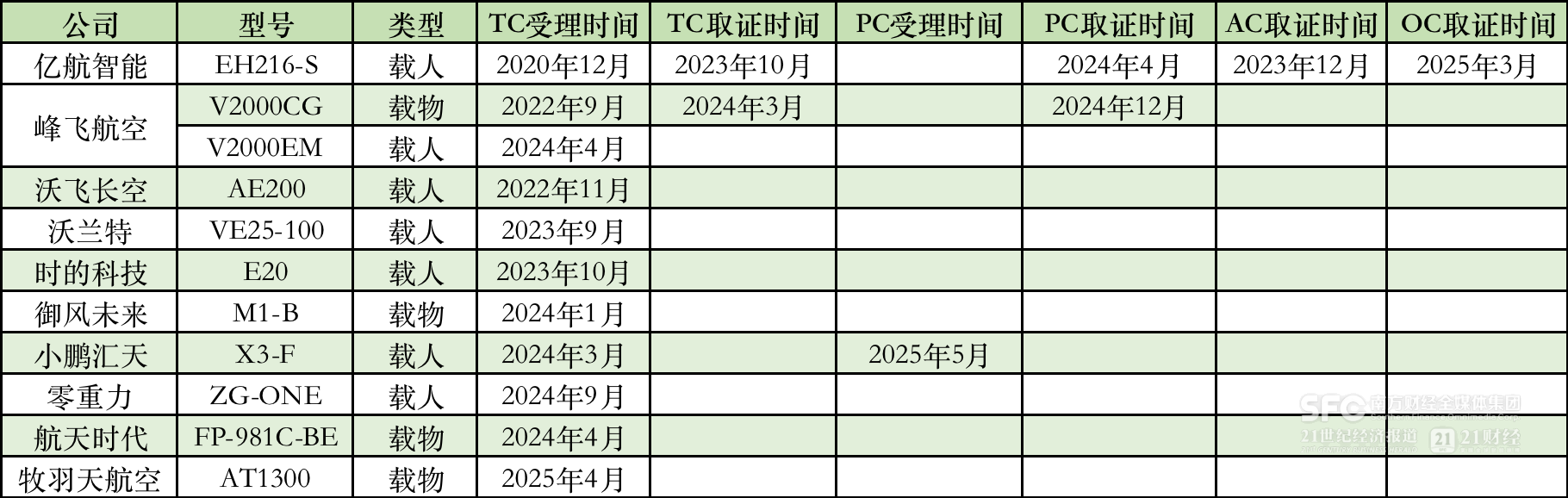
Core Viewpoint - The eVTOL industry is experiencing significant progress in airworthiness certification, with companies like Xiaopeng Huitian and Muyu Tian Aviation making strides in obtaining necessary certifications for their aircraft models [1][3]. Certification Progress - Xiaopeng Huitian's "Land Carrier" flying vehicle (X3-F) had its production license application accepted on May 9, 2023, while Muyu Tian Aviation's AT1300 model's type certificate application was accepted on April 30, 2023 [1]. - The eVTOL aircraft must obtain three key certifications: Type Certificate (TC), Production Certificate (PC), and Airworthiness Certificate (AC) to be legally operated [2]. Industry Insights - The TC is considered the most challenging certification, typically taking 2-3 years to obtain, while the PC and AC are less difficult [3]. - Currently, only two companies, EHang and Fengfei Aviation, have successfully obtained TC, with EHang's EH216-S taking nearly three years for the process [3][4]. Commercial Operations - EHang and Fengfei Aviation have both obtained their PC after receiving TC, with EHang being the only company to hold all four certifications (AC, TC, PC, OC) in China [4]. - The first operational certificate (OC) was issued to EHang's subsidiary and a joint venture, allowing for low-altitude flight services, primarily for sightseeing and experience flights [5][6]. Future Outlook - The issuance of the OC marks a significant step towards the commercialization of low-altitude passenger services and urban air mobility [6]. - EHang plans to expand its operations to include urban commuting and eventually achieve fully autonomous low-altitude transportation services [6].

中国低空经济商业化进阶,订单与供应链量产潮起
2 1 Shi Ji Jing Ji Bao Dao· 2025-05-16 10:40
Core Insights - The low-altitude economy in 2024 is expected to be driven by strong policy support, while 2023 has seen significant commercial momentum [1] - EVTOL manufacturers are advancing commercial operations in parallel with airworthiness certification, rather than waiting for certification to be completed [1][4] - 2025 is projected to be the commercial launch year for China's low-altitude economy, with several manufacturers expected to receive confirmed orders [1] Group 1: Commercialization and Orders - EHang has obtained the world's first operational qualification certificate for unmanned aerial vehicles, marking a significant step towards commercial operations [1] - Major EVTOL manufacturers, including Volant, Time Technology, and Pinnacle Aviation, have publicly announced multiple procurement orders this year [1][2] - Pinnacle Aviation has announced four procurement orders this year, with buyers including financial leasing companies and local governments [2] Group 2: Production and Supply Chain - EVTOL manufacturers are ramping up production facilities, with XPeng's flying car manufacturing base expected to be completed by Q3 2025 [2][5] - Financial leasing companies are playing a crucial role in supporting the aviation industry's development by providing funding and participating in market expansion [3][4] - XPeng's flying car manufacturing base has reached 70% completion, with plans for mass production and delivery by 2026 [5][6] Group 3: Battery Technology and Innovation - Battery manufacturers are increasingly focusing on the EVTOL market, with companies like EVE Energy and CATL providing next-generation lithium batteries for XPeng's flying cars [6] - The energy density of aviation batteries is a critical factor for the commercial viability of EVTOLs, with safety and high discharge rates being key requirements [6][7] - New battery technologies, such as semi-solid batteries, are being developed to meet the demands of the EVTOL industry [6][7] Group 4: Emerging Market Opportunities - The development of the low-altitude economy is creating new market opportunities, including EVTOL simulators, which combine features of traditional aircraft simulators with electric aviation [8][9] - Companies are beginning to explore and deliver EVTOL simulation solutions, indicating a growing interest in training and operational readiness for the EVTOL sector [9]
我国企业攻克工业零部件“身份证”技术
Zhong Guo Chan Ye Jing Ji Xin Xi Wang· 2025-05-15 22:01
近日,一批国产激光刻蚀防伪柔性特种标签交付并应用在小鹏汇天汽车上。这是我国企业在技术和工艺 上首次突破防伪特种标签的产品,并达到国外相同水准,标志着我国攻克工业零部件"身份证"技术,打 破了国外技术垄断。 取得这一技术突破的企业,是徐州高新区企业中科宝溢视觉科技(江苏)有限公司(以下简称"中科宝 溢")。中科宝溢董事长兼首席科学家张保平接受本报采访时表示,攻克工业零部件"身份证"技术,将助 力国内企业采购成本下降约50%,同时在产品供应上不再受国外垄断限制。 防伪标签市场应用广泛 中科宝溢是一家集高端影像显示材料研发、生产、销售于一体的高科技企业,是江苏省专精特新中小企 业。其团队于2020年荣获中国创新创业大赛深圳赛区新材料组一等奖。2021年,徐州高新区以招商引资 方式,将其从深圳市招引落地该高新区孵化。 "嘶嘶嘶……"随着中科宝溢技术人员操作仪器,一束直径不足头发丝百分之一的激光,以每秒数万次的 频率在特制薄膜材料上雕刻,一组肉眼不可见的微结构逐渐成型。这层薄膜贴在汽车配件上,用特定波 长光照射就会显现出专属的防伪标识,如同给工业零件装上了"数字指纹"。 2024年2月,中科宝溢材料事业部团队在市场调研 ...
从展厅到蓝天 创新保险护航低空经济“起飞”
Shang Hai Zheng Quan Bao· 2025-05-14 18:51
Core Viewpoint - The low-altitude economy is rapidly emerging as a new trillion-yuan industry, with innovations in insurance mechanisms becoming crucial for addressing risks associated with its development [1][6]. Group 1: Low-altitude Economy Development - The low-altitude economy is expanding from regional exploration to a national scale, with significant projects like drone delivery in rural areas and cross-province passenger flights during holidays [1]. - The development of low-altitude economy projects faces various uncertainties, making risk management essential for project success and corporate confidence [1]. Group 2: Insurance Innovations - Insurance innovations are being introduced across various regions to address the risk management needs of low-altitude economy projects, enhancing the overall security of these initiatives [1][2]. - The insurance solutions have evolved from simple policies to comprehensive risk management plans that cover all aspects of low-altitude flight operations [2][3]. Group 3: Commercial Applications - After successful test flights, low-altitude aircraft are moving towards commercial applications, serving diverse industries such as emergency rescue and industrial manufacturing [4][5]. - Companies like Zongheng Co. have established manufacturing bases for industrial drones, which are increasingly used in disaster response scenarios [4]. Group 4: Government and Local Initiatives - Local governments are recognizing the importance of insurance in the low-altitude economy and are actively exploring insurance solutions to meet emerging demands [6][7]. - Guangdong province has taken the lead in developing low-altitude economy insurance, launching the first dedicated insurance products to cover risks associated with low-altitude operations [6][7]. Group 5: Market Potential and Future Outlook - The demand for insurance in the low-altitude economy is expected to grow significantly, with projections indicating a market size of 8 to 10 billion yuan by 2035 [7]. - Collaboration among government, insurance companies, and enterprises is essential to build a robust insurance ecosystem that supports the low-altitude economy [7].