黑芝麻智能

Search documents
人形机器人上半场:资本先行,供应链迁徙,商业化探路
Tai Mei Ti A P P· 2025-08-14 02:41
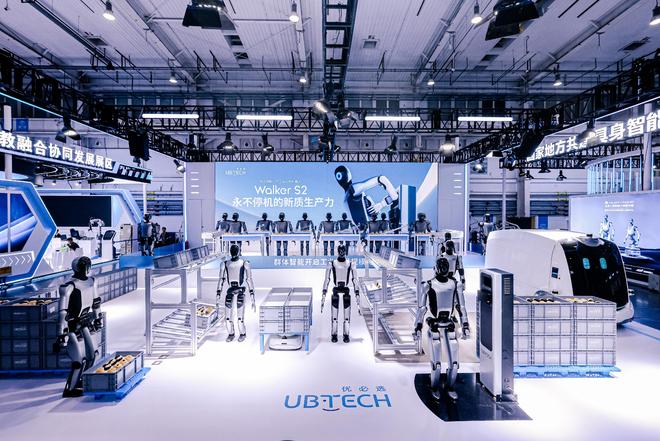
Group 1 - The World Robot Conference has significantly increased public interest in humanoid robots, with attendance surpassing 1.3 million [2] - Investment in embodied intelligence is surging, with notable investments from companies like JD.com, which announced investments in three robot companies in July [2][7] - The number of registered robot-related companies in China has reached 958,000, with a 43.81% increase in registrations compared to the same period last year [2] Group 2 - The domestic embodied intelligence industry has seen 144 financing events totaling 19.5 billion yuan, with an average deal size of 13.5 million yuan [3] - Major internet companies, including Tencent, Meituan, and JD.com, are actively investing in the embodied intelligence sector [3][4] - Meituan has invested in numerous robot companies since 2021, indicating a strong commitment to the sector [4][6] Group 3 - JD.com has launched an "Intelligent Robot Industry Acceleration Plan," committing over 10 billion yuan to support 100 intelligent robot brands [7] - The supply chain for humanoid robots is rapidly maturing, with significant overlap with the automotive supply chain [8][10] - Companies like SUTENG and Hezhima Intelligent are expanding their offerings to include components for robots, leveraging their experience in the automotive sector [10][11] Group 4 - The commercialization of robots is currently focused on specific verticals, with companies like UBTECH targeting the automotive industry for practical applications [15] - The market for quadruped robots is also expanding, with sales growing from 2,000 units in 2019 to 34,000 units in 2023, reflecting a compound annual growth rate of 102.3% [16] - The price of consumer-grade quadruped robots is expected to drop significantly, making them more accessible [17]


国盛证券:智驾核心部件壁垒高筑 国产芯片替代正当时
智通财经网· 2025-08-11 07:25
Core Insights - The report from Guosheng Securities highlights that System on Chip (SoC) is the mainstream trend for automotive computing chips, with high barriers to entry due to design and manufacturing complexities, high capital investment, and long validation cycles, making intelligent driving chips the most valuable core component in intelligent driving systems [1][2] Group 1: Market Trends - The trend of integrated cockpit and driving systems is significant, which can reduce costs, with single-chip solutions like NVIDIA Thor and Qualcomm 8775 expected to achieve large-scale production by 2025 [1] - The penetration of advanced driver assistance systems (ADAS) is accelerating, with the market for L3 and above intelligent driving systems expected to grow significantly, particularly in lower-priced vehicle segments [2] Group 2: Market Size and Growth - According to Frost & Sullivan, the global and Chinese ADAS SoC market sizes are projected to reach 275 billion and 141 billion yuan in 2023, respectively, with expected growth to 925 billion and 496 billion yuan by 2028, reflecting compound annual growth rates of 28% and 29% [2] - The ADS market (L3 to L5) is still in its early development stage, with expectations for the global ADS SoC market to reach 45.4 billion yuan by 2030 [2] Group 3: Competitive Landscape - NVIDIA holds a dominant position in the domestic intelligent driving assistance chip market with a 39% market share in 2024, while Horizon Robotics and Black Sesame Intelligence are expected to increase their market shares due to the trend of domestic substitution [3] - The intelligent driving chip industry is currently characterized by high investment, high growth, and low profitability, with companies generally operating at a loss, but scale effects are beginning to show, leading to a gradual narrowing of loss rates [3] Group 4: Investment Opportunities - The rapid increase in intelligent driving penetration is creating significant market space, leading to high growth in demand for intelligent driving chips, with opportunities for high-cost performance domestic chips [4] - Companies to watch include Horizon Robotics (09660), Black Sesame Intelligence (02533), NVIDIA (NVDA.US), Qualcomm (QCOM.US), XPeng Motors (09868), and Tesla (TSLA.US) [4]
AI重塑千行百业长三角产业协同迎新机遇
Shang Hai Zheng Quan Bao· 2025-08-10 17:40
Group 1 - The current AI wave is characterized by the transformation of all industries through large models, impacting brands, efficiency, processes, systems, and organizational structures [2][4] - The rapid growth of the semiconductor industry is primarily driven by AI and large models, creating new growth dynamics in the silicon photonics sector [4][5] - The integration and upgrading of the manufacturing industry in the Yangtze River Delta region present significant opportunities, forming a collaborative development model of "Shanghai R&D, surrounding manufacturing" [1][6] Group 2 - AI applications are expected to see large-scale implementation by 2025, with the current focus on "industry + AI" to enhance existing business problems [2][3] - The demand for computing power and data transmission is increasing, leading to substantial growth potential in the silicon photonics field [4][5] - The collaboration model in the Yangtze River Delta emphasizes the roles of different regions: Zhangjiang for R&D, Shanghai for engineering, and Rugao for production [7]



AI重塑千行百业 长三角产业协同迎新机遇
Shang Hai Zheng Quan Bao· 2025-08-10 17:35
Core Insights - The current AI wave, driven by large models, is reshaping various industries, enhancing brand, efficiency, processes, systems, and organizational structures [1] - The rapid growth of the semiconductor industry is primarily fueled by AI and large models, creating new growth dynamics in the silicon photonics sector [1][4] - The integration and upgrading of traditional manufacturing in the Yangtze River Delta region present significant opportunities due to the intersection of hard technology and traditional industries [6] AI and Industry Transformation - The transition from single-point AI breakthroughs to large models signifies a comprehensive disruption across all industries, with 2025 anticipated as a pivotal year for large-scale AI application deployment [1][2] - Companies that embrace AI early may achieve competitive advantages, but many face challenges in effectively integrating AI to solve existing business problems [2] - The emergence of super applications in AI is projected to occur between 2027 and 2029, similar to the mobile internet explosion following the iPhone's release [2] Semiconductor Industry Growth - AI and large models are driving the semiconductor industry's growth, with increasing demands for computing power and data transmission [4] - Companies like Robotech and DiAo Micro are investing in silicon photonics technology to capitalize on these trends, with expectations for rapid advancements in optical modules [4][5] - The automotive sector presents a significant market opportunity for AI-driven chips, with a current domestic production rate of less than 5% for automotive-grade chips [5] Collaborative Development in the Yangtze River Delta - The Yangtze River Delta is positioned for collaborative innovation, with Shanghai focusing on engineering and surrounding areas on production, creating a synergistic development model [6] - Experts emphasize the need for traditional industries to adopt new digital and intelligent paradigms to enhance competitiveness [6] - The integration of hard technology with traditional manufacturing is seen as a key driver for innovation and growth in the region [6]
“中国芯片企业已能完美替代外国竞争对手”
Guan Cha Zhe Wang· 2025-08-08 09:37
Core Viewpoint - Chinese chip companies are rapidly gaining market share and surpassing foreign competitors despite Western technological restrictions, with some companies achieving tenfold growth in the past two years, particularly in power and analog chip sectors [1][2]. Financial Performance - In Q2 2025, the company reported a total revenue of $2.209 billion, representing a year-on-year increase of 16.2%. The gross margin was 20.4%, a decrease of 2.1 percentage points quarter-on-quarter, and the capacity utilization rate was 92.5%, an increase of 2.9 percentage points [1]. - The company anticipates a moderate revenue growth of 5%-7% in Q3, with a slight decline in gross margin to 18%-20% [1]. Market Demand and Supply - The demand from Chinese customers is increasing, leading to a tight supply situation for wafers, expected to last until at least October. Domestic products are now able to "perfectly replace" those from foreign competitors [1][2]. - Some domestic clients, particularly in the power semiconductor sector, have increased their monthly orders from approximately 2,000 to 20,000 8-inch wafers over two years, with domestic clients accounting for over 50% of the company's 8-inch wafer orders [3]. Industry Trends - The company is assisting domestic clients in transitioning to more efficient 12-inch wafer technology to alleviate supply pressures [3]. - There is a significant rise in demand for storage-related chips, such as NAND flash memory controllers, despite a stagnation in the smartphone chip market [3]. Future Outlook - The company has high confidence in the order outlook for Q4 2025, despite uncertainties in end-user demand predictability [4]. - The industrial and automotive sectors accounted for approximately 10.6% of the company's revenue, with a 20% quarter-on-quarter increase in automotive chip shipments [4]. - The company expects that the impact of U.S. tariffs will be less than 1.3% of its revenue, contrary to initial concerns about demand for mass-market products [4][5].

黑芝麻智能(02533)获创始人单记章自愿延长禁售承诺
智通财经网· 2025-08-07 11:15
Core Viewpoint - The company, Hezhima Intelligent (02533), announced that its founder and CEO, Mr. Shan Jizhang, has voluntarily committed not to sell his restricted shares for an additional twelve months, reflecting confidence in the company's long-term value and future prospects [1] Summary by Relevant Sections - **Shareholder Commitment** - Mr. Shan Jizhang will not sell a total of 44.1 million restricted shares from August 8, 2025, to August 7, 2026, which represents 6.94% of the company's total issued shares as of the announcement date [1]

黑芝麻智能(02533) - 自愿性公告创始人自愿延长禁售承诺
2025-08-07 11:00
Black Sesame International Holding Limited 香港交易及結算所有限公司及香港聯合交易所有限公司對本公告的內容概不 負 責,對 其 準 確 性 或 完 整 性 亦 不 發 表 任 何 聲 明,並 明 確 表 示 概 不 就 因 本 公 告 全 部或任何部分內容而產生或因依賴該等內容而引致的任何損失承擔任何責任。 黑芝麻智能國際控股有限公司* 誠 如 招 股 章 程、中 報 及 年 報 所 載 者,有 關 本 公 司 創 始 人、董 事 會(「董事會」)董 事 長、執 行 董 事 兼 首 席 執 行 官 單 記 章 先 生(「單先生」)實益持有的44,100,000股 本 公司股份(「禁售股份」)的禁售承諾屆滿日期為2025年8月7日。 董 事 會 欣 然 宣 佈,本 公 司 已 獲 告 知,單 先 生 為 表 示 對 本 公 司 長 遠 價 值 及 未 來 前 景 的 信 心,已 自 願 承 諾 自2025年8月8日起至2026年8月7日 止(包 括 首 尾 兩 日)額 外 十 二 個 月 內,不 會 出 售 禁 售 股 份。 * 僅供識別 – 1 – 禁售股份總數為44 ...
黑芝麻智能(02533) - 截至2025年7月31日止月份股份发行人的证券变动月报表
2025-08-06 12:00
股份發行人及根據《上市規則》第十九B章上市的香港預託證券發行人的證券變動月報表 截至月份: 2025年7月31日 狀態: 新提交 致:香港交易及結算所有限公司 FF301 II. 已發行股份及/或庫存股份變動 公司名稱: 黑芝麻智能國際控股有限公司 呈交日期: 2025年8月6日 I. 法定/註冊股本變動 | 1. 股份分類 | 普通股 | 股份類別 | 不適用 | | 於香港聯交所上市 (註1) | | | 是 | | | --- | --- | --- | --- | --- | --- | --- | --- | --- | --- | | 證券代號 (如上市) | 02533 | 說明 | 普通股 | | | | | | | | | | 法定/註冊股份數目 | | | 面值 | | | 法定/註冊股本 | | | 上月底結存 | | | 1,000,000,000 | USD | | 0.0001 | USD | | 100,000 | | 增加 / 減少 (-) | | | 0 | | | | USD | | 0 | | 本月底結存 | | | 1,000,000,000 | USD | | 0.0 ...
“换下英伟达芯片,中企集体加速”
Guan Cha Zhe Wang· 2025-08-06 08:10
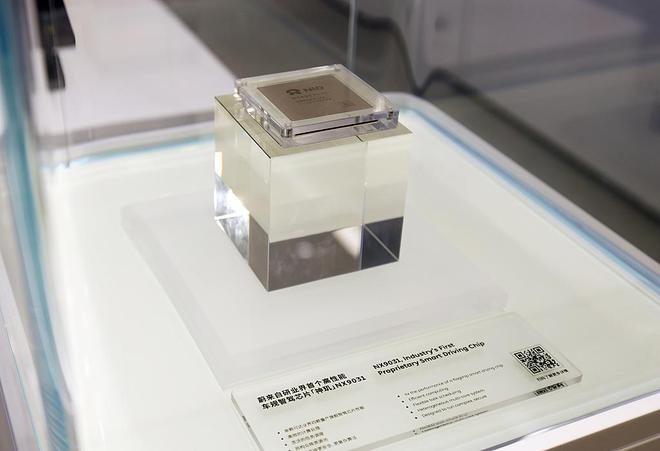
Core Viewpoint - The U.S. government's increasing export controls on high-tech products, particularly chips, is prompting Chinese automotive manufacturers and chip companies to accelerate the development and adoption of domestic solutions to replace foreign chip suppliers like NVIDIA [1][2]. Industry Trends - Chinese automotive manufacturers, including XPeng and NIO, are now integrating self-developed chips into their latest models, moving away from reliance on NVIDIA [1]. - At least 10 Chinese chip companies are focusing on the automotive market, with firms like Horizon Robotics, Huawei HiSilicon, and others rapidly emerging to serve domestic automakers [1]. - Major Chinese chip foundries, such as SMIC, are benefiting from this trend, with automotive and industrial application chips now accounting for 10% of their revenue, up from less than 3% three years ago [1]. Market Share and Projections - According to estimates, the share of domestic brands in the total supply of automotive chips in China is expected to rise from approximately 9% in 2024 to between 15% and 20% in 2025, potentially reaching 50% within five years when including self-developed chips [5]. - Horizon Robotics is emerging as a significant competitor to NVIDIA in the smart driving market, currently serving over 40 automakers and covering more than 310 vehicle models [5][7]. Competitive Landscape - The competition in the automotive chip market is intensifying, with companies like NXP, Renesas, and Infineon facing challenges from the rise of domestic players [7]. - Horizon Robotics has gained a leading market share of 33.97% in the L0 to L2 level smart driving solutions market in China, surpassing competitors like Mobileye and NVIDIA [7]. Technological Advancements - Chinese companies are making strides in producing advanced automotive chips, with products like the "Starry Sky No. 1" high-level auxiliary driving chip achieving mass production and meeting international standards [8]. - The self-sufficiency rate of microcontroller (MCU) chips in China is projected to increase significantly, from 19% in 2024 to 67% by 2030, indicating a strong trend towards domestic production [9][11]. Future Opportunities - The rapid electrification and digitalization of Chinese automobiles are creating opportunities for new companies focused on designing logic chips for infotainment systems and autonomous driving features [11].

辅助驾驶平权带动业绩高成长,黑芝麻智能(02533)布局全场景智能计算成效显著
智通财经网· 2025-08-05 03:53
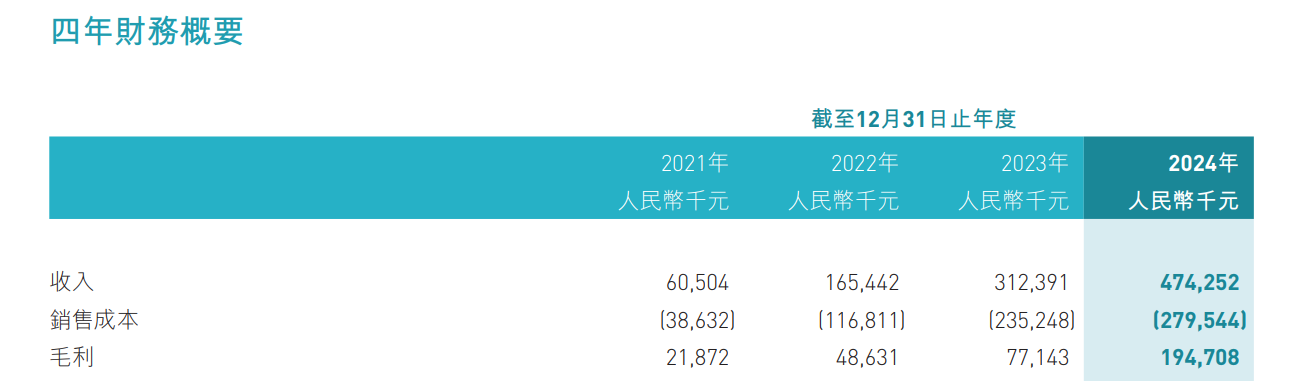
Group 1: Market Overview - The Hong Kong stock market has shown strong performance since April, with the Hang Seng Index increasing by over 30% in less than four months, reaching a peak of 25,735 points on July 24, the highest in nearly four years [1] - The strong performance is attributed to three main drivers: valuation recovery, policy benefits, and significant inflow of southbound funds, which have become a major force in driving up Hong Kong stocks [1] - As of July 25, 2025, southbound funds have seen a cumulative net inflow of HKD 820 billion this year, surpassing the total for 2024, with expectations of exceeding HKD 1 trillion for the entire year of 2025 [1] Group 2: Investment Trends - Investors are favoring high-dividend assets while showing strong interest in leading internet companies, pharmaceuticals, and hard tech sectors, particularly those involved in AI [2] - There is a growing trend of investors seeking out high-quality stocks that are currently undervalued, with companies like Black Sesame Intelligence gaining attention [2] Group 3: Company Performance - Black Sesame Intelligence has experienced rapid growth in the autonomous driving chip sector, with revenue increasing from CNY 60.5 million in 2021 to CNY 474 million in 2024, reflecting a compound annual growth rate (CAGR) of nearly 100% [3] - The company's gross profit rose from CNY 21.87 million to CNY 195 million during the same period, with a CAGR of 107% [3] Group 4: Industry Developments - The commercialization of L2+ autonomous driving technology is expected to see significant growth in 2025, with penetration rates projected to rise from 14% in 2024 to 30% [5] - The rapid penetration of L2+ technology is driven by the increasing availability of high-level autonomous driving features in new vehicles, with over 50% of new cars expected to be equipped with L2 technology [4] Group 5: Product Innovations - Black Sesame Intelligence has launched the A1000 series chips, which have been successfully integrated into multiple models from leading domestic automakers, ranking third in the market for high-performance driving chips [8] - The company has also introduced the Wudang C1200 series, the first integrated chip platform for autonomous driving and smart cockpit applications, expected to achieve mass production by 2025 [8][12] Group 6: Future Growth Potential - The company plans to expand its product line through the acquisition of an AI chip company, which focuses on cost-effective, low-power AI system chips, enhancing its competitive edge in the AI SoC market [17][20] - Black Sesame Intelligence's strategic shift from a dedicated chip manufacturer to a comprehensive intelligent computing platform provider is expected to lead to a revaluation of its intrinsic value, potentially resulting in higher valuation premiums [21]