
华山系列芯片

Search documents
CES2026揭示的AI三场变革:从眼镜到机器人、从家庭到工业丨36氪直击CES
3 6 Ke· 2026-01-12 11:04
Core Insights - The CES 2026 event highlighted a significant shift in AI from being merely a tool to becoming a foundational operating system for human life, as articulated by NVIDIA CEO Jensen Huang [3] - AI is transitioning from virtual capabilities to being embedded in physical and tangible life scenarios, impacting various sectors including information interaction, home life, transportation, and industrial systems [3][5] - The year 2026 is marked as a pivotal year for AI technology integration and industrialization, with a focus on practical applications in real-world scenarios [5][6] AI in Consumer Electronics - The emergence of smart glasses is seen as a potential replacement for smartphones, with over 50 companies showcasing AI and AR glasses at CES 2026 [7][8] - Companies like Rokid and INMO are leading the charge in lightweight, multifunctional AI glasses, with Rokid's AI glasses weighing only 49 grams and featuring various capabilities such as real-time translation and navigation [9][12] - The global smart glasses market is expected to experience explosive growth, with predictions indicating a significant uptick in 2026, particularly in China [8] AI in Daily Life - AI is increasingly integrated into daily life, with innovations such as Elon Musk's brain-machine interface and products like LumiMind's sleep regulation device aimed at addressing sleep disorders [4][20] - Companies are developing advanced cleaning robots that can navigate complex environments, indicating a shift from simple cleaning tools to multifunctional household assistants [15][17] - The introduction of AI-powered personal assistants, such as LOONA DeskMate, aims to enhance productivity in work environments by seamlessly integrating AI into daily tasks [24][26] AI in Transportation and Industry - AI is reshaping the transportation and industrial sectors, with companies like Black Sesame showcasing advanced driver assistance systems and AI chips designed for autonomous vehicles [30][32] - The development of automated charging solutions and intelligent inspection robots indicates a move towards more integrated and efficient industrial operations [35][36] - The focus on AI's role in energy management and sustainability is becoming increasingly relevant, with innovations aimed at addressing the energy demands of AI technologies [36][38] Conclusion - The CES 2026 event illustrates a comprehensive transformation in lifestyle driven by AI, affecting various aspects from consumer electronics to industrial applications, with significant contributions from Chinese technology companies [34]


CES2026揭示的AI三场变革:从眼镜到机器人、从家庭到工业丨36氪直击CES
36氪· 2026-01-12 09:30
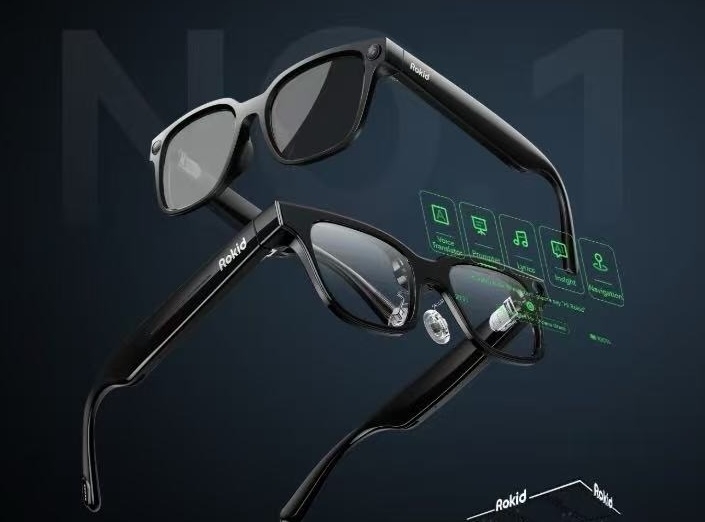
Core Insights - The article emphasizes that AI is transitioning from being merely a tool to becoming the "underlying operating system" of human life, as highlighted by NVIDIA CEO Jensen Huang at CES 2026 [3][4] - The event showcased a clear trend of AI embedding itself into physical reality and daily life, with significant advancements in AI chip performance expected in the coming years [4][6] Group 1: AI in Daily Life - AI is becoming ubiquitous, with a notable shift in information interaction methods, particularly through the rise of smart glasses, which are predicted to replace smartphones as the primary information access point [5][10] - Over 50 companies showcased AI and AR glasses, indicating a strong market growth, with predictions of a significant increase in the global smart glasses market by 2025 [10][11] - Chinese companies are leading the charge in the smart glasses market, with products like Rokid's AI glasses and INMO's offerings demonstrating advanced features and lightweight designs [12][15] Group 2: AI in Home and Industrial Applications - AI is increasingly integrated into home cleaning and organization, with advancements in robotic vacuum cleaners and other smart home devices that enhance user experience [18][21] - Companies like Ecovacs and Yunzhijia are pushing the boundaries of home cleaning technology, evolving from simple cleaning tools to comprehensive home management systems [18][21] - In industrial applications, AI is transforming operations, with companies like Black Sesame Technology showcasing advanced driver assistance systems and smart robotics that enhance automation and efficiency [38][41] Group 3: AI in Health and Work - AI is also making strides in health and wellness, with products like LumiMind's LumiSleep aimed at addressing sleep disorders through innovative brainwave monitoring technology [25][28] - The introduction of personal assistant robots, such as LOONA DeskMate, highlights the growing demand for AI in workplace settings, focusing on enhancing productivity and emotional well-being [29][31] - The CES 2026 event illustrates a shift towards AI systems that not only assist but also understand and adapt to human needs in various contexts [31][32] Group 4: Future Outlook - The article suggests that the next decade will see a significant transformation in consumer electronics due to AI, impacting various sectors including automotive, home appliances, and industrial systems [7][36] - The integration of AI into everyday life is expected to redefine how humans interact with technology, moving towards a more seamless and intuitive experience [43][48] - The participation of Chinese tech companies at CES indicates a collaborative future in technology development, moving beyond national narratives to a more global perspective [48][49]
CES 2026揭示的AI三场变革:从眼镜到机器人、从家庭到工业
3 6 Ke· 2026-01-12 04:47
Core Insights - The CES 2026 event highlighted that AI is evolving from a mere tool to a foundational operating system in human life, with significant implications for various industries [3][5][38] - Major companies like NVIDIA and AMD are leading the charge, with NVIDIA's CEO predicting a "ChatGPT moment" for physical AI and AMD announcing a thousand-fold increase in AI chip performance over the next four years [3][5] - The event showcased a clear trend of AI integration into everyday life, with innovations in smart glasses, home automation, and personal assistants [4][6][14] AI Integration in Daily Life - AI is set to transform home life, with products like LumiMind's LumiSleep, a brainwave-controlled sleep aid, and various smart cleaning robots enhancing household efficiency [4][20][14] - Companies like BroadLink are addressing the smart home ecosystem's fragmentation, enabling seamless integration of non-smart appliances into smart home networks [26][28] Smart Glasses Revolution - The smart glasses market is poised for explosive growth, with over 50 companies showcasing innovations at CES 2026, indicating a shift away from traditional smartphones as the primary information interface [6][7] - Notable products include Rokid's AI glasses, which are lightweight and feature-rich, and INMO's GO3, which offers advanced translation capabilities [8][11][10] Industrial and Automotive Applications - AI's impact extends to transportation and industrial sectors, with companies like Black Sesame and Daotong showcasing advancements in autonomous driving and automated systems [29][34] - Black Sesame's new chips and Daotong's automated charging solutions represent significant strides in integrating AI into complex operational frameworks [29][34][35] Future Outlook - The CES 2026 event suggests that AI will redefine consumer electronics and industrial applications over the next decade, with a focus on embedding AI into physical systems rather than merely enhancing existing functionalities [5][37][38] - The participation of Chinese tech companies at CES indicates a growing influence in shaping the future technological landscape [7][38]
CES2026揭示的AI三场变革:从眼镜到机器人、从家庭到工业
3 6 Ke· 2026-01-10 01:07
Core Insights - The CES 2026 event highlighted that AI is evolving from a mere tool to becoming the "underlying operating system" of human life, with significant advancements in its integration into physical environments [1][4] - NVIDIA's CEO Jensen Huang emphasized the imminent arrival of the "ChatGPT moment" for physical AI, indicating a shift from virtual to tangible applications [1][2] - The event showcased a clear trend of AI embedding itself into everyday life, impacting various sectors including information interaction, home living, transportation, and industrial systems [2][4] AI Integration in Daily Life - AI is set to transform home living, with innovations such as Elon Musk's brain-machine interface and products like LumiMind's LumiSleep, a real-time brainwave sleep regulator [3][23] - Companies like Rokid and INMO are leading the charge in the smart glasses market, with Rokid's AI glasses being touted as the lightest full-featured AI glasses available [9][11] - The smart cleaning industry is evolving, with companies like Ecovacs and Yunji introducing advanced cleaning robots capable of recognizing various objects and adapting to different cleaning scenarios [15][21] Smart Glasses Market - The smart glasses market is expected to experience explosive growth, with over 50 companies showcasing their products at CES 2026 [6][7] - Xreal and other Chinese brands are making significant strides in the AR/AI glasses sector, with partnerships and new product launches aimed at enhancing user experience [8][9] - INMO's products, such as the INMO GO3, are setting new standards in design and functionality, including real-time translation capabilities [12][14] AI in Industrial and Transportation Sectors - AI is reshaping the transportation and industrial sectors, with companies like Black Sesame Technology showcasing advancements in autonomous driving and intelligent systems [34][36] - The introduction of AI-driven solutions for automated charging and inspection robots indicates a shift towards more integrated and efficient industrial operations [38][39] - The CES 2026 event underscored the importance of AI in enhancing operational efficiency and addressing energy demands in the context of increasing AI computational needs [43][44] Future Outlook - The integration of AI into various aspects of life is expected to lead to a systemic shift in lifestyle and work processes, moving from capability demonstration to embedded productivity [44][45] - The participation of Chinese tech companies at CES 2026 reflects a significant presence in shaping the future technological landscape, indicating a collaborative global narrative [44][45]
摩尔线程重磅发布:新一代GPU架构“花港”能效提升10倍,系列芯片明年量产上市,推出AI算力笔记本
华尔街见闻· 2025-12-20 15:09
Core Viewpoint - The article highlights the significant advancements made by domestic GPU manufacturer Moore Threads with the launch of their new GPU architecture "Huagang," aimed at enhancing local AI computing power supply capabilities [1]. Group 1: New GPU Architecture - Moore Threads announced the mass production of the "Huagang" architecture-based series chips, including the Huashan and Lushan series, set to launch next year [1]. - The new architecture features a next-generation instruction set, achieving a 50% increase in computing density and a 10-fold improvement in energy efficiency, supporting large-scale intelligent computing clusters of over 100,000 cards [1][2]. - The Huashan GPU chip has surpassed international mainstream chips in floating-point computing power, memory bandwidth, memory capacity, and high-speed interconnect bandwidth, marking a technological advancement in high-performance computing for domestic GPUs [2]. Group 2: Performance Enhancements - The Lushan high-performance graphics rendering chip, based on the "Huagang" architecture, is expected to deliver a 15-fold improvement in 3A game rendering, a 64-fold increase in AI performance, and a 50-fold enhancement in ray tracing performance [2]. - The architecture also includes a new first-generation AI generative rendering architecture (AGR) and a second-generation ray tracing hardware acceleration engine [5]. Group 3: Software Ecosystem Upgrade - Alongside hardware upgrades, Moore Threads announced a comprehensive software upgrade for its self-developed MUSA architecture, which supports a full-function GPU computing ecosystem with a complete software stack and broad ecological compatibility [7]. - The unified software stack covers the entire product range, emphasizing the importance of full-function GPUs in supporting increasingly complex AI models and diverse application scenarios [7]. Group 4: AI Computing Notebook Launch - Moore Threads introduced the MTT AIBOOK, the first AI computing notebook equipped with the self-developed intelligent SoC chip "Changjiang," featuring a high-performance full-core CPU and a full-function GPU [9][10]. - The notebook supports the MUSA unified architecture and offers heterogeneous AI computing capabilities of 50 TOPS, targeting AI developers and professional users [10]. - The MTT AIBOOK is available for pre-sale at a price of 9,999 yuan for the 32GB RAM and 1TB storage version [10].
黑芝麻智能收购AI芯片公司
Xin Lang Cai Jing· 2025-12-03 13:20
Core Viewpoint - Black Sesame Intelligence plans to acquire a majority stake in Yizhi Electronics through a combination of equity acquisition and capital injection, with a total cost ranging from 400 million to 550 million yuan. Upon completion, Yizhi Electronics will become a non-wholly-owned subsidiary of Black Sesame Intelligence, and its financial performance will be consolidated into Black Sesame's financial statements [1][2][3] Group 1 - The acquisition is still under negotiation, and the final transaction terms, including specific equity ratios and payment arrangements, will be determined by a formal agreement between both parties [1][2] - Black Sesame Intelligence has a long-standing focus on automotive-grade intelligent automotive computing chip development, with its "Huashan" and "Wudang" series chips already in mass production for L2 to L3 level Advanced Driver Assistance Systems (ADAS) and intelligent cockpit applications [1][3] - Yizhi Electronics specializes in edge and end-side AI chips, providing system-level solutions around AI machine vision algorithms and SoC chip design, with products covering smart automotive, smart hardware, and smart security applications [1][3] Group 2 - The technological directions of Black Sesame Intelligence in automotive-grade computing platforms and Yizhi Electronics in edge visual AI and edge applications are complementary. If the transaction is successful, Black Sesame is expected to extend its reach into security and consumer-grade smart hardware sectors while maintaining its automotive business advantage [2][3] - Black Sesame Intelligence and other related parties are actively advancing the potential acquisition and related work, with the final transaction agreement expected to be signed by the first quarter of 2026 [2][3]

黑芝麻智能拟4-5.5亿元收购亿智电子控股权
Ju Chao Zi Xun· 2025-12-03 10:12
Group 1 - The core announcement is about Black Sesame Intelligence International Holdings Limited's intention to acquire a controlling stake in Zhuhai Yizhi Electronics Technology Co., Ltd. for an estimated total consideration of approximately RMB 400 million to RMB 550 million [1] - Upon completion of the transaction, Yizhi Electronics will become a non-wholly-owned subsidiary of Black Sesame Intelligence, and its financial performance will be consolidated into the group's financial statements [1] - The acquisition is still in negotiation, with final terms including specific equity ratios and payment arrangements to be determined in a formal agreement [1] Group 2 - Black Sesame Intelligence focuses on automotive-grade intelligent vehicle computing chips, with its "Huashan" and "Wudang" series chips already in mass production for L2 to L3 advanced driver assistance systems (ADAS) and smart cockpit applications [4] - Yizhi Electronics specializes in edge and endpoint AI chips, providing system-level solutions around AI machine vision algorithms and SoC chip design, with products covering smart automotive, smart hardware, and smart security applications [4] - The technological directions of Black Sesame Intelligence in automotive computing and Yizhi Electronics in edge visual AI and edge applications are complementary, potentially allowing Black Sesame to extend its reach into security and consumer-grade smart hardware markets [5]

黑芝麻智能拟4-5.5亿收购亿智电子
是说芯语· 2025-12-03 06:33
Core Viewpoint - Black Sesame Intelligence, a leader in automotive-grade AI chips, announced a significant acquisition of Zhuhai Yizhi Electronics for a total consideration of 400 million to 550 million yuan, aiming to enhance its strategic positioning in the AI chip industry [1]. Group 1: Acquisition Details - The acquisition will make Yizhi Electronics a non-wholly-owned subsidiary of Black Sesame, with its financial performance integrated into the group’s financial statements, marking the beginning of a collaborative layout in the AI chip industry [1]. - The transaction price reflects the market's recognition of Yizhi Electronics' technological value and demonstrates the strategic determination of domestic chip companies to accelerate development through capital means [5]. Group 2: Strategic Value - This acquisition is not merely an expansion but a strategic complement, allowing Black Sesame to extend its automotive chip technology into new markets such as smart security and consumer-grade smart hardware [4]. - Black Sesame aims to leverage Yizhi Electronics' edge AI algorithm capabilities to strengthen its full-stack technology system, creating a dual-scene coverage ability of "automotive-grade + edge" [5]. - The collaboration signals a consolidation trend within the domestic AI chip industry, as companies like Black Sesame move from isolated operations to resource aggregation, enhancing competitiveness in core areas such as algorithm research and application [5]. Group 3: Industry Trends - The automotive chip market in 2025 is dominated by Qualcomm with a 55% share and NVIDIA with 20%, indicating that domestic companies face pressure to increase their market share [5]. - The partnership between Black Sesame and Yizhi Electronics represents a significant step towards high-end and comprehensive development in the domestic AI chip industry, providing a new reference path for domestic chips to break into global competition [6].
均胜电子与黑芝麻智能战略合作 共同推进机器人控制系统研发与落地
智通财经网· 2025-11-21 01:50
Core Insights - Junsheng Electronics and Hezhima Intelligent have established a strategic partnership to focus on the joint development of robot domain controllers, optimization of intelligent computing platforms, and collaborative solutions for industry scenarios [1][3] - The collaboration aims to enhance innovation capabilities and industrial competitiveness in the field of intelligent manufacturing and embodied intelligence technology [1][3] Group 1: Company Collaboration - The partnership will leverage the strengths of both companies in key areas such as robot controllers, intelligent computing platforms, and typical industry applications [3] - Junsheng Electronics has been actively expanding its robot component business since 2025, building on its deep expertise in the automotive parts sector [1] - Hezhima Intelligent specializes in high-performance AI SOC chips and intelligent computing solutions, with its products widely used in intelligent driving and robotics [2] Group 2: Technological Development - Junsheng Electronics has developed a comprehensive solution for robot controllers based on various chip platforms, which will now extend to domestic chip platforms through the partnership with Hezhima Intelligent [1] - Hezhima Intelligent has launched the SesameX multi-dimensional intelligent computing platform aimed at the robotics industry, enhancing its capabilities in robot control and perception decision-making [2] - The collaboration is expected to drive the development, validation, and implementation of next-generation embodied intelligent robot control systems and solutions [3]

黑芝麻智20251030
2025-10-30 15:21
Summary of Black Sesame Intelligence Conference Call Company Overview - Black Sesame Intelligence focuses on AI hardware chips and has a strong understanding of chip technology from its founder, who is committed to a hardware-centric approach. The company collaborates with Bosch and has entered the automotive sector, successfully mass-producing multiple vehicle models, including Lynk & Co, Dongfeng series, and BYD export models [2][5]. Key Developments and Achievements - 2022 marked a pivotal year for Black Sesame Intelligence, with the launch of the Huashan A2000 chip, which significantly enhanced computing power, making it comparable to high-end automotive chips. The Wudang C1,200 chip family is applied in high-speed NOA and light procedure NOA, receiving validation from major clients, solidifying its leading position in the domestic AI hardware sector [2][5]. - The company has established deep collaborations with major automotive manufacturers such as Geely, Dongfeng, FAW, and BYD, and has successfully mass-produced various models [5]. Market Position and Competitive Landscape - Black Sesame is currently in a position similar to Horizon a year ago, with the potential to gain validation from leading new energy vehicle manufacturers through the C1,200 chip and achieve mass production [2][6]. - Horizon focuses on software system iterations, while Black Sesame emphasizes hardware expansion. The increasing policy requirements for domestic substitution present opportunities for both companies [2][6]. Investment Opportunities - The investment outlook for Black Sesame Intelligence is promising, particularly with the anticipated advancements in L4 level autonomous driving technology expected by 2026, which provides significant growth potential. The company’s AI chip products are rare, and there is a notable valuation gap compared to Horizon, suggesting substantial room for valuation recovery [3][4]. - Short-term market capitalization is projected to reach 30 billion RMB, corresponding to approximately 1.4 billion RMB in revenue by 2026. Long-term potential in L4 autonomous driving and robotics could lead to a market cap exceeding 50 billion RMB [3][4]. Algorithm Development and Partnerships - Black Sesame acknowledges its algorithmic shortcomings as a hardware-focused company. To address this, it collaborates with algorithm solution providers like Numa and International Intelligent Network, while also developing its own algorithm team. This multi-faceted strategy enhances its overall solution capabilities and market competitiveness [7]. Expansion into Non-Automotive Sectors - The company is actively diversifying into non-automotive AI applications, such as robotics and robotic dogs. Collaborations with Wuhan University and Yunshenchu are aimed at enhancing robotic cognition and applying chips in robotic products for various scenarios, including ship inspections. These initiatives are expected to contribute to revenue growth in the coming years [4][8].