东风股份

Search documents
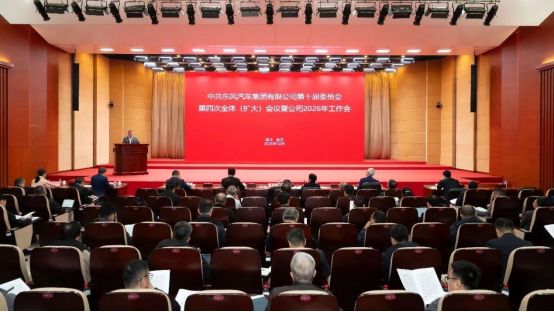
东风汽车召开2026年工作会 锚定“十五五”高质量发展新开局
Zheng Quan Shi Bao Wang· 2026-01-07 05:57
Core Viewpoint - Dongfeng Motor aims to establish a solid foundation for high-quality development in the "15th Five-Year Plan" by setting ambitious sales targets for 2026, including an overall sales goal of 3.25 million vehicles, 1.7 million new energy vehicles, and 600,000 exports, while focusing on long-term strategic goals rather than short-term gains [1][9]. Group 1: Transformation Achievements - During the "14th Five-Year Plan" period, Dongfeng Motor transitioned from relying on joint venture profits to achieving self-sustaining growth, marking a significant shift in its business model [3]. - In 2025, Dongfeng's new energy vehicle sales reached 1.04 million units, a year-on-year increase of 21%, with a penetration rate that improved by 7 percentage points [3]. - The company achieved over 1.5 million sales for its self-owned brands, a growth of over 9%, surpassing the strategic goal of a 1:1 sales ratio with joint ventures [3]. - Dongfeng's export volume reached 295,000 units, a 20% increase year-on-year, with significant advancements in overseas market expansion [3]. Group 2: Product Matrix Expansion - Dongfeng's product offerings have expanded, with 31 models in the passenger vehicle segment and 18 in the commercial vehicle segment, while the penetration rate of L2-level autonomous passenger vehicles exceeds 80% [4]. - The company maintains its leadership in the new energy MPV market with its Lantu brand, and has successfully launched smart off-road vehicles in collaboration with Huawei [4]. - The commercial vehicle sector has seen breakthroughs with the launch of the Tianlong KL pure electric tractor and the introduction of the Dongfeng Qiankun brand [4]. Group 3: Core Technology Development - Dongfeng is increasing its innovation investments, with a research and development intensity of 7.9% for its self-owned brands by 2025 [5]. - The company is focusing on multiple technology pathways, including hybrid, pure electric, and hydrogen energy, achieving a thermal efficiency of over 48% for its Maher hybrid engine [5]. - The domestic chip localization rate for self-owned brand vehicles has reached 67%, with the first domestically controllable high-performance automotive-grade MCU chip set for mass production in 2026 [6]. Group 4: Strategic Business Structure - Dongfeng has restructured its 27 directly managed units into a "4+2" business layout to address issues of business dispersion and internal competition [7]. - The establishment of Yipai Technology consolidates resources for self-owned passenger vehicles, while the creation of Yuechuang Technology aims to enhance the commercial vehicle business [7]. Group 5: 2026 Key Work Focus - The company will focus on three main lines of development in 2026: value creation, value protection, and value realization [9]. - Key areas of business development include advancing self-owned passenger vehicles, enhancing commercial vehicle performance, and accelerating the transformation of the parts sector [9]. - Brand building and ecosystem development will be critical, integrating marketing, brand positioning, technological innovation, and ecosystem value to enhance overall capabilities [9].


大道皮卡MBTI人格图鉴:5款车的“性格”,总有一款戳中你!| 头条
第一商用车网· 2026-01-07 02:35
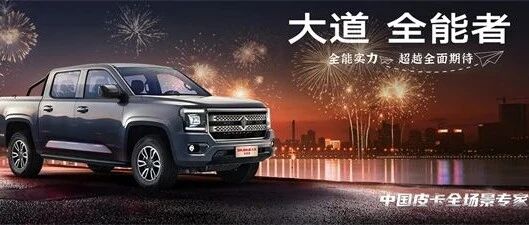
Core Viewpoint - The article presents a unique perspective on the personality traits associated with different models of the Dadao pickup trucks, suggesting that each model reflects a specific lifestyle and character type, appealing to various consumer needs and preferences [1][14]. Group 1: All-Rounder - ESTJ - The ESTJ model is characterized as a reliable and responsible "multi-tasker," suitable for both commercial and family use, with features like a long wheelbase and large cargo capacity [2][3]. - It offers practical attributes such as a robust suspension system and spacious interior, making it ideal for both work and family outings [3][4]. Group 2: Mountain Version - ISTP - The ISTP model is designed for rugged terrains, featuring advanced off-road capabilities and durable construction, appealing to those who thrive in challenging environments [6]. - It includes practical features for utility and comfort, such as ample storage space and a quiet cabin, catering to the needs of rural entrepreneurs and mountain workers [6]. Group 3: Light Chaser - ESFP - The ESFP model is described as a "life player," focusing on comfort and enjoyment, with high-quality interior features and advanced technology for a pleasant driving experience [7][8]. - It emphasizes family-friendly attributes and leisure activities, making it suitable for those who value lifestyle and social interactions [8]. Group 4: Daredevil - ESTP - The ESTP model is targeted at extreme off-road enthusiasts, equipped with high-performance features for various terrains and conditions [10]. - It includes practical enhancements for outdoor activities, such as power supply options and real-time off-road information, appealing to adventure seekers [10]. Group 5: Flying General - INTJ - The INTJ model is positioned as a premium option for discerning customers, featuring unique design elements and customizable performance attributes [11][12]. - It caters to niche markets with a focus on extreme off-road capabilities and personalized modifications, appealing to serious off-road enthusiasts [12].
浙江黑马硬刚欧美!派恩杰碳化硅芯片,打破20年技术垄断
Sou Hu Cai Jing· 2026-01-07 02:13
Core Viewpoint - The article highlights the emergence of Zhejiang-based company PAIENJIE Semiconductor as a global leader in silicon carbide (SiC) chips, breaking a 20-year monopoly held by foreign companies and addressing critical needs in the electric vehicle, photovoltaic, and AI sectors [1][8]. Group 1: Importance of Silicon Carbide Chips - Silicon carbide chips are essential for several industries due to their superior performance compared to traditional silicon-based chips [3]. - In the electric vehicle sector, SiC chips can enhance vehicle range by 5%-8% and support 800V fast charging, with a projected penetration rate of 42% in China by 2025 [3]. - For photovoltaic energy storage, SiC chips can achieve conversion efficiencies exceeding 99%, with national mandates for their use in energy storage stations by 2026 [3]. - In AI applications, SiC chips can reduce operating temperatures by 15-20°C, with an expected demand increase of 1.5 billion yuan in this sector by 2025 [3]. Group 2: Market Growth Projections - The global silicon carbide market is projected to exceed 22 billion yuan by 2025 and soar to 85 billion yuan by 2030, indicating a significant growth trajectory [4]. Group 3: PAIENJIE's Competitive Edge - PAIENJIE's success is attributed to its technological advancements, including reducing the cell size of SiC MOSFETs from 4.8μm to 3.2μm and achieving embedded packaging technology that stabilizes performance at high temperatures [5]. - The company follows an IDM (Integrated Device Manufacturer) model, controlling the entire process from design to manufacturing and advanced packaging, thus providing comprehensive solutions to clients [5]. - Since its establishment in 2018, PAIENJIE has rapidly achieved vehicle certification and has delivered 4 million chips, helping clients reduce costs by 25% [5]. Group 4: Client Base and Partnerships - PAIENJIE has established strong partnerships with leading domestic companies like BYD, securing significant orders in the electric vehicle sector [6]. - The company has also penetrated the international market, becoming a top-tier supplier for major European automotive manufacturers [6]. - In the AI sector, PAIENJIE is collaborating with leading providers to develop high-voltage direct current solutions, positioning itself in the emerging AI cooling market [6]. Group 5: Support for Domestic Industry - PAIENJIE's rise reflects the broader trend of domestic silicon carbide industry development, supported by strong government policies promoting strategic mineral resources and domestic semiconductor alternatives [7]. - The market demand is expected to surge, with projections of over 22 million electric vehicles sold globally by 2025 and 500 GW of new photovoltaic installations, creating ample growth opportunities for domestic companies [8].
东风公司董事长杨青:坚定不移推动商用车事业重回行业第一!| 头条
第一商用车网· 2026-01-06 14:20
Core Viewpoint - Dongfeng Company aims to regain its position as the industry leader in commercial vehicles by implementing a focused strategy and enhancing operational efficiency in its commercial vehicle division [1][3]. Group 1: Strategic Initiatives - Dongfeng Company has established a "4+2" business layout, creating a dedicated commercial vehicle division to enhance integrated operations and concentrate resources for growth [3]. - The company plans to achieve a "good start" in 2026, emphasizing the importance of internal collaboration and improving terminal dispatch capabilities to maintain healthy inventory levels [3]. Group 2: Market Position and Opportunities - Dongfeng Company is well-positioned in the commercial vehicle sector, benefiting from strong brand recognition and a favorable market environment for the transition to new energy vehicles [3]. - The introduction of the T1 platform represents a significant opportunity for Dongfeng to reclaim its leading position in the industry, with a focus on market segmentation and product profitability [3].

长城汽车全面落实双休,员工:刚开始以为是谣言,不敢信
Mei Ri Jing Ji Xin Wen· 2026-01-06 12:16
Core Viewpoint - Great Wall Motors has officially implemented a full weekend off policy, marking a significant shift in its employee work schedule, which has been a topic of speculation for months [1][3][12] Group 1: Company Policy Changes - The adjustment to a full weekend off will take effect in 2026 and will apply to all employees, transitioning from a previous system of alternating work schedules [3][5] - This change represents the fourth iteration of the company's vacation policy, moving from "single and double weekends" to "double weekends" [3][12] Group 2: Employee Reactions - Employees expressed relief and joy over the new policy, highlighting the importance of spending weekends with family [2][5] - Some employees noted that while the cancellation of high-temperature leave (10 days) is a downside, the overall benefit of stable weekends outweighs this loss [1][5] Group 3: Industry Context - The automotive industry has been experiencing intense competition, leading to high levels of employee overtime and burnout [8][9] - Reports indicate that many companies in the sector have been forced to adopt extreme work schedules, with some employees working up to 100 hours of overtime per month [9][12] - The shift to a more balanced work-life approach, as seen with Great Wall Motors, is viewed as a sign of the industry moving away from harmful competitive practices [12] Group 4: Financial Performance - In 2025, Great Wall Motors achieved a record high in new car sales, reaching 1.3237 million units, a year-on-year increase of 7.33% [5] - The sales of new energy vehicles also saw significant growth, with 403,700 units sold, marking a 25.44% increase [5] - Despite the sales growth, the company faced challenges with profitability, as net profit declined by 16.97% in the first three quarters of 2025 due to high marketing and channel costs [5]


投资5亿!T3出行大湾区重磅布局,落子中山
Sou Hu Cai Jing· 2026-01-06 11:59
关注权威资讯,就在南方都市报中山新闻部官方微信公众号"南都中山" 来源:中山火炬工业集团 据了解,该项目由中山市招商引资工作专班牵头对接,联合火炬高新区招商团队,共同引进的中山市首个融合智慧出行与无人 驾驶技术的区域总部,将围绕智能交通产业链生态,吸引上下游企业集聚,进一步提升区域产业竞争力和城市生活品质。 作为行业"国家队"与互联网巨头双重加持的头部企业,南京领行科技股份有限公司成立于2019年,核心股东涵盖中国一汽、东 风汽车、长安汽车等汽车行业领军企业,同时获得腾讯、阿里巴巴等互联网巨头战略投资,既是高新技术企业,更是行业内备 受瞩目的独角兽企业。此次落户中山的T3出行湾区生态总部,将重点建设大湾区运营管理与结算中心、自动驾驶(Robo-Taxi) 运营研发中心、低空服务运营中心及司机驿站等核心板块,通过一站式智慧出行服务填补区域智慧出行经济空白。 项目落地不仅将依托车路协同、智能调度等先进技术,强力驱动中山自动驾驶、人工智能、智慧城市等前沿产业升级,更将发 挥头部企业集聚效应,吸引智能交通产业链上下游企业汇聚,加速高端人才流入。本项目未来几年累计将实现数十亿营业收 入,显著提升区域经济实力、产业竞争力 ...
“终于能好好陪家人过周末了”,长城汽车取消大小周,全面落实双休!员工:刚开始以为是谣言,不敢信
Mei Ri Jing Ji Xin Wen· 2026-01-06 11:48
长城汽车全面落实双休 员工:终于能好好陪家人过周末了 每经编辑|段炼 据大河报报道,2026年初的一个午餐时段,保定长城汽车的食堂突然沸腾,欢呼声此起彼伏。一位老员工举着手机不停刷新,屏幕上2026年工作日历 里"周末双休"的标注格外醒目,他红着眼眶念叨:"终于等到这一天了。" 这一幕的背后,是长城汽车正式取消大小周、全面落实双休制度的消息尘埃落定,这则消息远比午餐的热菜更让人振奋。 记者了解到,长城汽车此次双休调整于2026年正式落地,覆盖全体员工,此前流传数月的"取消大小周"传言终于成真。这一调整意味着,长城员工的休假 制度完成了从"每月单双休"到"大小周""大小周+高温假",再到完整双休的第四次迭代。 | 2月 February March April | | 2026年日历 January | | | | | | | | | | | | | | | | | | | | | | | --- | --- | --- | --- | --- | --- | --- | --- | --- | --- | --- | --- | --- | --- | --- | --- | --- | --- | --- ...

新能源车竞逐三年,“厂二代”已经开始迭代
Zhong Guo Jing Ji Wang· 2026-01-06 11:12
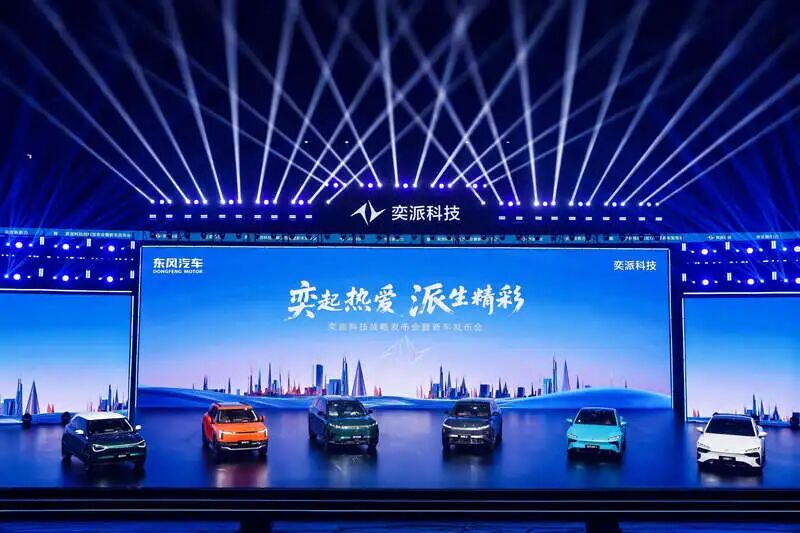
Core Insights - The penetration rate of new energy vehicles (NEVs) in China's passenger car market reached 53.6% in the first 11 months of 2025, up from 48.9% in 2024 and 35.7% in 2023, indicating a significant growth trajectory for NEVs in the country [1] - The automotive industry is transitioning from a phase of rapid growth to a highly competitive environment, characterized by cost pressures, sales challenges, and innovation demands, leading to a situation where revenue growth does not equate to profit growth [1] - Companies are increasingly adopting brand integration strategies to consolidate resources and enhance operational efficiency in response to intense market competition [3][4] Industry Trends - Many leading automotive companies are shifting from a "multi-brand expansion" strategy to a focus on resource integration and collaboration, which is seen as a crucial strategic choice to address internal competition and inefficiencies [4] - The Chinese government's policy direction supports this trend, emphasizing the need for group management among automotive manufacturers to improve resource allocation efficiency [4] - The integration of brands allows companies to streamline operations, reduce internal conflicts, and enhance decision-making efficiency, particularly for traditional automakers facing challenges in adapting to market changes [6] Company Developments - Dongfeng's brand integration, particularly with Yipai Technology, is a key example of addressing resource fragmentation and enhancing product focus, enabling significant investment in key products and innovations [6] - The newly integrated Yipai Technology aims to launch six new models by 2026, focusing on differentiated competition strategies and rapid iteration of existing models to strengthen product competitiveness [10] - The integration has resulted in a clearer product matrix, with brands like Nanom and Yipai complementing each other, leading to improved sales performance and market positioning [9][14] Marketing Strategies - Post-integration, companies are adopting more cohesive and precise marketing strategies to enhance brand image, which is crucial in a competitive market where brand perception significantly influences consumer purchasing decisions [11] - Yipai Technology has engaged in various marketing activities targeting younger demographics, including partnerships with popular cultural events and platforms, to establish a youthful brand image [13] - The focus on brand integration and marketing coherence is expected to create a broader consumer base and enhance brand recognition in the market [11][14] Performance Metrics - Yipai Technology achieved a total sales volume of 275,752 units in 2025, marking a year-on-year increase of 28.3%, with both Nanom and Yipai series surpassing 100,000 units in cumulative sales within 22 months [14] - The integration strategy has allowed Yipai Technology to operate with the efficiency comparable to new energy vehicle startups, enhancing its market competitiveness and growth potential [14][18]
东风汽车丨2026年销量目标325万辆 汽车出口60万辆
Cai Jing Wang· 2026-01-06 08:29
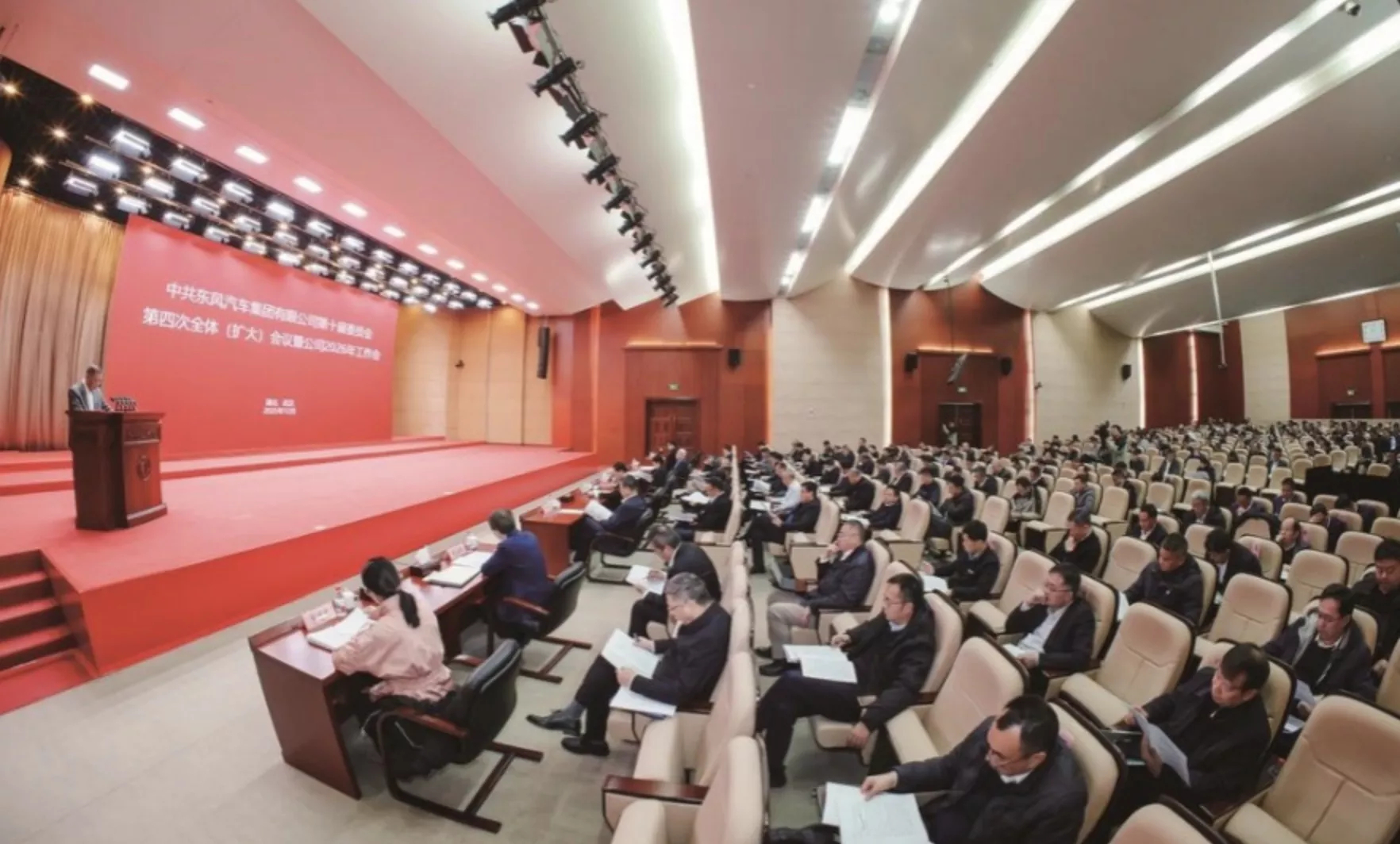
Core Viewpoint - Dongfeng Motor has outlined its "14th Five-Year" development strategy and key tasks for 2026 during its recent work conference, while also summarizing its achievements from 2025 and the "13th Five-Year" period [1]. Group 1: Sales and Market Performance - In 2025, Dongfeng's total sales reached 1.04 million units of new energy vehicles (NEVs), marking a 21% year-on-year increase, with a penetration rate up by 7 percentage points [2]. - The company aims for a total sales target of 3.25 million units in 2026, including 1.7 million NEVs and 600,000 units for export [2][6]. Group 2: Product Development and Innovation - Dongfeng's product lineup for its self-owned NEV brands expanded in 2025, featuring flagship models from Lantu and new products from Yipai and other brands [3]. - The company made significant advancements in hybrid, pure electric, and hydrogen technologies, achieving a thermal efficiency of over 48% for its Mahle hybrid engine and progressing in solid-state battery development [5]. Group 3: Strategic Initiatives and Partnerships - Dongfeng is transitioning its joint ventures towards new models, with the launch of new energy models from Dongfeng Nissan and upgrades in intelligent products [5]. - The company has established strategic partnerships with tech firms like Tencent and Huawei to enhance its "car-internet" integration and smart technology applications [5][8]. Group 4: Organizational and Operational Enhancements - Since 2025, Dongfeng has implemented reforms in organizational structure, process mechanisms, and supply chain collaboration to improve operational efficiency and profitability [8]. - The company plans to strengthen its global business layout, particularly in Europe and Southeast Asia, to drive growth through localized production and marketing networks [8].
2025年全球冷藏车行业区域市场分析 北美市场占比最高【组图】
Qian Zhan Wang· 2026-01-06 08:13
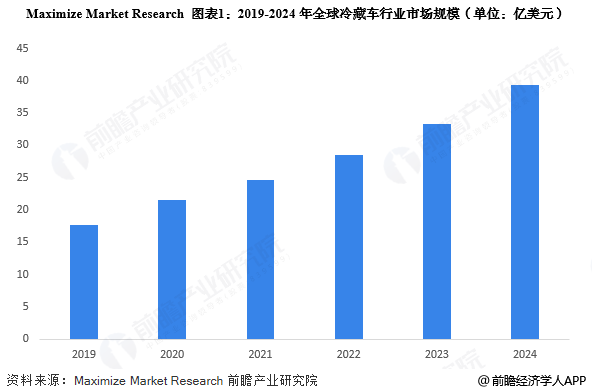
Group 1 - The global refrigerated truck market is projected to grow steadily, reaching a size of $3.93 billion by 2024, with a year-on-year increase of 17.66% from previous years [1] - North America is the largest market for refrigerated trucks, accounting for approximately 40% of the global market share in 2024, followed by the Asia-Pacific region at 26.5% [3] - The light truck segment dominates the global refrigerated truck market, making up nearly 40% of the market share in 2024, while heavy trucks account for 31.7% and medium trucks for 29.2% [5] Group 2 - In 2024, global sales of new energy refrigerated transport vehicles are expected to reach 37,000 units, with Asia leading the market at approximately 25,000 units, representing 68% of the total [7] - The global refrigerated truck industry has a promising development outlook, with emerging markets in the Asia-Pacific region (especially China and India), Latin America, and the Middle East driving demand for fresh food and pharmaceutical cold chains, projected to reach $5.7 billion by 2030 [9]