华住集团

Search documents
约谈,携程股价越来越高,但强制酒店调价惹上事了
3 6 Ke· 2025-09-18 23:42
Core Viewpoint - Ctrip (9961.HK) is facing regulatory scrutiny from the Zhengzhou Market Supervision Administration due to allegations of unreasonable price manipulation through its "Price Adjustment Assistant" tool, which has been reported to force hotels to comply with price changes without consent [1][2][3] Regulatory Actions - The Zhengzhou Market Supervision Administration conducted an administrative interview with Ctrip on September 17, following a report from multiple hotels regarding forced price adjustments [1] - Ctrip has been ordered to respect merchants' autonomy and rectify issues related to forced activation of the "Price Adjustment Assistant" tool, which modifies hotel prices without consent [1][3] Business Operations - The "Price Adjustment Assistant" is an automated pricing tool that lowers hotel prices on Ctrip if they are higher than competitors, which has raised concerns about its unilateral nature [2][3] - Ctrip's response to the allegations has been to claim that the tool is intended to help hotels adapt to local market prices and enhance competitiveness [3] Financial Performance - Ctrip has shown strong financial performance, with projected revenues of 445 billion yuan and 533 billion yuan for 2023 and 2024, respectively, and net profits of 99 billion yuan and 172 billion yuan [4] - In Q2 2025, Ctrip's revenue reached 148.43 billion yuan, a year-on-year increase of 16%, with net profit rising by 26% to 48.46 billion yuan [4] Market Position - Ctrip holds a dominant position in the domestic OTA market, with a GMV market share of 56% in 2024, providing significant exposure and traffic for hotels [6] - The company has been criticized for squeezing hotel profit margins while maintaining a low-price image to attract users [3][6] Industry Dynamics - The hotel industry is experiencing challenges, with a 11.8% year-on-year increase in total hotel supply, while demand is undergoing structural adjustments, leading to intensified competition [7] - Major hotel chains like Jinjiang Hotels and others have reported declines in revenue and net profit, indicating a tough operating environment [7][8] Competitive Landscape - Competitors like JD.com are seizing the opportunity to expand their presence in the hotel industry by offering lower commission rates and alternative supply chain services [9] - Ctrip has initiated changes in response to industry backlash, including a "de-involution" campaign aimed at restructuring its review system and optimizing recommendation logic [10]


服务经济之科技引领变革(二):酒店AI应用加速落地,提升运营效率
Orient Securities· 2025-09-18 13:09
Investment Rating - The industry investment rating is "Positive (Maintain)" [4] Core Insights - The core value of AI in hotels lies in systematic cost reduction and efficiency enhancement, focusing on optimizing cost structures and resource allocation rather than just self-service at the front desk. AI can lower labor and energy costs through demand forecasting, dynamic pricing, and automated scheduling, while continuously releasing efficiency dividends in supply chain, equipment maintenance, and inventory management. Policy support and technological maturity will drive small and medium-sized hotels to follow suit, enhancing overall industry operational efficiency [3][7]. Summary by Sections Industry Overview - The global hotel AI market is expected to grow at a compound annual growth rate (CAGR) of approximately 15% from 2020 to 2027, driven by the dual demand for customer experience upgrades and cost optimization. Applications such as smart front desks, self-check-in, dynamic pricing, and voice interaction meet guests' preferences for "contactless and personalized" services while significantly reducing labor and energy costs [7]. Key Players and Innovations - Leading hotel groups are achieving cost reduction and efficiency gains, with revenue management and smart rooms as breakthrough areas. For instance, Huazhu's "new front desk model" reduces check-in time to as fast as 10 seconds, while Shoulv's "AI digital store manager" provides traffic forecasting and dynamic pricing for nearly 7,000 hotels, enhancing RevPAR and operational efficiency. Atour leverages its ACARD membership system and "smart experience rooms" for facial recognition check-in [7]. Future Development - The future penetration of AI in the hotel industry will accelerate, focusing on three key areas: building intelligent middle platforms to integrate PMS, RMS, and CRM systems for cross-system data collaboration; naturalizing interactions through virtual customer service and digital humans for a more immersive experience; and expanding applications to security, cleaning, marketing, and refined member operations. With ongoing policy support, technological advancements, and capital investment, AI is expected to become the "infrastructure" for hotels to enhance operational efficiency and competitiveness, driving long-term benefits in cost structure optimization and service quality improvement [7].

从一个公众号智能体说起:好用的Agent,究竟需要什么?
机器之心· 2025-09-18 04:32
Core Viewpoint - The article discusses the evolution and practical applications of AI agents, particularly focusing on Tencent's "公众号智能体" (Public Account Intelligent Agent) and its role in enhancing user experience and operational efficiency in various industries [2][8][35]. Group 1: AI Agent Functionality - The "公众号智能体" can automatically read and update articles from authorized public accounts, addressing the challenge of information overload for users [5]. - A basic yet practical feature of the agent is the article recommendation assistant, which filters and summarizes relevant articles based on user needs [6][8]. - The agent's capabilities highlight the need for a robust industrial platform to support effective AI applications in real-world scenarios [8][11]. Group 2: Industrialization of AI Agents - Tencent's ADP 3.0 platform was launched to facilitate the development of intelligent agents, transitioning from simple applications to complex business services [12][16]. - The platform supports advanced capabilities such as "Agentic RAG," which allows agents to autonomously plan and execute complex tasks by breaking them down into manageable steps [17]. - Workflow capabilities enhance the reliability and stability of complex processes, ensuring compliance with standard operating procedures in industries like hospitality [19][20]. Group 3: Multi-Agent Collaboration - The platform introduces multi-agent collaboration modes, allowing for the integration of agents into workflows and the distribution of tasks among different agents [21][24]. - This collaborative approach increases the capacity to handle complex tasks but also raises challenges in managing communication and synchronization between agents [23]. Group 4: Open Ecosystem and Integration - The ADP platform features a "model plaza" that supports third-party models, reflecting a trend towards flexibility and avoiding vendor lock-in for enterprises [25]. - Over 140 high-quality plugins are available, enabling users to select the most cost-effective models for their needs [26]. - Tencent plans to open-source key technologies in the agent domain, promoting a collaborative ecosystem and demonstrating confidence in its foundational technologies [27]. Group 5: User Accessibility and Market Integration - The article emphasizes the importance of seamless integration of agents into existing user workflows to maximize their value [30]. - A case study of "绝味食品" illustrates how AI agents can enhance marketing efforts, achieving significant improvements in sales performance and customer engagement metrics [31]. - The ultimate goal is to make AI agents not just backend tools but frontline assets that directly interact with consumers, addressing the critical "last mile" challenge in AI application [32][35]. Group 6: Future Directions and Competitive Landscape - The focus of competition in the AI agent space is shifting from model capabilities to practical engineering and ecosystem integration [36]. - The article concludes that a clear and pragmatic framework for developing reliable AI agents is essential for future advancements in the industry [37].

行业景气环比改善,服务消费政策落地,有望享多重红利
2025-09-17 14:59
Summary of Conference Call Records Industry Overview - The service consumption in China is significantly lower than in developed countries, currently at approximately 30% compared to 70% in the US, indicating substantial growth potential [1][2] - The new policies aim to enhance service consumption, particularly in the cultural and tourism sectors, with local governments actively improving service quality [1][2] Key Policy Insights - Five major increments in the new policy include: 1. Optimizing student holiday arrangements to explore spring and autumn breaks, benefiting tourism [1][4] 2. Encouraging IP collaborations to promote cross-industry partnerships [1][4] 3. Linking sports events with cultural tourism to boost consumer engagement [1][4] 4. Promoting AI applications in various sectors such as e-commerce and education [1][4] 5. Regulating non-academic training institutions to encourage market-oriented vocational training [1][4] Impact on Specific Sectors - **Tourism and Hospitality**: - The expansion of the visa-free entry policy is expected to significantly boost inbound tourism, particularly benefiting major cities like Beijing and Shanghai, as well as OTA platforms and hotels [3][9][12] - **Cultural and Sports Events**: - The policy encourages the introduction of international sports events and supports local sports activities, which will benefit event organizers and related industries, enhancing investor expectations [1][6] - **Education and Training**: - The new regulations for non-academic training institutions will favor companies like New Oriental and others in the vocational training sector [7][8] Financial and Economic Support - The government plans to utilize central budget investments and local special bonds to support cultural tourism and elderly care facilities, which will attract social capital investment [13] - Financial tools will be employed to increase credit availability, directly benefiting companies involved in consumer lending, such as Chongqing Department Store [13] Additional Considerations - The adjustment of student holiday schedules is anticipated to increase tourism frequency while alleviating congestion during peak seasons [11][12] - The integration of AI in service sectors is expected to enhance operational efficiency and reduce costs, indicating a significant trend in future consumption development [10]


互联网:2025年环球旅讯峰会要点总结
Haitong Securities International· 2025-09-17 13:02
Investment Rating - The report maintains a positive outlook on the travel industry, particularly on Ctrip, with a target price of $82 based on a 20x PE for 2026 N-GAAP OP of 20.851 billion RMB [4]. Core Insights - The global travel market has recovered to pre-pandemic levels, with a significant increase in inbound tourism driven by visa-free policies, showing a 15.8% year-on-year growth in inbound visitors in the first half of 2025 [3][7]. - The hotel industry is facing an oversupply, with a supply growth rate of 11.8% in the first half of 2025, leading to a potential 2-3 year period for inventory digestion [3][11]. - Ctrip is focusing on enhancing hotel efficiency and creating new demand scenarios, such as inbound tourism and performance markets [3][4]. - The importance of membership ecosystems is emphasized, as loyalty programs significantly influence the travel behavior of the new generation of travelers [3][7]. - AI applications in the travel industry are on the rise, with over 64% of consumers having used AI for travel planning, although concerns about data security and decision transparency remain barriers [3][15]. Summary by Sections Global Travel Market - The global travel market has returned to pre-pandemic levels, with online penetration rates continuing to rise. Inbound tourism saw a 15.8% increase in visitor numbers in the first half of 2025, with visa-free visitors growing by 53.9% [3][7]. - The demand for outbound travel is also recovering, with short-haul outbound travel increasing by 38.1% and long-haul by 22.3% [3][7]. Hotel Industry - The hotel industry is experiencing oversupply, with a 11.8% growth in hotel supply in the first half of 2025. Ctrip's CEO suggests that it may take 2-3 years to digest this inventory [3][11]. - Major hotel groups like Huazhu, Jinjiang, and Shoulv are focusing on deepening domestic market operations, with Huazhu making progress in Southeast Asia [3][11]. Ctrip - Ctrip is implementing strategies to help hotels improve efficiency and create new demand scenarios, such as inbound tourism and performance markets [3][4]. - The company is also enhancing its marketing efforts in overseas markets to capture the spending mindset of inbound foreign tourists [4]. Membership Ecosystem - The loyalty programs are increasingly influential among younger travelers, with 15-20% of the younger generation willing to spend more for membership upgrades [7]. AI Applications - AI is being increasingly utilized in the travel industry, with 64% of consumers having used AI for travel planning. However, issues like data security and decision transparency are still significant concerns [15].

九部门发布扩大服务消费“19条” 促消费政策有望进一步加码(附概念股)
Zhi Tong Cai Jing· 2025-09-17 11:33
Group 1 - The government has introduced 19 specific measures to boost service consumption, focusing on enhancing service supply and attracting foreign consumers [1][3] - The measures cover a wide range of industries, including internet, culture, telecommunications, sports events, education, and high-end healthcare, indicating a favorable policy environment for these sectors [1][3] - The emphasis is on addressing the supply-side shortage of quality services through financial support and policy adjustments, which is expected to invigorate the service consumption market [1][2] Group 2 - In August, the total retail sales of consumer goods reached 39,668 billion yuan, showing a year-on-year growth of 3.4%, with service retail sales growing by 5.1% [2] - The overall consumption trend remains positive, with expectations for further policy support to boost consumption, potentially increasing the annual growth rate of retail sales to around 4.5% [2][4] - Analysts suggest a shift in policy focus from physical investments to experience-based service consumption, highlighting the importance of government support for service supply [4] Group 3 - Companies like Huazhu Group and Trip.com are expected to benefit from the recovery in tourism consumption, with Huazhu's EBITDA projected to grow by 5% to 1.5 billion yuan [5] - Trip.com anticipates a revenue growth of 12%-17% in 2025, benefiting from policies aimed at attracting foreign consumers [5] - Hong Kong Travel and China Duty Free are positioned to gain from inbound tourism and enhanced duty-free shopping opportunities, with potential increases in visitor numbers and sales [6]


刘强东下厨炒家乡菜 再为一线业务撑腰
Feng Huang Wang· 2025-09-17 02:34
Core Insights - Liu Qiangdong, the founder of JD.com, is actively promoting the company's expansion into various sectors, including food delivery, hospitality, and beauty services, indicating a strong ambition for growth [1][3][10] Group 1: Business Expansion - Liu Qiangdong has been frequently appearing at JD.com's frontline operations, particularly after the company's entry into the food delivery market in April [1][3] - The company aims to innovate the hospitality sector by establishing a new supply chain that reduces costs for restaurants and hotels, targeting a cost reduction to 20% of current levels [5][12] - JD.com is not merely diversifying but is focused on enhancing its supply chain capabilities across various industries, including food delivery and hospitality [6][12] Group 2: Strategic Partnerships - JD.com has signed a strategic cooperation agreement with Jinjiang Hotels to integrate resources and innovate in dining and hospitality services [11][12] - The company is leveraging high-profile events, such as wine tasting sessions, to engage with high-net-worth customers and promote its hospitality services [10][11] Group 3: Market Positioning - Liu Qiangdong emphasizes that JD.com's self-operated model does not harm platform sellers but rather complements them, as evidenced by a 30% growth in restaurants within a five-kilometer radius of the first "Seven Fresh Kitchen" [5][6] - The company is positioning itself against major OTA players like Meituan and Ctrip by offering a zero-commission policy for up to three years, aiming to alleviate pressure on hotel operators [12][13] Group 4: User Engagement - JD.com has reinitiated user engagement events, reminiscent of its early days, to strengthen customer relationships and gather feedback for business improvement [9][10] - The recent wine tasting event saw a significant increase in hotel bookings and user engagement, indicating a successful strategy to attract customers [11][12]

中国入境旅游 - 全球酒店报告-Investor Presentation-China Inbound Tourism – Global Hotel Report
2025-09-17 01:51
Summary of Key Points from the Conference Call Industry Overview - **Industry Focus**: The report centers on China's inbound tourism and its implications for the lodging sector, particularly for international branded hotel chains [2][10][11]. Market Size and Growth Potential - **Inbound Lodging GMV Growth**: Expected to increase from US$10 billion to US$65 billion over the next decade, indicating significant growth potential for the sector [2]. - **International Tourists**: The number of international tourists to China is projected to rise from 32 million in 2019 to between 71 million and 211 million by 2034, depending on various scenarios [10][15]. - **Per Head Spending**: Anticipated to grow from US$2,418 in 2019 to between US$2,790 and US$4,077 by 2034, reflecting an increase in tourism revenue [10][15]. Revenue Projections - **Tourism Revenue**: Total tourism revenue from international travelers is expected to reach between US$199 billion and US$864 billion by 2034, with lodging revenue specifically projected to grow significantly [15][18]. - **Lodging Revenue**: Lodging revenue from international travelers is forecasted to increase from US$11 billion in 2019 to between US$24 billion and US$138 billion by 2034 [15][18]. Key Players and Market Dynamics - **International C-Corps**: Major hotel chains such as Marriott, Hilton, and IHG are expected to benefit the most from the growth in inbound tourism [2][18]. - **Domestic Market**: Domestic travel lodging spending is projected to grow significantly, with a CAGR of 20% anticipated from 2024 to 2034 [18]. Risks and Challenges - **Tourist Growth Rate**: There are concerns regarding slower global tourist growth, which could impact China's share of international tourists [109]. - **Spending Growth**: Per head spending growth may not meet expectations, potentially affecting overall revenue [109]. - **Construction Delays**: Hotel construction may face delays due to the outlook on Revenue Per Available Room (RevPAR) [109]. Valuation Insights - **Valuation Metrics**: The report includes various valuation metrics for key players, indicating market cap and expected P/E ratios for companies like H World, Marriott, and Hilton [172][173]. - **Market Positioning**: The report highlights the competitive positioning of international C-Corps in China, noting that they make up a significant portion of the hotel pipeline [70][90]. Conclusion - **Investment Opportunities**: The growth potential in China's inbound tourism presents significant investment opportunities, particularly for international hotel chains and related sectors [2][10][11]. - **Monitoring Trends**: Continuous monitoring of tourism trends, spending patterns, and competitive dynamics will be crucial for stakeholders in the lodging industry [10][11][109].
港股概念追踪 | 九部门发布扩大服务消费“19条” 促消费政策有望进一步加码(附概念股)
智通财经网· 2025-09-16 23:45
Group 1 - The Ministry of Commerce and nine other departments have jointly issued measures to boost service consumption, indicating a stronger focus on service consumption than before [1] - The measures include 19 specific tasks across five areas, such as developing service consumption platforms, enhancing the quality of services in various sectors, and increasing financial support for service facilities [1][2] - The measures aim to address the supply-side shortage of quality services, which is a key focus of the current policy [1][3] Group 2 - The measures are expected to stimulate market vitality by providing financial support to service industry operators, thereby reducing their financing costs [2] - In August, the total retail sales of consumer goods reached 39,668 billion yuan, with a year-on-year growth of 3.4%, indicating a continuous expansion in market sales [2] - Analysts predict that the overall retail sales growth rate for the year could reach around 4.5%, reflecting the government's commitment to boosting domestic demand [2][3] Group 3 - Companies like Huazhu Group and Trip.com are expected to benefit from the recovery in tourism consumption, supported by policies aimed at enhancing service infrastructure [4] - Hong Kong Zhonglv's acquisition of stakes in tourism-related companies is anticipated to contribute additional profits, benefiting from the optimized inbound tourism policies [5] - China Duty Free's core business of providing duty-free shopping for inbound travelers is likely to see increased sales if policies facilitate easier access for tourists [6]
腾讯AI战略大提速,资本开支已达831.6亿元
Shang Hai Zheng Quan Bao· 2025-09-16 15:54
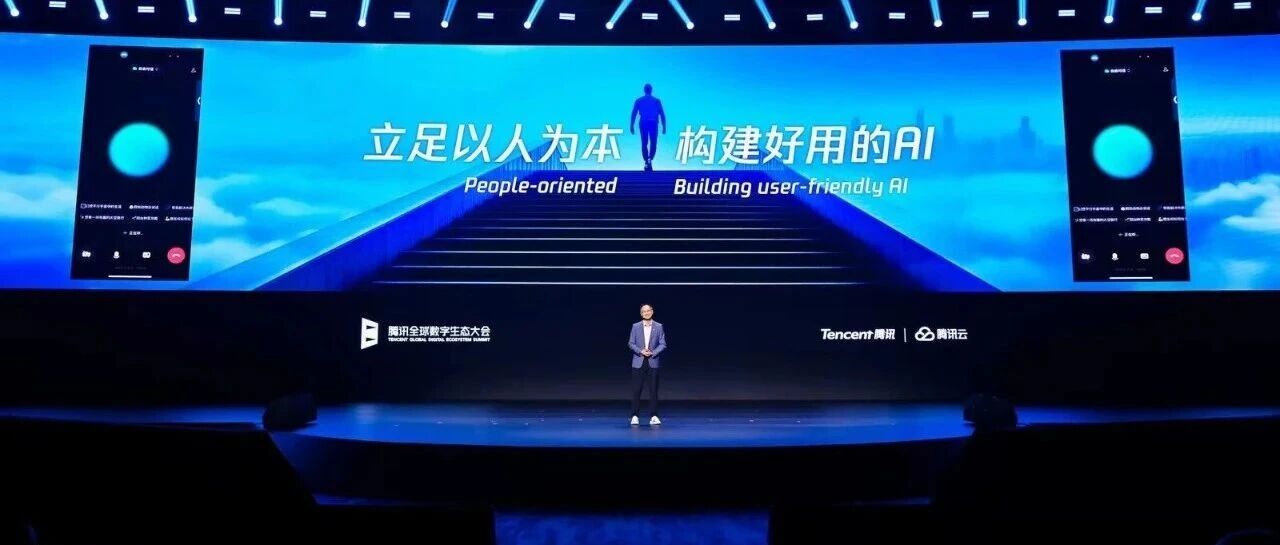
Core Insights - Tencent's AI strategy is driving significant growth and efficiency across various industries, with a focus on both "intelligentization" and "globalization" as key growth engines [2][9][11] Group 1: AI Strategy and Implementation - Tencent has invested a total of 83.16 billion yuan in AI since accelerating its strategy in Q4 of last year, with a 119% year-on-year increase in capital expenditure in Q2 [2] - The company reported a 22% year-on-year increase in gross profit and an 18% increase in operating profit (Non-IFRS) in the same quarter, highlighting the financial benefits of its AI investments [2] - AI capabilities are being integrated into various business sectors, including advertising, gaming, and cloud services, significantly enhancing operational efficiency and revenue growth [6][9] Group 2: AI Applications in C-end and B-end - On the consumer side, Tencent's "Yuanbao" has rapidly evolved, with user inquiries reaching the total amount of the previous month within just a few days [5] - For business applications, Tencent Cloud's AI features have seen a 150% year-on-year increase in user adoption, with tools like "AI Minutes" and knowledge management systems achieving high accuracy rates [5][6] - AI is also streamlining internal processes, reducing contract review times by 80% and increasing coding efficiency by over 16% [5][6] Group 3: Global Expansion and Partnerships - Tencent is focusing on global expansion, with a significant increase in overseas cloud service clients, doubling in the past year [12] - The company is investing $150 million to build its first data center in the Middle East and has established multiple global technology support centers across Asia, Europe, and the Middle East [12] - Partnerships with companies like Huazhu Group and AstraZeneca are leveraging Tencent's AI capabilities to enhance customer service and operational efficiency [8][12]