茶百道

Search documents
茶百道与泸州老窖联名推出白酒奶茶 首日热卖近12万杯
Zheng Quan Shi Bao Wang· 2025-09-17 12:56
Core Insights - The new tea beverage brand Cha Bai Dao (02555.HK) has relaunched its classic drink "Zui Bu Shang Dao," which combines white liquor and milk tea, achieving nearly 120,000 cups sold on its first day [1] - The drink uses real white liquor and is designed with consumer health in mind, containing approximately 174 kcal per serving, catering to the rising trend of "micro-drinking" among younger consumers [1] - The Chinese liquor market is seeing a shift, with over 60% of consumers now being young people aged 18-35, indicating a significant change in consumer preferences [1] Product Launch and Sales Performance - Cha Bai Dao has been actively launching new products this year, including the Oriental Plant Series and Fresh Pomegranate Series, which have received positive market feedback [2] - The newly launched "Fresh Pomegranate" series, featuring "Fresh Pomegranate Ice Tea" and "Fresh Pomegranate Guava," sold 200,000 cups on its first day [2] - In Q2, new product sales accounted for 28% of total sales, with daily average GMV per store increasing by approximately 15% compared to Q1, reaching the highest quarterly level in nearly a year [2]

“微醺经济”升温,白酒倒进奶茶杯?“醉步上道”首日热卖近12万杯
Yang Zi Wan Bao Wang· 2025-09-17 08:37
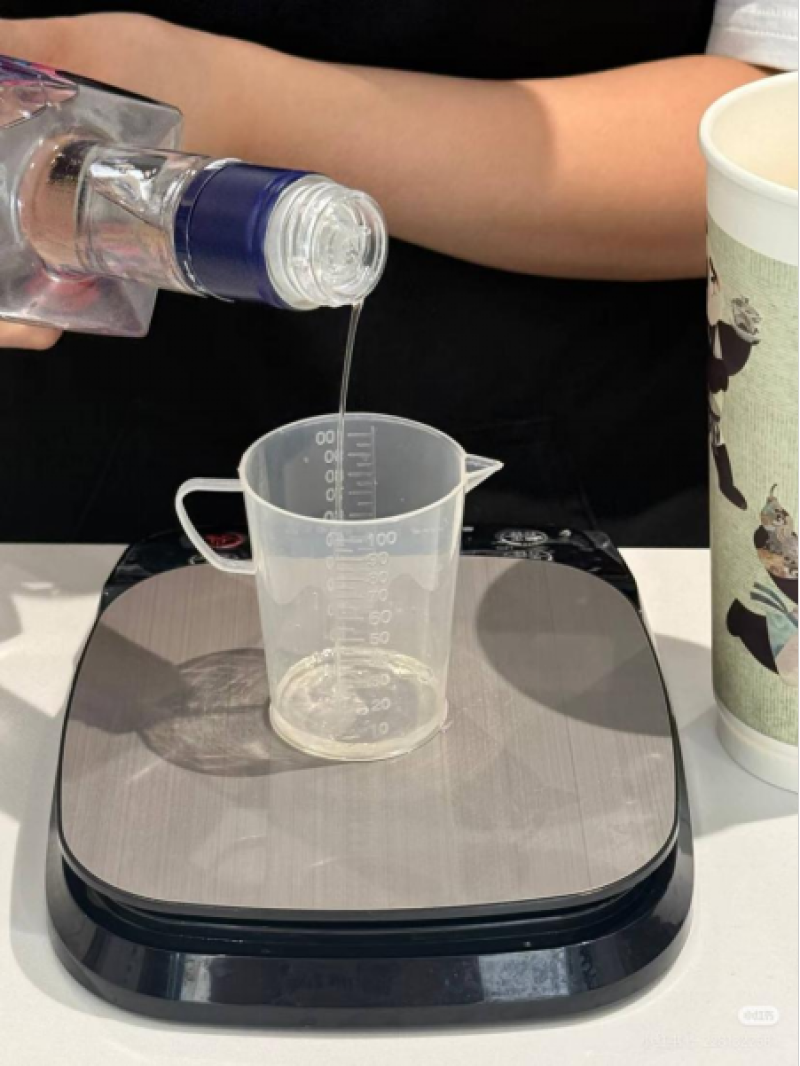
Core Insights - The new tea beverage brand Cha Bai Dao has re-launched its classic drink "Zui Bu Shang Dao," which combines white liquor and milk tea, achieving nearly 120,000 cups sold on its first day [1][4] - "Zui Bu Shang Dao" is a collaboration with Luzhou Laojiao and is the first innovative drink in China to combine white liquor with milk tea, originally launched in 2020 [1][3] - The drink has gained a loyal following over the past five years, with consumers frequently requesting its return on social media platforms [1] Product Details - Each cup of "Zui Bu Shang Dao" contains 3 grams of Luzhou Laojiao white liquor, emphasizing the use of genuine liquor in the drink [3][4] - The drink combines the flavors of aged Pu'er tea and fresh milk, with a calorie count of approximately 174 kcal for a medium-sized cup without added sugar [4] - The product is designed to cater to health-conscious consumers while providing a fresh and mild intoxication experience [4] Market Trends - According to the China Alcohol Industry Association, over 60% of white liquor consumers are now young people, with a significant increase in the 18-35 age group [4] - The rise of the "mild intoxication economy" has led to a growing demand among young consumers for products that offer a light drinking experience [4] - Cha Bai Dao's decision to reintroduce "Zui Bu Shang Dao" reflects its sensitivity to consumer demand and market trends [4] Company Strategy - Cha Bai Dao's management emphasizes the importance of effective new product launches and lifecycle management for classic products [4] - The company aims to balance quality and cost-effectiveness through supply chain advantages [4]

促服务消费措施出台,巩固板块信心
HTSC· 2025-09-17 06:32
Investment Rating - The report maintains a "Buy" rating for several companies in the service consumption sector, including Gu Ming, Mi Xue, Cha Bai Dao, Xiao Cai Yuan, Da Shi, and others [7][8]. Core Insights - The recent policy measures aimed at expanding service consumption are expected to boost the service sector, particularly in areas such as cultural tourism, IP consumption, and elderly care [1][2]. - The report highlights the potential for significant growth in China's service consumption, with the current contribution of service industry value added to GDP at 57%, compared to around 70% in developed countries, indicating room for expansion [1][2]. - The report emphasizes the importance of high-quality service supply and the integration of new technologies and business models to enhance the service sector [1][4]. Summary by Sections Policy Measures - The report outlines five key areas with 19 specific measures to promote service consumption, including the cultivation of service consumption platforms and the enhancement of high-quality service supply [3][4]. - Specific initiatives include optimizing cultural product offerings, extending operating hours for tourist attractions, and promoting long-term care insurance [3]. Market Performance - As of August 2025, retail and catering revenue reached 449.6 billion yuan, showing a year-on-year growth of 2.1%, indicating a recovery from previous lows [4]. - Domestic travel during the first half of 2025 saw 3.285 billion trips, a 20.6% increase year-on-year, with spending reaching 3.15 trillion yuan, up 15.2% [4]. Company Recommendations - The report suggests focusing on leading companies with growth potential and strong market positions, such as Gu Ming, Mi Xue, and others, which are expected to benefit from policy support and industry consolidation [5][8]. - Specific companies highlighted for their growth potential include Gu Ming (1364 HK), Mi Xue Group (2097 HK), and others, with target prices set for each [8][12]. Financial Performance - Gu Ming reported a 34.4% year-on-year increase in GMV to 14.1 billion yuan in the first half of 2025, with a net profit of 1.625 billion yuan, reflecting a 121.5% increase [13]. - Mi Xue Group's revenue for the first half of 2025 was 14.87 billion yuan, a 39.3% increase year-on-year, with a net profit of 2.69 billion yuan, up 42.9% [15]. Growth Outlook - The report anticipates that as the new measures are implemented, the service sector will experience a surge in high-quality supply and innovative business models, driving domestic demand growth [4][5].





秋果扎堆,你尝到这波时令果茶了吗|消费视窗
Sou Hu Cai Jing· 2025-09-17 01:20
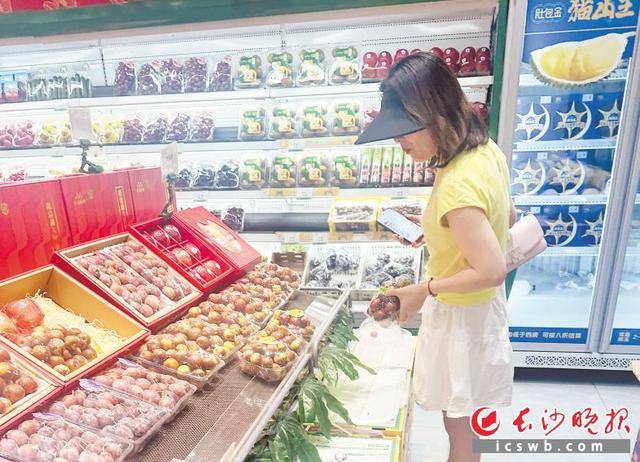
Core Insights - The article highlights the arrival of autumn fruits in Changsha, with a variety of seasonal fruits such as persimmons, pomelos, pomegranates, winter jujubes, and citrus fruits becoming available, providing consumers with new flavors after the summer season [1][3] Group 1: Seasonal Fruits - The market is currently seeing a mix of summer and autumn fruits, with seasonal varieties like autumn pears, plums, and pomegranates being particularly popular among consumers [3] - Local fruit vendors are promoting the health benefits of consuming seasonal fruits, with customers expressing a preference for fresh, in-season options [3] - Fruit gift boxes featuring seasonal fruits are gaining popularity, with a notable example being a three-piece gift box priced at 69.9 yuan, which is marketed as both practical and thoughtful for gifting [3] Group 2: New Beverage Offerings - Major tea brands in Changsha are launching autumn-themed beverages, such as "Fresh Pomegranate Ice Tea" and "Fresh Pomegranate Guava," which have quickly gained popularity, with 200,000 cups sold on the first day of launch [5] - The preparation of these beverages involves fresh pomegranate seeds being extracted on-site, enhancing customer engagement and satisfaction [5] - Local dessert shops are also introducing autumn-themed desserts, incorporating seasonal fruits like persimmons, which are associated with good fortune [5] Group 3: Pricing Trends - Industry experts indicate that the current prices for autumn fruits are relatively high due to the early harvest of certain varieties, with prices expected to decrease significantly after the National Day holiday [6] - For instance, the retail price of soft-seeded pomegranates is currently around 8 to 10 yuan per pound, which may drop to 5 to 6 yuan per pound post-holiday, as supply increases and fruits mature [6] - Consumers are advised to wait until after the National Day for better pricing and taste, as the fruits will be sweeter and more abundant [6]
六大新茶饮巨头半年“捞金”超55亿,靠外卖撑起“半边天”?
Xin Lang Cai Jing· 2025-09-16 08:20
Group 1 - The core viewpoint of the article highlights the strong performance of major tea beverage brands in the first half of 2025, with total revenue exceeding 33 billion yuan and net profits surpassing 5.5 billion yuan despite a challenging market environment [1][2] - Six major tea brands reported significant revenue growth, with Mixue Ice City achieving 14.87 billion yuan in revenue and 2.72 billion yuan in net profit, reflecting year-on-year increases of 39.3% and 44.1% respectively [2][3] - The takeaway from the performance indicates that delivery services have become a crucial driver for revenue growth among tea brands, with platforms like JD.com reporting over 100 million orders for brands like Mixue Ice City within four months of launching [5][6] Group 2 - The industry is witnessing a trend of closing unprofitable stores, with over 2,500 franchise locations shut down by leading tea brands in the first half of the year, as companies shift focus from expansion to improving profitability [9][11] - Companies like Nayuki Tea and Guming have adopted strategies to enhance operational efficiency by closing underperforming stores while focusing on direct-operated models, resulting in improved sales performance [11][12] - The strategy of targeting lower-tier markets remains a priority, with brands like Guming increasing their store presence in second-tier and below cities, which now account for 81% of their total stores [12][13] Group 3 - Major tea brands are diversifying their product offerings, with coffee becoming a common strategic choice, as seen with Guming and others integrating coffee into their existing store formats [13][15] - Nayuki Tea has launched a new light food and beverage concept, expanding its product range to include healthy options and all-day dining, thereby broadening its consumer appeal [18] - The exploration of new store formats and product lines is seen as a key strategy for brands to capture additional market share and adapt to varying consumer needs across different city tiers [17][18]
外卖补贴大战埋下隐忧?新茶饮留客出新招
Zheng Quan Shi Bao Wang· 2025-09-16 05:05
Core Insights - The takeaway from the article is that while the recent food delivery subsidy war has led to short-term sales growth for new tea beverage brands, it has also created long-term concerns regarding pricing dependency and profitability for franchisees [1][5][6]. Group 1: Impact of Delivery Subsidies - Brands actively participating in the subsidy war have seen significant short-term sales increases, with companies like Mixue Group reporting a revenue of 14.875 billion yuan, a year-on-year growth of 39.3% [2]. - The average single-store sales revenue for Mixue Group reached 278,000 yuan, up 13.2% year-on-year, benefiting from the increased order volume due to the subsidy war [2]. - Other companies like Nayuki Tea reported that third-party delivery platforms contributed approximately 44.2% to their direct store revenue, with a year-on-year increase in delivery revenue of 7.5% [2]. Group 2: Concerns and Challenges - The subsidy war has led to a "price dependency" among consumers, which could disrupt the pricing structure of brands in the long run [1][5][6]. - Franchisees are facing a dilemma where they must share the costs of subsidies, leading to a situation where revenue increases do not translate into profit, thus affecting long-term stability [1][6]. - Companies like Bawang Chaji, which chose not to participate in the subsidy war, reported a significant decline in single-store performance, with a 25% year-on-year drop in average monthly GMV [3][7]. Group 3: Strategic Responses - As subsidies are expected to decrease, leading brands are focusing on product differentiation and optimizing store operations to retain consumers [1][8]. - Companies are increasing their investment in product innovation and digital tools to enhance operational efficiency and reduce costs [8][9]. - Bawang Chaji plans to introduce a new menu and automation equipment to improve operational efficiency and reduce labor costs by the end of the year [9].
文轩指数| 2025上半年上市新茶饮企业活力排名
Sou Hu Cai Jing· 2025-09-16 04:54
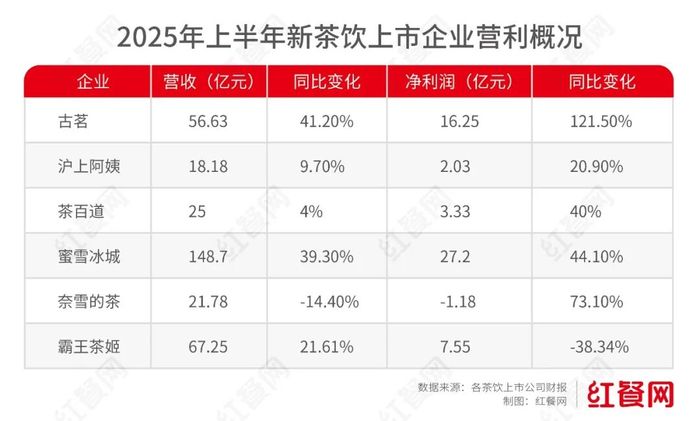
Core Insights - The new tea beverage industry is experiencing significant growth, with six listed companies reporting total revenue exceeding 33 billion yuan and profits over 5 billion yuan in the first half of the year [2] - The competitive landscape is shifting due to aggressive price wars on delivery platforms, impacting the market dynamics of new tea beverages [2] - The performance of listed companies varies widely, indicating a divergence in market vitality and operational strategies [2][9] Group 1: Industry Performance - In the first half of 2025, six listed new tea beverage companies achieved a total revenue of over 33 billion yuan, with profits exceeding 5 billion yuan, reflecting ongoing industry growth [2] - The competitive environment has intensified, with major platforms like Meituan, JD, and Ele.me engaging in subsidy wars, leading to a test of supply chain resilience and brand loyalty among new tea companies [2] - The market is transitioning from rapid expansion to a focus on quality and efficiency, as companies adapt to changing consumer preferences and competitive pressures [9] Group 2: Company Rankings and Financials - The vitality ranking of listed new tea beverage companies for the first half of 2025 shows that Mixue Ice City leads with a revenue of 14.875 billion yuan, a 139.3% increase, and a net profit of 2.718 billion yuan, up 144.1% [3] - Other notable companies include Guo Mei with 5.663 billion yuan in revenue (up 141.2%) and Hu Shang A Yi with 1.818 billion yuan (up 19.7%) [3] - Naixue's Tea reported a revenue decline of 14.4% to 2.178 billion yuan, with a significant net loss reduction of 73.1% to 118 million yuan, indicating ongoing challenges despite operational adjustments [15] Group 3: Market Dynamics and Strategic Shifts - The new tea beverage sector is witnessing a shift from aggressive store expansion to a more measured approach, with companies like Guo Mei slowing their growth rate while focusing on product development and marketing [10] - Mixue Ice City continues to expand rapidly, adding nearly 9,796 stores in the first half of the year, while Cha Bai Dao has significantly slowed its growth, adding only 59 stores [12] - The competitive landscape is increasingly characterized by a divide between strong and weak players, with predictions of a more pronounced market consolidation by 2025 [15]

外卖补贴退坡 新茶饮如何留住消费者?
Zheng Quan Shi Bao· 2025-09-15 22:33
Core Insights - The takeaway from the recent news is that the takeaway subsidy war has significantly impacted the new tea beverage industry, with both positive short-term sales growth for participating brands and long-term concerns regarding pricing and profitability [1][5][8] Group 1: Impact of Subsidy War - Brands actively participating in the subsidy war have seen a notable increase in sales, while those not participating have experienced a decline in same-store data [1][2] - For instance, Mixue Group reported a revenue of 14.875 billion yuan, a year-on-year increase of 39.3%, with net profit rising 44.1% to 2.718 billion yuan, leading the industry [2] - Naixue's Tea indicated that third-party delivery platforms contributed approximately 44.2% to direct store revenue, with a year-on-year increase in delivery revenue of 7.5% [2] Group 2: Concerns and Challenges - The subsidy war has raised concerns about long-term sustainability, as it may lead to consumer price dependency and affect the pricing structure of brands [1][5][6] - Companies like Bawang Chaji, which chose not to participate in the subsidy war, reported a significant decline in same-store performance, with a 25% drop in average monthly GMV [3][7] - The pressure on franchisees to share subsidy costs has created a situation where increased revenue does not translate into increased profits, leading to operational challenges [5][6] Group 3: Future Strategies - As the subsidy war cools down, brands are focusing on product innovation and operational efficiency to retain consumers and stabilize pricing [8][9] - Companies are investing in new product development, with Tea Baidao reporting that new product sales accounted for 28% of total sales in the second quarter [8] - The industry is shifting from rapid expansion to quality improvement, with a focus on optimizing store models and controlling costs for sustainable growth [9]
外卖补贴退坡新茶饮如何留住消费者?
Zheng Quan Shi Bao· 2025-09-15 18:34
Core Insights - The takeaway from the recent news is that the takeaway subsidy war has significantly impacted the new tea beverage industry, with both positive short-term sales growth for participating brands and long-term concerns regarding pricing and profitability for franchisees [1][5][6]. Group 1: Impact of Subsidy War - Brands actively participating in the subsidy war have seen a notable increase in sales, while those not participating have experienced a decline in same-store performance [1][2]. - For instance, Mixue Group reported a revenue of 14.875 billion yuan, a year-on-year increase of 39.3%, with net profit rising 44.1% to 2.718 billion yuan, leading the industry [2]. - Naixue's Tea indicated that third-party delivery platforms contributed approximately 44.2% to direct store revenue, with a year-on-year increase in delivery revenue of 7.5% [2]. Group 2: Concerns and Challenges - The subsidy war has raised concerns about consumer price sensitivity, leading to a potential dependency on discounts, which could harm brand pricing structures in the long run [5][6]. - Franchisees face challenges as they must share the burden of subsidy costs, leading to a situation where revenue increases do not translate into profit [5][6]. - Companies like Bawang Chaji, which chose not to participate in the subsidy war, reported a significant decline in same-store performance, with a 25% drop in average monthly GMV per store in the Greater China region [3][7]. Group 3: Future Strategies - As the subsidy war cools down, brands are focusing on product innovation and operational efficiency to retain consumers and stabilize pricing [8][9]. - Companies are increasing their R&D efforts to launch differentiated products and leveraging digital tools to optimize operations and reduce costs [8][9]. - For example, Bawang Chaji plans to introduce a new menu and automation equipment to enhance operational efficiency and reduce labor costs [9].
一周上新!入口刚好、Costco、我的面包...海内外新品资讯抢先看 | 全球职人情报站
东京烘焙职业人· 2025-09-14 08:32
Group 1 - The article highlights the latest bakery product launches from various brands, showcasing innovative flavors and ingredients [2][3][4][5][6][8][11][13][15][18][22][24][26][28][30][32][33][39][41][43][45][47][49][51][55][57][59][60][62][64][66][68][70][71][73][76][78][80][83][84][87][89][90][92][95][97][99][101][104][105][108][110][112][114][117][119][120][121][122][123][125][126][127][128][129][131][133][135][137] Group 2 - The article discusses the rise of supermarket bakeries and the competition among chain bakeries, indicating a shift in consumer preferences [140] - It mentions the collaboration between various brands and cultural institutions, enhancing product appeal through thematic marketing [120][121][122] - The article notes the expansion of certain bakery brands, such as BAKER & SPICE, which has opened its 100th store, reflecting growth in the sector [128]