三全食品

Search documents
食品加工板块1月30日跌0.68%,*ST春天领跌,主力资金净流出5772.59万元
Zheng Xing Xing Ye Ri Bao· 2026-01-30 08:54
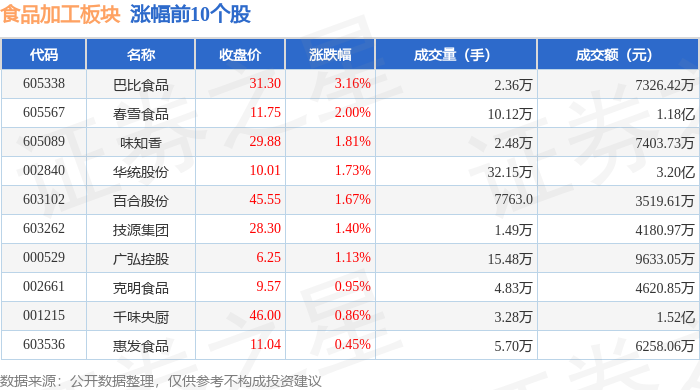
Market Overview - On January 30, the food processing sector declined by 0.68%, with *ST Chuntian leading the drop [1] - The Shanghai Composite Index closed at 4117.95, down 0.96%, while the Shenzhen Component Index closed at 14205.89, down 0.66% [1] Stock Performance - Notable gainers in the food processing sector included: - Baba Foods (605338) with a closing price of 31.30, up 3.16% [1] - Chunxue Foods (605567) at 11.75, up 2.00% [1] - Weizhi Xiang (6805609) at 29.88, up 1.81% [1] - Major decliners included: - *ST Chuntian (600381) at 3.51, down 4.88% [2] - Gaisi Foods (920826) at 13.54, down 3.63% [2] - Tangchen Beijian (300146) at 12.17, down 2.48% [2] Capital Flow - The food processing sector experienced a net outflow of 57.72 million yuan from institutional investors, while retail investors saw a net outflow of 46.55 million yuan [2] - Conversely, speculative funds recorded a net inflow of 104 million yuan [2] Individual Stock Capital Flow - Key stocks with significant capital flow include: - Huadong Shares (002840) with a net outflow of 9.89 million yuan from institutional investors [3] - Chunxue Foods (605567) saw a net inflow of 7.02 million yuan from institutional investors [3] - Qianwei Yangchu (001215) had a net inflow of 6.95 million yuan from speculative funds [3]





盒马、奥乐齐都在推的新式馒头,塞满粗粮切半卖,已经火了半年
3 6 Ke· 2026-01-30 00:49
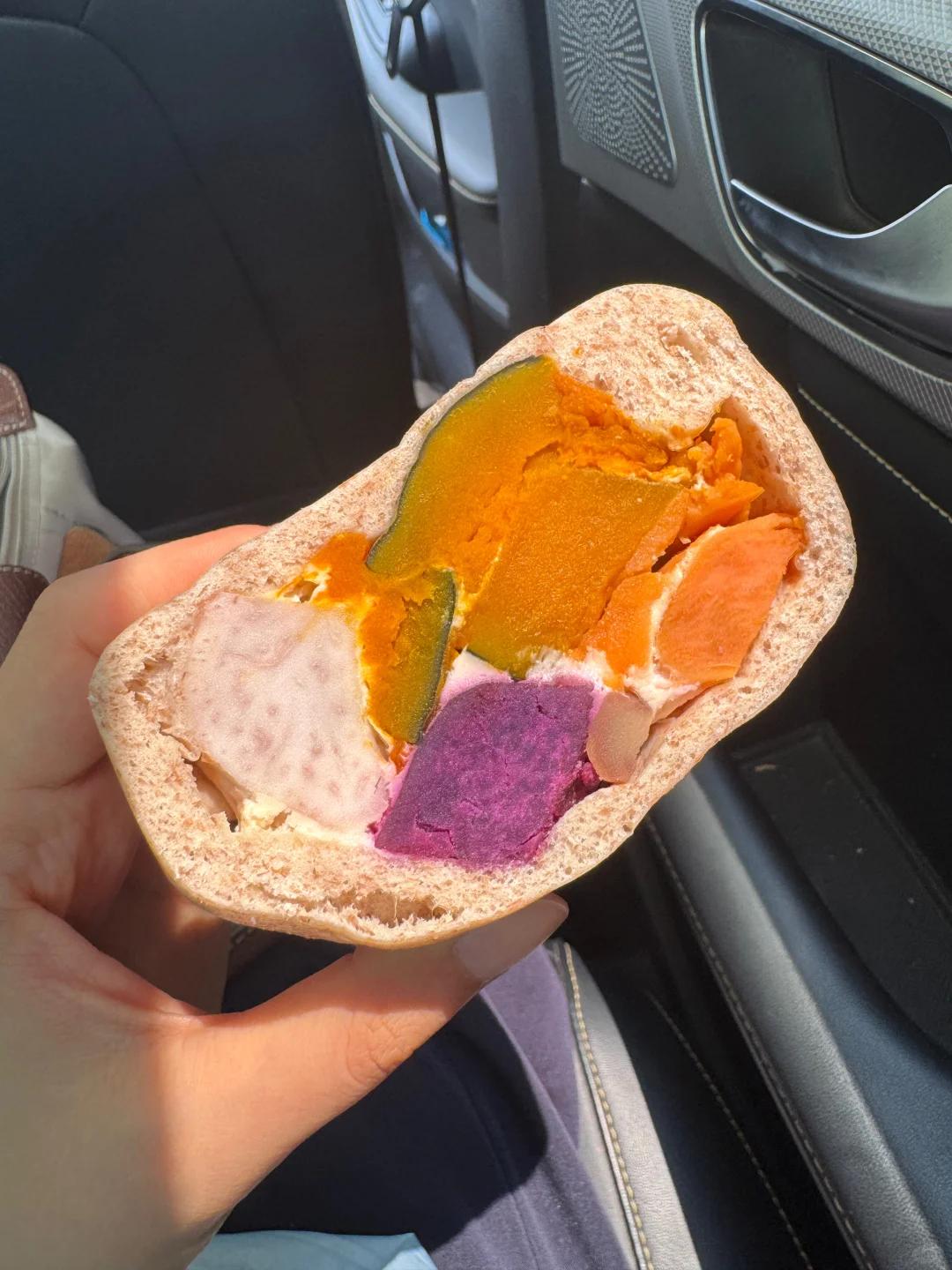
现在的馒头,越来越"花心"了。 近半年来,一种被网友称为"五谷丰登馒头"的新式馒头,开始在社交媒体上频繁出现。 在网友晒出的图片中,"五谷丰登馒头"总是一切两半示人。通过其平整的横切面,可以看到紫薯、芋头、板栗等多种粗粮,被紧实地塞在面皮之下。它们 呈现出粗粮刚蒸熟时新鲜的色泽,仿佛掀开蒸笼的瞬间,看到一锅散发着热气的五谷杂粮。 图片来源:小红书@一颗小豌豆 大量网友晒出了这种"塞满粗粮"的馒头。截至2026年1月29日下午,小红书"五谷丰登馒头"话题下累计讨论量达到4.9万。 引发大量讨论的同时,"五谷丰登馒头"也取得了不错的成绩。 2025年7月,专注早餐面点的品牌蒸笼头,推出"五谷丰登馒头"。截至2026年1月29日,该产品在抖音累计售出6.9万份。 图片来源:盒马 "五谷丰登馒头"采用的产品概念,不只应用在馒头上。欧包、三明治等品类,都有这种将粗粮内馅展示在外的产品推出。 其中,永辉超市的现制产品"丰收的喜悦"欧包最为出圈。截至2026年1月29日下午,小红书"丰收的喜悦"话题下笔记浏览量达1850.7万,讨论量达6.1万。 永辉超市"丰收的喜悦"欧包 图片来源:小红书@Wang41 图片来源:蒸笼头 ...
整个社会都在喊没钱了,为什么这些公司反而年赚百亿?
创业家· 2026-01-29 10:34
Core Viewpoint - The article emphasizes that despite the prevailing narrative of economic hardship, certain industries are thriving and generating significant profits, particularly in the context of Japan's "lost 30 years" and the evolving consumer behavior in China [3][4]. Group 1: Economic Shifts and Opportunities - The concept of a "low-desire society" does not equate to a lack of opportunities, as consumer demand is shifting towards different sectors [4]. - The article identifies eight key industries that are capitalizing on changing consumer preferences, highlighting that demand migration presents substantial business opportunities [5]. Group 2: Key Industries and Trends - **Second-Hand Economy**: The second-hand luxury market in Japan, exemplified by companies like Daikokuya, has seen a significant revenue increase. In China, platforms like Hongbulin and Panghu are experiencing similar growth [6][7]. - **Pet Economy**: With declining birth rates, spending on pets is rising, as seen with brands like Inaba in Japan and Guobao in China, indicating a robust market for pet products and services [12][13][14]. - **Adult Care**: The adult diaper market in Japan has surpassed $10 billion, showcasing the potential of the aging population as a lucrative economic segment [17][18]. - **Health Food and Beverages**: The rise in health consciousness has led to increased demand for products like sugar-free tea and functional beverages in both Japan and China [21]. - **Beauty and Aesthetics**: The beauty industry continues to thrive, with products like collagen supplements and home beauty devices gaining popularity, indicating a strong consumer focus on personal care [23][24][26]. - **Outdoor Recreation**: Companies in the outdoor equipment sector, such as Snow Peak in Japan, are profiting from the growing interest in outdoor activities, reflecting a shift in consumer spending priorities [29][31]. - **Convenience Economy**: The demand for convenience products, such as frozen foods and smart home appliances, is increasing as younger generations seek to save time in their daily routines [39][40]. - **Leisure and Experience Economy**: Consumers are willing to spend on experiences and small pleasures, indicating a dual trend of frugality and indulgence in spending [36][44].

食品加工板块1月29日涨1.22%,三全食品领涨,主力资金净流入1.09亿元
Zheng Xing Xing Ye Ri Bao· 2026-01-29 09:03
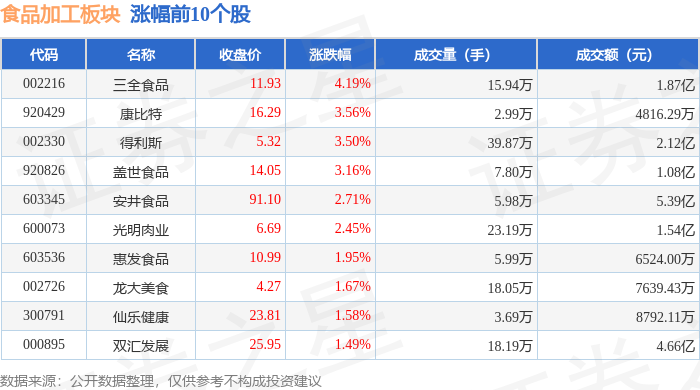
Group 1 - The food processing sector increased by 1.22% on January 29, with Sanquan Foods leading the gains [1] - The Shanghai Composite Index closed at 4157.98, up 0.16%, while the Shenzhen Component Index closed at 14300.08, down 0.3% [1] - Key stocks in the food processing sector showed significant price increases, with Sanquan Foods rising by 4.19% to a closing price of 11.93 [1] Group 2 - The food processing sector experienced a net inflow of 1.09 billion yuan from institutional investors, while retail investors saw a net outflow of 5457.21 million yuan [2] - Major stocks like Anjuke Foods and Sanquan Foods had substantial net inflows from institutional investors, with Anjuke Foods receiving 57.76 million yuan [3] - Retail investors showed a negative trend, with significant outflows from stocks such as Sanquan Foods and Guangming Meat Industry [3]


经济越来越差,这八大行业越赚爆!
创业家· 2026-01-28 10:09
Core Insights - The article discusses how certain industries are thriving despite a general perception of economic downturn, highlighting eight key sectors that present significant business opportunities in a low-desire society [3][4]. Group 1: Key Industries - **Second-Hand Economy**: The second-hand luxury market in Japan, represented by companies like Daikokuya, has seen a surge in revenue. In China, platforms like Hongbulin and Panghu are experiencing similar growth, indicating a shift in consumer spending towards second-hand goods [6][7][8][9]. - **Pet Economy**: With declining birth rates, young people are spending more on pets, leading to a boom in pet food and healthcare products. Companies like Inaba in Japan and Guobao in China are capitalizing on this trend [11][12][14][15]. - **Adult Care Products**: The adult diaper market in Japan has surpassed $10 billion, indicating a growing demand for adult care products in China, with companies like Kexin poised for growth [16][17][18]. - **Health Food and Beverages**: The rise in health consciousness has led to increased sales of sugar-free beverages and functional drinks in both Japan and China, with brands like Suntory and Dongpeng gaining traction [21][22]. - **Beauty Economy**: The demand for beauty products, including collagen supplements and at-home beauty devices, is on the rise, with companies like Jinbo Bio and U like seeing significant sales growth [23][25]. - **Outdoor Recreation**: The outdoor equipment market is thriving, with brands like Snow Peak in Japan and various Chinese brands experiencing rapid sales growth, as consumers seek leisure activities despite economic constraints [25][26][27]. - **Emotional Economy**: Brands like Labubu and Rio are tapping into the emotional needs of consumers, offering products that provide comfort and joy, even in a frugal spending environment [28][29][30]. - **Lazy Economy**: The trend towards convenience has led to increased sales of frozen foods and smart home appliances, with companies like Anjijia and Kewos leveraging technology to save consumers time [33][35][36]. Group 2: Market Trends - The article emphasizes that the current economic climate, often described as a "cold winter," presents unique opportunities for those willing to invest in counter-cyclical sectors [39]. - It suggests that the key to success in this low-desire era is recognizing and seizing opportunities in these emerging markets, rather than succumbing to pessimism [39].

【银河食饮刘光意】专题研究丨鸣鸣很忙港股上市,关注产业链投资新趋势
Sou Hu Cai Jing· 2026-01-28 00:30
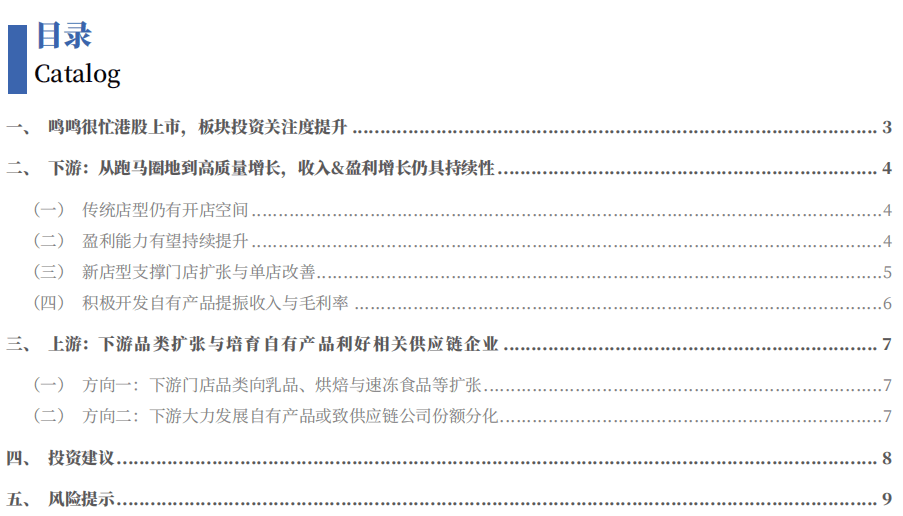
Group 1 - The core viewpoint is that Ming Ming Hen Mang plans to list on the Hong Kong Stock Exchange on January 28, becoming the first stock in the "bulk snack" sector, with a global offering of 14.1 million shares, expected to raise over HKD 3 billion, and a market capitalization of approximately HKD 50 billion [1][7] - The market response has been positive, with eight cornerstone investors subscribing a total of HKD 1.5 billion, including Tencent, Temasek, and BlackRock, and the latest subscription multiple exceeding 1500 times [1][8] Group 2 - Downstream growth is shifting from rapid expansion to high-quality growth, with traditional store types still having significant opening space, projected to reach nearly 50,000 stores by 2025, with a total potential of about 74,000 stores [2][9] - Profitability is expected to continue improving, with adjusted net margins for Ming Ming Hen Mang increasing from 2.3% to 3.9% from 2023 to the first three quarters of 2025, driven by reduced opening subsidies and category structure adjustments [2][13] - New store formats are supporting store expansion and single-store improvement, with both Ming Ming Hen Mang and Wan Chen planning to open discount supermarket formats by 2025, currently accounting for less than 20% of new store types [2][17] - The development of private label products is boosting revenue and gross margins, with both companies planning to increase their private label revenue share, currently in the single digits, compared to 20-30% for similar brands [2][19] Group 3 - Upstream opportunities are emerging as downstream stores expand into categories like dairy, baking, and frozen foods, benefiting related upstream supply chain companies, particularly mid-tier brands with significant revenue elasticity [3][24] - The focus on developing private label products is leading to market share differentiation among supply chain companies, with manufacturers that have strong product development and customization capabilities likely to gain market share [3][26] Group 4 - Investment recommendations highlight the positive outlook for the bulk snack industry, emphasizing the transition to high-quality growth and the potential for upstream supply chain companies to benefit from downstream category expansions and increased private label product shares [4][28]
中国银河证券:看好零食量贩行业发展新趋势带来投资机会 收入增长仍具持续性&盈利能力提升
智通财经网· 2026-01-27 03:15
Core Viewpoint - The report from China Galaxy Securities highlights the investment opportunities arising from the new trends in the snack retail industry, indicating a shift from rapid expansion to high-quality growth, with leading companies driving revenue and profitability improvements [1] Downstream - The traditional snack retail sector has significant room for expansion, with an expected increase to nearly 50,000 stores by 2025, creating a total potential of about 74,000 stores, which represents an increase of over 20,000 stores [2] - Profitability is expected to continue improving, with adjusted net profit margins for Mingming Hen Mang rising from 2.3% to 3.9% and Wancheng's net margin increasing from -1.6% to 4.4% from 2023 to the first three quarters of 2025, driven by reduced store opening subsidies and category structure adjustments [2] - New store formats are supporting expansion and improving single-store performance, with both Mingming Hen Mang and Wancheng planning to open discount supermarket formats by 2025, currently accounting for less than 20% of new store formats, with potential for further growth [2] - The development of private label products is boosting revenue and gross margins, with the share of private label income for the two leading companies expected to be in the single digits, indicating significant room for growth compared to competitors like Don Quijote, where private label shares are around 20-30% [2] Upstream - Downstream stores are expanding their product categories to include dairy, baked goods, and frozen foods, which is expected to benefit related upstream supply chain companies, particularly mid-tier brands with significant revenue elasticity [3] - The focus on developing private label products by downstream stores may lead to market share differentiation among supply chain companies, as the relationship between upstream and downstream evolves from simple trade to deep product collaboration, favoring manufacturers with strong product development and customization capabilities [3]

中国银河发布食品饮料行业研报:鸣鸣很忙港股上市,关注产业链投资新趋势
Mei Ri Jing Ji Xin Wen· 2026-01-26 23:49
Core Viewpoint - China Galaxy has issued a report recommending the food and beverage industry, highlighting the upcoming IPO of "Mingming Hen Mang," which is set to become the first stock in the bulk snack sector in Hong Kong, with a positive market response and significant investor interest [1] Group 1: Downstream Developments - The traditional store model has substantial room for expansion, with an expected increase to nearly 50,000 snack retail stores by 2025, indicating a total potential of about 74,000 stores, with over 20,000 new openings anticipated [2] - Profitability is expected to continue improving, with adjusted net profit margins for "Mingming Hen Mang" rising from 2.3% to 3.9% and "Wancheng" from -1.6% to 4.4% from 2023 to the first three quarters of 2025, driven by reduced store subsidies and category structure adjustments [2] - New store formats are supporting expansion and improving single-store performance, with both "Mingming Hen Mang" and "Wancheng" planning to open discount supermarket formats by 2025, currently representing less than 20% of new store formats [2] - Development of proprietary products is boosting revenue and gross margins, with both companies focusing on customized and private label products, which currently account for a single-digit percentage of revenue, indicating significant growth potential compared to competitors [2] Group 2: Upstream Opportunities - Downstream store category expansion into dairy, baking, and frozen foods is expected to benefit related upstream supply chain companies, particularly mid-tier brands with significant revenue elasticity [3] - The push for proprietary products in downstream stores may lead to market share differentiation among supply chain companies, with those possessing strong product development and customization capabilities likely to gain market share [3] Group 3: Investment Recommendations - The food retail industry is transitioning from rapid expansion to a phase of high-quality growth, with "Wancheng Group" recommended and "Mingming Hen Mang" noted for attention due to their revenue growth and profitability improvements [4] - Upstream, companies benefiting from the expansion into new product categories include "New Dairy" and "Lihigh Foods," with "Yiming Foods" also noted for attention [4] - As downstream stores increase their proprietary product share, supply chain companies with strong R&D and customization capabilities are expected to gain market share, with "Jinzai Foods" recommended and "Yanjin Foods," "Weilong," "Youyou Foods," and "Ganyuan Foods" noted for attention [4]
连续五年扣非净亏损,惠发食品深陷“扩张困局”
Xin Lang Cai Jing· 2026-01-26 08:49
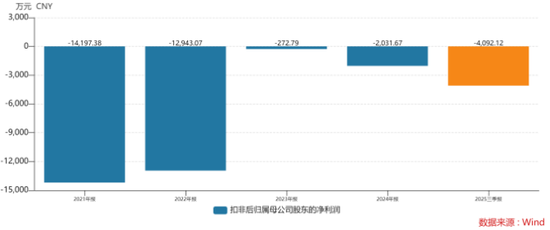
Core Viewpoint - Huifa Foods (603536.SH) is expected to report a net loss of 62 million to 75 million yuan for 2025, marking a year-on-year decline of approximately 273.81% to 352.19% [1][8]. Financial Performance - For the first three quarters of 2025, Huifa Foods' revenue decreased by 19.52% year-on-year, with major product categories such as dumplings, fried products, and Chinese dishes experiencing double-digit declines [3][11]. - The company has accumulated losses exceeding 350 million yuan since 2021, with net profit and net profit excluding non-recurring items both expected to be negative for 2025 [1][8]. - The overall revenue for the first three quarters of 2025 was 1.046 billion yuan, down 18.31% compared to the previous year [11]. Market Dynamics - The Chinese frozen food industry is transitioning from rapid expansion to a focus on quality and structure, with consumer demand shifting from standardized products to those that meet differentiated quality and emotional needs [3][10]. - The market is currently facing structural mismatches between consumer demand and traditional supply, leading to a slowdown in growth for conventional frozen food products [3][10]. Competitive Landscape - In Q3 2025, while companies like Anjijia and Guangzhou Restaurant achieved revenue growth through product innovation and channel expansion, Huifa Foods continued to see revenue decline [4][11]. - The company is facing intense competition, with overcapacity in the frozen food market leading to price wars that erode profit margins [3][10]. Strategic Adjustments - To combat market challenges, Huifa Foods is expanding its market and sales channels, including investments in group meal services and health food supply chains [6][12]. - The company has reported a decline in revenue from its supply chain model, which generated 276 million yuan, down 8.75% year-on-year, although this decline was less severe than other traditional sales channels [6][12]. - Huifa Foods is also exploring overseas markets, with foreign revenue reaching 844.51 million yuan, a 71.77% increase year-on-year, although this remains a small base for significant financial impact [14][15]. Cost Management - Despite increased market expansion efforts, Huifa Foods reported a contraction in management and sales expenses for the first three quarters of 2025, indicating a potential strategic focus on resource allocation towards the fourth quarter [16].

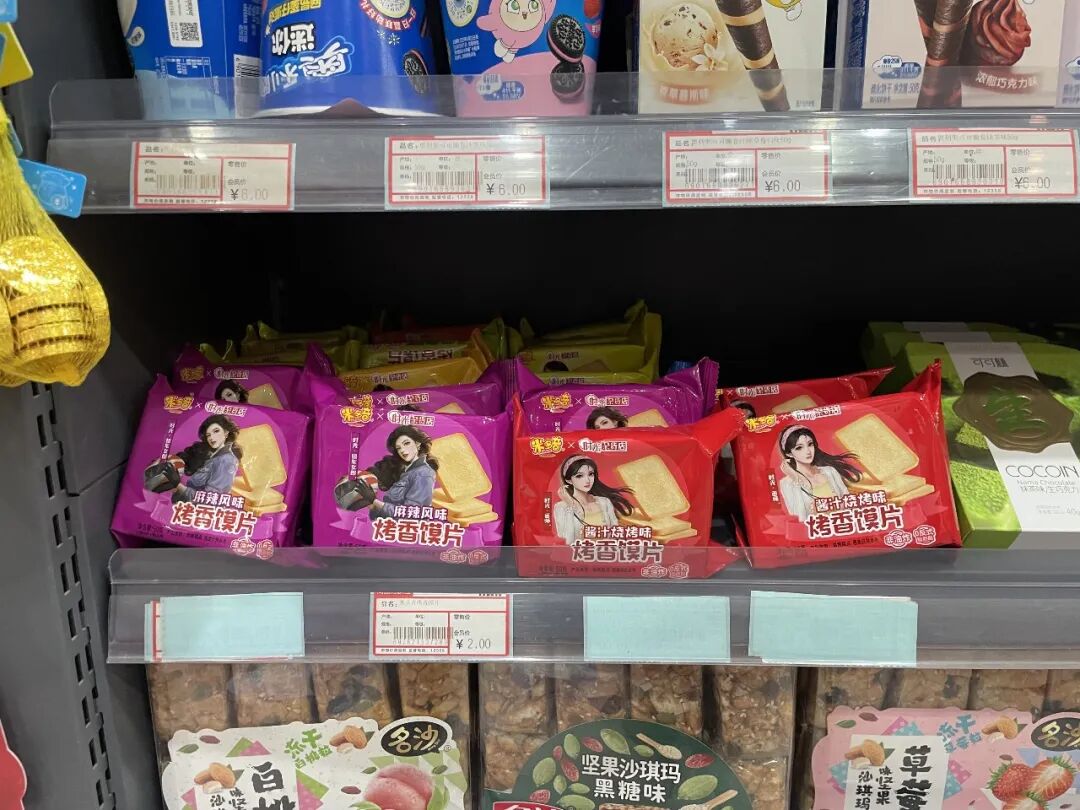
一年狂揽16亿,河南公司卖2元“土味零食”,老板称“不上市、不欠钱”
3 6 Ke· 2026-01-25 23:58
Core Viewpoint - The article highlights the success of the hidden champion company, Midoqi, in the snack food industry, particularly in the production of baked wheat snacks, and its unique business model of avoiding public listing and debt while focusing on quality and market penetration [1][11]. Group 1: Company Overview - Midoqi, known as the "King of Baked Wheat Snacks," achieved a revenue of 1.6 billion yuan in 2023, with annual sales of 6 billion pieces of its main product, and ranks first in the national market for its category [1][3]. - The company has a production capacity of 200,000 tons per year and operates on a 400,000 square meter site, indicating significant scale in its operations [5]. Group 2: Market Strategy - Midoqi initially targeted lower-tier markets, establishing a strong distribution network in local towns before expanding into higher-tier cities, with 80% of its distributors having over 10 years of partnership [5]. - The company has diversified its product line to include various snack types, such as "wheat cubes" and "stone cakes," to capture a broader consumer base [3]. Group 3: E-commerce Transition - Midoqi faced challenges in e-commerce, starting its online presence around 2017 with limited success, but turned a corner in 2020 by introducing small trial packs priced around 2 yuan, which helped penetrate the southern market [6][10]. - The brand has since seen significant growth in online sales, reaching several hundred million yuan annually, aided by strategic partnerships with platforms like Pinduoduo and Taobao [6][9]. Group 4: Brand Evolution - In 2023, Midoqi began refreshing its brand image and product offerings, incorporating health-conscious trends and engaging with younger consumers through popular media collaborations [10]. - The company emphasizes a long-term, stable growth strategy, avoiding the pitfalls of rapid expansion and maintaining a focus on quality and consumer needs [11][16].