华宝证券

Search documents
机构论后市丨12月或成为布局跨年行情的窗口期;春季躁动中值得关注的仍然是成长风格
Di Yi Cai Jing· 2025-12-07 09:45
信达证券:12月或成为布局跨年行情的窗口期;国海证券:春季躁动中值得关注的仍然是成长风格;开 源证券:可提前布局春季躁动。 沪指本周累计上涨0.37%,深证成指涨1.26%,创业板指涨1.86%。A股后市怎么走?看看机构怎么说: ①信达证券:12月或成为布局跨年行情的窗口期 开源证券指出,近期市场回调暂告一段落,可提前布局春季躁动,交易和配置上应注意:(1)科技与 周期双轮驱动,反内卷下周期机会凸显;(2)科技依然具备中长期占优的条件;(3)在近期的调整 中,我们认为部分超跌的成长行业的机会已经有所显现:军工、传媒(游戏)、AI应用、港股互联网、 电力设备等;而未来机构的核心科技蓝筹或也将跟随修复。 ④银河证券:A股市场中长期向好逻辑不改 银河证券指出,年末行情轮动较快,或仍以震荡结构为主。同时,A股市场中长期向好逻辑不改。监管 层下调险企股票投资风险因子,将进一步释放保险资金入市潜力,为市场注入更多增量流动性。 ⑤华宝证券:建议12月优选景气度向上的行业进行提前布局 华宝证券指出,由守转攻,积极布局高景气方向等风起。内外部波动风险均有所缓和,前期热门成长板 块多数出现了止跌企稳的现象,12月有望进一步整固企 ...


基金投顾规模年内翻倍 华宝证券多元布局+创新引领构筑核心竞争力
Mei Ri Jing Ji Xin Wen· 2025-12-05 15:27
Group 1: Awards and Recognition - Huabao Securities won two prestigious awards at the "2025 Capital Market High-Quality Development Forum," including "Best Brokerage Proprietary Team of 2025" and "Best ETF Service Provider of 2025," marking the third consecutive year for the ETF service award [1] - The company has demonstrated strong performance in the ETF sector, maintaining a leading position in the industry [1] Group 2: ETF Business and Wealth Management - Huabao Securities' non-monetary ETF holdings accounted for 84% of its total non-monetary fund holdings as of mid-2025, ranking 25th in ETF holdings, 7th in trading volume, and 12th in trading accounts in the industry [2] - The company offers automated investment solutions such as ETF smart grid robots and ETF regular investment plans, enhancing investment efficiency and lowering operational barriers for investors [2] Group 3: Fund Advisory and Growth - The fund advisory business reached a management scale of over 8 billion yuan by mid-October 2025, reflecting a 107% growth since the beginning of the year, positioning it as a significant growth driver [3] - The "Time Traveler" portfolio, which focuses on global equities, gold, and dividend assets, achieved a return rate of 9.98% in the first half of 2025 and a cumulative return of 39.13% since inception, leading its category in the market [3] Group 4: Proprietary Trading and Investment Strategy - The proprietary trading business adheres to a "steady foundation, diversified expansion" philosophy, achieving consistent performance through a refined research and investment strategy [4] - The company has implemented a dual-track strategy in fixed income investments, combining stable base configurations with flexible trading to enhance profitability [4] Group 5: Asset Management and Institutional Services - Huabao Securities has received six industry awards for its asset management capabilities in 2025, focusing on a strategy of "stable fixed income as a foundation" and "diversified asset allocation" [5] - The company launched the "Huabao Aggregation" platform in the first half of 2025, providing a comprehensive digital solution for institutional clients, significantly improving investment efficiency and service experience [5] Group 6: Carbon Finance Initiatives - Huabao Securities has prioritized carbon finance as a strategic focus, leveraging its resources to support green transformation and assist enterprises in carbon asset trading [7] - The company successfully facilitated carbon emission rights transactions for Baosteel Group and engaged in carbon repurchase transactions, marking significant contributions to the carbon market [7] Group 7: Green Finance and Public Engagement - The company has actively promoted its "Huabao Carbon Finance" brand and launched a carbon points mall in Shanghai, becoming the only brokerage to enter the carbon public welfare sector [8] - Huabao Securities has received multiple awards for its innovative practices in carbon finance, including recognition from the Shanghai government and various environmental organizations [8]
基金投顾产品月报系列(24):基金投顾产品11月调仓一览-20251204
KAIYUAN SECURITIES· 2025-12-04 12:43
- The report categorizes fund advisory products into various types based on equity weight and asset allocation distribution, including pure bond type (0%), fixed income+ type (0%-20%), mixed stock-bond type (20%-70%), stock type (70%-100%), and multi-asset allocation type, with further segmentation of stock-type advisory products into QDII type, industry theme type, and ordinary stock type based on strategy characteristics and income sources[11][17] - Performance statistics show that in November 2025, equity assets performed poorly overall, while pure bond and multi-asset allocation advisory products performed relatively better. Absolute return averages for November were: pure bond type (0.1%), fixed income+ type (-0.2%), mixed stock-bond type (-0.9%), stock type (-1.8%), and multi-asset allocation type (-0.2%). Median absolute returns since 2025 were: pure bond type (1.4%), fixed income+ type (4.2%), mixed stock-bond type (12.3%), stock type (23.0%), and multi-asset allocation type (12.7%)[12][13][16] - Among stock-type advisory products, active selection strategies had the highest relative returns in November 2025, while industry rotation strategies led in returns since 2025. November absolute returns were: active selection (-2.4%), index-driven (-2.6%), and industry rotation (-3.5%). Absolute returns since 2025 were: active selection (23.0%), index-driven (21.7%), and industry rotation (25.6%)[16][21][3] - Fund advisory products with high returns since 2025 include: multi-asset allocation type (e.g., "Global Daily Accumulation" with 28.6% return), stock type (e.g., "Anxin Aggressive 90" with 45.6% return), mixed stock-bond type (e.g., "Peach and Plum Silent" with 25.3% return), fixed income+ type (e.g., "Guotai Idle Money Steady Walk" with 13.3% return), and pure bond type (e.g., "Zhidao AI Stable Type" with 6.0% return)[23][24][26][27][28] - In November 2025, 131 fund advisory products underwent portfolio adjustments. Key allocation changes included increased exposure to A-shares, cash and currency, U.S. stocks, overseas bonds, and emerging markets, while reducing exposure to Hong Kong stocks, gold, other commodities, and bonds[29][33][34] - Sector allocation changes in A-shares for November 2025 included increased exposure to coal, power equipment, basic chemicals, and food and beverages, while reducing exposure to pharmaceuticals, electronics, and non-ferrous metals[36][37][38]
银行理财打新“踩油门” 为何集体顶上科创板?
Zhong Guo Jing Ying Bao· 2025-12-04 11:04
Group 1 - The core viewpoint of the articles highlights the increasing participation of wealth management companies in new stock IPOs, particularly focusing on technology companies and the STAR Market [1][2][3] - Wealth management products are increasingly adopting a "fixed income + new stock subscription" structure, with over 80% of funds allocated to bond assets and a small portion for new stock purchases, balancing returns and volatility [1][2] - The number of wealth management companies participating in new stock subscriptions remains limited, but leading institutions are setting a demonstration effect, with a noticeable increase in new products since September [1][2] Group 2 - There is a growing trend of wealth management products focusing on new stock subscriptions, particularly in sectors like semiconductors, new energy, and high-end manufacturing, reflecting a strategic alignment with national priorities [2][3] - The frequency of new stock subscriptions by bank wealth management subsidiaries in the STAR Market indicates a shift in asset allocation strategies from traditional fixed income to diversified equity investments [3] - The expectation is that by 2026, new stock subscription products will expand into various lines, competing directly with public offering funds and extending into strategic placements and private equity [3][4]
ETF策略指数跟踪周报-20251201
HWABAO SECURITIES· 2025-12-01 06:54
1. Report Industry Investment Rating - No relevant content provided 2. Core Viewpoints of the Report - The report presents several ETF strategy indices constructed with the help of ETFs and tracks their performance and positions on a weekly basis, including the Huabao Research Small - Large Cap Rotation ETF Strategy Index, Huabao Research SmartBeta Enhanced ETF Strategy Index, etc [12] 3. Summary by Relevant Catalogs 3.1 ETF Strategy Index Tracking - **Performance of ETF Strategy Indices Last Week**: The Huabao Research Small - Large Cap Rotation ETF Strategy Index had a return of 1.65%, with a benchmark return of 2.04% and an excess return of - 0.39%; the Huabao Research SmartBeta Enhanced ETF Strategy Index had a return of 5.13%, with a benchmark return of 2.04% and an excess return of 3.10%; the Huabao Research Quantitative Fire - Wheel ETF Strategy Index had a return of 0.58%, with a benchmark return of 2.04% and an excess return of - 1.46%; the Huabao Research Quantitative Balancing Act ETF Strategy Index had a return of 0.84%, with a benchmark return of 1.64% and an excess return of - 0.80%; the Huabao Research Hot - Spot Tracking ETF Strategy Index had a return of 1.98%, with a benchmark return of 2.82% and an excess return of - 0.84%; the Huabao Research Bond ETF Duration Strategy Index had a return of - 0.16%, with a benchmark return of - 0.26% and an excess return of 0.09% [13] 3.2 Huabao Research Small - Large Cap Rotation ETF Strategy Index - **Strategy Principle**: It uses multi - dimensional technical indicator factors and a machine - learning model to predict the return difference between the Shenwan Large Cap Index and the Shenwan Small Cap Index. The model outputs signals weekly to predict the strength of the indices in the next week and determines positions based on the results to obtain excess returns relative to the market [14] - **Performance**: As of 2025/11/28, the excess return since 2024 was 19.93%, the excess return in the past month was 0.50%, and the excess return in the past week was - 0.39%. The return in the past week was 1.65%, - 2.39% in the past month, and 51.22% since 2024 [14][15] - **Position**: The position was 100% in the CSI 300ETF (fund code: 510300.SH) [18] 3.3 Huabao Research SmartBeta Enhanced ETF Strategy Index - **Strategy Principle**: It uses price - volume indicators to time self - built Barra factors and maps the timing signals to ETFs based on the exposure of ETFs to 9 major Barra factors to obtain returns exceeding the market. The selected ETFs cover mainstream broad - based index ETFs and some style and strategy ETFs [19] - **Performance**: As of 2025/11/28, the excess return since 2024 was 24.67%, the excess return in the past month was 7.70%, and the excess return in the past week was 3.10%. The return in the past week was 5.13%, 4.81% in the past month, and 55.96% since 2024 [19][20] - **Position**: The positions included 25.12% in the Science and Technology Innovation 100 ETF (fund code: 588220.SH), 25.03% in the Full Science and Technology Innovation Index ETF (fund code: 589600.SH), 24.96% in the ChiNext 200 ETF (fund code: 159270.SZ), and 24.90% in the ChiNext Comprehensive ETF (fund code: 159541.SZ) [23] 3.4 Huabao Research Quantitative Fire - Wheel ETF Strategy Index - **Strategy Principle**: It starts from multiple factors, including the grasp of medium - and long - term fundamental dimensions, the tracking of short - term market trends, and the analysis of the behaviors of various market participants. It uses valuation and crowding signals to indicate industry risks and multi - dimensionally digs out potential sectors to obtain excess returns relative to the market [23] - **Performance**: As of 2025/11/28, the excess return since 2024 was 33.97%, the excess return in the past month was 2.00%, and the excess return in the past week was - 1.46%. The return in the past week was 0.58%, - 0.89% in the past month, and 65.27% since 2024 [23][26] - **Position**: The positions included 21.02% in the Bank ETF (fund code: 512800.SH), 20.57% in the Oil and Gas ETF (fund code: 159697.SZ), 19.59% in the Securities and Insurance ETF (fund code: 512070.SH), 19.57% in the Power ETF (fund code: 159611.SZ), and 19.25% in the New Energy ETF (fund code: 516160.SH) [27] 3.5 Huabao Research Quantitative Balancing Act ETF Strategy Index - **Strategy Principle**: It uses a multi - factor system including economic fundamentals, liquidity, technical aspects, and investor behaviors to build a quantitative timing system for trend analysis of the equity market. It also establishes a prediction model for the market's small - and large - cap styles to adjust the position distribution in the equity market and comprehensively obtains excess returns relative to the market through timing and rotation [27] - **Performance**: As of 2025/11/28, the excess return since 2024 was - 9.55%, the excess return in the past month was 1.23%, and the excess return in the past week was - 0.80%. The return in the past week was 0.84%, - 1.23% in the past month, and 22.38% since 2024 [27][28] - **Position**: The positions included 9.38% in the Ten - Year Treasury Bond ETF (fund code: 511260.SH), 5.87% in the 500ETF Enhanced (fund code: 159610.SZ), 5.83% in the CSI 1000ETF (fund code: 512100.SH), 32.27% in the 300 Enhanced ETF (fund code: 561300.SH), 23.35% in the Policy - Financial Bond ETF (fund code: 511520.SH), and 23.30% in the Short - Term Financing ETF (fund code: 511360.SH) [30] 3.6 Huabao Research Hot - Spot Tracking ETF Strategy Index - **Strategy Principle**: It uses strategies such as market sentiment analysis, tracking of major industry events, investor sentiment and professional opinions, policy and regulatory changes, and historical deduction to timely track and dig out hot - spot index target products, construct an ETF portfolio that can capture market hot - spots, provide investors with references for short - term market trends, and help them make wiser investment decisions [30] - **Performance**: As of 2025/11/28, the excess return in the past month was 1.93%, and the excess return in the past week was - 0.84%. The return in the past week was 1.98%, - 0.36% in the past month [30][33] - **Position**: The positions included 35.39% in the Non - Ferrous Metals 50ETF (fund code: 159652.SZ), 24.30% in the Bosera Hong Kong Stock Dividend ETF (fund code: 513690.SH), 21.43% in the Hong Kong Stock Connect Pharmaceutical ETF (fund code: 513200.SH), and 18.88% in the Short - Term Financing ETF (fund code: 511360.SH) [34] 3.7 Huabao Research Bond ETF Duration Strategy Index - **Strategy Principle**: It uses bond market liquidity and price - volume indicators to select effective timing factors and predicts bond yields through machine - learning methods. When the expected yield is below a certain threshold, it reduces the long - duration positions in the bond investment portfolio to improve the long - term return and drawdown control ability of the portfolio [34] - **Performance**: As of 2025/11/28, the excess return in the past month was 0.24%, and the excess return in the past week was 0.09%. The return in the past week was - 0.16%, - 0.15% in the past month, 9.14% since 2024, and 23.25% since its establishment [34][35] - **Position**: The positions included 49.99% in the Ten - Year Treasury Bond ETF (fund code: 511260.SH), 25.01% in the Policy - Financial Bond ETF (fund code: 511520.SH), and 25.00% in the 5 - to 10 - Year Treasury Bond ETF (fund code: 511020.SH) [37]
A500ETF基金(512050)成交额超42亿,成分股广汽集团涨停,单日吸金超6亿
Xin Lang Cai Jing· 2025-11-24 05:30
Group 1 - The A500 index components show mixed performance, with GAC Group leading at 10.00% increase, followed by BlueFocus at 9.04% and Haige Communications at 6.27%, while Jiangte Motor leads the decline [1] - The A500 ETF fund has a latest price of 1.12 yuan, with a turnover rate of 22% and a trading volume of 4.229 billion yuan, indicating active market trading [1] - The A500 ETF fund has seen a net inflow of 642 million yuan recently, reflecting positive investor sentiment [1] Group 2 - The A500 index consists of 500 securities selected from various industries, representing large market capitalization and good liquidity, aimed at reflecting the overall performance of the most representative listed companies [2] - As of October 31, 2025, the top ten weighted stocks in the A500 index account for 19.36% of the index, including major companies like CATL, Kweichow Moutai, and Ping An Insurance [2] - The A500 ETF fund and its enhanced versions closely track the A500 index, with various connection funds available for investors [2]

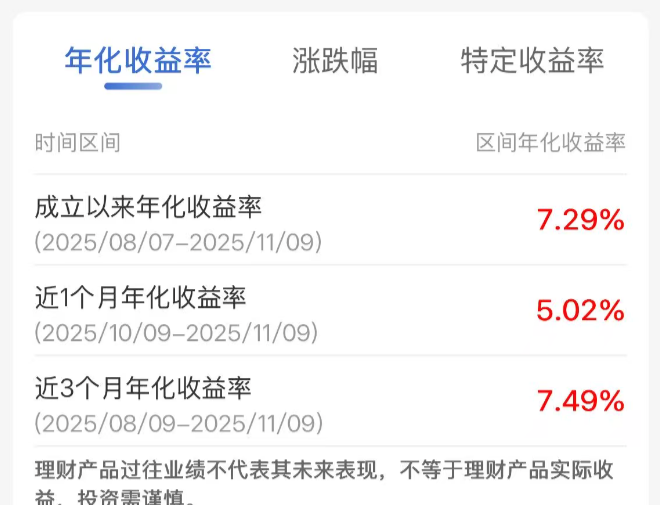
理财产品收益“注水”?业界呼吁规范业绩展示
Zhong Guo Ji Jin Bao· 2025-11-23 14:19
Core Viewpoint - The issue of "inflated" returns on wealth management products has gained significant attention, with many investors reporting discrepancies between advertised and actual returns, prompting calls for standardized performance disclosures in the industry [1][2]. Group 1: Factors Leading to Inflated Returns - Wealth management institutions often highlight better-performing return periods prominently while downplaying poorer performance, leading to investor dissatisfaction when actual returns fall short of expectations [2]. - Some banks employ various methods to artificially boost short-term returns to enhance product rankings, which can mislead investors [2]. - A specific example shows a bank's product advertised a historical annualized return of 3.149%, while actual returns over the past months were significantly lower, failing to meet the performance benchmark [2][3]. Group 2: Underlying Causes of the Issue - The persistent focus on scale and performance metrics among wealth management firms drives them to create products with misleadingly attractive returns [3]. - There is a conflict between risk appetite on the liability side and the reality of net value management, as clients transitioning from savings accounts expect stable returns, increasing the need for accurate information disclosure [3]. - The low-interest-rate environment has created challenges for enhancing returns, leading some firms to resort to technical adjustments to reported returns [3]. Group 3: Industry Recommendations - There is a call for the industry to standardize performance disclosures, with suggestions to clarify that performance benchmarks are reference targets rather than guaranteed returns [4][5]. - Firms should shift towards a client-demand-driven service model, focusing on asset allocation solutions tailored to individual client needs, enhancing long-term engagement [5]. - Strengthening capabilities in multi-asset strategies and developing transparent, low-cost index products can provide investors with clearer, more resilient investment options [5]. Group 4: Investor Awareness - Investors need to recognize that the implementation of new asset management regulations means there are no longer guaranteed returns, and they should remain vigilant against misleading promotions [6]. - Understanding that performance benchmarks are merely reference points, not promises of returns, is crucial for investors [6]. - Investors should consider the relationship between product returns and the bond market, which is influenced by macroeconomic factors, to avoid being misled by short-term performance of individual products [6].
理财产品收益“注水”?业界呼吁规范业绩展示
中国基金报· 2025-11-23 14:15
Core Viewpoint - The article highlights the issue of "inflated" returns on bank wealth management products, calling for standardized performance disclosures to protect investors and enhance industry integrity [2][3]. Group 1: Causes of Inflated Returns - Multiple factors contribute to the inflation of returns on wealth management products, including the strategic placement of high-performing returns on promotional platforms while downplaying poorer performance [4]. - Some banks artificially boost short-term returns to enhance product rankings, leading to discrepancies between advertised and actual performance [4]. - The underlying reasons for these practices include a focus on scale-driven growth, the mismatch between risk preferences of clients and net value management, and the challenges posed by a low-interest-rate environment [5][6]. Group 2: Industry Response and Recommendations - There is a call for the industry to standardize performance disclosures, ensuring that performance benchmarks are seen as reference targets rather than guaranteed returns [8][9]. - Recommendations include providing historical performance data, enhancing risk disclosures, and shifting towards a client-centric service model that focuses on asset allocation solutions [9][10]. - The industry is encouraged to innovate in multi-asset strategies and develop transparent, low-cost index products to improve return resilience while managing volatility [9][10]. Group 3: Investor Awareness - Investors are urged to recognize that the implementation of new asset management regulations has eliminated the concept of guaranteed returns, emphasizing the principle of "seller responsibility, buyer risk" [9][10]. - A proper understanding of performance benchmarks is essential, as they serve as reference points rather than guaranteed outcomes, influenced by various macroeconomic factors [9][10]. - Investors should evaluate the market representation and transparency of indices linked to products, as well as the overall performance and risk management capabilities of the product managers [10].


ETF及指数产品网格策略周报-20251118
HWABAO SECURITIES· 2025-11-18 11:59
Group 1: Overview of Grid Trading Strategy - The essence of "grid trading" is a high buy low sell strategy, which is based on price fluctuations rather than predicting market trends, making it suitable for markets with frequent price movements [3][11] - Characteristics of suitable grid trading targets include: selecting on-market targets, stable long-term trends, low transaction costs, good liquidity, and high volatility, with equity ETFs being particularly suitable [3][11] Group 2: Analysis of ETF Grid Strategy Targets - Financial Technology ETF (159851.SZ) is driven by capital market reforms and technological innovations, with a reported revenue of 419.56 billion yuan and a net profit of 169.05 billion yuan for 42 listed brokerages in the first three quarters of 2025, reflecting a net profit growth of over 60% [3][12] - Military Industry Leader ETF (512710.SH) is expected to benefit from a new round of military procurement cycles, with China's defense budget for 2025 set at 1.81 trillion yuan, a year-on-year increase of 7.2%, although still below 1.3% of GDP [4][15] - Robotics ETF (159530.SZ) is positioned for explosive growth in 2025, supported by policies promoting intelligent robotics and significant investments in the sector, with over 200 investment events and total financing exceeding 24 billion yuan by July 2025 [5][6][17] Group 3: Recommendations for Investors - Investors are advised to use grid trading strategies by selecting a combination of suitable ETFs with low correlation, such as pairing broad-based and sector-specific ETFs or combining A-shares and Hong Kong stocks to diversify risk and enhance capital utilization [20]
银行理财高收益昙花一现,背后是信托T-1估值套利模式
Di Yi Cai Jing· 2025-11-17 12:03
Core Viewpoint - The article discusses the phenomenon of "yield illusion" in wealth management products, where high annualized returns advertised (up to 10%) may not reflect the actual returns received by investors, which can be over 1 percentage point lower than expected [1][6]. Group 1: Yield Trends - Many wealth management products have shown a "high then low" yield curve, with over 130 out of 177 products launched since August experiencing a decline in annualized returns [5][10]. - A specific example includes a product with an initial annualized return of 9.67% that dropped to just 0.82% within a month, highlighting the volatility in returns [5][6]. - The average annualized return for bank wealth management products has decreased to 1.68% as of September 2025, indicating a shift into the "1% era" for returns [11]. Group 2: Industry Practices - Wealth management companies are employing "yield maneuvering" techniques, such as injecting high-yield assets during the product establishment phase to attract investors, followed by a gradual decline in returns [6][12]. - The practice of issuing numerous similar products to create a competitive edge, known as "shell raising," has become common, with 10,000 new products launched in the third quarter of 2025 alone [8][12]. - The T-1 valuation arbitrage method allows companies to manipulate returns by using previous day's net asset values for transactions, effectively redistributing profits between new and old products [9][12]. Group 3: Market Impact - The competitive nature of the wealth management market has led to a cycle where firms feel pressured to inflate returns, which can mislead investors and potentially lead to widespread complaints [13]. - The reliance on high-yield products may distort the true price discovery process in the market, pushing up risk-free interest rate expectations and encouraging short-term investment behaviors [13].