华润万象生活

Search documents
招银国际焦点股份
Zhao Yin Guo Ji· 2026-02-23 10:50
Group 1: Stock Recommendations - 吉利汽车 (Geely Auto) has a market cap of $23.4 billion, with a target price of $25.00, indicating an upside potential of 48%[5] - 正力新能 (Zhengli New Energy) has a market cap of $2.8 billion, with a target price of $18.00, indicating an upside potential of 113%[5] - 极兔速递 (Jitu Express) has a market cap of $12.2 billion, with a target price of $13.40, indicating an upside potential of 25%[5] - 三一国际 (Sany International) has a market cap of $6.2 billion, with a target price of $20.60, indicating an upside potential of 37%[5] - 瑞幸咖啡 (Luckin Coffee) has a market cap of $11.0 billion, with a target price of $54.68, indicating an upside potential of 41%[5] Group 2: Performance Overview - The basket of 26 long positions had an average return of -2.3%, outperforming the MSCI China Index, which returned -2.4% by 0.1 percentage points[10] - Out of the 26 stocks, 11 had returns exceeding the benchmark[10] - The report includes a new addition of Datadog (DDOG US) to the buy list, while Salesforce (CRM US) has been removed[7]





地产及物管行业双周报(2026/2/7-2026/2/20):春节期间新房成交同比小增,商业不动产REITs半月申报12单-20260223
Shenwan Hongyuan Securities· 2026-02-23 07:36
Investment Rating - The report maintains a "Positive" rating for the real estate and property management sectors, highlighting the potential for recovery in quality real estate companies and commercial properties [3]. Core Insights - The report indicates that new home sales during the Spring Festival period saw a year-on-year increase of 5.4%, with a total of 9.3 million square meters sold across 16 major cities [3][13]. - The overall sentiment in the real estate market is improving, driven by recent government policies aimed at stabilizing the market and addressing local government debt risks [3]. - The report emphasizes that the fundamental bottom of the real estate sector is approaching, with expectations for quality companies to recover profits more quickly and flexibly [3]. Summary by Sections 1. Industry Data - New home sales in 34 key cities during the week before the Spring Festival totaled 192.3 million square meters, a decrease of 1.1% week-on-week, but an increase of 56.6% compared to the average weekly sales this year [4]. - In February, new home sales in 34 cities increased by 88.5% year-on-year, with first and second-tier cities showing a 96.8% increase [9]. - The inventory of new homes in 15 cities was reported at 8,870.4 million square meters, with a slight decrease of 0.1% week-on-week [54]. 2. Policy News - The report notes that the government has reiterated its commitment to stabilizing the real estate market, with various local policies being introduced to optimize housing supply and manage existing stock [3]. - Specific measures include the promotion of REITs in commercial real estate, with 12 applications submitted recently [3]. 3. Company Dynamics - Sales data for major real estate companies in January showed mixed results, with China Jinmao reporting a 13.6% increase in sales, while other companies like Poly Developments saw a 13.3% decrease [3]. - The report highlights the performance of the property management sector, which has shown resilience compared to the broader market [3]. 4. Market Performance - The SW Real Estate Index fell by 0.69%, underperforming the Shanghai and Shenzhen 300 Index, which rose by 0.36% [3]. - The report suggests that the current valuation levels for quality real estate companies are at historical lows, making them attractive for investment [3].



房地产行业点评:关于上海收购二手房用于保租房试点工作启动的点评
Bank of China Securities· 2026-02-14 05:39
Investment Rating - The industry investment rating is "Outperform the Market," indicating that the industry index is expected to perform better than the benchmark index over the next 6-12 months [24]. Core Insights - The pilot program in Shanghai for acquiring second-hand housing for rental housing is expected to have advantages compared to lower-tier cities and may serve as a guiding model for other key urban projects [2][4]. - If the implementation is orderly, it could positively impact market expectations and confidence [2]. - The acquisition of second-hand homes is part of a new model called "monetization of affordable housing construction," allowing for the conversion of physical affordable housing into monetary funds for purchasing suitable existing homes [1][4]. Summary by Sections Event Overview - On February 2, 2026, the first batch of second-hand housing acquisitions for rental housing projects in Shanghai was officially signed, supported by China Construction Bank [1]. - The pilot will take place in the districts of Pudong, Xuhui, and Jing'an, focusing on acquiring 96 second-hand homes to be included in the affordable housing supply system [1]. Acquisition Mechanism - The acquisition will prioritize small-sized units built before 2000, with a total price not exceeding 4 million yuan, targeting properties with clear ownership and no disputes [4][5]. - The program aims to address the housing supply-demand imbalance in key areas with high rental demand [4][6]. Market Conditions - As of the end of 2025, there were approximately 4,825 second-hand homes in the three districts that met the acquisition criteria, with a total listing value of 14.2 billion yuan [4][11]. - The rental demand for one and two-bedroom units in these districts is notably high, with demand ratios reaching 85.4% in Xuhui, 80.2% in Pudong, and 78.2% in Jing'an [6][8]. Financial Support and Sustainability - The funding for the acquisitions will come from district-level financial resources, supplemented by bank loans, with rental income from the acquired properties expected to support ongoing operations [4][5]. - China Construction Bank is expected to provide financial support for the acquisition process, including customized financing solutions [4][5]. Comparative Analysis - The report compares Shanghai's approach to similar initiatives in Zhengzhou, noting that while Zhengzhou's program has not significantly boosted market demand, Shanghai's pilot is positioned to better meet existing rental needs [4][5]. - The price decline of second-hand homes in Shanghai has been significant, with prices in the three districts dropping by over 20% compared to their peak [4][15].
万象天地、金铂中心、山姆…2026佛山商业大年来了!
3 6 Ke· 2026-02-14 02:04
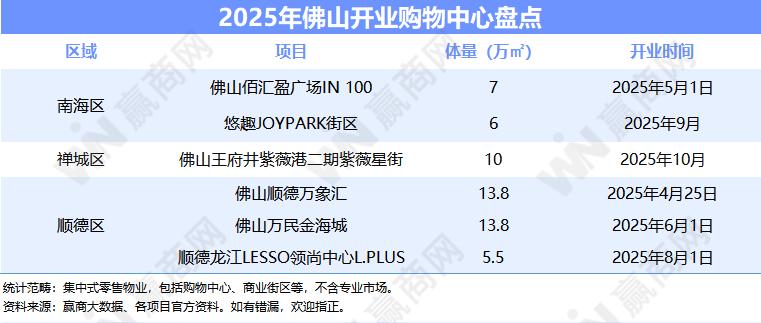
相比2024年的开出的7个购物中心、42.9万㎡体量,开业数量表现持续放缓,但新增供应体量回暖,佛山整体存量进一步承压前行。 即便如此,2025年佛山市场仍不乏有高关注度项目入市。 华润置地湾西首个重资产项目、华润万象生活进驻佛山首发项目顺德万象汇,携340余家品牌、超50%佛山或顺德首店亮相。项目商业建筑面积近13.8万 ㎡,是顺德最大商业综合体,也是华南体量最大万象汇。 万民金海城作为佛山新城最大商业综合体,商业体量达13.8万㎡,以95%新城首店、18米室内流水瀑布、假一罚十/不好吃包退、高达85项免费服务等内容 重构区域消费场景。 刚过去的2025年,据赢商大数据统计,佛山开出了6个购物中心,新增56.1万㎡商业体量。 | | 2025年佛山开业购物中心盘点 | | | | --- | --- | --- | --- | | 区域 | 顾目 | 体量(万m2) | 开业时间 | | 南海区 | 佛山佰汇盈广场IN 100 | 7 | 2025年5月1日 | | | 悠趣JOYPARK街区 | 6 | 2025年9月 | | 禅城区 | 佛山王府井紫薇港二期紫薇星街 | 10 | 2025年10月 | ...

房地产行业2026年1月70个大中城市房价数据点评:70城新房房价环比跌幅持平,二手房房价环比跌幅收窄,一线城市二手房房价环比跌幅收窄幅度最大
Bank of China Securities· 2026-02-13 13:15
Investment Rating - The report rates the real estate industry as "Outperforming the Market" [24]. Core Insights - In January 2026, new home prices in 70 large and medium-sized cities decreased by 0.4% month-on-month, while second-hand home prices fell by 0.5%. The decline in second-hand home prices has narrowed compared to December 2025 [3][10]. - The number of cities with declining new home prices increased to 62, with an average decline of 0.42%, which is a slight improvement from the previous month [3]. - First-tier cities saw a month-on-month decline of 0.3% in new home prices, while second-hand home prices decreased by 0.5%, with significant improvements noted in Beijing [3][11]. - Second-tier cities experienced a month-on-month decline of 0.3% in new home prices and 0.5% in second-hand home prices, with some cities showing price increases [3][11]. - Third-tier cities maintained a month-on-month decline of 0.4% in new home prices and a 0.6% decrease in second-hand home prices, with a few cities showing slight increases [3][11]. - The report suggests that while the narrowing of second-hand home price declines in January is a positive sign, ongoing observation of transaction volumes and prices is necessary, particularly for potential seasonal rebounds in the market [3][11]. - The report anticipates two key turning points in 2026: a "policy turning point" around the end of Q1 and a "fundamental turning point" around Q4, with investment opportunities expected to arise [3][11]. - Recommended investment focuses include companies with stable fundamentals in core cities, smaller firms showing significant breakthroughs in sales and land acquisition, and commercial real estate companies exploring new consumption scenarios [3][11]. Summary by Sections New Home Prices - In January 2026, new home prices in 70 cities fell by 0.4%, with 62 cities experiencing declines [3][10]. - First-tier cities saw a stable decline of 0.3%, while second-tier cities had a decline of 0.3% and third-tier cities maintained a decline of 0.4% [3][11]. Second-Hand Home Prices - Second-hand home prices decreased by 0.5% in January 2026, with 67 cities reporting declines [3][11]. - First-tier cities experienced a decline of 0.5%, second-tier cities saw a 0.5% decrease, and third-tier cities had a 0.6% decline [3][11]. Investment Recommendations - Focus on companies with strong sales and land reserves in first and second-tier cities, smaller firms with notable sales and land acquisition breakthroughs, and commercial real estate companies adapting to new consumption trends [3][11].
房地产行业2026年1月月报:新房成交同比降幅收窄,二手房成交同比由负转正,央行释放降再贷款利率、降商业用房首付比例等利好-20260213
Bank of China Securities· 2026-02-13 12:52
Investment Rating - The report rates the real estate industry as "Outperform" compared to the market [1] Core Insights - New home sales in January showed a narrowing year-on-year decline, while second-hand home sales turned positive year-on-year [1][21] - The central bank has released favorable policies, including lowering the re-lending rate and reducing the down payment ratio for commercial properties [1][4] New Home Sales - In January, the new home sales area in 40 cities decreased by 42.3% month-on-month and by 22.0% year-on-year, with the year-on-year decline narrowing by 10.1 percentage points compared to the previous month [5][14] - First-tier cities saw a year-on-year decline of 14.0%, while second-tier cities experienced an 18.1% decline, and third and fourth-tier cities had a 41.1% decline [15][20] Second-Hand Home Sales - The second-hand home sales area in 18 cities decreased by 2.0% month-on-month but increased by 9.0% year-on-year, with the year-on-year growth rate improving by 41.3 percentage points compared to the previous month [21][25] - All city tiers showed positive year-on-year growth in second-hand home sales, with first-tier cities growing by 15.0% year-on-year [21][30] Inventory and Absorption - As of the end of January, the new home inventory area in 12 cities was 112.91 million square meters, down 0.4% month-on-month and down 6.3% year-on-year, with an overall absorption cycle of 18.1 months [28][29] - The absorption cycle for first-tier cities increased by 4.3 months year-on-year, while third and fourth-tier cities saw a decrease of 8.2 months [28] Land Market - The land market in January saw a transaction area decrease of 76.5% month-on-month and a 20.2% year-on-year decline, with an average land premium rate of 2.87% [1][12] - The average land price per square meter decreased by 36.8% month-on-month and by 20.9% year-on-year [13] Real Estate Companies - The top 100 real estate companies saw a 49.5% year-on-year decline in land acquisition amounts, with a land acquisition intensity of 32% [1][12] - The financing scale for the real estate industry in January was 39.6 billion yuan, down 26% year-on-year but up 7% month-on-month [1][14] Policy Developments - The central bank's policy changes include lowering the re-lending rate to 1.25% and reducing the minimum down payment ratio for commercial properties from 50% to 30% [1][4] - The first batch of commercial real estate REITs has been submitted for approval, with a total expected fundraising of 31.47 billion yuan [1][4] Sector Performance - The real estate sector outperformed the CSI 300 index in January, with an absolute return of 4.3% and a relative return of 2.7% [1][12] - The report anticipates two potential turning points in 2026: a policy turning point around the end of Q1 and a fundamental turning point around Q4 [1][12]




万象城、印象城、胖东来轮番炸场,河南去年新开13个商业项目!
3 6 Ke· 2026-02-13 02:52
Core Insights - The retail sales of consumer goods in Henan are projected to reach 2.9 trillion yuan in 2025, with a year-on-year growth of 5.6%, surpassing the national average by 1.9 percentage points [1] - The concentrated commercial market in Henan is entering a phase of "well-known enterprises sinking and quality upgrading," with 13 new projects expected to open in 2025, totaling approximately 1,002,900 square meters [1][2] - Zhengzhou leads the new project openings with 5 projects, accounting for 38.5% of the total, and a total construction area of 422,000 square meters [1][2] Retail Market Development - The average commercial area of new projects in Henan is 77,000 square meters, with about 83% of projects being under 100,000 square meters [2] - Notable operators such as Wanda, Wuyue, and Longfor are expanding their presence in Henan, with 7 new projects managed by well-known commercial operators [2] - The new projects aim to enhance community daily consumption and reshape urban functional highlights, contributing to the evolution of Henan's commercial ecosystem [2] Project Highlights - Zhengzhou Zhengdong Wanda Plaza, with a total area of 241,000 square meters, aims to fill the high-end commercial gap in the region and drive consumption upgrades [3][5] - Zhengzhou Baidu New Image integrates cultural elements into its design, featuring 15 courtyards that reflect traditional Zhengzhou architecture [6][9] - Zhengzhou Songnan Impression City focuses on creating a youth-friendly community with a commercial area of approximately 50,000 square meters [10][12] Economic Impact - The new commercial projects are expected to create thousands of jobs and stimulate local economies, with significant employment opportunities generated by various projects [19][25] - The introduction of over 550 well-known brands in Zhengdong Wanda Plaza and 231 brands in Shangqiu Wuyue Plaza highlights the focus on enhancing consumer experience and driving economic growth [5][22] Summary of New Projects - A total of 13 new concentrated commercial projects are set to open in Henan in 2025, with notable projects including Zhengzhou Zhengdong Wanda Plaza, Zhengzhou Songnan Impression City, and Shangqiu Wuyue Plaza, among others [31]

房地产板块最新观点:板块上涨空间能否进一步打开?-20260213
CMS· 2026-02-13 02:05
Investment Rating - The report maintains a "Recommended" rating for the real estate sector, indicating a positive outlook for the industry based on expected performance relative to the market benchmark [5]. Core Insights - Recent valuation recovery in real estate stocks reflects a combination of oversold conditions relative to the CSI 300 index, changes in fundamental expectations, and policy anticipations [1][3]. - The upward potential for real estate stock prices requires further support from either fundamental performance or policy implementation, with key drivers including better-than-expected transaction volumes and significant policy announcements [12][14]. - The market is currently divided between investors with optimistic views on fundamentals and those speculating on policy changes, which may lead to conflicting strategies [10]. Summary by Sections Recent Valuation Recovery - The recent increase in real estate stock prices is attributed to a recovery from oversold conditions and shifts in market sentiment regarding fundamentals and policies [1]. - Data from January 1 to February 5 shows a year-on-year decline in new home transactions by 6% and an increase in second-hand home transactions by 31%, although adjusted lunar year comparisons indicate a more significant decline [3]. Conditions for Further Price Increases - The gap between the real estate index and the CSI 300 has narrowed significantly, suggesting that without further catalysts, the potential for excess returns in the real estate sector may diminish [12]. - Future price increases will depend on exceeding expectations in fundamental performance, such as increased transaction volumes and favorable policy developments [14]. Policy Directions and Drivers - Key areas of policy focus include changes in inventory levels, loan continuation methods post "Financial 16," and the outcomes of specific corporate financing events [15]. - Potential policy measures may involve lowering mortgage rates and implementing inventory reduction strategies to stabilize housing prices [16][18]. Market Dynamics and Stock Selection - The current market trend favors companies with higher sales growth and land acquisition rates, indicating a preference for "winning" companies based on market momentum [22]. - If supportive policies are enacted, the focus may shift from "winning" companies to those with attractive valuations, while also considering companies with strong operational momentum [24]. - Specific companies to watch include those with stable performance and high dividend yields, as well as those benefiting from improvements in the housing market [25].
未知机构:2026年房地产市场前低后高全年板块或迎来两大拐点25年房-20260213
未知机构· 2026-02-13 01:55
Summary of Conference Call Notes Industry Overview - The real estate market is expected to experience a "front low and back high" trend in 2026, with two significant turning points anticipated throughout the year [1][3]. - The real estate market and investment continue to face adjustment pressures in 2025 [1][3]. Short-term Strategies - Short-term measures should focus on destocking and boosting demand and confidence to stabilize the market [1][3]. - Support for reasonable financing needs of real estate companies is essential to stabilize investment [1][3]. - Immediate policy interventions are necessary to prevent a sharp market decline [1][3]. Long-term Strategies - In the medium to long term, there is a need to guide real estate companies to actively transform from increasing investment development value to enhancing service operation value [2][3]. - Development models and systems require updates to adapt to changing market conditions [2][3]. Market Dynamics - The ongoing market weakness is primarily due to supply-demand mismatches and weak expectations regarding future housing prices [4]. - Recommendations include: 1. Government side (G-end): Utilize land reserves and urban renewal to absorb supply and create demand [4]. 2. Business side (B-end): Activate existing assets through securitization and restructuring to shift supply [4]. 3. Consumer side (C-end): Adjust administrative, provident fund, and fiscal policies to boost consumer demand and digest supply [4]. Investment Trends - Real estate investment continues to weaken, largely due to significant financial pressures on developers [5]. - Key predictions for 2026 include: 1. Sales area of 810 million square meters, down 8% year-on-year [6]. 2. Average sales price of 9,144 yuan per square meter, down 4% year-on-year [6]. 3. Sales amount of 7.4 trillion yuan, down 12% year-on-year [6]. 4. Investment of 6.9 trillion yuan, down 16% year-on-year [6]. 5. New construction area of 480 million square meters, down 18% year-on-year [6]. 6. Completed area of 490 million square meters, down 19% year-on-year [6]. - The main market contradiction has shifted from "shrinking transaction volume" to "continuously falling prices," particularly in the second-hand housing market [6]. Market Outlook - The decline in the second-hand housing market further impacts the transaction volume of new homes [7]. - Overall liquidity is shrinking, leading to weakened demand that affects developers' investment and subsequently drags down the economy [8]. - 2026 is seen as the beginning of the "14th Five-Year Plan," with expectations for the real estate market to improve under the central economic work conference's goal of stabilizing investment [8]. - Two potential turning points are anticipated: a "policy turning point" around the end of Q1 and a "fundamental turning point" around Q4 [8]. - The "policy turning point" may reflect increased policy enthusiasm on both supply and demand sides, while the "fundamental turning point" will be indicated by a narrowing decline in second-hand housing prices [8]. Investment Recommendations - Despite expected declines in real estate sales, investment, and new construction in 2026, the rate of decline is anticipated to be less severe than in 2025 [8]. - Investment opportunities may arise in the real estate sector throughout 2026, with a focus on companies that have adequately accounted for impairments in 2025, as well as those that have proactively adapted to new business models [11]. - Suggested companies for investment include China Resources, Binjiang, Zhaoshang, Yuexiu, Jianfa, Poly Real Estate, and others involved in new consumption opportunities [11]. Risk Factors - Key risks include policies not being implemented as expected, continued declines in sales and housing prices, and slower-than-expected recovery of market confidence [12].
中银晨会聚焦-20260213-20260213
Bank of China Securities· 2026-02-13 00:50
Core Insights - The report predicts a "front low and back high" trend for the real estate market in 2026, suggesting potential recovery opportunities in the sector [1][3] - It emphasizes the importance of stabilizing the market through inventory reduction and boosting demand and confidence, while also supporting reasonable financing needs of real estate companies [3][4] - The report identifies three main investment lines: stable companies in core cities, "small but beautiful" firms with significant breakthroughs, and commercial real estate companies exploring new consumption scenarios [1][9] Market Outlook - The real estate market is expected to face continued pressure in 2025, with a focus on policy measures to prevent a sharp decline [3][4] - The report forecasts a decline in key real estate indicators for 2026, including a projected 8% decrease in sales area to 810 million square meters and a 12% drop in sales revenue to 7.4 trillion yuan [5][6] - It anticipates a gradual recovery in the market, with potential policy and fundamental turning points in Q1 and Q4 of 2026, respectively [7][8] Investment Recommendations - The report suggests focusing on companies with strong fundamentals in first and second-tier cities, such as China Resources Land and China Merchants Shekou [1][9] - It highlights the potential of Poly Real Estate Group as a "small but beautiful" firm that has made significant sales and land acquisition breakthroughs [9] - The report also points to commercial real estate companies like China Resources Vientiane Life and Swire Properties that are actively exploring new operational models [1][9]