舍得酒业

Search documents
展望一季度内地经济两大看点:环球市场动态2026年2月10日
citic securities· 2026-02-10 03:32
Market Overview - A-shares opened higher with the Shanghai Composite Index rising 1.41% to 4,123.09 points, and the ChiNext Index up 2.98% to 3,332.77 points, with a total trading volume of approximately 22.7 billion yuan[17] - The Hang Seng Index increased by 1.76% to 27,027.16 points, with major tech stocks rebounding, and total market turnover around 255.1 billion HKD[13] - European markets saw collective gains, with the Euro Stoxx 600 index up 0.7% and the DAX index rising 1.19% to 25,014.87 points, supported by positive economic data[11] Economic Insights - The macroeconomic outlook for Q1 highlights two key points: the impact of the longest Spring Festival holiday on consumption and policy direction from local two sessions[6] - Consumer recovery is characterized by a shift towards service alternatives, while commodity prices remain constrained by household balance sheet recovery[6] - The focus of policy has shifted from traditional infrastructure expansion to granular competition in sectors like low-altitude economy and computing power[6] Commodity and Currency Trends - Oil prices rose for two consecutive days, with NYMEX crude oil up 1.27% to $64.36 per barrel, driven by geopolitical tensions in the Middle East[28] - The dollar index fell by 0.8%, leading to a significant increase in gold prices, which rose 1.3% to $5,050.9 per ounce[28] - The Japanese yen initially fell but later gained 0.9% against the dollar, closing at 155.88[28] Fixed Income Market - U.S. Treasury yields fluctuated, with the 10-year yield at 4.20%, down 0.4 basis points, while the 30-year yield rose by 0.7 basis points to 4.86%[31] - Asian credit markets showed a strong sentiment with overall spreads narrowing by 1-2 basis points, as investors remained cautious ahead of the Lunar New Year[31] Sector Performance - In the U.S., the technology sector led gains, with the Nasdaq up 0.9% and the S&P 500 rising 0.5%[11] - The AI sector showed a 40% quarter-over-quarter growth in annual recurring revenue, indicating a positive trend despite initial skepticism[24] - The white liquor sector is expected to perform better than market expectations during the Spring Festival, driven by strong consumer demand[20]
春节跟踪-白酒系列经销商电话会
2026-02-10 03:24
Summary of Conference Call on Baijiu Industry Industry Overview - The conference call focused on the Baijiu industry, particularly the performance of major brands during the 2026 Spring Festival period, comparing it to the previous year. Key Points Moutai (茅台) - Moutai's sales are expected to complete 40% of the annual plan before the festival, with payment progress accelerating by 5% year-on-year [1] - The price of Moutai remains around 1,700 RMB, with a significant reduction of 35% in the supply of non-standard products [1][3] - Post-festival, Moutai prices may slightly decrease, potentially down to around 1,500 RMB, depending on market demand [8] Wuliangye (五粮液) - Wuliangye's payment rate is at 60%, with expected shipments close to 60% before the festival [4] - The price range is between 790-800 RMB, showing significant year-on-year growth [4] - The brand's sales are boosted by digital empowerment and promotional activities, with a projected increase of 40% in sales volume compared to last year [4][20] Guojiao 1573 (国窖 1,573) - Guojiao 1573's payment collection is below expectations, with most distributors achieving less than 10% of the target [5] - The price remains firm at 840-850 RMB, but has decreased by over 30% year-on-year due to high social inventory [5] Langjiu (郎酒) and Shede (舍得) - Langjiu has completed payments ahead of schedule, with prices stable at around 650 RMB, showing slight improvement in sales [6] - Shede's sales are slower, with a year-on-year decline of 10% [6] Jiangsu Market Performance - Jiangsu's overall Baijiu market performance is disappointing, with Yanghe's sales significantly affected by inventory issues and product transitions [24] - Yanghe's overall payment is only about half of last year's, with specific products like Hai Zhi Lan underperforming [24][27] Price Trends - Yanghe's product prices are stable with slight increases, but some products have seen declines due to market conditions [25] - The overall price trend in Jiangsu shows a mix of stability and slight increases, with some products experiencing significant drops [25] Market Dynamics - The Baijiu market is experiencing a polarization, with some brands like Water Well performing well in certain regions while others struggle due to poor distributor performance [22] - The overall expectation for post-festival demand is mixed, with Moutai expected to see a 10% increase, while Wuliangye may see a slight decline due to previous inventory control measures [31] Inventory and Sales Performance - Inventory levels for various brands are high, with Guojiao 1573 and others facing challenges in moving stock [15][16] - The overall sales performance in the Baijiu market shows a decline in many segments, with some brands like Water Well facing significant challenges due to structural issues in distribution [22][23] Additional Insights - The conference highlighted the importance of digital tools and promotional strategies in driving sales for brands like Wuliangye [4] - The impact of last year's inventory control policies on current sales dynamics was discussed, indicating a shift in market strategies [32]


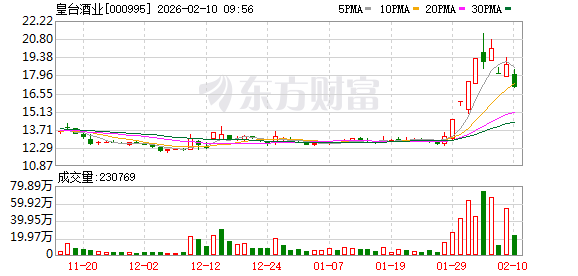
白酒指数盘中下跌2.02%,皇台酒业跌超6%
Mei Ri Jing Ji Xin Wen· 2026-02-10 01:56
Group 1 - The liquor index experienced a decline of 2.02% during the trading session on February 10 [2] - Huangtai Liquor Company saw a drop of over 6% in its stock price [2] - Other companies such as Jinhui Liquor, Jiugui Liquor, Shede Liquor, and Luzhou Laojiao all reported declines exceeding 2% [2]


2026年2月:中国酒类行业展望
Zhong Cheng Xin Guo Ji· 2026-02-09 11:21
Investment Rating - The report maintains a stable investment rating for the Chinese liquor industry, indicating that the overall credit quality of the industry is not expected to change significantly in the next 12 to 18 months [5]. Core Insights - The liquor industry is closely tied to macroeconomic conditions and per capita income levels. Recent years have seen consumption pressures due to economic slowdown, low investment, and policy restrictions, leading to negative revenue and profit growth for large-scale enterprises [6][8]. - The white liquor sector has been experiencing a continuous decline in production since 2017, with a "volume and price drop" scenario expected to persist into 2025 due to high inventory and slow market movement [6][14]. - The beer industry remains stable with high market concentration, but faces challenges from reduced consumption in dining and entertainment venues. The trend towards product premiumization and innovation continues to drive growth [5][26]. - Overall, the liquor industry is under pressure from weak economic recovery and consumption policies, with expectations of continued downward pressure on revenue and profits in the future [10][39]. Summary by Sections Key Points - The liquor industry's demand is significantly affected by macroeconomic conditions and per capita income. Recent economic factors have led to a decline in revenue and profit growth for large-scale enterprises [6][9]. - White liquor production has been decreasing since 2017, with a projected "volume and price drop" scenario continuing into 2025 due to high inventory levels and slow market activity [14][25]. - The beer industry maintains a high concentration level, with stable production capacity utilization. However, the reduction in dining and entertainment venues has negatively impacted beer consumption [26][37]. Analytical Approach - The analysis focuses on the credit fundamentals of the liquor industry, examining key indicators affecting consumption since 2025, including disposable income, consumer confidence, and policy adjustments [7]. Industry Fundamentals - The liquor industry's demand is closely linked to macroeconomic conditions and disposable income levels. Recent years have seen consumption pressures due to economic slowdown and policy restrictions [8][9]. - The white liquor sector has been facing a continuous decline in production, with a significant drop in output expected in 2025 due to high inventory and slow market movement [14][25]. Financial Performance - Since 2025, white liquor enterprises have generally experienced significant declines in operating performance, while beer companies have benefited from optimized product structures [39][40]. - The overall debt levels of liquor companies are low, and while debt service indicators have declined, they remain favorable. Group companies have access to financing channels that support their debt repayment capabilities [39][40].
1月酒水销售,区域名酒站起来了!
Sou Hu Cai Jing· 2026-02-09 08:48
Core Insights - The article highlights the ongoing adjustments in the liquor industry, emphasizing the need for companies to accurately grasp market trends to navigate the increasingly competitive landscape [1] Group 1: White Liquor Market - The white liquor market in January 2026 is experiencing a significant adjustment, with high inventory and low profit margins leading to a situation where channel profits for high-end liquor are compressed to 30-50 yuan per bottle [3] - Despite cautious inventory levels and thin channel profits, the online sales data from Kuaishou indicates a shift in consumer behavior, with regional brands gaining traction in a more accessible and flexible manner [2][4] - The sales proportions for mid-range price segments (100-300 yuan, 300-500 yuan, and 500-800 yuan) have all increased compared to 2025, indicating a shift towards more affordable options [4][5] - The top-selling SKUs in the high-end segment now include regional brands, suggesting consumers are seeking distinctive alternatives beyond traditional high-end products [6] Group 2: Beer Market - The beer market is showing a clear trend of consumption upgrading, with the 100-300 yuan price segment accounting for 74.75% of sales in January 2026, a significant increase from 51.54% in 2025 [8][9] - Qingdao Beer has emerged as a dominant player in the mid-range segment, successfully linking its products to the festive consumption needs of the Chinese New Year [9][11] - The marketing strategies employed by beer brands, such as festive themes and emotional connections, have transformed beer into a social currency during the holiday season [11] Group 3: Wine Market - The wine market is witnessing a shift, with consumer spending moving towards the mid-price range, particularly the 300-500 yuan segment, which saw a substantial increase from 9.28% in 2025 to 21.76% in January 2026 [12][14] - The high-end segment is experiencing a decline, while the mid-range is gaining traction, indicating a potential shift in consumer preferences towards value-oriented options [12][14] - The rise of domestic brands and unique offerings in the wine market suggests a growing consumer interest in quality and storytelling, moving away from solely international brands [16]
春晚,白酒春节营销的巅峰之战|观酒周报
2 1 Shi Ji Jing Ji Bao Dao· 2026-02-09 06:50
Group 1 - The upcoming Spring Festival is a crucial marketing period for the liquor industry, with a long holiday expected to boost consumption opportunities [1] - The CCTV Spring Festival Gala has announced four major liquor sponsors: Wuliangye, Yanghe, Gujinggong, and Langjiu, with each having a significant presence in the event [1][2] - There are expectations of additional liquor brands participating in the Spring Festival Gala, despite a perceived reduction in sponsorship compared to previous years [1] Group 2 - In recent years, the Spring Festival Gala has typically featured a core group of four liquor sponsors, with additional brands appearing in various capacities [2][3] - The number of liquor brands participating in the Spring Festival Gala has varied, with a peak of nine brands in 2024, indicating a trend of increasing brand involvement [4] - Some liquor companies are shifting their focus to local television programs to strengthen brand presence in their key markets, while still maintaining participation in major events like the CCTV Spring Festival Gala [5] Group 3 - Various liquor brands are exploring partnerships with social media platforms to enhance engagement and marketing reach during the Spring Festival [8] - Companies like Xijiu are entering into direct sales partnerships with platforms like Meituan to facilitate quicker delivery and boost sales [9] Group 4 - New product launches are occurring, such as the introduction of a low-alcohol liquor by Shui Jing Fang, which has seen significant pre-sale success [10] - The UMEET blueberry sparkling wine from Moutai has achieved impressive sales figures on its launch day, indicating strong market interest [11] - Luzhou Laojiao aims to enhance its market position and is targeting a top-three industry ranking, reflecting competitive ambitions within the sector [12] Group 5 - Chongqing Beer reported growth in revenue, profit, and sales volume for 2025, indicating a recovery and positive trend in the beer market [14]
国泰海通晨报-20260209
GUOTAI HAITONG SECURITIES· 2026-02-09 02:23
Macro Research - The recent significant drop in gold prices is primarily due to previous irrational surges, high leverage, and crowded trading conditions, which does not alter the long-term bullish trend for gold. Mid to long-term investment opportunities in gold should still be considered [2][3] Social Services Industry Research - The optimization of vacation systems, improvement in cultural tourism supply, and acceleration of local asset securitization are expected to create investment opportunities in the scenic area sector. Three main lines for investment are suggested: focus on transportation improvements, resource integration expectations, and new project launches [3][4] Cosmetics Industry Research - The cosmetics market is expected to continue steady growth in 2026, driven by product innovation and the rise of domestic brands. It is recommended to selectively invest in high-growth companies and those with recovery potential due to product and channel changes. Specific companies to consider include 若羽臣, 倍加洁, 毛戈平, 林清轩, and 上美股份 for strong fundamentals, and 贝泰妮, 珀莱雅, and others for recovery potential [6][7][8]
如何看白酒板块上涨持续性?
GF SECURITIES· 2026-02-08 10:09
Core Viewpoints - The recent focus on the liquor sector has increased, with significant price movements observed, but there remains considerable disagreement regarding the sustainability and potential of this price increase, with some investors viewing it as merely a rebound [7][14] - The current rise in the liquor sector is attributed to several factors, including the proximity of stock prices to historical lows, a significant increase in the price of Moutai, and a general recovery in consumer confidence [7][15][17] - The liquor sector is expected to enter a reversal phase in 2026, differing from the previous three years where post-holiday sales did not sustain momentum [21][26] Liquor Sector Analysis - The liquor sector has seen a price increase due to the stock prices nearing the "924" low point, with the current index at 41366, just 2% above the lowest point recorded in September 2024 [15] - Moutai's price has risen to approximately 1700 CNY, reflecting a more than 15% increase over the past month, which has bolstered market confidence in its future performance [17][19] - The recovery in consumer confidence is linked to rising real estate transactions in major cities, which is expected to positively impact liquor demand [17][19] Industry Data Tracking - The food and beverage sector experienced a 4.3% increase in stock prices from February 2 to February 6, outperforming the CSI 300 index by 5.6 percentage points [36] - Within the sector, liquor and soft drinks led the gains, with increases of 5.3% and 4.7% respectively, while other categories like health products saw declines [36][40] - The current PE-TTM for the food and beverage sector is 22.2X, while the liquor sector stands at 19.5X, indicating relative valuations of 1.58 and 1.38 times compared to the CSI 300 [49][55] Price Tracking - As of February 6, the price for a bottle of Moutai was 1610 CNY, down 40 CNY from the previous week, while the price for a case was 1660 CNY, down 50 CNY [56] - The price for other major brands like Wuliangye and Guojiao1573 remained stable, indicating a cautious market outlook for the liquor sector [56][29] Investment Recommendations - The liquor sector is anticipated to enter a new growth cycle in 2026, with key recommendations including Luzhou Laojiao, Shanxi Fenjiu, and Kweichow Moutai [7][36] - For consumer goods, a moderate price increase is expected in 2026, with a focus on new products and channels providing opportunities for individual stocks [7][36]


用好“关键一招”,探索县域经济高质量发展“射洪路径”
Xin Lang Cai Jing· 2026-02-07 20:46
Core Insights - The article emphasizes the importance of developing distinctive county economies as highlighted by the 20th National Congress and provincial government reports, showcasing a commitment to enhancing county-level economic growth [3] Group 1: Economic Development - The city of Shehong has adopted a "3+2" integrated approach to local economic work, focusing on industrial strength and establishing itself as a core area for lithium battery production and a national hub for high-quality liquor [3] - Over the past five years, Shehong's GDP increased from 41.4 billion to 68.5 billion, with its share of the total GDP in Suining rising from 29.5% to 34.2% [3] - General public budget revenue doubled from 1.51 billion to 3.45 billion, indicating significant fiscal growth [3] Group 2: Strategic Goals - The city aims to become a "billion-level county" in the western region by strengthening key industries, particularly in lithium and food and beverage sectors, while exploring new development models [4] - Plans include advancing urban integration with surrounding towns and expanding urban development boundaries to 50 square kilometers by 2030 [4] - Key transportation projects are prioritized to enhance connectivity with Suining and the Chengdu-Chongqing economic circle [4] Group 3: Urban and Social Development - The city is committed to exploring new paths for urban-rural integration, implementing initiatives to attract visitors, and optimizing public services in employment, education, healthcare, and elder care [5] - The goal is to increase the urban population to over 500,000 by 2030, transforming Shehong into a well-functioning, comfortable, and happy city [5]