Manus

Search documents
AI应用繁花似锦,电商产业链先行受益
Orient Securities· 2026-01-12 01:47
Investment Rating - The report maintains a "Positive" outlook for the retail industry, indicating a potential return exceeding 5% relative to market benchmarks [8][12]. Core Insights - The report highlights that AI applications are rapidly evolving, with 2026 expected to mark a commercial turning point for the industry. Key developments include significant IPOs and strategic acquisitions in the AI sector, which are anticipated to drive growth in retail [8]. - The integration of AI in cross-border e-commerce and e-commerce services is emphasized, with specific companies identified as beneficiaries of this trend. The report suggests that AI tools can enhance operational efficiency across various segments of the retail industry [3][8]. Summary by Sections AI and Cross-Border E-commerce - AI is expected to create new traffic entry points for B2B platforms, transitioning from SEO to GEO. Companies like Xiaogoods City and Focus Technology are leveraging AI tools to improve operational efficiency and customer engagement [3][8]. - Xiaogoods City has over 30,000 merchants utilizing AI applications, with usage exceeding 1 billion times [8]. - Focus Technology reported a membership penetration rate of over 50% for its AI services [8]. AI and E-commerce Services - The report notes that e-commerce platforms are shifting from SEO to GEO, with third-party (TP) companies gaining advantages through AI tools that analyze consumer preferences [8]. - Companies such as Qingmu Technology and Yiwang Yichuang are developing proprietary technologies to support AI applications in e-commerce operations [8]. - Qingmu Technology has created a suite of tools to adapt to evolving AI technologies, while Yiwang Yichuang is building a dedicated team to enhance its competitive edge in the market [8].





宏观和大类资产配置周报:本周沪深300指数上涨2.79%-20260112
Bank of China Securities· 2026-01-12 01:41
Macro Economic Overview - The macroeconomic report indicates that the Shanghai Composite Index rose by 2.79% this week, with the CSI 300 index futures increasing by 3.20% [1][3][13] - The report highlights a significant increase in commodity futures, with coking coal futures up by 6.50% and iron ore futures up by 3.23% [3][13] - The annualized yield of Yu'ebao (a money market fund) decreased by 2 basis points to 1.03%, while the yield on ten-year government bonds rose by 4 basis points to 1.88% [3][13] Employment Data Analysis - The U.S. non-farm payrolls data for December 2025 showed a mixed picture, with new jobs added decreasing to 50,000, down by 14,000 month-on-month, indicating weakness in the private sector, particularly in manufacturing [4] - Average hourly earnings in the private sector increased by 3.8% year-on-year, with the unemployment rate at 4.4%, down by 0.1 percentage points [4] Asset Allocation Recommendations - The report maintains the asset allocation order as follows: equities > commodities > bonds > cash, suggesting an overweight position in stocks and a cautious stance on bonds and cash [5][6] - The report emphasizes the importance of monitoring the implementation of incremental policies in the stock market [6] Commodity Market Insights - The commodity futures index increased by 4.01% this week, with notable gains in precious metals (6.84%) and non-ferrous metals (5.19%) [52] - Lithium carbonate saw a significant price increase of 17.80%, while industrial silicon experienced a decline of 1.56% [52][53] Real Estate and Automotive Sector Trends - The report notes a decline in the transaction area of commercial housing in 30 major cities, with a weekly transaction area of 226.42 million square meters, but anticipates stabilization due to supportive policies [37] - In the automotive sector, wholesale and retail sales of passenger vehicles showed a year-on-year increase of 45% and 17%, respectively, indicating strong consumer demand [43]
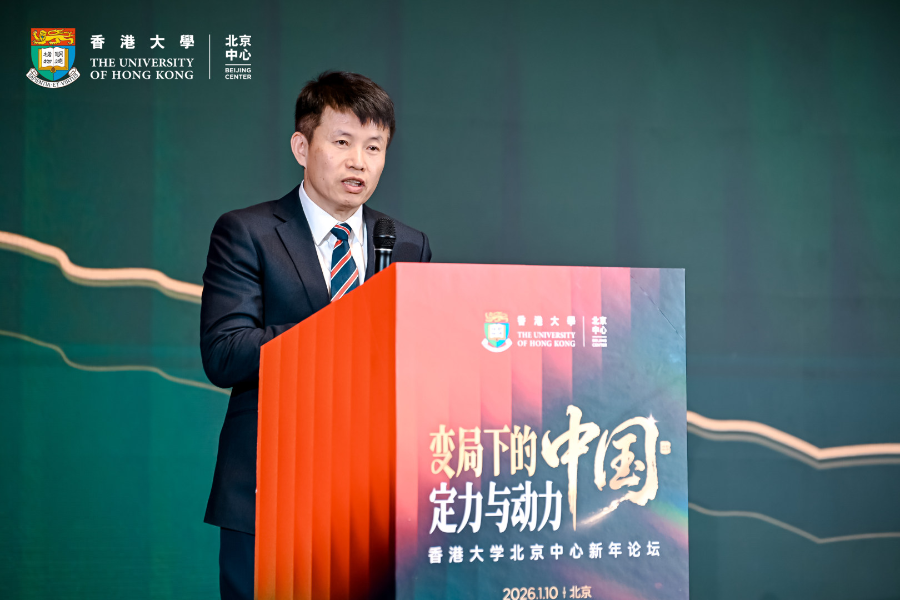
港大教授蔡洪滨:全球变局加速下 中国经济是不确定中的确定力量
2 1 Shi Ji Jing Ji Bao Dao· 2026-01-11 13:05
Group 1 - The core viewpoint emphasizes that China's economy is becoming a "certain force in uncertainty" due to its unique resilience amidst a complex and changing international landscape [1][3] - Three major trends are accelerating in 2026: the comprehensive acceleration of AI business applications, profound adjustments in the international political and economic order, and the increasing complexity and diversity of political ecology and value systems worldwide [3][4] - AI applications are expected to penetrate various industries more deeply, becoming a key driver of transformation, as exemplified by Meta's acquisition of the Chinese AI startup Manus [3] Group 2 - The international political and economic order, established post-World War II and dominated by the United States, is facing reconstruction pressures, with some countries prioritizing unilateral policies and withdrawing from international organizations [3] - The ongoing changes in global order are exemplified by the recent situation in Venezuela, which has drawn global attention [3] - Chinese enterprises are not retreating due to external uncertainties; instead, the trend of Chinese companies going global reflects their entrepreneurial spirit and innovation, which will continue to be a significant driving force for China's economic development [4]

投资前瞻(1.12—1.18)| 高盛建议今年超配A股和H股;三大热门领域受机构调研关注
和讯· 2026-01-11 09:12
Macro and Financial - CPI continues to rise, with a year-on-year increase of 0.8% in December 2025, driven mainly by food prices, which rose by 1.1% [5][6] - The Ministry of Finance announced adjustments to export tax rebates for photovoltaic products, effective from April 1, 2026, aiming to reduce trade friction and improve fiscal resource allocation [7] - The Ministry of Industry and Information Technology (MIIT) is promoting the construction of a national integrated computing network to enhance industrial smart computing capabilities [8] - A guideline for the construction of industrial green microgrids has been issued, aiming to promote the use of green electricity in key industrial sectors [9][10] Capital Market - The China Securities Regulatory Commission (CSRC) has introduced new regulations to enhance whistleblower rewards for securities and futures violations, increasing the reward percentage from 1% to 3% of penalties [14][15] - The Shanghai Composite Index has reached a new high, closing at 4120.43 points after a 16-day consecutive rise, with significant trading volume exceeding 3.1 trillion yuan [19] - Goldman Sachs has expressed a positive outlook on the Chinese stock market, predicting a 20% increase in the MSCI China Index and a 12% increase in the CSI 300 Index for the year [17] Business and Industry - The MIIT has warned against irrational competition in the lithium battery industry, emphasizing the need for market regulation and quality supervision [27] - The State Council's Anti-Monopoly Committee is investigating the competitive landscape of the food delivery platform industry due to issues of excessive subsidies and price competition [28] - The Ministry of Commerce has stated that any foreign acquisitions must comply with Chinese laws and regulations, particularly regarding Meta's acquisition of Manus [29] - The sixth batch of national high-value medical consumables procurement has been initiated, focusing on drug-coated balloons and urological intervention consumables [33]

AI周报 | 智谱、MiniMax港股上市大涨;商务部回应审查Meta收购Manus
Di Yi Cai Jing· 2026-01-11 02:58
Group 1 - Google's market capitalization surpassed Apple's for the first time since 2019, closing at $3.89 trillion compared to Apple's $3.85 trillion, marking a significant shift in the tech sector [4] - Nvidia's market cap stands at $4.6 trillion, establishing a new ranking of Nvidia, Google, and Apple as the top three companies by market value [4] - The market perceives the shift in rankings as a reflection of differing AI strategies between Google and Apple, with a focus on AI technology reshaping industry dynamics [4] Group 2 - MiniMax and Zhizhu, two AI model companies, saw significant stock price increases upon their Hong Kong listings, with MiniMax rising nearly 110% to a market cap of over HKD 105 billion, while Zhizhu increased over 20% to a market cap of HKD 69.8 billion [2] - The contrasting stock performances suggest differing investor sentiments towards their business models, indicating a preference for consumer-facing (C-end) companies over business-facing (B-end) ones [2] Group 3 - Meta's $2 billion acquisition of Chinese AI startup Manus is under scrutiny by China's Ministry of Commerce to ensure compliance with local laws and regulations regarding technology exports [3] - Manus, founded by Chinese entrepreneur Xiao Hong, gained rapid valuation growth, reaching $500 million after a $75 million funding round, before being targeted for acquisition by Meta [3] Group 4 - xAI, led by Elon Musk, completed a Series E funding round raising $20 billion, doubling its valuation to $230 billion, with participation from top global investors including Nvidia and Cisco [5] - The funding round reflects the ongoing trend of substantial capital inflows into AI startups, with xAI now among the top three highest-valued AI companies [5] Group 5 - Nvidia unveiled its new Rubin platform featuring six new chips, including the Rubin GPU, which boasts performance metrics significantly surpassing previous models, indicating a leap in computational capabilities [7] - The Rubin GPU's performance is five times that of its predecessor, highlighting Nvidia's focus on enhancing AI processing power [7] Group 6 - AMD's CEO emphasized the need for a 100-fold increase in global computing power to meet the growing demand for AI, projecting that active AI users will reach 5 billion by 2030 [8] - The conversation around computational capacity at CES reflects the industry's urgent need to optimize performance to keep pace with AI model growth [8] Group 7 - Lenovo's chairman stated that the AI era will not see a "winner-takes-all" scenario, emphasizing the importance of collaboration across hardware, chip, and AI model companies [9] - Lenovo introduced its personal superintelligent device, Lenovo Qira, and announced a partnership with Nvidia to create an AI cloud super factory [9] Group 8 - OpenAI launched ChatGPT Health, targeting the healthcare market, which is projected to grow significantly, with the global AI healthcare market expected to reach approximately $505.59 billion by 2033 [10] - The integration of health-related functionalities into ChatGPT highlights the increasing demand for AI applications in healthcare [10] Group 9 - TianShu ZhiXin, a domestic AI chip manufacturer, went public in Hong Kong, raising approximately HKD 3.7 billion, with plans to invest in GPU chip development and AI solutions [12] - Despite revenue growth, TianShu ZhiXin has not yet achieved profitability, indicating challenges in the competitive GPU market [12] Group 10 - Arm announced the establishment of a physical AI department, merging its automotive and robotics divisions, aiming to enhance labor efficiency and economic impact through physical AI solutions [14] - The focus on physical AI at CES underscores the growing interest in hardware solutions that interact with the real world [14]


趣图:Manus 是对中国工程师红利理解最深刻的企业
程序员的那些事· 2026-01-11 02:17
往期趣图 (点击下方图片可跳转阅读) Manus 被收购后,我在留言区多次看到类似这样的评论:"招 1000 个,最后带走 50 个最顶尖的,裁掉剩 余的 950" 原来这是出自一个知乎网友: ...

网红带货构成商业广告丨南财合规周报(第221期)
2 1 Shi Ji Jing Ji Bao Dao· 2026-01-11 00:11
AI Dynamics - Manus, an AI startup, is under scrutiny from domestic regulators despite relocating its headquarters to Singapore, indicating potential compliance issues related to technology export controls [2][3] - The core technology of Manus may fall under China's export restrictions, raising questions about whether proper declarations were made during its relocation [3] - The acquisition of Manus by Meta for several billion dollars is significant as it represents one of the few instances of a Chinese AI application being fully acquired by a major tech company [2] User Growth in AI - AMD's CEO predicts that the number of active AI users globally will exceed 5 billion within the next five years, highlighting the rapid expansion of AI technology [4] - Since the launch of ChatGPT, the user base has grown from millions to over 1 billion active users, outpacing early internet growth [4] Platform Regulation - The State Administration for Market Regulation and the National Internet Information Office have issued the "Live E-commerce Supervision Management Measures," mandating platforms to establish a blacklist system for non-compliant operators [9][10] - The measures require live e-commerce platforms to implement tiered management based on compliance, user engagement, and transaction volume [9] Food Delivery Market Investigation - The State Council's Anti-Monopoly and Anti-Unfair Competition Committee is conducting an investigation into the competitive landscape of the food delivery service industry due to concerns over aggressive subsidy practices and market pressure [13][14] - The investigation aims to assess the competitive behavior of food delivery platforms and gather feedback from various stakeholders, including operators and consumers [13]
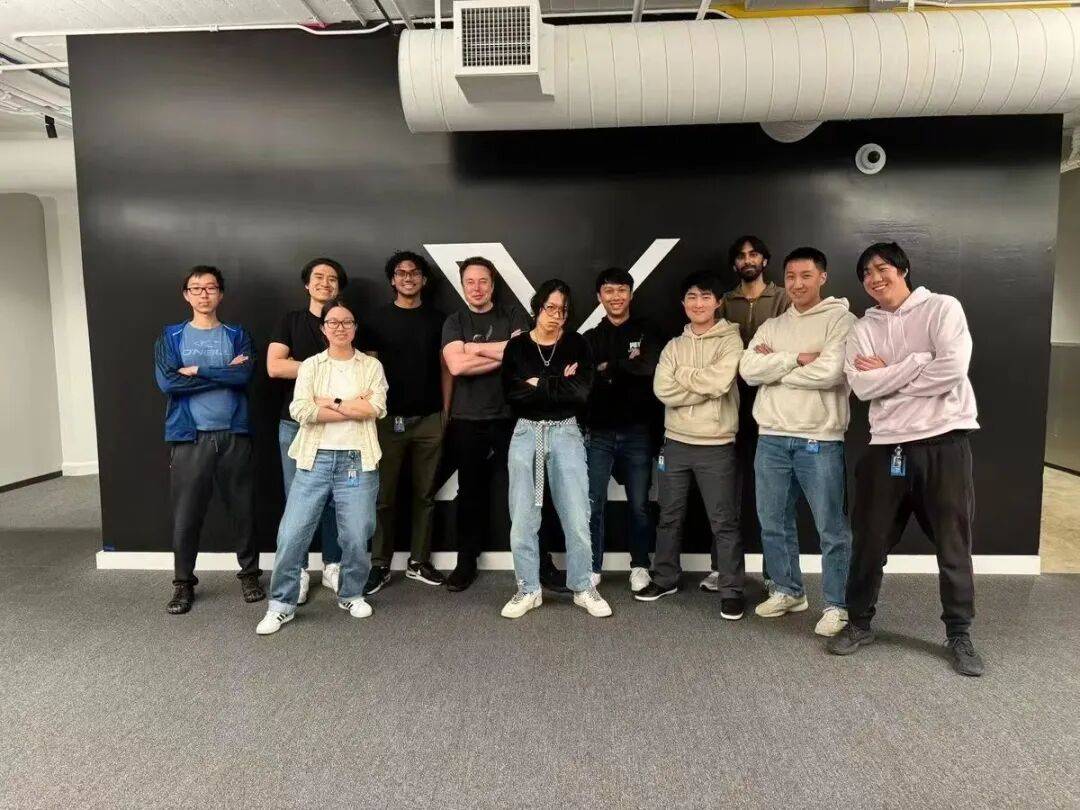
马斯克的一张合影告诉你,美国AI产业竟然靠着华人撑着
Sou Hu Cai Jing· 2026-01-10 13:05
Core Insights - The article highlights the significant role of Chinese talent in the American AI industry, particularly in Silicon Valley, where they have evolved from being mere executors to becoming key decision-makers and innovators in AI technology [3][5][7]. Group 1: Chinese Talent in AI - Chinese professionals have become indispensable in the development of AI technologies, contributing to major advancements in companies like NVIDIA and OpenAI [3][4]. - The transformation of Chinese engineers from "top architects" to "essential pillars" of American AI dominance reflects a broader trend of their increasing influence in the industry [3][5]. - The "Yao Class" from Tsinghua University and other elite institutions has gained recognition in Silicon Valley, often surpassing local talent in terms of capability and innovation [9][10]. Group 2: Engineering Excellence - The article emphasizes the "engineering brutality aesthetics" exhibited by Chinese teams, showcasing their ability to optimize complex algorithms and data processes, which is crucial in the current AI landscape [13]. - The success of the Chinese-led AI company Manus, which was acquired by Meta for billions, illustrates the rapid engineering capabilities and innovative approaches of these teams [5][13]. - Chinese engineers are noted for their meticulous attention to detail and relentless work ethic, which have become vital in the competitive AI sector [13][15]. Group 3: Cultural and Social Dynamics - A unique ecosystem has emerged among Chinese professionals in Silicon Valley, characterized by strong cultural ties and trust, facilitating rapid information exchange and collaboration [15]. - The social dynamics, including informal gatherings and discussions, play a crucial role in fostering innovation and community support among Chinese engineers [15]. - This cultural cohesion allows for efficient resource mobilization, enabling Chinese teams to quickly adapt and thrive in the fast-paced AI environment [15]. Group 4: Geopolitical Context - The article discusses the complex geopolitical landscape that Chinese AI professionals navigate, balancing their contributions to American technological advancement with the scrutiny of their backgrounds [17]. - Despite the challenges posed by international tensions, the presence of Chinese talent is deeply embedded in the fabric of the American AI industry, making them a critical component of its success [17][19]. - The narrative suggests that the contributions of Chinese engineers transcend national boundaries, emphasizing the universal nature of intelligence and innovation in the field of AI [19].

多律师详解Manus跨境并购:技术出海要补上一堂合规课
Di Yi Cai Jing· 2026-01-10 07:05
Core Viewpoint - The regulatory actions surrounding Meta's acquisition of Manus reflect deeper policy corrections and compliance issues in the context of international technology cooperation and investment [1][2]. Group 1: Acquisition Details - Meta's acquisition of Manus is its third-largest acquisition, focusing on talent acquisition, and is expected to enhance its capabilities in AI following Manus's rapid rise with its general AI agent [1]. - Manus's annual revenue surpassed $125 million within eight months of launching its AI agent, leading to a valuation increase to $2 billion [1]. Group 2: Regulatory Concerns - The Chinese Ministry of Commerce announced on January 8, 2026, that it would evaluate the compliance of the acquisition with export control and technology transfer regulations, introducing uncertainty into the transaction [2]. - The evaluation will focus on whether any technology transfer from Manus to Meta violates Chinese laws, particularly concerning the export of restricted technologies [2][3]. Group 3: Technology Export Control - The key legal framework for technology export control includes the "Regulations on the Administration of Technology Import and Export" and the updated "Catalog of Technologies Prohibited or Restricted from Export" [3]. - There is a risk that Manus's core AI technology, developed in China, could be transferred to foreign entities without the necessary export licenses, potentially violating regulations [3]. Group 4: Data Compliance Issues - Data export compliance requires that Manus undergo safety assessments when transferring important data or personal information to Meta, especially given the scale of data used in training its AI products [4]. - The compliance framework is governed by laws such as the "Personal Information Protection Law" and the "Data Security Law," which mandate safety assessments for significant data transfers [4]. Group 5: Investment and Merger Regulations - The acquisition also involves compliance with the "Overseas Investment Management Measures" and may require prior notification under the "Anti-Monopoly Law" if it constitutes a concentration of operators [5]. Group 6: Market Reactions and Risks - Manus's decision to exit the Chinese market and relocate to Singapore was influenced by regulatory scrutiny from the U.S. Treasury, highlighting the legal compliance risks associated with its high-profile marketing strategies [6][7]. - The move to Singapore may not alleviate concerns regarding U.S. control over the company, and it could trigger regulatory actions from Chinese authorities [7]. Group 7: Implications for AI Entrepreneurs - The Manus case serves as a cautionary tale for AI entrepreneurs regarding the importance of understanding domestic regulatory frameworks and managing public relations effectively [8]. - Entrepreneurs are advised to maintain independent judgment and not solely rely on investors or legal counsel in navigating complex regulatory landscapes [8].
反转来了,Meta收购Manus并非单纯的商业行为
Sou Hu Cai Jing· 2026-01-10 03:38
Core Viewpoint - The acquisition of Chinese AI startup Manus by Meta for $2 billion is under scrutiny by the Chinese government, reflecting the global trend of data sovereignty and technology regulation [2][3]. Group 1: Acquisition Details - Manus was sold to Meta for over $2 billion, marking it as the third-largest acquisition in Meta's history [3]. - The acquisition was completed on December 30, with Manus founder Xiao Hong becoming a vice president at Meta [3]. - Manus will maintain its independent operations while joining Meta's superintelligence lab in Singapore [3]. Group 2: Regulatory Context - The Chinese government supports cross-border business operations but requires compliance with national laws regarding foreign investments and technology transfers [2]. - Major economies are increasingly regulating data flow and technology transfers, as seen with the EU's GDPR and the U.S. CFIUS [3]. - The scrutiny of Meta's acquisition is not seen as protectionism but as a necessary measure to ensure fair competition in the global tech landscape [2]. Group 3: Strategic Implications - Manus's strategy of relocating its headquarters to Singapore to detach from its "Chinese identity" is referred to as "Singapore washing" [4]. - The founder highlighted the significant revenue potential from overseas users compared to domestic ones, indicating a strategic shift towards international markets [4]. - The regulatory review will focus on the origins of core technology and data, rather than just the company's registered location [5]. Group 4: Future Outlook - The Ministry of Commerce has initiated an "evaluation investigation," which may lead to a more in-depth review [5]. - If no major violations are found regarding technology exports and data transfers, the acquisition may proceed [5]. - However, if significant compliance issues arise, the deal could be adjusted or terminated [5].