Mobileye

Search documents
汽车供应商与人工智能机器人-重大机遇还是新兴风险
2025-06-02 15:44
Summary of Conference Call on Auto Suppliers and AI Robots Industry Overview - The conference call discusses the North American auto suppliers' landscape, particularly in relation to the emerging robotics market and AI integration into physical applications [1][4]. Key Points and Arguments 1. **Opportunity for Auto Suppliers**: US auto suppliers are positioned to fill critical gaps in the supply chain for technologies that enable AI's transition into the physical world, especially as legacy automakers face increasing challenges [1][4]. 2. **Supply Chain Challenges**: The US is the largest net importer of electric motor parts and gearing systems, with imports exceeding exports by 138% and 65% respectively, indicating a significant reliance on foreign supply chains [2][4]. 3. **Localization Efforts**: Tesla's CEO emphasizes the need to localize the supply chain to mitigate geopolitical risks, highlighting the absence of local supply chains for critical components [2][4]. 4. **Technological Overlap**: Auto suppliers have the potential to transition into the robotics supply chain due to shared technological architectures across various robotic forms, such as cars and humanoids [3][4]. 5. **Long-term Market Dynamics**: Factors pushing suppliers away from traditional automotive markets include the rise of Chinese competitors and affordability challenges, while the demand for robotics and AI technologies pulls them towards new opportunities [3][4]. 6. **Potential for Diversification**: Analysts suggest that auto suppliers could diversify into non-automotive sectors like robotics, drones, and defense, driven by long-term growth pressures in the automotive industry [16][4]. 7. **Key Players**: Companies like Aptiv (APTV), Magna (MGA), BorgWarner (BWA), and Mobileye (MBLY) are identified as well-positioned to pivot towards robotics and AI due to their technological capabilities and financial flexibility [17][19]. 8. **Emerging Trends in China**: Chinese auto suppliers are already venturing into humanoid robotics, leveraging their manufacturing expertise and technological overlaps, which could serve as a model for US companies [22][24]. 9. **Investment Implications**: The rise of embodied AI could lead to significant demand for critical minerals, with estimates suggesting an additional US$800 billion in demand by 2050, necessitating supply chain diversification for Western producers [28][29]. Additional Important Insights - **Potential Deal-Making**: The call anticipates a wave of deal-making, including spin-offs and consolidations, as companies reassess their business strategies in light of the evolving AI landscape [21][4]. - **Framework for Assessing Firms**: A framework is proposed to evaluate auto suppliers' potential in the embodied AI market based on two factors: technological/skill transferability and strategic/financial flexibility [34][39]. - **Global Supply Chain Control**: Chinese enterprises currently dominate the supply of critical minerals, controlling 65% of mined and 88% of refined rare earths, highlighting the urgency for Western companies to diversify their supply chains [28][29]. This summary encapsulates the critical insights from the conference call, focusing on the evolving role of auto suppliers in the robotics and AI sectors, the challenges they face, and the strategic opportunities available to them.

机器人底层操作系统专家
2025-05-27 15:28
Summary of Key Points from the Conference Call Industry Overview - The discussion revolves around the **robotics industry**, specifically focusing on the **robot operating systems** and their integration with hardware components [1][2][3]. Core Insights and Arguments - **Unified Interface Requirement**: Robot operating systems must mask hardware differences and provide a unified interface to ensure real-time processing for tasks like video, voice, and motion control, supporting 30FPS video processing and 1,000Hz six-dimensional force sensor data collection [1]. - **Resource Management**: The operating system kernel must effectively manage CPU, NPU, and AI accelerator resources to ensure efficient operation of AI visual models and real-time motion control tasks. Real-Time Operating Systems (RTOS) allocate fixed CPU cores to specific tasks to prevent resource contention [1][5]. - **Chip Integration Trends**: The industry is leaning towards high-integration chips, with operating systems needing to be closely tied to hardware to optimize resource allocation and improve development efficiency, albeit with some technical dependencies [1][7]. - **Cost Considerations**: Companies must consider future data processing capabilities and costs when selecting operating systems. NVIDIA's solutions, while comprehensive, are expensive, prompting companies to consider alternatives like Qualcomm, Intel, or domestic chips to avoid technology stack dependencies [8][9]. - **X86 Architecture Preference**: The X86 architecture is favored for robotics applications due to its superior floating-point computation capabilities, essential for tasks involving matrix calculations [13][14]. Additional Important Content - **Bottlenecks in Mass Production**: The current bottlenecks in mass-producing robots include algorithm maturity, data issues, and the need for improved chip technology. The existing operating systems are not yet fully prepared for large-scale production, requiring enhancements in AI integration and real-time motion control [22][23]. - **Trends in Operating System Selection**: There is a trend towards diverse operating system selections, with some companies opting for comprehensive solutions from vendors like NVIDIA for rapid product launches, while others seek cost-effective solutions during mass production phases [10]. - **Domestic Chip Companies**: Notable domestic chip companies include Huawei and Rockchip, with Rockchip being recognized for its cost-effectiveness despite not matching Qualcomm's capabilities [12]. - **Development Models**: Companies may choose between purchasing pure software or commissioning operating system vendors to develop complete hardware and software solutions, depending on their in-house capabilities [25]. - **Future Development Trends**: The future trend is towards integrating multiple hardware components into a single operating system to handle all applications efficiently, as exemplified by NVIDIA's Isaac platform [28]. This summary encapsulates the critical insights and trends discussed in the conference call regarding the robotics industry and the evolution of robot operating systems.
申万宏源:首予速腾聚创(02498)“增持”评级 激光雷达配置需求进入爆发期
智通财经网· 2025-05-14 03:58
Core Viewpoint - The report from Shenwan Hongyuan indicates that SUTENG JUCHUANG (02498) is expected to experience significant revenue growth from 2025 to 2027, with projected revenues of 2.62 billion, 3.66 billion, and 4.70 billion yuan respectively, while the net profit is forecasted to be -238 million, 106 million, and 320 million yuan respectively. The company is currently not profitable, leading to a PS valuation method being employed for its assessment [1]. Group 1 - The company is rapidly leading the global LiDAR industry, focusing on providing quality solutions in the field of embodied intelligence. The sales of LiDAR products have seen a non-linear high growth, confirming the explosive demand from automotive companies for LiDAR configurations under the trend of increasing intelligence [2]. - In 2024, the total sales of LiDAR products are expected to reach approximately 544,000 units, representing a significant year-on-year increase of 109.6%. The sales of LiDAR products for ADAS applications are projected to be around 520,000 units. The company is expected to maintain a leading market share of 26% in 2024, ranking first globally [2]. - The product matrix of the company is comprehensive, covering various technical paths including mechanical, semi-solid, and solid-state LiDAR, with performance ranging from short to ultra-long distances and low to high beam configurations. This allows the company to meet a wide range of demands across different price segments [2]. Group 2 - The first driving force is the end-to-end vehicle integration and equalization of intelligent driving. The previous debate over LiDAR configurations in vehicles has been influenced by Tesla's insistence on a pure vision and neural network approach. With advancements in computing power and the maturity of end-to-end algorithms, the integration of multi-sensor fusion with pure vision is becoming more feasible [3]. - The LiDAR industry is expected to enter the "thousand-yuan machine era" by 2025, with prices dropping to the range of 25,000 to 30,000 yuan. This price reduction is anticipated to significantly increase the configuration rate of LiDAR as an "invisible safety airbag" for autonomous driving [3]. - The global market for LiDAR in passenger vehicles is estimated to reach approximately 7 billion yuan by 2025, with the Chinese market accounting for about 6.3 billion yuan. The overseas market is expected to gradually open up and grow rapidly, representing an important direction for LiDAR's incremental growth [3]. Group 3 - The second driving force is the strategic positioning of the robotics technology platform. The company focuses on the development of incremental components such as robotic vision and dexterous hands, launching solutions based on hand-eye coordination for upper body operations and lower body mobility [4]. - The year 2025 is viewed as the year of mass production for humanoid robots, with companies like Tesla aiming to produce 5,000 units of Optimus this year, and domestic companies like Zhiyuan Robotics achieving deliveries in the thousands [4]. - In the niche market of robotic lawn mowers, the demand for LiDAR products is projected to exceed 400,000 units by 2025 and is expected to surpass 900,000 units by 2028 [4].

958亿上市公司老板开小号,一把融资22亿
3 6 Ke· 2025-05-12 11:41
Core Insights - AI21 Labs has raised $300 million in Series D funding led by Google and NVIDIA, bringing its total funding to $636 million [1] - The company, founded in 2017 in Israel, focuses on developing large language models and natural language processing tools [2] Company Overview - AI21 Labs was co-founded by experienced entrepreneurs, including Amnon Shashua, a prominent computer scientist and founder of Mobileye, which was acquired by Intel for $15.3 billion [2][3] - The initial product, Wordtune, launched in October 2020, quickly gained recognition and was named one of Google's best Chrome extensions in 2021 [3] Investment and Market Position - AI21 Labs has a strong investor base, including industry giants like Google, NVIDIA, and Intel, as well as notable investment firms [4] - Despite competition from OpenAI's ChatGPT, AI21 Labs has seen increased investor interest, raising over $500 million since ChatGPT's launch [5] Product Development and Innovation - AI21 Labs has responded to market challenges by launching Wordtune Spices, an enhanced writing assistant that provides citations and data, improving text credibility [5] - The company has shifted focus to enterprise-level AI services, with its Jamba model supporting a context window of up to 256,000 tokens, significantly larger than OpenAI's offerings [6] Competitive Advantages - AI21 Labs' Maestro system reduces hallucination rates by 50% and improves reasoning accuracy to over 95%, making it suitable for high-precision fields like law and medicine [6] - The models support local deployment, emphasizing data privacy and customization, which is crucial for industries with sensitive data [6] Strategic Partnerships - NVIDIA's investment in AI21 Labs enhances demand for its high-performance GPUs and allows integration of AI21's models into NVIDIA's enterprise AI solutions [7] - Both Google and NVIDIA aim to leverage AI21 Labs to expand their influence in the enterprise AI market [7]
自动驾驶新星发布2024年年报,毛利暴跌25%
Jin Rong Jie· 2025-04-29 06:15
据知行汽车科技(苏州)股份有限公司(01274.HK)所发布公告,其 2024 年度财报全面展示了公司在 过去一年的经营状况、财务表现以及未来发展战略。这份财报不仅反映了知行汽车在自动驾驶领域的发 展成果,也凸显了其在竞争激烈的市场环境中面临的挑战。 知行汽车也面临着诸多挑战。从过往公告和行业研究报告来看,公司对部分大客户和特定供应商存在较 高依赖。过去,吉利集团一直是公司的最大客户,报告期内来自吉利集团的收入占总收入的 83.7%。此 外,公司依赖 Mobileye 供应自动驾驶域控制器的基础版本及授权软件,若这一供应出现问题,公司将 面临收入大幅减少的风险。行业竞争日益激烈,部分车企对自动驾驶自主研发的持续投入,对外部第三 方供应商产生了一定的竞争关系。知行汽车基于 Mobileye 提供的自动驾驶域控制器 SuperVision™供给 极氪 001 车型部分中国境内版本的收入在 2024 年有所下降,这表明公司在市场竞争中面临着严峻的挑 战。 互联网上,行业专家对知行汽车的发展也持有不同观点。部分专家认为,知行汽车在技术研发上的持续 投入和取得的成果值得肯定,其在低算力芯片 BEV 模型部署上的突破,有 ...
汽车视点 | 国际范、科技范、融合范…从上海车展“新面孔”看汽车产业新动向
Zhong Guo Jin Rong Xin Xi Wang· 2025-04-29 02:27
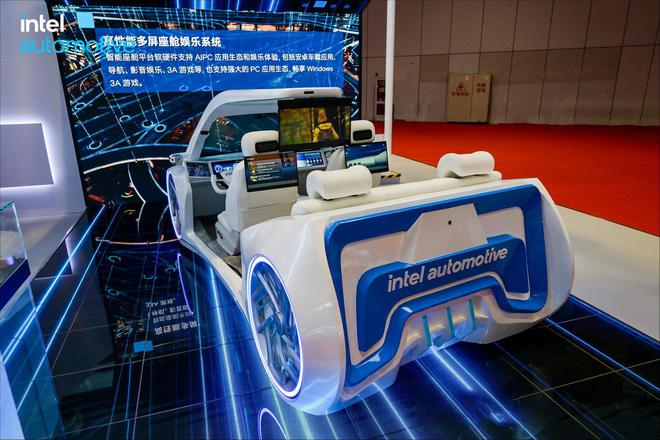
Core Insights - The 2025 Shanghai International Automobile Industry Exhibition has opened to the public, showcasing new trends in the Chinese automotive industry with increased participation from international dealers [1][2] - The presence of overseas dealers has surged, with nearly 10,000 foreign dealers attending, indicating strong demand for Chinese electric vehicles in their local markets [1][2] - The exhibition highlights the growing importance of technology in the automotive sector, with both foreign and domestic tech companies showcasing innovations [2][3] Group 1: International Participation - International dealers, such as Moctar Chafi from Ivory Coast, are actively seeking to purchase Chinese electric vehicles, indicating a strong market for these products abroad [1] - The exhibition has attracted significant interest from overseas dealers, particularly in the electric vehicle segment, with many expressing confidence in the sales potential of Chinese brands [1][2] - The export of Chinese automobiles has seen substantial growth, with 1.54 million vehicles exported in Q1 2023, including 441,000 electric vehicles, marking a 43.9% year-on-year increase [2] Group 2: Technological Advancements - The exhibition has seen a rise in technology companies participating, with major players like Intel and Sony alongside domestic firms, reflecting the trend of "software-defined vehicles" [2][3] - Mobileye, an Israeli automotive technology company, has introduced its advanced driver assistance systems at the exhibition, showcasing its collaboration with Chinese automakers [3] - The integration of advanced technologies such as 3D rendering and real-time operating systems is becoming a focal point for automotive manufacturers, enhancing the overall driving experience [6][7] Group 3: Localized Strategies - Companies like Faurecia are emphasizing their localization strategies, with over 60% of their Asian orders coming from China, highlighting the importance of the Chinese market for global automotive suppliers [7] - The trend of developing products tailored to the Chinese market is evident, with many companies planning to leverage successful products in China for global distribution [8] - The competition in the automotive industry is shifting towards supply chain resilience, technological influence, and ecosystem integration, with companies closely aligned to Chinese market demands likely to gain a competitive edge [8]


跨国企业加大中国汽车供应链投入,告别“英伟达式依赖”|2025上海车展
Tai Mei Ti A P P· 2025-04-27 00:57
Core Insights - The 2025 Shanghai International Automobile Industry Exhibition has highlighted the increasing localization efforts of multinational automotive suppliers in China, with Intel making its debut by launching the second-generation AI-enhanced Software Defined Vehicle (SDV) SoC, which utilizes a chiplet architecture [2][3] - Intel's collaboration with companies like Hezhima Intelligent and others aims to address key technological challenges in the automotive sector, focusing on building a new intelligent vehicle ecosystem [2][4] - The automotive industry is facing three main challenges: transitioning from traditional automotive architecture to software-defined vehicles, ensuring sustainability in economics and battery supply, and achieving scalability across different vehicle models [2][3] Intel's Developments - Intel's second-generation SDV SoC boasts a tenfold increase in AI performance, a 61% improvement in CPU performance per watt, and a twofold enhancement in audio performance, with mass production set to begin in 2026 [3] - The automotive division of Intel is now based in China, reflecting the company's commitment to the Chinese market and its belief in significant opportunities within the automotive sector [3][4] Collaboration and Market Dynamics - The partnership with Hezhima Intelligent focuses on creating a cockpit and driving integration platform, leveraging Intel's chiplet architecture [4][5] - The demand for automotive chips is projected to increase significantly, with traditional fuel vehicles requiring approximately 600-700 chips, electric vehicles needing around 1600, and advanced smart vehicles potentially requiring up to 3000 chips [4] Market Trends and Competitors - Other global automotive giants, such as Porsche, are also enhancing their presence in the Chinese market, with Porsche announcing the completion of a strategic upgrade for its R&D center in Shanghai [5] - Unity China is actively developing in-car gaming ecosystems and has established partnerships with numerous automotive manufacturers, achieving over 85% market share in real-time 3D cockpit solutions [7][8] Future Outlook - Mobileye, a subsidiary of Intel, reported a revenue of $438 million in Q1 2025, marking an 83% year-on-year increase, driven by reduced inventory levels among primary customers [10] - The automotive technology landscape is evolving, with companies like Bosch and Aptiv also increasing their investments in the Chinese market, indicating a shift towards local supply chains and solutions [11][12]


Intel(INTC) - 2025 Q1 - Earnings Call Transcript
2025-04-25 05:57
Financial Data and Key Metrics Changes - First-quarter revenue was $12.7 billion, at the high end of guidance, driven by better-than-expected Xeon sales [34] - Non-GAAP gross margin was 39.2%, approximately three percentage points above guidance due to strong demand for Raptor Lake and improved costs for Meteor Lake [34] - Earnings per share for Q1 was 13¢, exceeding guidance of breakeven EPS, driven by higher revenue and lower operating expenses [35] - Operating cash flow was $800 million, with growth CapEx of $6.2 billion, resulting in adjusted free cash flow of negative $3.7 billion [36] Business Line Data and Key Metrics Changes - Intel products revenue was $11.8 billion, down 10% sequentially but above expectations [38] - Client Computing Group (CCG) revenue decreased 13% quarter over quarter, below typical seasonality [38] - Data Center and AI (DCAI) revenue was down 5% sequentially, driven by hyperscaler demand for AI servers [39] - Intel Foundry revenue was $4.7 billion, up 8% sequentially due to increased demand for advanced packaging services [39] Market Data and Key Metrics Changes - The PC total addressable market (TAM) is expected to grow 3% to 5% due to the end of service for Windows 10 and aging installed base [31] - Traditional server side is poised for double-digit CPU core growth this year, supported by delayed infrastructure upgrades [32] - Economic uncertainty is increasing due to shifting trade policies and inflation, prompting a conservative business management approach [33] Company Strategy and Development Direction - The company aims to transform its culture and operations to enhance innovation and agility [11] - A focus on building best-in-class products, particularly in AI workloads, is emphasized as a strategic priority [18][20] - The company plans to streamline operations and reduce organizational complexity to improve execution [12][14] - A commitment to strengthening the balance sheet and monetizing non-core assets is highlighted [28][29] Management's Comments on Operating Environment and Future Outlook - Management acknowledges ongoing macroeconomic uncertainties but remains optimistic about the underlying fundamentals supporting growth [33][44] - The company is preparing for potential economic slowdowns and is adjusting forecasts accordingly [43] - Management emphasizes the importance of customer feedback in shaping product and platform design [22] Other Important Information - The company has set OpEx targets of $17 billion for 2025 and $16 billion for 2026, reflecting a focus on cost optimization [15][49] - A four-day-per-week return to office policy is mandated to foster collaboration and innovation [16] - The company plans to deconsolidate Altera from its financial results following a significant investment from Silver Lake Partners [41][42] Q&A Session Summary Question: Balancing internal product roadmap and foundry needs - Management discussed the importance of flattening the organization to focus on product delivery while improving yield and reliability for foundry customers [56][58] Question: Gross margin outlook for 2025 and 2026 - Management indicated that gross margins may face headwinds due to product mix and tariff dynamics, but expects improvements in 2026 with better margin products [62][66] Question: Updates on third-party foundry customers - Management emphasized the priority of ramping internal customers before expanding to third-party foundry customers, focusing on building trust and reliability [76][78] Question: Assessment of Panther Lake and Clearwater Forest - Management expressed confidence in Panther Lake's competitive positioning and outlined plans for Clearwater Forest's launch in 2026 [82][86] Question: Seven nanometer capacity constraints - Management explained that demand for older generation products is currently stronger due to macroeconomic factors, impacting the ramp of newer products [122][124] Question: Data center market outlook - Management remains optimistic about data center growth driven by hyperscalers, while acknowledging macroeconomic concerns [111][113] Question: CapEx outlook for 2025 and 2026 - Management plans to operate with an $18 billion CapEx in 2025, focusing on better returns from existing assets [116][118] Question: Panther Lake launch amid macro events - Management believes Panther Lake will see strong uptake due to its performance and pricing, despite current macroeconomic challenges [128][130]
STMicroelectronics Stock Falls 34% in 6 Months: Buy the Dip?
ZACKS· 2025-04-07 17:00
Core Viewpoint - STMicroelectronics (STM) has experienced a significant decline in stock value, dropping 33.9% over the past six months, underperforming compared to its industry peers and the broader technology sector [1][2] Financial Performance - The company is facing a challenging outlook for Q1 2025, with a projected 22.4% year-over-year revenue decline in Q4 2024, particularly affected by weakness in the automotive and industrial markets [2] Growth Drivers - Despite recent performance challenges, STM's focus on advanced microcontroller technology and Silicon Carbide (SiC) investments positions the company for long-term growth [3][4] - In 2024, STM generated $1.1 billion in revenue from SiC products, driven by high-value wins in the automotive and industrial sectors, including a strategic partnership with Ampere [5] - The China market has become a key growth area for STM's SiC products, with significant engagements with leading automakers and a long-term supply agreement with Geely Auto [6] Manufacturing and Innovation - STM is constructing a high-volume SiC manufacturing facility in Catania, Italy, aimed at enhancing manufacturing capabilities and achieving significant cost savings by 2027 [7] - The company has secured multiple design wins in the automotive sector, particularly in software-defined vehicle architectures and advanced driver-assistance systems through collaboration with Mobileye [8] Product Development - STM's advancements in the STM32 microcontroller series, including the introduction of the STM32N6 series with machine learning capabilities, demonstrate the company's commitment to innovation and meeting the demands of AI applications [10][12] - The company has also reported design wins in various industrial applications, showcasing its dedication to power and energy management solutions [9] Investment Outlook - STM's strong product innovation, expanding STM32 portfolio, strategic focus on SiC, and solid design wins across automotive and industrial markets position it as a compelling investment opportunity in the semiconductor space [14] - The company currently holds a Zacks Rank 2 (Buy), indicating positive market sentiment [15]

全民智驾,芯片变局
远川研究所· 2025-04-03 14:01
Core Viewpoint - The article discusses the evolving landscape of the intelligent driving (智驾) industry, highlighting the shift in market dynamics and the competitive strategies of various companies, particularly focusing on the impact of BYD's recent initiatives on the mid-range intelligent driving chip market [3][12][24]. Group 1: Market Dynamics - The intelligent driving industry is witnessing a significant shift, with BYD's announcement of standardizing high-level intelligent driving across its models, which is expected to raise the baseline for intelligent driving features in the market [9][12]. - The demand for mid-range intelligent driving chips is projected to surge from tens of thousands to millions due to the competitive landscape created by BYD and other domestic brands [12][24]. - The market for low-computing (under 10T AI computing) intelligent driving chips exceeded 10 million units last year, while high-end chips like OrinX and Ascend 610 sold around 2.6 million units [5][6]. Group 2: Competitive Strategies - Companies are adopting a "barbell strategy" in intelligent driving chip selection, focusing on either low-cost entry-level chips for basic safety features or high-end chips for advanced functionalities, leaving mid-range chips in a precarious position [6][7]. - The competition among chip manufacturers is intensifying, with major players like NVIDIA, Huawei, and domestic firms like Horizon and Qualcomm vying for market share in the mid-range segment [14][15][20]. - The article notes that the competitive logic for mid-range chips differs from high-end chips, with a greater emphasis on cost-effectiveness and performance [14][15]. Group 3: Industry Challenges - The article highlights the challenges faced by Mobileye, which has lost its dominant position in the intelligent driving chip market due to increased competition and the rise of local players [24][25]. - The shift towards "全民智驾" (universal intelligent driving) is prompting car manufacturers to demand high-end driving experiences at mid-range prices, creating pressure on chip suppliers to innovate and reduce costs [27][30]. - The article suggests that NVIDIA's current strategy may be overly confident, as it faces competition from newer, more cost-effective solutions from other manufacturers [30][31].