
九毛九

Search documents
贾国龙起诉罗永浩背后:西贝冒不起险了丨消费一线
2 1 Shi Ji Jing Ji Bao Dao· 2025-09-11 15:43
Group 1 - The core issue revolves around a legal dispute initiated by the founder and CEO of Xibei, Jia Guolong, against Luo Yonghao, following Luo's criticism of Xibei's menu, claiming it consists mainly of pre-prepared dishes [1][6] - Jia Guolong emphasized that Xibei does not serve any pre-prepared dishes and plans to publicly showcase the menu consumed by Luo Yonghao for transparency [1][6] - Luo Yonghao's comments have significantly impacted Xibei's reputation, prompting Jia to pursue legal action, although he will not personally respond to Luo's statements [1][6] Group 2 - Xibei is currently facing operational challenges, with revenue declining as part of a broader industry trend [7][8] - In the first half of 2025, several major restaurant brands, including Haidilao and Jiumaojiu, reported revenue declines of 3.7% to 207.03 billion and 10.1% to 27.53 billion respectively [8] - The overall restaurant market is under pressure, with a notable increase in the number of closures, while only specific categories like Western cuisine and bakery items are experiencing growth [9][10] Group 3 - The restaurant market in major cities is also declining, with Beijing's restaurant revenue dropping by 3.6% and Shanghai's by 2.9% in the first seven months of 2025 [10] - Nationally, the restaurant revenue for the same period showed a modest growth of 3.8%, indicating a challenging environment for many brands [10] - The negative impact of public criticism on brands is highlighted by past incidents, such as the downfall of Zhong Xue Gao due to adverse publicity, which has made Xibei cautious about potential risks [11][12]


九毛九20250911
2025-09-11 14:33
Summary of the Conference Call for Jiumaojiu Company Overview - **Company**: Jiumaojiu - **Industry**: Restaurant and Food Service Key Points and Arguments Business Model and Performance - Jiumaojiu has launched a new model focusing on fresh ingredients, transitioning from a single dish (sour fish) to three signature dishes with a variety of hot dishes. As of July, 64 new model stores have been established, with a target of over 150 by the end of the year and full implementation by the end of 2026 [2][3][5] - The new model has shown a 10% year-on-year increase in revenue and a 15% increase in dine-in revenue for July and August, significantly outperforming the old model [2][5] - In the first half of 2025, the company reported a net profit of 61 million RMB, maintaining a net profit margin of 2.2%, consistent with the previous year [3][5] Store Optimization and Closure - The company is actively optimizing its store structure, planning to close 68 self-operated stores and 3 franchise stores in the first half of 2025, with an additional 40 to 50 closures expected in the second half [2][3] - These closures are anticipated to impact short-term revenue but are viewed as beneficial for long-term health [2][3] Supply Chain and Cost Management - The introduction of live fish delivery to stores has been implemented, with the supply chain focusing on vegetable cleaning, rough processing, and sauce preparation. The self-supply ratio of bass fish remains below 30% [2][9] - The new model has slightly reduced gross margins by 1-2 percentage points, but future gross margins are expected to stabilize around 64% [7][8] Consumer Trends and Market Positioning - The company has observed a shift in consumer demographics, with a decrease in young customers and an increase in family diners, leading to higher expectations for food quality and dining experience [4][11] - To adapt, Jiumaojiu is enhancing its fresh ingredient offerings and overall dining experience to meet these evolving consumer demands [4][11] Future Plans and Financial Outlook - The company aims to achieve over 18% operating profit margin per store and plans to complete the renovation of all stores by 2026, with a capital expenditure budget exceeding 300 million RMB [7][19][20] - Retail business revenue is projected to grow, with sales contributions expected to reach 110-120 million RMB in the first half of 2025 [16] Challenges and Strategic Adjustments - The company has decided to discontinue pre-packaged sour fish due to negative brand perception, with plans to reintroduce it after establishing a fresh concept across all stores [17][18] - The sour fish category is still expanding, and the company plans to enhance customer retention by diversifying its menu offerings [18] Conclusion - Jiumaojiu is undergoing significant transformation with a focus on fresh ingredients and improved customer experience, while strategically closing underperforming stores to strengthen its market position and profitability in the long term [2][3][4][5][11]
华创证券:维持九毛九“推荐”评级 目标价2.65港元
Zhi Tong Cai Jing· 2025-09-09 05:33
Core Viewpoint - Huachuang Securities maintains a "recommended" rating for Jiumaojiu (09922), projecting net profits of 147 million, 165 million, and 168 million yuan for 2025, 2026, and 2027 respectively, with a target price of 2.65 HKD. The company has a solid supply chain foundation and strong core brands, with the ability to continuously incubate new brands, indicating promising future growth [1]. Brand Performance - For the first half of 2025, Jiumaojiu reported revenue of 2.753 billion yuan, a year-on-year decrease of 10.1%, and a net profit of 61 million yuan, down 16.05% year-on-year. The net profit margin was 2.13%, a decrease of 0.09 percentage points, while the net profit margin attributable to the parent company was 2.2%, down 0.16 percentage points [1]. - By brand, the operating profit margins for the first half of 2025 were as follows: Taier at 13.4% (down 0.4 percentage points), Song Hotpot at 3.6% (down 5.0 percentage points), Jiumaojiu at 12.7% (down 4.2 percentage points), and other brands at 15.9% (up 25.7 percentage points). The company has closed some non-core brands, reducing related expenses [1]. Consumer Metrics - The offline dining sector faced pressure in the first half of 2025, with a decline in turnover rates across brands. Taier's turnover rate dropped significantly to 2.2 from 2.7 in the same period of 2024. The turnover rates for Song Hotpot and Jiumaojiu were 1.7 (down from 2.0) and 1.5 (down from 1.8) respectively [2]. - The per capita consumption for Taier increased slightly to 73 yuan from 71 yuan in 2024, while Song Hotpot's per capita consumption decreased to 99 yuan from 110 yuan, and Jiumaojiu's per capita consumption rose to 57 yuan from 56 yuan [2]. Same Store Sales - Same-store sales for the first half of 2025 showed a decline: Taier at 1.536 billion yuan (down 18.9% year-on-year), Song Hotpot at 288 million yuan (down 20.07%), and Jiumaojiu at 193 million yuan (down 19.85%) [3]. Store Structure Optimization - As of the end of the first half of 2025, the total number of stores, including a few franchised restaurants, was 729, a net decrease of 42 from the end of the first half of 2024. Taier had 566 stores (down 48), with some direct stores converted to franchises, increasing the number of franchised restaurants to 19. Song Hotpot increased its store count to 31 (up 9), while Jiumaojiu had 68 stores (down 4) [4]. Supply Chain and International Expansion - The company is actively optimizing its supply chain and has begun trial operations at the Nansha Supply Chain Center, enhancing its digital capabilities. The Taier brand has expanded operations to multiple countries, including Singapore, Malaysia, Canada, the United States, Thailand, and Indonesia, while Lai Meili has opened one store in Singapore [5].
华创证券:维持九毛九(09922)“推荐”评级 目标价2.65港元
智通财经网· 2025-09-09 05:31
Core Viewpoint - Huachuang Securities maintains a "Buy" rating for Jiumaojiu (09922), projecting net profit for 2025/26/27 to be 1.47/1.65/1.68 billion yuan, with a target price of 2.65 HKD. The company has a solid supply chain foundation and strong core brands, with potential for continuous new brand incubation [1] Financial Performance - In the first half of 2025, Jiumaojiu reported revenue of 2.753 billion yuan, a year-on-year decrease of 10.1%, and a net profit attributable to shareholders of 61 million yuan, down 16.05%. The company's net profit margin was 2.13%, a decrease of 0.09 percentage points year-on-year [1] - By brand, the operating profit margins for the first half of 2025 were as follows: Taier at 13.4% (down 0.4 percentage points), Song Hotpot at 3.6% (down 5.0 percentage points), Jiumaojiu at 12.7% (down 4.2 percentage points), and other brands at 15.9% (up 25.7 percentage points) [1] Customer Metrics - In the first half of 2025, the turnover rates for each brand decreased: Taier at 2.2 (down from 2.7 in the same period of 2024), Song Hotpot at 1.7 (down from 2.0), and Jiumaojiu at 1.5 (down from 1.8) [2] - The table turnover rates were also down: Taier at 3.1 (down from 3.8), Song Hotpot at 2.5 (down from 2.9), and Jiumaojiu at 2.5 (down from 2.8) [2] - Average customer spending showed slight increases for Taier (73 yuan, up from 71 yuan) and Jiumaojiu (57 yuan, up from 56 yuan), while Song Hotpot saw a decline (99 yuan, down from 110 yuan) [2] Same-store Sales - Same-store sales for the first half of 2025 were as follows: Taier at 1.536 billion yuan (down 18.9%), Song Hotpot at 288 million yuan (down 20.07%), and Jiumaojiu at 193 million yuan (down 19.85%) [3] Store Optimization - As of the end of the first half of 2025, the total number of stores, including a few franchise restaurants, was 729, a net decrease of 42 from the end of the first half of 2024. Taier had 566 stores (down 48), Song Hotpot had 31 stores (up 9), and Jiumaojiu had 68 stores (down 4) [4] Supply Chain and International Expansion - The company is actively optimizing its store structure and has closed underperforming stores. The Nansha supply chain center has begun trial operations, enhancing its digital capabilities. Taier has expanded operations in multiple countries, including Singapore, Malaysia, Canada, the United States, Thailand, and Indonesia [5]
九毛九(09922.HK):收入承压 门店升级初显成效股价
Ge Long Hui· 2025-09-09 04:26
Core Viewpoint - The company is experiencing short-term pressure on performance, with both revenue and profit declining due to factors such as decreased table turnover rates, concentrated store closures, and pressure on same-store sales [1][2] Group 1: Financial Performance - In H1 2025, the company achieved operating revenue of 2.753 billion yuan, a year-on-year decrease of 10.1% [1] - The net profit attributable to shareholders was 61 million yuan, down 31.3% year-on-year [1] - Revenue from key brands such as Tai Er, Song Huo Guo, and Jiu Mao Jiu was 1.946 billion, 416 million, and 226 million yuan respectively, with year-on-year declines of 13%, 3%, and 22% [1] Group 2: Same-Store Performance - Same-store sales for Tai Er, Song Huo Guo, and Jiu Mao Jiu decreased by 19.0%, 20.1%, and 19.8% respectively, primarily due to lower table turnover rates [1] - The average daily sales for same-store in Q2 showed a smaller decline compared to Q1, indicating initial positive effects from new store formats and menu optimization [1] Group 3: Strategic Initiatives - The company strategically closed 88 underperforming stores in H1 2025, resulting in a net reduction of 78 stores, bringing the total to 729 [2] - As of July 31, 2025, Tai Er completed the upgrade of 64 stores to the "5.0 Fresh Model," focusing on core ingredients and enhancing customer experience [2] - The Guangzhou Nansha supply chain center has begun trial operations, supporting cross-regional expansion and quick meal services [2] Group 4: Future Projections - The company forecasts earnings per share of 0.10, 0.16, and 0.20 yuan for 2025, 2026, and 2027 respectively, with a downward adjustment in previous estimates due to slower-than-expected same-store recovery and significant direct store reductions [2] - The reasonable valuation level for the company is projected at a 24 times price-to-earnings ratio for 2025, corresponding to a target price of 2.61 HKD [2]
餐饮巨头们止跌回血:一边关店砍成本,一边加码做外卖
虎嗅APP· 2025-09-07 09:00
Core Viewpoint - The restaurant industry in China is experiencing a mixed recovery, with some leading companies showing signs of revenue and profit growth, while others continue to face challenges due to external factors and market competition [4][5]. Group 1: Overall Performance - Among 29 listed restaurant companies, 17 reported year-on-year revenue growth, with Gu Ming leading at 41.26% [6]. - 15 companies saw an increase in net profit, while 7 remained in a state of net loss, including Dao Xiang Holdings and Tang Palace, which shifted from profit to loss [6][9]. - Notable profit growth was observed in companies like Da Shi and Wei Qian (China), with net profits increasing over 100% [9]. Group 2: Market Dynamics - The restaurant sector is characterized by uneven performance across different segments, with high-end dining facing significant pressure due to reduced consumer spending and government policies [11]. - In Hong Kong, over 20 local chain restaurants have closed in recent months, highlighting the tough market conditions [11]. - Traditional high-end restaurants are struggling, while casual dining and fast-food brands are performing better, with companies like Da Shi and Wei Qian (China) showing revenue and profit increases [11]. Group 3: Cost Management and Store Closures - Many companies are focusing on cost-cutting measures, including closing underperforming stores to improve operational efficiency [14][19]. - For instance, Huang Shang Huang closed 762 stores in the first half of the year, contributing to improved efficiency [12]. - Companies like Xiao Cai Yuan and Hai Di Lao are also reducing store numbers while optimizing their operational models [21][22]. Group 4: New Strategies and Innovations - The entry of major players like JD and Taobao into the food delivery market has intensified competition, prompting restaurants to adapt their strategies [26]. - Many companies are increasing their focus on delivery services, with significant revenue contributions from this channel [29]. - New product lines and sub-brands are being launched to capture additional market segments, as seen with Hai Di Lao's expansion into new restaurant concepts [31][34].

证监会九问直指核心,巴奴IPO进程恐生变数
3 6 Ke· 2025-09-05 08:56
Core Viewpoint - The IPO of Banlu Hotpot faces uncertainties due to regulatory inquiries from the China Securities Regulatory Commission (CSRC) regarding its corporate governance and financial practices, amidst a challenging market environment for high-end dining [1][11][12]. Company Overview - Banlu Hotpot, founded in 2004, positions itself as a premium hotpot brand with a focus on high-quality ingredients, particularly its signature dish of "tripe and mushroom" [2][4]. - The average customer spending at Banlu is significantly higher than competitors, with a reported average of 138 yuan per customer in Q1 2025, compared to 97.5 yuan for Haidilao and 54.8 yuan for Xiaobai [3][4]. Financial Performance - Banlu has shown strong revenue growth, outpacing the overall hotpot industry, with a stable gross margin of around 66%, which is higher than Haidilao's 62% [5][6]. - Despite high gross margins, Banlu's net profit margins remain relatively low, at 4.8% in 2023, 5.3% in 2024, and 7.8% in Q1 2025, primarily due to high operating expenses [6][7]. Market Dynamics - The hotpot industry is experiencing a significant shift towards value-oriented dining, with a reported decline in average spending per customer across the sector, from approximately 90 yuan in 2023 to 60-65 yuan in 2024 [8][9]. - Banlu's strategy to adjust pricing dynamically in response to regional market conditions has led to a decrease in average spending, but it aims to maintain its premium positioning [10][11]. Expansion Plans - Banlu plans to open 150 new stores over the next two years, with an estimated investment of 7.5 billion yuan required for this expansion, highlighting the urgency of its IPO to secure necessary funding [11][12]. - The company aims to enhance its presence in key cities while also expanding into lower-tier markets, although this strategy poses risks due to potential misalignment with its high-quality brand image [10][11]. Regulatory Challenges - The CSRC has raised nine key questions regarding Banlu's corporate governance, including issues related to its complex ownership structure and dividend policies, which could impact the IPO process [11][12][13]. - The market sentiment towards hotpot stocks is currently low, with significant declines in the stock prices of competitors like Haidilao, which may affect investor appetite for Banlu's IPO [13].
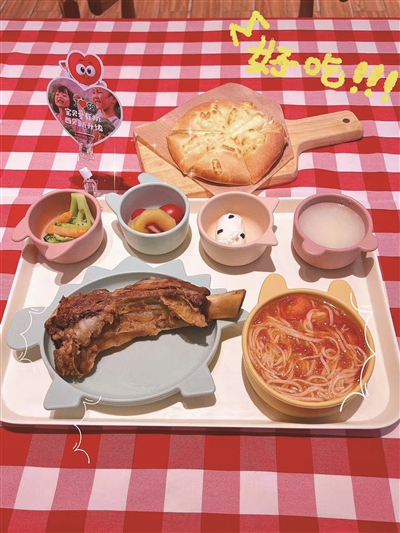
多家餐饮品牌推出儿童餐
Mei Ri Shang Bao· 2025-09-04 22:20
Core Insights - The children's meal market is rapidly growing, with various brands targeting this segment to capitalize on increasing consumer awareness of children's health and dining frequency [2][4] - Major brands like Haidilao, Xibei, and others have already entered the children's meal space, with Xibei being one of the earliest players since 2017, achieving over 40 million sales of children's meals by early this year [2][4] - The market potential for children's meals is significant, with estimates suggesting a consumption market size of 390 billion to 590 billion yuan based on a 10% penetration rate [4] Brand Activities - Haidilao launched the "Haidilao Little Team" collaboration meal, achieving over 70,000 sales in a single day shortly after its release [3] - Xibei has been active in enhancing its children's meal offerings, including partnerships with animation IPs and introducing themed dining experiences [2][3] - Other brands like Meizhou Dongpo and Yonghe Dawang are also innovating in the children's meal space, focusing on health-conscious options and themed restaurants [3] Market Dynamics - The children's consumption market in China is substantial, with related expenses accounting for over 30% of total family spending [4] - The demographic of 25-35 years old is becoming a significant consumer force in the family dining market, indicating a shift in consumer behavior towards family-oriented dining experiences [4] - Analysts suggest that children's meals can serve as a leverage point for brands to drive family consumption, similar to trends observed in retail environments [4]

九毛九(09922) - 截至二零二五年八月三十一日止之股份发行人的证券变动月报表
2025-09-04 08:50
FF301 股份發行人及根據《上市規則》第十九B章上市的香港預託證券發行人的證券變動月報表 截至月份: 2025年8月31日 狀態: 新提交 致:香港交易及結算所有限公司 公司名稱: 九毛九国际控股有限公司 (於開曼群島註冊成立的有限公司) 呈交日期: 2025年9月4日 I. 法定/註冊股本變動 | 1. 股份分類 | 普通股 | 股份類別 | 不適用 | | 於香港聯交所上市 (註1) | | 是 | | | --- | --- | --- | --- | --- | --- | --- | --- | --- | | 證券代號 (如上市) | 09922 | 說明 | | | | | | | | | | 法定/註冊股份數目 | | 面值 | | | 法定/註冊股本 | | | 上月底結存 | | | 500,000,000,000 | USD | 0.0000001 | USD | | 50,000 | | 增加 / 減少 (-) | | | | | | USD | | | | 本月底結存 | | | 500,000,000,000 | USD | 0.0000001 | USD | | 50,000 ...
“酱油茅”,半年净赚39亿
投中网· 2025-09-03 06:33
Core Viewpoint - The consumer industry is showing signs of recovery, with some Hong Kong-listed consumer companies experiencing a revaluation of their stocks, particularly Nongfu Spring, which has seen its stock price increase by over 100% since September of last year, reaching a market capitalization of over 550 billion HKD [5][6]. Group 1: Market Performance - The recovery signals are evident, with Nongfu Spring's stock price only 15% away from its historical high, indicating that the market is likely to provide a correct pricing for the company [6]. - Unlike previous phases of broad consumer growth, market differentiation is becoming the norm, especially in the restaurant sector, where leading brands like Haidilao are still struggling, while second-tier brands like Jiumaojiu and Xiaobai are facing significant declines [6][7]. Group 2: Industry Trends - The enthusiasm for hot pot consumption is declining, and there are noticeable shifts in consumer preferences within the restaurant industry. Essential consumer markets, such as packaged water and condiments, are showing stronger resilience against economic cycles [7]. - Haidilao, known as the "sauce king," reported a revenue of 15.229 billion CNY for the first half of 2025, a year-on-year increase of 7.59%, and a net profit of 3.914 billion CNY, up 13.35% [8][10]. Group 3: Company Developments - Haidilao's stock price has rebounded from its lows, with its actual controller holding 35.99% of the shares, valued at over 87 billion CNY [11][12]. - The company has undergone significant changes, including leadership transitions and a push for internationalization, with its IPO on the Hong Kong Stock Exchange attracting nearly 4.7 billion HKD from eight cornerstone investors [18][19]. - Haidilao aims to transform from a soy sauce leader to a comprehensive cooking solution provider, with plans to cover various culinary needs from kitchen to table [21][22]. Group 4: Financial Performance - Haidilao's financial report indicates a continuous double-digit growth in net profit for six consecutive quarters, with a gross margin increase to 40.12% and a net profit margin of 25.75% [24]. - The company has initiated its first interim dividend plan since its listing, proposing a cash dividend of 2.60 CNY per 10 shares, totaling 1.52 billion CNY [26]. - Following a series of strategic moves, Haidilao's stock price saw an increase of over 8% in August, reflecting a recovery in performance [27].

