博时基金

Search documents
国产算力水平有望持续提升,睿创微纳涨超3%,科创100指数ETF(588030)红盘冲击3连涨
Xin Lang Cai Jing· 2025-12-31 06:22
Group 1 - The core viewpoint of the news highlights the growth and performance of the Sci-Tech Innovation Board 100 Index and its ETF, indicating a positive trend in the market [1][3] - As of December 30, 2025, the Sci-Tech 100 Index ETF has seen a cumulative increase of 3.91% over the past week, with a current price of 1.39 yuan [1] - The ETF has recorded a trading volume of 2.94 billion yuan, with a turnover rate of 4.49% [1] Group 2 - The National Development and Reform Commission emphasizes the rapid growth and innovation in the demand for AI computing chips, supported by the "AI+" initiative [1] - The Ministry of Industry and Information Technology has issued a plan to accelerate the digital transformation of the automotive industry, integrating AI technologies into various operational aspects [2] - The "14th Five-Year Plan" outlines a clear direction for industrial development, focusing on technological innovation and advanced manufacturing as key drivers of economic transformation [2] Group 3 - The latest scale of the Sci-Tech 100 Index ETF has reached 6.539 billion yuan, marking a one-month high, with a total of 4.737 billion shares [3] - The ETF has experienced continuous net inflows over the past four days, totaling 364 million yuan, with an average daily net inflow of approximately 9.11 million yuan [3] - The top ten weighted stocks in the Sci-Tech 100 Index account for 26.72% of the index, with notable companies including Huahong Semiconductor and BeiGene [3]

完美世界股价跌1.1%,博时基金旗下1只基金重仓,持有4.79万股浮亏损失8622元
Xin Lang Cai Jing· 2025-12-31 02:22
Group 1 - The core point of the news is that Perfect World Co., Ltd. experienced a decline of 1.1% in its stock price, reaching 16.22 CNY per share, with a trading volume of 1.04 billion CNY and a turnover rate of 0.35%, resulting in a total market capitalization of 31.466 billion CNY [1] - Perfect World, established on August 27, 1999, and listed on October 28, 2011, is primarily engaged in the development, publishing, and operation of online games, as well as film and television production and related services [1] - The revenue composition of Perfect World includes 50.18% from PC online games, 26.23% from mobile online games, 20.29% from television and short dramas, 1.85% from other game-related businesses, 0.50% from other film-related businesses, 0.48% from other sources, and 0.47% from console games [1] Group 2 - From the perspective of fund holdings, one fund under Bosera Fund has a significant position in Perfect World, with the Bosera CSI 500 Enhanced ETF (159678) increasing its holdings by 5,600 shares in the third quarter, totaling 47,900 shares, which accounts for 1.25% of the fund's net value, ranking as the fourth-largest holding [2] - The Bosera CSI 500 Enhanced ETF (159678) was established on February 13, 2023, with a latest scale of 73.2515 million CNY, achieving a year-to-date return of 39.94%, ranking 1134 out of 4189 in its category, and a one-year return of 36.07%, ranking 1168 out of 4188 [2]

基金分红:博时中债1-3年国开行基金1月8日分红
Sou Hu Cai Jing· 2025-12-31 01:38
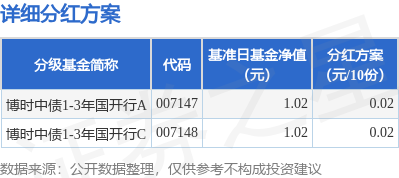
| 分级基金筒称 | 代码 | ■准日基金净值 | | 分红方案 | | --- | --- | --- | --- | --- | | | | (元) | | (元/10份) | | 博时中德1-3年国开行A 007147 | | | 1.02 | 0.02 | | 博时中德1-3年国开行C 007148 | | | 1.02 | 0.02 | 本次分红对象为权益登记日登记在册的本基金份额持有人,权益登记日为1月6日,现金红利发放日为1 月8日。选择红利再投资方式的投资者所转换的基金份额将以2026年1月6日的基金份额净值为计算基准 确定再投资份额,红利再投资所转换的基金份额于2026年1月7日直接划入其基金账户,2026年1月8日起 投资者可以查询、赎回。根据财政部、国家税务总局的财税[2002]128号《财政部 国家税务总局关于开 放式证券投资基金有关税收问题的通知》及财税[2008]1号《关于企业所得税若干优惠政策的通知》的 规定,基金向投资者分配的基金利润,暂免征收所得税。本基金本次分红免收分红手续费。选择红利再 投资方式的投资者其红利所转换的基金份额免收申购费用。 证券之星消息,12月31日发布《 ...

昊志机电(300503) - 300503昊志机电投资者关系管理信息20251230
2025-12-30 12:20
Group 1: Business Overview - The company achieved a revenue of 1,143.20 million CNY in the first three quarters of 2025, representing a year-on-year growth of 18.10% [5] - The net profit attributable to shareholders was 121.58 million CNY, with a year-on-year increase of 50.40% [6] - The net profit after deducting non-recurring gains and losses was 97.07 million CNY, showing a significant growth of 102.52% [6] Group 2: Product Performance - The spindle products generated a revenue of 758.00 million CNY, accounting for 66.31% of the main business income, with a year-on-year growth of 30.32% [7] - Revenue from functional components such as rotary tables, reducers, and linear motors was 168.34 million CNY, representing 14.73% of total revenue, with a growth of 15.69% [7] - Infranor group's motion control products saw a revenue decline of 14.20%, totaling 201.42 million CNY [7] Group 3: PCB Market Position - The company holds over 60% market share in the mechanical drilling spindle market and over 80% in the forming machine spindle market [9] - The growth in PCB-related sales is driven by the increasing demand for AI computing infrastructure and the ongoing upgrade of consumer electronics [8] Group 4: Robotics Business Development - The robotics segment is structured as "N+1+3," focusing on core components and three business scenarios: beauty, factory loading/unloading, and electric vehicle charging [10] - Revenue from robotics-related components is currently small and does not significantly impact overall performance [11] - The company has achieved significant advancements in robotics components, with precision metrics surpassing international standards [11] Group 5: Commercial Aerospace Sector - The company has initiated business cooperation with Blue Arrow Aerospace in the commercial aerospace sector, although specific details are confidential [3] - As of September 30, 2025, revenue from commercial aerospace-related business accounted for approximately 1% of the main business income [3] - The commercial aerospace industry is expected to enter a phase of scaled development around 2026-2027, presenting new market opportunities [2]

基金研究系列之一:缓冲型ETF国内实践探索
NORTHEAST SECURITIES· 2025-12-30 11:23
Report Industry Investment Rating - Not provided in the given content Core Viewpoints - The report systematically evaluates the product design, implementation, risks, and governance of buffered ETFs, aiming to offer a set of auditable pilot suggestions for fund managers, channels, and regulators. Buffered ETFs use a four - leg option strategy to limit downside and cap upside, with their key being a dynamic reinvestment path determined by market snapshots, option pricing, and execution on reset days [1][3]. - In China, a gradual pilot strategy for buffered ETFs is recommended, starting with "quasi - buffered" products based on broad - based ETFs or futures, and large public funds with market - making and hedging capabilities should take the lead. The long - term value of buffered ETFs depends on the issuer's hedging ability, market - maker sustainability, and regulatory cooperation [3]. Summary by Directory 1. Introduction - Traditional "60/40" stock - bond portfolios failed in 2022, leading investors to seek a "third - type asset". The report focuses on buffered ETFs, aiming to explore their localization in the Chinese ETF market and provide decision - making references for relevant parties [10]. - Buffered ETFs use derivatives to limit downside and upside in each outcome period. The report will detail key engineering issues such as the four - leg option strategy, reset days, and the difference between price return and total return [11]. 1.1 Product Design Goals and Constraints - "Spot" in buffered ETFs and similar products can be various assets. The difference between price return and total return affects dividend handling, liquidity, and tax treatment, and should be clearly disclosed [12][13]. 1.2 Buffered ETF Four - Leg Strategy - A typical buffered ETF consists of four option positions: buying deep in - the - money calls, buying at - the - money puts, selling out - of - the - money puts, and selling out - of - the - money calls. Each leg has its own engineering purpose, Greek - letter characteristics, and practical points [14][17]. 1.3 Pricing Balance Formula and Cap's Endogeneity - The design of buffered ETFs requires a "zero - cost structure". The formula for premium balance is Premium(Short OTM Call)=Premium(Long ATM Put)−Premium(Short OTM Put). The Cap is determined by market variables such as implied volatility, volatility skew, interest rates, etc., and is an endogenous result of market conditions [18]. 1.4 Product's Reset Day - The reset day is crucial. FLEX options, which allow customization of contract elements, are used. Key factors to consider on the reset day include contract specifications, settlement and underlying types, market - making and liquidity risks, pricing sources and model assumptions, margin and cash requirements, execution strategies, and scenario - based backtesting [25][27]. 1.5 Impact of Price Return Index - Option pricing and settlement in buffered ETFs are often based on price return indexes, not total return indexes. This means investors forgo dividend cash - flows, which can significantly drag down long - term returns. The net long - term drag can be calculated as Net Long - Term Drag ≈ Expense Ratio + Dividend Yield − Net Option Carry [28][31]. 1.6 Scenario - Based Stress Testing - Stress testing is essential for buffered ETFs due to their high dependence on reset - day market conditions, non - linearity in tail events, and potential margin and liquidity risks. Different types of stress - testing scenarios include historical replay, parametric scenarios, stochastic Monte Carlo simulation, and reverse stress testing [32][35]. 2. Outcome Period Mechanism and Intra - Period Trading Path 2.1 Outcome Period and Reset - Buffered ETFs have a defined outcome period, and the Buffer and Cap are locked at the start of each period. The length of the period affects cash - flow, hedging, and investor exposure. The reset process involves market snapshots, option selection, and contract settlement. Only buying on the first day of the period and holding to maturity can ensure the promised returns [39][42]. 2.2 Intra - Period Trading Complexity - Intra - period trading in buffered ETFs is complex, with returns determined by option layouts and Greek - letter exposures. To reduce risks, measures such as pre - trading visualization, setting hedging frequencies, formulating liquidity and execution strategies, and providing clear disclosures are recommended [43][46]. 3. Overseas Market Competition and Product Line Differentiation 3.1 Mainstream Issuer Strategy Comparison - Major issuers in the overseas market have different strategies. Innovator ETFs is a pioneer with a full product line; First Trust is a channel giant; AllianzIM focuses on innovative reset periods; Pacer ETFs combines trends with buffering; and iShares is a price - cutter [49][52]. 3.2 Tabular Stratification of Buffer Depth and Product Line - Products are classified into different buffer - depth categories: moderate buffer, deep buffer, and principal protection, each with typical parameters, target investors, use scenarios, and risk - control points [53][55]. 3.3 Strategy Comparison, Stratification Logic, and Issuance Suggestions - Issuers should consider their capabilities, channels, and regulatory compliance when designing products. In China, large public funds, comprehensive brokerage asset managers, and small technology - driven asset managers are likely candidates to issue buffered ETFs, and a step - by - step pilot strategy is recommended [56][58]. 4. Buffered ETF Market Analysis - In the US, the rise of buffered ETFs is due to macro - environment, market infrastructure, distribution networks, and tax and regulatory factors. In China, there is demand for such products, but implementation faces challenges, and a gradual pilot approach is needed [59][62]. 5. Comparison of Buffered ETFs and Snowball - Type Structured Products - Buffered ETFs and snowball - type products differ in terms of issuance, structure and counter - party risk, liquidity, transparency, return and cost, and investor suitability. Buffered ETFs are more suitable for institutional and retail clients seeking transparency and tradability, while snowball - type products are for high - net - worth individuals [63][67]. 6. Conclusion - Buffered ETFs transform institutional risk - management techniques into standardized products, offering downside protection at the cost of giving up potential high - end returns. They are suitable for investors who understand their complexity but may be a long - term wealth drag for those blindly seeking "capital preservation" [68].
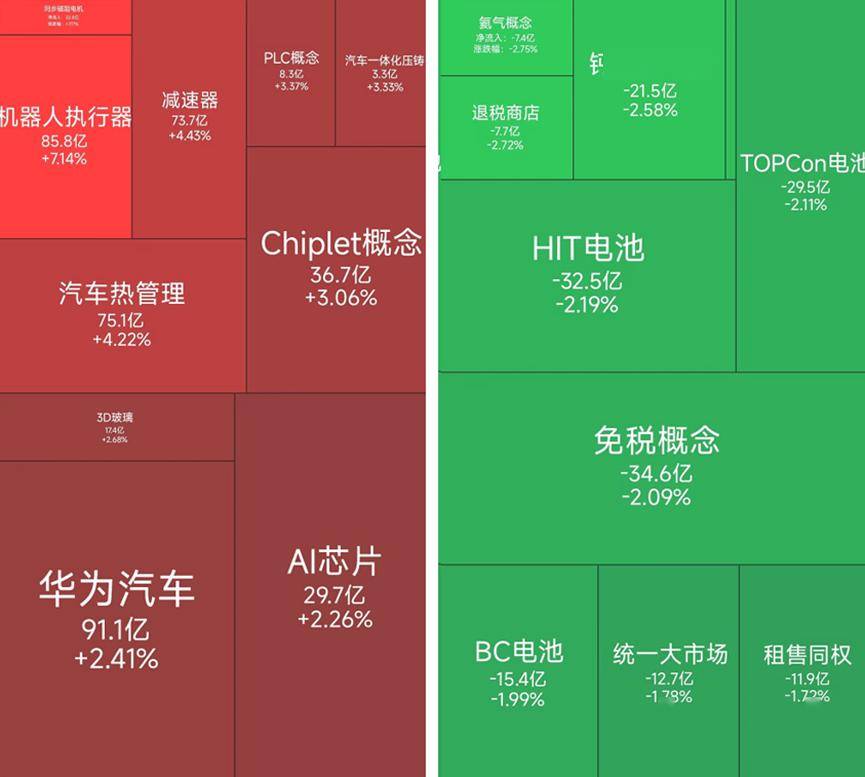
机器人执行器概念爆发,13位基金经理发生任职变动
Sou Hu Cai Jing· 2025-12-30 09:09
Market Performance - On December 30, A-shares showed mixed performance with the Shanghai Composite Index closing flat at 3965.12 points, the Shenzhen Component Index rising by 0.49% to 13604.07 points, and the ChiNext Index increasing by 0.63% to 3242.90 points [1] Fund Manager Changes - On December 30, a total of 13 fund managers experienced changes in their positions, with 640 fund products having manager changes in the past 30 days [3] - One fund manager left due to a job change, managing two funds during their tenure [3] - Tianhong Fund's Wang Fan managed assets totaling 254 million yuan, with the highest return of 17.84% on the Tianhong Yongyu Balanced Pension Fund over 3 years and 193 days [3] New Fund Managers - On December 30, 24 fund products announced new fund managers, involving 12 fund managers [4] - Baiying Fund's Cai Dan manages assets of 2.597 billion yuan, with the highest return of 103.05% on the Baiying CSI A100 Index Enhanced Fund over 8 years and 149 days [4] Fund Research Activity - In the past month (November 30 to December 30), Huaxia Fund conducted the most company research, engaging with 42 listed companies, followed by Southern Fund, Bosera Fund, and Huitianfu Fund with 37, 34, and 32 companies respectively [6] - The most researched industry was specialized equipment with 155 instances, followed by computer equipment with 111 instances [6] Recent Fund Research Focus - In the last week (December 23 to December 30), the most researched company was Pulite, a plastic products company, with 28 fund institutions participating in the research [7] - Other companies with significant research attention included Nord Shares, Xiangyu Medical, and Desai Xiwai, with 23, 22, and 22 fund institutions respectively [7]




中证A50指数ETF今日合计成交额9.77亿元,环比增加46.78%
Zheng Quan Shi Bao Wang· 2025-12-30 08:48
Core Viewpoint - The trading volume of the CSI A50 Index ETFs reached 977 million yuan today, marking an increase of 311 million yuan from the previous trading day, with a growth rate of 46.78% [1] Trading Volume Summary - The A50 ETF Fund (159592) had a trading volume of 254 million yuan today, an increase of 182 million yuan from the previous day, with a growth rate of 254.06% [1] - The Harvest CSI A50 ETF (562890) recorded a trading volume of 148 million yuan, up by 131 million yuan from the previous day, reflecting a growth rate of 765.79% [1] - The Ping An CSI A50 ETF (159593) saw a trading volume of 122 million yuan, increasing by 20.71 million yuan from the previous day, with a growth rate of 20.53% [1] - The top increases in trading volume were seen in the Harvest CSI A50 ETF (562890) and the China Merchants CSI A50 ETF (512250), with growth rates of 765.79% and 444.67% respectively [1] Market Performance Summary - As of market close, the average increase for ETFs tracking the CSI A50 Index was 0.25%, with notable performers including the Dacheng CSI A50 ETF (159595) and the Bosera CSI A50 ETF (561750), which rose by 0.52% and 0.43% respectively [1]
洗牌+革新!2026公募五大趋势勾勒行业新蓝图
证券时报· 2025-12-29 15:05
Core Viewpoint - The Chinese public fund industry is transitioning from "rapid growth" to "high-quality development," marking a critical shift in growth paradigms as it moves into 2026 after a significant "self-revolution" in 2025 [1] Group 1: Shift from Scale to Quality - The industry is moving from a "scale is king" mentality to prioritizing "investor satisfaction," driven by regulatory guidance and a focus on long-term investment returns [2] - Fund companies are expected to transition from a "sales-driven" model to a "service-driven" and "performance-driven" approach, emphasizing the importance of aligning interests with investors [2] - The introduction of floating fee rate funds and a revised evaluation system will focus on long-term risk-adjusted returns rather than short-term rankings and scale metrics [2] Group 2: Industry Restructuring - A new wave of industry consolidation is anticipated, with some fund companies expected to grow stronger through mergers and resource integration, aiming to create comprehensive financial institutions [3] - Smaller fund companies are finding success through differentiated competition, focusing on specialized areas such as quantitative indices and public REITs, while those lacking distinct identities face survival challenges [4] - The "Matthew effect" will become more pronounced, with leading firms leveraging brand and scale advantages, while smaller firms seek growth through niche positioning [4] Group 3: Tooling and Granularity - The trend of using tool-based products for asset allocation is becoming mainstream, with fund companies developing increasingly granular investment products to meet market demands [5] - Index products are evolving from broad categories to highly specialized offerings, providing low-cost entry points into specific industry sectors [5] - Active equity funds are undergoing a "tooling transformation," with new regulations expected to enhance the clarity of investment styles and their associated alpha generation capabilities [6] Group 4: AI in Investment Research - AI is expected to transition from a supportive role to a "second brain" in investment decision-making, enhancing cognitive boundaries and decision-making processes [7] - Fund companies are adopting AI technologies for various applications, including risk management and product innovation, which could fundamentally change business models [8] - AI will play a significant role in improving operational efficiency across governance, compliance, and customer service, leading to more refined product offerings [8] Group 5: Evolution of Fund Sales - The fund sales sector is set to undergo a comprehensive restructuring in 2026, focusing on customer-centric approaches rather than scale-driven growth [9] - Regulatory changes are pushing for a new assessment framework that prioritizes client outcomes over sales volume, marking a shift towards long-term value creation [9] - The sales strategy is evolving from "finding blockbuster funds" to "long-term companionship," aiming to enhance investor trust and address the issue of fund profitability versus investor returns [9]

美元流动性维持宽松,商品短期或偏稳运行
Guo Tou Qi Huo· 2025-12-29 13:36
1. Report Industry Investment Rating No relevant content provided. 2. Core Viewpoints of the Report - The commodity market as a whole rose 4% last week, with precious metals leading the way with a 9.69% increase. The short - term commodity market may run stably due to the loose dollar liquidity [2]. - The Fed's loose outlook and geopolitical risks support the strength of precious metals. The short - term market fluctuates greatly as various varieties hit new highs [2]. - The non - ferrous sector may oscillate strongly in the short term due to the weak dollar and the support from the expected contraction of mine supply [3]. - The black sector may oscillate as the demand and supply situation is complex, with factors such as changes in steel mill production and raw material supply [3]. - Oil prices continue to be under pressure due to the long - term loose supply - demand background, despite the geopolitical tension in Venezuela [3]. - The polyester chemical varieties may be affected by supply and demand changes, and attention should be paid to the downstream polyester load [4]. - The short - term trend of agricultural products and oils and fats is expected to be oscillatory, influenced by factors such as weather and export expectations [4]. 3. Summary According to Related Catalogs 3.1 Market Review - The overall commodity market rose 4% last week, with precious metals up 9.69%, non - ferrous metals up 4.97%, energy and chemicals up 2.98%, agricultural products up 2.53%, and black metals up 0.08%. Silver, PTA, and nickel were the top gainers, while tin, coke, and rebar were the top losers [2][6]. - The 20 - day average volatility of the commodity market increased, with only the black and coal - chemical related varieties showing a decline in volatility. The overall market scale increased, but only the precious metal and non - ferrous sectors had net inflows, with most funds concentrated in silver [2][6]. 3.2 Outlook for Different Sectors - **Precious Metals**: Supported by the Fed's loose policy and geopolitical risks, the shortage of spot makes silver, platinum, and palladium more favored by funds. The gold - silver ratio has fallen below the average. Exchange restrictions and risk warnings have led to large short - term market fluctuations [2]. - **Non - ferrous Metals**: The weak dollar and better - than - expected GDP growth in the US provide a neutral - warm macro environment. Although the inventory is increasing and the spot premium is weakening, the expected contraction of mine supply supports the price, and the sector may oscillate strongly in the short term [3]. - **Black Metals**: The demand for rebar decreased, production increased slightly, and inventory continued to decline. The slowdown of blast furnace production cuts and the stable molten iron output need attention to the sustainability of environmental protection restrictions. The supply of raw materials is relatively sufficient, and the sector may oscillate in the short term [3]. - **Energy**: The geopolitical tension in Venezuela increases the risk premium of crude oil, but the impact on global supply is limited. The US shale oil production remains high, and oil prices are under pressure due to the long - term loose supply - demand situation [3]. - **Chemical Industry**: Polyester varieties may face supply pressure from device restarts, but the strong expectation remains, and attention should be paid to the downstream polyester load [4]. - **Agricultural Products**: The improving weather in South America and the expected transition of La Nina to ENSO neutral increase the expectation of a bumper harvest in South America. The fundamentals of palm oil are less negative, and the short - term trend of oils and fats may be oscillatory [4]. 3.3 Commodity Fund Overview - Gold ETFs generally had positive returns last week, with the total scale of gold ETFs increasing by 0.77% and the total trading volume increasing by 29.04%. The total scale of commodity ETFs increased by 0.86% and the trading volume increased by 23.22% [36]. - Among them, the returns of different gold ETFs ranged from 3.21% to 3.60%, and the return of the silver fund was 17.43%, while the returns of energy - chemical, bean - meal, and non - ferrous metal ETFs were 4.25%, 1.69%, and 4.34% respectively [36][38].
AI算力、脑机接口与商业航天催化科技主线
Xin Lang Cai Jing· 2025-12-29 11:20
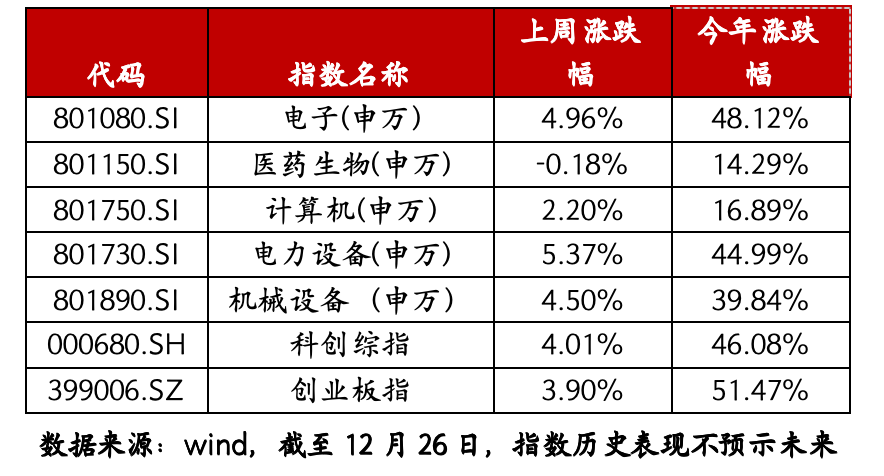
Group 1: Technology Sector Overview - The technology sector, including the Sci-Tech and ChiNext boards, has started to rebound, with only the pharmaceutical and biological industry experiencing a slight decline of 0.18% last week, while other industries showed good rebound gains [1] - The electronic index (801080.SI) increased by 4.96% last week and has risen by 48.12% this year, indicating strong performance in the electronic sector [2] - The computer index (801750.SI) rose by 2.20% last week and has increased by 16.89% year-to-date, reflecting positive momentum in the computer industry [2] Group 2: Sci-Tech Index Overview - The Sci-Tech 100 index, Sci-Tech Composite index, and ChiNext index all experienced upward movement last week, with significant recovery since September 26, 2024, after a general decline from the 2021-2022 peak [3] - As of December 26, 2024, the Sci-Tech 100 index has risen by 43.03%, the Sci-Tech Composite index by 57.62%, and the ChiNext index by 77.00% [3] Group 3: Market Insights - NVIDIA has reached a technology licensing agreement with Groq for $20 billion, acquiring all assets and technology licenses, which will enhance NVIDIA's product capabilities and market expansion [5] - DDR5 memory prices are expected to rise by 45% by the end of 2026 due to shifts in production capacity towards AI-related high-bandwidth memory, impacting major PC manufacturers' product release schedules [7] - Novo Nordisk's oral semaglutide has been approved in the U.S. for weight management, marking a significant advancement in the pharmaceutical sector [8] - The National Medical Products Administration has included implantable brain-machine interface devices in its priority approval list, indicating policy support for this emerging technology [8] Group 4: Power Equipment Sector - The price of polysilicon has increased, with the average transaction price rising to 53,900 yuan per ton, up 1.32% week-on-week, providing support for price stabilization across downstream segments [10] - Several lithium iron phosphate manufacturers announced production line maintenance, which is expected to reduce output and strengthen pricing power in the industry [11] Group 5: Mechanical Equipment Sector - A humanoid robot made its debut at the 15th National Games, showcasing advanced capabilities in award presentation, marking a milestone in the integration of technology and sports [12] - UBTECH's Walker S2 humanoid robot has entered mass production, with hundreds of units delivered for use in automotive manufacturing and smart logistics, indicating a shift from prototype to production [12] Group 6: Investment Recommendations - The overall trend for the Sci-Tech Composite index, Sci-Tech 100 index, and ChiNext index is positive, suggesting a favorable outlook for related industries in the medium to long term [13]