
美元流动性宽松

Search documents
美元流动性维持宽松,商品短期或偏稳运行
Guo Tou Qi Huo· 2025-12-29 13:36
1. Report Industry Investment Rating No relevant content provided. 2. Core Viewpoints of the Report - The commodity market as a whole rose 4% last week, with precious metals leading the way with a 9.69% increase. The short - term commodity market may run stably due to the loose dollar liquidity [2]. - The Fed's loose outlook and geopolitical risks support the strength of precious metals. The short - term market fluctuates greatly as various varieties hit new highs [2]. - The non - ferrous sector may oscillate strongly in the short term due to the weak dollar and the support from the expected contraction of mine supply [3]. - The black sector may oscillate as the demand and supply situation is complex, with factors such as changes in steel mill production and raw material supply [3]. - Oil prices continue to be under pressure due to the long - term loose supply - demand background, despite the geopolitical tension in Venezuela [3]. - The polyester chemical varieties may be affected by supply and demand changes, and attention should be paid to the downstream polyester load [4]. - The short - term trend of agricultural products and oils and fats is expected to be oscillatory, influenced by factors such as weather and export expectations [4]. 3. Summary According to Related Catalogs 3.1 Market Review - The overall commodity market rose 4% last week, with precious metals up 9.69%, non - ferrous metals up 4.97%, energy and chemicals up 2.98%, agricultural products up 2.53%, and black metals up 0.08%. Silver, PTA, and nickel were the top gainers, while tin, coke, and rebar were the top losers [2][6]. - The 20 - day average volatility of the commodity market increased, with only the black and coal - chemical related varieties showing a decline in volatility. The overall market scale increased, but only the precious metal and non - ferrous sectors had net inflows, with most funds concentrated in silver [2][6]. 3.2 Outlook for Different Sectors - **Precious Metals**: Supported by the Fed's loose policy and geopolitical risks, the shortage of spot makes silver, platinum, and palladium more favored by funds. The gold - silver ratio has fallen below the average. Exchange restrictions and risk warnings have led to large short - term market fluctuations [2]. - **Non - ferrous Metals**: The weak dollar and better - than - expected GDP growth in the US provide a neutral - warm macro environment. Although the inventory is increasing and the spot premium is weakening, the expected contraction of mine supply supports the price, and the sector may oscillate strongly in the short term [3]. - **Black Metals**: The demand for rebar decreased, production increased slightly, and inventory continued to decline. The slowdown of blast furnace production cuts and the stable molten iron output need attention to the sustainability of environmental protection restrictions. The supply of raw materials is relatively sufficient, and the sector may oscillate in the short term [3]. - **Energy**: The geopolitical tension in Venezuela increases the risk premium of crude oil, but the impact on global supply is limited. The US shale oil production remains high, and oil prices are under pressure due to the long - term loose supply - demand situation [3]. - **Chemical Industry**: Polyester varieties may face supply pressure from device restarts, but the strong expectation remains, and attention should be paid to the downstream polyester load [4]. - **Agricultural Products**: The improving weather in South America and the expected transition of La Nina to ENSO neutral increase the expectation of a bumper harvest in South America. The fundamentals of palm oil are less negative, and the short - term trend of oils and fats may be oscillatory [4]. 3.3 Commodity Fund Overview - Gold ETFs generally had positive returns last week, with the total scale of gold ETFs increasing by 0.77% and the total trading volume increasing by 29.04%. The total scale of commodity ETFs increased by 0.86% and the trading volume increased by 23.22% [36]. - Among them, the returns of different gold ETFs ranged from 3.21% to 3.60%, and the return of the silver fund was 17.43%, while the returns of energy - chemical, bean - meal, and non - ferrous metal ETFs were 4.25%, 1.69%, and 4.34% respectively [36][38].
节前避险情绪渐浓,商品午后突然变脸【期市日评】
Wen Hua Cai Jing· 2025-12-29 09:59
Group 1 - The market experienced a sell-off, particularly in recently surging commodities, with significant declines in platinum, palladium futures, and lithium carbonate [1][2] - Lithium carbonate futures dropped by 7.89%, hitting the limit down, influenced by delayed resumption of lithium mines and adjustments in pricing by leading lithium salt companies [2] - Silver futures initially surged nearly 10% but later fell, with geopolitical tensions and supply constraints providing initial support for precious metals [3] Group 2 - Copper prices reached new highs but later retraced some gains, supported by ongoing supply constraints from overseas mining disruptions and a favorable monetary policy environment [4] - The overall demand for lithium carbonate is weakening, with a reduction in orders for passenger vehicles expected in January, while commercial vehicle and energy storage orders remain strong [2] - The commodity index reported a decline of 0.38%, reflecting a broader trend of capital outflow from precious metals and new energy sectors, with significant outflows from gold, lithium carbonate, and silver [6]

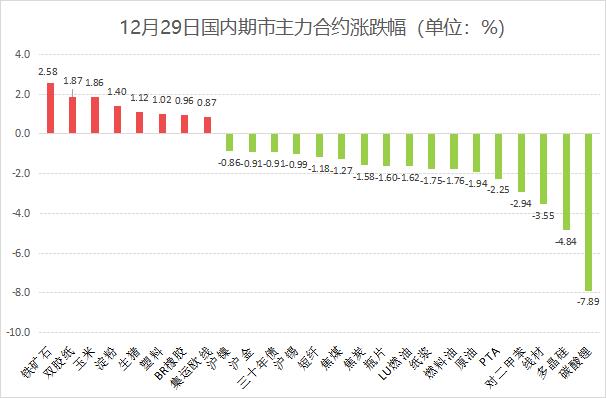
沪铜涨幅收窄 十万关口得而复失【12月29日SHFE市场收盘评论】
Wen Hua Cai Jing· 2025-12-29 07:51
Core Viewpoint - The copper market experienced fluctuations with prices initially rising above 100,000 yuan per ton but later retreating due to a decrease in market optimism and increasing social inventory [1] Group 1: Market Performance - On Friday night, copper prices rose, breaking the 100,000 yuan per ton mark, but closed with a narrower increase of 0.76% as market sentiment cooled [1] - The optimism in the market diminished, leading to a decline in copper prices, which followed the trend of precious metals [1] Group 2: Influencing Factors - The previous rise in copper prices was supported by the Federal Reserve's interest rate cuts and quantitative easing, resulting in a low U.S. dollar index and a surge in precious metals [1] - However, ongoing risk warnings from domestic and foreign exchanges have led to increased volatility in precious metals, further dampening market sentiment [1] Group 3: Supply and Demand Dynamics - Domestic copper concentrate processing fees remain weak, indicating a persistent tight supply situation [1] - Despite rising copper prices, downstream purchasing demand is low, leading to an ongoing expansion of spot discounts and accumulation of social inventory [1] Group 4: Future Outlook - According to Everbright Futures, the macroeconomic environment remains supportive due to the Fed's actions, allowing copper to maintain a strong trend [1] - Low inventory levels and resilient demand provide support for prices, but high price levels may suppress some physical buying, and the approaching year-end may lead to a seasonal decline in demand, potentially resulting in inventory accumulation [1]
华泰证券:预计美联储12月较大概率继续降息
Di Yi Cai Jing· 2025-10-29 23:51
Core Viewpoint - The Federal Reserve is likely to continue lowering interest rates in December, with current market pricing indicating a 60% probability of a rate cut, influenced by upcoming employment and inflation data [1] Employment Data - Initial jobless claims and job vacancy data suggest a weak labor market, but recent ADP weekly employment data indicates stabilization since October, aligning with the continuous recovery in NFIB hiring intentions [1] Inflation Data - The September Consumer Price Index (CPI) fell short of expectations, with inflation expectations remaining stable, suggesting a moderate inflation environment [1] Future Projections - Although the downside risk for the labor market may decrease, employment recovery is expected to be slow, and with moderate inflation, a rate cut in December remains the baseline scenario [1] - If the labor market improves by 2026 and inflation exceeds the Fed's target, the market's current pricing of nearly three rate cuts in 2026 may be difficult to realize [1] Market Liquidity - Given the potential stabilization in the labor market, continued rate cuts by the Fed, and the end of balance sheet reduction, overall dollar liquidity is expected to remain accommodative, supporting U.S. asset prices [1]

收评:沪指跌0.3%,医药、券商等板块走低,旅游板块强势
Sou Hu Cai Jing· 2025-09-19 07:39
Market Performance - The three major stock indices experienced fluctuations and declined, with the Sci-Tech 50 Index dropping over 1% and more than 3,400 stocks in the market showing losses [1] - As of the market close, the Shanghai Composite Index fell by 0.3% to 3,820.09 points, the Shenzhen Component Index slightly decreased by 0.04% to 13,070.86 points, and the ChiNext Index dropped by 0.16% to 3,091 points [1] - The total trading volume in the Shanghai, Shenzhen, and Hong Kong markets reached 23,497 billion yuan [1] Sector Performance - Sectors such as pharmaceuticals, brokerage, automotive, and semiconductors saw declines, while the tourism sector experienced strong gains [1] - Coal, media, and gas sectors showed upward movement, with active performance in sectors like photolithography machines, lithium mining, and military trade concepts [1] Economic Outlook - According to China Merchants Securities, the recent interest rate cut by the Federal Reserve is seen as the beginning rather than the end, suggesting that future trading expectations for rate cuts may fluctuate, potentially leading to a decline in the US dollar index and US Treasury yields [1] - The current drivers of the A-share market's upward trend remain unchanged, indicating that the A-share market is still in the second phase of a bull market, with expectations for continued growth along low penetration rate sectors [1] Investment Sentiment - Hengsheng Qianhai Fund noted that after a sustained market rise, some funds opted to take profits in the short term due to the favorable interest rate cut, causing some disturbance in bullish market sentiment [1] - Following the Fed's rate cut, global liquidity is likely to become more accommodative, combined with the acceleration of domestic growth stabilization policies, suggesting that the economic fundamentals will continue to improve [1] - The trend of revaluation for Chinese assets is ongoing, and while short-term rapid increases may lead to greater volatility, short-term corrections do not alter the long-term positive trend, with expectations for a slow bull market to continue [1]
中金 :中美流动性共振的窗口期
Jin Shi Shu Ju· 2025-08-29 10:12
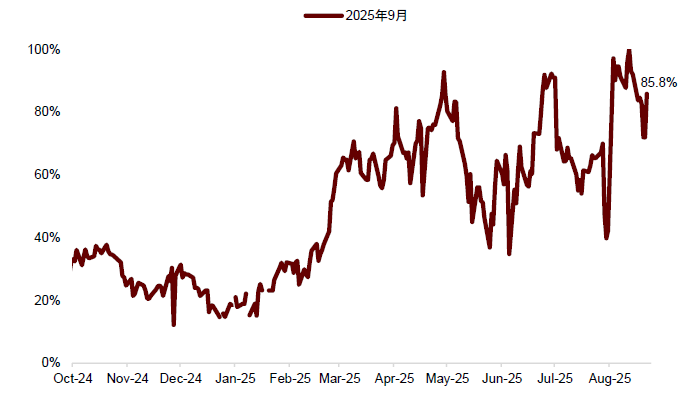
Group 1 - The Federal Reserve's unexpected dovish shift suggests a potential interest rate cut in September, with market expectations for a rate cut probability rising to 86% [1][2] - Powell's comments indicate a preference for stabilizing growth over controlling inflation, which may reduce recession risks but increase stagflation risks [4] - The expectation is that U.S. inflation has reached an upward turning point, with the upward cycle likely to last nearly a year [4][5] Group 2 - In the next 1-3 months, investors may struggle to determine the duration and magnitude of inflation's rise, as the Fed could interpret it as a temporary phenomenon [7] - Historical data shows that during periods of "rising inflation + declining growth," the dollar typically depreciates, gold prices rise, and U.S. Treasury yields decline, while stock performance is mixed [8][9] - The current liquidity environment in the U.S. remains ample, with bank reserves significantly higher than during the 2019 liquidity crisis [14][15] Group 3 - China's fiscal policies have led to improved macro liquidity, with M1 and M2 growth rates turning upward, indicating a shift in liquidity towards the stock market [18][20] - The government's proactive fiscal measures have not only enhanced liquidity but also reversed pessimistic market expectations, reducing stock market downside risks [22] - The correlation between stocks and bonds in China has turned negative, suggesting a "stock-bond seesaw" effect rather than simultaneous bullish trends [27][31] Group 4 - The synchronized liquidity easing in both the U.S. and China may create a favorable macro environment for various asset classes, including stocks and gold [33] - However, there are concerns about the sustainability of this liquidity easing, as rising inflation in the U.S. could disrupt the Fed's rate-cutting plans [36] - The current market environment presents both risks and opportunities, with potential volatility expected around key economic data releases in early September [39] Group 5 - Recommendations include overweighting A-shares, Hong Kong stocks, and gold, while maintaining a neutral position on U.S. bonds and adjusting U.S. stocks from underweight to neutral [40][42] - The valuation of Chinese stocks, particularly the CSI 300 index, is close to historical averages, suggesting potential for upward movement [40] - The current environment favors gold, with expectations that it remains in the early stages of a bull market despite recent volatility [48][49]
中金 :中美流动性共振的窗口期
中金点睛· 2025-08-29 00:07
Core Viewpoint - The article discusses the implications of the Federal Reserve's shift towards a dovish stance, indicating a potential interest rate cut in September, which may lead to a temporary easing of dollar liquidity and impact various asset classes positively [2][4][6]. Group 1: Federal Reserve and Inflation Outlook - The Federal Reserve's recent comments suggest a preference for stabilizing growth over controlling inflation, which may reduce recession risks but increase stagflation risks [4]. - Market expectations for a September rate cut have risen to 86%, reflecting investor sentiment towards a more accommodative monetary policy [2]. - The article predicts that inflation in the U.S. may have reached an upward turning point, with an expected upward cycle lasting nearly a year [4][6]. Group 2: Market Reactions and Asset Performance - Historical data indicates that during periods of "inflation rising + growth declining," the dollar typically depreciates, U.S. Treasury yields decline, and gold prices increase, while stock market performance can be mixed [6]. - The article highlights that the current liquidity in the U.S. market is robust, with bank reserves significantly higher than during the 2019 liquidity crisis, which reduces liquidity risks [13][15]. Group 3: China’s Economic Environment - China's fiscal policies have been proactive, enhancing macro liquidity and shifting it towards the stock market, which has improved market sentiment and reduced downside risks for equities [18][21]. - The article notes that the correlation between stocks and bonds in China may turn negative in a low-inflation environment, leading to a "stock-bond seesaw" effect [24]. Group 4: Investment Recommendations - The article recommends overweighting A-shares and Hong Kong stocks, maintaining a standard allocation to U.S. and Chinese bonds, and adjusting U.S. stocks from underweight to standard weight due to improved liquidity conditions [29][42]. - It emphasizes the potential for gold to perform well in a declining interest rate environment, suggesting a continued overweight position in gold [34][40].
本轮A股上涨的逻辑
21世纪经济报道· 2025-08-20 07:23
Core Viewpoint - The recent surge in A-shares is attributed to a combination of global macroeconomic factors and domestic market characteristics, with significant contributions from U.S. fiscal policy changes and abundant dollar liquidity [1][2][3]. Group 1: Global Market Context - The Shanghai Composite Index recently reached a nearly 10-year high, surpassing 3746 points, while the Shenzhen Index hit a two-year high, with A-share total market capitalization exceeding 100 trillion yuan [1]. - Global markets have experienced significant gains this year, driven by favorable conditions such as the resolution of trade tensions and a shift in U.S. fiscal policy towards expansion, including a proposed $4 trillion tax cut [1][2]. - The decline of the U.S. dollar index by approximately 10% year-to-date has created a favorable liquidity environment for non-U.S. markets, facilitating capital inflows into A-shares [2]. Group 2: Domestic Economic Factors - China's economy is projected to achieve a 5% growth rate for the year, with a 5.3% actual GDP growth in the first half, positioning it uniquely among major economies [3]. - The Chinese yuan is expected to appreciate, enhancing the attractiveness of yuan-denominated assets and supporting foreign capital inflows [3]. - The stability of Chinese policy compared to the U.S. adds to the appeal of A-shares, as it reduces the risk premium demanded by investors [3]. Group 3: Market Dynamics and Investor Behavior - Recent market activity has shown a significant increase in retail and leveraged funds, with 1.96 million new accounts opened in July and a 39% increase in small-cap fund inflows [4]. - Foreign capital has also shown signs of recovery, with a 36.3% increase in average daily trading volume from northbound funds in July [4]. - The sustainability of the current A-share rally is contingent on external macroeconomic stability, with potential risks from U.S. policy changes and dollar liquidity tightening [4].

本轮A股上涨的逻辑
2 1 Shi Ji Jing Ji Bao Dao· 2025-08-19 22:50
Market Overview - The Shanghai Composite Index recently reached a nearly 10-year high, surpassing 3746 points, while the Shenzhen Index hit a two-year high, with the total market capitalization of A-shares exceeding 100 trillion yuan [1] - Global markets have shown significant gains this year, influenced by favorable global factors, including agreements reached by the U.S. government with certain countries and a shift from fiscal contraction to expansion in the U.S. [1][2] Dollar Liquidity and Capital Flows - The recent decline in the U.S. dollar index, down 2.7% in the past quarter and nearly 10% year-to-date, has created a favorable liquidity environment for non-U.S. markets [2] - As of June 30, foreign capital held approximately 2.29 trillion yuan in A-shares through northbound channels, an increase of 871 billion yuan compared to the end of 2024 [2] Economic Fundamentals - China's GDP growth rate for the first half of the year was 5.3%, with an expected annual growth of around 5%, making it unique among major economies [3] - The strong performance of the renminbi is attracting foreign investment, providing more room for domestic monetary policy adjustments [3] Policy Environment - China's policy environment is characterized by stability compared to the uncertainty in U.S. policies, which lowers the risk premium required by investors [3] - Recent policy adjustments aimed at reducing systemic risks are expected to have a long-term positive impact on the A-share market [3] Market Dynamics - The recent surge in the A-share market has been driven by retail and leveraged funds, with significant increases in new accounts and net inflows into the stock market [4] - Foreign capital is showing signs of recovery, with a 36.3% increase in average daily trading volume from northbound funds in July [4] Sustainability of Market Trends - The sustainability of the A-share market's upward trend is influenced by external macroeconomic conditions, with potential risks from U.S. policy uncertainties and a tightening of dollar liquidity [5] - A relatively loose domestic market environment supports active financing leverage and thematic trading [5]
21评论丨本轮A股上涨的逻辑
2 1 Shi Ji Jing Ji Bao Dao· 2025-08-19 22:31
Market Overview - The Shanghai Composite Index recently reached a nearly 10-year high, surpassing 3746 points, while the Shenzhen Index hit a two-year high, with the total market capitalization of A-shares exceeding 100 trillion yuan [1] - Global markets have shown significant gains this year, influenced by favorable global factors, including agreements reached by the U.S. government with certain countries and a shift from fiscal contraction to expansion in the U.S. [1][2] Dollar Liquidity and Capital Flows - The recent decline in the U.S. dollar index, down 2.7% in the past quarter and nearly 10% year-to-date, has created a favorable liquidity environment for non-U.S. markets [2] - As of June 30, foreign capital held approximately 2.29 trillion yuan in A-shares through northbound channels, an increase of 871 billion yuan compared to the end of 2024 [2] Economic Fundamentals - China's GDP growth rate for the first half of the year was 5.3%, with an expected annual growth of around 5%, making it unique among major economies [3] - The strong performance of the renminbi is attracting foreign investment, providing more room for domestic monetary policy adjustments [3] Policy Environment - China's policy environment is characterized by stability compared to the uncertainty in U.S. policies, which lowers the risk premium required by investors [3] - Recent policy adjustments aimed at reducing systemic risks are expected to have a long-term positive impact on the A-share market [3] Market Dynamics - The recent surge in the A-share market has been driven by retail and leveraged funds, with significant increases in new accounts and net inflows into the stock market [4] - Foreign capital is showing signs of recovery, with a 36.3% increase in average daily trading volume from northbound funds in July [4] Sustainability of Market Trends - The sustainability of the A-share market's upward trend is influenced by external macroeconomic conditions, with potential risks from U.S. policy uncertainties and a tightening of dollar liquidity [5] - A relatively loose domestic market environment supports active financing leverage and thematic trading [5]