中国财险

Search documents
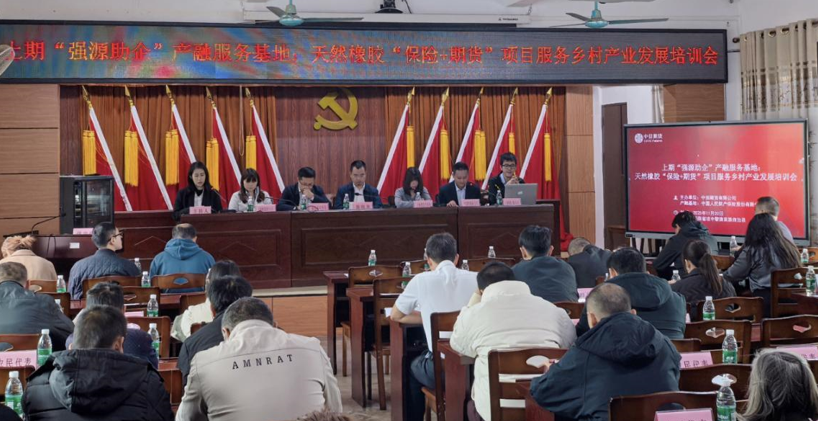
中信期货成功举办“上期‘强源助企’产融基地:天然橡胶‘保险 + 期货’项目服务乡村产业发展培训会”
Qi Huo Ri Bao Wang· 2025-11-28 07:42
Core Insights - The training conference on the "Insurance + Futures" project for natural rubber was successfully held, emphasizing the importance of financial tools in rural industry development [1][2] - The event brought together various stakeholders, including government officials, insurance companies, and rubber growers, highlighting a collaborative approach to industry challenges [1][2] Group 1: Event Overview - The conference was organized by CITIC Futures Hainan Branch and took place in Qiongzhong County, receiving significant attention from local government departments [1] - Key attendees included county officials, representatives from the Shanghai Futures Exchange, and insurance company executives, showcasing a multi-faceted representation [1] Group 2: Training Content - Three speakers provided in-depth insights into the "Insurance + Futures" model, focusing on its operational mechanisms and risk management advantages for rubber growers [2] - The training highlighted the unique benefits of the "Insurance + Futures" model in mitigating price volatility risks and stabilizing operational income for rubber farmers [2] Group 3: Future Directions - CITIC Futures aims to continue integrating financial services with the rubber industry, enhancing the vitality of rural industry development and supporting the implementation of rural revitalization strategies in Qiongzhong County [2]

书写“科技金融”大文章,险企赋能低空经济|广东金融大讲堂
2 1 Shi Ji Jing Ji Bao Dao· 2025-11-28 07:37
Core Insights - The article discusses the collaboration between China People's Property Insurance Company (CPIC) Guangzhou Branch and EHang in the low-altitude economy sector, highlighting the integration of technology finance to support this emerging market. Group 1: Industry Trends and Opportunities - The low-altitude economy is gaining traction as a focal point for technology finance to empower the real economy, driven by national strategic policies like the "National Comprehensive Three-Dimensional Transportation Network Planning Outline" [2][3] - CPIC has conducted extensive market research and identified increasing demand for risk protection and financial support in areas such as drone logistics and low-altitude tourism [2][3] Group 2: Collaboration and Innovation - The partnership with EHang, a leader in the eVTOL (electric vertical takeoff and landing) sector, resulted in the first specialized insurance project for low-altitude aircraft, marking a significant step in integrating insurance with low-altitude innovation [6][7] - The first insurance policy was signed in July 2024, providing risk coverage for EHang's EH-216S unmanned passenger aircraft, which enhances investor confidence in low-altitude transportation projects [7][8] Group 3: Future Plans and Product Development - CPIC and EHang plan to expand their collaboration by developing a comprehensive insurance service system that covers all stages of the low-altitude economy, including research, production, and operation [9][10] - Future innovations will include the development of specialized insurance products for various low-altitude applications, such as drone logistics and low-altitude tourism, utilizing advanced technologies like AI and blockchain for risk assessment and claims processing [11][12] Group 4: Ecosystem Building and Policy Support - CPIC aims to build a robust low-altitude economy ecosystem by providing comprehensive risk protection and linking various stakeholders, including government, industry associations, and financial institutions [13][14] - The company is actively involved in policy advocacy to enhance the regulatory framework for low-altitude economy and technology finance, suggesting measures like insurance subsidies and risk-sharing mechanisms to stimulate industry growth [17][18]

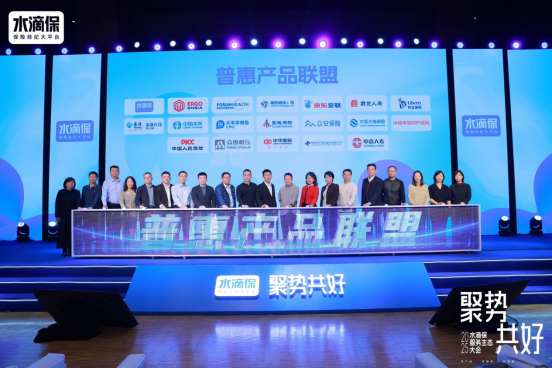
水滴保举办2025服务生态大会 携手18家保司成立“普惠产品联盟”
智通财经网· 2025-11-28 05:59
Core Insights - The second "Gathering Strength, Achieving Common Good" Waterdrop Insurance Service Ecosystem Conference was successfully held, where a report on the innovation of insurance for individuals with pre-existing conditions was released, highlighting the current protection status and demand pain points for this demographic [1][9] - Waterdrop Insurance established the "Inclusive Product Alliance" with 18 insurance companies to focus on the protection needs of specific groups such as individuals with pre-existing conditions, the elderly, and mothers and infants, aiming to promote inclusive insurance services through AI empowerment and product co-creation [1][16] Group 1 - The average annual medical expenditure for individuals with pre-existing conditions is nearly 90,000 yuan, indicating a significant protection gap that needs to be addressed [3][9] - The development of insurance for individuals with pre-existing conditions aligns with the national "14th Five-Year Plan" principles of prioritizing people's needs and high-quality development, and is essential for expanding coverage and improving service in the insurance industry [3][5] - The report indicates that over 60% of critical illness patients incur out-of-pocket expenses exceeding 100,000 yuan, and the prevalence of chronic diseases is increasing among younger populations, necessitating innovation in insurance products [9][10] Group 2 - Waterdrop Insurance has launched 214 insurance products for individuals with pre-existing conditions, with 34 being industry firsts, and has introduced innovative products such as a medical insurance plan that does not require health declarations [10][12] - The "Three Good Services" initiative, focusing on "Good Products," "Good Services," and "Good Claims," aims to enhance the overall service experience through AI and big data technology [13][14] - The establishment of the "Inclusive Product Alliance" aims to develop affordable and accessible insurance products for the public, with participation from various insurance companies to strengthen collaboration and trust within the industry [16]
党建搭桥 共赢发展——大地保险江苏分公司联动建邺高新区
Jiang Nan Shi Bao· 2025-11-28 04:45
Core Viewpoint - The collaboration between China Dadi Property Insurance Co., Ltd. Jiangsu Branch and Nanjing Jianye High-tech Zone Management Committee aims to enhance regional economic empowerment and improve employee services through a partnership driven by party-building initiatives [1] Group 1: Collaboration and Agreements - The meeting focused on key topics such as regional economic empowerment and enhancement of employee services, resulting in multiple cooperation agreements [1] - The Jianye High-tech Zone Management Committee recognized the professional capabilities and cooperative intentions of Dadi Insurance Jiangsu Branch [1] - Both parties reached a cooperation intention regarding talent development and employee wellness services [1] Group 2: Company Initiatives and Future Plans - Dadi Insurance Jiangsu Branch expressed its willingness to align with the development strategy of the high-tech zone, providing comprehensive risk protection and customized financial services [1] - The exchange is seen as a practical implementation of deepening party leadership and fostering collaborative development between government and enterprises [1] - Dadi Insurance Jiangsu Branch plans to leverage this meeting as an opportunity to enhance comprehensive cooperation with the Jianye High-tech Zone Management Committee, focusing on industrial upgrades, project protection, and employee services [1]
险企发债观察:发行规模仍居历史高位 永续债占比超七成
2 1 Shi Ji Jing Ji Bao Dao· 2025-11-27 23:25
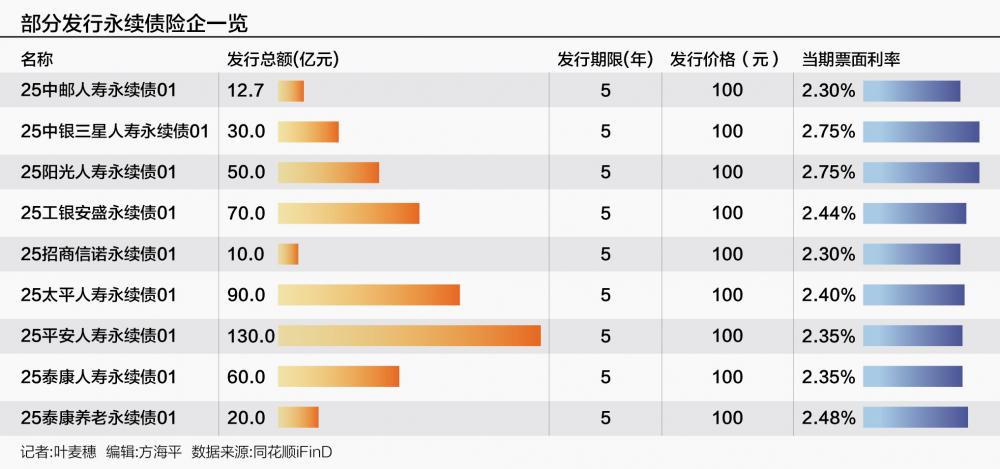
Core Viewpoint - Perpetual bonds have become a favored financial instrument for large insurance companies and banks due to their accounting treatment as equity, enhancing capital strength and providing a buffer against long-term solvency fluctuations [1][3] Group 1: Market Trends - As of November 26, 2023, 19 insurance companies have issued capital supplementary bonds or perpetual bonds, totaling over 70 billion yuan, with nearly 70% of this amount being perpetual bonds, highlighting their importance in core capital supplementation for insurers [1][4] - The issuance of perpetual bonds has surged, with 472.7 billion yuan issued in 2023, accounting for 71.2% of total bond issuance, a significant increase from approximately 25% in the previous year [4] Group 2: Regulatory and Strategic Insights - The regulatory framework for perpetual bonds was established in August 2022, allowing insurance companies to tap into core secondary capital, which addresses solvency ratio challenges [3] - The decision to issue perpetual bonds is influenced by a company's strategic planning and funding needs, as these bonds provide a stable funding source and optimize debt structure [3] Group 3: Financial Performance and Cost of Capital - The overall capital position of the insurance industry remains robust, with only five companies failing to meet solvency standards as of the latest reports, a decrease from previous years [5] - The low interest rate environment has driven strong demand for bond issuance, with perpetual bond rates dropping to between 2.15% and 2.8% in 2025, compared to higher rates in previous years [5][6] - Companies are increasingly redeeming older, higher-interest bonds in favor of new, lower-cost perpetual bonds, significantly reducing their interest expenses [6]

保险业护航科技创新全链条
Jing Ji Ri Bao· 2025-11-27 21:10
Core Viewpoint - The insurance industry is increasingly integrating with technological innovation to provide a comprehensive service system that supports the development of new productive forces by reducing innovation costs and enhancing risk management capabilities [1][2][3]. Group 1: Expansion of Service Scope - The rise of technology insurance is synchronized with technological innovation and the construction of a modern industrial system, becoming a crucial part of the technology financial system [2]. - National policies are positioning technology insurance as a foundational tool for technology finance, expanding its service scope from traditional industries to key areas such as artificial intelligence, semiconductors, biomedicine, advanced materials, and new energy [2][4]. - The importance of risk dispersion mechanisms is increasing alongside technological innovation, highlighting the dialectical unity between uncertainty exploration and certainty assurance [2]. Group 2: Market Demand and Policy Impact - The insurance industry is witnessing a significant increase in support for strategic emerging industries, with technology insurance providing over 9 trillion yuan in coverage for innovation activities in 2024, and a 30% year-on-year growth in premium income [4][5]. - Local governments are actively implementing supportive mechanisms, such as Shenzhen's plan to establish a technology insurance ecosystem and explore collaborative applications across the industrial chain [4][5]. - The interaction between policy effects and market demand is becoming more pronounced, with insurance mechanisms being integrated into the early stages of technological innovation [5]. Group 3: Embedding in the R&D Cycle - Technology insurance is addressing weak links in the R&D process by offering customized coverage for various stages, including concept validation and pilot testing, thus alleviating the financial burden on enterprises [6]. - New insurance products are being developed to cover risks associated with extreme weather, process errors, and supplier defaults, allowing R&D teams to focus on critical technological breakthroughs [6][7]. - The expansion of insurance coverage and enhanced risk identification and pricing capabilities are aligning with the needs of high-risk sectors such as semiconductors and biomedicine [6]. Group 4: Financial Support and Credit Enhancement - The insurance sector is providing long-term capital to strategic emerging industries, with investments reaching 680 billion yuan in 2024, reflecting a 17% year-on-year increase [9]. - The collaboration between insurance and investment is creating a comprehensive financial support chain for technology enterprises, enhancing their creditworthiness and facilitating smoother financing processes [9][10]. - The integration of technology insurance into financing strategies is leading to a more stable rhythm of R&D investment and smoother paths for technology commercialization [10].
华夏银行股份有限公司关于董事任职资格获国家金融监督管理总局核准的公告
Shang Hai Zheng Quan Bao· 2025-11-27 19:25
Core Points - The National Financial Regulatory Administration has approved the qualifications of Mr. Lü Chen and Mr. Ma Jinzhao as directors of Huaxia Bank, effective from November 25, 2025 [1][2] - The term for Mr. Lü Chen and Mr. Ma Jinzhao as directors will last until the completion of the ninth board of directors of Huaxia Bank [1] Summary of Directors' Background - Mr. Lü Chen, a non-executive director, was born in October 1971 and holds a master's degree. He has held various senior positions in the China People's Insurance Company and is currently a vice president and audit responsible person at China People's Property Insurance Co., Ltd. [2] - Mr. Ma Jinzhao, also a non-executive director, was born in October 1985 and has a master's degree. He has worked in various financial management roles within Shougang Group and is currently the deputy director of the operating finance department [2]

陇南监管分局同意中国大地保险宕昌支公司营业场所变更
Jin Tou Wang· 2025-11-27 05:23
二、中国大地财产保险股份有限公司应按相关规定及时办理变更及许可证换领事宜。 2025年11月24日,国家金融监督管理总局陇南监管分局发布批复称,《中国大地财产保险股份有限公司 陇南中心支公司关于中国大地财产保险股份有限公司宕昌支公司营业场所变更的请示》(大地财保陇发 〔2025〕200号)收悉。经审核,现批复如下: 一、同意中国大地财产保险股份有限公司宕昌支公司营业场所变更为:甘肃省陇南市宕昌县城关镇旧城 坝东一路118号县图书馆二楼201。 ...
中国财险(2328.HK):车险与非车险发展齐头并进 资负共振驱动利润快速增长
Ge Long Hui· 2025-11-26 13:02
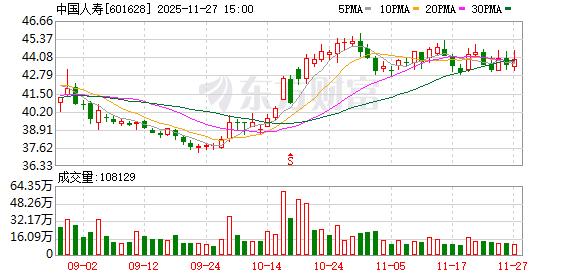
Core Viewpoint - The company has achieved strong profit growth in both auto and non-auto insurance segments, benefiting from improved operational management and cost efficiency, leading to a 130.7% year-on-year increase in overall underwriting profit and a 50.5% increase in net profit attributable to shareholders [1][3] Financial Performance - In the first three quarters, the company reported an underwriting profit of 14.865 billion yuan, up 130.7% year-on-year, with insurance service revenue increasing by 5.9% to 385.921 billion yuan and a comprehensive cost ratio improving by 2.1 percentage points to 96.1% [1][2] - The net profit attributable to shareholders reached 40.268 billion yuan, reflecting a 50.5% year-on-year growth, driven by a 130.7% increase in underwriting profit and a 33.0% increase in total investment income to 35.9 billion yuan [1][2] Liability Side - Both auto and non-auto insurance segments contributed to profit growth, with non-auto insurance turning profitable. The underwriting profit increase was primarily driven by improvements in the comprehensive cost ratio [2] - The comprehensive cost ratio improved by 2.1 percentage points to 96.1%, with insurance service revenue from auto insurance and non-auto insurance increasing by 3.7% and 9.3%, respectively [2] Asset Side - The company achieved a total investment income of 35.9 billion yuan, a year-on-year increase of 33.0%, with an annualized total investment return rate of 5.4%, benefiting from a rising capital market and optimized asset allocation [2] Investment Recommendation - The company shows strong performance on both asset and liability sides, with significant profit growth in both auto and non-auto insurance segments. The estimated price-to-book ratio is 1.23, with a dividend yield of 4.2%. Projected net profit growth rates for 2025, 2026, and 2027 are 43.5%, 13.7%, and 9.7%, respectively, with a target price of 23.09 HKD [3]
人形机器人也有保险了!多家险企竞逐,数据积累不足成关键掣肘
Huan Qiu Wang· 2025-11-26 06:14
Core Insights - The humanoid robot industry is experiencing explosive growth driven by breakthroughs in AI technology and upgraded demand [3][4] - Insurance is becoming a crucial tool for risk management in the humanoid robot sector, with companies developing specialized insurance products to address diverse risks [3][5] Industry Growth and Market Potential - By 2025, the market size for embodied intelligence in China is expected to reach 5.295 billion yuan, accounting for approximately 27% of the global market; the humanoid robot market is projected to reach 8.239 billion yuan, representing about 50% of the global market [3] - The rapid development of the industry necessitates a robust risk management framework to support sustainable growth [3] Insurance Product Development - Taiping Insurance has launched a dedicated insurance product "Smart Insurance" for the commercial application of humanoid robots, covering the entire risk chain from production to usage [3] - PICC Property and Casualty is utilizing a dual-track model with "robot body loss insurance + third-party liability insurance" to enter the market, covering damages from natural disasters and operational failures [4] - The insurance products focus on multiple layers of protection, including physical damage to robots, third-party liability, and product safety [4] Challenges in Insurance Sector - The insurance industry faces challenges such as insufficient data accumulation, limitations in risk assessment models, and market perception biases [5][6] - The lack of historical failure data for humanoid robots complicates the development of accurate risk assessment models [6][7] Data and Policy Support - Insurers are encouraged to engage in product safety assessments and data collection during the experimental phase to address data shortages [7] - Policy support is crucial for industry development, with government initiatives promoting the creation of insurance products for emerging technologies like robots [7]