
拜耳

Search documents
痛经药物的春天还要再等等
3 6 Ke· 2025-07-07 23:11
Core Viewpoint - The recent failure of Organon's candidate drug OG-6219 in Phase II clinical trials highlights the challenges in developing effective treatments for endometriosis, a condition affecting approximately 190 million women globally, with significant implications for the company's innovation pipeline and the broader market for pain management in women’s health [1][2][9]. Group 1: Market Demand and Supply - Endometriosis is a high-prevalence disease that causes severe pelvic pain and can lead to infertility, affecting about 1 in 10 women of reproductive age [1]. - Despite the significant treatment demand, there is a scarcity of new drugs, primarily due to the unclear underlying mechanisms of the disease, which complicates research and development [2][4]. - The complexity of individual patient factors, such as hormonal levels and inflammation, further complicates the development of effective treatments, leading to a low conversion rate for new mechanism drugs [2][4]. Group 2: Challenges in Drug Development - Existing treatments, such as NSAIDs, provide temporary relief but do not address the root cause of endometriosis, creating a high barrier for new drugs to demonstrate superior efficacy [2][3]. - High costs and side effects associated with approved drugs, such as AbbVie’s Orilissa and Pfizer’s Myfembree, have limited market acceptance [3][4]. - The failure of Organon’s OG-6219, which was expected to be a breakthrough treatment, underscores the difficulties in drug development within this therapeutic area [7][8]. Group 3: Organon's Position - Organon, formed from Merck's spinoff, aimed to innovate in women's health through acquisitions, including the purchase of Forendo Pharma for $750 million, which included OG-6219 [6]. - The failure of OG-6219 has significantly impacted Organon's innovation pipeline, leaving it with limited options for future development in endometriosis treatment [7][8]. - Despite the setback, Organon has expressed intentions to explore new treatment options for endometriosis, although the high difficulty and long timelines in this field pose significant challenges [8][12]. Group 4: Future Outlook - While the failure of OG-6219 is disappointing, the potential for innovation in endometriosis treatment remains, with ongoing research into alternative pathways and new compounds [10][11]. - Current research efforts are primarily focused on traditional pathways, but there are emerging explorations into novel approaches, such as cannabinoid therapies and inflammation-targeting strategies [11]. - A significant shift in the treatment landscape may require breakthroughs in technology and a renewed commitment from the industry to address the unmet medical needs of millions of women suffering from endometriosis [12].

周观点:“反内卷”有望带来细分板块景气修复-20250706
GOLDEN SUN SECURITIES· 2025-07-06 12:20
Investment Rating - The industry investment rating is maintained as "Increase" [5] Core Viewpoints - The "anti-involution" policy is expected to lead to a recovery in the sub-sectors of the basic chemical industry [2] - The geopolitical situation in the Middle East has caused fluctuations in oil prices, with Brent crude oil returning to the range of $60-70 per barrel [1] - The agricultural chemical sector is anticipated to see a recovery in demand due to the "anti-involution" policy and environmental safety regulations [3] Summary by Sections Oil and Gas Sector - Brent crude oil prices peaked at $78.85 per barrel during the escalation of the Israel-Iran conflict but have since returned to $68.30 per barrel as of July 4, indicating a reversion to fundamental pricing [1] - Global oil demand is projected to increase by 720,000 barrels per day according to IEA, while OPEC anticipates a supply increase of 1.3 million barrels per day, leading to a supply-demand imbalance [1] Basic Chemical Sector - The central government has emphasized the need to eliminate low-price disorderly competition, which is expected to accelerate the exit of outdated production capacity in the chemical sector [2] - The growth rate of ongoing projects in the basic chemical sector is projected to fluctuate, with a decline expected in Q1 2025 [2] Agricultural Chemical Sector - China's total pesticide production is expected to increase by 24% in 2024, with significant growth in herbicides and insecticides [3] - Recent incidents have impacted the supply of certain products, leading to price increases of 87% and 35% for specific chemicals [3] - The ongoing litigation involving Bayer and glyphosate may significantly affect the supply and pricing of glyphosate and its alternatives [4]
研判2025!中国口服降糖药行业市场规模、采集情况及企业格局分析:口服降糖药市场在集采与创新的拉锯中迎来分水岭[图]
Chan Ye Xin Xi Wang· 2025-07-04 01:15
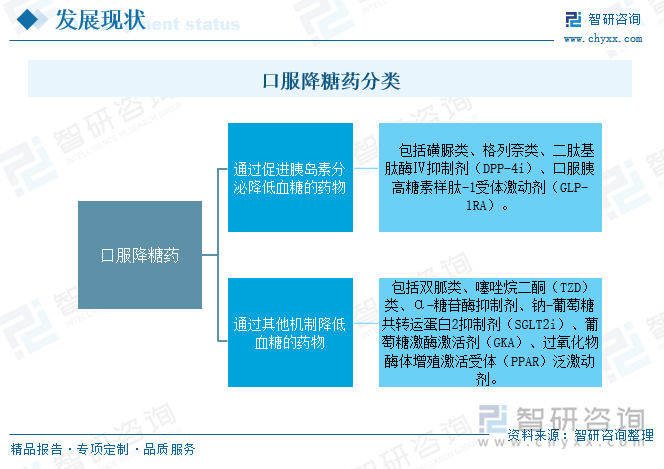
Core Insights - The oral hypoglycemic drug market is expanding rapidly due to the increasing prevalence of diabetes globally, with an estimated 589 million patients aged 20-79 by 2024, projected to reach 853 million by 2050 [4][6] - China has the highest number of diabetes patients at 148 million, accounting for 25% of the global total, with a significant rise in prevalence over the past 30 years [4][6] - The market for oral hypoglycemic drugs in China is expected to reach approximately 36.1 billion yuan by 2024, driven by both foreign and domestic companies [10][18] Industry Overview - Oral hypoglycemic drugs can be categorized into those that promote insulin secretion and those that lower blood sugar through other mechanisms [2][4] - The main classes of oral hypoglycemic drugs include sulfonylureas, meglitinides, DPP-4 inhibitors, GLP-1 receptor agonists, biguanides, TZDs, alpha-glucosidase inhibitors, and SGLT2 inhibitors [2][12] Market Dynamics - The oral hypoglycemic drug market in China is dominated by foreign companies such as AstraZeneca, MSD, and Bayer, which collectively hold over 50% market share [18] - The market is experiencing a shift with the rise of domestic companies, as they continue to innovate and develop new products [18][20] Recent Trends - The national centralized procurement policy has significantly impacted the pricing and availability of oral hypoglycemic drugs, with average price reductions reaching 88.5% in recent procurement rounds [15][16] - There is a growing trend towards the development of combination therapies and new mechanism drugs, such as glucose kinase activators and PPAR agonists, which are expected to become mainstream in diabetes treatment [20][22] Future Outlook - The DPP-4 inhibitors market is anticipated to expand further as domestic manufacturers increase their market penetration, potentially altering the current dominance of imported and generic drugs [20]




Novartis' Cosentyx Misses Primary Goal in Arteritis Phase III Study
ZACKS· 2025-07-03 15:35
Core Insights - Novartis' late-stage study of Cosentyx for treating giant cell arteritis (GCA) failed to meet its primary endpoint of sustained remission at week 52 [1][3][4] Group 1: Study Results - The Phase III GCAptAIN study showed that Cosentyx combined with a 26-week steroid taper did not achieve a statistically significant improvement in sustained remission compared to placebo with a 52-week taper [3][4][5] - Cosentyx also missed secondary endpoints with statistical significance, although it demonstrated lower steroid exposure and consistent safety [4][6] Group 2: Drug Background and Market Impact - Cosentyx, first approved in 2015, has expanded its indications to include several conditions such as psoriatic arthritis and hidradenitis suppurativa [2] - In Q1 2025, Cosentyx sales increased by 18% to $1.53 billion, driven by new launches and volume growth in core indications [8] Group 3: Future Plans and Implications - Novartis plans to further analyze the full data from the GCAptAIN study and share results in the future [6] - Potential label expansions for Cosentyx in additional indications could drive further growth [8]

北京“两区”建设五周年,制度创新引领高水平开放
Xin Jing Bao· 2025-07-03 14:53
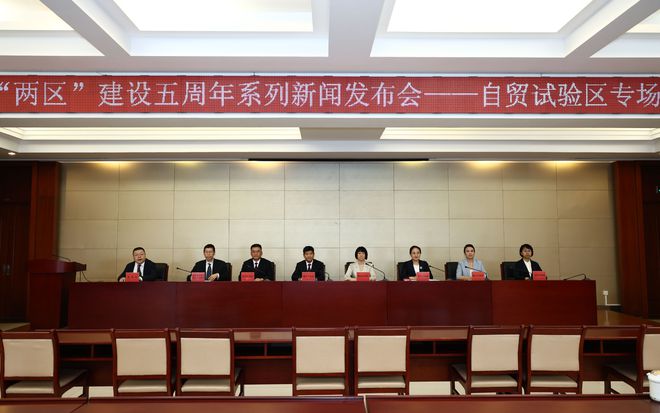
Core Viewpoint - The five-year development of Beijing's "Two Zones" (National Service Industry Expansion Pilot Zone and Beijing Free Trade Zone) has led to significant achievements in institutional innovation, the establishment of an open economy, and advancements in technological innovation and industrial upgrading [1][3]. Group 1: Institutional Innovation - Over the past five years, Beijing's Free Trade Zone has formed a series of nationally influential pioneering achievements, with Haidian District generating 98 institutional innovation cases, four of which have been promoted nationwide [3]. - The Zhongguancun Comprehensive Bonded Zone has become the first in the country to focus on "bonded R&D," implementing a "3+1" smart supervision model [3]. - Changping District has made strides in the medical and health sector, establishing several "national firsts," including the first international research hospital and the first decentralized clinical trial pilot [3][8]. Group 2: Economic Growth and Foreign Investment - Shunyi District has attracted 2,180 projects over five years, ranking first among the seven groups in the city, with a notable focus on rare disease drug imports [5]. - Daxing District has introduced over 7,800 market entities with registered capital exceeding 130 billion, becoming a hub for cross-border e-commerce [5]. - Chaoyang District has seen nearly 60,000 new enterprises established in the CBD area, with over 10,000 foreign investment institutions, accounting for nearly half of the city's multinational company regional headquarters [6]. Group 3: Technological and Industrial Development - Haidian District's GDP is projected to reach 1.29 trillion yuan in 2024, accounting for one-fourth of the city's total, with over 1,900 AI-related companies [7]. - Changping District has developed a comprehensive ecosystem in the medical health sector, with over 2,000 companies and a revenue exceeding 100 billion yuan [8]. - The Beijing Economic-Technological Development Area has achieved breakthroughs in various cutting-edge fields, including the establishment of the first artificial intelligence data training base in the country [4]. Group 4: Future Development Strategies - Future strategies include deepening medical health reforms in Changping, promoting data cross-border flow in Daxing, and focusing on green finance and digital economy in Tongzhou [9][10]. - Haidian District plans to accelerate the construction of an AI model industry cluster and enhance the technology service system to support SMEs [10].
Is DexCom (DXCM) Stock Outpacing Its Medical Peers This Year?
ZACKS· 2025-07-03 14:41
Group 1 - DexCom (DXCM) is outperforming its Medical peers with a year-to-date return of approximately 7.5%, while the average return for Medical companies is -2.9% [4] - DexCom is part of the Medical - Instruments industry, which has an average return of -7.5% this year, indicating that DXCM is performing better within its specific industry [5] - The Zacks Rank for DexCom is 2 (Buy), reflecting a positive earnings outlook with a 0.2% increase in the consensus estimate for full-year earnings over the past 90 days [3] Group 2 - Bayer Aktiengesellschaft (BAYRY) has also outperformed the sector with a year-to-date increase of 59.4% and holds a Zacks Rank of 2 (Buy) [4][5] - The consensus estimate for Bayer's current year EPS has risen by 6.4% over the last three months, indicating improving analyst sentiment [5] - Bayer is part of the Large Cap Pharmaceuticals industry, which is ranked 53 and has seen a slight decline of -0.3% this year [6]



FDA Grants Accelerated Approval to Regeneron's Blood Cancer Drug
ZACKS· 2025-07-03 14:20
Core Insights - Regeneron Pharmaceuticals, Inc. (REGN) received FDA approval for linvoseltamab-gcpt, branded as Lynozyfic, for treating relapsed or refractory multiple myeloma (MM) after at least four prior therapies [1][6][7] - Lynozyfic is a bispecific antibody that connects B-cell maturation antigen (BCMA) on MM cells with CD3-expressing T cells, leading to T-cell activation and cancer cell destruction [2][5] - The approval was based on the LINKER-MM1 trial, which showed a 70% objective response rate and a 45% complete response rate, marking it as one of the most effective bispecific antibodies for this patient group [4][7] Regulatory Approval - Lynozyfic is the first FDA-approved BCMAxCD3 bispecific antibody with a dosing schedule of every two weeks starting at week 14, and every four weeks if a very good partial response is achieved after 24 weeks of therapy [5][7] - The approval addresses a significant unmet need for patients with late-stage MM, who have limited treatment options [6] Market Context - MM is the second most common blood cancer, with over 36,000 new cases expected in the US by 2025 [5] - REGN's shares have declined by 22.9% year-to-date, contrasting with a 0.6% decline in the industry [2] Oncology Portfolio Development - The approval of Lynozyfic enhances REGN's oncology portfolio, which includes Libtayo for various cancers [9] - REGN is also pursuing the approval of odronextamab for treating relapsed or refractory follicular lymphoma and diffuse large B-cell lymphoma, with a target action date for resubmission set for July 30, 2025 [10][11] Competitive Landscape - REGN faces challenges with its lead drug Eylea, which is experiencing declining sales due to competition from Roche's Vabysmo, impacting its market share [11][12]


报告下载 | 药企2025年中展望:欧美巨头们下半年谁领跑,谁承压?
彭博Bloomberg· 2025-07-03 03:45
Core Viewpoint - The outlook for large pharmaceutical companies in the US and Europe in the second half of 2025 is mixed, with concerns over US drug pricing and optimistic expectations for upcoming data releases [2]. Group 1: Patent Expiration Risks - Over $350 billion in annual sales for large pharmaceutical companies in the US and Europe face risks from patent expirations, with 133 drugs losing exclusivity between 2025 and 2030 [5]. - Approximately 40% of the revenue at risk from patent expirations comes from small molecule drugs, while biologics represent the highest share of potential sales erosion [5]. - Merck faces the greatest risk due to the patent expiration of Keytruda in 2028, with Bristol Myers Squibb also significantly impacted [5]. Group 2: Currency Impact - The recent decline of the US dollar may negatively affect non-dollar reporting pharmaceutical companies, including Sanofi, Roche, GSK, and Novo Nordisk [7]. - Conversely, companies like AstraZeneca and Novartis, which report in dollars, may benefit from favorable currency effects [7]. Group 3: Earnings Growth Projections - Eli Lilly and Novo Nordisk are expected to lead in adjusted earnings growth for 2025, with Lilly's operating margin showing significant expansion potential [8]. - AstraZeneca, Sanofi, and Novartis are projected to achieve double-digit earnings growth, with Novartis's outlook being particularly surprising given its patent challenges [8]. - Bristol Myers Squibb and Bayer are experiencing profit margin pressures due to competition from high-margin generics [8]. Group 4: Sales Forecasts - Sales forecasts for major pharmaceutical companies indicate varied growth rates, with Eli Lilly projected to grow from $45.043 billion in 2024 to $100.289 billion by 2029, reflecting a compound annual growth rate (CAGR) of 22.7% [9]. - Novo Nordisk is expected to see sales increase from $290.403 billion in 2024 to $515.458 billion by 2029, with a CAGR of 14.3% [9]. - In contrast, Pfizer's sales are projected to decline from $63.627 billion in 2024 to $53.724 billion by 2029, indicating a negative CAGR of 1.5% [9].
晨会纪要——2025年第111期-20250703
Guohai Securities· 2025-07-03 00:30
Group 1: Express Delivery Industry Insights - The express delivery industry is focusing on cost reduction at the terminal stage, with significant potential for cost control as terminal delivery costs account for 60.64% of total costs in 2024 for companies like YTO Express [3][4] - Cost elasticity is high for express delivery companies; for instance, a 0.1 CNY increase in per parcel profit for Zhongtong Express could lead to an additional 34 million CNY in performance, indicating a 34% elasticity [4] - Various cost reduction measures are being explored by express companies, including the use of collection points, direct delivery models, and the introduction of unmanned vehicles for deliveries [4][5] Group 2: Unmanned Vehicle Implementation - The use of unmanned vehicles is gaining traction, with companies like Zhongtong Express and SF Express investing heavily in this technology, aiming to reduce delivery costs significantly [8][9] - Cost reduction potential is substantial; for instance, using unmanned vehicles could lower the transportation cost per parcel from 0.16 CNY to 0.05 CNY, achieving a 69% reduction [9] - The regulatory environment is becoming more favorable for unmanned vehicles, with many cities granting road rights, which is expected to accelerate the adoption of this technology [6][7] Group 3: Agricultural Chemical Market Dynamics - Glyphosate prices have increased, with the current price at 24,800 CNY per ton, reflecting a recovery in demand and inventory depletion in the industry [17][18] - The glyphosate industry is experiencing a demand recovery, with significant inventory reduction observed, dropping by 43,000 tons since April 2025 [19] - The potential bankruptcy of Bayer's glyphosate production could benefit domestic competitors, as Bayer holds a 32% global market share [20][21] Group 4: Investment Opportunities in Glyphosate - The report highlights several key companies in the glyphosate market, such as Jiangshan Chemical and Xingfa Group, which are well-positioned to benefit from the industry's recovery [22][23] - The overall outlook for the agricultural chemical sector is positive, with expectations of continued profit recovery for companies involved in glyphosate production [21] Group 5: Photovoltaic Equipment Industry Developments - The photovoltaic equipment industry is witnessing advancements in perovskite solar cells, with significant efficiency improvements reported by various manufacturers [26][27] - The industry is entering a phase of large-scale production, with at least three GW-level production lines expected to be operational by 2025 [26] - Investment opportunities are emerging in the perovskite equipment sector, with a focus on suppliers of key manufacturing equipment [29]




基础化工行业动态研究:草甘膦价格上涨,关注农药市场修复机会
Guohai Securities· 2025-07-02 15:39
Core Insights - The report maintains a "recommended" rating for the agricultural chemical industry, highlighting the recovery potential in the pesticide market due to rising glyphosate prices [1][8] - Glyphosate prices have shown a significant recovery, with the raw material price reaching 24,800 CNY per ton as of July 1, 2025, an increase of 1,800 CNY per ton since early April [6][8] Industry Performance - The basic chemical industry has outperformed the CSI 300 index over various time frames, with a 1-month performance of 5.0%, 3-month performance of 3.2%, and a 12-month performance of 16.4% compared to the CSI 300's 2.7%, 1.5%, and 13.6% respectively [4] Investment Highlights - The glyphosate industry is experiencing inventory depletion and demand recovery, leading to a price rebound from its bottom. As of June 27, 2025, glyphosate industry inventory was 40,000 tons, down 43,000 tons since early April [6] - The global largest glyphosate producer, Bayer, faces potential bankruptcy due to ongoing lawsuits related to its glyphosate product "Roundup," which could benefit domestic competitors in the glyphosate market [7] Company Focus - Key companies in the glyphosate sector include: - Jiangshan Chemical, with a production capacity of 70,000 tons/year [9] - Xingfa Group, the leading domestic glyphosate producer with a capacity of 230,000 tons/year [9] - Xin'an Chemical, with a capacity of 80,000 tons/year [10] - Yangnong Chemical, a major player with a capacity of 30,000 tons/year [10] - Guoxin Co., with a capacity of 20,000 tons/year [10] - Hebang Bio, with a capacity of 50,000 tons/year [10] - Lier Chemical, with a capacity of 18,500 tons/year [10] - Limin Co., with a capacity of 5,000 tons of glyphosate and 2,000 tons of refined glyphosate [10] Earnings Forecast - The report provides earnings per share (EPS) estimates for key companies, indicating potential growth in profitability: - Jiangshan Chemical: EPS of 1.10 CNY in 2025E [11] - Xingfa Group: EPS of 1.85 CNY in 2025E [11] - Yangnong Chemical: EPS of 3.44 CNY in 2025E [11] - Guoxin Co.: EPS of 1.12 CNY in 2025E [11] - Lier Chemical: EPS of 0.53 CNY in 2025E [11] - Limin Co.: EPS of 1.05 CNY in 2025E [11]


