泸州老窖

Search documents
大消费行业2025Q4基金持仓分析:大消费板块重仓比例连续7个季度回落,远低于历史均值水平
Wanlian Securities· 2026-01-28 00:24
证券研究报告|商贸零售 [Table_Title] 大消费板块重仓比例连续 7 个季度回落,远 低于历史均值水平 [Table_ReportType] ——大消费行业 2025Q4 基金持仓分析[Table_ReportDate] [投资要点: Table_Summary] ⚫ 大消费板块重仓比例持续回落,多数消费子板块重仓比例均环比 下降,只有轻工制造、商贸零售和社会服务三个板块略有上升。 2025Q4 大消费板块基金重仓比例延续了 7 个季度以来的下降趋 势,环比下降 0.28pcts 至 4.41%,目前处于历史低位,远低于 2018 年以来的历史重仓比例平均值 10.94%。 ⚫ 分个股:全市场个股持仓 TOP20 中大消费板块占据 2 个席位,与 Q3 季度席位数持平,大消费板块个股重仓比例分化明显。2025Q4 全市场基金重仓比例 TOP20 个股中大消费板块占据 2 个席位,食 品饮料(贵州茅台)和家用电器(美的集团)各占据 1 席。大消 费板块基金重仓比例提升幅度前 10 个股包括 3 只家用电器个股 (美的集团、格力电器、海尔智家)、2 只食品饮料个股(伊利股 份、口子窖)、2 只轻工制造个 ...


食品饮料行业2025Q4基金持仓分析:食饮重仓比例持续下降,除酒类外的细分板块重仓比例回升
Wanlian Securities· 2026-01-28 00:24
Investment Rating - The industry investment rating is "stronger than the market," indicating an expected relative increase of over 10% in the industry index compared to the broader market within the next six months [29]. Core Insights - The food and beverage sector's heavy holding ratio continues to decline, dropping to 2.61% in Q4 2025, down 0.20 percentage points from the previous quarter, and significantly below the historical average of 6.77% since 2018 [1][10]. - Within the sector, the heavy holding ratio for sub-segments, excluding alcoholic beverages, has seen a rebound, with notable increases in categories such as seasoning and fermented products, dairy beverages, and snacks [2][13]. - The top ten heavy holdings in the food and beverage sector are dominated by liquor stocks, which occupy seven positions, with a total heavy holding ratio of 2.37% [3][19]. Summary by Sections 1. Heavy Holding Ratios - The food and beverage industry's heavy holding ratio has decreased to 2.61%, ranking sixth among 31 primary industries, down from fifth in the previous quarter [1][10]. - The liquor segment's heavy holding ratio has dropped to 2.26%, while other sub-segments like seasoning and fermented products, dairy beverages, snacks, and food processing have shown slight increases [2][13]. 2. Liquor Segment Analysis - The liquor segment remains a dominant force in the food and beverage industry, accounting for over 86% of the heavy holdings, although it has decreased by 1.76 percentage points [16]. - The top three liquor stocks by heavy holding ratio are Guizhou Moutai, Shanxi Fenjiu, and Wuliangye, with significant fluctuations in their rankings [19][20]. 3. Investment Recommendations - The report suggests that the liquor industry is in a bottoming phase, with low valuations and high dividends providing strong support for stock prices. The inventory destocking cycle is expected to continue until mid-2026, with potential investment opportunities emerging in the second half of 2026 [25]. - For the broader consumer goods sector, growth is anticipated from product upgrades, particularly in beer and dairy, while the seasoning industry is expected to benefit from low raw material costs and the rise of customized solutions [4][27].




泸州老窖:公司各大单品均有38度产品
Zheng Quan Ri Bao Zhi Sheng· 2026-01-27 14:09
Core Viewpoint - Luzhou Laojiao is focusing on product innovation and creating new consumption scenarios to appeal to younger consumers, emphasizing low-alcohol products and emotional value in their offerings [1] Product Innovation - The company is preparing for product innovation by deepening its 38° low-alcohol product line, enhancing the smoothness and drinkability to meet the core needs of young consumers for low-alcohol and slightly intoxicating experiences [1] - Luzhou Laojiao is also developing innovative alcoholic beverages such as craft beer and Chinese fruit wines, as well as derivative products like bio-fermented masks and perfumes, aligning with the consumption demands of younger demographics [1] New Consumption Scenarios - The company aims to promote new drinking methods such as iced drinks and cocktails, creating new consumption scenarios, including the establishment of consumption stores that showcase its products in conjunction with dining experiences [1] - Luzhou Laojiao is working to integrate its products into the daily routines and social scenarios of young people and women, making them an organic part of their lifestyle [1]
豪掷6亿!茅台借区块链重塑白酒江湖,以后买酒还得看“含链量”?
Sou Hu Cai Jing· 2026-01-27 11:28
Core Viewpoint - Moutai is leveraging a significant investment of 600 million yuan and blockchain technology to address long-standing issues in the liquor industry, including counterfeiting and price discrepancies, by establishing a new framework for trust and pricing [1][3]. Group 1: Threefold Breakthrough - Chip-level anti-counterfeiting: Moutai is embedding RFID smart chips in each bottle, creating a unique digital identity for tracking from production to consumption, which increases counterfeit detection rates to 99% [3]. - On-chain ownership: Moutai is implementing a system that allows consumers to connect directly with the factory inventory through digital ownership certificates, reducing the role of distributors and pushing prices back to rational levels [4]. - Asset digitization: Moutai is transforming physical liquor into Real World Assets (RWA) on the blockchain, establishing new industry standards and enhancing the financial attributes of liquor in the digital economy [5]. Group 2: Industry Resonance - Moutai's initiatives are sparking a digital transformation across the liquor industry, with other major companies like Luzhou Laojiao and Wuliangye adopting similar technologies to enhance authenticity and consumer engagement [7][8]. - Data-driven decision-making is revolutionizing efficiency, as seen in companies like Shede Liquor, which have improved data processing efficiency by 80% through 5G and blockchain integration [9]. - The transformation signifies a shift from multi-layer distribution to direct connections with manufacturers, marking a new era of dual circulation for physical goods and digital assets [10]. Group 3: Transformation Insights - Traditional companies can learn from Moutai's approach, focusing on practical solutions to industry pain points without necessarily investing large sums [11]. - The integration of blockchain with RFID and IoT creates a seamless experience for consumers, ensuring that technology serves practical needs [12]. - Moutai's compliance with regulations while exploring digital asset innovation demonstrates that sustainable growth can be achieved within a compliant framework [12].

白酒周期启示录
雪球· 2026-01-27 08:57
Core Viewpoint - The article emphasizes the importance of industry cycles over individual company performance in the Chinese liquor market, particularly during periods of economic downturns, where even strong companies face significant declines due to systemic pressures [7][11][35]. Group 1: Industry Performance Overview - The period from 2013 to 2021 was characterized as a "golden era" for the liquor industry, with major brands like Kweichow Moutai increasing by 1297%, Shanxi Fenjiu by 1090%, and Wuliangye by 860% [13][15]. - In contrast, the period from 2022 to 2026 is described as a "deep adjustment period," where major brands have seen significant declines, with Luzhou Laojiao down 49%, Wuliangye down 46%, and Kweichow Moutai down 26% [20][22]. Group 2: Investment Strategy - Investors are advised to focus on industry cycles when selecting stocks, prioritizing companies with strong demand resilience during downturns, such as Kweichow Moutai, or those with low valuations, like Gujing Gongjiu B [29][30]. - The article warns against relying on company-specific factors (alpha) to counteract industry-wide trends (beta), as strong financials or management integrity may not protect against systemic downturns [31][32]. Group 3: Historical Context and Lessons - The article highlights that past star stocks, such as Yanghe and Shui Jing Fang, which performed well during the boom, have suffered even greater declines in the current downturn, illustrating that past performance does not guarantee future resilience [33][34]. - The cyclical nature of the industry is underscored, with the assertion that understanding the primary conflict between industry cycles and individual company performance is crucial for avoiding investment pitfalls [35].



白酒板块1月27日跌0.56%,*ST岩石领跌,主力资金净流出3.86亿元
Zheng Xing Xing Ye Ri Bao· 2026-01-27 08:49
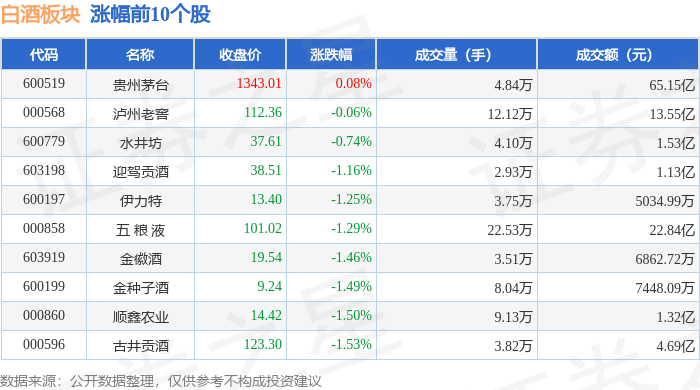
Core Viewpoint - The liquor sector experienced a decline of 0.56% on January 27, with *ST Rock leading the drop, while the Shanghai Composite Index rose by 0.18% and the Shenzhen Component Index increased by 0.09% [1]. Group 1: Liquor Sector Performance - The closing prices and performance of key liquor stocks showed mixed results, with Kweichow Moutai slightly up by 0.08% at 1343.01, while several others like Wuliangye and Luzhou Laojiao saw declines of 1.29% and 0.06% respectively [1]. - The total trading volume for Kweichow Moutai was 48,400 hands, with a transaction value of 6.515 billion yuan, while Wuliangye had a trading volume of 225,300 hands and a transaction value of 2.284 billion yuan [1]. Group 2: Capital Flow Analysis - The liquor sector saw a net outflow of 386 million yuan from institutional investors and 289 million yuan from retail investors, while retail investors had a net inflow of 675 million yuan [2]. - Specific stocks like Kweichow Moutai experienced a net inflow of 39.8 million yuan from institutional investors, while *ST Rock had a net outflow of 68,400 yuan [3]. Group 3: ETF Performance - The Food and Beverage ETF (product code: 515170) tracked the sub-index of the food and beverage industry, showing a decline of 2.01% over the past five days, with a price-to-earnings ratio of 19.31 times [5]. - The Consumer ETF (product code: 510630) tracked the main consumer industry index, with a decline of 1.52% over the past five days and a price-to-earnings ratio of 20.22 times [6].


泸州老窖(000568.SZ):公司境外收入占比较小
Ge Long Hui· 2026-01-27 08:16
格隆汇1月27日丨泸州老窖(000568.SZ)在投资者互动平台表示,公司境外收入占比较小,根据公司 《2024年年报》显示,公司2024年境外营收约1.86亿元,占比0.60%。 ...
昔日百亿基金经理,如今业绩倒数
Sou Hu Cai Jing· 2026-01-27 07:52
Core Viewpoint - In 2025, 97% of nearly 4,370 actively managed equity funds achieved positive returns, with the highest return exceeding 230%, although 129 funds experienced a decline in net value, including six funds managed by Wang Mingxu, who significantly underperformed benchmarks [2][4][5]. Group 1: Fund Performance - Wang Mingxu managed eight funds, with six established before 2025 recording negative returns in that year, specifically: -16.31% for Guangfa Domestic Demand Growth A, -15.47% for Guangfa Value Advantage, -14.55% for Guangfa Value Selection A, -13.34% for Guangfa Ruiming Two-Year Holding A, -12.60% for Guangfa Steady Selection Six-Month Holding A, and -12.50% for Guangfa Balanced Selection A [4][7]. - The three-year performance of these six funds significantly lagged behind their benchmarks, with net value growth rates of -15.10% to -16.76%, underperforming benchmarks by 31.68 to 37.91 percentage points [5][7]. Group 2: Investment Strategy and Holdings - The six funds managed by Wang Mingxu exhibited similar investment strategies, primarily focusing on sectors such as real estate, brokerage, high-end liquor, and city commercial banks, with attempts to invest in the internet data center industry [8][9]. - Despite a strategy that included reducing exposure to real estate and increasing stakes in city commercial banks and high-end liquor, the overall performance of these sectors was disappointing, with the liquor index declining by 6.67% in the first three quarters of 2025 [8]. Group 3: Management Scale and Response - Wang Mingxu's management scale has significantly decreased, dropping from 306.52 billion yuan in mid-2021 to 72.65 billion yuan by the end of 2025 [9]. - An inquiry was sent to Guangfa Fund regarding Wang Mingxu's performance and management issues, but no response was received by the time of reporting [10].

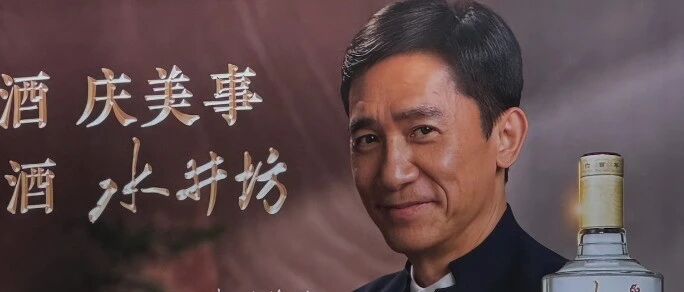
梁朝伟、刘晓庆、邓紫棋等明星扎堆代言白酒
Xin Lang Cai Jing· 2026-01-27 04:44
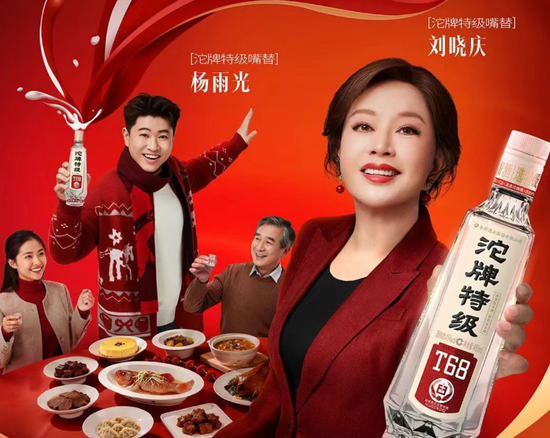
Core Viewpoint - The recent trend of Chinese liquor brands partnering with celebrities for endorsements is driven by the need to enhance brand image and boost sales, especially as the Spring Festival approaches, marking a peak consumption period for liquor [1][3][16]. Group 1: Brand Positioning and Image Building - Tuo Pai Jiu, a brand under Shede Liquor, has appointed celebrities Liu Xiaoqing and Yang Yuguang as brand ambassadors to strengthen its market presence [1][3]. - Other brands like Wuliangye and Moutai are also leveraging celebrity endorsements to connect with younger consumers and establish a modern brand image [6][19]. - The choice of high-profile figures like Tony Leung for Wuliangye's premium line aims to reinforce the brand's upscale positioning [19]. Group 2: Sales Promotion and Market Engagement - Brands such as Tuo Pai Jiu and Gu Xiao Jiu are targeting the mass market by selecting relatable and popular figures like Yue Yunpeng and Luo Yonghao to resonate with their consumer base [7][20]. - The trend indicates a shift towards more accessible marketing strategies, with brands opting for celebrities who have a strong online presence and appeal to younger audiences [20][21]. - The success of these endorsements is attributed to the celebrities' ability to engage with consumers on a personal level, enhancing brand affinity [22]. Group 3: Alternative Marketing Strategies - Some brands are exploring cost-effective marketing strategies, such as Luzhou Laojiao's sponsorship of the Australian Open, which aligns with the festive season to maximize visibility [10][23]. - The evolving marketing landscape suggests that liquor brands will continue to adopt innovative and relatable approaches to connect with consumers [11][24].


梁朝伟、刘晓庆、邓紫棋等明星扎堆代言白酒
21世纪经济报道· 2026-01-27 04:43
Core Viewpoint - The article discusses the increasing trend of liquor brands, particularly in the baijiu sector, engaging celebrities for endorsements to enhance brand image and drive sales as the consumption season approaches [3][5]. Group 1: Celebrity Endorsements in Baijiu - Tuo Pai Jiu has appointed Liu Xiaoqing and comedian Yang Yuguang as brand ambassadors, with Liu set to host a live stream on Douyin [1]. - The trend of celebrity endorsements in the baijiu industry has surged recently, with brands like Shui Jing Fang and Gu Xiao Jiu also announcing high-profile endorsements [3][5]. Group 2: Marketing Strategies - The primary goals of these endorsements are to establish brand identity and enhance sales. Brands like Wuliangye and Moutai are targeting younger consumers by collaborating with popular figures [6]. - Tuo Pai Jiu and Gu Xiao Jiu are focusing on more relatable and accessible celebrities to resonate with their target demographic, which is primarily middle-market consumers [7]. Group 3: Changing Consumer Dynamics - The appeal of celebrities does not strictly correlate with age; for instance, Liu Xiaoqing has gained popularity among younger audiences through her candid appearances on variety shows [8]. - Brands are also adopting cost-effective marketing strategies, such as leveraging events like the Australian Open to boost visibility during peak consumption periods [8].