国家电网

Search documents
“十五五”提到的量子科技,商业化落地到哪一步了?
3 6 Ke· 2025-11-03 10:45
Core Insights - The "15th Five-Year Plan" emphasizes the importance of quantum technology as a new economic growth point, marking a shift from basic research to industrial application and economic empowerment [1][9] - China aims to enhance its position in the global technology competition by focusing on original innovation and creating a conducive environment for disruptive innovation in quantum technology [2][8] - The plan indicates a significant increase in investment and support for quantum technology, including funding, talent acquisition, and infrastructure development [2][8] Quantum Communication - China has achieved several "world firsts" in quantum communication, including the launch of the world's first quantum science satellite, "Mozi," and the establishment of the "Beijing-Shanghai" quantum communication backbone network [3][4] - Pilot applications of quantum key distribution (QKD) have been initiated in various sectors, including government, finance, and power, demonstrating superior security compared to traditional encryption methods [3][6] Quantum Computing - Breakthroughs in quantum computing have been made, with the "Nine Chapters" quantum computer achieving quantum supremacy in specific tasks, outperforming classical supercomputers by several orders of magnitude [3][4] - Major tech companies like Baidu, Huawei, and Alibaba are developing quantum computing cloud platforms, making quantum computing more accessible to businesses and researchers [6][9] Quantum Precision Measurement - Significant advancements in quantum precision measurement technologies, such as atomic clocks and quantum radars, have been made, showcasing their potential in various applications, including navigation and resource exploration [4][7] - Commercial quantum sensors are being developed and utilized in academic and industrial settings, indicating a growing market for quantum measurement technologies [7] Commercialization Trends - Quantum communication is currently the most commercially advanced area, with companies like Guoshun Quantum and China Telecom promoting quantum key distribution solutions nationwide [6][8] - Quantum computing is still in the early stages of commercialization, but its potential applications in finance, pharmaceuticals, and logistics are attracting interest from various enterprises [6][9] Future Outlook - The "15th Five-Year Plan" is expected to accelerate the industrialization of quantum technology, with national projects focusing on overcoming key technological challenges [8][9] - The formation of industry clusters around major cities and increased capital investment in quantum startups are anticipated, fostering a complete industrial chain [8][9] - The integration of quantum technology with AI, blockchain, and IoT is expected to create new business models and enhance technological capabilities [8][9]
首次世界500强断崖差距,日本149家,美151家,中国仅3家?
Sou Hu Cai Jing· 2025-11-03 07:44
1995年,世界五百强名单上,中国仅有三家企业的身影,宛如黑白报纸上被按捺住的脉搏,与彼时美国 的一百五十一家、日本的一百四十九家形成鲜明对比。这巨大的数字鸿沟,如同一把锐利的刀刃,瞬间 割裂了国际经济视野,残酷地映照出经济体量与话语权之间的断崖式差距。 时间的长河向1995年以前流淌。首先,我们聚焦于美国企业那盘根错节的工业与品牌网络。通用电气和 可口可乐的财务报表,与当年的行业年鉴相互印证,无可辩驳地展示了其营收上的领先地位。以年鉴的 翔实数据为证据,读者可以清晰地看到,那种规模优势是如何逐步形成,并进而深刻影响全球供应链的 流向。 泛黄的纸张边缘,复印件上清晰可见的指纹,公共资料库中那位亲切的档案馆工作人员指认那是无数次 翻阅留下的痕迹。1995年那份榜单的原件,如今静静地珍藏于一家公共资料库,复印件和相关的登记记 录,都可在那里查阅核实。这些可追溯的文献资料,构成了本文时间轴上最早的锚点。 镜头随即转向日本。耳畔仿佛响起车间里此起彼伏的铆钉声,以及流水线上转动的合页声。丰田和本田 的生产线记录,与出口数据携手并进,共同勾勒出日本制造模式高度可复制性的特征。国家统计年鉴和 企业年报,成为了判断的坚实依据 ...


数字人民币真的要来了?11月起,应用场景将全面铺开
Sou Hu Cai Jing· 2025-11-03 05:11
Core Insights - The People's Bank of China has announced the implementation of a "dual-center" framework for the digital yuan, marking a significant shift towards a digital currency era starting from November 2025 [1][6] - The digital yuan will expand its application scenarios beyond pilot programs to cover retail consumption, public services, cross-border trade, and green finance, indicating a comprehensive integration into the economy [1][8] Retail and Public Services - In Jiangsu, the digital yuan has ranked first in consumption for two consecutive years, with public hospitals supporting digital payments reaching 53% and key tourist attractions at 45% as of October 2023 [3] - The integration of digital yuan in property transactions in Nanjing and the use of smart contracts in Suzhou for housing fund transactions have shown significant advancements, with monthly transaction volumes exceeding 2.1 billion yuan [3] Cross-Border and Industry Applications - The internationalization of the digital yuan is set to achieve a breakthrough by 2025, with a cross-border digital payment platform in Shanghai expected to facilitate real-time transaction tracking and smart contract supervision [5] - The digital yuan is becoming a core tool for empowering the new energy industry, with significant loans issued to renewable energy companies in Fujian, exceeding 7 billion yuan [5] Technology and Ecosystem - Continuous breakthroughs in underlying technologies, such as blockchain 3.0 and quantum security encryption, have significantly enhanced transaction speeds and security [6] - The dual-center structure signifies a transition from "technical validation" to "ecosystem operation," with distinct roles for Beijing and Shanghai in managing domestic and international financial infrastructures [6] Future Outlook - The comprehensive rollout of the digital yuan will transform it from merely a payment method to a strategic tool for restructuring the monetary circulation system and promoting green transformation [8][9] - The digital currency revolution is expected to enhance user experience through zero-fee transfers, real-time subsidies, and improved accessibility in remote areas, ultimately leading to a more inclusive and efficient financial future [9]


李乐成《党建》刊发署名文章:加快推进人工智能赋能新型工业化
Bei Jing Ri Bao Ke Hu Duan· 2025-11-03 03:54
Core Insights - Artificial intelligence (AI) is recognized as a crucial driver of the new technological revolution and industrial transformation, with a strong emphasis on self-reliance and application-oriented development [1][2][3] Group 1: Importance of AI in Industrialization - AI is identified as a strategic technology leading the current technological revolution and industrial transformation, with significant implications for global technological competition and industrial optimization [2] - The integration of AI with the real economy, particularly manufacturing, is deemed essential for success [2] Group 2: Key Tasks for AI Empowerment - Continuous strengthening of foundational research and focusing on core technologies such as high-end chips and basic software is emphasized [3] - The establishment of a collaborative innovation system involving enterprises, academia, and research institutions is crucial for upgrading traditional industries and developing new strategic industries [3] Group 3: Pathways for AI Empowerment - Deep integration of AI technology and industrial innovation is necessary, with a focus on market-driven technological development [4] - A robust governance mechanism for AI is essential to ensure safety and security while promoting industrial strength [4] Group 4: Progress in AI Industry - China's AI industry is projected to exceed 900 billion yuan by 2024, with over 5,000 AI companies and more than 400 national-level specialized "little giant" enterprises [5][6] - Significant advancements in computing power and data resources have been made, with over 35,000 high-quality datasets established [6] Group 5: Optimizing the AI Ecosystem - The establishment of a comprehensive standardization system for AI is underway, with nearly 200 standards expected to be developed by 2025 [7] - A national AI industry investment fund of 60 billion yuan has been launched to support the sector [7] Group 6: Fostering AI Advantageous Enterprises - Support for leading enterprises in AI innovation and the development of small and medium-sized enterprises is crucial for creating a robust ecosystem [11][12] - The focus is on enhancing the development environment for AI, including standardization and funding support [12] Group 7: Strengthening Safety and Governance - The importance of balancing development and safety in AI is highlighted, with a focus on enhancing technical safeguards and ethical governance [12][13] - The establishment of a monitoring system for AI safety risks is essential for ensuring responsible development [12]
李乐成:加快推进人工智能赋能新型工业化
Xin Lang Cai Jing· 2025-11-03 03:08
智通财经11月3日讯,工业和信息化部党组书记、部长李乐成在《党建》杂志发表署名文章《加快推进 人工智能赋能新型工业化》。 文章指出,"面对新一代人工智能技术快速演进的新形势,要充分发挥新型举国体制优势,坚持自立自 强,突出应用导向,推动我国人工智能朝着有益、安全、公平方向健康有序发展。"工信部深入学习贯 彻习近平总书记关于人工智能发展的重要指示批示精神,坚定不移贯彻落实党中央、国务院决策部署, 牢牢把握人工智能赋能新型工业化的重大机遇,体系化推进人工智能产业创新和赋能应用,为中国式现 代化构筑强大物质技术基础。 文章指出,深入实施"人工智能+制造"。制造业是立国之本、强国之基,是人工智能应用的主战场。完 善政策体系,研究出台"人工智能+制造"专项行动实施意见,部署重点行业、重点环节、重点领域智能 化转型任务,发布实施制造业企业人工智能应用指南。加快重点行业智能化转型,制定制造业重点行业 智能化转型指引,常态化开展赋能"深度行"活动,搭建线上线下供需对接平台,加快行业标杆解决方案 和经验推广应用。推动制造业全流程智能化升级,推进人工智能技术深度嵌入生产制造核心环节,拓展 智能辅助设计、虚拟仿真、故障预警等应用场 ...
中国品牌发展指数(2025)发布
Ren Min Ri Bao· 2025-11-02 22:02
Core Insights - The China Brand Development Index (2025) was released at the opening ceremony of the 2025 China Brand Forum, indicating a sustained positive trend in brand development amid deepening reforms and enhanced corporate innovation [2] Group 1: Brand Development Index - The index utilizes big data and artificial intelligence to dynamically monitor 100 representative enterprises, providing a scientific quantitative evaluation of the economic climate from a brand perspective [2] - The index shows that 50% of the brands included are from the real economy, highlighting the significant role of traditional industries in brand development [2] Group 2: Development Characteristics - Technology companies like Huawei and DeepMind are reshaping global supply chains through intensive R&D efforts [2] - The integration of ESG (Environmental, Social, and Governance) principles into corporate strategies is driving green transformation and carbon neutrality [2] - State-owned enterprises (SOEs) such as State Grid and Industrial and Commercial Bank of China, along with private firms like Alibaba and Tencent, consistently rank among the world's top 500 companies, demonstrating strong revenue and risk resilience [2] - Chinese enterprises, particularly SOEs, are deepening their global presence as part of their internationalization process [2]
21现场|在2025世界物联网博览会,预见未来“智慧生活”
2 1 Shi Ji Jing Ji Bao Dao· 2025-11-01 12:39
Core Insights - The 2025 World Internet of Things (IoT) Expo opened in Wuxi, focusing on "Intelligent Perception - Network Connection - Vertical Empowerment" as its main theme, showcasing the entire IoT industry chain from foundational technologies to end applications [1] Group 1: Exhibition Themes - The expo features four main exhibition halls: IoT Capability Hall, Industry Application Hall, Intelligent Connection Ecosystem Hall, and Smart Living Hall, covering various aspects of IoT [1] - The Smart Living Hall highlights cutting-edge products such as smart home devices and wearables, demonstrating how IoT technology is reshaping daily life [1] Group 2: Key Exhibits - China Telecom showcased a drone cockpit in the Smart Living Hall, equipped with a large curved screen for real-time transmission of high-definition images from the drone [2] - The cockpit integrates 5G networked drone operations, allowing for real-time data exchange and remote control, enhancing safety and efficiency in drone flights [2] - China Mobile presented the AI Fitness Smart Ring, which provides real-time feedback on exercise performance through a virtual AI coach [2] Group 3: Technological Innovations - The IoT Capability Hall displayed advanced technologies such as multi-modal sensing, advanced communication, and IoT operating systems, with exhibits like the intelligent inspection robot dog from State Grid [3] - The robot dog can autonomously complete inspection tasks in complex environments, significantly reducing the labor intensity for workers [3] - The Industry Application Hall focused on core technologies in vehicle networking and the empowerment of new industrialization through IoT solutions [3]
在2025世界物联网博览会,预见未来“智慧生活”
2 1 Shi Ji Jing Ji Bao Dao· 2025-11-01 12:38
Core Insights - The 2025 World Internet of Things (IoT) Expo opened in Wuxi, focusing on "Intelligent Perception - Network Connection - Vertical Empowerment" as its main theme, showcasing the entire IoT industry chain from foundational technologies to end applications [1] Group 1: Exhibition Themes - The expo features four main exhibition halls: IoT Capability Hall, Industry Application Hall, Intelligent Connection Ecosystem Hall, and Smart Living Hall, covering various aspects of IoT [1] - The Smart Living Hall highlights cutting-edge products such as smart home devices and wearables, demonstrating how IoT technology is reshaping daily life [1] Group 2: Key Exhibits - China Telecom showcased a 5G-connected drone cockpit, allowing operators to monitor flight status and control the drone's speed and direction through a large curved screen [2] - China Mobile presented the AI Fitness Smart Ring, which provides real-time feedback on exercise form through a virtual AI coach [2] - The IoT Capability Hall displayed advanced technologies like multi-modal sensing and IoT operating systems, including a smart inspection robot from State Grid that significantly reduces the labor intensity of cable inspections [3] Group 3: Industry Applications - The Industry Application Hall focused on core technologies and products related to vehicle networking and the empowerment of new industrialization through IoT solutions [3] - The exhibition emphasized the integration of vehicle-road-cloud systems and showcased new-generation vehicle technologies [3]
专家:“十五五”电网面临多方挑战 加快推进“双八百”特高压柔直技术攻关
Zhong Guo Jing Ying Bao· 2025-11-01 05:48
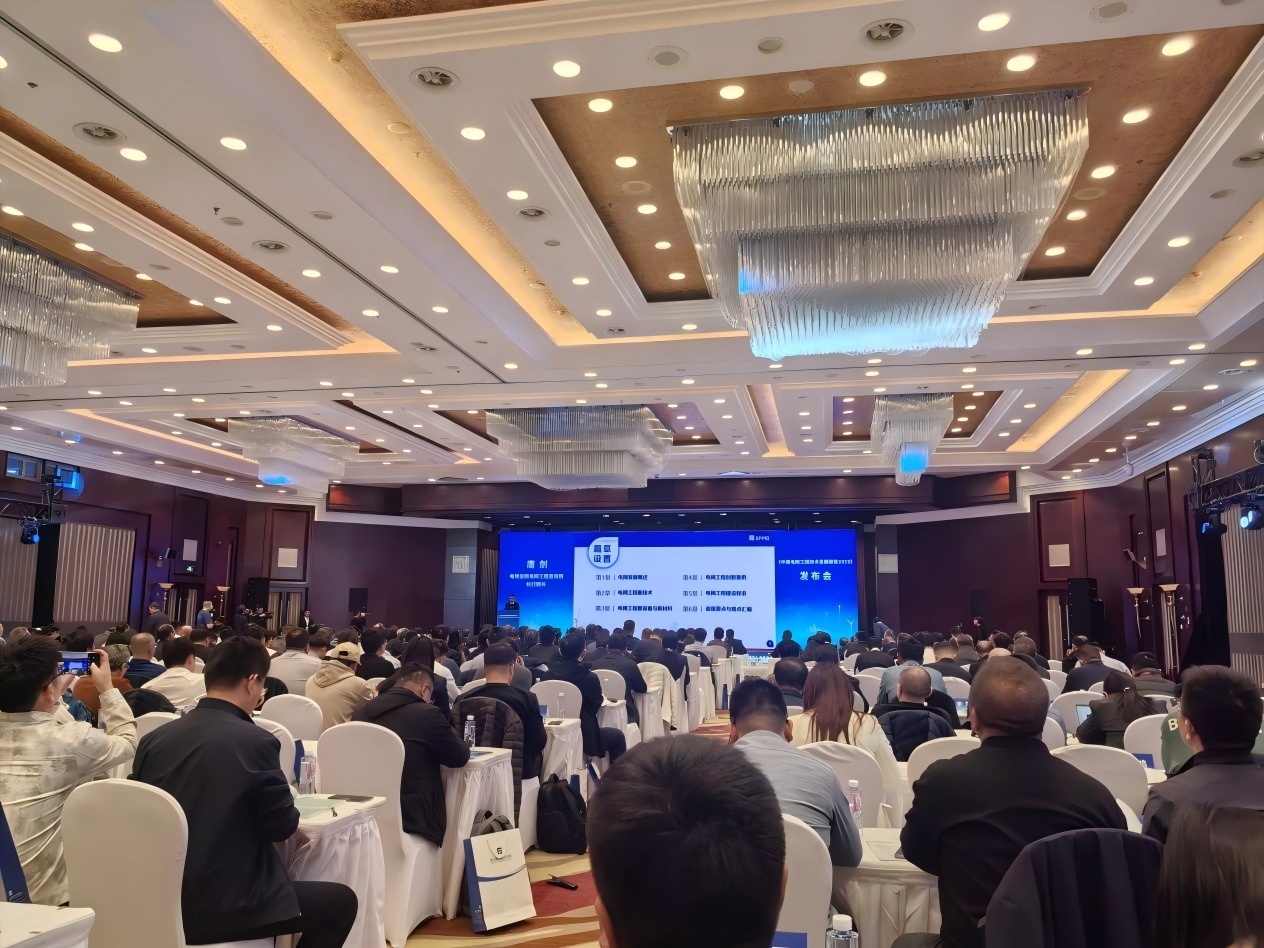
Core Insights - The 2025 National Power Grid Technology Exchange Conference highlighted significant advancements in China's power grid engineering during the "14th Five-Year Plan" period, emphasizing the importance of energy production and consumption revolution for high-quality development [2][4] - Experts at the conference identified new challenges and proposed targeted recommendations for the upcoming "15th Five-Year Plan" period, focusing on the need for unified planning and resource allocation in power grid development [2][3] Group 1: Key Developments - The conference revealed that the power system will exhibit high penetration of renewable energy, increased electrification, and greater supply-demand variability during the "15th Five-Year Plan" period, necessitating new requirements for grid planning and construction [2][3] - The report released at the conference summarized achievements in new technologies, equipment, and materials in power grid engineering since 2024, providing insights into future technological directions [4] Group 2: Expert Opinions - The Director of the Electric Power Department of the National Energy Administration emphasized the need for enhanced unified planning and resource support to adapt to the requirements of a national unified electricity market [2][3] - The Deputy General Manager of China Energy Construction Group called for increased investment in technology and research to improve the resilience and safety of the supply chain in response to unprecedented demands from rapid renewable energy development [2][3] Group 3: Challenges and Recommendations - The Deputy Chief Engineer of the State Grid highlighted the urgent need for research and application of new technologies to address world-class technical challenges in power grid construction [3] - The Deputy General Manager of the Southern Power Grid pointed out the necessity for a new intelligent construction paradigm to manage the complexities of large-scale renewable energy projects and storage systems [3][4]
视频丨今年前10个月国家电网绿电交易超2000亿千瓦时
Yang Shi Xin Wen Ke Hu Duan· 2025-11-01 05:00
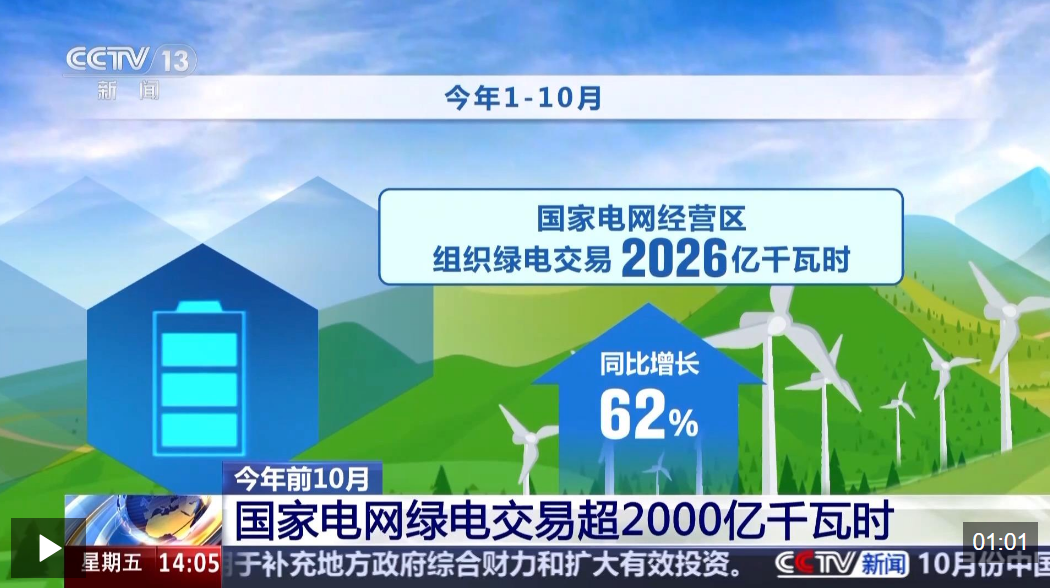
Core Insights - The scale of green electricity trading in the State Grid's operating area has exceeded 200 billion kilowatt-hours in the first ten months of this year, marking a historical high with a year-on-year growth of 62% [1][3]. Group 1: Green Electricity Trading - The total green electricity trading volume reached 202.6 billion kilowatt-hours from January to October, reflecting a significant increase compared to the previous year [1]. - The growth in trading volume is attributed to the continuous expansion of new energy installations and the improvement of market mechanisms [3]. Group 2: New Energy Installations - The installed capacity of wind and solar energy in the State Grid's operating area has reached 136.4 million kilowatts, representing a year-on-year increase of 33% [3]. - The establishment of inter-provincial electricity trading models has optimized the allocation of electricity resources across provinces [3]. Group 3: Market Mechanisms - The introduction of long-term green electricity agreements has resulted in over 30 billion kilowatt-hours of agreements, providing stable revenue for new energy companies and reliable green electricity sources for users [5]. - The current market systems are facilitating the optimization of green electricity distribution, ensuring large-scale grid connection and high proportion consumption of new energy [7].