红旗连锁

Search documents
汉堡王8个月转手赚2亿刀,外资到底在玩什么?
3 6 Ke· 2025-11-13 08:44
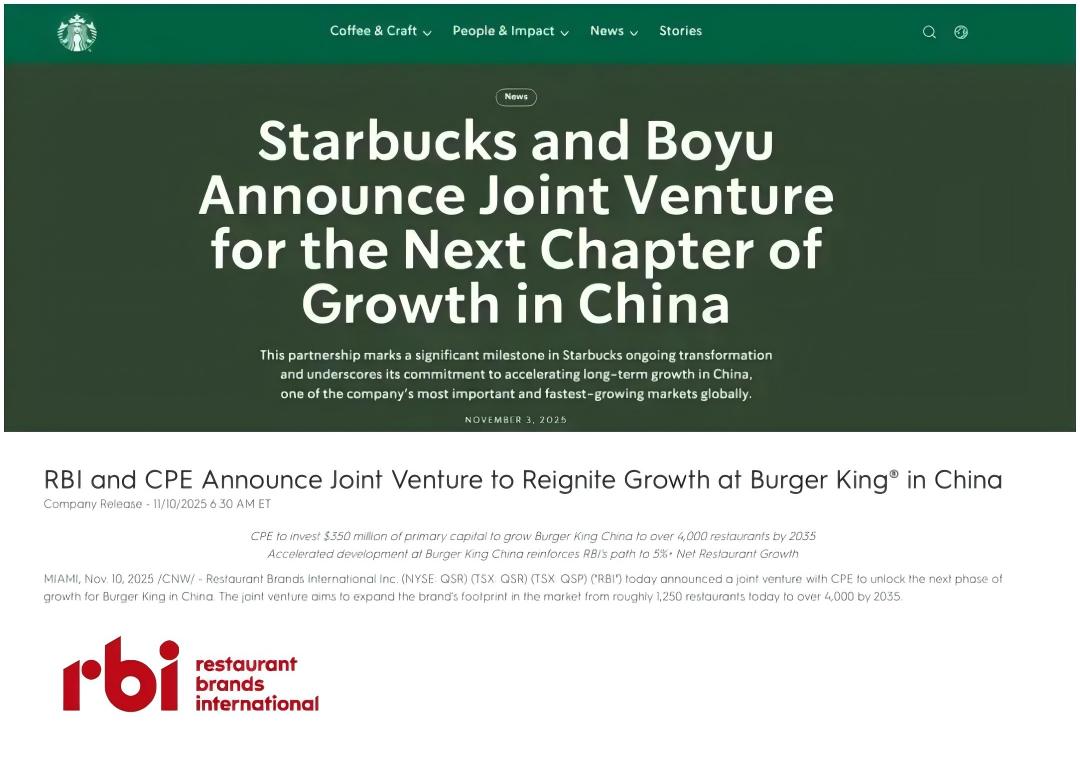
01 看了一堆汉堡王和星巴克"卖身"的标题党新闻后,我都快笑死了。 图|来源网络 一周之内,两条重磅:11月4号星巴克宣布把中国业务60%股权卖给博裕资本;11月10号汉堡王把83%股权卖给CPE源峰。 然后一堆媒体开始喊"外资餐饮大败退""洋品牌水土不服"。 我看完这些标题,又看了看交易细节,我感觉我又行了。 这哪是败退,这明明是换了个更舒服的姿势继续赚钱。 图|来源网络 星巴克一次性套现40亿美元,手里还握着40%股权,未来十年以上每年躺着收品牌授权费,加起来总价值超过130亿美元。 汉堡王拿走3.5亿美元,保留17%股权,还签了20年的品牌授权协议。 你们说这是败退? 这是完美退出好吧。 02 先别急着喊口号,咱们算笔账。 以星巴克为例,很多人觉得它把控股权卖了,是不是混不下去了? 朋友,你想多了。 星巴克在中国目前8000家店,2025财年全年营收31亿美元。 听起来不错对吧? 但你得知道,这31亿美元是怎么赚来的——门店租金、人力成本、供应链投入、营销费用,全是钱。 图|来源网络 更要命的是,星巴克还得跟瑞幸死磕。瑞幸现在27000家店了,年底冲刺30000家,而且价格比星巴克便宜一半还拐弯。 这意 ...


红旗连锁:商投投资受让股份成控股股东,持续督导期届满
Xin Lang Cai Jing· 2025-11-13 07:53
Core Points - The company Hongqi Chain announced a share transfer agreement on December 20, 2023, where Shangtou Investment will acquire 230 million shares, representing 16.91% of the total share capital [1] - Shareholders Cao Shiru and Cao Zengjun will relinquish voting rights for 282 million shares, accounting for 20.72% [1] - The transfer of shares will be completed on November 11, 2024, resulting in Shangtou Investment becoming the controlling shareholder and the actual controller being the Sichuan Provincial State-owned Assets Supervision and Administration Commission [1] - During the continuous supervision period, the acquirer and the company will operate in accordance with the law, and the acquirer will fulfill commitments and subsequent plans without providing guarantees or loans to the acquirer or its affiliates [1] - The company appointed Tan Liu as the secretary of the board on September 24, 2025, with the continuous supervision period ending on November 11, 2025 [1]

红旗连锁(002697) - 华西证券股份有限公司关于成都红旗连锁股份有限公司详式权益变动报告书之2025年第三季度持续督导意见暨持续督导总结报告
2025-11-13 07:46
华西证券股份有限公司 关于 成都红旗连锁股份有限公司 详式权益变动报告书 之 2025 年第三季度持续督导意见 暨 声 明 2023 年 12 月 20 日,商投投资与曹世如女士及其一致行动人曹曾俊先生签 署了《四川商投投资有限责任公司与曹世如及曹曾俊关于成都红旗连锁股份有限 公司之股份转让协议》《表决权放弃协议》《业绩承诺协议》。曹世如女士、曹 曾俊先生拟通过协议转让的方式将持有的合计 93,925,000 股红旗连锁股份(其中 曹世如女士转让 81,855,000 股,曹曾俊先生转让 12,070,000 股)及其所对应的股 东权利、权益转让给商投投资,合计转让股份占公司总股本的 6.91%,在上述股 份转让完成后,曹世如、曹曾俊承诺在弃权期限内放弃其合计所持红旗连锁剩余 的 281,775,000 股股份(占公司总股本的 20.72%)的表决权;同日,永辉超市与 商投投资签署了《四川商投投资有限责任公司与永辉超市股份有限公司关于成都 红旗连锁股份有限公司之股份转让协议》,永辉超市拟通过协议转让的方式将持 有的 136,000,000 股红旗连锁股份及其所对应的股东权利、权益转让给商投投资, 占公司总股本 ...
外资正在批量“撤离”?
Sou Hu Cai Jing· 2025-11-13 01:41
Core Viewpoint - The recent trend of foreign brands selling their businesses in China reflects a significant shift in the market dynamics, where local brands are gaining ground and changing consumer preferences are impacting the competitive landscape [6][9][26] Group 1: Foreign Brands Selling - CPE Yuanfeng has entered a strategic partnership with Burger King, investing $350 million to acquire approximately 83% of the joint venture "Burger King China" [1] - Starbucks has also formed a partnership with Boyu Capital, with an investment of around $4 billion for up to 60% stake in Starbucks China [2] - Yum! Brands is reviewing its strategy for Pizza Hut, considering the sale of its business [4] Group 2: Market Dynamics - The Chinese market has shifted from a foreign brand-dominated "blue ocean" to a competitive "red ocean," with local brands like Luckin Coffee and Li Ning gaining market share [9][14] - Starbucks' market share has dropped from 34% in 1999 to less than 15% currently, indicating a significant decline in its competitive position [9] - The rise of domestic brands has led to a decrease in the perceived value of foreign brands, as consumers now prioritize quality and price over brand origin [11][12] Group 3: Changing Consumer Behavior - Consumers are increasingly aware of the value of domestic products, often finding similar quality at lower prices [11] - The rapid evolution of consumer preferences and marketing strategies has made it difficult for foreign brands to keep up [17][19] - The success of local brands in penetrating lower-tier cities highlights the challenges faced by foreign brands in adapting to the new market environment [21] Group 4: Strategic Shift of Foreign Brands - Foreign brands are transitioning from a "heavy asset direct operation" model to a "light asset cooperation" model, focusing on brand licensing and partnerships rather than direct management [24] - This shift allows foreign brands to minimize risks while still benefiting from the growing Chinese market through royalties and dividends [24][26] - The changing landscape indicates that local players are now leading the market, with foreign brands taking a backseat [26]


外资投资者:愈发看好中国市场长期配置价值
Zheng Quan Shi Bao· 2025-11-12 18:58
Group 1 - The 2025 Shanghai Stock Exchange International Investor Conference focuses on "Value Leadership and Open Empowerment - New Opportunities for International Capital Investment and M&A," attracting over 100 renowned investment institutions and nearly 400 representatives from various regions [1] - The A-share market has shown a stable upward trend this year, with major indices rising and investor confidence significantly improving, leading to continued international capital inflow into the Chinese market [1] - Global asset management institutions and sovereign wealth funds express increasing optimism about the long-term investment value of the Chinese market due to stable macroeconomic conditions, improved policy environments, and accelerated technological innovation [1] Group 2 - Temasek's China Chairman, Wu Yibing, states that China has become one of the most important markets in their international investment portfolio, representing 18% of global total assets [1] - Invesco's Asia-Pacific ETF Director, Huang Wanjun, notes that foreign investors are increasingly interested in Chinese assets, which are seen as attractive in terms of valuation and investment value [1] - Huatai Securities' Institutional Business Committee Chair, Liang Hong, believes that the revaluation of Chinese assets has begun and will deepen, with investors focusing on innovative sectors beyond just AI, including hard technology and consumer brands [1] Group 3 - The conference also marks the seventh anniversary of the Sci-Tech Innovation Board, highlighting the Shanghai Stock Exchange's progress in supporting technological innovation and new productivity development [2] - The coordinated development of the stock, bond, fund, derivatives, and REITs markets, along with effective green finance initiatives, has strengthened foreign investors' confidence in long-term investments in China [2] - The Shanghai Stock Exchange and Singapore Exchange's collaboration on the China Securities New Exchange Asian 100 Index series was announced during the conference [2]
China's FMCG Market Shows Sustained Resilience
凯度消费者指数· 2025-11-12 03:50
Core Insights - The fast-moving consumer goods (FMCG) market in urban China showed a 2% year-on-year sales growth in the first three quarters of 2025, with beverages leading the growth while dairy products faced challenges [1] - Final consumption expenditure contributed 53.5% to economic growth, driving GDP growth by 2.8 percentage points [2] - Online channels experienced a 7% year-on-year sales growth, with major e-commerce platforms like Douyin and JD.com showing positive performance [10][12] Group 1: FMCG Market Performance - Urban China's FMCG market achieved a 2% year-on-year sales growth in the first three quarters of 2025, with beverages leading the growth [1] - Dairy products faced significant challenges, with declines in both purchase frequency and spend per trip [1] - Lower-tier cities remained key growth engines, with sales in town and county markets growing by 4.1% and 3.6% respectively [1] Group 2: Retailer Performance - Walmart Group's market share increased by 1 percentage point, driven by Sam's Club and community store formats [6] - Hema's overall share increased by 0.4 percentage points, with its ChaoHesuan format driving growth through value-for-money offerings [6] - The SPAR Group achieved significant growth in the East region, with its discount store model becoming a key growth driver [6] Group 3: Discount Store Format - The penetration of discount snack stores exceeded 31% in the first three quarters of 2025, with a notable increase in the West region [7] - Comprehensive discount stores saw a 2.3 percentage points year-on-year increase in penetration, driven by major players expanding their offerings [8] - Wumart Group accelerated its transition to a hard discount format, leveraging its existing store network [9] Group 4: Online Channels - Online channels demonstrated steady performance with a 7% year-on-year sales growth [10] - Douyin's penetration increased by 5.1 percentage points, reaching close to 50%, with significant growth in town-level markets [12] - Xiaohongshu's penetration reached 1.7%, reflecting its unique content community platform's effectiveness [13] Group 5: Private Label Development - Over 48% of Chinese urban households purchased private label products, an increase of 10 percentage points year-on-year [17] - Retailers are enhancing control over product supply chains to optimize costs and improve price advantages for private labels [17] - Traditional supermarkets and online platforms are actively promoting private label development to strengthen consumer loyalty [18]
咖啡豆价格狂飙,打工人的“续命水”会涨价吗?
Ge Long Hui· 2025-11-11 12:43
Core Insights - The global coffee market is experiencing a significant price surge, with Arabica coffee futures reaching historical highs, driven by supply constraints and increasing demand [1][2][3] - In contrast, the Chinese coffee market is witnessing a price war among brands, leading to a drastic reduction in consumer prices despite rising raw material costs [4][5][6] Group 1: Market Dynamics - As of November 8, 2023, Arabica coffee futures are priced at 388.38 cents per pound, having increased by 4.94% in the first week of November [1] - The price of coffee futures has risen over 70% from 188.5 cents per pound at the beginning of January 2023 to a peak of 336.4 cents per pound in December 2022, surpassing the growth rate of gold during the same period [1][2] - The USDA projects a 7.5% decrease in global Arabica coffee production for the 2025/26 season compared to the historical peak of 6.3 million tons in 2018/2019 [2] Group 2: Supply Chain and Production Issues - Weather conditions in major coffee-producing countries, particularly Brazil, have led to reduced production forecasts, contributing to the rise in coffee futures prices [2] - The International Coffee Organization has warned of systemic risks to global coffee production due to climate change [2] Group 3: Consumer Market Trends in China - The Chinese coffee market is projected to reach a scale of 313.3 billion yuan in 2024, reflecting an 18.1% growth year-on-year, with per capita consumption increasing significantly [3][8] - The number of coffee shops in China has doubled over the past three years, with major cities nearing the density of mature coffee markets like New York and Tokyo [3] Group 4: Price Competition and Brand Strategies - A price war has emerged in the Chinese coffee market, with brands like Luckin Coffee and Kudi Coffee offering products at prices as low as 6 yuan to 9.9 yuan, leading to a significant shift in consumer expectations [4][5][6] - Many coffee brands are facing pressure to maintain market share through aggressive pricing strategies, which may not be sustainable in the long term [9][10] Group 5: Future Outlook and Industry Transformation - Experts predict a shift from price competition to value competition, emphasizing product quality and consumer experience as key differentiators in the market [10][12] - The coffee industry in China is expected to undergo significant consolidation, with weaker brands likely to exit the market in the coming 12-18 months [10][12]
汉堡王中国易主:CPE源峰斥资3.5亿美元拿下83%股权
Guan Cha Zhe Wang· 2025-11-11 12:09
Core Insights - The recent establishment of a joint venture "Burger King China" between CPE Yuanfeng and RBI Group marks a significant shift in the ownership structure of Burger King's operations in China, with CPE Yuanfeng acquiring approximately 83% control [1][2] - CPE Yuanfeng will inject $350 million (approximately 2.5 billion RMB) into the joint venture to support expansion, marketing, menu innovation, and operational improvements [1] - The joint venture aims to increase the number of Burger King outlets in China from around 1,250 to over 4,000 by 2035, representing more than a twofold increase [3] Company Background - Burger King entered the Chinese market in 2005 and has undergone several ownership changes, with RBI acquiring full control in 2025 before this latest transaction [2] - CPE Yuanfeng has extensive investment experience in the consumer services sector, with a total investment of approximately 10 billion RMB in various well-known brands [2] Market Context - The expansion plan for Burger King China comes amid challenges, as the brand currently lags behind competitors like KFC and McDonald's, which have over 12,000 and nearly 8,000 outlets in China, respectively [3][4] - The trend of foreign restaurant brands in China shifting to local capital partnerships is evident, as seen with Starbucks recently selling 60% of its Chinese operations to a local investor [3]




宏观深度报告20251111:类比2020-2021,A股处于什么位置?
Soochow Securities· 2025-11-11 05:00
Macro Environment - The current A-share market shows significant similarities to the 2020-2021 period, driven by policy-induced economic recovery, with GDP growth expected to reach over 5% in 2025[12] - In 2025, the domestic monetary and fiscal policies are consistent with those of early 2020, maintaining a loose stance to support market growth[13] - The consumer price index (CPI) in October 2025 increased by 0.2%, while the core CPI rose to 1.2%, indicating a gradual recovery in domestic demand[14] Industry Trends - The 2025 A-share market is experiencing structural characteristics similar to 2020-2021, with significant growth in sectors like AI, robotics, and new consumption, mirroring the previous focus on consumption, new energy, and semiconductors[2] - The new energy sector in 2025 is projected to see a net profit growth of 55.77% in the photovoltaic sector, with storage orders increasing by 131.75% year-on-year[17] - The TMT sector has seen a 43.80% increase in the index from January to November 2025, surpassing the 18.24% growth during the same period in 2020-2021[19] Market Dynamics - Daily trading volume in 2025 averaged approximately 1.68 trillion yuan, significantly higher than the 700 billion yuan in 2020, reflecting increased market activity[25] - The margin trading balance reached a historical high of over 2.5 trillion yuan by October 2025, up more than 47% from the end of 2021[25] - The current market phase is likened to the slow bull market of late 2020, with strategic funds guiding market entry, indicating a potential for continued upward movement[5] Risks and Considerations - Risks include the possibility that industry trends may not materialize as expected, and the anticipated scale of foreign capital inflow may be weaker than projected[53] - The commercial progress of technology sectors is uncertain, and the timing of overseas interest rate cuts remains unpredictable, which could impact market sentiment[53]
美国参议院已获得足够票数通过临时拨款法案


21世纪经济报道· 2025-11-11 04:11
Group 1 - The U.S. Senate has passed the Continuing Appropriations and Extensions Act, marking the end of a 41-day government shutdown since October 1 [1] - U.S. stock market saw significant gains, with Nvidia rising nearly 6% and Xpeng Motors increasing over 16% [2] - The cryptocurrency market experienced a major sell-off, resulting in approximately 140,000 liquidations [2] Group 2 - Burger King China has been sold, with shareholders from Mixue Ice City and Pop Mart taking over [2] - Nissan is undergoing significant restructuring, including selling properties, closing factories, and laying off employees as part of a survival strategy [2]