
招商轮船

Search documents
运价罕见单日暴跌20%,油轮龙头股价逆势上涨
2 1 Shi Ji Jing Ji Bao Dao· 2025-12-27 23:37
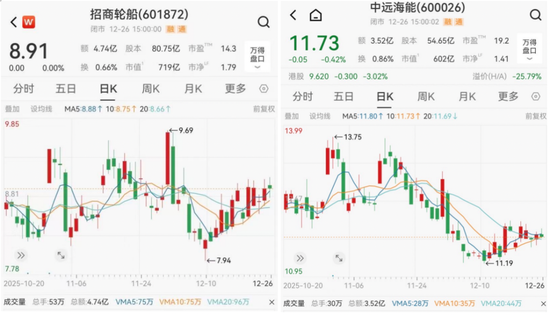
Core Viewpoint - The global tanker market experienced a significant drop in VLCC spot rates, with the Baltic TD3C index falling 20% to $87,711 per day, marking the largest single-day decline since May 2020. Despite this, major domestic oil tanker companies like China Merchants Energy Shipping Company and COSCO Shipping Energy Transportation remained resilient, with China Merchants Energy seeing a weekly increase of over 4% as of December 26 [1][3][8]. Group 1: Market Dynamics - The tanker market is influenced by complex and sometimes contradictory pricing mechanisms, which have led to a notable increase in tanker transport prices since August due to longer transport distances and rising demand [4][11]. - The current geopolitical situation has resulted in a reduction of the global "compliant" fleet, with the number of sanctioned tankers doubling to 906 vessels, representing 19% of the global oil tanker fleet capacity [10][12]. - The demand for oil tankers is expected to rise as OPEC has resumed increasing oil production, which could further support tanker rates [10][12]. Group 2: Company Performance - China Merchants Energy maintains the world's largest VLCC fleet, with 52 VLCCs and 7 Aframax tankers, positioning it well for potential profit growth as tanker rates are projected to reach their highest levels since 2008 in Q4 2025 [7][8]. - Despite the favorable market conditions, the stock price of China Merchants Energy was only 8.91 yuan per share as of December 26, which is lower than its historical prices from 2015 and 2024 [8][12]. - The company's management remains optimistic about the tanker market, predicting that the supply-demand imbalance will persist, keeping average rates above those of 2025 [15]. Group 3: Future Outlook - Analysts suggest that the tanker market may be entering a "super cycle," driven by supply constraints and increasing demand, although the current stock prices of leading companies do not fully reflect this potential [7][12]. - The upcoming delivery of new VLCCs is expected to be insufficient to offset the decline in efficiency from older vessels, maintaining a tight supply situation in the compliant market [13][15]. - The market's perception of seasonal demand fluctuations may not accurately predict future performance, as the first quarter is traditionally a peak season for tanker operations [15].


运价罕见单日暴跌20%,油轮龙头股价逆势上涨
21世纪经济报道· 2025-12-27 23:31
Core Viewpoint - The global tanker market experienced a significant drop in VLCC spot rates, with the Baltic TD3C index falling 20% to $87,711 per day, marking the largest single-day decline since May 2020. Despite this, major domestic oil tanker companies like China Merchants Energy Shipping Company (招商轮船) and COSCO Shipping Energy Transportation (中远海能) remained resilient, with China Merchants' stock rising over 4% in the week ending December 26, 2023 [1][3][8]. Group 1: Market Dynamics - The oil tanker market is characterized by complex and sometimes contradictory pricing mechanisms, which have led to a mixed performance of A-share oil tanker companies despite strong demand [3]. - Analysts from Guotai Junan Securities highlighted a "super bull market option" for oil shipping companies due to unexpected demand and supply bottlenecks, suggesting that current valuations do not fully reflect the potential for a super bull market [7]. - As of mid-2025, China Merchants will maintain the world's largest VLCC fleet, comprising 52 VLCCs and 7 Aframax tankers, positioning it as a key player in the market [7]. Group 2: Supply and Demand Factors - The global fleet of sanctioned oil tankers has doubled to 906 vessels, representing 19% of the total oil tanker fleet, which has led to increased transportation distances and a temporary surge in tanker rates [10][11]. - The geopolitical landscape has restructured global oil transportation routes, contributing to rising tanker rates, while the U.S. shale oil production faces challenges that may support higher rates in the long term [11]. - Despite the recent surge in tanker rates, concerns remain about potential price corrections if geopolitical tensions ease or if floating storage capacities are released [12]. Group 3: Future Outlook - The supply of VLCCs is expected to remain tight until mid-2026, with only a limited number of new deliveries and a significant portion of the fleet being older vessels that may not meet environmental standards [13]. - The company anticipates that the compliance market will continue to experience supply-demand imbalances, with average rates expected to be higher than in 2025 [14]. - The company also noted that the first quarter of the year is typically a peak season for oil transportation, despite historical trends suggesting a decline in activity during the fourth quarter [15].

极端周期,VLCC油运公司命运之局
2 1 Shi Ji Jing Ji Bao Dao· 2025-12-27 00:00
Core Viewpoint - The global tanker market experienced a significant drop in VLCC spot rates, with the Baltic TD3C index falling 20% to $87,711 per day, marking the largest single-day decline since May 2020. This decline is viewed as a market correction rather than a crisis, as VLCC rates remain above the highs seen in the spring of 2020 [1][2]. Group 1: Market Dynamics - The recent drop in tanker rates contrasts sharply with the extreme market conditions of May 2020, where OPEC's failed negotiations led to a drastic reduction in demand and unprecedented negative oil prices. This time, there are no similar geopolitical crises or OPEC production cuts influencing the market [2]. - Despite the drop in rates, major domestic tanker companies like China Merchants Energy Shipping Company (招商轮船) and COSCO Shipping Energy Transportation (中远海能) have shown resilience, with China Merchants experiencing a weekly increase of over 4% as of December 26 [2]. - The tanker market's pricing mechanism is complex, influenced by various factors including geopolitical tensions and supply chain disruptions, which have led to increased transportation distances and demand [3][7]. Group 2: Future Outlook - Analysts suggest that the tanker industry is entering a "super bull market" phase due to unexpected demand and supply constraints, with projections indicating that VLCC spot market earnings could reach their highest levels since 2008 by Q4 2025 [5][6]. - The current fleet of VLCCs is aging, with 20.2% of the global fleet over 20 years old, which may limit supply growth and maintain upward pressure on rates [11]. - The company anticipates that the supply-demand imbalance will persist, particularly as older vessels may not meet new environmental regulations, potentially leading to a decrease in effective fleet capacity [10][13]. Group 3: Investor Sentiment - There is a notable divergence between the performance of tanker rates and the stock prices of related companies, with the latter showing a lackluster response to rising rates due to market concerns over potential price corrections [9]. - The management of China Merchants has expressed optimism about the tanker market, predicting that the stock price will eventually reflect the positive market conditions despite current investor hesitance [12][13].
极端周期,VLCC油运公司大赌局
2 1 Shi Ji Jing Ji Bao Dao· 2025-12-26 12:34
Core Viewpoint - The global tanker market is experiencing a significant drop in VLCC spot rates, with the Baltic TD3C index falling 20% to $87,711 per day, marking the largest single-day decline since May 2020 [1][2] Group 1: Market Dynamics - The recent drop in tanker rates contrasts sharply with the extreme market conditions of May 2020, where OPEC production cuts and geopolitical events led to a dramatic shift in oil transportation dynamics [2][3] - Despite the current decline, VLCC rates have not fallen below the highs seen during the spring bull market of 2020, indicating a more stable market environment [2][3] - The recent price drop is viewed as a market correction rather than a collapse, with major domestic tanker companies like China Merchants Energy Shipping Company (招商轮船) and COSCO Shipping Energy Transportation Co. (中远海能) showing resilience [2][3] Group 2: Supply and Demand Factors - Analysts suggest that the tanker market is influenced by a combination of unexpected demand and supply constraints, which could provide a "super bull market option" for listed oil shipping companies [4][5] - The head of China Merchants Energy Shipping Company noted that their VLCC fleet remains the largest globally, with expectations of significant profit growth due to rising spot rates [5][6] - The global fleet of sanctioned tankers has doubled to 906 vessels, representing 19% of the total oil tanker fleet, which has restructured transportation routes and increased shipping distances [7][8] Group 3: Future Outlook - The tanker market is expected to face a tight supply situation, with a limited number of new VLCC deliveries and a significant portion of the fleet being older vessels that may not meet environmental regulations [11][12] - The company anticipates that the demand for compliant vessels will continue to outstrip supply, leading to higher average rates in the future [12][13] - The company's management remains optimistic about the market's long-term prospects, despite short-term fluctuations and seasonal demand variations [12][13]
航运行业2026年策略报告:关注2026年油轮、散货景气上行-20251226
CMS· 2025-12-26 09:04
Group 1: Core Insights - The report highlights a positive outlook for the tanker and bulk shipping sectors in 2026, with a relatively favorable supply-demand balance for medium and large vessels, indicating potential for significant seasonal elasticity [1] - The shipping sector has shown relative outperformance against the transportation index, although it remains weaker than the CSI 300 index, with the shipping index rising by 8.8% year-to-date compared to a 16.1% increase in the CSI 300 [5][11] - The report emphasizes the impact of geopolitical factors and tariff policies on shipping performance, noting significant fluctuations in freight rates due to trade tensions, particularly between the US and China [11] Group 2: Container Shipping - In 2025, container shipping faced notable impacts from tariff policies, leading to a significant drop in cargo volumes on US-China routes, with a temporary surge in freight rates due to a "rush to ship" phenomenon [21] - The demand for container shipping remains resilient, with a year-on-year export growth of 5.4% in China for the first eleven months of 2025, despite challenges from tariff adjustments [25][30] - Supply forecasts indicate a steady increase in container fleet capacity, with expected growth rates of 4.7% and 6.4% for 2026 and 2027, respectively, while the demand growth is projected at 2.4% and 3.0% for the same years [49][55] Group 3: Oil Shipping - The oil shipping sector is expected to maintain a favorable supply-demand balance in 2026, driven by multiple positive factors, including increased production from the Middle East and rising demand for oil imports from Asia [60] - The report notes a significant increase in global oil exports starting from September 2025, with major oil-producing countries ramping up their output, contributing to a supply-demand imbalance that supports rising freight rates [63] - VLCC (Very Large Crude Carrier) rates have shown a substantial increase, with rates reaching $110,000 per day by December 2025, reflecting the strong demand and supply constraints in the oil shipping market [60][61] Group 4: Dry Bulk Shipping - The dry bulk shipping market is experiencing a recovery in the second half of 2025, with increased demand for iron ore and grain transportation, leading to a positive outlook for 2026 [60] - The report forecasts a growth rate of 0.9% and 0.7% for dry bulk shipping volumes in 2026 and 2027, respectively, driven by the demand for iron ore and grain [60] - Supply constraints are anticipated, particularly for Capesize vessels, with limited growth expected in their capacity, which may support freight rate increases in the upcoming years [60][55]


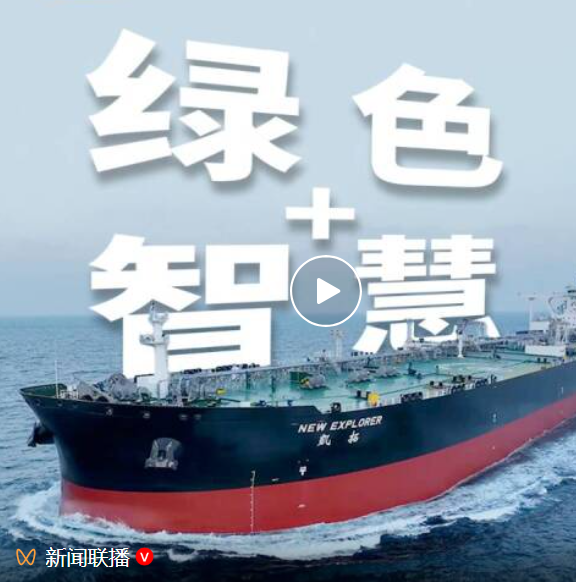
冲刺四季度|首艘甲醇双燃料动力智能VLCC命名交付
Xin Lang Cai Jing· 2025-12-25 21:26
Group 1 - The core achievement is the successful delivery of the world's first methanol dual-fuel intelligent VLCC "Kaituo" four months ahead of schedule, marking a significant milestone in low-carbon development for the shipping industry [2] - The "Kaituo" is the eighth generation VLCC developed by Dalian Shipbuilding, featuring strong navigability, excellent port suitability, low emissions, and smart operation capabilities [4] - The vessel utilizes domestically developed methanol dual-fuel engines and fuel supply systems, achieving up to a 92% reduction in carbon dioxide emissions, a 99% reduction in sulfur oxides (SOx), and a 90% reduction in particulate matter (PM) compared to conventional fuel [4] Group 2 - The ship is equipped with a domestically developed intelligent ship-based platform, intelligent liquid cargo control system, and intelligent engine room operation and maintenance system, enhancing operational economy, safety, and intelligence [6] - The intelligent liquid cargo control system, developed by Dalian Shipbuilding with complete independent intellectual property rights, integrates over ten systems related to crude oil loading and transportation, enabling multi-system collaborative control, intelligent loading and unloading operations, and decision support based on an expert knowledge base [6]

安通控股斩获四连板,招商系“三雄”成“幕后大赢家”
Huan Qiu Lao Hu Cai Jing· 2025-12-25 11:46
Core Viewpoint - Antong Holdings has experienced a significant stock price surge, driven by the recent launch of the Hainan Free Trade Port and its strategic positioning in the domestic shipping market, making it a key player in the ongoing speculation surrounding Hainan's economic policies [2][5][10]. Company Overview - Antong Holdings is a leading domestic shipping company with a network covering the two major ports of Hainan Island, Yangpu and Haikou, ranking among the top three in container throughput at Haikou Port [2][5]. - The company has a diversified revenue structure, with over 80% of its income derived from maritime operations, and it is recognized as one of the top three domestic shipping companies alongside COSCO Shipping and Zhonggu Logistics [5][10]. Stock Performance - On December 25, Antong Holdings' stock reached a new five-year high of 5.95 yuan, marking its fourth consecutive trading day of gains [2][3]. - The company's market capitalization increased to 25.18 billion yuan, surpassing Zhonggu Logistics [5]. Shareholder Dynamics - Major shareholders of Antong Holdings include China Merchants Energy, China Merchants Port, and China National Foreign Trade, with their combined holdings valued at approximately 20.53 billion yuan, 14.88 billion yuan, and 10.05 billion yuan, respectively [6][9]. - The China Merchants Group has been actively increasing its stake in Antong Holdings, indicating a strategic consolidation effort [7][8]. Market Drivers - The recent launch of the Hainan Free Trade Port, characterized by "zero tariffs, low tax rates, and simplified tax systems," has heightened expectations for increased cargo flow and regional maritime demand [5][10]. - The influx of speculative trading from various well-known investors has contributed to the stock's upward momentum, with significant net purchases recorded from multiple trading desks [4][10]. Financial Performance - Following a substantial loss of 4.5 billion yuan in 2019, Antong Holdings successfully turned around its financials, achieving a net profit of 1.29 billion yuan in 2020 and 2.37 billion yuan in 2022, reflecting a growth of nearly 34% year-on-year [10]. - For the first three quarters of 2025, the company reported revenues of 6.54 billion yuan, a year-on-year increase of 22.65%, and a net profit of 664 million yuan, up 311.77% compared to the previous year [11]. Operational Capacity - As of the latest reports, Antong Holdings has a weighted average total capacity of 2.2861 million deadweight tons, with a significant portion of its fleet consisting of medium-sized container ships [11]. - The company is strategically positioned to benefit from the current market dynamics, as the demand for medium-sized vessels is expected to rise due to environmental regulations and a shortage of such ships in the market [11].

甲醇日报:伊朗装置反复扰动市场情绪-20251225
Guan Tong Qi Huo· 2025-12-25 11:45
Group 1: Report Industry Investment Rating - No relevant content Group 2: Core Viewpoints - The futures market shows a narrow - range intraday oscillation. The pressure of the 40 - day moving average at the daily - line level has not been effectively broken through, and the pressure remains. It is difficult to significantly reduce inventory before the Spring Festival. The repeated situation of Iranian plants has a great impact on market sentiment. Attention should be paid to the previous low support below, and the upside space is limited with weakening rebound sentiment [4] Group 3: Summary by Related Catalogs Fundamental Analysis - As of December 24, 2025, the total methanol port inventory in China was 1412,500 tons, an increase of 193,700 tons compared to the previous period. The inventory in East China increased by 207,700 tons, while that in South China decreased by 14,000 tons. The significant inventory build - up in ports this week was mainly in Jiangsu, with 403,300 tons of visible foreign vessels recorded during the period. The weakening of the inland market led to a significant decline in提货 in the Yangtze River area of Jiangsu, contributing to a large - scale inventory build - up. In South China, the inventory in Guangdong decreased, while that in Fujian increased [1] - Due to gas restrictions in Iran, the operating rate decreased and loading slowed down, alleviating import pressure to some extent. Considering the loading data in November and some delayed arrivals, the import volume from December 2025 to January 2026 is estimated to be between 1.4 and 1.6 million tons [1] Macroeconomic Analysis - Six special working groups led by multiple departments have carried out on - the - spot inspections in 12 key regions across the country to investigate and seal up abandoned mine shafts and crack down on illegal mining [2] - The Ministry of Commerce held a meeting stating that it is necessary to boost consumption vigorously [2] - China Merchants Energy Shipping Co., Ltd. announced that the world's first methanol dual - fuel VLCC tanker "Kaituo" was delivered in Dalian on December 22, 2025 [2] Futures and Spot Market Analysis - The futures market shows a narrow - range intraday oscillation. The pressure of the 40 - day moving average at the daily - line level has not been effectively broken through, and the pressure remains. It is difficult to significantly reduce inventory before the Spring Festival. The repeated situation of Iranian plants has a great impact on market sentiment. Attention should be paid to the previous low support below, and the upside space is limited with weakening rebound sentiment [4]
航运港口板块12月25日涨0.39%,重庆港领涨,主力资金净流出3.8亿元
Zheng Xing Xing Ye Ri Bao· 2025-12-25 09:07
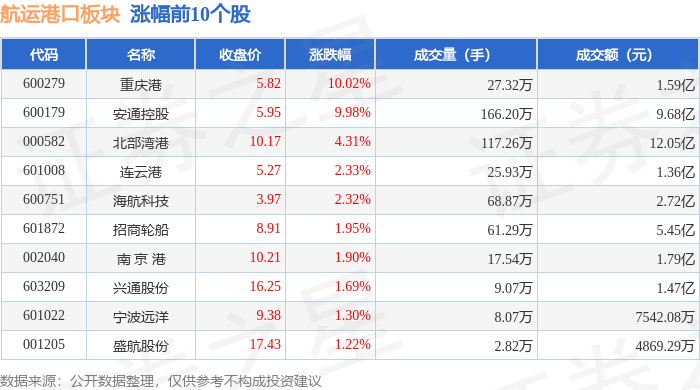
Group 1 - The shipping and port sector increased by 0.39% on December 25, with Chongqing Port leading the gains [1] - The Shanghai Composite Index closed at 3959.62, up 0.47%, while the Shenzhen Component Index closed at 13531.41, up 0.33% [1] - Key stocks in the shipping and port sector showed significant price increases, with Chongqing Port rising by 10.02% to a closing price of 5.82 [1] Group 2 - The shipping and port sector experienced a net outflow of 380 million yuan from main funds, while retail investors saw a net inflow of 279 million yuan [2] - The trading volume and turnover for key stocks varied, with An Tong Holdings seeing a closing price of 5.95 and a trading volume of 1.662 million shares [2] - The net inflow of funds for Chongqing Port was negative at -39.11 million yuan, indicating a shift in investor sentiment despite its price increase [3]


【冠通期货研究报告】甲醇日报:伊朗装置反复扰动市场情绪-20251224
Guan Tong Qi Huo· 2025-12-24 11:59
【冠通期货研究报告】 【宏观面分析】 按照国务院安委会办公室统一部署,由国家矿山安监局、公安部、自然资源 部、生态环境部、市场监管总局、国家能源局等部门带队的 6 个专项工作组,近 日分两批赴全国 12 个重点地区,开展针对废弃矿洞排查封堵整治、严厉打击盗 采盗挖矿产资源行为的明查暗访工作。 商务部召开党组扩大会议:要大力提振消费。 招商轮船公告称:公司在大连船舶重工集团有限公司订造的全球首艘甲醇双 燃料动力 VLCC 油轮"凯拓"轮于 2025 年 12 月 22 日在大连交付。 【期现行情分析】 甲醇日报:伊朗装置反复扰动市场情绪 发布日期:2025 年 12 月 24 日 【基本面分析】 库存方面:截至 2025 年 12 月 17 日,中国甲醇港口库存总量在 121.88 万吨, 较上一期数据减少 1.56 万吨。其中,华东地区去库,库存减少 3.10 万吨;华南 地区累库,库存增加 1.54 万吨。本周甲醇港口库存窄幅去库,周期内显性外轮 卸货计入 21.09 万吨,江内有 10.66 万吨在靠船货尚未计入库存。周内华东主流 社会库提货延续良好,浙江有烯烃工厂停车检修继续影响消费。本周华南港口库 存 ...