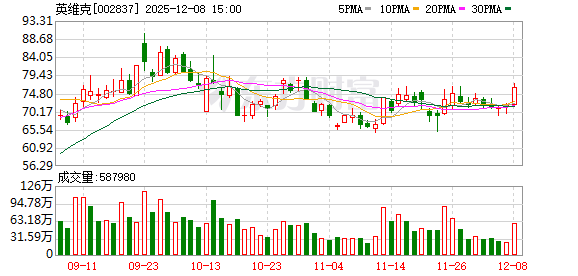
英维克

Search documents
冰轮环境(000811):冷热系统解决方案龙头 IDC及核电等领域业务快速发展
Xin Lang Cai Jing· 2025-12-08 12:37
Core Viewpoint - The company has confirmed an initial turning point in its performance, with significant coverage in IDC and nuclear power sectors, showcasing strong technological advantages that are expected to accelerate future development [1] Investment Highlights - The company offers a complete set of heating and cooling system solutions, with anticipated accelerated growth in performance due to rapid developments in AIDC and nuclear power sectors. Projected EPS for 2025-2027 is 0.71, 0.84, and 0.94, with growth rates of 11.4%, 12.4%, and 12.6% respectively [2] - The company has a strong track record in the refrigeration industry, with main business areas including low-temperature freezing, central air conditioning, environmental heating, energy chemical equipment, precision casting, smart services, and hydrogen equipment. Revenue is projected to grow from 909 million yuan in 2005 to 6.635 billion yuan in 2024, a sixfold increase with a CAGR of 11.03%. Net profit is expected to grow from 44 million yuan to 628 million yuan, a thirteenfold increase with a CAGR of 15.02% [2] - For Q3 2025, the company reported revenue of 4.825 billion yuan, a year-on-year decrease of 2.45%, and a net profit of 428 million yuan, a year-on-year decrease of 9.68% [2] IDC Sector Coverage - The company has established a strong presence in the IDC sector, serving leading domestic and international clients. Its subsidiaries, Dunham-Bush and Icewheel Heat Exchange Technology, provide cooling equipment for data centers and liquid cooling systems. Successful domestic projects include the National Supercomputing Center in Guangzhou and various data centers for China Mobile and China Unicom [3] - The company collaborates with local integrators overseas, servicing projects in North America, Australia, Southeast Asia, and the Middle East [3] Industrial Heat Control Strategy - The company's industrial heat control strategy is accelerating, focusing on the main battlefield of industrial heat control. It leverages core heat pump technology with high temperature, large temperature differences, and wide temperature ranges, integrating multi-source and multi-level system technologies for comprehensive coverage and compatibility [3] Overseas Revenue Growth - The company has a well-established overseas presence, with revenue expected to reach 1.979 billion yuan in 2024, a year-on-year increase of 103.60%. The trend of rapid growth in overseas revenue is expected to continue, with 1.017 billion yuan in overseas revenue reported for H1 2025, a year-on-year increase of 100.99% [3]

英维克:关于股东部分股份解除质押的公告
Zheng Quan Ri Bao· 2025-12-08 11:37
证券日报网讯 12月8日晚间,英维克发布公告称,公司于近日接到实际控制人齐勇先生的通知,获悉其 所持有公司的部分股份办理解除质押业务,本次解除质押股份数量为4,514,640股。 (文章来源:证券日报) ...


英维克(002837) - 关于股东部分股份解除质押的公告
2025-12-08 08:15
证券代码:002837 证券简称:英维克 公告编号:2025-059 深圳市英维克科技股份有限公司 关于股东部分股份解除质押的公告 本公司及董事会全体成员保证信息披露的内容真实、准确、完整,没有虚假记载、 误导性陈述或重大遗漏。 2. 中国证券登记结算有限责任公司深圳分公司出具的证券质押及司法冻结明细表。 股东名称 是 否 为 控 股 股 东 或 第 一 大 股 东 及 其 一致行动人 本次解除质押股 份数量(股) 占其所持 股份比例 占公司总 股本比例 起始日 解除日期 质权人 齐勇 是 4,514,640 8.19% 0.46% 2022/12/8 2025/12/5 招商证券股份 有限公司 合计 4,514,640 / / / 一、 股东股份解除质押的基本情况 特此公告。 深圳市英维克科技股份有限公司 深圳市英维克科技股份有限公司(以下简称"公司")于近日接到实际控制人齐勇先 生的通知,获悉其所持有公司的部分股份办理解除质押业务,具体事项如下: 二、股东股份累计质押基本情况 截至本公告披露日,上述股东及其一致行动人所持质押股份情况如下: | | | | | 合计占 | 合计占 | 已质押股份情况 | | ...
AI进入“液冷时代”,市场低估了“转变力度”,国产供应链正加速入局
Hua Er Jie Jian Wen· 2025-12-08 03:07
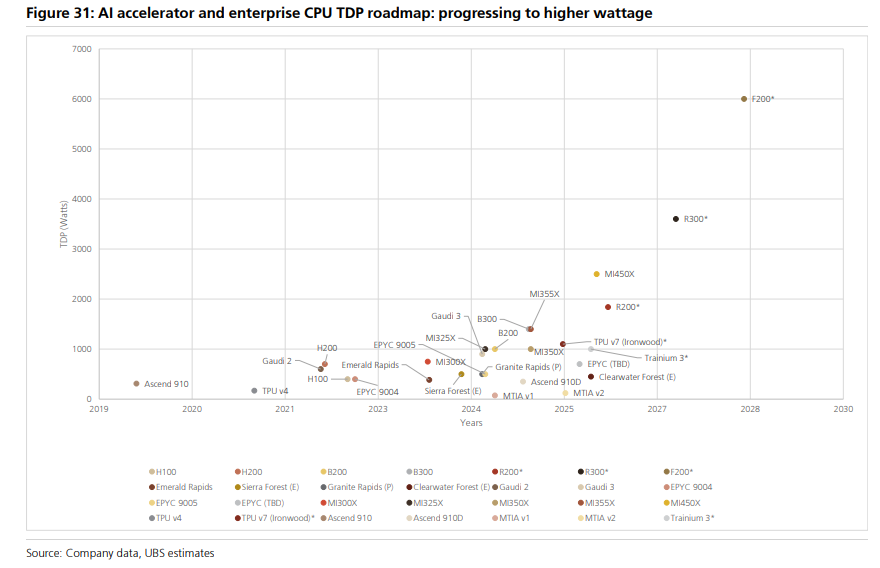
Core Insights - The transition to liquid cooling in data centers is becoming essential due to the rising power consumption of AI chips, marking a significant structural shift in the industry [1][2][4] - The global market for direct liquid cooling (DLC) is projected to grow from $1.138 billion in 2024 to $31.191 billion by 2030, with a compound annual growth rate (CAGR) of 51% [14][16] - The shift towards liquid cooling is driven by the need to meet stringent energy efficiency standards and the increasing power density of server cabinets [7][10] Market Dynamics - AI accelerator thermal design power (TDP) is rapidly increasing, with NVIDIA's GPUs expected to reach power levels between 1,800W to 7,000W in the coming years [2][4] - Traditional air cooling methods are becoming inadequate as cabinet power density exceeds 30-40kW, necessitating a shift to liquid cooling solutions [5][10] - Liquid cooling technology can reduce Power Usage Effectiveness (PUE) to below 1.2, making it a favorable option for meeting regulatory requirements [7] Technology Trends - The liquid cooling market is bifurcating into two main technology segments: Cold Plate technology for applications below 3,500W and Micro-Channel Lid (MCL) technology for higher power applications [10][12] - Cold Plate technology is expected to remain dominant for lower power applications, while MCL technology is anticipated to become mainstream for high-performance chips by 2026 [11][12] - The value of liquid cooling per rack is expected to quadruple by 2030, indicating a significant increase in market value [15] Supply Chain Evolution - NVIDIA is shifting its supply chain strategy from a "closed delivery" model to an "open ecosystem," allowing more suppliers to enter its supply chain [17][19] - This change provides opportunities for domestic suppliers to become either secondary suppliers through ODMs or primary suppliers as their technologies mature [17][19] - The estimated market for liquid cooling systems required for ASIC chips is projected to reach 35.3 billion RMB by 2026, with NVIDIA's platform requiring even more [19]

通信行业周报 2025年第49周:Credo FY2026Q2营收环比+20.2%,可回收火箭“朱雀三号”入轨成功-20251208
Guoxin Securities· 2025-12-08 01:53
Investment Rating - The report maintains an "Outperform" rating for the communication industry, indicating expected performance above the market benchmark by over 10% [6][46]. Core Insights - The communication industry is experiencing significant growth driven by advancements in AI infrastructure and cloud computing technologies, particularly with the introduction of new AI chips and optical interconnect technologies [5][11][18]. - Companies like Marvell and Credo are leading the charge with substantial revenue growth and strategic acquisitions aimed at enhancing their capabilities in AI and data center technologies [2][3][21]. - The successful launch of the "Zhuque-3" rocket marks a pivotal moment in China's commercial space endeavors, further stimulating interest and investment in the aerospace sector [4][31]. Summary by Sections Industry News Tracking - AWS successfully hosted its annual re:Invent cloud computing conference, unveiling the next-generation AI chip Trainium 4, which supports NVLink Fusion technology for high-speed chip interconnects [11][12]. - Marvell reported a 37% year-over-year revenue increase for FY2026 Q3, driven by data center demand and operational efficiency, and announced a $3.25 billion acquisition of Celestial AI to enhance its optical interconnect technology [2][18]. - Credo's FY2026 Q2 revenue reached $268 million, reflecting a 20.2% quarter-over-quarter growth, with expectations for continued growth driven by AI training and inference infrastructure [3][21]. Market Performance Review - The communication sector index increased by 3.69% this week, outperforming the CSI 300 index by 2.41%, ranking second among primary industries [4][36]. - Notable performers in the sector included satellite internet, optical devices/chips, and IoT controllers, with respective increases of 9.85%, 5.93%, and 4.35% [36]. Investment Recommendations - The report emphasizes the importance of AI computing infrastructure development, recommending investments in optical devices, communication equipment, and liquid cooling technologies [5][43]. - It suggests long-term investment in the three major telecom operators due to their stable operations and increasing dividend payouts, highlighting companies such as China Mobile and ZTE [5][43].




液冷:GPU+ASIC渗透加速,订单能见度到2028年
2025-12-08 00:41
Summary of Conference Call on Liquid Cooling Technology in Data Centers Industry Overview - The conference call focused on the liquid cooling technology in data centers, particularly its application in high-performance computing and the growing demand for efficient cooling solutions due to increasing chip power consumption [1][2]. Key Insights and Arguments - **Market Penetration**: The penetration rate of liquid cooling in GB200 servers is expected to reach 75%, while GB300 is nearing 100%. This indicates a significant increase in liquid cooling adoption by 2026, driven by NVIDIA's GPU series, which is predominantly shipped in liquid-cooled configurations [1][2]. - **Growth Projections**: The GPU cabinet shipment volume is projected to be between 100,000 to 120,000 units by 2026, corresponding to a market size of approximately $10 billion. The ASIC server shipment is expected to reach 8 million units, with a 40% penetration rate translating to a market size of about $3.9 billion. The combined market for GPU and ASIC servers is anticipated to exceed $15 billion, with a compound annual growth rate (CAGR) of around 55% from 2025 to 2026 [1][7]. - **Cooling Technology Trends**: The choice of cooling solutions is primarily based on heat flux density and cabinet power consumption. Liquid cooling is becoming essential for high-power chips, although cost considerations may lead some users to opt for suboptimal solutions like air cooling [1][4]. Important but Overlooked Content - **Supply Chain Dynamics**: The expansion of the liquid cooling market is driving demand for components, with key suppliers such as Chi Hong, Shuang Hong, and Coolmaster ramping up production in Southeast Asia. The main suppliers for CDU (Cooling Distribution Unit) include Weidi and Baode, with Sidecar being the predominant configuration [3][8]. - **Domestic Companies' Prospects**: Domestic firms like Yingweike have entered the supply chains of NVIDIA and Google, positioning themselves as potential leading manufacturers. Yingweike has received order guidance from NVIDIA for 2026, including a 3-4% share of quick connectors, translating to an estimated revenue of $500 million, along with $200 million from CDU contributions [3][9]. - **Technological Advancements**: NVIDIA is developing microchannel liquid cooling technology to enhance cooling efficiency, expected to mature by Q4 2026. Google has implemented advanced cooling techniques that adapt to AI training load fluctuations, ensuring reliable thermal management [5][6]. Conclusion - The liquid cooling technology in data centers is poised for significant growth, driven by increasing power demands of chips and advancements in cooling solutions. The market dynamics indicate a robust expansion of both the technology and the associated supply chain, with domestic players gaining traction in a competitive landscape [1][3][9].
“AI+卫星”共舞
2025-12-08 00:41
2026 年科技领域的两大核心赛道是什么?这些赛道的市场前景如何? "AI+卫星"共舞 20251207 摘要 AI 产业链景气度持续上升,各大巨头持续投资 AI 算力,部分客户已展望 至 2028 年需求,预示长期需求乐观,产业链公司积极扩产以应对潜在 的产能和供给挑战。 光通信领域,1.6T 高速光模块预计 2026 年放量,并出现 6.4T/12.8T 需求。市场对 2026 年 800G 激光模块需求预期为 4,000-4,500 万只, 1.6T 光模块需求预测为 2000-3,000 万只。 硅光芯片和 CW 激光器受益于 800G/1.6T 光模块发展,硅光模块渗透 率有望提升,中兴通讯、新胜等龙头企业市占率有望提高。CW 激光器 国产化替代速度预计快于 EML/VCSEL,国内企业如源杰科技等积极储 备产能。 FA 和 MPO 等无源器件市场空间巨大,预计 2025-2026 年分别达到 30-40 亿及 100 亿以上。致尚科技、杰普特等公司积极布局并扩产,康 宁对行业前景持乐观态度。 OCS 技术与谷歌 TPU 紧密相关,Meta、亚马逊、微软等巨头推进 ASIC 自研项目,将拉动 OCS ...
液冷迎来千亿拐点:AI算力驱动热管理升级,国产链迎历史性入局机遇
材料汇· 2025-12-07 15:30
Core Viewpoint - The article emphasizes the rapid growth of global computing power demand driven by advancements in artificial intelligence, cloud computing, and high-performance computing, leading to unprecedented cooling challenges for data centers. Liquid cooling technology is evolving from an optional solution to a necessary one due to its energy efficiency, low power consumption, and noise reduction advantages, especially in light of tightening national PUE (Power Usage Effectiveness) requirements. The article outlines the evolution of liquid cooling technology, market landscape, and future trends, predicting that the global liquid cooling market will exceed 100 billion yuan by 2026, marking the beginning of a liquid cooling revolution driven by technology, policy, and industry collaboration [2]. Group 1: Liquid Cooling Technology - Liquid cooling technology is essential for addressing the cooling pressures of data centers. It utilizes liquid to dissipate heat from components, leveraging the high thermal conductivity and heat capacity of liquids compared to air, resulting in lower energy consumption, higher cooling efficiency, and reduced noise [6][13]. - The core advantages of liquid cooling include low energy consumption, high cooling capacity (4-9 times that of air cooling), low noise levels, and lower total cost of ownership (TCO), with PUE values potentially dropping below 1.2 [13][26]. - The rapid increase in chip power density necessitates the adoption of liquid cooling solutions, as traditional air cooling struggles to meet the demands of next-generation architectures like NVIDIA's Rubin, which anticipates power densities reaching up to 600 kW [14][18]. Group 2: Market Trends and Future Outlook - The liquid cooling market is expected to surpass 100 billion yuan by 2026, driven by technological advancements, policy support, and collaboration across the supply chain [2]. - The evolution of liquid cooling technology is characterized by the emergence of microchannel cold plates and phase change cooling plates, which enhance efficiency and customization [2][14]. - The article highlights the increasing importance of liquid cooling in meeting national PUE requirements, with policies pushing for lower PUE values, thereby promoting the adoption of energy-efficient technologies [22][25]. Group 3: Industry Applications and Solutions - Liquid cooling solutions are categorized into direct contact and indirect contact types, with single-phase immersion cooling being the primary development direction due to its high efficiency and energy savings [30][47]. - Single-phase cold plate cooling is expected to remain the mainstream solution for a considerable time due to its compatibility with existing infrastructure and lower retrofit costs [37]. - Immersion cooling offers high energy efficiency (PUE < 1.13) and supports high-density deployments, although it presents challenges in product design and maintenance [48][49].

通信行业周报2025年第49周:Credo FY2026Q2营收环比+20.2%,可回收火箭“朱雀三号”轨成功-20251207
Guoxin Securities· 2025-12-07 13:37
Investment Rating - The report maintains an "Outperform" rating for the communication industry, indicating expected performance above the market benchmark by over 10% [6][46]. Core Insights - The communication industry is experiencing significant growth driven by advancements in AI infrastructure and cloud computing technologies, with companies like AWS and Marvell leading the charge [5][11][18]. - Credo's revenue growth is attributed to the expansion of AI training and inference infrastructure, with a notable increase in demand for AEC and ALC products [3][21]. - Marvell's acquisition of Celestial AI is a strategic move to enhance its capabilities in data center optical interconnect technology, positioning the company for future growth in AI and cloud data centers [2][18]. Summary by Sections Industry News Tracking - AWS successfully hosted its annual re:Invent cloud computing conference, unveiling the next-generation AI training chip Trainium 4, which supports NVLink Fusion technology [11][12]. - Marvell reported a 37% year-over-year revenue increase for FY2026Q3, driven by data center demand and operational efficiency, and announced a $3.25 billion acquisition of Celestial AI to enhance optical interconnect technology [2][13][18]. - Credo's FY2026Q2 revenue reached $268 million, reflecting a 20.2% quarter-over-quarter increase, with ALC expected to drive future growth [3][21]. Market Performance Review - The communication sector index rose by 3.69% this week, outperforming the Shanghai Composite Index, which increased by 1.28% [4][36]. - Key sectors such as satellite internet, optical devices/chips, and IoT controllers showed strong performance, with respective increases of 9.85%, 5.93%, and 4.35% [36]. Investment Recommendations - The report suggests continued focus on AI computing infrastructure development, recommending investments in optical devices, communication equipment, and liquid cooling technologies [5][43]. - The three major telecom operators are highlighted as important assets for dividend allocation, with stable operations and increasing dividend payouts [5][43].
2026年AI算力硬件出海逻辑及重大边际变化梳理
傅里叶的猫· 2025-12-07 13:13
Group 1: Optical Modules - The optical module industry is experiencing the highest growth and performance realization among AI hardware this year, driven by high verification barriers for North American CSP tech giants and increasing demand due to the acceleration of supernode technology [2][4] - The average ratio of optical modules to GPUs is continuously increasing, with demand for 800G and 1.6T optical modules being revised upwards, indicating a strong upward resonance in demand [2][4] - By 2026, the demand for 1.6T optical modules is expected to exceed 30 million units, with an average price of $900-1000 per unit, while high-end EML optical chips are projected to face a 25-30% supply shortage [4][5] Group 2: Liquid Cooling - The liquid cooling industry has seen fluctuating trends this year, with initial enthusiasm dampened by low penetration rates, followed by a resurgence in August and significant breakthroughs in November [5][9] - The demand for liquid cooling in North America is expected to expand rapidly by 2026, with penetration rates in the NVIDIA ecosystem projected to rise from 20-30% to over 80-90% [7][9] - A leading domestic manufacturer is anticipated to capture a market share of 13-17% in North America by 2026, with Google expected to implement liquid cooling solutions for over 200,000 TPU V7 chips, creating a market space exceeding $24-28 billion [9][10] Group 3: AI PCB - The AI PCB industry is thriving, with companies like Shenghong, Huidian, and Shengyi achieving performance realization in North America, despite some quarterly fluctuations [10][12] - The supply side is seeing an increase in product value and manufacturing difficulty due to upgrades in customer chips and cabinet solutions, leading to a marginal differentiation in the supply landscape [10][12] - By 2026, the introduction of orthogonal backplanes is expected to significantly increase unit value, with M9 material processing anticipated to break through, although mass production is expected to ramp up in 2027 [12][13] Group 4: Server Power Supply - The server power supply market has shown similar trends to liquid cooling, with initial excitement followed by a divergence in performance among manufacturers [13][14] - The supply side is dominated by Taiwanese manufacturers, with a high concentration of market share, while domestic manufacturers are expected to make significant breakthroughs in North America by 2026 [14][15] - The adoption of HVDC technology is projected to replace traditional UPS solutions, with an expected market scale exceeding $20-30 billion by 2026 [15]