
中国财险

Search documents
集体大涨!重磅信号来了
格隆汇APP· 2025-11-12 09:55
Core Viewpoint - The article highlights the significant profit contribution from insurance capital's stock investment business, driven by new accounting regulations, which is expected to lead to a long-term value reassessment of insurance stocks [5][24]. Group 1: Market Performance - Hong Kong insurance stocks, including China Ping An, AIA, and China Life, have seen rapid gains, contributing to a more than 2% increase in the Hong Kong Stock Connect non-bank ETF [3]. - The non-bank ETF has recorded a net inflow of 6.46 billion yuan in a single day, marking a total net inflow of 22.225 billion yuan year-to-date, reaching a new historical high of 24.654 billion yuan [18]. Group 2: Investment Trends - Insurance capital has made 31 equity stakes this year, surpassing the 2020 peak and setting a new record since 2015 [6]. - The proportion of equity assets in listed insurance companies has increased, with total investment assets reaching 21.85 trillion yuan, and the stock allocation rising by 1.44 percentage points compared to the end of 2024 [7]. Group 3: Profit Growth - The average annualized total investment return for major listed insurance companies reached 7.3%, a year-on-year increase of 1.2 percentage points, with net profits for the top five insurance companies growing by 33.5% year-on-year [23]. - China Ping An reported a net profit of 132.856 billion yuan for the first three quarters, a year-on-year increase of 11.5%, with a significant 45.4% growth in the third quarter alone [26][27]. Group 4: Strategic Shifts - Insurance companies are increasingly focusing on technology stocks, with significant increases in holdings in the electronics sector, reflecting a shift in investment strategy from traditional sectors to more diversified allocations [14][16]. - The article emphasizes that the new accounting standards (IFRS 17 and IFRS 9) have enhanced the correlation between insurance company performance and the stock market, allowing for greater profit growth during market upswings [24]. Group 5: Future Outlook - The article suggests that the ongoing recovery in the A-share market will benefit insurance companies, particularly those with strong beta attributes, as they continue to increase their allocation to equity assets [26]. - The anticipated growth in new single premium sales for 2026 is expected to be in double digits, driven by the positive correlation between previous year investment returns and subsequent product sales [26].


港股收评:恒指涨0.85%,金融、石油等权重股活跃,光伏股走弱
Ge Long Hui· 2025-11-12 08:39
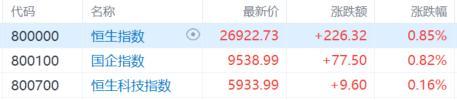
Market Overview - The Hong Kong stock market indices collectively rose, with the Hang Seng Index and the Hang Seng China Enterprises Index reaching intraday highs of 1.2%, closing up 0.85% and 0.82% respectively, while the Hang Seng Tech Index saw a modest increase of 0.16% [1][2]. Sector Performance - Large technology stocks exhibited mixed performance; JD Health surged over 5%, Midea Group rose over 4%, while NIO and XPeng Motors fell over 6% and 3% respectively [4][5]. - Home appliance stocks performed strongly, with Hisense Home Appliances leading the charge with an 8.52% increase, followed by TCL Electronics and Midea Group, both rising over 4% [6]. - Aluminum stocks were active, with China Hongqiao rising over 5% to reach a historical high, and China Aluminum increasing over 4% [7][8]. - Gaming stocks saw gains, with Melco International Development up over 7% and Galaxy Entertainment up over 4% [9]. - Insurance stocks strengthened, with China Life rising over 4% and several others increasing by over 3% [10]. - Brain-computer interface concept stocks gained traction, with BrainCo rising over 7% [11][12]. - Solar energy stocks faced significant declines, with GCL-Poly Energy dropping over 7% and several others following suit [13][14]. - Gold stocks generally fell, with Jihai Resources down over 5% [15][16]. Investment Insights - The market outlook suggests potential opportunities due to discrepancies between market expectations and fundamentals, with anticipated benefits from Federal Reserve rate cuts and improved Sino-U.S. relations [18].
第一上海:予中国财险“买入”评级 目标价23.3港元
Zhi Tong Cai Jing· 2025-11-12 06:24
Core Viewpoint - The report from First Shanghai recommends a "buy" rating for China Pacific Insurance (02328) with a target price of HKD 23.3, indicating a potential upside of 21.7% from the current price, driven by the growth in non-auto insurance as a key engine for premium growth in the context of China's economic transformation [1] Group 1: Financial Performance - In the first three quarters of 2025, the company achieved insurance service revenue of CNY 385.9 billion, a year-on-year increase of 5.9%, with auto insurance revenue at CNY 227.6 billion (up 3.7%) and non-auto insurance revenue at CNY 158.3 billion (up 9.3%) [1] - The net profit for the same period reached CNY 40.3 billion, reflecting a significant year-on-year growth of 50.5% [1] - Total investment income for the first three quarters was CNY 35.9 billion, a 33% increase year-on-year, with an annualized total investment return rate of 5.4%, up 0.8 percentage points from the previous year [1] Group 2: Non-Auto Insurance Growth - Non-auto insurance original premium income reached CNY 223.06 billion, accounting for 50.3% of total premiums, surpassing auto insurance [2] - A new regulatory policy effective November 1, 2025, aims to manage rates in the non-auto insurance sector, which is expected to enhance underwriting profit margins and improve the comprehensive cost ratio for non-auto insurance [2] - The company targets a comprehensive cost ratio of under 96% for auto insurance and under 99% for non-auto insurance in 2025 [2] Group 3: Internationalization Strategy - The company has initiated an internationalization strategy aimed at significantly increasing overseas business within five years, aligning with the trend of Chinese enterprises expanding abroad and the internationalization of the RMB [3] - The strategy focuses on servicing Chinese products and enterprises, particularly in the areas of new energy vehicles and overseas infrastructure projects [3] - The company has successfully launched related businesses in Hong Kong and Thailand, with plans to expand into Europe and Southeast Asia, leveraging its experience in new energy vehicle insurance to create a competitive advantage [3]
第一上海:予中国财险(02328)“买入”评级 目标价23.3港元
智通财经网· 2025-11-12 06:20
Core Viewpoint - The report from First Shanghai recommends a "buy" rating for China Pacific Insurance (02328) with a target price of HKD 23.3, indicating a potential upside of 21.7% from the current price, driven by the growth in non-auto insurance as a key engine for premium growth in the context of China's economic transformation and increasing social risk protection needs [1] Group 1: Financial Performance - In the first three quarters of 2025, the company achieved insurance service revenue of CNY 385.9 billion, a year-on-year increase of 5.9%, with auto insurance revenue at CNY 227.6 billion (up 3.7%) and non-auto insurance revenue at CNY 158.3 billion (up 9.3%) [1] - The net profit for the same period reached CNY 40.3 billion, reflecting a significant year-on-year growth of 50.5% [1] - Total investment income for the first three quarters was CNY 35.9 billion, a year-on-year increase of 33%, with an annualized total investment return rate of 5.4%, up 0.8 percentage points year-on-year [1] Group 2: Non-Auto Insurance Growth - Non-auto insurance original premium income reached CNY 223.06 billion in the first three quarters, accounting for 50.3% of total premiums, surpassing auto insurance [2] - A new regulatory policy effective November 1, 2025, aims to manage rates in the non-auto insurance sector, which is expected to enhance underwriting profit margins and improve the comprehensive cost ratio for non-auto insurance [2] - The company targets to maintain a comprehensive cost ratio of below 96% for auto insurance and below 99% for non-auto insurance in 2025 [2] Group 3: Internationalization Strategy - The company has initiated an internationalization strategy aimed at significantly increasing overseas business within five years, aligning with the trend of Chinese enterprises going global and the internationalization of the RMB [3] - The strategy focuses on servicing Chinese products and enterprises, particularly in the areas of new energy vehicles and overseas infrastructure construction [3] - The company has successfully launched related businesses in Hong Kong and Thailand, with plans to expand into Europe and Southeast Asia, leveraging its experience in new energy vehicle insurance to create a competitive advantage [3]
信达澳亚基金李德清卸任6只产品 其中1只为迷你基金
Xi Niu Cai Jing· 2025-11-12 05:35
Core Points - Fund manager Li Deqing has resigned from six funds due to personal reasons, effective November 7, 2025 [2][3] - Li Deqing has no other funds under management following this resignation [2] - The funds managed by Li Deqing include the Xin'ao Hengsheng Mixed Fund and the Xin'ao Xinyu 6-Month Holding Period Bond Fund, among others [2][3] Fund Performance Summary - The Xin'ao Xinyu 6-Month Holding Period Bond Fund has a net asset value of only 21.76 million yuan as of the end of Q3, with a single institution holding 45.88% of its shares [3] - This fund has experienced a decline, with its net asset value falling below 50 million yuan for 60 consecutive working days, prompting the fund company to report to regulatory authorities [3] - Since its inception on March 21, 2024, the fund has seen a unit net value growth of 7.02%, underperforming its benchmark by 4.44 percentage points [4] - The Xin'ao Hengsheng Mixed Fund has a net asset value of approximately 53.44 million yuan as of Q3, also nearing the threshold for a mini-fund [4] - This fund has recorded a unit net value growth of only 0.74% since its inception on September 24, 2021, lagging behind its benchmark by 14.62 percentage points [4] Holdings Overview - The Xin'ao Xinyu 6-Month Holding Period Bond Fund holds 4.26% in stocks and 59.12% in bonds, with top holdings including Zijin Mining, Tencent Holdings, and Alibaba [4] - The Xin'ao Hengsheng Mixed Fund has a stock allocation of 20% and a bond allocation of 59.92%, with similar top holdings to the Xin'ao Xinyu fund, including Alibaba and Tencent [4][5]

非车险报行合一落地 定价能力或成竞争焦点
Zhong Guo Zheng Quan Bao· 2025-11-11 20:09
Core Viewpoint - The implementation of the unified reporting and pricing system for non-auto insurance starting November 1 aims to standardize the market, curb vicious competition, and improve underwriting profitability [1][2]. Group 1: Implementation of Unified Reporting and Pricing - The unified reporting and pricing system requires insurance companies to align their actual insurance terms and rates with the materials submitted to regulatory authorities [1]. - Non-auto insurance has seen rapid growth, with premium income reaching 687.8 billion yuan in the first nine months of the year, accounting for a significant portion of property insurance premiums [1]. - The previous competitive model based on pricing has led to underwriting losses for many companies, necessitating a shift towards improved pricing capabilities [1][2]. Group 2: Regulatory Guidance and Industry Response - The Financial Regulatory Authority has issued guidelines to enhance the management of non-auto insurance, focusing on optimizing assessment mechanisms and strengthening rate management [2]. - Insurance companies have established special task forces to review existing products and upgrade systems to comply with new regulations [2][3]. - Different non-auto insurance products have specific re-filing deadlines, with commercial property insurance needing to be re-filed by December 1, 2025, and other products by the end of 2026 [2]. Group 3: Changes in Business Operations - The requirement for "fee upon issuance" means that property insurance companies must collect premiums before issuing policies, altering traditional business practices [3]. - Companies are currently informing clients about these changes and coordinating with relevant departments for system upgrades [3]. Group 4: Future Market Dynamics - The competition in the non-auto insurance market is expected to shift from price competition to a focus on pricing capability, risk identification, and service quality [3][4]. - Smaller specialized insurance companies can leverage their strengths by focusing on niche markets and offering customized products and differentiated services [4]. - Companies are encouraged to enhance their cost accounting systems and invest in technology to improve risk pricing and underwriting capabilities [4].

173家险企前三季度平均投资收益率为3.27%
Zheng Quan Ri Bao· 2025-11-11 16:15
Core Viewpoint - Insurance institutions have reported strong investment performance in the first three quarters of the year, attributed to a recovering equity market and declining long-term bond yields, leading to improved valuations [1][3]. Group 1: Investment Performance - As of November 11, 173 insurance institutions disclosed their financial investment returns, with the highest return at 22.77% and the lowest at -0.31%. A total of 91 institutions achieved returns of 3% or higher, while only one institution reported a negative return [1][2]. - The average investment return for the 173 insurance institutions was 3.27%, with a median of 3.04%. The highest return was from Fubon Property Insurance at 22.77%, and the lowest was from AXA Global Re (Shanghai) at -0.31% [2]. - Among life insurance companies, 72 reported an average return of 3.74% and a median of 3.28%. The highest return was from Junlong Life Insurance at 12.21%, while the lowest was from Aixin Life Insurance at 1.96% [2]. - For property and casualty insurance companies, 86 reported an average return of 3.05% and a median of 3.06%. Fubon Property Insurance had the highest return at 22.77%, and Suzhou Dongwu Property Insurance had the lowest at 0.19% [2]. Group 2: Reinsurance Performance - 15 reinsurance companies reported an average investment return of 2.28% and a median of 2.75%. The highest return was from China Property Reinsurance at 3.98%, while AXA Global Re (Shanghai) had the lowest at -0.31% [3]. Group 3: Asset Allocation Strategies - Insurance companies have increased their allocation to equity assets through various methods, including establishing private equity investment funds and increasing stock investments. As of the second quarter of 2025, the balance of funds allocated to stocks was 3.07 trillion yuan, accounting for 8.5% of total investments, showing an increase from the previous year [4]. - Since August, at least three private equity funds involving insurance capital have been established, with 10 insurance institutions participating in fund setups. In the third quarter, financial institutions contributed a total of 43.4 billion yuan to private equity funds, with insurance institutions contributing the highest amount of 18.3 billion yuan [4]. - In the first half of the year, insurance asset management institutions registered 11 equity investment plans, an increase of 6 plans year-on-year, with a total registered scale of 26.8 billion yuan, up 188% [4]. Group 4: Reasons for Increased Equity Investment - The increase in equity asset allocation by insurance capital is driven by several factors: declining yields on traditional fixed-income assets, regulatory encouragement for insurance capital to leverage long-term advantages, and the alignment of certain equity asset characteristics with the long-term liabilities of insurance companies [5]. - The diversification of equity investment forms has created a more flexible asset allocation framework for insurance capital, allowing for stable dividends and industry synergy through long-term equity investments, while increasing stock allocations enhances liquidity [5][6].
中国财险(02328.HK):业绩符合预期 关注出海带来的第二增长曲线
Ge Long Hui· 2025-11-11 12:52
Core Viewpoint - The company reported strong financial performance in Q3 2025, with net profit and net assets showing significant year-on-year growth, aligning with market expectations [1][2]. Performance Review - Q3 2025 net profit increased by 91.5% year-on-year to 15.81 billion yuan, while net profit for the first nine months of 2025 rose by 50.5% to 40.27 billion yuan [1]. - Net assets grew by 12.3% from the beginning of the year to 289.9 billion yuan [1]. Development Trends - The overall premium growth rate remained stable, with original premium income in Q3 2025 increasing by 3.0% year-on-year to 119.9 billion yuan, and for the first nine months, it rose by 3.5% to 443.18 billion yuan [1]. - The combined cost ratio (CoR) improved significantly, with the overall CoR for the first nine months decreasing by 2.1 percentage points to 96.1% [1]. - Non-auto insurance premium income showed higher growth, with health insurance premiums increasing by 11.5% year-on-year in Q3 2025 [1]. Investment Performance - The total investment return rate for the first nine months of 2025 increased by 0.8 percentage points to 5.4%, contributing to the high growth in net profit and net assets [2]. - The solvency ratio improved by 8.7 percentage points to 244% [2]. Business Expansion - The company is focusing on overseas business development, with plans for 30% of incremental premiums over the next five years to come from international operations [2]. - The company has made organizational arrangements to support its overseas business strategy, which is expected to enhance valuation [2]. Profit Forecast and Valuation - The company is currently trading at 1.5x and 1.3x P/B for 2025 and 2026 estimates, respectively [2]. - EPS estimates for 2025 and 2026 have been raised by 25% and 7% to 2.14 yuan and 1.89 yuan, respectively [2]. - The target price has been increased by 23% to 19.1 HKD, indicating a slight downside of 0.9% from the current stock price [2].
国泰海通|非银:盈利大幅提振,资负持续改善——上市险企2025年三季报综述
国泰海通证券研究· 2025-11-10 15:07
Core Viewpoint - The insurance industry is experiencing significant growth in new business value (NBV) for life insurance and improvements in the combined ratio (COR) for property insurance, driven by investment income, leading to enhanced profitability and a positive outlook for leading insurance companies [1][2]. Group 1: Life Insurance NBV Growth - The life insurance sector has shown robust growth in NBV for the first three quarters of 2025, with notable increases from major players: China Pacific Insurance (31.2%), China Life (41.8%), China Ping An (46.2%), New China Life (50.8%), China Re (76.6%), and AIA (19.3%) [2]. - The growth is attributed to an increase in new policies and an improvement in the new business value rate [2]. Group 2: Property Insurance COR Improvement - The property insurance sector has seen a continued improvement in the combined ratio for the first three quarters of 2025, with China Re at 96.1% (-2.1pt), Ping An Property at 97.0% (-0.8pt), and China Pacific Property at 97.6% (-1.0pt) [2]. - This improvement is due to better catastrophe claims management and enhanced cost control measures [2]. Group 3: Investment Income and Profitability - Investment income has significantly boosted net profit for listed insurance companies, with growth rates for net profit in the first three quarters of 2025 as follows: China Life (60.5%), New China Life (58.9%), China Re (50.5%), China Ping An (28.9%), China Pacific (19.3%), and China Life (11.5%) [2]. - The contribution of investment service performance to profit improvement is substantial, with New China Life (51.5%), China Life (50.9%), and China Re (49.5%) leading in this regard [3]. Group 4: Net Asset Improvement - The overall net asset improvement for listed insurance companies in the first three quarters of 2025 is as follows: China Life (22.8%), China Re (16.9%), China Ping An (6.2%), New China Life (4.4%), and China Pacific (-2.5%) [3]. - Changes in net assets are primarily influenced by variations in other comprehensive income and retained earnings, with the current profit, especially from TPL asset investment income, playing a crucial role in enhancing net assets [3]. Group 5: Future Outlook - The life insurance sector is expected to see continued improvement in liability costs, with market share further concentrating among leading companies [4]. - The property insurance sector is anticipated to maintain improved underwriting profitability under the combined insurance model [4]. - The importance of active management capabilities in investment strategies is expected to rise, with insurance companies likely to adjust bond allocations based on interest rate changes and enhance equity allocations under long-term market policies [4].




中金:升中国财险目标价至19.1港元 顺势出海大有可为
Zhi Tong Cai Jing· 2025-11-10 06:39
Core Viewpoint - China Pacific Insurance (02328) reported a significant increase in net profit for Q3 and the first three quarters, with year-on-year growth of 91.5% and 50.5% respectively, reaching 15.81 billion and 40.27 billion RMB, aligning with market expectations [1] Financial Performance - Net profit for Q3 increased by 91.5% to 15.81 billion RMB [1] - Net profit for the first three quarters rose by 50.5% to 40.27 billion RMB [1] - Net assets grew by 12.3% year-to-date to 289.9 billion RMB [1] Earnings Forecast - The company raised its earnings per share (EPS) forecasts for 2025 and 2026 by 25% and 7% respectively, now projected at 2.14 RMB and 1.89 RMB [1] - The valuation basis has been extended to 2026, with the price-to-book ratio increased from 1.2x to 1.3x [1] - Target price has been raised by 23% to 19.1 HKD [1] Strategic Developments - China People's Insurance Group (01339) showcased high-quality development paths for non-auto business during a recent capital market open day [1] - The company plans to support Chinese enterprises in their overseas expansion, focusing on both enterprise and product exports [1] - It is anticipated that 30% of incremental premiums over the next five years will come from overseas business contributions [1]