OPPO

Search documents
2025年中国智能手机市场排名出炉:vivo第一,小米第二,苹果增速领跑
Xin Lang Cai Jing· 2026-01-08 11:48
从竞争态势来看,头部品牌在2025年依然保持显著优 势,vivo、小米与苹果在激烈的市场竞争中稳居第一梯 队。具体到市场份额,全年第1周至第52周的数据显示, vivo凭借主品牌与子品牌的协同效应,以16.76%的市场 份额位居首位,相较2024年全年略有下降,后者为 17.43%。 小米以16.60%的份额排名第二,较上年提升0.71个百分 2025年中国智能手机市场激活量排名日前揭晓,前五大品牌依次为vivo、小米、苹果、OPPO和华为。 数据显示,vivo(含iQOO)、小米(含REDMI)、OPPO(含一加、realme真我)、苹果与华为共同占 据全年国内市场激活量前五位置,各品牌激活量均超过4000万部。其中,苹果、小米和OPPO实现同比 增长,展现出较强的增长动力。 这一市场格局与2025年整体行业走势保持一致。统计数 据显示,当年1月至11月,国内手机市场出货总量达2.82 亿部,同比增长0.9%。其中,5G手机出货量约为2.44亿 部,同比增长1.3%,占整体出货量的比重达到86.6%, 持续主导市场发展方向。 这一市场格局与2025年整体行业走势保持一致。统计数据显示,当年1月至11月,国内 ...
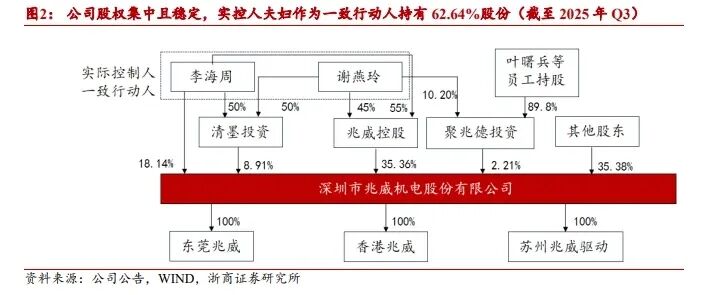
兆威机电首次覆盖:微型传动系统龙头,人形机器人、XR、汽车电子打开成长空间(附下载)
Xin Lang Cai Jing· 2026-01-08 11:36
Core Viewpoint - The company is a leading player in the micro drive system industry, with a strong focus on expanding its downstream markets and a solid technical foundation established by its experienced management team [1][2][5]. Group 1: Company Overview - The company was founded in 2001 and went public in 2020, initially focusing on precision injection molding and components, later shifting to micro drive systems in 2010 [1][2]. - The company has expanded its product applications to various industries, including automotive electronics, communication devices, smartphones, medical care, service robots, industrial automation, smart homes, and AR & VR [1][5]. Group 2: Market Position and Strategy - Micro drive systems are core components in the industrial sector, characterized by their miniaturization, high precision, reliability, lightweight, and low noise, with significant market demand across various sectors [5][14]. - The company targets key industries undergoing intelligent upgrades, such as smart automotive, consumer technology, medical technology, and advanced manufacturing, to meet diverse application needs [5][14]. Group 3: Customer Base and Product Development - The company adopts a customized business model to develop micro drive systems based on client needs, enhancing user stickiness and building a strong customer base [6][15]. - It has established partnerships with renowned companies like Huawei, Bosch, BYD, Great Wall Motors, Vivo, OPPO, Xiaomi, iRobot, and others, enhancing its market competitiveness [6][15]. Group 4: Financial Performance - From 2017 to 2024, the company achieved a compound annual growth rate (CAGR) of 15.7% in revenue and 24.3% in net profit, with projected revenues of 1.525 billion yuan and net profits of 225 million yuan in 2024, reflecting year-on-year growth of 26.4% and 25.1% respectively [7][16]. - The company experienced a significant decline in its micro drive system business for smartphone camera modules in 2020 but has since rebounded due to successful expansions into automotive electronics and other sectors [7][16]. Group 5: Cost Structure and R&D Investment - The company's gross margin remains stable at around 30%, with raw material costs being a significant portion of total costs, making it sensitive to fluctuations in material prices [10][18]. - R&D expenses have increased significantly post-IPO, with a year-on-year growth of 86.7% in 2021, reflecting the company's commitment to enhancing its competitive edge through innovation and solution development [10][18].

涨疯了,一盒内存条堪比上海一套房!
Jin Tou Wang· 2026-01-08 09:35
Core Viewpoint - The rising cost pressure in the automotive industry is primarily driven by memory prices rather than metal raw materials, with significant price increases in memory components impacting the overall cost of smartphones, computers, and cars [1][4]. Group 1: Memory Price Increases - The price of a 265G DDR5 server memory module has reached 40,000, with a box of 100 costing 4 million, comparable to the price of a house in some areas of Shanghai [4]. - The price of 16GB DDR4 memory modules surged by 1800% last year, while DDR5 modules increased by over 500% [1][5]. - The demand for memory in AI applications is significantly higher, with a single AI server requiring 8-10 times more memory than a standard server, leading to a supply shortage [5][7]. Group 2: Impact on Consumer Electronics - The increase in memory prices is expected to lead to higher prices for smartphones and computers, with memory accounting for 10%-20% of hardware costs [4]. - Smartphone manufacturers like Xiaomi, OPPO, and others have already raised prices by 100 to 600 yuan for new models since last October due to rising costs [7]. - The global smartphone shipment volume is projected to decline by 2.1% in 2026 due to these price increases [7]. Group 3: PC Market Dynamics - Major PC manufacturers such as Dell and Lenovo are planning price increases ranging from 10% to 30% for commercial PCs [9]. - The domestic memory manufacturers like Yangtze Memory Technologies and ChangXin Memory are gaining market share due to their price advantages of 15%-20% [9]. Group 4: AI Infrastructure and Market Competition - Tech giants like Apple, Google, and Amazon are aggressively competing for memory supply, with procurement teams stationed in South Korea to secure long-term contracts [11]. - Samsung and SK Hynix are maintaining a strong stance on pricing, opting for quarterly pricing rather than long-term contracts, which has led to significant price increases [11]. - The current memory price surge is expected to persist until 2026, with predictions of price hikes of up to 70% from major manufacturers [9][11].

被小米辞退后,王腾进军睡眠赛道
Guan Cha Zhe Wang· 2026-01-08 07:46
Group 1 - The core idea of the news is that former Xiaomi executive Wang Teng has founded a new company named "Today Yixiu," focusing on developing sleep health-related products to improve people's energy levels [1][2] - Wang Teng's motivation for this venture stems from personal experiences with sleep quality and energy levels, which he found to be common issues among his peers due to work-related stress [1] - The new company will leverage advancements in AI and sensor technology to create products that can actively monitor and intervene in environmental factors affecting sleep, such as light, temperature, sound, and air quality [1] Group 2 - Wang Teng has a background in product strategy at OPPO and joined Xiaomi in 2016, where he held various significant positions, including General Manager of the Redmi brand and the China market [2] - His rapid rise within Xiaomi, achieving the role of General Manager of the China market in just eight years, indicates his strong influence and recognition within the company [2] - Wang Teng was dismissed from Xiaomi in September 2023 due to serious violations, including leaking company confidential information and conflicts of interest, which garnered significant attention [2]


AI重构C端医疗
Hua Er Jie Jian Wen· 2026-01-08 06:53
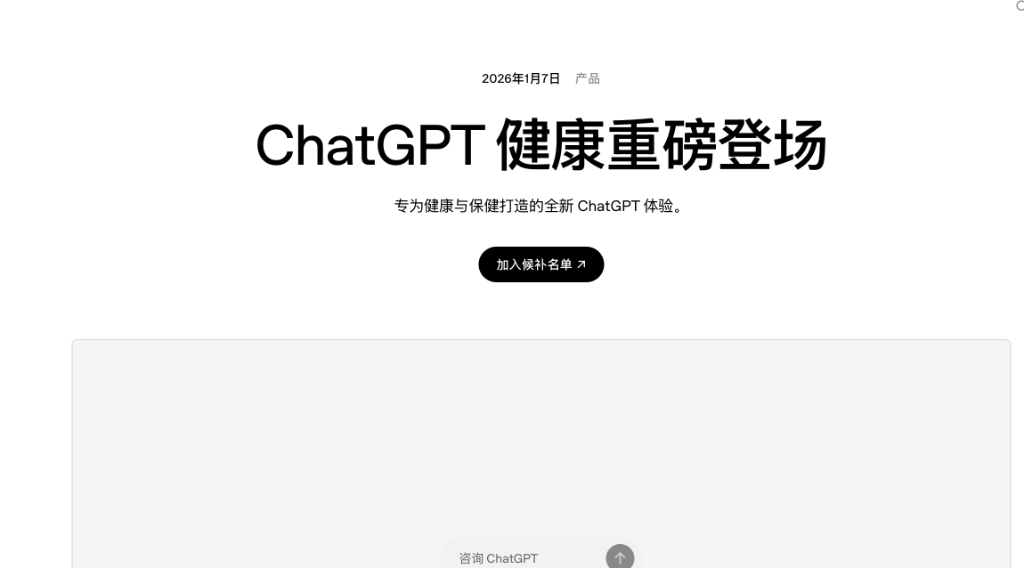
Core Insights - The perception that digital healthcare is a false proposition is being challenged by the surge in AI-driven healthcare demand, which has been historically underestimated due to high entry barriers and low frequency of medical needs [1] - The emergence of AI healthcare solutions like Ant Group's "Afu" and OpenAI's Health signifies a shift from traditional search engine-dominated medical information to AI agents managing personal health [5][16] Group 1: Ant Group's "Afu" - Ant Group's "Afu" saw its monthly active users double to over 30 million within a month, with daily inquiries exceeding 10 million [2][6] - "Afu" integrates with major smart device brands and connects to 5,000 hospitals and 300,000 doctors, providing a comprehensive healthcare service from monitoring to consultations [8] - A significant 55% of "Afu" users come from third-tier cities, highlighting the demand for accessible healthcare solutions in underserved markets [8] Group 2: OpenAI's Health - OpenAI launched ChatGPT Health on January 7, 2026, creating a separate entry point for health-related inquiries to address privacy concerns [3][9] - The architecture of ChatGPT Health ensures that health-related data is stored separately, preventing any cross-contamination with other data, thus fostering user trust [10] - OpenAI partnered with b.well Connected Health to address the challenge of fragmented medical data, allowing users to access their medical records seamlessly [12][13] Group 3: AI Healthcare Functionality - ChatGPT Health aims to manage the entire lifecycle of user health by integrating static medical records and dynamic physiological data [14] - The service can generate personalized health recommendations and actionable plans, demonstrating a significant advancement over traditional healthcare models [15] - Both "Afu" and ChatGPT Health are evolving to provide end-to-end healthcare services, reflecting a common demand for AI-driven healthcare solutions in both Eastern and Western markets [15] Group 4: Valuation Logic in AI Healthcare - The competitive landscape of healthcare is shifting from search engine-based information retrieval to conversational AI services, diminishing the value of traditional health information platforms [17] - The role of offline service providers is transforming as they become data asset managers rather than just service providers, emphasizing the value of high-quality real-world data [18] - Trust is becoming a critical currency in AI healthcare, with privacy assurances and data handling practices being central to user engagement and future monetization strategies [19]
冲上热搜!小米前高管,成立新公司
中国基金报· 2026-01-08 06:17
Core Viewpoint - Wang Teng has announced the establishment of a new company named "Today is Suitable for Rest," focusing on developing products related to sleep health to improve people's energy levels [2][3]. Group 1: Reasons for Choosing Sleep Health and Energy Management - Sleep and energy have become significant health concerns for everyone, with many individuals experiencing poor sleep quality and fatigue due to work-related stress [4][9]. - There is a need to enhance societal understanding of the value of sleep, as many people are unaware of the risks associated with sleep deprivation [4][9]. - The rapid development of AI large models allows for significant improvements in product experiences, enabling proactive interventions to enhance sleep and energy management through various sensors [4][9]. Group 2: Company Structure and Recruitment - The initial team has been formed, primarily consisting of members from leading tech companies like Xiaomi and Huawei, who possess extensive experience in software and hardware product development [9]. - The company is actively recruiting for key positions, including software and hardware product managers, health/AI algorithm engineers, sleep health experts, and various engineering roles [9]. - The initial team prefers candidates with relevant work experience, and the company is based in Beijing, with plans to establish branches in Hangzhou and Shenzhen in the future [9]. Group 3: Background of Wang Teng - Wang Teng previously held significant positions at OPPO and Xiaomi, culminating in his role as General Manager of the Redmi brand and the China market [10]. - He was dismissed from Xiaomi in September 2025 due to serious violations, including leaking company confidential information and conflicts of interest [10].
浙江光学膜企业开启IPO上市辅导
WitsView睿智显示· 2026-01-08 05:42
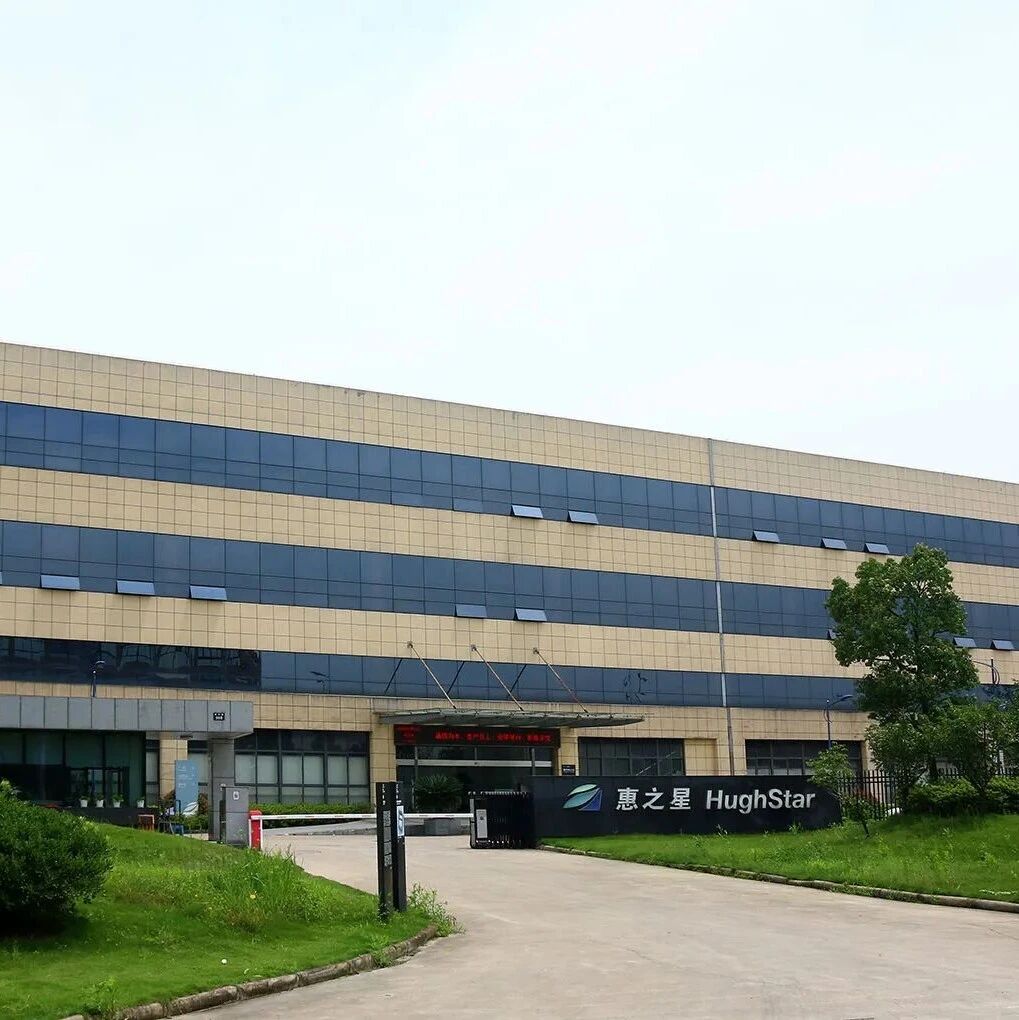
Group 1 - The core viewpoint of the article is that Ningbo Huizhixing New Materials Technology Co., Ltd. has officially commenced its IPO listing guidance, planning to publicly issue shares to unspecified qualified investors and list on the Beijing Stock Exchange, with Kaiyuan Securities serving as the advisory institution [1]. Group 2 - Huizhixing specializes in the research, production, and sales of optical-grade hardening films and other special functional films, with its main products including CPI functional film materials, polarizer functional film materials, and PET functional film materials, making it one of the few companies in China capable of producing CPI and TAC functional film materials [3]. - By December 2025, Huizhixing plans to use self-raised funds to purchase and assemble high-precision coating production lines to meet its production and operational development needs [3]. - The company's revenue for 2023, 2024, and the first half of 2025 is projected to be 262 million yuan, 330 million yuan, and 214 million yuan, respectively, while net profits are expected to be -17.39 million yuan, 21.45 million yuan, and 29.38 million yuan [3]. - Huizhixing has established partnerships with various optical manufacturers, including Nitto Group, Zhanxin Co., Ltd., Sandexin, Feirongda, Anjie Technology, Lingyi Technology, Dingfeng Precision, Sanlipu, Shengbo Optoelectronics, BOE, Tianma, and TCL Huaxing, and its products are widely used by well-known electronic terminal brands such as Huawei, Honor, OPPO, and vivo [3]. - Notably, Huizhixing secured financing of 29.90 million yuan from Changyang Technology, an optical film company, in May of last year, further advancing its CPI and PET functional film materials business [3].
超低价机票概率变低:民航深入整治“内卷式”竞争丨消费参考
2 1 Shi Ji Jing Ji Bao Dao· 2026-01-08 03:21
Group 1: Industry Overview - The Civil Aviation Administration of China (CAAC) has outlined seven key tasks for the aviation industry in 2026, focusing on improving quality and efficiency, enhancing core competitiveness, and addressing "involution" competition [1] - The CAAC plans to develop a passenger transport cost survey method and establish a price monitoring and early warning mechanism to prevent unhealthy competition based on below-cost pricing [1][2] Group 2: Pricing Trends - Domestic ticket prices have been declining, with an average bare ticket price of 704 yuan in the first 50 weeks of 2025, down 1.8% from 2024 and 11.3% from 2019 [3] - In the fourth quarter of 2025, the average full ticket price rose to 628 yuan, an increase of 2.5% year-on-year, although still down 10.7% compared to 2019 [3] Group 3: Profitability and Market Performance - The aviation market saw overall profitability improvement in the first three quarters of 2025, with all listed airlines reporting profits except Spring Airlines and Juneyao Airlines, which faced specific challenges [4] - The CAAC reported that in 2025, the total transport turnover reached 1,640.8 billion ton-kilometers, with passenger transport volume at 770 million, and cargo/mail transport volume at 10.17 million tons, representing year-on-year growth of 10.5%, 5.5%, and 13.3% respectively [4] Group 4: International Demand Growth - The implementation of visa-free policies has contributed to increased demand for international flights, with 40.6 million inbound foreign visitors recorded by December 16, 2025, a year-on-year increase of 27.2% [5]
谷歌市值超苹果;内存价格涨势将延至2026年丨科技风向标
2 1 Shi Ji Jing Ji Bao Dao· 2026-01-08 03:09
21世纪经济报道新质生产力研究院综合报道 早上好,新的一天又开始了。在过去的24小时内,科技行业发生了哪些有意思的事情?来跟21tech一起 看看吧。 【巨头风向标】 谷歌2019年以来首次市值超苹果 美股三大指数收盘涨跌不一,纳指涨0.16%,标普500指数跌0.34%,道指跌0.94%。大型科技股多数上 涨,英特尔涨超6%,谷歌涨逾2%,微软、英伟达涨超1%,亚马逊小幅上涨;Meta跌逾1%,苹果、特 斯拉小幅下跌。其中,谷歌市值达到3.89万亿美元,超过苹果公司的3.85万亿美元,为2019年以来首 次。 ChatGPT发布AI医疗功能 OpenAI重磅推出ChatGPT健康(ChatGPT Health),能够把你的医疗记录、健康App甚至是Apple健康数 据连接起来,然后用AI帮你看懂那些复杂的体检报告、准备就医问题清单甚至规划饮食运动。根据 OpenAI透露,健康咨询已经成了ChatGPT最高频的使用场景之一,全球每周有超过2.3亿人在上面问健 康问题。于是,OpenAI做了这个健康版本。当然,OpenAI也强调,ChatGPT健康只是辅助工具,不能 替代医生看病。 联想、英伟达干了件大事 20 ...
谷歌市值超苹果;内存价格涨势将延至2026年丨新鲜早科技
2 1 Shi Ji Jing Ji Bao Dao· 2026-01-08 03:08
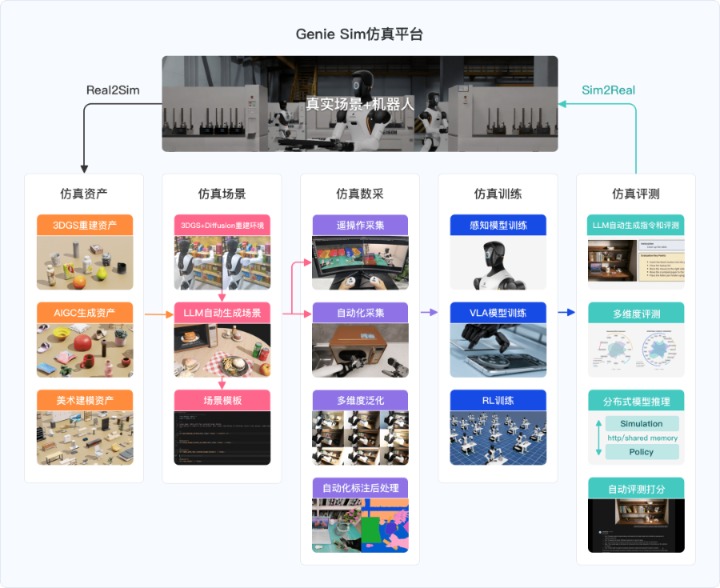
Group 1: Market Movements - Google's market capitalization reached $3.89 trillion, surpassing Apple's $3.85 trillion for the first time since 2019 [2] - Major tech stocks saw varied performance, with Intel rising over 6% and Google increasing by over 2% [2] Group 2: AI Developments - OpenAI launched ChatGPT Health, which connects medical records and health apps to help users understand health reports [3] - Lenovo and NVIDIA announced a collaboration to create an "AI Cloud Super Factory," aiming to significantly reduce AI deployment time and scale up to 100,000 GPUs [4] - Siemens and NVIDIA expanded their strategic partnership to develop industrial AI solutions, with plans to create AI-driven manufacturing bases starting in 2026 [5] - Genie Sim 3.0, an open-source simulation platform driven by large language models, was launched by Zhiyuan Robotics at CES [8] Group 3: Corporate Announcements - Xiaomi awarded its 2025 Technology Awards, with the top prize going to the self-developed chip "玄戒O1" [7] - ByteDance denied rumors of entering the automotive industry but confirmed ongoing collaborations in automotive intelligence with Mercedes-Benz [9] - Baidu's "萝卜快跑" received the first full autonomous driving test license in Dubai, with plans to expand its fleet to over 1,000 vehicles [10] Group 4: Financial Activities - xAI completed its E-round financing, raising $20 billion, exceeding its initial target of $15 billion [20] - Su Mei Da plans to acquire a 16.92% stake in Blue Science and Technology for approximately $4.03 billion [22] - Zhongwei Company announced plans to sell up to 1.3% of its shares in Tuojing Technology, with an expected transaction value of approximately 1.393 billion yuan [17]